
Tensile Strength
An Introduction to Understanding and Measuring Tensile Strength
Tensile strength is a key measurement used by researchers, engineers, and quality control departments to evaluate the mechanical properties of a material, product, or component. A material's tensile strength is defined as the maximum mechanical tensile (pulling) stress that a specimen can withstand before failure, although the definition of failure varies depending on the material's type and its design.
As materials are subjected to increasing tensile stress, the bonds between their atoms are stretched and then eventually broken as the stress increases. When atomic bonds are merely being stretched, the material is said to be within its elastic region, where removal of the force will cause the material to return to its original shape. Once the atomic bonds are being broken, the material has entered its plastic region. This means that the material has been chemically altered and will no longer return to its original shape upon the removal of force. Specimens will often begin to change visibly during this stage of the test, narrowing in the center in a behavior known as 'necking'.
Depending on the material being evaluated, tensile strength can be evaluated either at the point where it enters the stage of plastic deformation - its yield point - or the point at which the material finally ruptures. Evaluating tensile strength at the point of plastic deformation is referred to as yield strength. Evaluating tensile strength at the point of specimen rupture is referred to as ultimate tensile strength.
The type of material being tested will determine whether the yield strength or the ultimate tensile strength provides the most useful information. For example, ductile materials such as metals are typically evaluated at the point of yield, whereas brittle materials such as composites are often evaluated at the point of rupture. Both of these points, along with modulus of elasticity, are important calculations used to help characterize the strength of a material.

Units to Measure Tensile Strength
In the international system tensile strength is expressed in Pascals or Megapascals, which is equivalent to Newtons per square meter (N/m²). In the American system it is expressed in pounds per square inch (lbf/in² or psi).
How is Tensile Strength Calculated?
Tensile strength is calculated by dividing the cross-sectional area of the specimen by the maximum achieved tensile force. Tensile strength (σ) = maximum tensile force (F) / specimen cross-sectional area (A):
How to Measure Tensile Strength?
Tensile strength is measured by performing a tensile test on a universal testing machine, and care must be taken to ensure that the results are accurate and repeatable. Evaluating a material by its tensile strength/yield strength in units of stress (Pa or psi) instead of force (N or lbf) helps with repeatability in results. This is because prepared materials/specimens have thickness and width tolerances that can vary, and stress accounts for thickness and width measurements of each specimen’s tensile strength calculation. For example, if an operator tested 5 specimens from the same batch, and all had varying thicknesses, their max forces values may have a wider range while their stress values will remain comparable.

This graph shows examples of upper and lower yield strengths for different types of curves where Reh represents upper yield strength, Rel represents lower yield strength, and a represents initial transient effect. These curves are representative of behavior often seen when testing metals.

Tensile Strength of Common Materials
| Material | Yield Strength (MPa) | Ultimate Tensile Strength (MPa) |
| Nylon-6 | 45 | 45-90 |
| Acrylic, clear cast sheet (PMMA) | 72 | 87 |
| Aluminum | 95 | 110 |
| Copper | 70 | 220 |
| Structural, ASTM A36 steel | 250 | 400-550 |
| Steel, stainless AISI 302 - cold-rolled | 502 | 860 |
| Titanium alloy | 730 | 900 |
| Diamond | 1600 | 2800 |
| Aramid (Kevlar or Twaron) | 3620 | 3757 |
| Carbon fiber (Toray T1100G) (the strongest human-made fibers) |
- | 7000 fiber alone |
Source: https://www.engineeringtoolbox.com/young-modulus-d_417.html
EQUIPMENT FOR MEASURING TENSILE STRENGTH
Tensile strength, along with other tensile properties, is measured on universal testing machines. This equipment is available in a variety of different force capacities, with maximum force capacities ranging from 0.02 N to 2,000 kN. In addition to tensile testing these machines can also perform compression, bend, peel, tear, shear, friction, torsion, puncture, and a variety of other types of testing in order to fully characterize the mechanical properties of materials, components, and finished products. Depending on your lab's throughput requirements, several automation systems are also available.
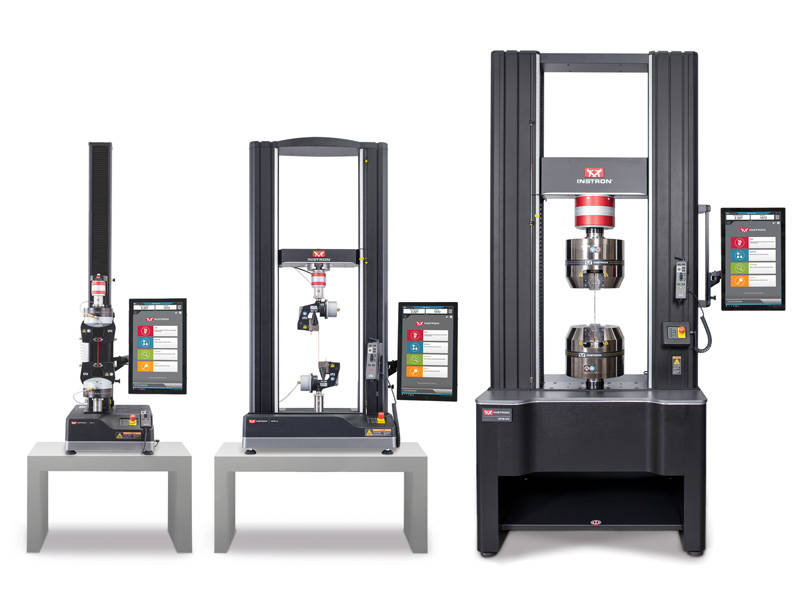
Universal Testing Systems up to 300 kN - 6800 Series
Designed for exceptional performance, the 6800 Series delivers unparalleled accuracy and reliability, improved ergonomics, and an enhanced testing experience for today’s operator. Available with a force capacity range of 0.02 N (2 gf) to 300 kN.
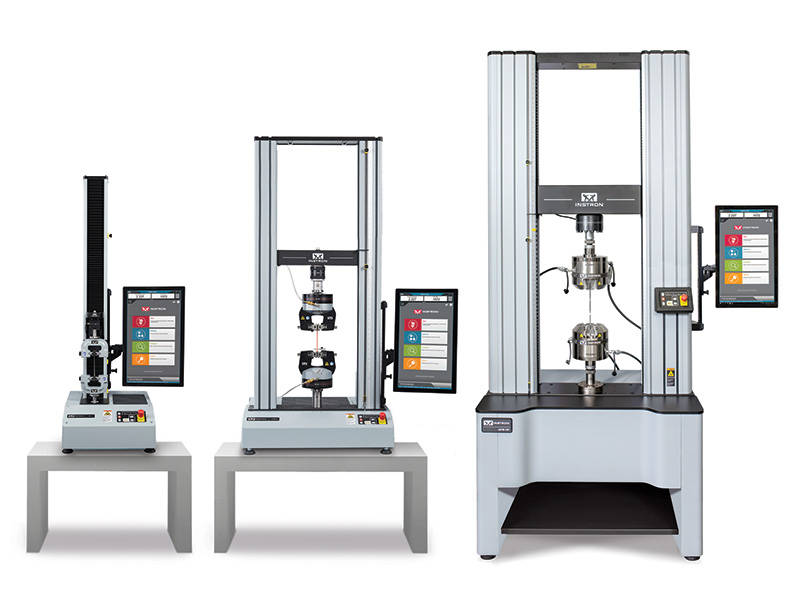
Universal Testing Systems up to 300 kN - 3400 Series
The 3400 Series testing systems offer the simplicity and performance needed for routine, standardized QC tests and general-purpose mechanical testing. Available with a force capacity range of 0.02 N (2 gf) to 300 kN.
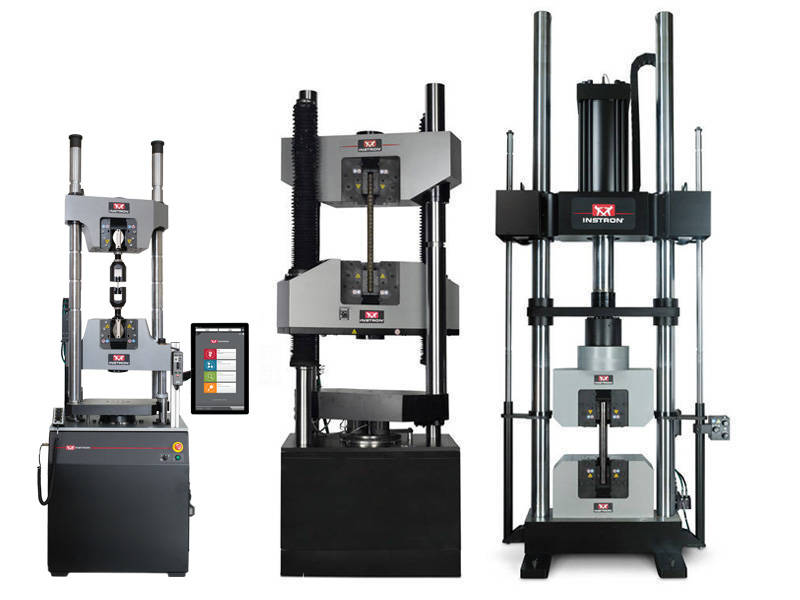
Industrial Universal Testing Systems up to 2000 kN
Instron’s Industrial Series includes frames with single or dual test spaces and range in force capacity from 300 kN to 2000 kN and are used to test high strength metals, alloys, and composites.
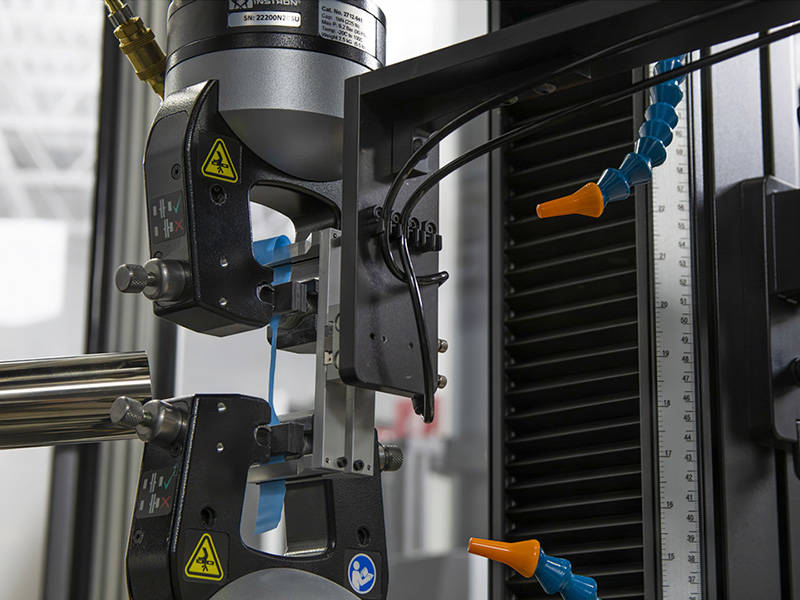
Automated Testing Systems
Instron's range of automated testing systems empower labs to improve throughput, repeatability, and safety while freeing up skilled operators to focus on other valuable tasks.

6800 系列 – 万能材料试验系统
Instron 的6800 系列万能材料试验系统提供出色的精度及可靠性。 6800 系列基于正在申请专利的操作员保护架构,具有全新的智能气动控制装置和碰撞保护功能,使材料测试比以往任何时候都更简单、更智能、更安全。

