
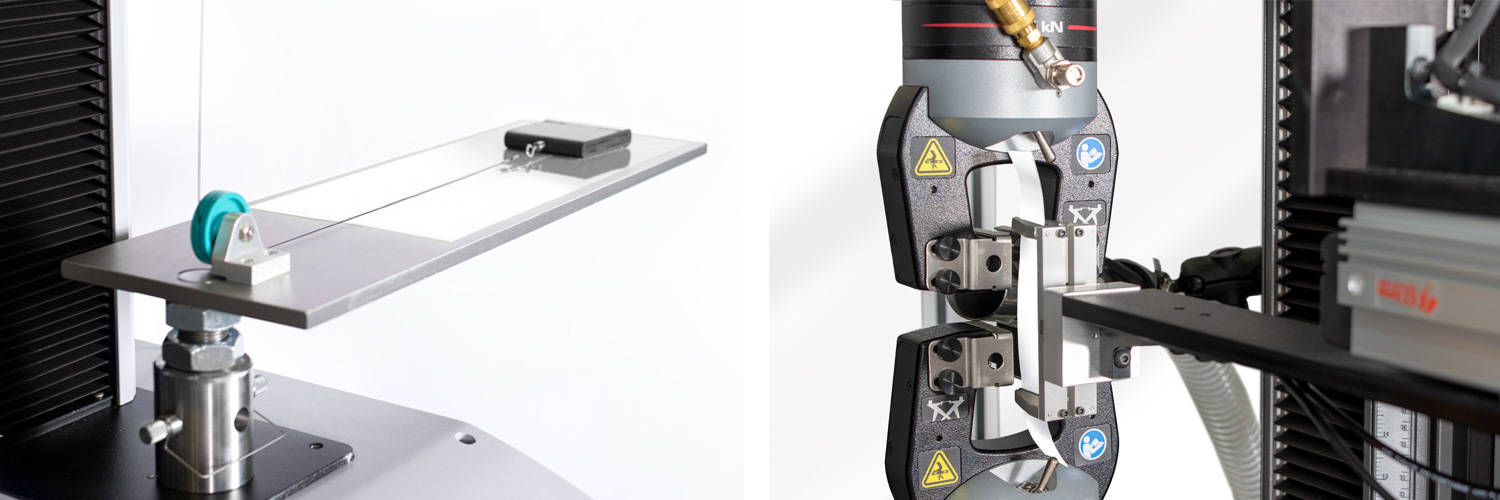
Separator Film Testing for Electric Vehicle Batteries

A separator is a membrane that separates a battery cell's anode from its cathode. Separator films are a critical part of lithium-ion batteries and other liquid electrolyte batteries. The polymers used for these films must be strong enough to withstand the winding operation during assembly as well as plating of lithium on the anode in an uneven manner due to extensive use. Issues with the selection of the cell separator materials can compromise battery integrity and increase the potential for internal short circuits, leading to thermal runaway, fire, and even explosions. Safer and stronger separator material more effectively prevents contact between the anode and cathode, while thinner material helps reduce the weight of each battery and improve energy density.
The main tests performed to evaluate the mechanical properties of separator film are tensile, puncture, and coefficient of friction tests. Tensile and coefficient of friction testing are critical for ensuring the separator film can withstand manufacturing of the battery, while puncture resistance is a crucial mechanical property used to assess and select the material with the best performance, while reducing the thickness, number of layers, and weight. UL 2591 (Component certification for lithium-ion battery cell separators) was specifically designed
to develop a comprehensive approach to cell separator testing in order to address safety
concerns associated with separators becoming progressively thinner and lighter due to industry trends.
Tensile testing ensures that separator film can withstand all tensile forces applied during manufacturing and throughout the service life of the battery. There are several standards suitable for tensile testing polymer separators, including ASTM D882 and ISO 527-3. Ensuring proper specimen alignment, insertion, and grip operation are necessary for best repeatability and throughput, as well as to avoid possible damage to a specimen before testing. Instron offers a variety of solutions for tensile testing battery separator films, with both affordable and premium tiers of products designed to provide superior accuracy and throughput for labs requiring them. Testing these materials in accordance to ASTM D882 can be very beneficial for quality control checks as well as during R&D when trying to determine the optimal separator film solution. Additionally, as is the case for many other thin film materials, separator film is anisotropic and so is recommended to be tested in multiple different cutting/testing directions.
Puncture Test
Separator film must be strong enough to withstand punctures from dendrites that form with extensive battery use. This is critical for ensuring the safety and longevity of each cell throughout the lifespan of the battery. Ensuring proper specimen tautness and alignment of the upper probe are critical for this application. ASTM F1306 outlines the puncture testing of flexible barrier films to characterize the material response when a 3.2 mm diameter probe is driven into a clamped specimen. EN 14477 is another standard that characterizes the puncture resistance of thin film materials, however, it uses a smaller probe (0.8 mm) compared to ASTM F1306. High-speed puncture resistance testing to ASTM D3763 can be determined by use of Instron's 9450 Series drop tower.
Coefficient of Friction Test
Tight winding creates mechanical loads between the separator film and the electrode coating, and understanding the coefficient of friction can ensure that proper winding processes occur in production. It is common to use ISO 8295 and ASTM D1894-14 as guidance for this testing.
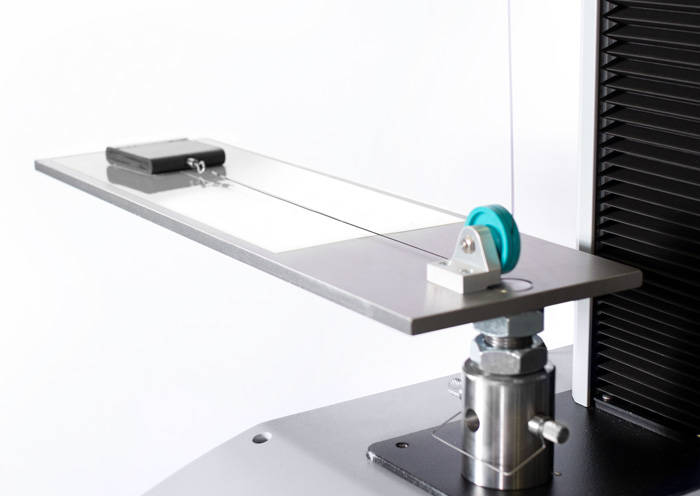
Automation
Automation systems from Instron introduce a new level of productivity for battery testing. As battery production volumes continue to increase, throughput and efficiency are critical to keep up with demand. Utilizing an automation system with the recommended equipment for each application can free up operators and maximize throughput, while maintaining optimal results.
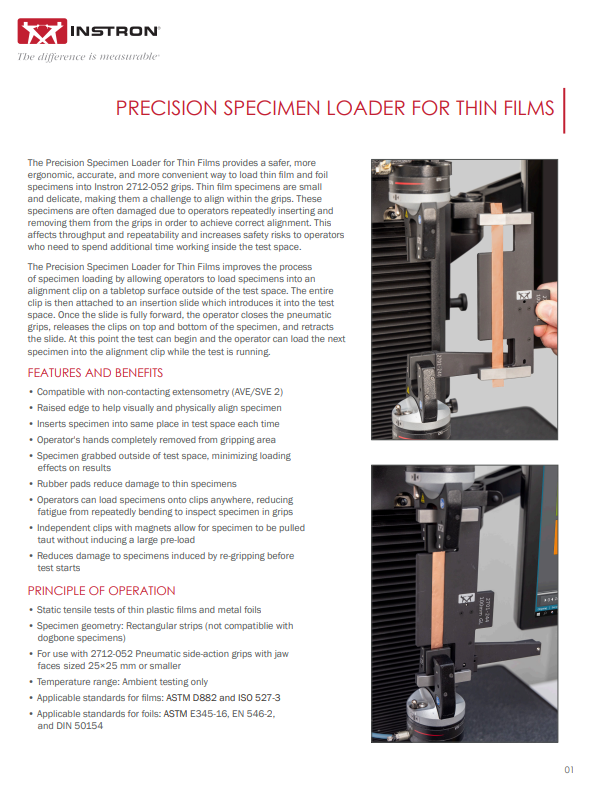
Precision Specimen Loader
The Precision Specimen Loader for Thin Films provides a safer, more ergonomic, accurate, and more convenient way to load thin film and foil specimens into Instron 2712-052 grips.
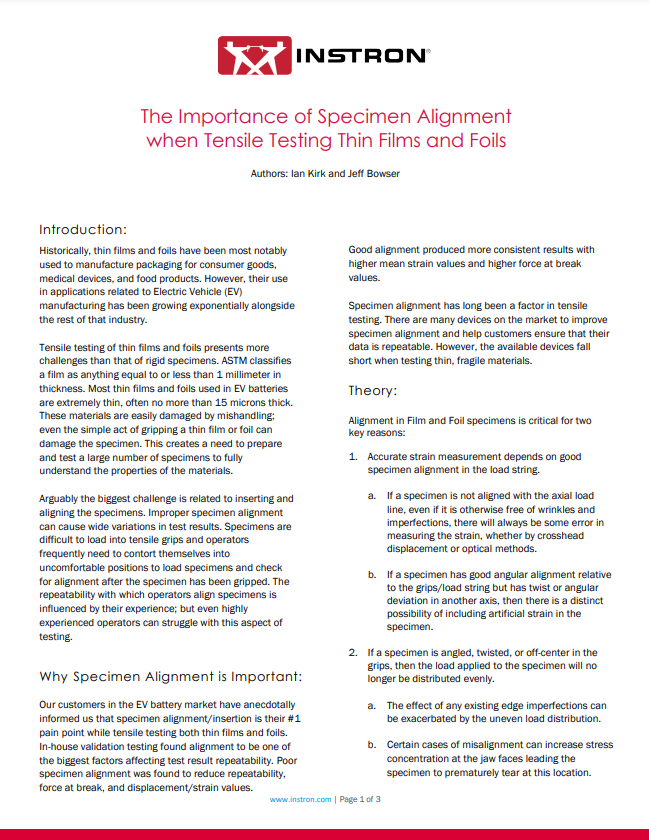
The Importance of Specimen Alignment When Tensile Testing Thin Films and Foils White Paper
This white paper reviews the results of experiments designed to determine the impact specimen alignment has on results when testing thin films and foils.

6800 Series Premier Testing Systems Brochure
Instron 6800 Series Universal Testing Systems provide unparalleled accuracy and reliability. Built on a patent-pending Operator Protect system architecture with an all-new Smart-Close Air Kit and Collision Mitigation features, the 6800 Series makes materials testing simpler, smarter, and safer than ever before.

3400 Series Universal Testing Systems Brochure
Instron 3400 Series universal testing systems for tensile, compression, bend, and other material property tests.

Bluehill Universal Brochure
Bluehill Universal is Instron’s advanced materials testing software, designed for intuitive touch interaction and streamlined workflows. It offers pre-loaded test methods, QuickTest for rapid setup, enhanced data exporting, and Instron Connect for direct service communication. Users of Bluehill 2 and Bluehill 3 can easily upgrade to the latest version for improved performance and usability

2712-04X Series Pneumatic Side-Action Grips
Pneumatic side-action grips offer a versatile gripping solution for a wide range of materials. Rated capacities between 1 and 10 kN.

Mechanical Testing of Electric Vehicle Batteries White Paper
Static mechanical testing is key to assessing the safety and reliability of electric vehicles (EVs). Soaring EV sales combined with ever-changing battery technology are leading to an expanding range of components and materials that require thorough testing. This white paper examines the key static mechanical testing methods and technologies associated with EV battery applications.
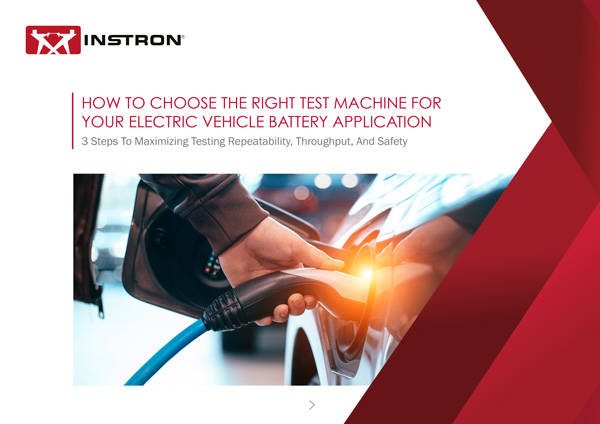
How to Choose the Right Test Machine for You EV Battery Application
Mechanical testing is key to assessing the performance and safety of an electric vehicle’s (EV) battery system. Accurate, efficient, and safe testing equipment is critical for companies trying to increase productivity and decrease time-to-market in this competitive new industry. The e-guide will walk you through three key steps to selecting the most appropriate test equipment for EV battery applications.
