The Definitive Guide to ASTM D882 - Tensile Testing of Thin Plastic Film

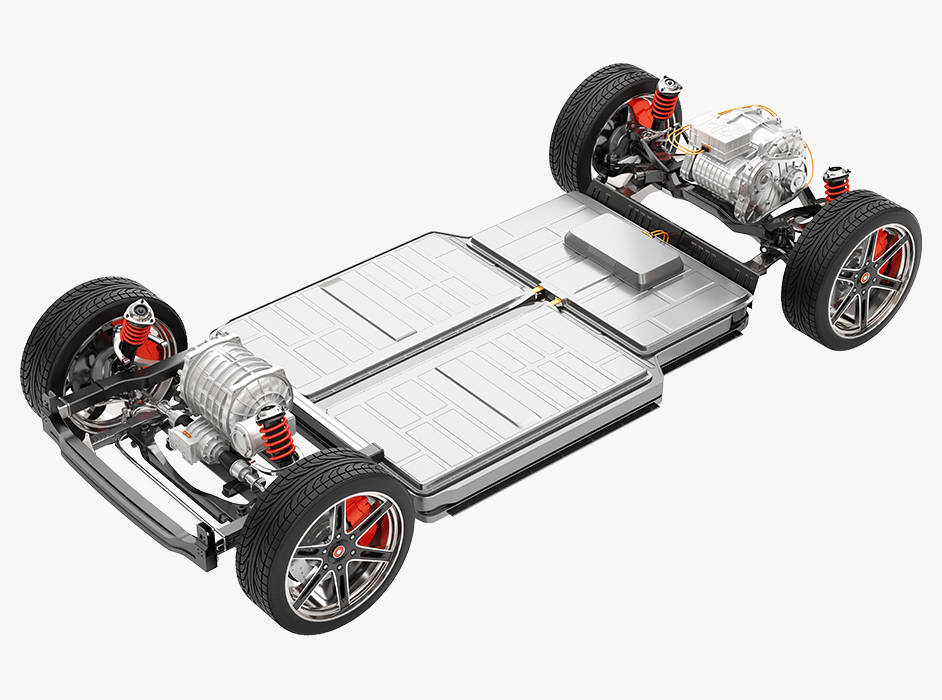
Though ASTM D882 is not an official standard for testing EV battery separator films, this standard is being modified to evaluate the mechanical properties of these materials. Separator films are a critical part of lithium-ion and other liquid electrolyte batteries that separate the anode and cathode. The most common material used for separator film is polyolefin, a polymer film that is strong enough to withstand the winding operation during assembly as well as uneven plating of lithium on the anode due to extensive use. Safer and stronger separator material more effectively prevents contact between the anode and cathode, while thinner material helps reduce the weight of each battery and improve energy density.
Testing these materials in accordance to ASTM D882 can be very beneficial for quality control checks as well as in R&D when trying to determine the optimal separator film solution. Additionally, as is the case for many other thin film materials, separator film is anisotropic and so is recommended to be tested in multiple different cutting/testing directions.
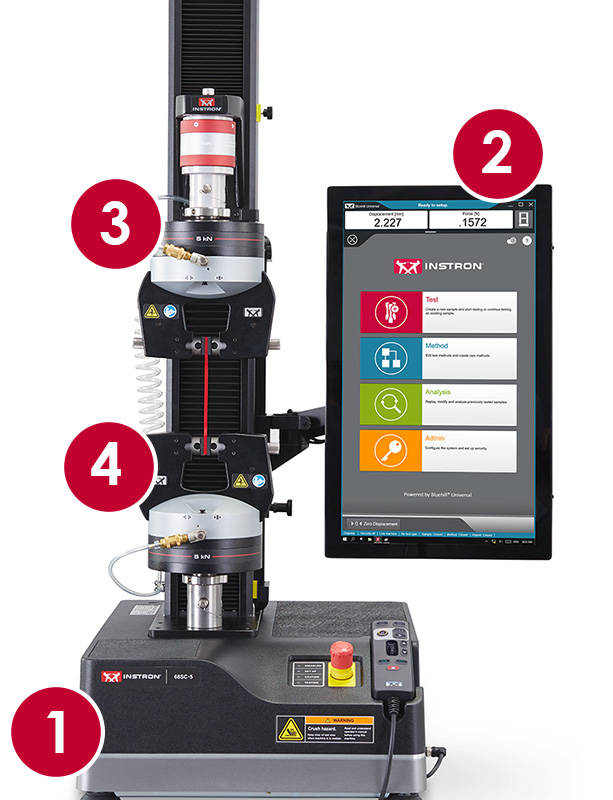
| ASTM D882 Test Setup | |
|---|---|
| 1) | 6800 Series Universal Testing System |
| 2) | Bluehill Universal Software |
| 3) | 2580 Series Load Cell |
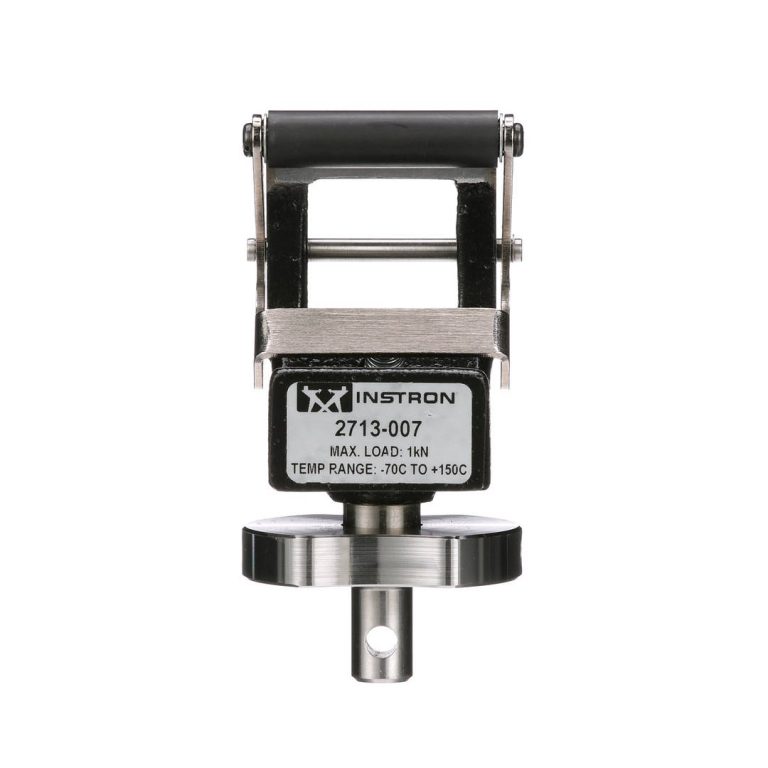
| 4) | 2712 Series Pneumatic Grips |

SPECIMEN ALIGNMENT
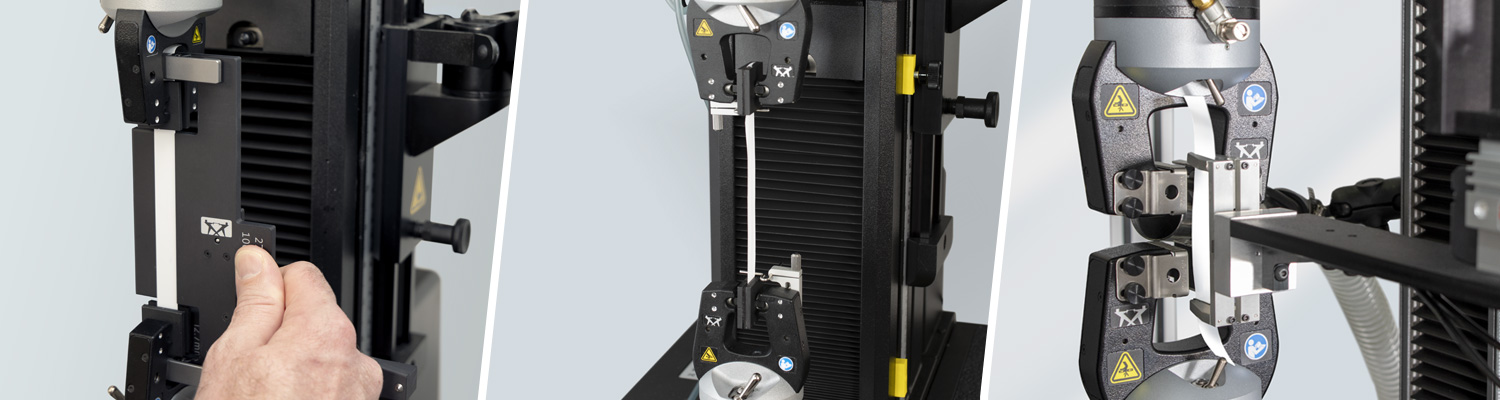
Tensile testing of thin films and foils presents more challenges than the testing of rigid specimens, and most thin films and foils used in EV battery manufacturing are extremely thin, with a thickness of no more than 15 microns. These materials are easily damaged by mishandling; even the simple act of gripping a thin film or foil can damage the specimen. Correctly aligning such delicate specimens is a major pain point for many testing labs, and the use of a precision specimen loader device is recommended. These devices use a detachable alignment clip and linear rail to guide the specimens into the grips, and are available in multiple sizes to accommodate a wide range of specimen dimensions.
Because ASTM D882 specimens are fragile, jaw face selection is also critical to successful testing. Serrated jaw faces are not recommended because they can cause damage to the specimen when gripping, leading to jaw breaks or inaccurate results. Rubber faces do not damage thin film specimens and have been shown to prevent specimen slippage as they thin out in the faces during the testing process, making rubber faces paired with pneumatic grips the preferred combination. This combination also produces the most repeatable results.
Rubber jaw faces should match the width of the gripped or tabbed end of the specimen. The most common face size for this type of material is 25 mm x 25 mm (1 in x 1 in). The matching width allows for ease of specimen alignment, which is critical for good breaks and accurate test results. In the event that the specimen width is on the smaller side of the tolerance for the standard, it is necessary to have jaw faces at least as wide as the specimen, but wider is also acceptable in this case.
Line contact gripping also is a possibility for film specimens that are too thin for rubber faces. Line contact faces include one smooth jaw face and an opposite face that is rounded, helping distribute the clamping force along one single line perpendicular to the crosshead’s movement. The most critical aspect of gripping is to avoid slippage when testing, as well as maintain an even stress distribution throughout each specimen while testing.
Automated Thin Film Testing for Electric Vehicle Batteries
With explosive growth projected for the electric vehicle industry, battery manufacturers should consider scaling their testing capacities as soon as possible to meet the projected increase in demand. As testing volume increases, throughput and efficiency become more important. Instron offers many different solutions for increasing the productivity of your test lab, including both automated and semi-automated systems that are ideal for testing high volumes of thin film specimens.
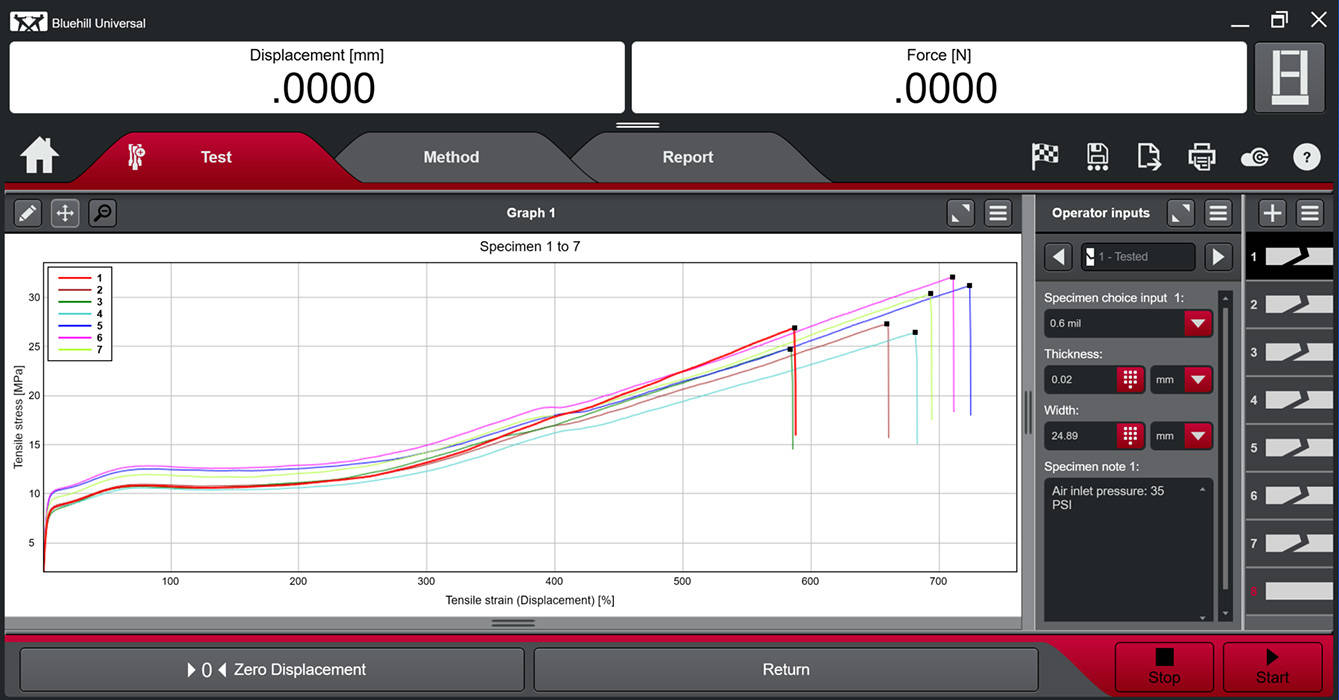
ResultsInstron's Bluehill Universal testing software makes it easy to report calculations in compliance with the standard. The software also comes with a pre-configured test method for ASTM D882 testing, complete with specific test parameters and calculations to help ensure compliance.