Discover the basics behind today's most widely used materials testing methods. Choose a test type to learn more, explore our testing solutions library for application-specific guidance, or find a specific term in our glossary for clear definitions of essential terms.

A tensile test (or tension test) applies force to a material specimen to measure the material's response to tensile (or pulling) stress. This helps product designers decide when, where, and how to use a given material.
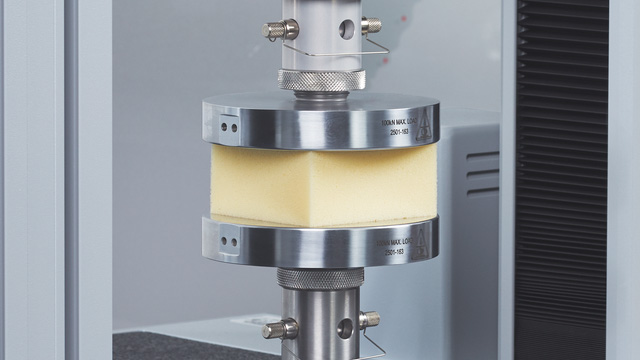
Compression tests determine a material's behavior under applied crushing loads. They are typically conducted by applying compressive pressure to a test specimen using platens or specialized fixtures on a universal testing machine.
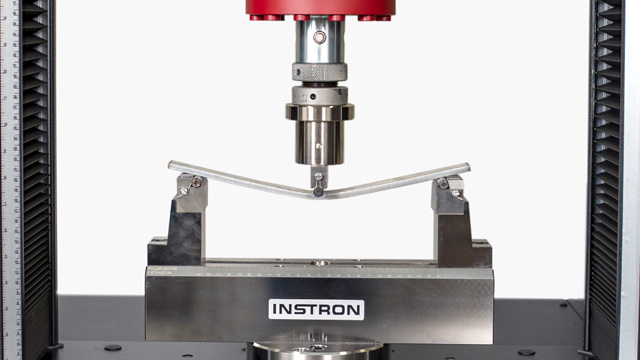
Bend testing — sometimes called flexure testing or transverse beam testing — measures the behavior of materials such as polymers, wood, and composites as they are subjected to simple beam loading.
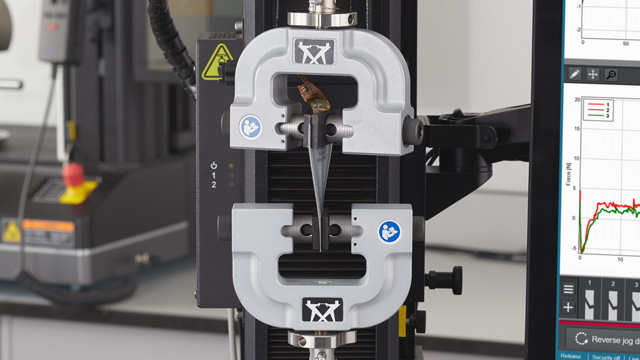
Torsion testing evaluates the properties of materials or devices while under stress from angular displacement. It is used to test raw materials like metal wires or plastic tubing, or finished products such as screws, pharmaceutical bottles, and sheathed cables.
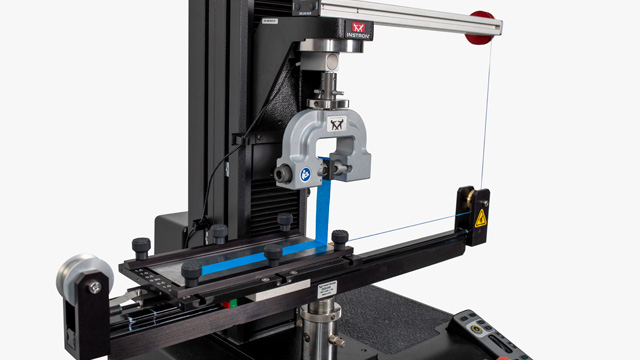
A peel test measures the properties of an adhesive bond. It applies a tensile force to a flexible substrate that is bound by an adhesive to either another flexible substrate (such as tape, thin film, or rubber) or a rigid substrate (such as metal, rigid plastic, or composite).
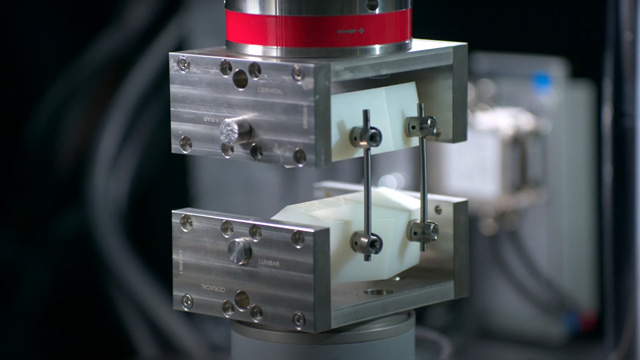
Dynamic and fatigue testing evaluates how materials perform under repeated or fluctuating loads, revealing durability, crack growth, and long‑term performance. These tests simulate real‑world cyclic conditions to determine when and how a material will fail.
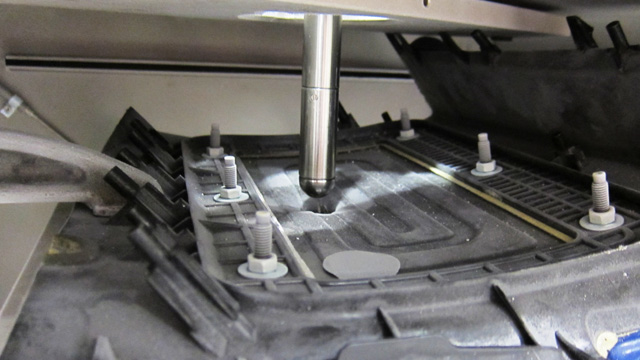
Impact testing is testing an object's ability to resist high-rate loading. An impact test determines the energy absorbed in fracturing a test piece at high velocity. Most of us think of it as one object striking another object at a relatively high speed.
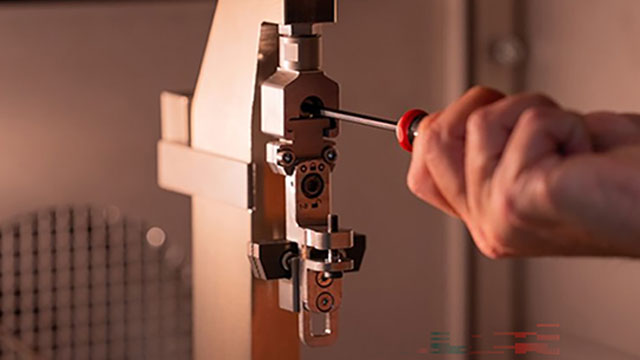
Tensile impact testing measures how materials respond to sudden, high‑speed loads, revealing true dynamic strength and failure modes. It’s especially valuable for polymers and composites, where high strain‑rate behavior differs significantly from static results.
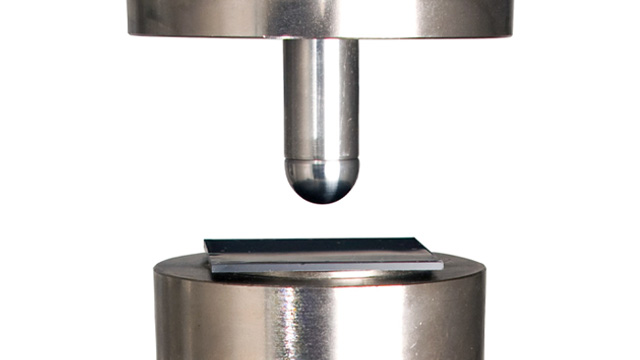
Explore how puncture testing determines puncture resistance and failure behavior using drop weight impact machines, instrumented tups, and controlled temperature conditions, following ISO 6603 and ASTM D3763 standards.

Compression After Impact (CAI) testing measures how composite materials retain strength after barely visible impact damage. The method uses a drop‑weight impact followed by compression testing, following standards like ASTM D7136, ISO 18352, and AITM 1.0010, with specific fixture and specimen dimensions for accurate, repeatable results.
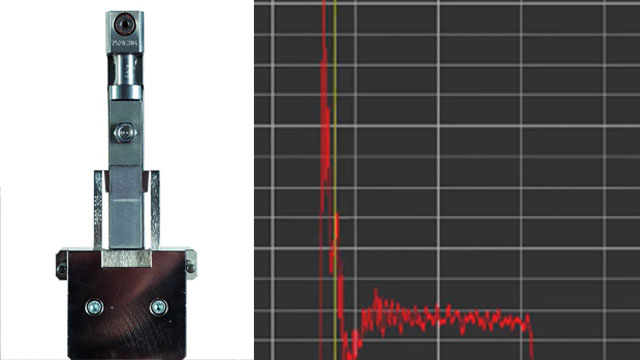
HDT and Vicat testing consist of determining the temperature at which a stressed sample undergoes deflection. In the HDT test, the sample undergoes flexion, while in the Vicat test, the sample is penetrated by a point.

The 3‑Point Bend Impact Test evaluates the flexural performance of rigid plastics and composites under high‑velocity impact. Using an instrumented drop‑weight system with a dedicated 3‑point bend fixture, the method measures force‑deflection behavior and strain‑rate effects in accordance with ASTM D256 and ISO 179‑2.
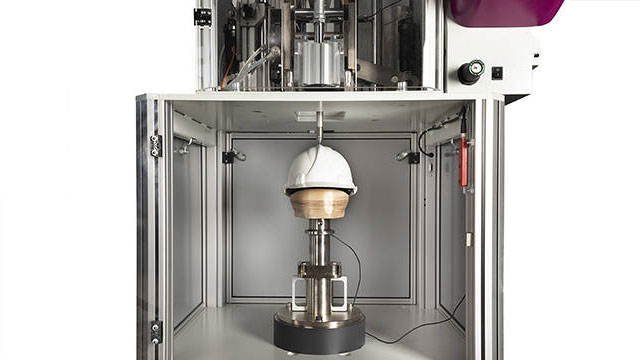
Testing components and finished parts with an impact machine verifies safety, durability, and compliance. By measuring how many impacts a part can withstand before failure, manufacturers can spot weaknesses early, reduce development costs, and avoid downstream quality issues. This applies to products ranging from safety helmets to pharmaceutical tablets, supporting both innovation and reliable quality control.
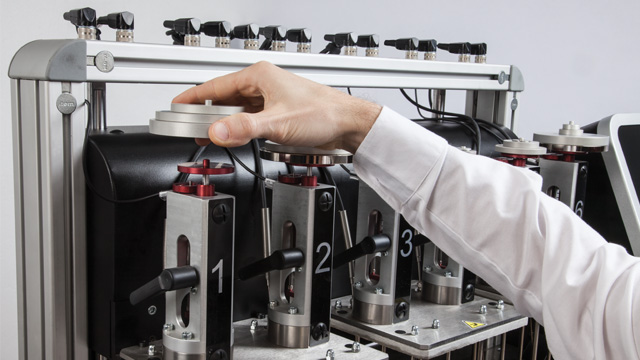
HDT and Vicat testing consist of determining the temperature at which a stressed sample undergoes deflection. In the HDT test, the sample undergoes flexion, while in the Vicat test, the sample is penetrated by a point.

Rheology testing measures the deformation of matter under the influence of imposed stress, by analyzing the internal response of materials to forces. The material is forced to flow, and the rheological characteristics determine the processability.

Talk to an Instron Expert
Every material, standard, and test method has its own demands. Tell us what you're testing, and one of our applications engineers will help you configure the right frame, load cell, grips, and software for your lab — no guesswork required.
Talk to an Applications Engineer
Tell us about your testing needs, and we'll help you configure the right frame, load cell, grips, and software for your lab. Please complete the form below, and we'll respond within 1-2 business days. For a faster response, call +1-800-473-7838 or +1 781 828 2500 if you are outside of the US.