Automotive manufacturers need vehicles that are safer, lighter, and more efficient, while reducing cost and time to market. Many of these goals depend on new materials and components that have never been used in a vehicle before, from advanced high-strength steels and composites to the battery materials inside electric vehicles. Each one needs reliable test data before it can be approved.
Instron® testing systems give automotive engineers accurate data on material and part performance at every stage, from research and development to production quality control. Our systems cover the full range of automotive testing, from a tensile test on a single polymer specimen to durability testing of a complete vehicle. For crash simulation and structural durability, our center of excellence in Darmstadt, Germany, supports manufacturers and suppliers worldwide.
Electric Vehicles
Electric vehicles (EVs) have brought new materials and components into the automotive supply chain, and each one needs mechanical testing. Battery packs add significant weight, which has increased the focus on lightweighting across the vehicle. EV-specific materials and assemblies, from polymer separator films in lithium-ion cells to the finished battery packs, need testing in both development and production.
Battery safety starts with the materials inside each cell. Separator films must resist puncture and tearing, because a damaged separator can cause an internal short circuit. Tensile and puncture tests measure these properties during material development and confirm them in production.
At the pack level, lightweight metals, composites, and polymers are replacing heavier materials in enclosures and structures. Each new material and joint needs mechanical test data before it can be approved for use in a vehicle.
Related Solutions
Wheel and Tire
Wheels and tires are safety-critical components that carry high loads and wear throughout their service life. To confirm their reliability, tests must reproduce real loading conditions as closely as possible. A full mechanical profile of the materials used to make them is also required.
Tire rubber and tire cord are tested for tensile strength and elongation to confirm they meet specification. Cord testing is critical because the cords carry much of the load inside the tire.
Rheology testing of uncured rubber shows how the compound will flow during mixing and extrusion. This helps manufacturers control quality before a tire is built, when changes cost the least.
Related Solutions
Chassis and Body
Most of a vehicle's chassis and body is made from metal. The demand for lighter vehicles has driven the development of higher-strength grades of steel and aluminum. These new grades bring new testing challenges, such as higher test forces and more demanding strain measurement.
Tensile and bend tests on sheet metal provide the strength, ductility, and formability data needed for stamping and crash simulation. High strain rate tests show how these materials behave at crash speeds. Composite laminates add their own tests, such as tensile and compression after impact.
At the component and full-vehicle level, structural durability and road simulation systems reproduce years of road loads in the lab. These systems are supported by our center of excellence in Darmstadt, Germany.
Related Solutions
- Sheet Metal Tensile Testing
- Sheet Metal Bend Testing
- High Strain Rate Testing
- Composite Laminates Tensile Testing
- Composite Laminates Compression After Impact Testing
- Bumper Impact Testing
- Exhaust Mount Fatigue Testing
- Exhaust Line Durability Testing
- Structural Durability Testing
- Road Simulation Systems
- Full Vehicle Testing
Drivetrain and Suspension
The drivetrain and suspension carry repeated loads every time the vehicle moves. Damage can range from a cosmetic issue to a major safety failure. Vehicle manufacturers and OEM suppliers must meet strict safety standards, so these components need torsion, fatigue, and durability testing to prove they will last.
Axles, drive shafts, and clutches face repeated torsion and bending loads throughout their life. Torsion and durability tests measure their strength, stiffness, and fatigue life under these loads.
Shock absorbers are tested for their response to impact loads. Together, these tests support design validation and confirm that production parts meet specification.
Related Solutions
Engine
Engine and transmission components run much hotter than the rest of the vehicle. Many OEMs set their own temperature requirements for every component. Testing at both ambient and operating temperature shows how engine and transmission materials will perform in service.
Metals and plastics can lose strength quickly as temperature rises, so ambient test data alone is not enough. Tensile tests in environmental chambers and furnaces measure strength and stiffness at the temperatures these parts will see in service, both high and low.
Fatigue tests on crankshafts and other engine components show how long they will last under the repeated loads of normal operation.
Related Solutions
Interior
Drivers and passengers see and touch the interior every time they use the vehicle, so appearance matters. Interior components must also hold up to years of daily use. Mechanical testing of interior fabrics, trim, and components confirms they will keep their appearance and performance over time.
Plastics used in dashboards, trim, and panels are tested for tensile and flexural properties. Heat deflection temperature (HDT) and Vicat softening temperature tests show whether parts will deform in a hot cabin.
Seating foam is tested in compression to confirm comfort and durability over time. Knobs and buttons are tested in tension and torsion so they do not loosen or break. Drop weight impact tests on dashboards show how interior parts behave in a collision.
Related Solutions
Joining
Lightweighting has increased the range of materials used in vehicles. Joining different materials reliably is now a key engineering challenge. Adhesives, mechanical fasteners, and welds all hold the vehicle together. Testing shows how each joint will perform over the life of the vehicle.
Adhesive joints are tested in lap shear and peel to measure bond strength. Bolts are tested for tensile and fatigue strength, and plastic welds are tested in tension to confirm they meet their design strength.
High strain rate tests show how joints behave at crash speeds. This matters more as vehicles combine metals, composites, and plastics in the same structure, because each material pairing behaves differently.
Related Solutions
Safety Systems
Passenger safety drives a large share of automotive research and development. Mechanical testing validates design and material choices for seat belts, airbags, seats, and other safety components. These tests then move into quality control, so every critical component is checked before it reaches a vehicle.
Sled-based crash simulation reproduces frontal, side impact, and whiplash events without destroying a full vehicle. This lets engineers test seats, restraints, and airbags earlier in development and more often. Seat belt webbing is also tested at high strain rates to confirm it performs under crash loads. For full-scale crash simulation, our Darmstadt center of excellence brings more than 50 years of experience.
Related Solutions
KEY CONSIDERATIONS
What to Look for in an Automotive Testing System

Built to Last
The average age of an Instron system we service is 18 years, so your investment keeps working for decades.

Accurate, Repeatable Data
We are the only testing system manufacturer that designs and builds its own load cells.

Adaptable and Easy to Use
Thousands of accessories adapt one system to new tests, and Bluehill® Universal software guides operators at every skill level.

Expert Support Worldwide
Engineers on ASTM and ISO standards committees, plus more than 300 Field Service Engineers in more than 100 countries.
Recommended Testing Systems

Test components and raw materials, from elastomers to metals, in tension, compression, and bending. Thousands of grips and fixtures let one system adapt to new materials and test methods. Universal testing systems support every stage, from qualifying new materials to quality control in high-volume production.
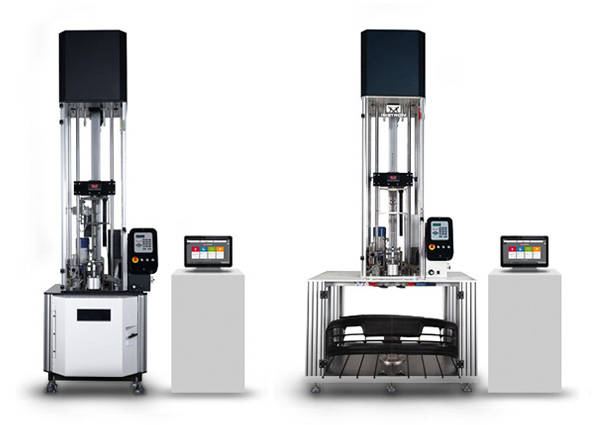
9400 Series drop towers measure the impact performance of plastics and composites, such as bumper and dashboard materials. They simulate real-life impact events at controlled energies and temperatures. The results help you design stronger parts and confirm their performance before they go into a vehicle.

Measure the torsional strength and stiffness of automotive materials and components. The Torsion Add-On 3.0 turns a new or existing 6800 or 5900 Series universal testing system into an axial-torsion system. For dynamic and fatigue testing, ElectroPuls® systems offer both axial and torsional testing.
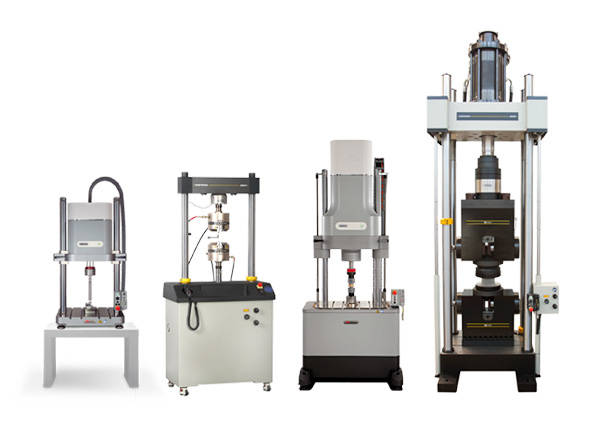
Components in a vehicle face millions of load cycles over their life. Our servohydraulic and ElectroPuls dynamic and fatigue systems test materials and components under these cyclic loads, from small coupons to suspension parts. The results help you predict and extend service life before parts reach production.
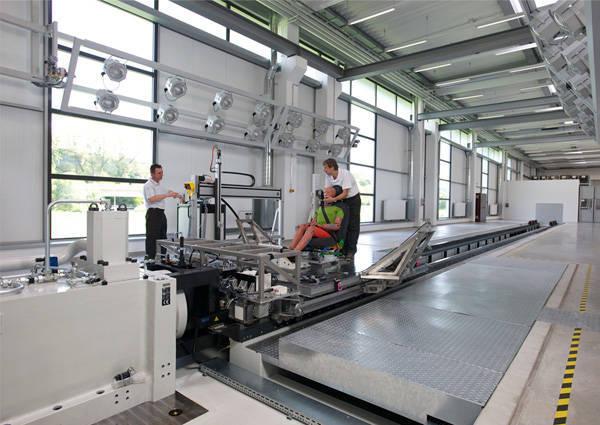
Our Hydropuls® acceleration sled systems are used to develop and approve vehicle safety systems and parts. They also help engineers study how materials and structures behave during a crash. More than 60 Hydropuls CSA systems are installed worldwide, supported by our center of excellence in Darmstadt, Germany.
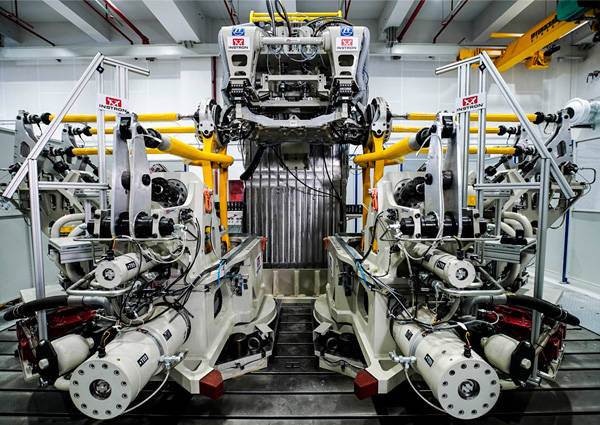
Vehicles must perform reliably for years without risk to occupants. Structural durability systems run functional and lifetime tests on components and complete assemblies, from axles to full vehicles. Systems are controlled by the Labtronic EVO® controller and supported by our center of excellence in Darmstadt, Germany.

Talk to an Instron Expert
Validating a new material or component? Tell us about your application, and our automotive specialists will help you choose the right testing system, fixtures, and software.
Talk to an Automotive Applications Engineer
Tell us about your testing needs, and we'll help you configure the right frame, load cell, grips, and software for your lab. Please complete the form below, and we'll respond within 1-2 business days. For a faster response, call +1-800-473-7838 or +1 781 828 2500 if you are outside of the US.

Resources
- Automotive Testing Solutions Brochure
- Electric Vehicle Battery Testing Solutions Brochure
- The Ultimate Guide to Lightweight Materials and Parts Testing in Automotive and Aerospace
- Webinar: Mechanical Testing Challenges for EV Battery Development and Production
- Why Accurate Fatigue Testing Is Essential for Additively Manufactured Automotive Parts
- How an Impact Drop Tower Is Used to Test Automotive Parts
- Accessories for Materials Testing Catalog