

Battery Testing Solutions
As battery technology continues to evolve across electric vehicles, consumer electronics, energy storage, and beyond, the mechanical testing requirements for battery materials, components, and assemblies are becoming increasingly demanding.
Instron offers a comprehensive range of accessories designed to support battery testing across a wide variety of applications — from tensile and compression testing of electrode materials and separators to puncture, peel, and crush testing of cells and pouches.
The accessories below are compatible with Instron's testing systems and can be configured to meet the specific requirements of your battery testing program. Use the links below to jump directly to the section you need.
Grips | Environmental | Fixtures | Sensors | Software
Grips
2712 Series
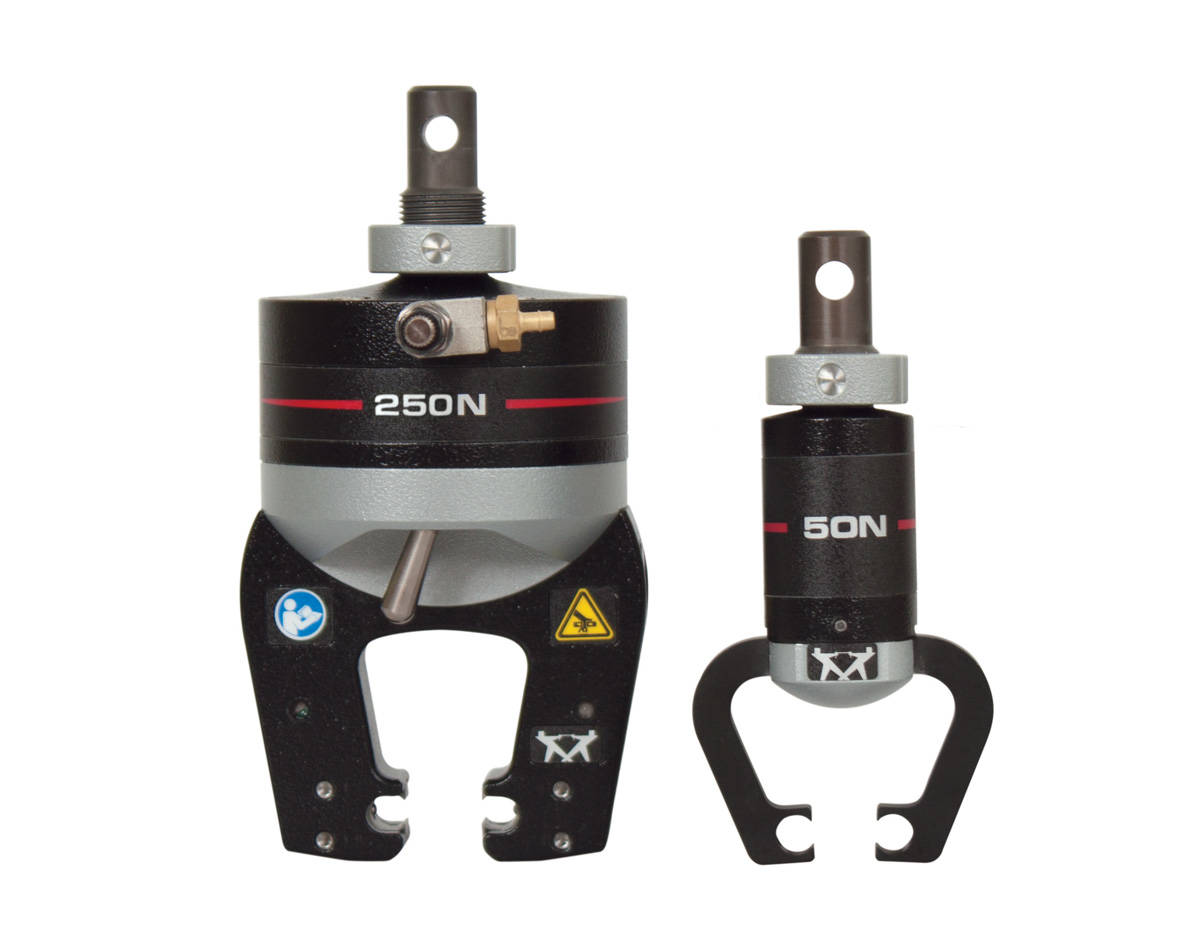
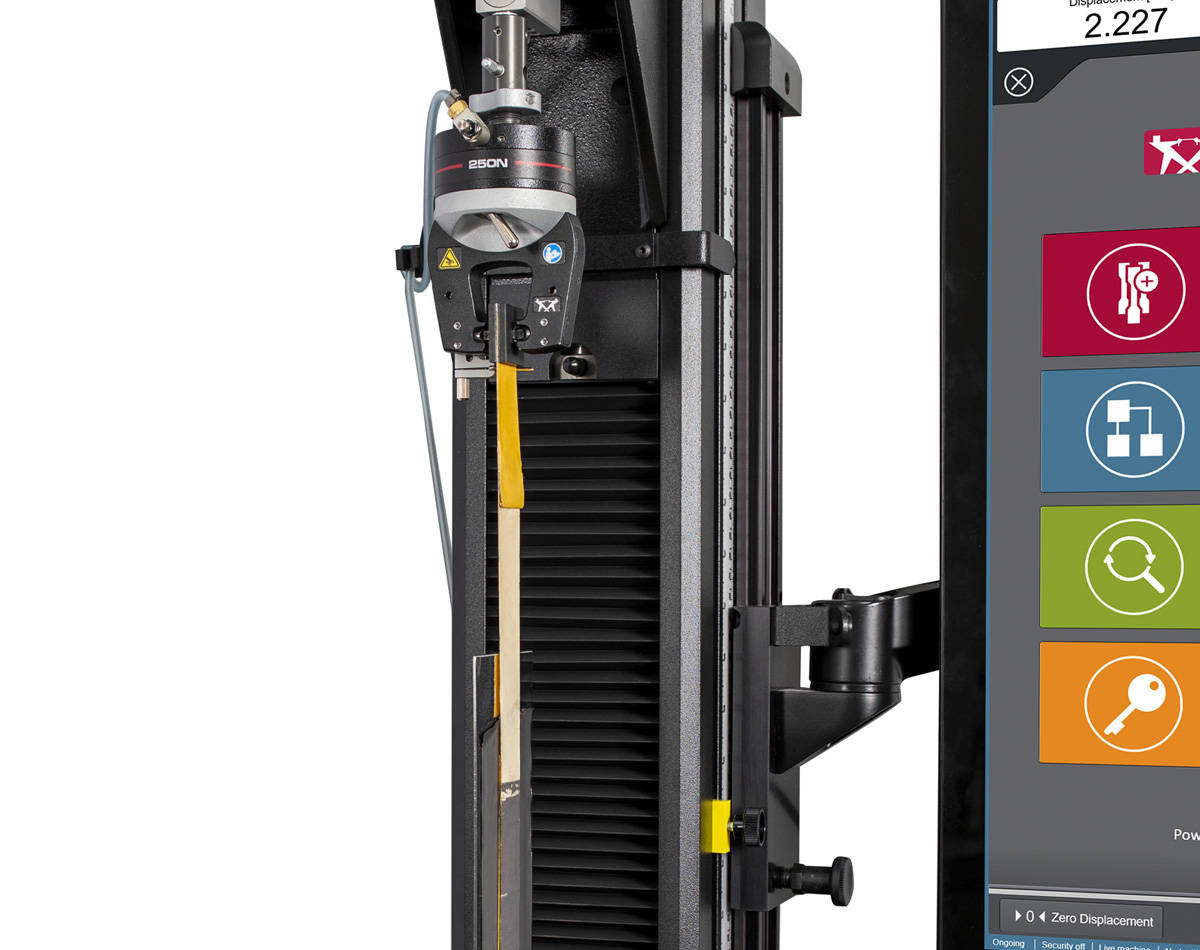
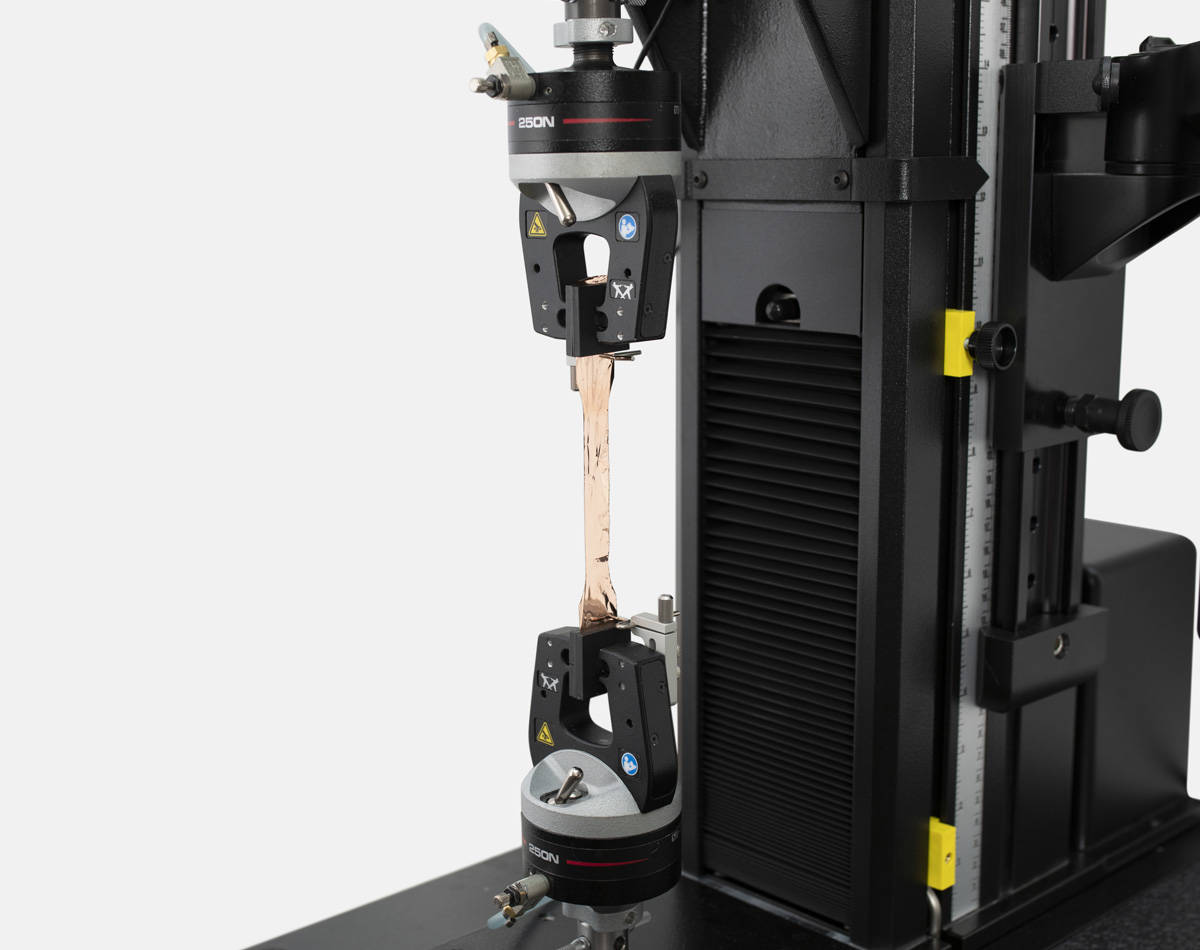
Instron's pneumatic side action grips feature a versatile design for testing various battery materials and components. They're most commonly used for testing foil, separator film, and welds used in battery production. Adjustable clamping pressure and quick-change jaw faces let these grips adapt to a wide variety of specimens.
2710-100 Series
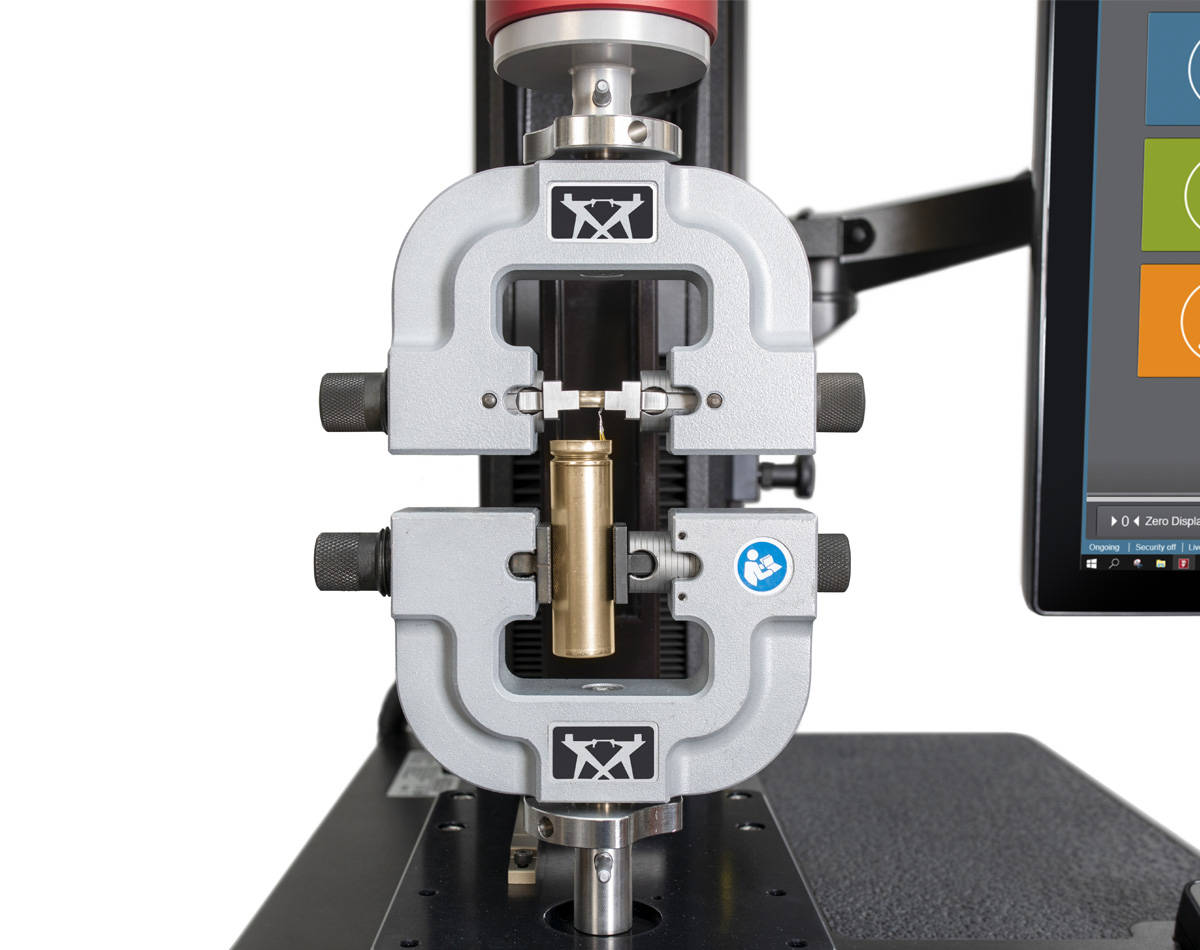
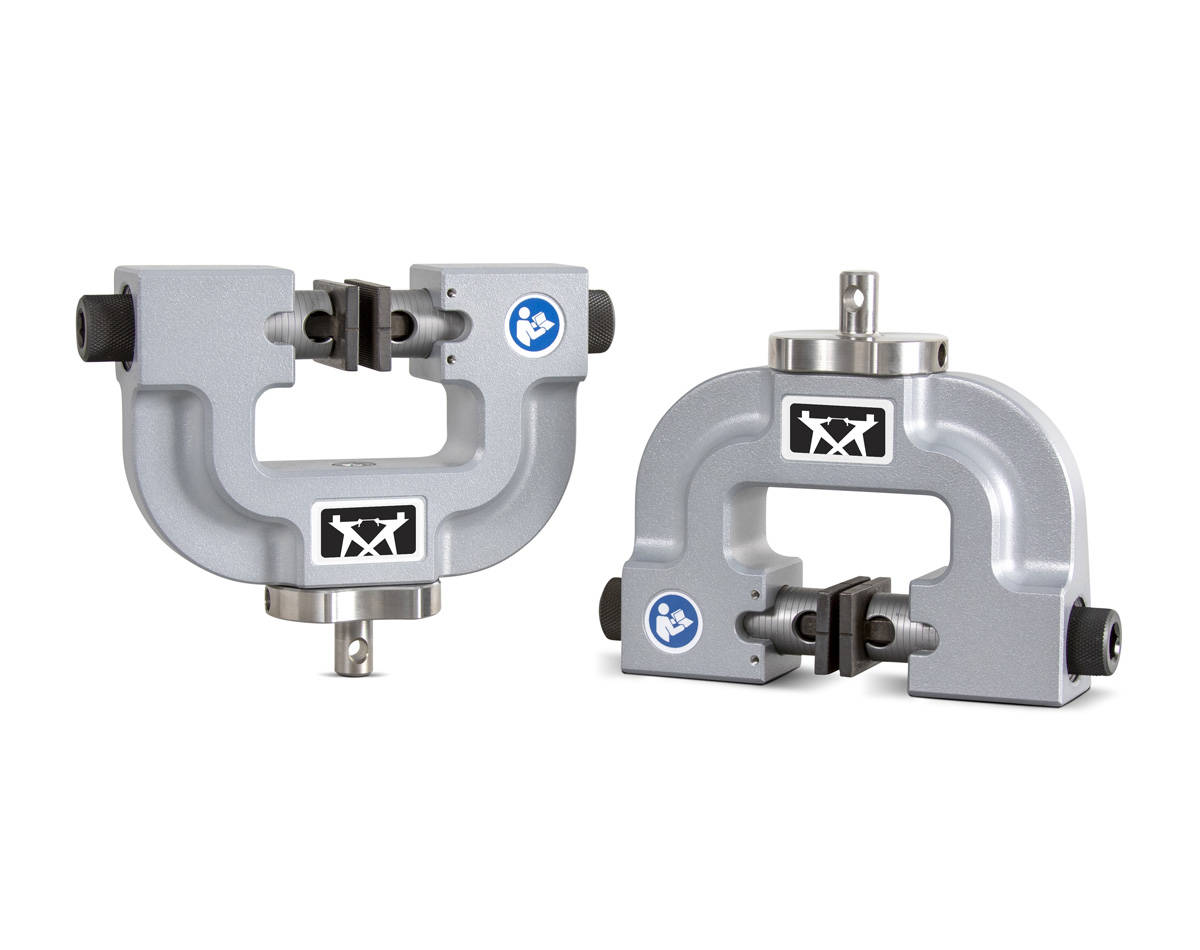
Instron's advanced screw side action grips offer similar versatility to pneumatics, using an adjustable or constant gripping pressure instead of pneumatic actuation. These grips are an ideal solution for testing components and welds, thanks to their increased jaw face separation and allowable offset.
Catalog No. CP122505
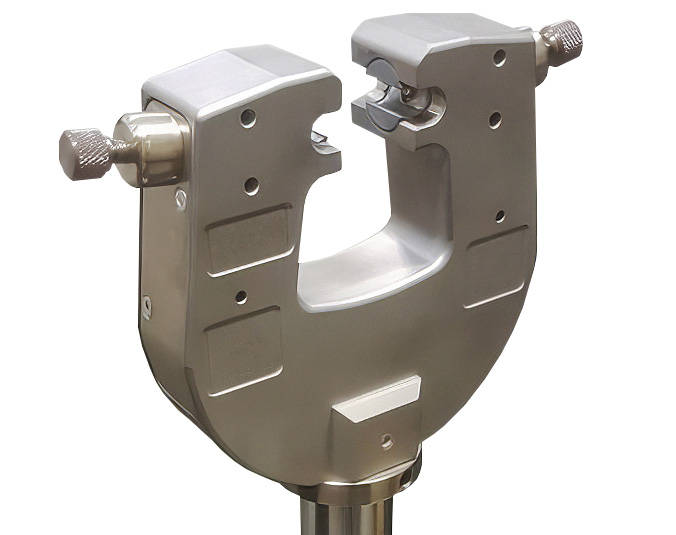
High-temperature pneumatic side action grips are useful for tensile testing in both ambient conditions and inside environmental chambers. Inspired by the design of the 2712 Series, these grips use a stainless-steel construction to endure high and low temperatures and are compatible with a wide range of accessories and jaw faces. They can be positioned at 0°, 30°, or 90°, making them fully compatible with Instron's non-contacting video extensometers.
Catalog No. 2701-240, 2701-241, 2701-242, 2701-243, 2701-244
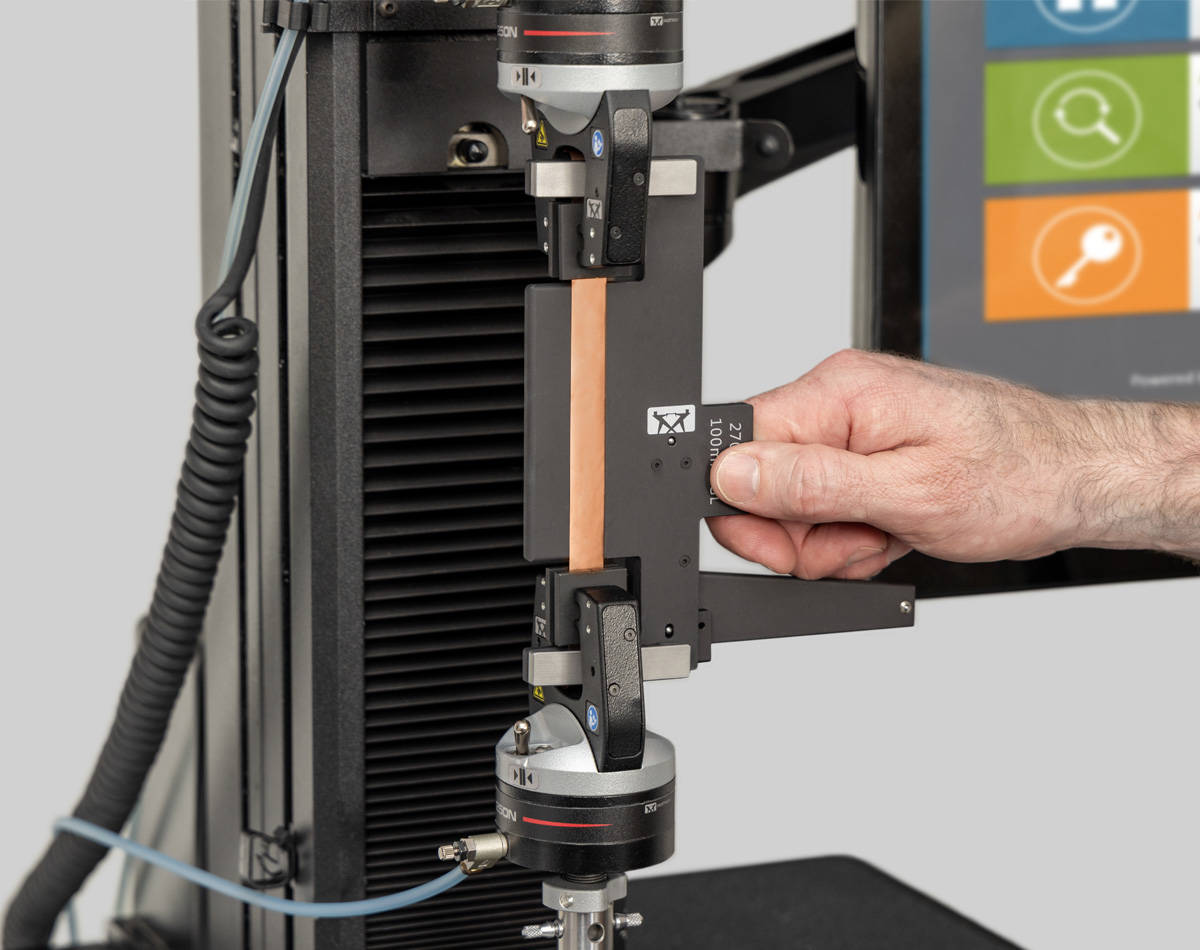
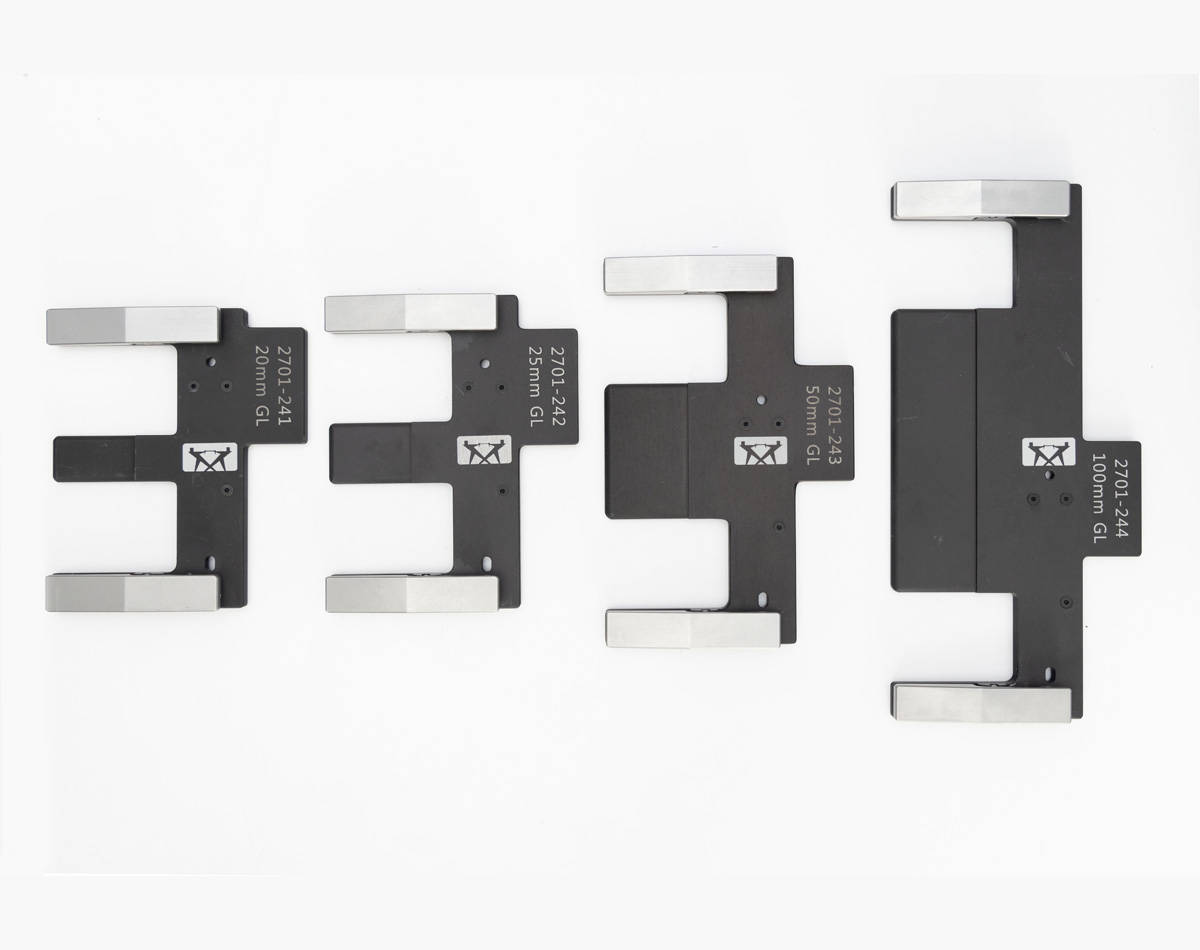
The precision specimen loader streamlines alignment and setup for testing thin films and foils, reducing result variation while improving safety and ergonomics. Designed for use with Instron's 250 N pneumatic side-action tensile grips (catalog no. 2712-052), it uses a detachable alignment clip and linear rail to guide specimens into place, with multiple sizes available for different specimen dimensions.
Wide-Body Grips
Catalog No. CP137924
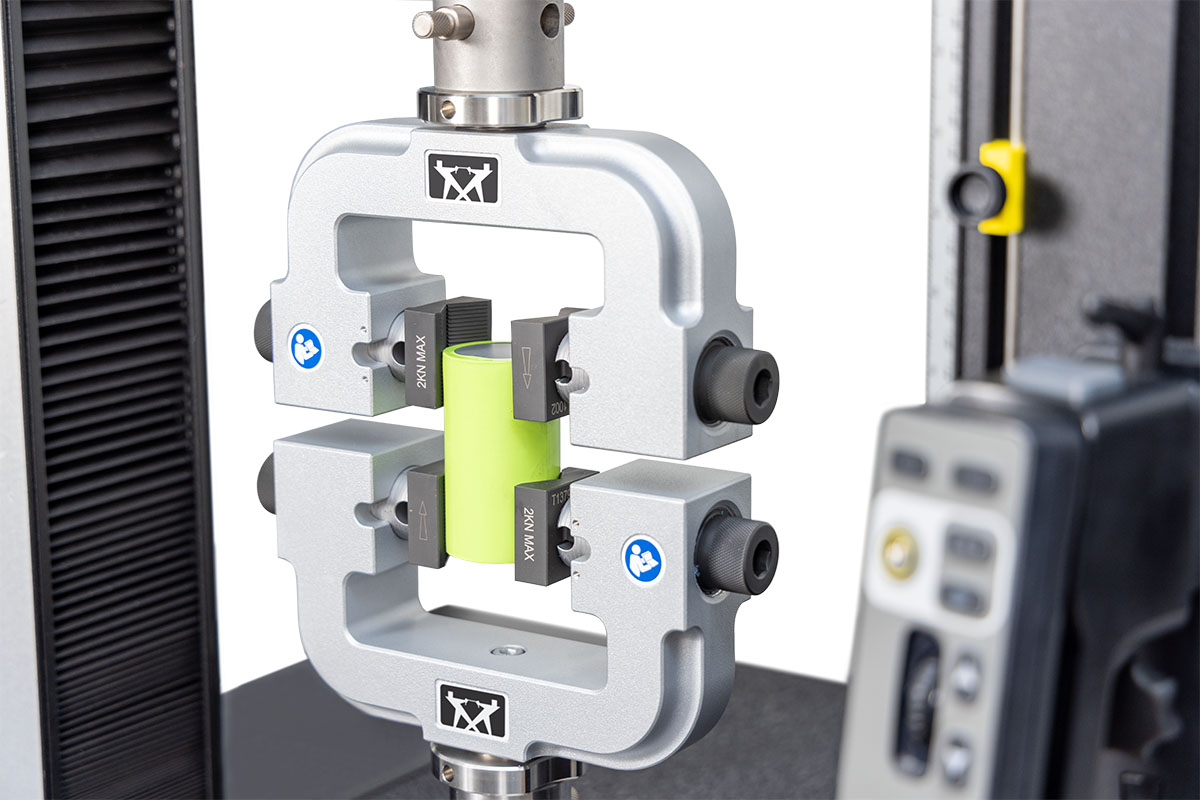
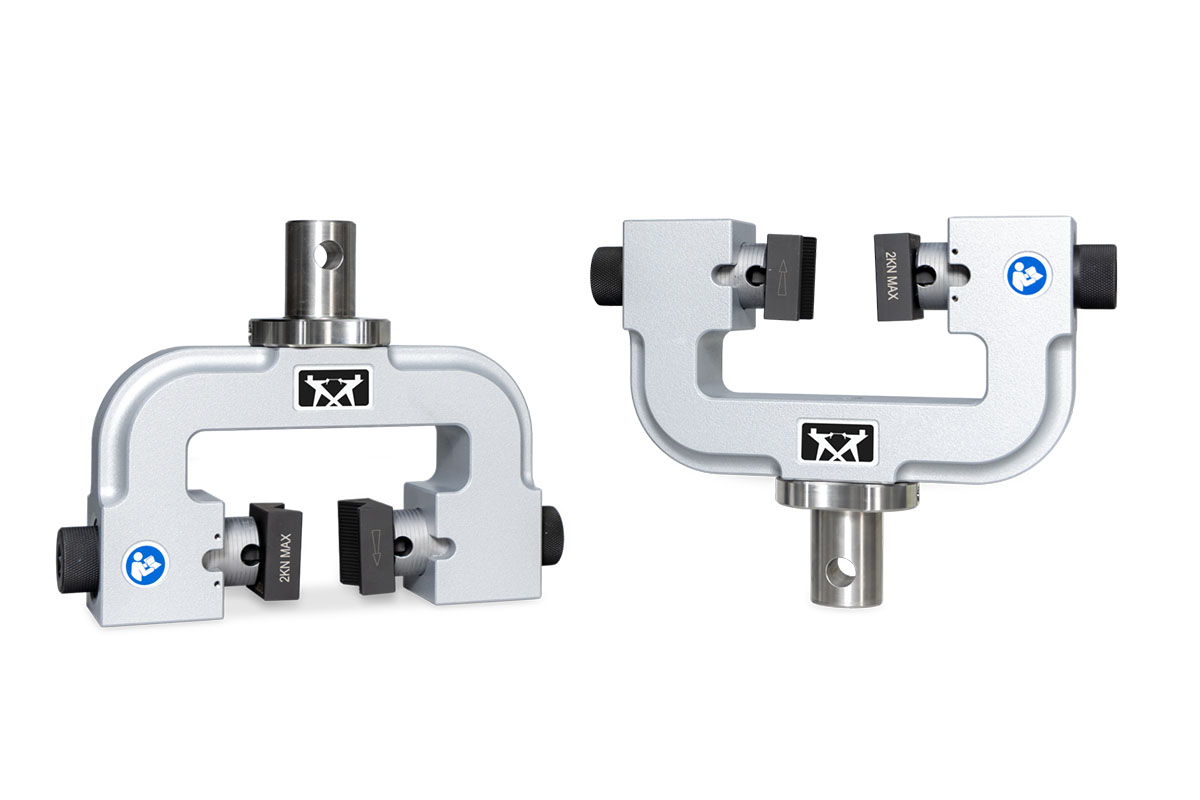
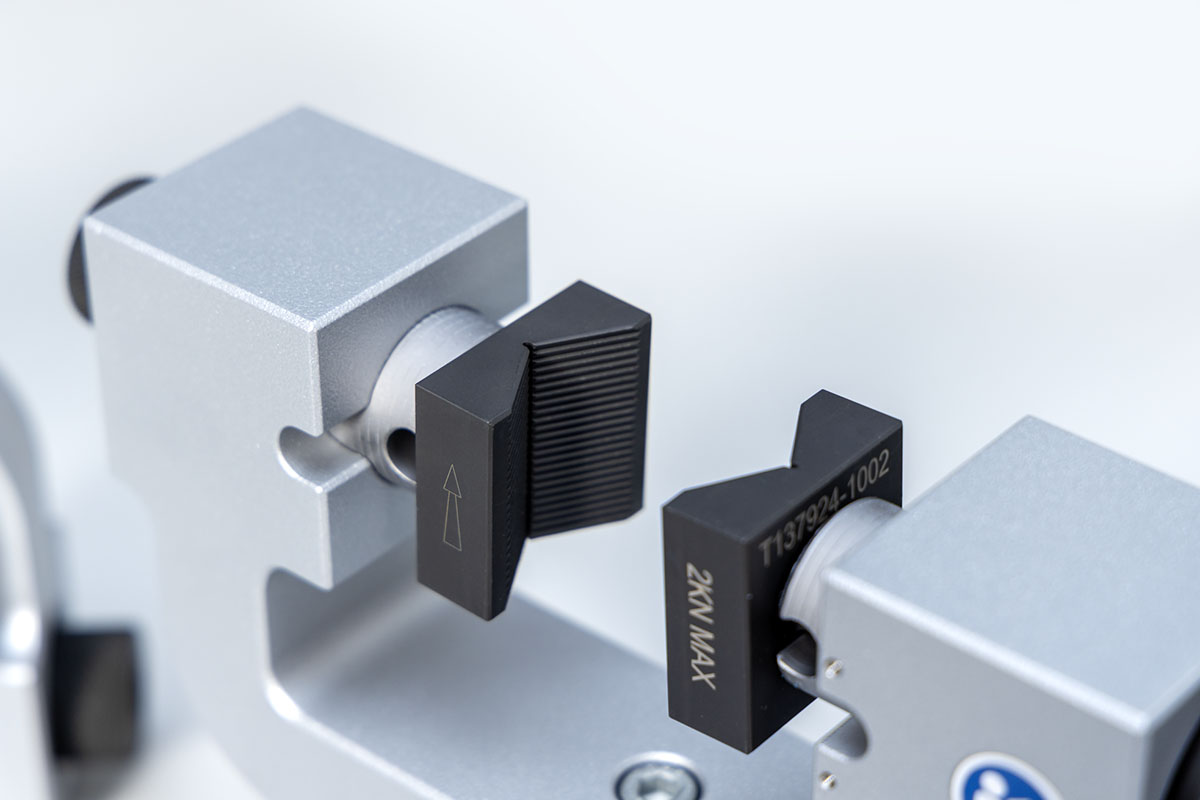
Instron's wide-body screw side action grips are designed to accommodate cylindrical cells up to 51 mm in diameter. They retain the dual screw actuation, graduated cylinders, and quick-release jaw face design of Instron's standard screw side action grips, while featuring an expanded opening to securely hold larger specimens.
Contact Our Sales Department.
Please complete the form below and we will be happy to contact you with a response. Our typical response time for an online request is within 1-2 business days. For a faster response, please call +1-800-473-7838.

Environmental
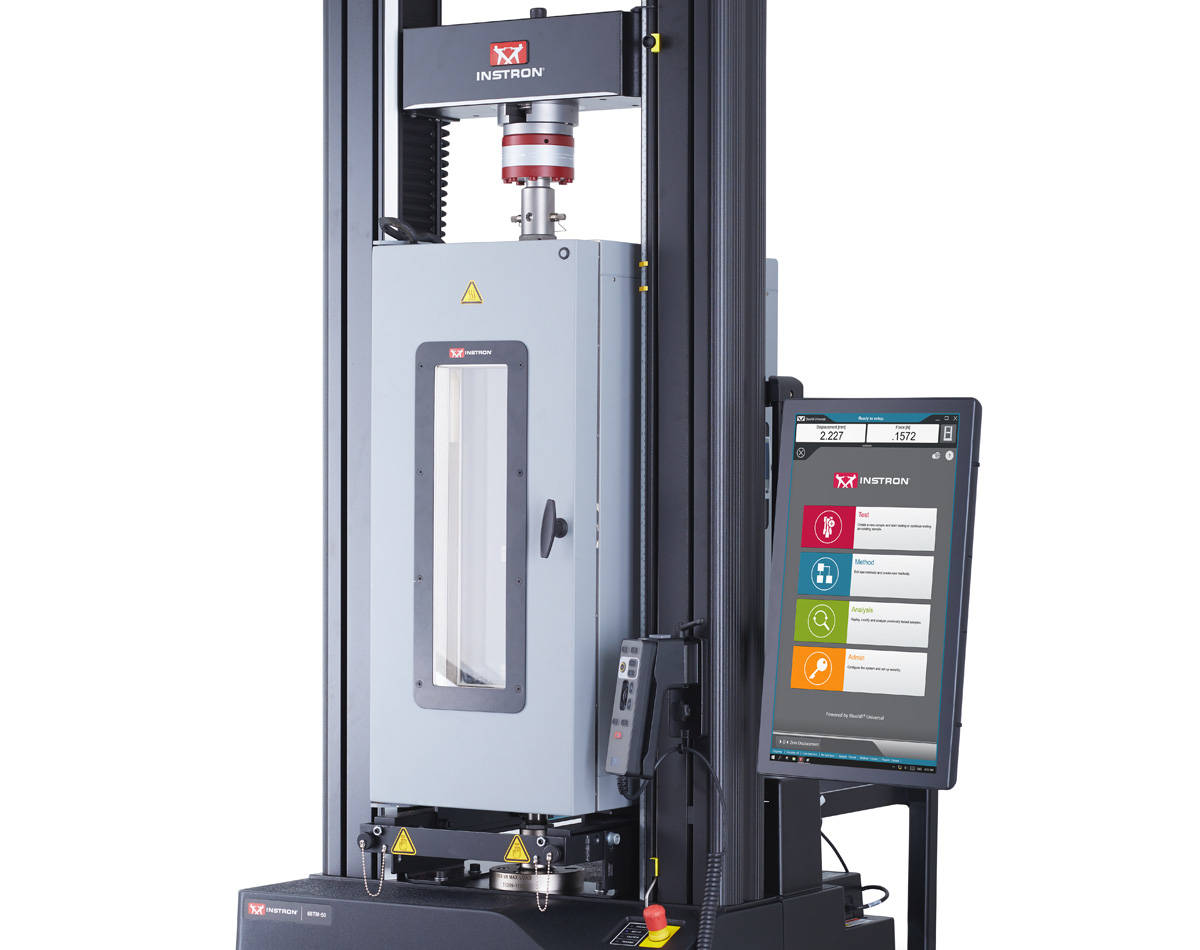
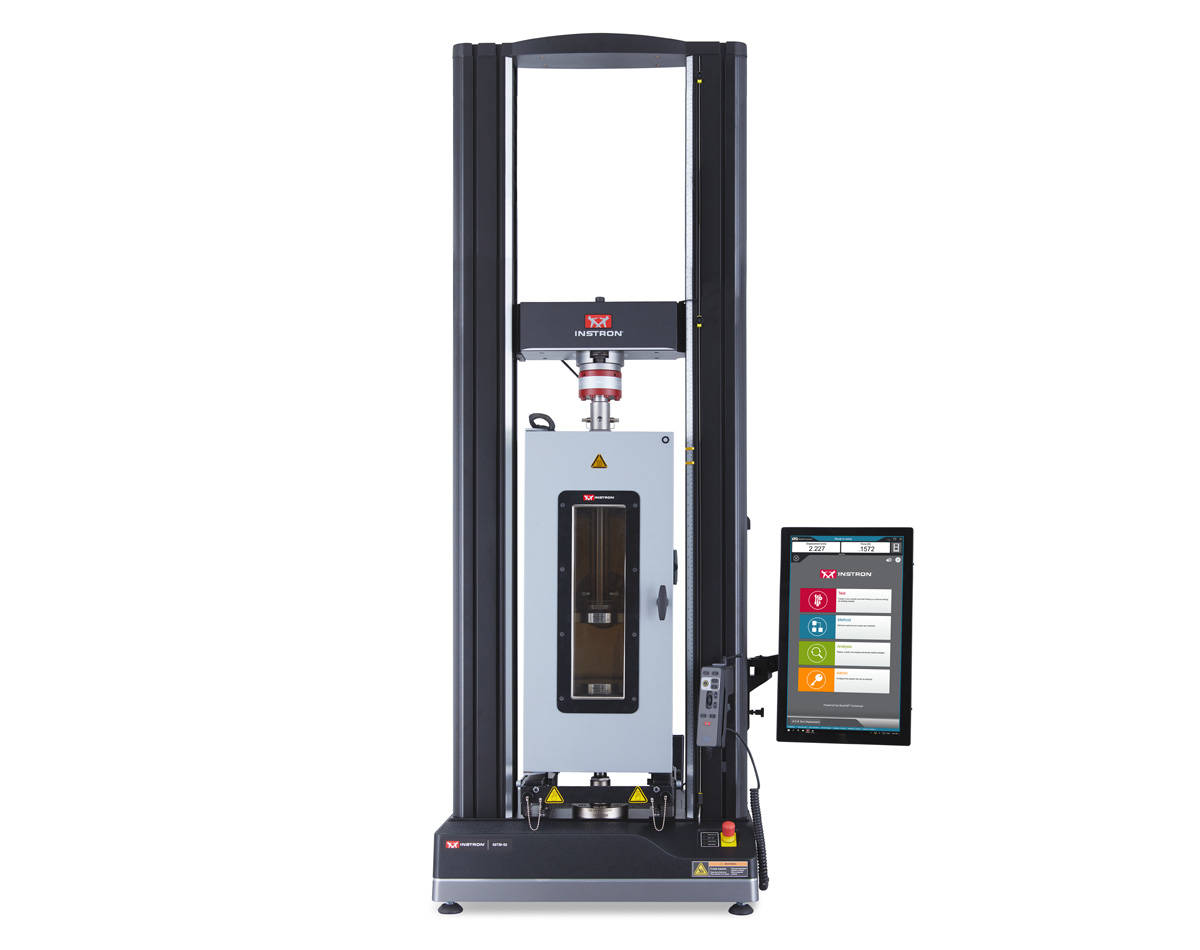
Materials, cells, modules, and packs used in batteries can perform differently under varying environmental conditions. A testing chamber integrated with the Instron test frame allows specimens to be tested under a range of temperature and humidity conditions while under load — useful for validating performance across the full range of conditions a battery may encounter in service, from cold-climate storage to high-temperature charging cycles.
Catalog No. CP122505
High-temperature pneumatic side action grips are useful for tensile testing in both ambient conditions and inside environmental chambers. Inspired by the design of our 2712 Series tensile grips, these grips are made of a stainless-steel construction to endure high and low temperatures and are compatible with a wide range of accessories and jaw faces. The grips can also be positioned at 0, 30, and 90 degrees, making them fully compatible with our non-contacting video extensometer products.
Fixtures
Pneumatic 90° Peel Fixture
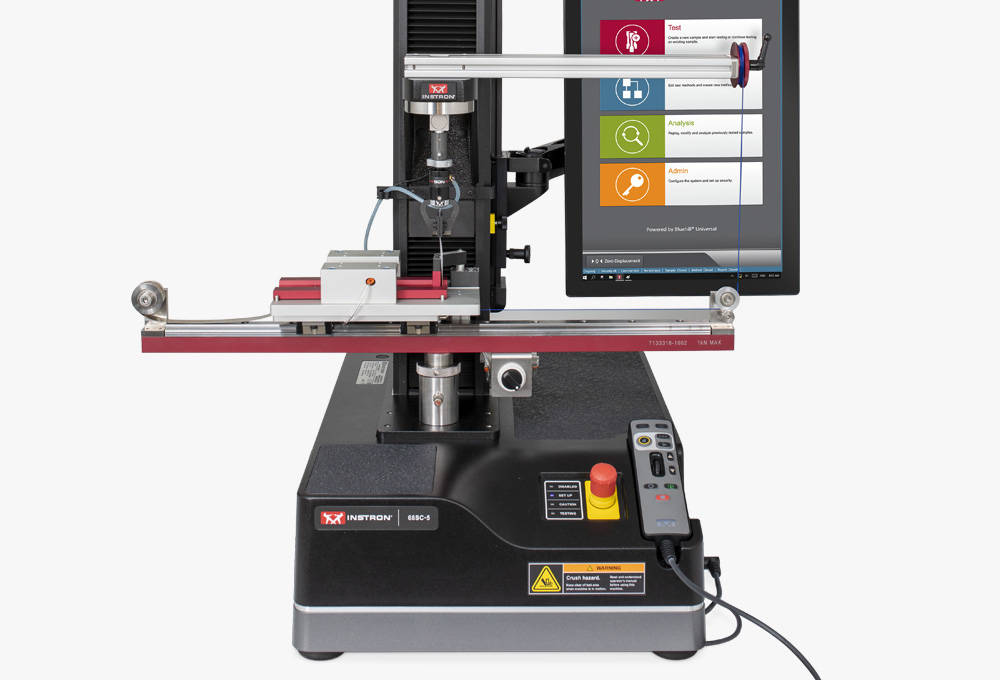
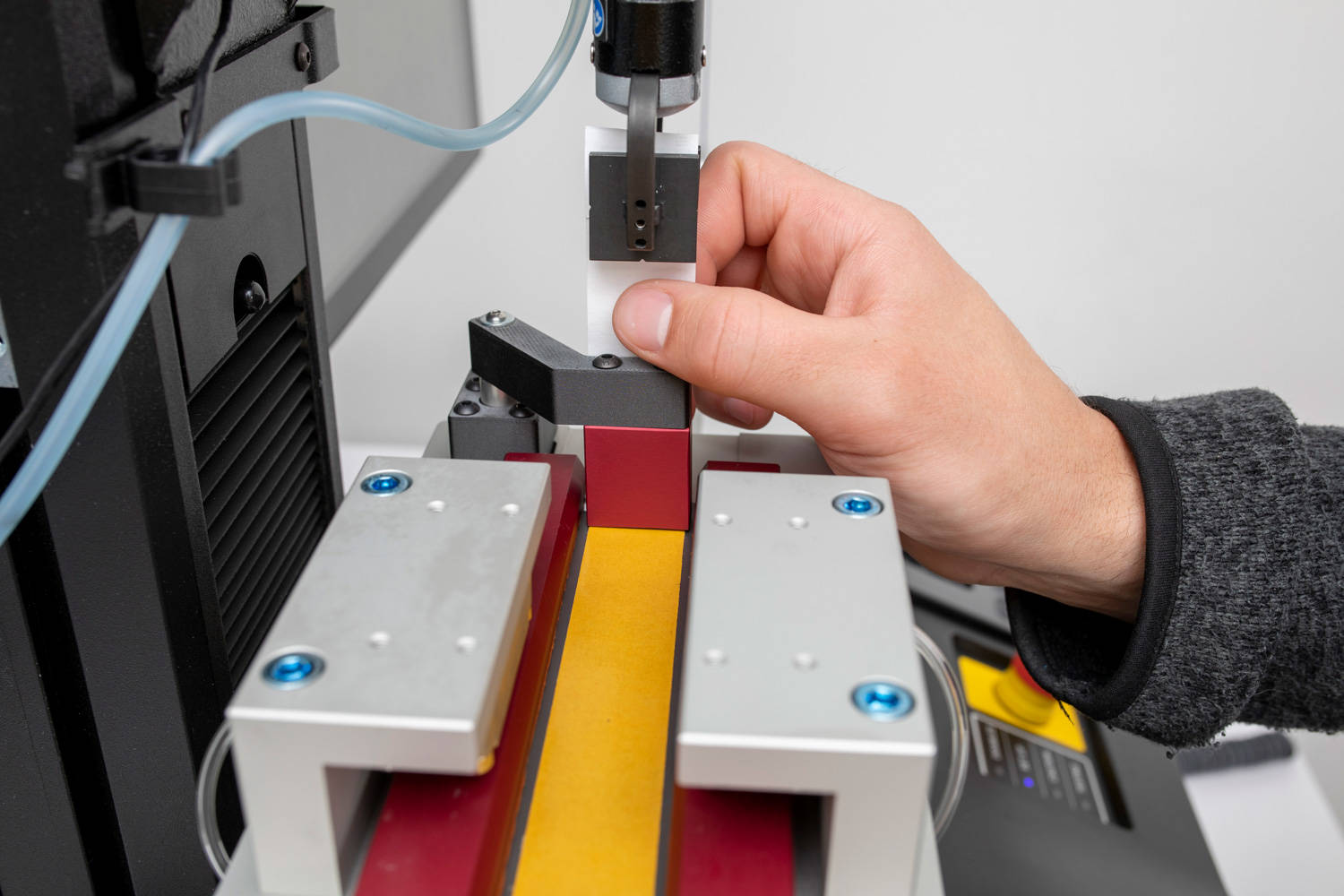
Catalog No. CP134660
Contact Our Sales Department.
Please complete the form below and we will be happy to contact you with a response. Our typical response time for an online request is within 1-2 business days. For a faster response, please call +1-800-473-7838.
The pneumatic 90° peel fixture is designed for electrode adhesion testing. It helps an operator align and clamp a specimen quickly and consistently while maintaining a 90° peel angle from start to finish, improving repeatability and throughput and reducing operator involvement compared to a standard manually-controlled peel fixture.
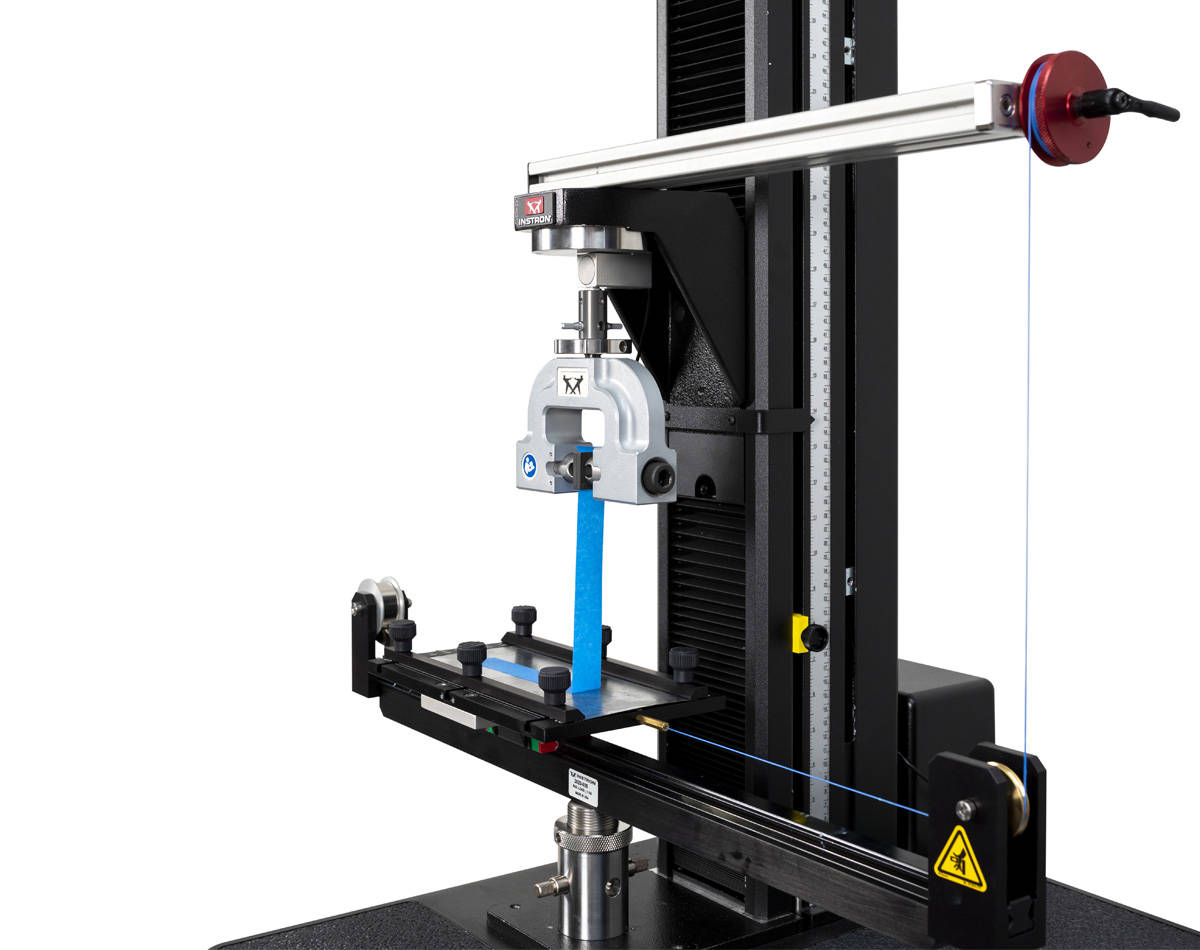
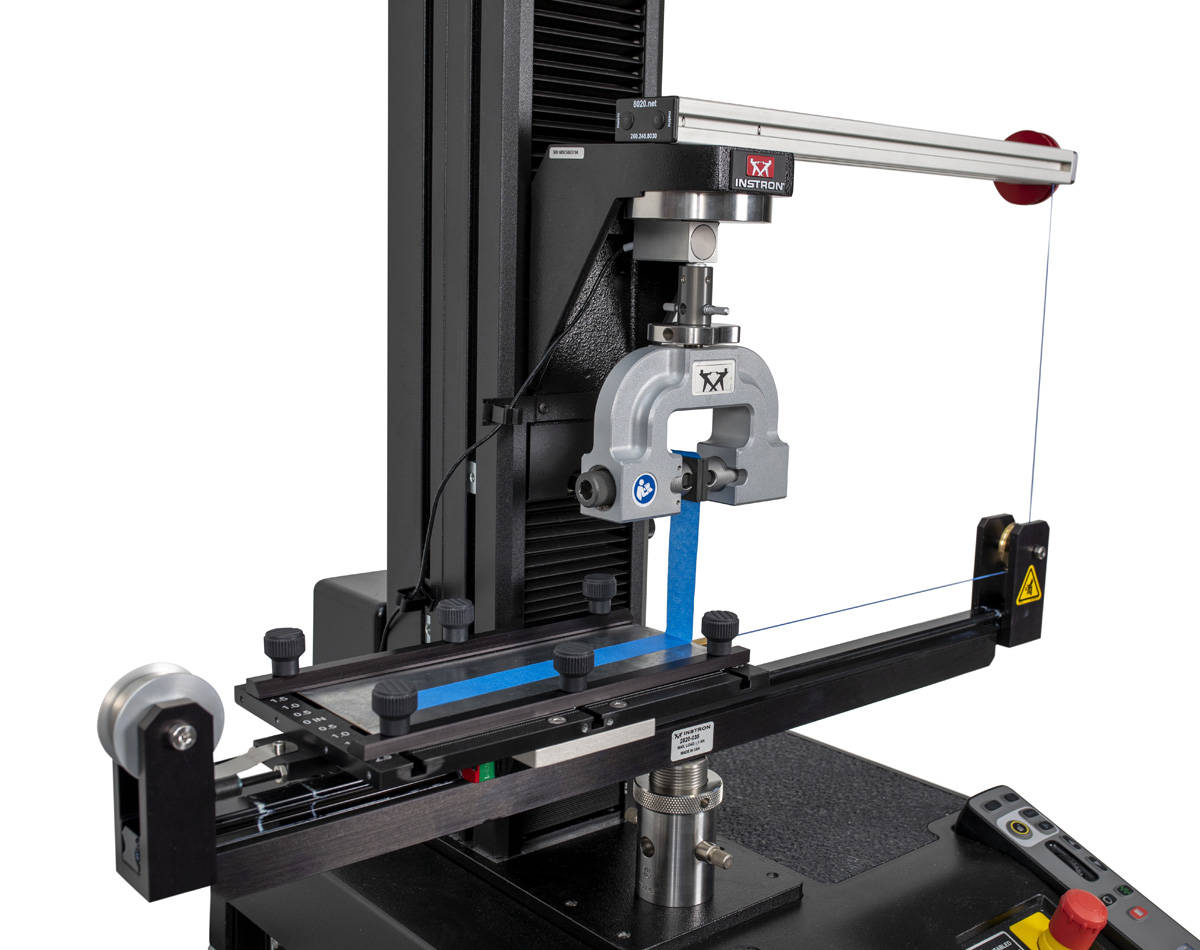
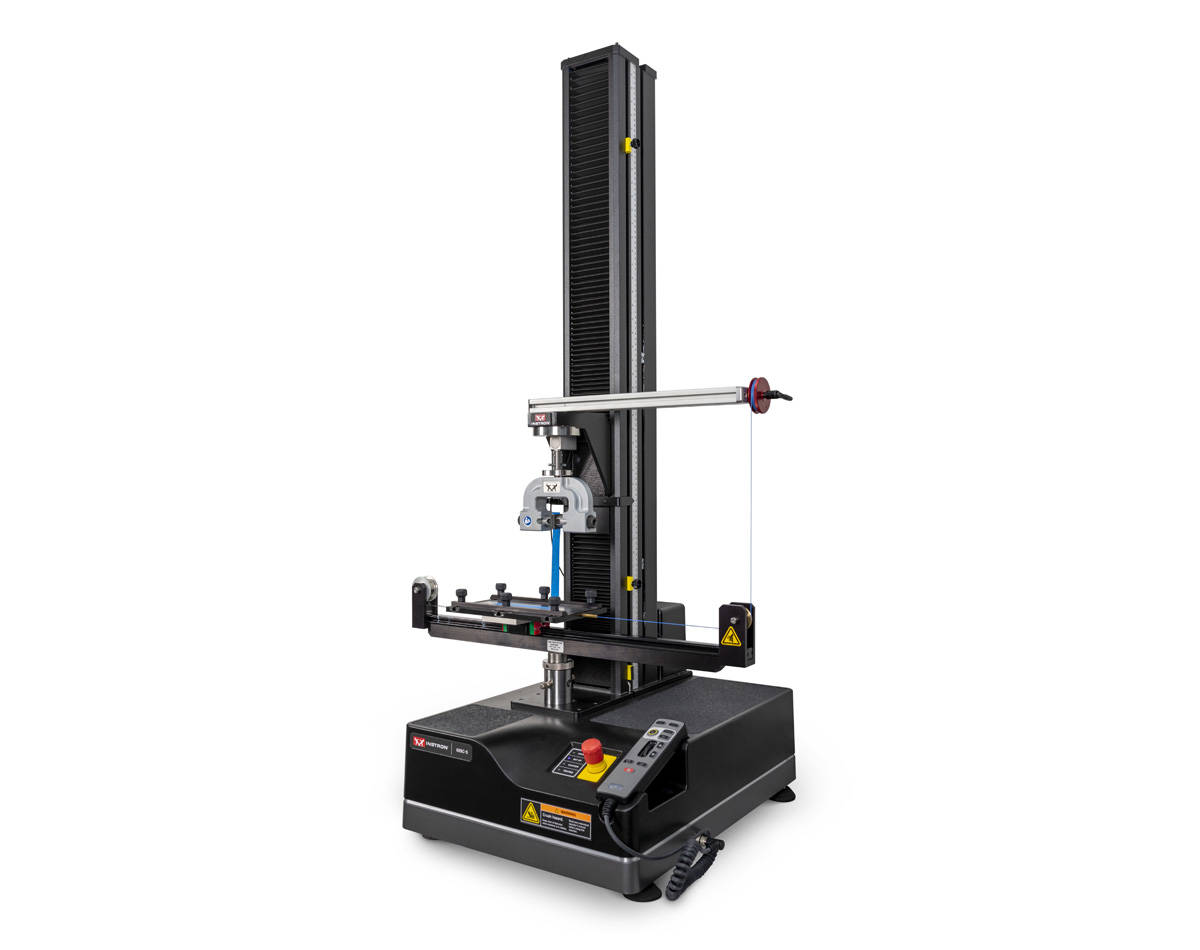
Catalog No. 2820-035
The standard 90° peel test fixture consists of a bearing-mounted sled linked to the testing machine's crosshead by a cable and pulley system. Its T-slotted sled allows the substrate clamps, which secure the substrate to the sled, to adjust to a variety of substrate widths.
Puncture Fixture
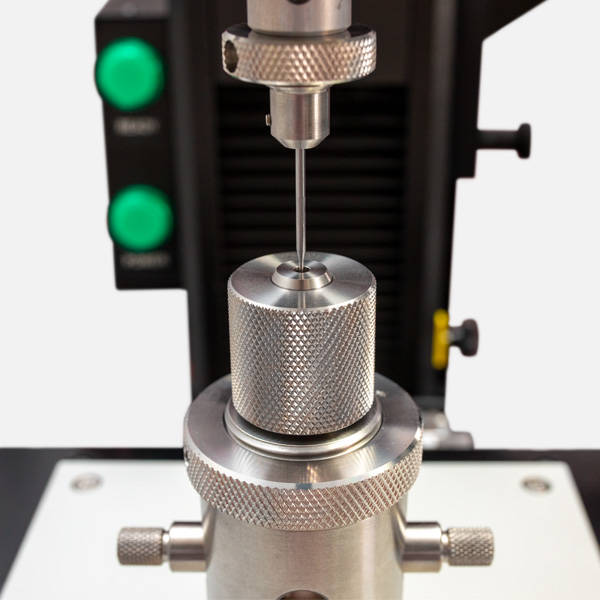
1 mm Probe (Catalog No. CP132292) and 0.8 mm Probe (Catalog No. CP105780)
Designed in accordance with EN 14477 for puncture testing of separator film and other flexible materials, this fixture pairs a lower clamping mechanism with an upper probe of either 0.8 mm or 1 mm diameter. The lower fixturing includes probe guidance and a means to hold the specimen taut throughout the test.
Contact Our Sales Department.
Please complete the form below and we will be happy to contact you with a response. Our typical response time for an online request is within 1-2 business days. For a faster response, please call +1-800-473-7838.
Pneumatic Puncture Fixtures
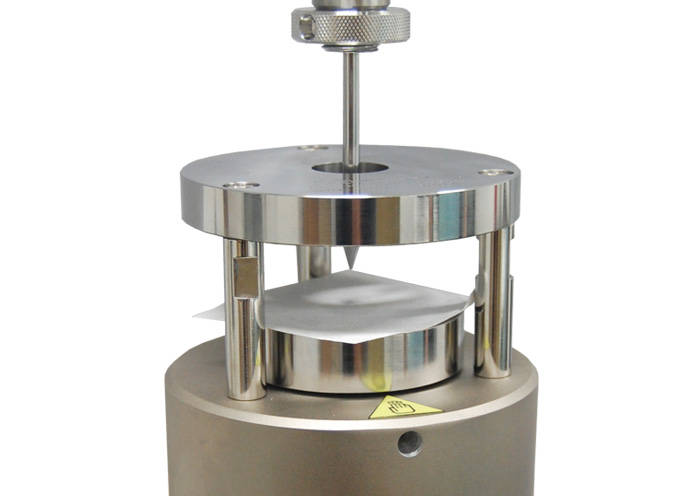
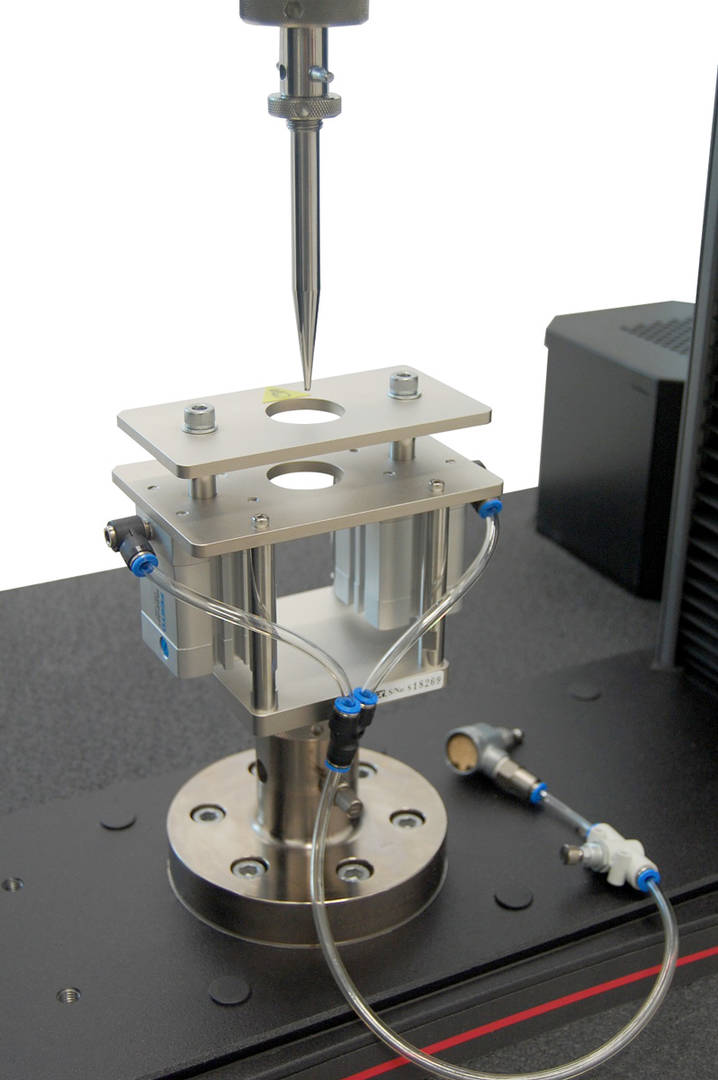
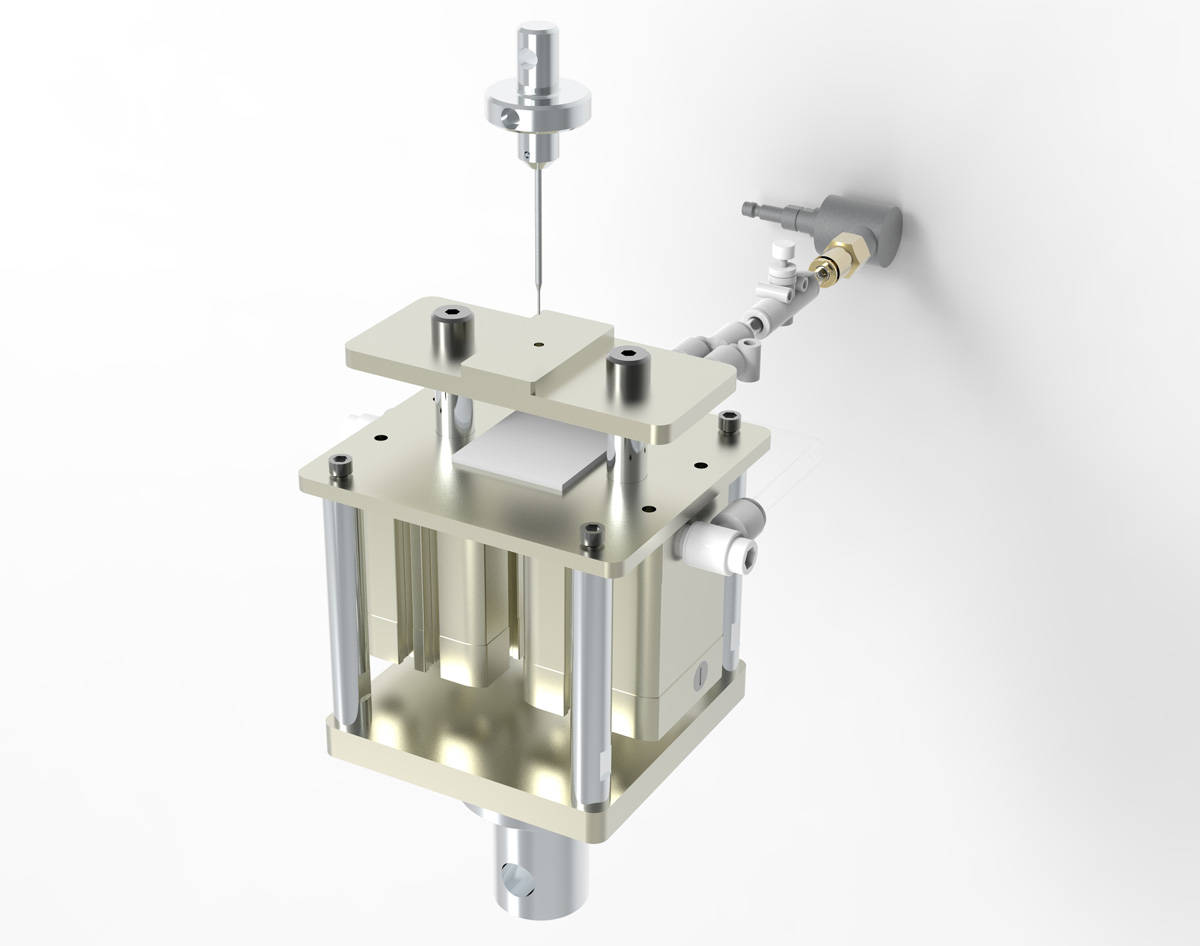
To reduce slippage during puncture testing, pneumatic puncture fixtures are available for testing in compliance with EN 863, ASTM F1306, and EN 14477. The specimen is held in place by pneumatically actuated clamps that provide consistent, stable clamping force throughout the test.
Contact Our Sales Department.
Please complete the form below and we will be happy to contact you with a response. Our typical response time for an online request is within 1-2 business days. For a faster response, please call +1-800-473-7838.
Tack Test Fixture
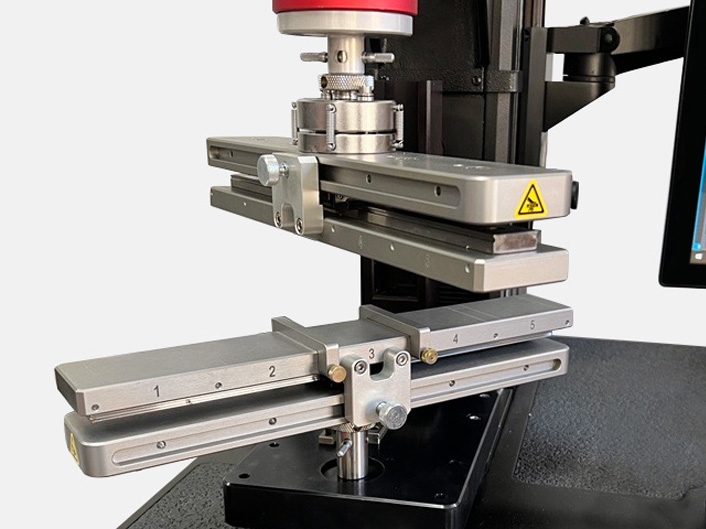
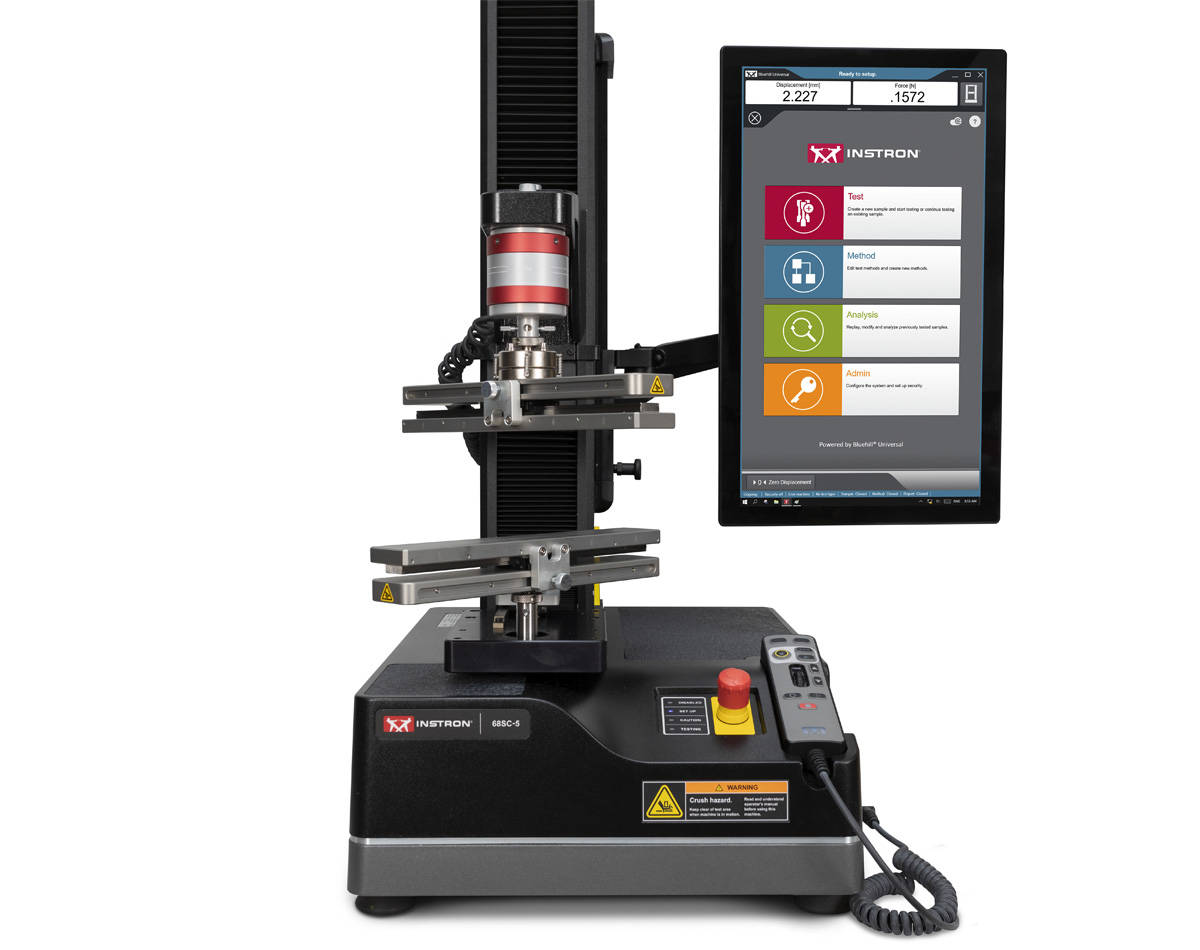
Catalog No. CP131999
Designed for ease of specimen preparation and throughput, this fixture is optimized for testing the adhesion strength of electrodes to their current collector. It's built with five specimen locations, allowing five consecutive tests without additional specimen preparation in between. The lightweight upper and lower fixtures are separate parts for simplified installation and cleaning, and the upper fixture is spherically seated and lockable to ensure parallelism between both fixtures during testing.
Contact Our Sales Department.
Please complete the form below and we will be happy to contact you with a response. Our typical response time for an online request is within 1-2 business days. For a faster response, please call +1-800-473-7838.
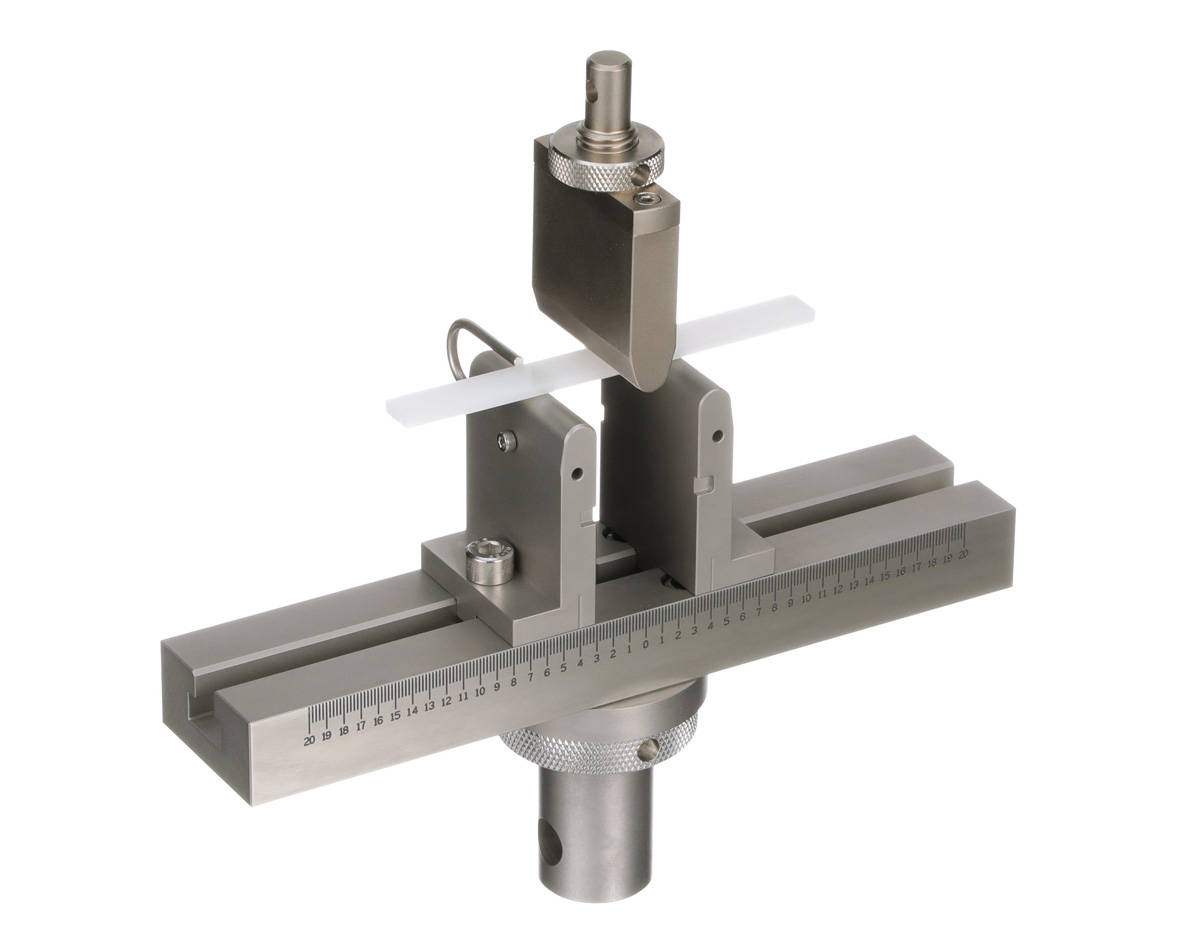
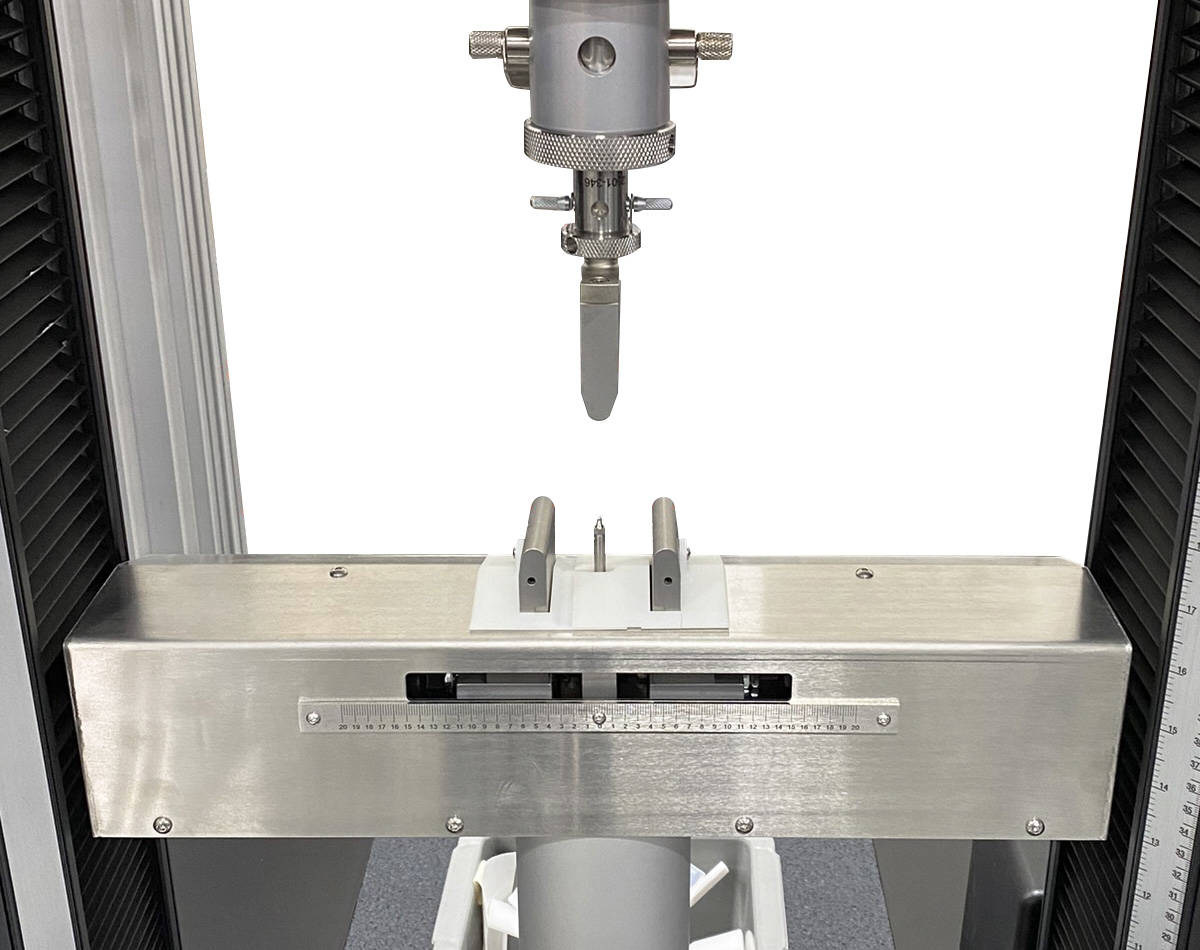
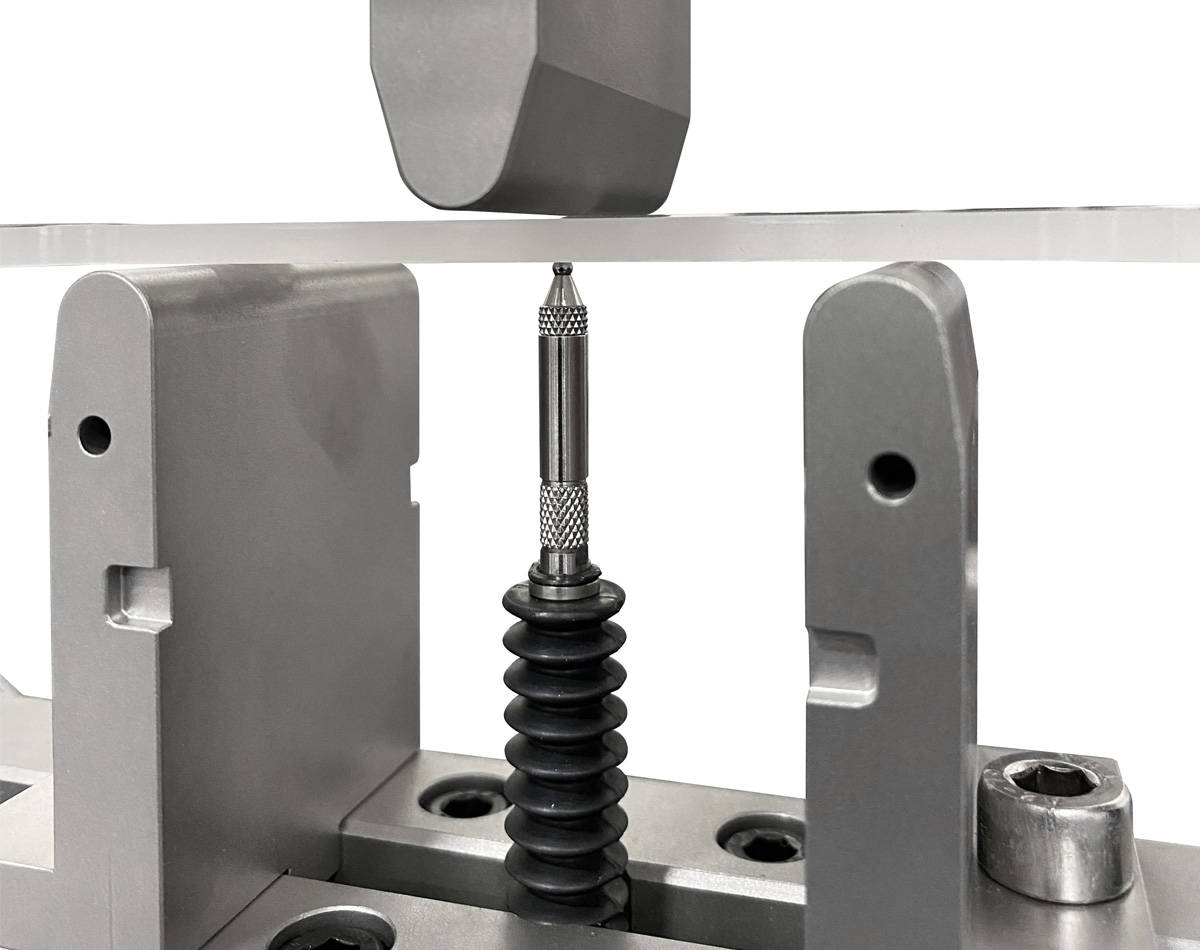
Instron offers a wide range of flex/bend fixtures for specimens from a few millimeters up to 600 mm in length, and for loads from a few newtons to several kilonewtons. Three- and four-point bend tests of raw materials, battery materials, and cells are all possible using standard and custom fixtures that can incorporate displacement sensors and mount on all frame types. A high-accuracy version of the most common 5 kN flexure fixture (catalog no. CP139080) integrates a digital displacement gauge, measuring specimen displacement to an accuracy of 1 µm.
Bending / Hemming Test Fixture to VDA 238-100: 2020
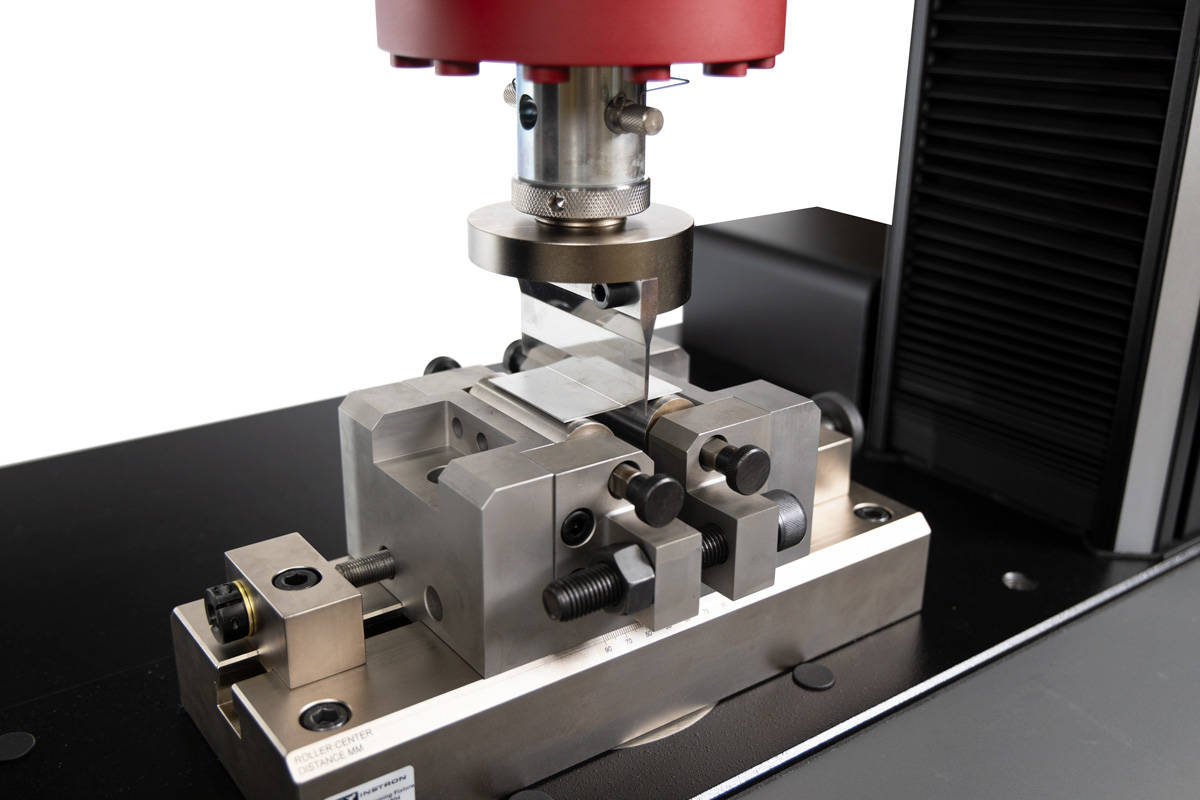
Catalog No. CP130604
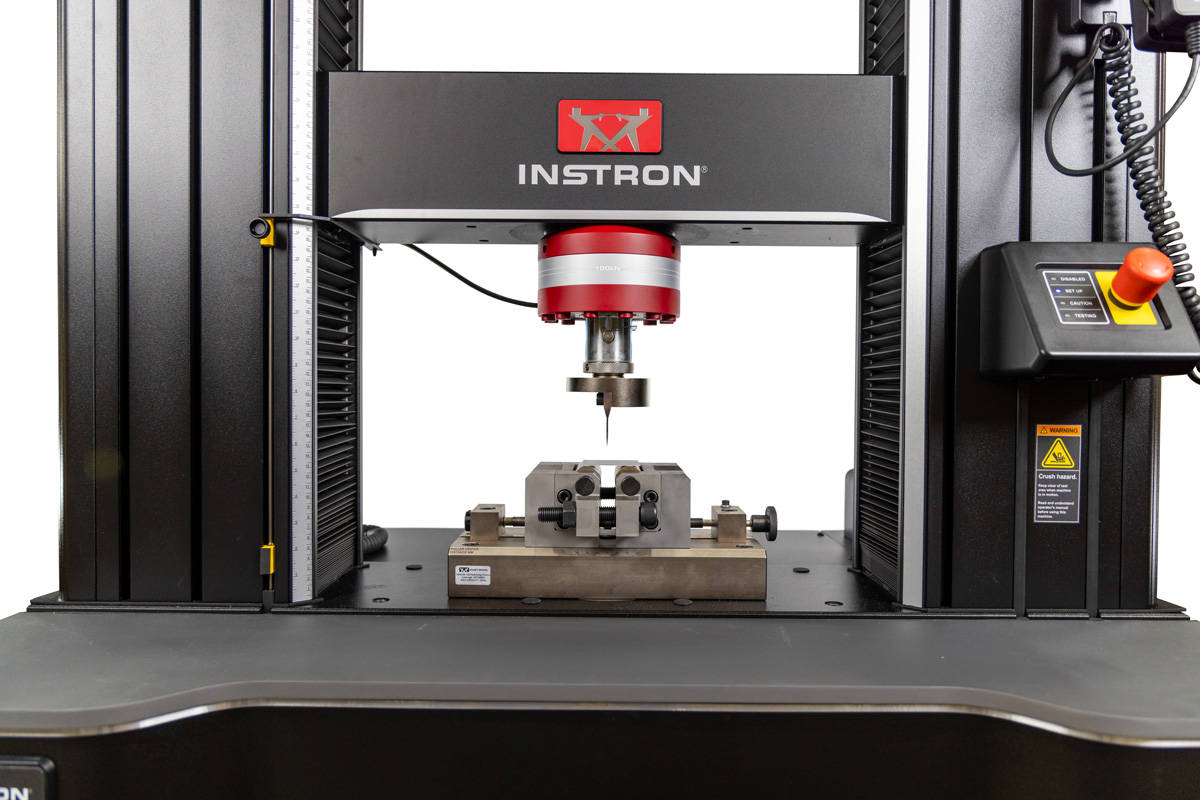
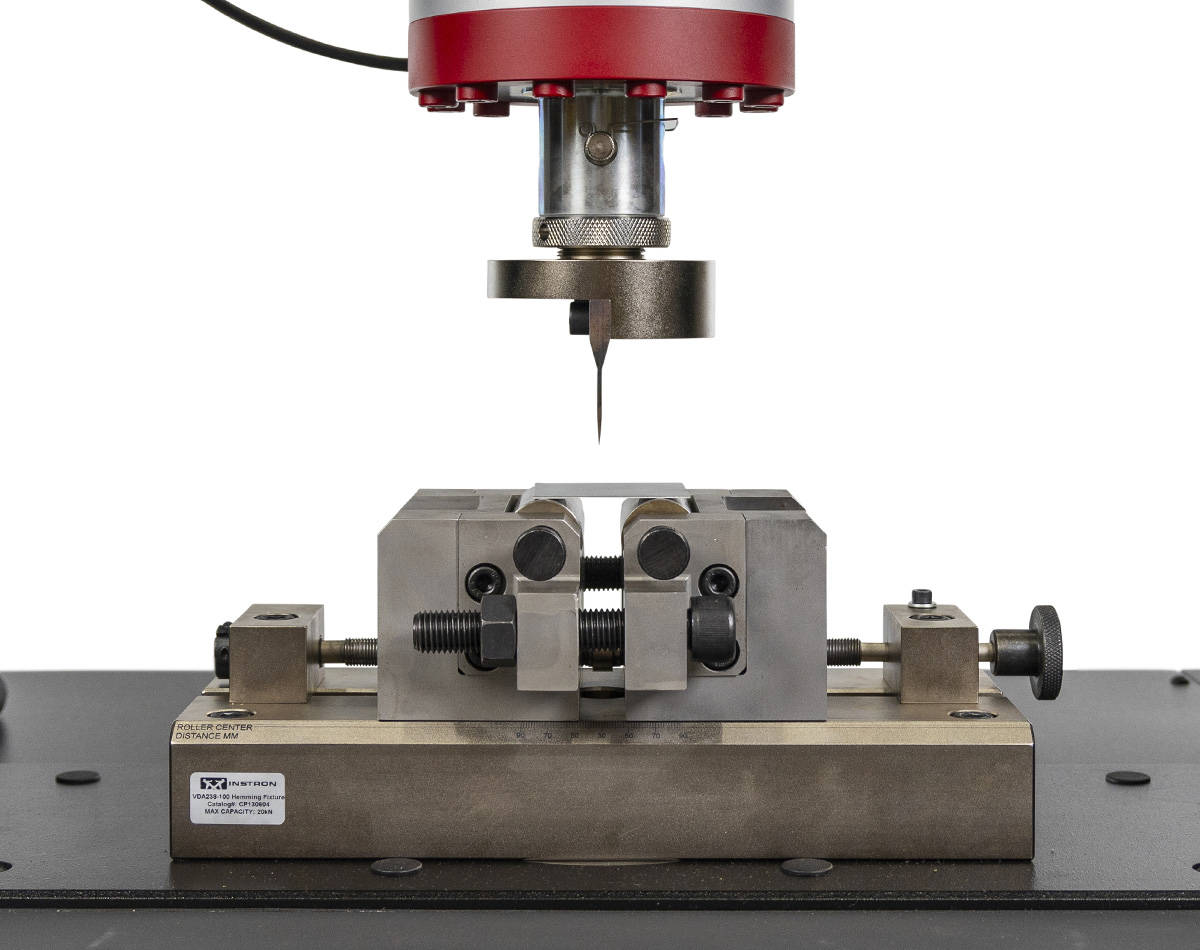
This hemming test fixture has a maximum force capacity of 20 kN and is designed specifically for tight-radius bend testing of sheet metals in accordance with VDA 238-100. Punch radius, roller diameter, and roller distance are constrained to reduce lab-to-lab variability. The fixture is used to evaluate the formability and crash behavior of the high-strength metal casings that house and shield EV batteries.
Contact Our Sales Department.
Please complete the form below and we will be happy to contact you with a response. Our typical response time for an online request is within 1-2 business days. For a faster response, please call +1-800-473-7838.

Catalog No. 2810-005
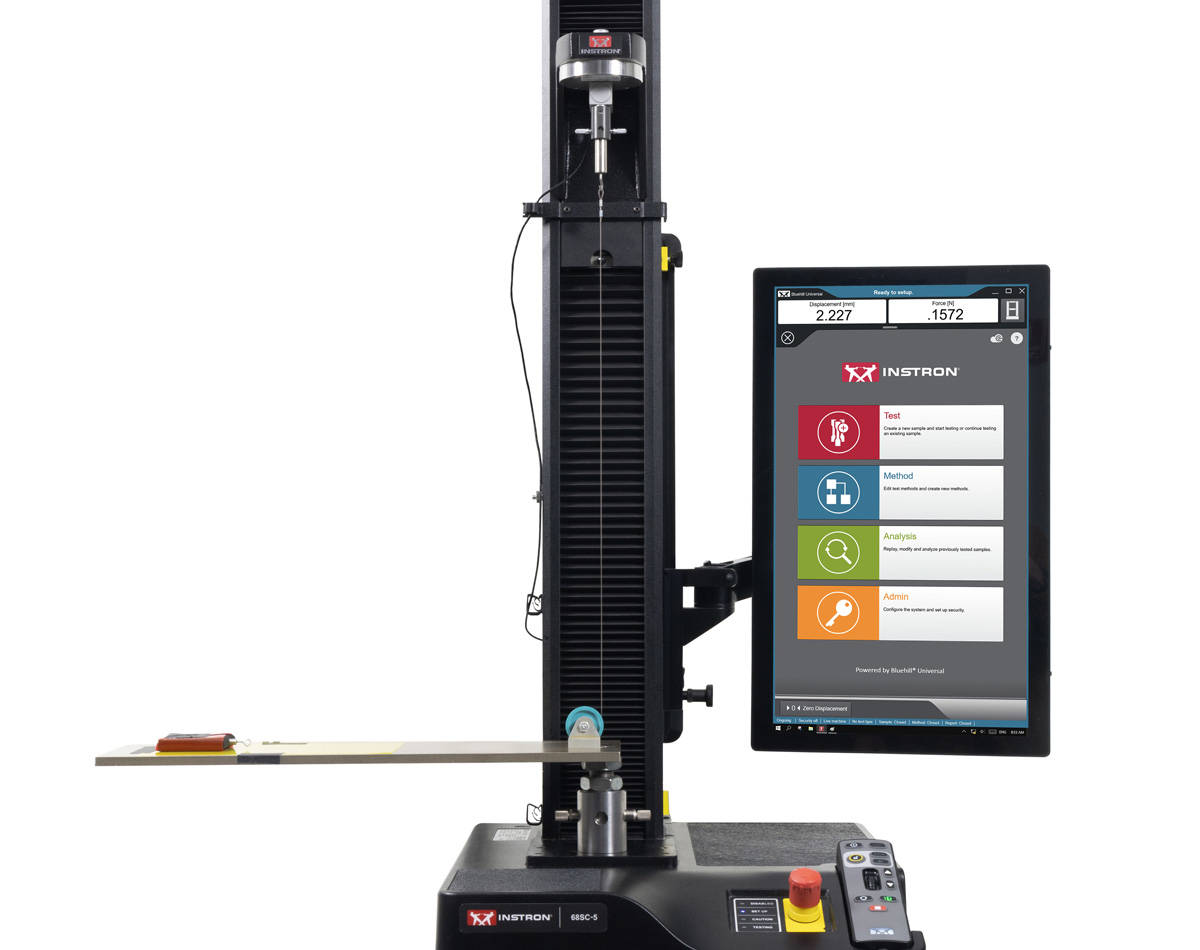
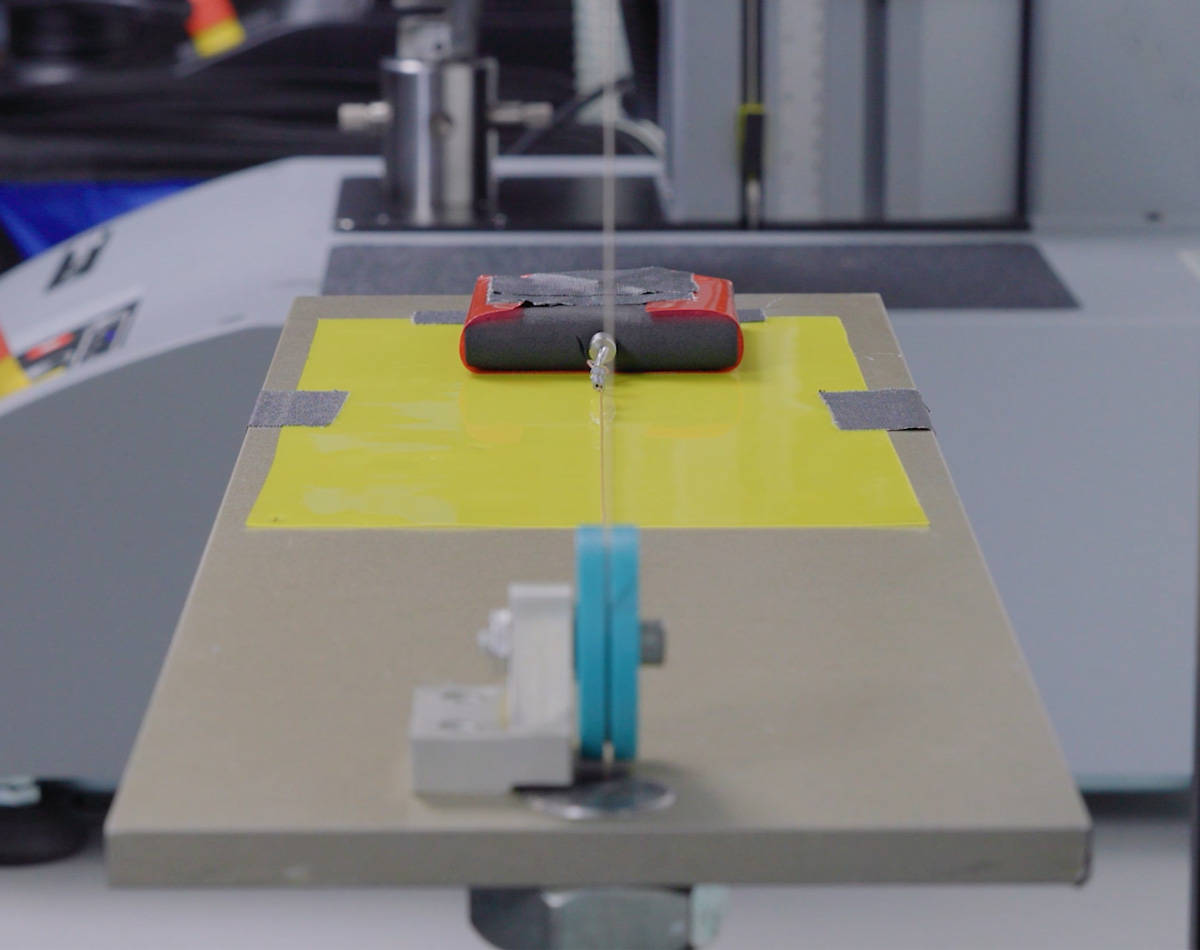
Instron's coefficient of friction fixture measures the static and kinetic coefficient of friction of plastic film and sheeting. It's commonly used to measure the friction forces of separator film material used in batteries, helping characterize how separator layers behave during cell assembly and handling.
Weld Test Fixture
Catalog No. CP132001
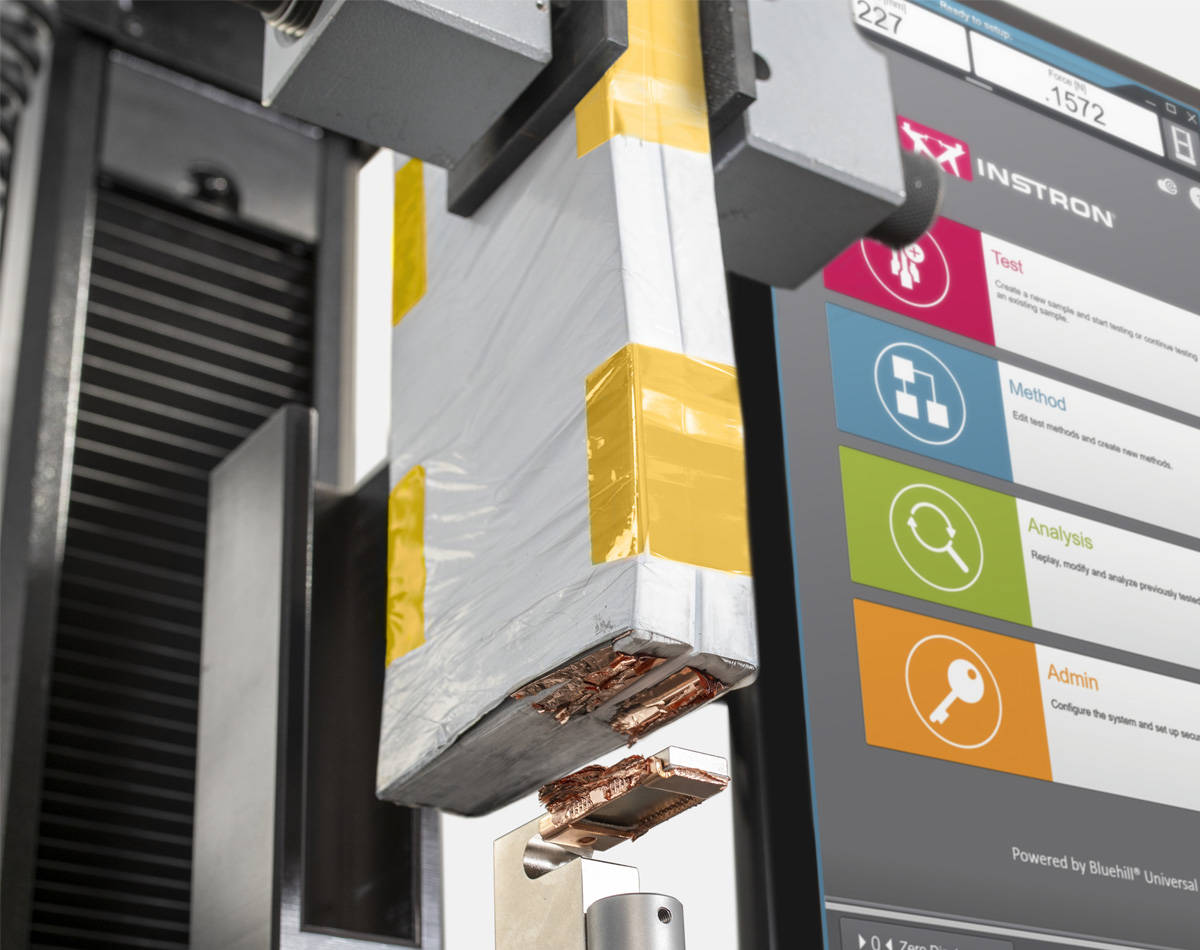
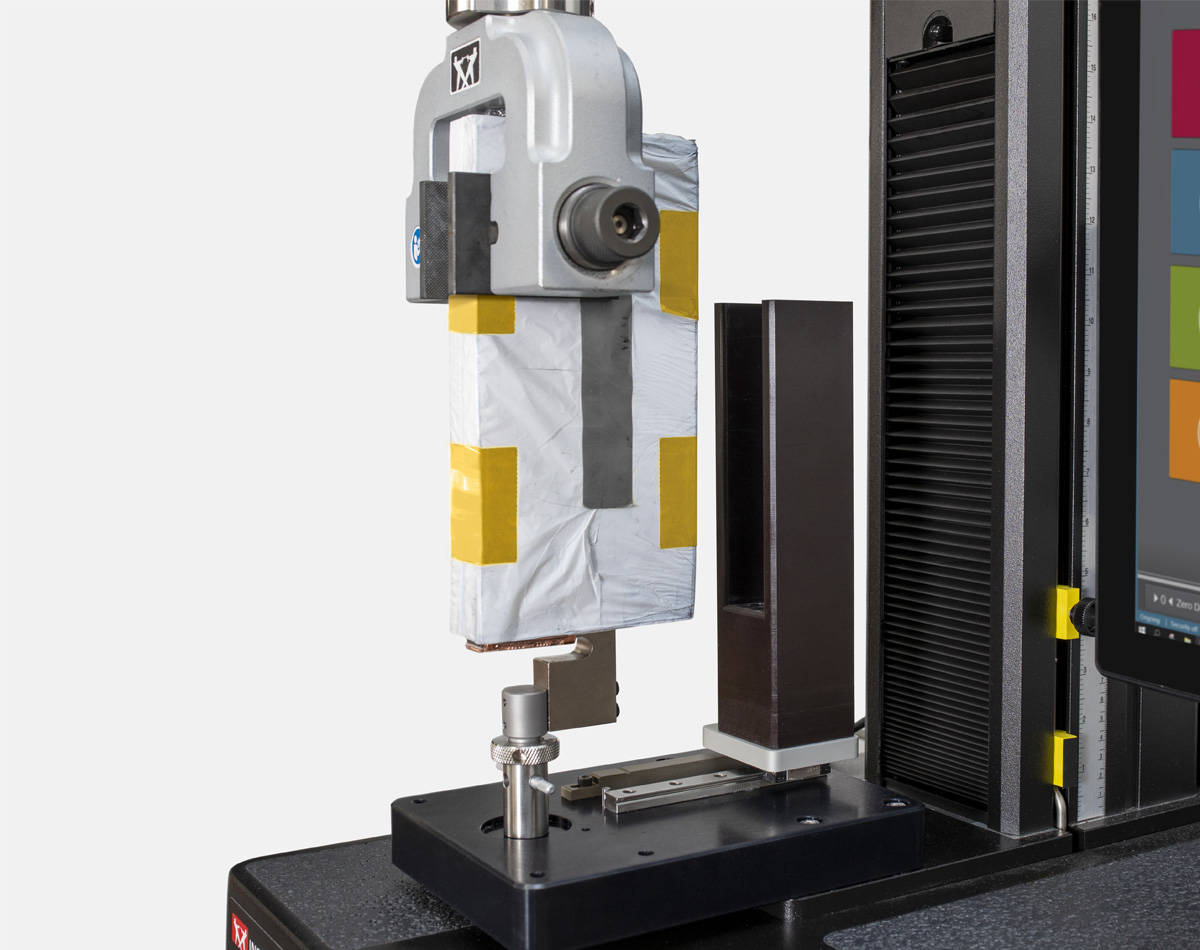
This custom-made prismatic battery weld test fixture features a cantilever-style hook and alignment fixture for testing the cumulative welding of anode/cathode tabs to their current collector. A crosshead extension provides added clearance around the specimen and alignment device when using a single-column frame, and the fixturing can be swapped to accommodate different prismatic cell or weld sizes by replacing the specimen alignment fixture and lower hook.
Contact Our Sales Department.
Please complete the form below and we will be happy to contact you with a response. Our typical response time for an online request is within 1-2 business days. For a faster response, please call +1-800-473-7838.
Busbar Clamping Stage
Contact Our Sales Department.
Please complete the form below and we will be happy to contact you with a response. Our typical response time for an online request is within 1-2 business days. For a faster response, please call +1-800-473-7838.

Catalog No. CP128348
Designed for clamping busbar and other battery components, this fixturing allows for adjustable sizing and clamping force for testing the various welds used in battery production. Its adjustable design accommodates a range of busbar geometries without requiring fixture changeover between specimens.
Battery Swell Testing Platens

Catalog No. CP136688
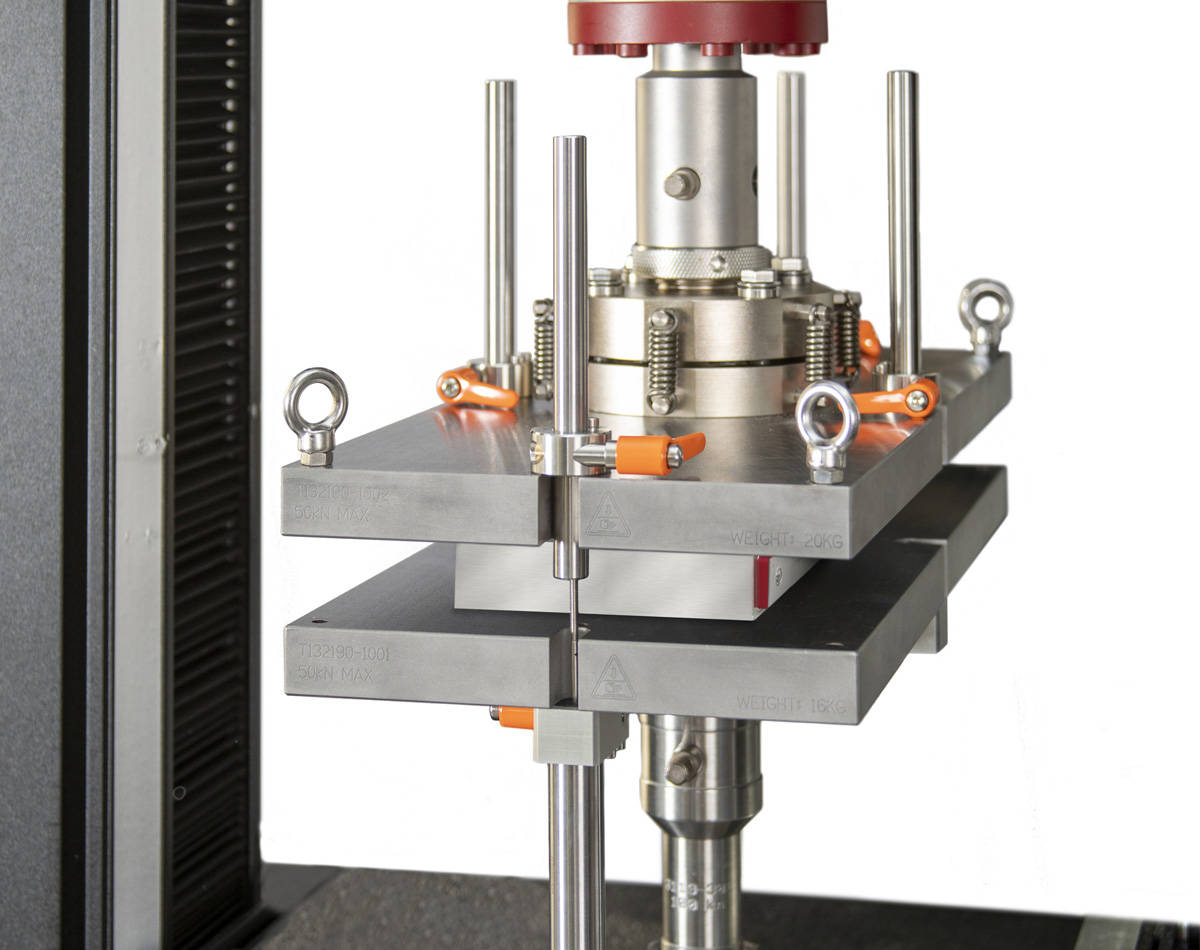
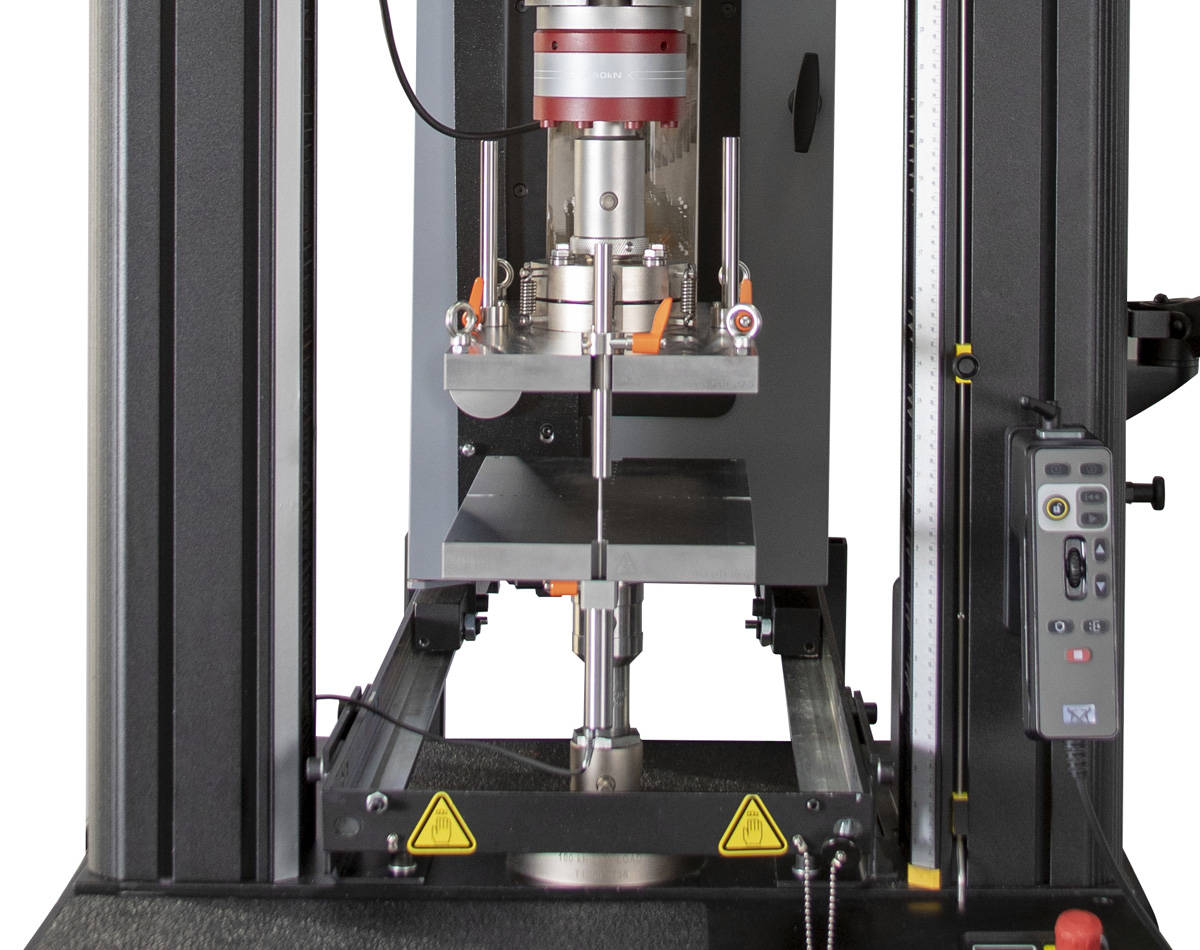
These custom-made platens are designed for measuring compressive load, swelling, and compressive strain in batteries. Four integrated LVDT mounting locations pair with a spherical seat that can be locked for parallelism or left unlocked to determine swelling in separate regions during charging and discharging. The lower platen includes a threaded hole pattern for mounting specimen guides for stack testing of multiple cells, and the platens are temperature-rated from -40°C to 150°C for use inside an environmental chamber.
Contact Our Sales Department.
Please complete the form below and we will be happy to contact you with a response. Our typical response time for an online request is within 1-2 business days. For a faster response, please call +1-800-473-7838.
Resistance Measurement Compression Anvils


Catalog No. CP139006
These compression anvils measure a material's compressive load, strain, and electrical resistivity. The set includes an upper spherical seat that ensures platen parallelism and electrical isolation from the frame, with integrated contact plates for accurate resistance measurement — plate geometry and material can be customized to fit specific testing needs. When connected to an ohmmeter, data collection integrates seamlessly with Bluehill ® Universal, synchronizing load, displacement, and resistivity data in a single acquisition.
Contact Our Sales Department.
Please complete the form below and we will be happy to contact you with a response. Our typical response time for an online request is within 1-2 business days. For a faster response, please call +1-800-473-7838.
Sensors
Catalog No. CP134297
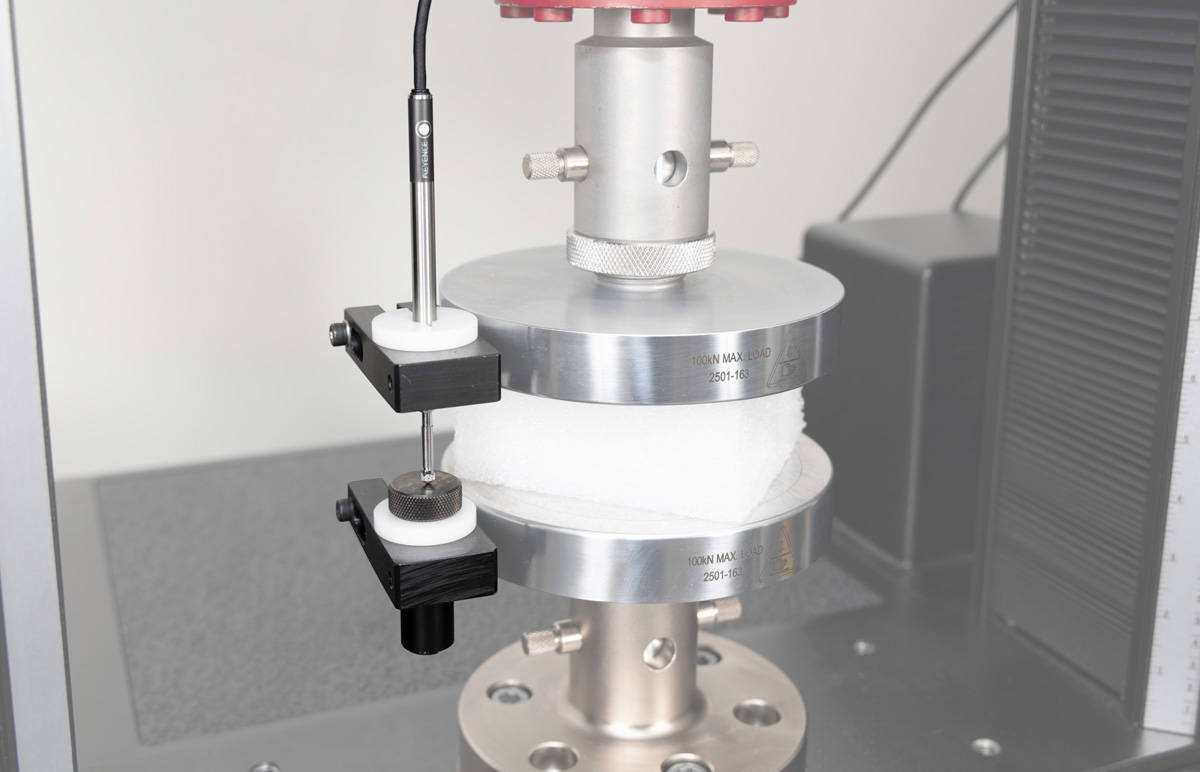
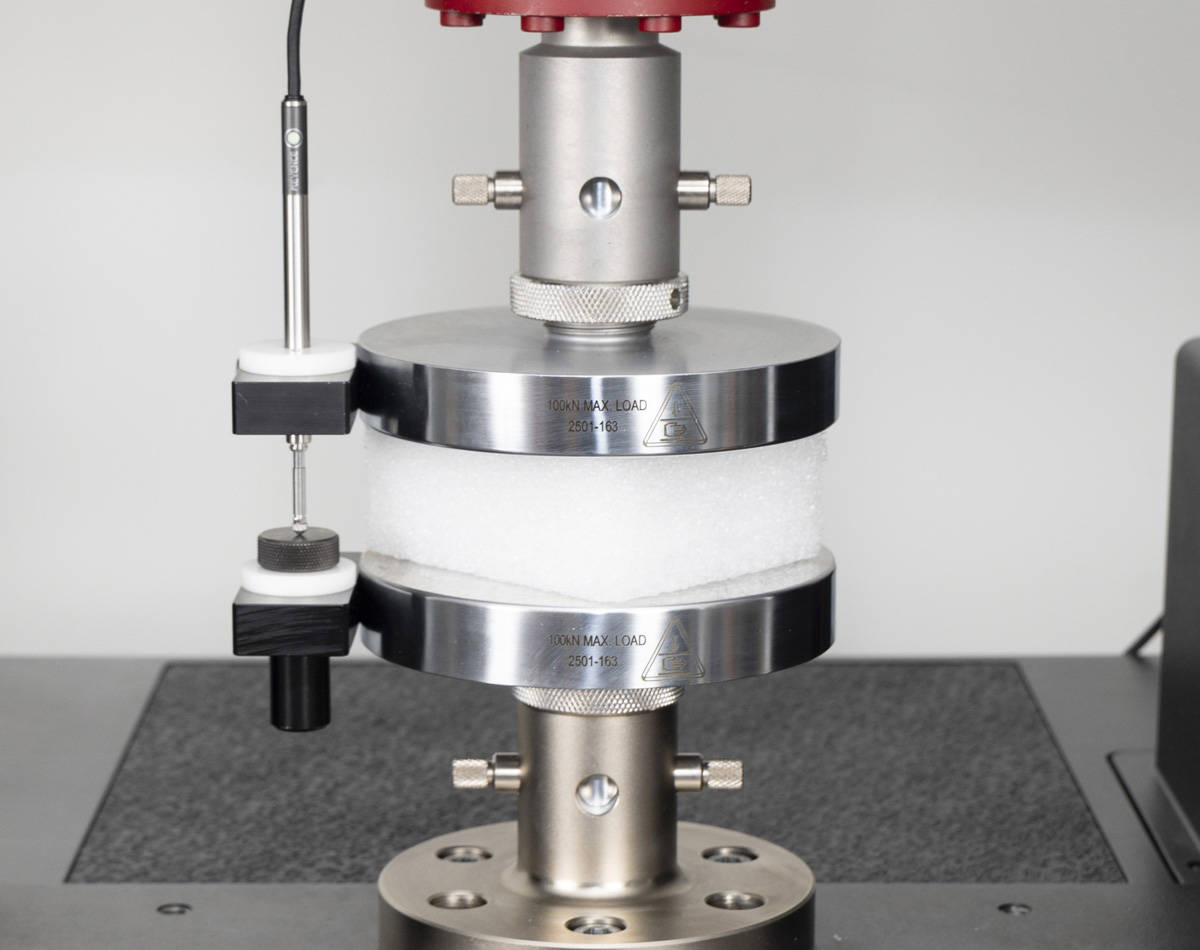
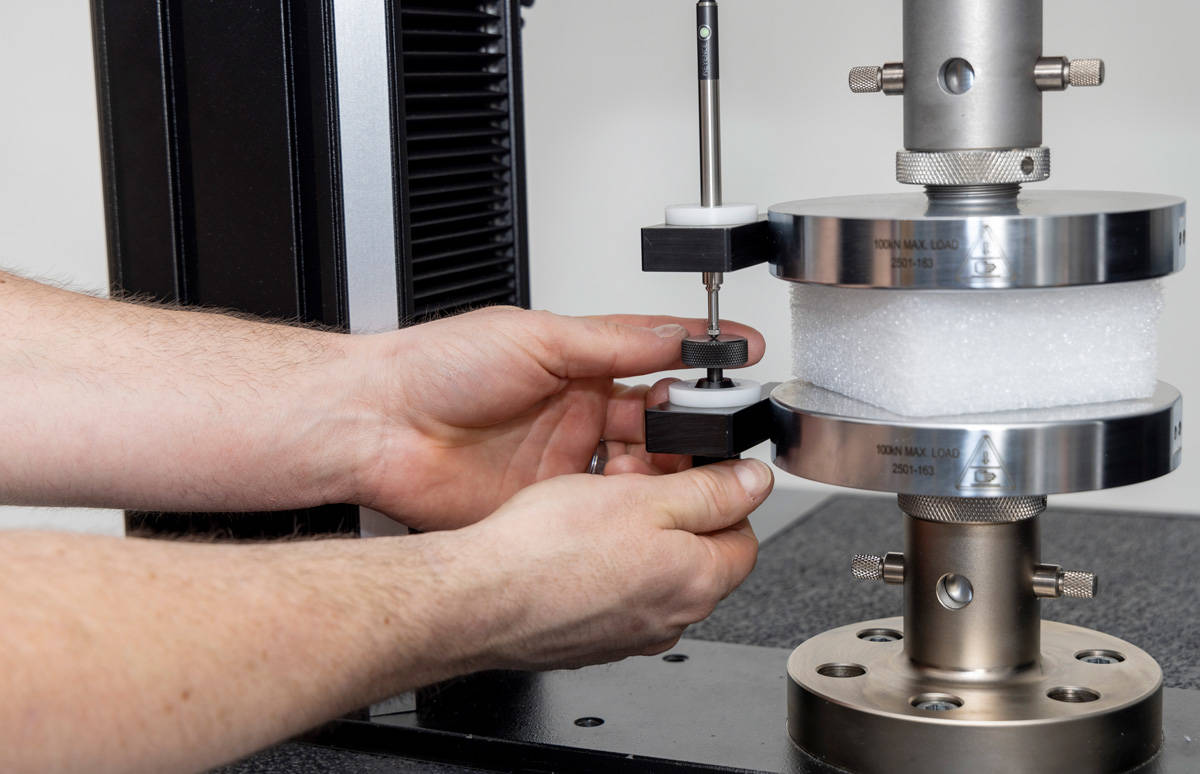
This digital LVDT provides a repeatable, highly accurate method of displacement measurement for battery materials, components, and assemblies. Easy to set up and automatically recognized by the software, it delivers high-precision, localized displacement or strain measurement in tension, compression, and flex tests, including specialized applications like measuring cell expansion during charging/discharging cycles.
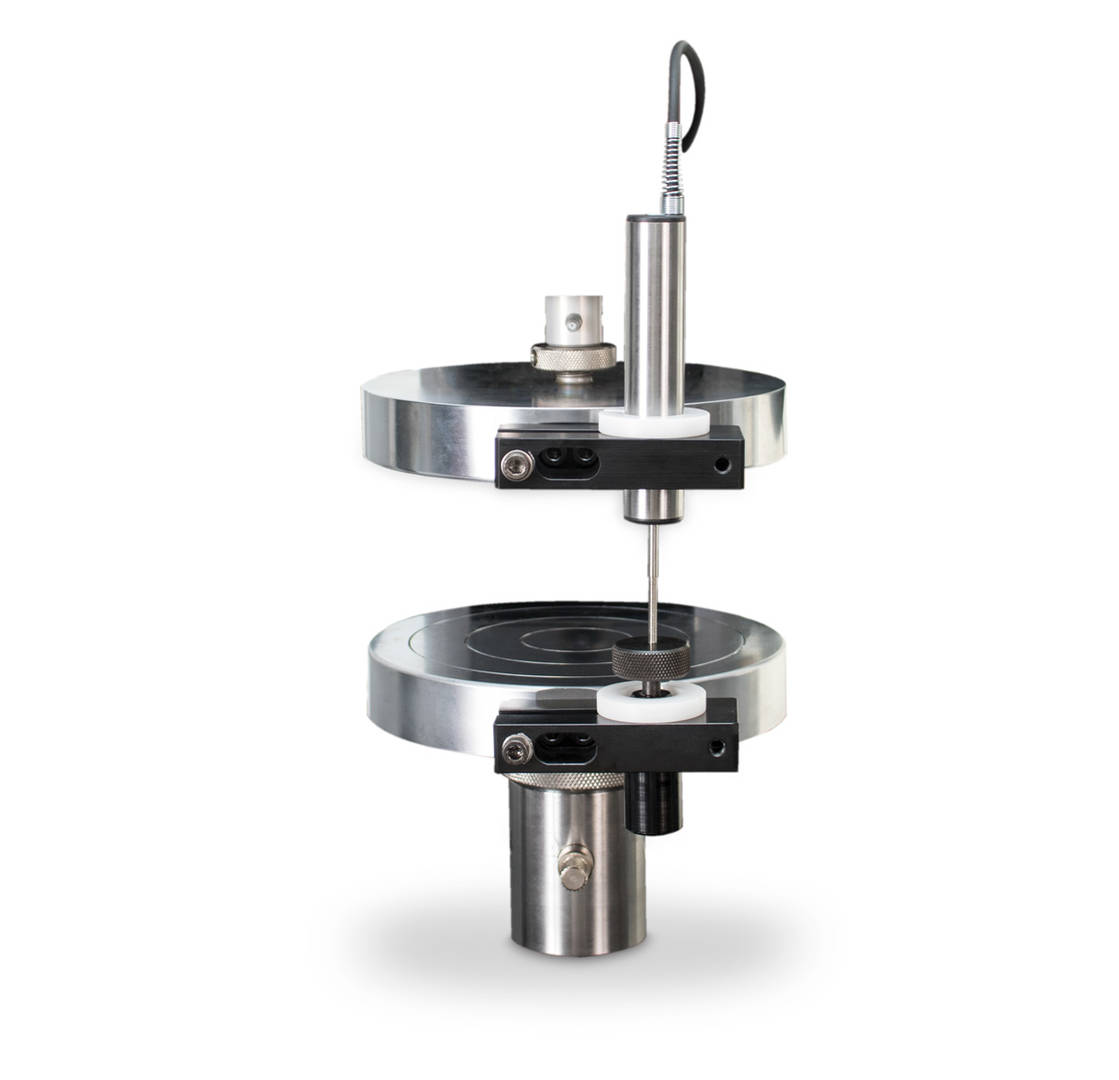

LVDTs are a valuable addition to a test system for precise, localized strain measurement, particularly useful in tension and compression applications where fixture or system compliance needs to be eliminated. Instron offers a suite of LVDTs for standard conditions, plus specialized versions like catalog no. CP130176 for extreme temperatures from -40°C to 200°C.

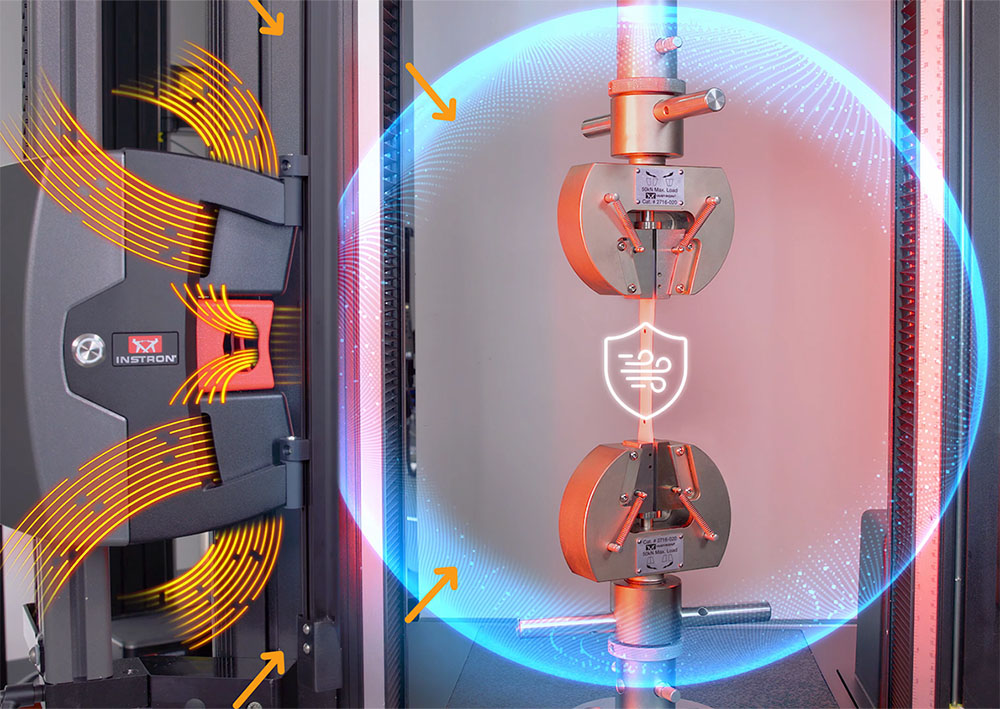
The AVE3 advanced non-contacting video extensometer delivers precise strain measurement with micron-level accuracy for tensile, compression, and bend testing. Compliant with ISO 9513 and ASTM E83, it works across small to large gauge lengths and low to high elongations, and handles sensitive materials like films, explosive composite failures, and non-ambient testing in a chamber or fluid bath.
Thermocouple Conditioners
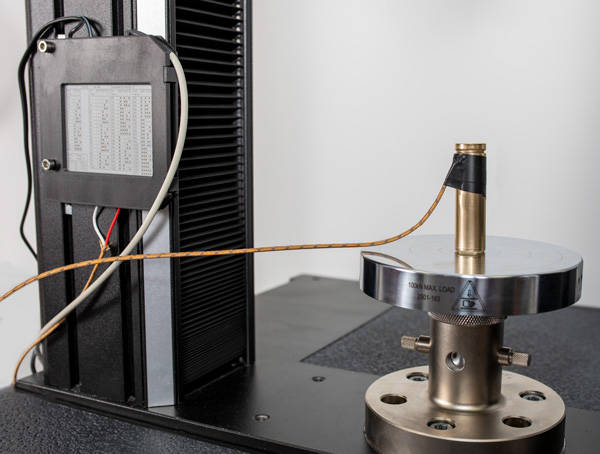
Catalog No. CP132303
This thermocouple signal conditioner is modified with wiring to Instron's sensor conditioner module for live data capture and display of temperature during testing. It comes factory-programmed for type J and K thermocouples, configured for -100°C to 350°C, and can be reconfigured by the user depending on the measurements needed.
Contact Our Sales Department.
Please complete the form below and we will be happy to contact you with a response. Our typical response time for an online request is within 1-2 business days. For a faster response, please call +1-800-473-7838.
Barcode Scanner
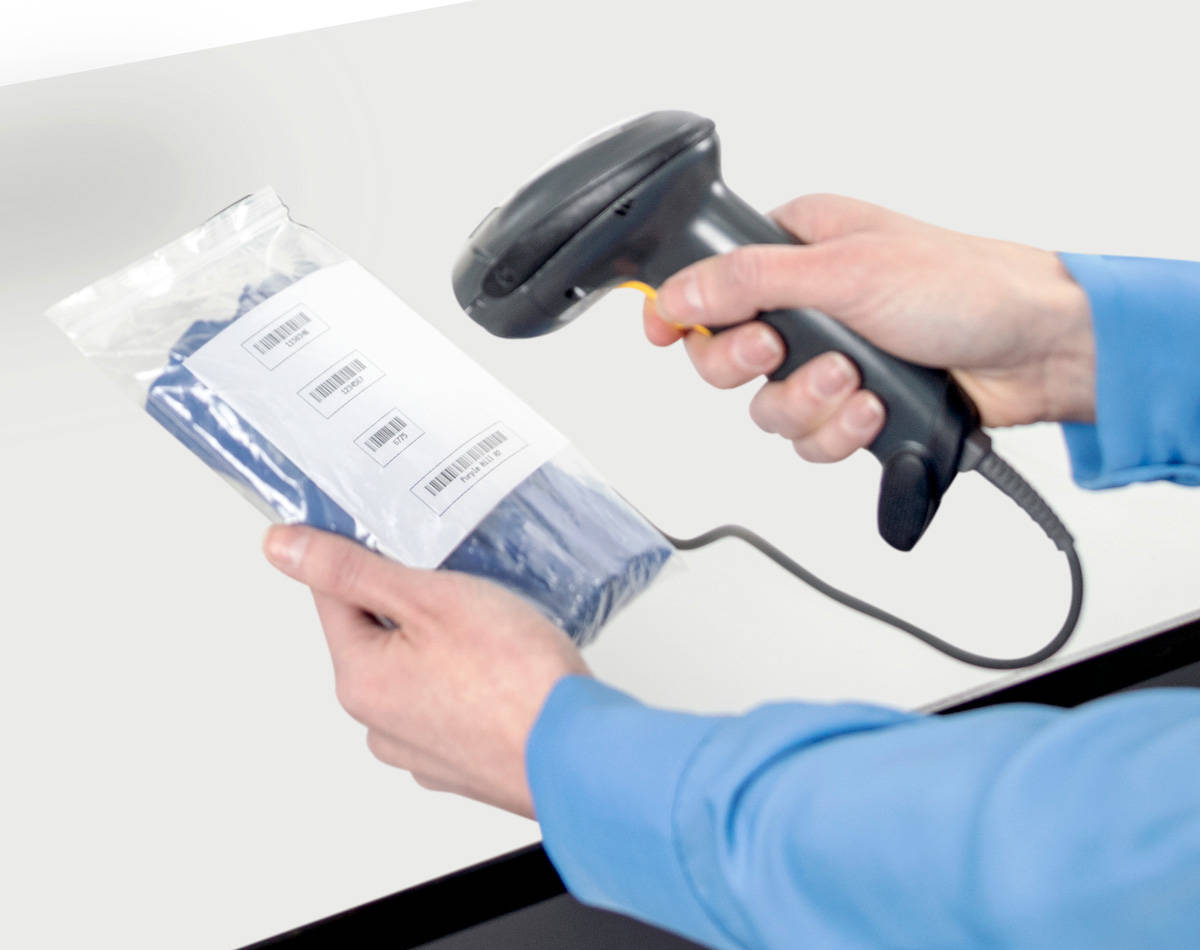
A standard USB barcode and QR code scanner allows sample and specimen information to be entered directly into Bluehill Universal testing software, cutting down on manual data entry and reducing transcription errors. Any barcode or QR code that includes a tab function can populate text or number fields in the software automatically.
Contact Our Sales Department.
Please complete the form below and we will be happy to contact you with a response. Our typical response time for an online request is within 1-2 business days. For a faster response, please call +1-800-473-7838.
Software
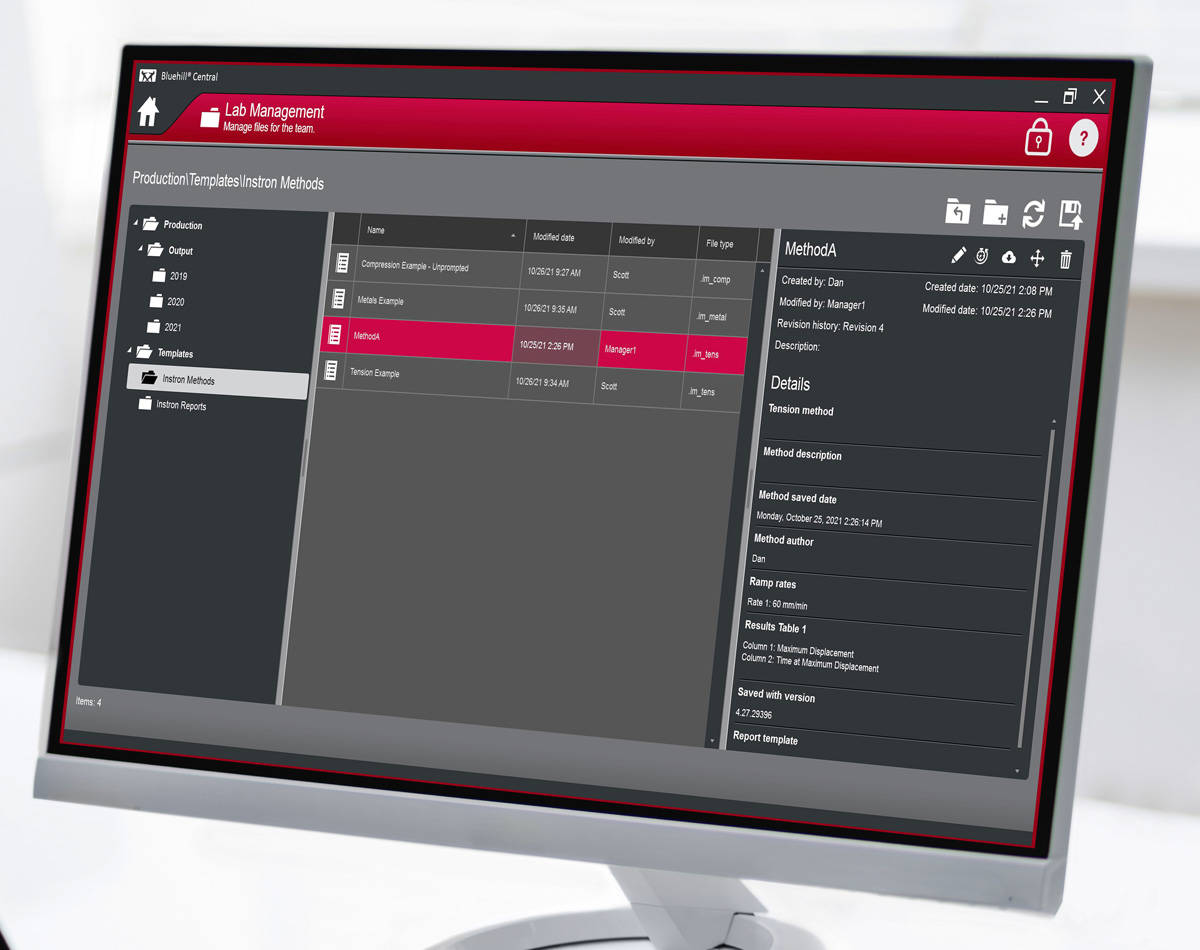

Lab Management Software
Bluehill Central is a laboratory management tool that enables centralized, remote management of Bluehill Universal software across multiple Instron test frames. It allows you to remotely manage all Bluehill Universal users, test templates, results, file revision approvals, and audit trail data from multiple systems in one place.
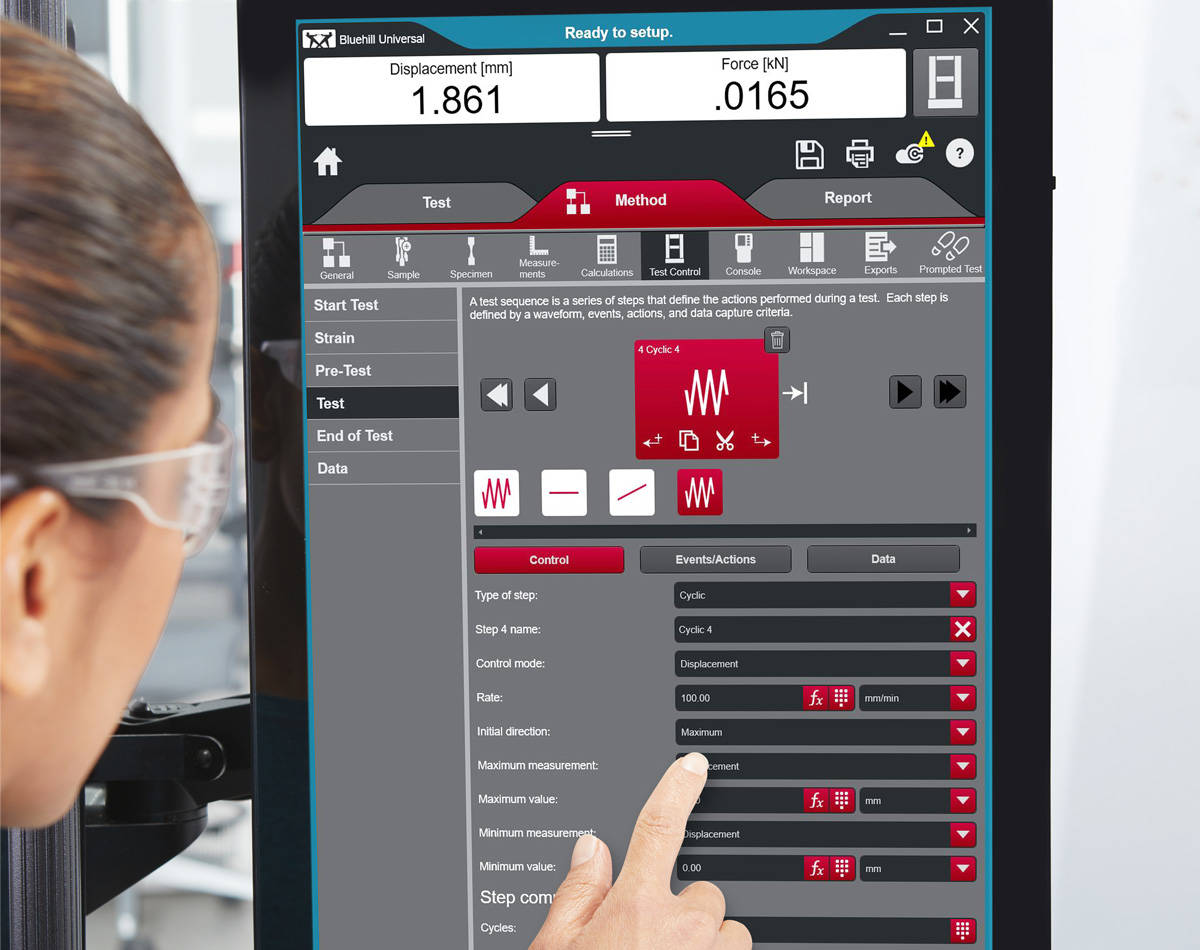
The Bluehill Universal Application Programming Interface (API) allows system administrators to build custom interfaces for various applications and devices, automating pre- and post-test actions such as exporting, importing, and starting tests. The API is included with the standard purchase of Bluehill Universal and is accessible through standard .NET-based programming.

Talk to an Instron Expert.
Not sure which battery testing accessory fits your application? Tell us about your testing requirements and we will help you find the right solution.
Contact Our Sales Department.
Please complete the form below and we will be happy to contact you with a response. Our typical response time for an online request is within 1-2 business days. For a faster response, please call +1-800-473-7838.