

Construction and Building Materials Testing

Increased infrastructure funding is driving significant growth in roadway and bridge projects. [The original copy cited "$15.4 billion in 2023" — this figure is now several years old and needs to be refreshed with current data before publishing, along with a clear citation of its source.] Organizations hoping to secure new business from this funding must be able to maintain or increase throughput when testing construction materials to major ASTM and ISO standards, evaluating materials such as metals and concrete. Those prepared for these new challenges can expect increased business opportunities.
However, most DOT facilities are currently operating outdated testing equipment that's no longer performing optimally, or that may no longer receive manufacturer support. Older test systems, even when well-maintained, are likely to experience extended downtime if they require replacement parts — and may fail completely if those parts are no longer available. Organizations relying on inadequate equipment risk project delays and lost business as a result.
Use the links below to jump directly to the section you're interested in:
Rebar Testing | Concrete Testing | Metals Testing | Testing Solutions | Retrofit or Replace | Service and Support
Rebar Testing
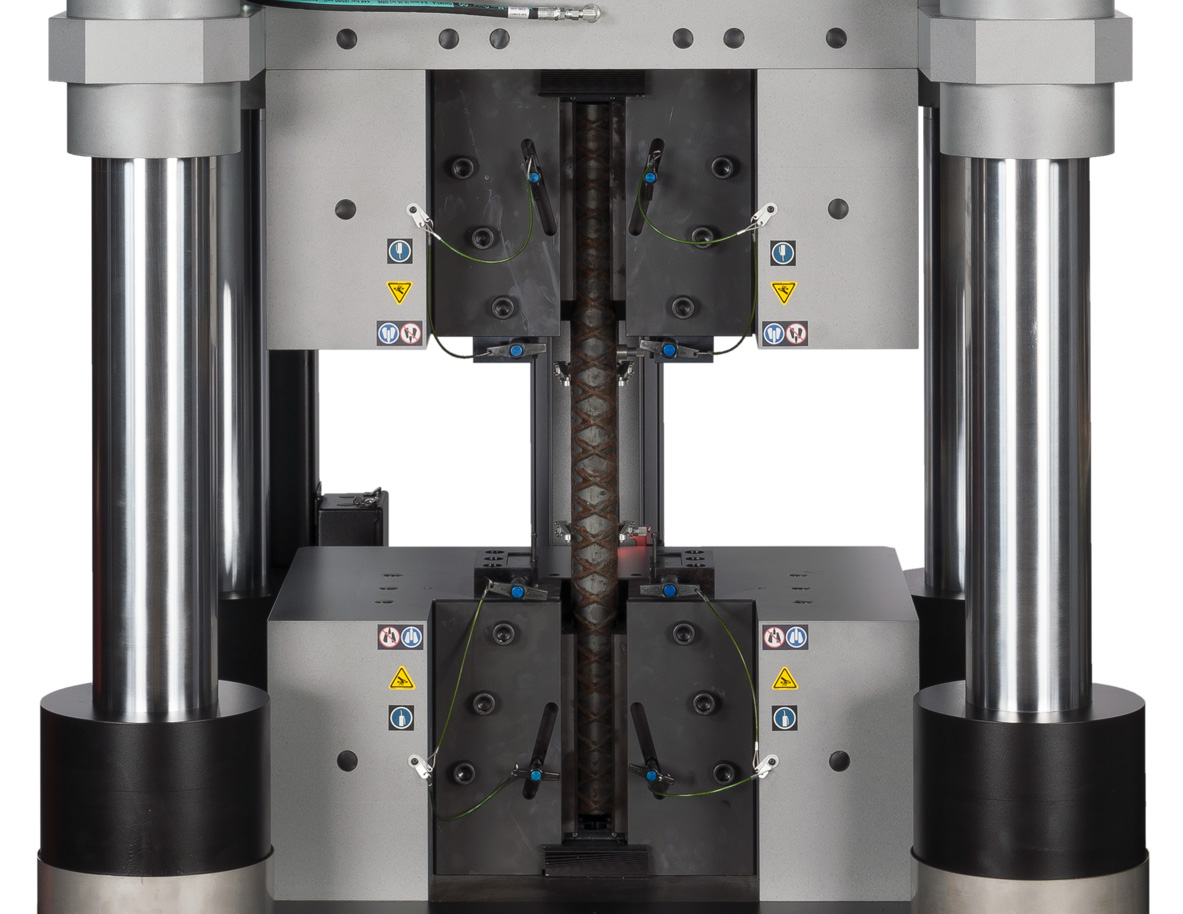
Steel reinforcing bar, or rebar, is critical to increasing the overall strength of the concrete that surrounds it. Global and regional standards exist to help ensure rebar produced anywhere in the world exhibits consistent physical, chemical, and mechanical properties. Proper mechanical testing — including tensile, bend, compression, and fatigue testing — is often necessary to determine whether rebar meets its published specifications and ensure product quality.
Common standards include ASTM E8M, ASTM A370, ASTM A615, ISO 6892-1, ISO 15630-1, AC133, BS 4449, GB 1499, and JIS G3112.

Concrete Testing
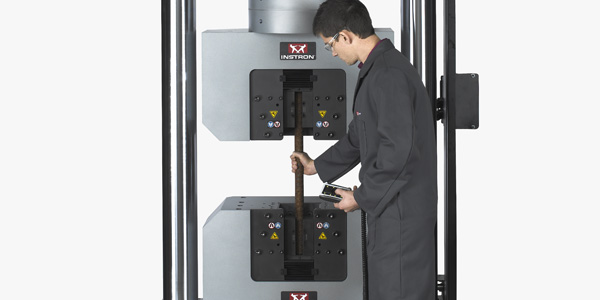
Concrete is one of the world's oldest and most commonly used building materials. Most modern structures are built either partially or entirely of concrete, which is also used extensively in the construction of roadways, bridges, and other infrastructure. Given the obvious safety implications, accurate characterization of material properties is critical when evaluating concrete. Standards such as ASTM C109, ASTM C39, and ASTM C78 evaluate both compressive and flexural strength.


Metals Testing
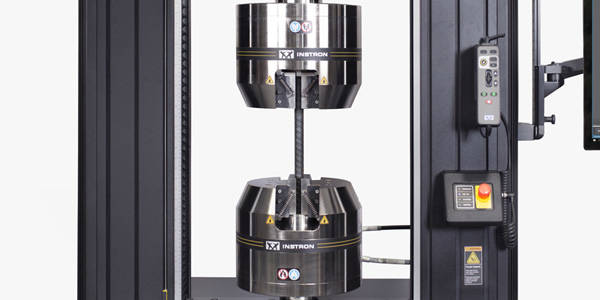
Several major international standards govern the testing of metals and metallic materials, and Instron systems are designed with their requirements in mind. To simplify testing, Bluehill® Universal Software includes a metals application module containing test methods for ASTM E8, ISO 6892, ASTM A370, and other key standards. Instron's high-force electromechanical systems are suitable for testing a wide range of metal specimen geometries in both ambient and non-ambient conditions.
Instron Testing Solutions for Construction and Building Materials
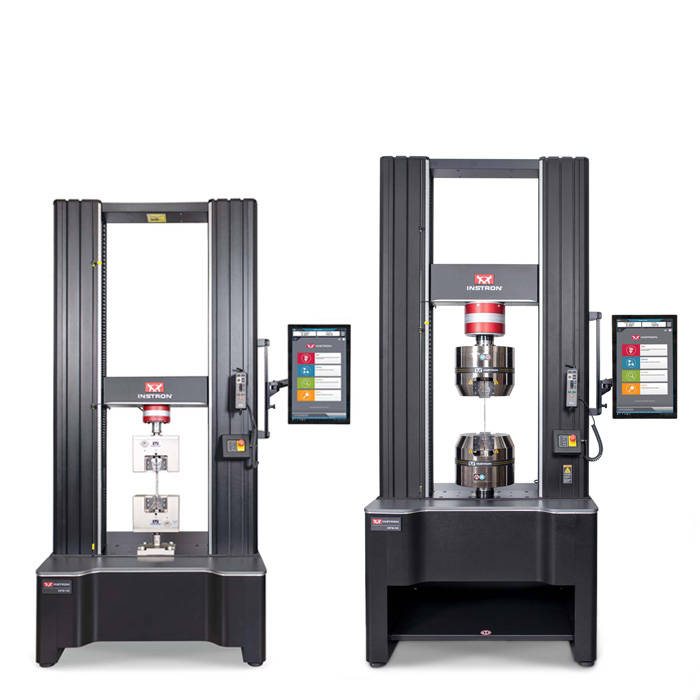
Equipped with a wide range of accessories to perform static tests when you need to determine the tensile, compressive, and flexural properties of a wide range of materials.

Commonly used for testing rebar, concrete, and other building materials, with a testing range of 300–2,000 kN force.
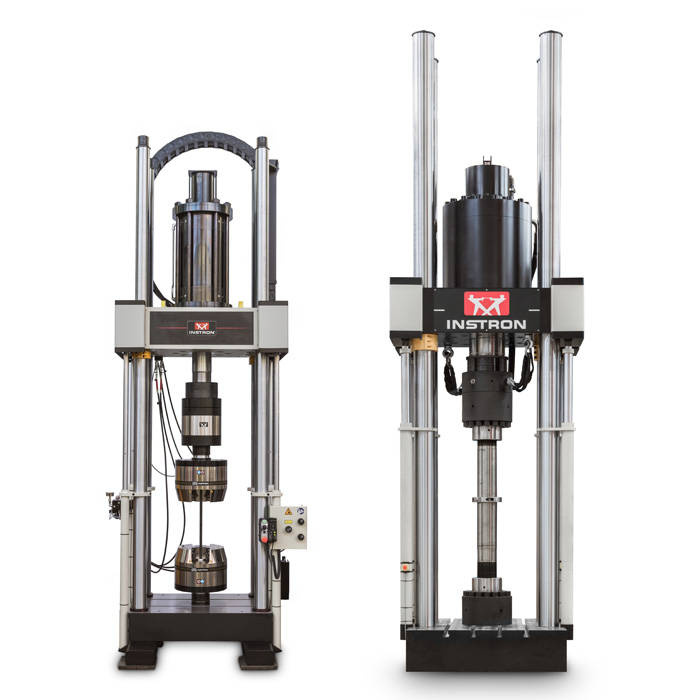
Used to characterize the fatigue life of high-strength materials, determine product life cycle, and provide insight into how a material will fail.
Retrofit or Replace Outdated Equipment
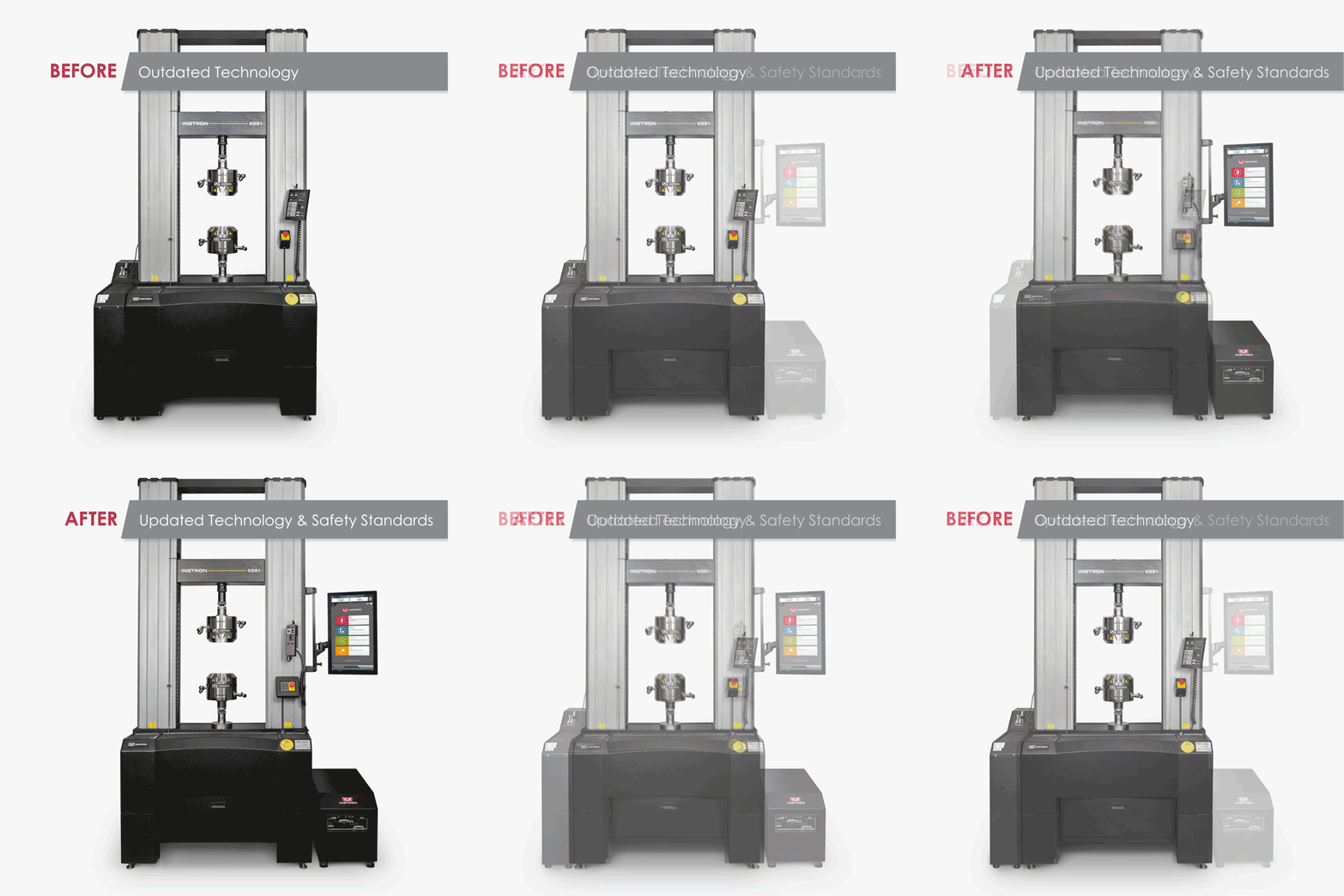
Now is the time to modernize your testing equipment. Instron offers multiple options for replacing outdated parts and components, up to and including full system replacement. Instron's system retrofits provide a comprehensive overhaul of your machine, replacing all at-risk components to rejuvenate your system and extend its life for years to come.
Where system replacement is preferable, our high-force 6800 Series floor models and Industrial Series static hydraulic frames are available for testing up to 2,000 kN. Instron can also retrofit machines from other suppliers.
Talk to an Applications Engineer
Tell us about your testing needs, and we'll help you configure the right frame, load cell, grips, and software for your lab. Please complete the form below, and we'll respond within 1-2 business days. For a faster response, call +1-800-473-7838 or +1 781 828 2500 if you are outside of the US.

SUPPORT THAT LASTS
80+ Years of Expertise and 250+ Field Service Engineers, Committed to Your System's Entire Life Cycle

Service Agreements
Coverage tiers from preventive maintenance to full parts & labor.

Live Diagnostics
Remote diagnostics via Instron Connect, resolving many issues without a site visit.

Training
Operator and engineer-level training, on-site or virtual, to build operator confidence.

Upgrades
Field-installable software and hardware upgrades to extend the life of your system.