
How To
7월 18, 2024
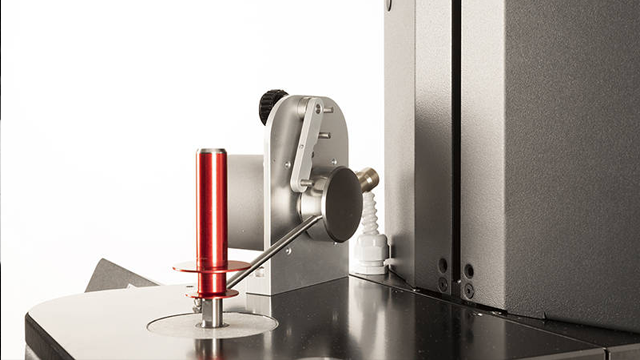
High vs. Low Flow Materials: 4 Testing Solutions to Enhance Reliability and Accuracy of Your Results
Unveiling the secrets of plastic behavior for enhanced product development.
10월 16, 2023
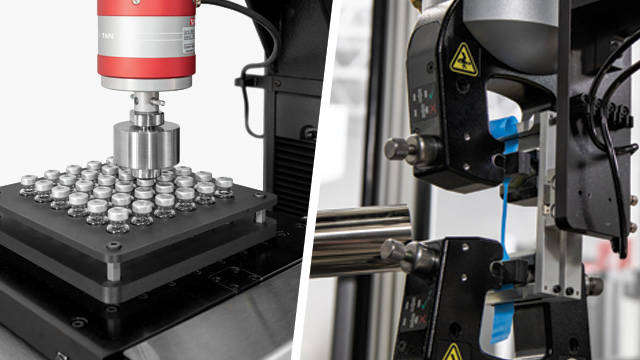
How to Choose the Right Mechanical Testing Automation for Your Biomedical Manufacturing Lab
We look at the key factors to consider when addressing the specific challenges posed by biomedical device testing.
Posted By Nick Erickson
7월 7, 2022

The ABCs of XY Stage Adhesive Tack Testing
In volume 4 of our Tales from the Apps Lab Series, we take a look at tack testing of a hydrogel adhesive patch used in a wearable nerve stimulation system.
Posted By Nick Erickson
6월 29, 2022
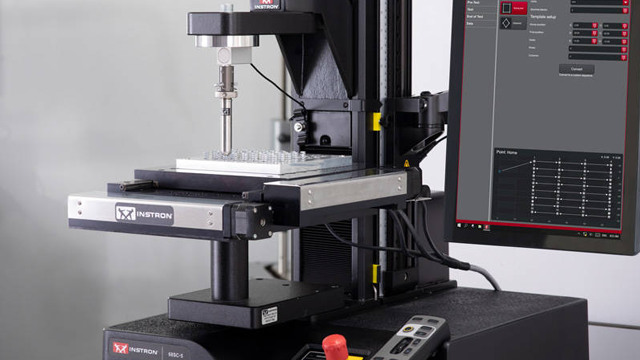
Top Benefits of Semi-Automation for Materials Testing
Learn how a semi-automated testing system can help labs achieve improved throughput, efficiency, repeatability, and safety.
Posted By Nick Erickson
6월 3, 2022

I Hope This Tree Isn’t Afraid of Needles!
In Volume 3 of Tales from the Apps Lab, we take a look at a unique application involving injecting medicine into trees.
Posted By Nick Erickson
4월 18, 2022

Alignment Tips for the AutoX750 Extensometer
Five easy steps to achieve proper alignment for the AutoX750 automatic contacting extensometer.
Posted By Nick Erickson
4월 5, 2022
Why is Pendulum Impact Testing Important in Research
Charpy and Izod impact tests play a vital role in the plastic chain, especially in raw material supply and recycling applications. The impact strength is one of the most crucial properties for polymer-based materials and it is commonly seen on materials data sheets. Knowing the impact strength of plastics allows manufacturers to classify the materials for specific purposes.
4월 4, 2022
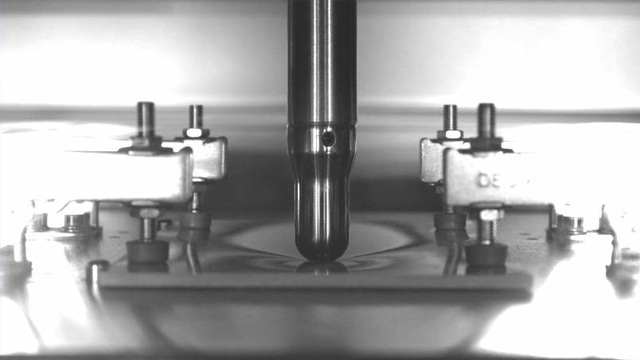
How to Perform a CAI Test More Accurately and Safely
A CAI test (compression after impact test) is critical to assessing the damage resistance of composites according to ASTM D7136 and other industry standards. Here we look at how the latest drop weight impact testing machine technology can help you perform a CAI test more accurately and safely.
3월 15, 2022
Using a 3-Jaw Chuck for Materials Testing
In this video Instron Applications Engineer, Charlie Pryor, discusses how a 3-jaw chuck is a useful accessory to have in the lab for compression, tensile, torsion, rigidity, and tack testing applications. Compatible with Instron MT torsion testers, universal testing machines, and the torsion add-on, the 3-jaw chuck can be used to mount a variety of attachments, including probes, screwdriver bits, custom-made adapters, and can even be used to clamp directly onto specimens.
Posted By Nick Erickson
3월 11, 2022

How to measure the Melt Flow Index of recycled and biodegradable plastics
Learn how modern melt flow index testers address the challenges of measuring recycled and biodegradable plastics – ensuring accurate quality assessment amid evolving material demands.
1월 5, 2022

5 steps to selecting hammers for your pendulum impact testing machine
The hammer is a critical component of a pendulum impact testing machine. There is now a wide range of hammers to choose from, covering a broad energy spectrum. Selecting the correct device is key to ensuring repeatable pendulum hammer impact test results. Here are some key considerations and features to look out for to maximize efficiency, safety and accuracy.
11월 24, 2021
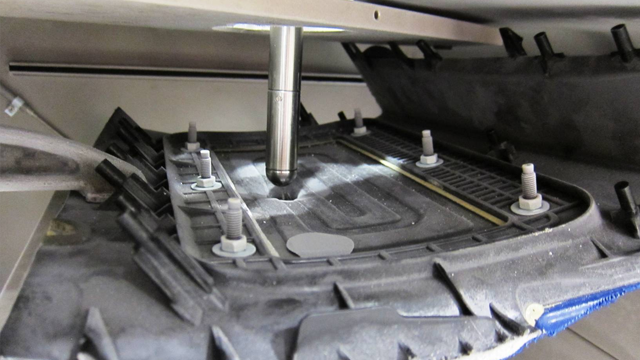
How is an Impact Drop Tower used in Testing Automotive Parts
Why Impact Testing is Important to Automotive Manufacturing With safety being a major priority in the automotive sector, it is vital that manufacturers
10월 27, 2021

Wedge Peel Impact Test on Adhesives
ISO 11343 is a standardized Wedge Peel Impact test method used to measure the resistance of high-strength structural adhesives.
10월 1, 2021

Pendulum Impact Testing Machine or Drop Tower
How to choose the correct Impact Testing Equipment for the application
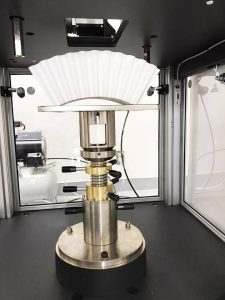
6월 30, 2021
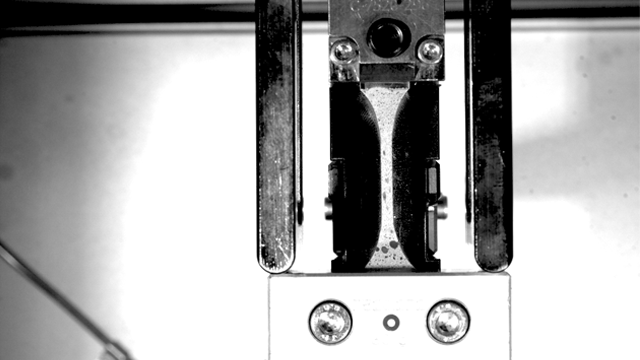
Drop Tower Tensile Impact Testing for High Strain Rate Measurements
If you are dealing with CAE simulations, considering materials’ properties at high-strain rates is critical to get reliable predictions of your product.
6월 15, 2021

How to Test the HDT of 3D Printing Materials
How To How to Test the HDT of 3D Printing Materials Heat Deflection Temperature (HDT) tests play a vital role in 3D printing, especially in fused deposition modeling (FDM) and Polyjet applications. The HDT is one of the most crucial properties for polymer-based 3D printing materials as well as for 3D-printed prototypes and parts. Using […]
4월 28, 2021
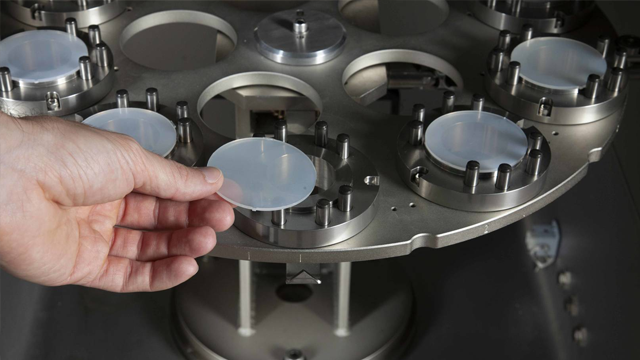
How To Investigate Dynamic Failures of Materials
How To How To Investigate Dynamic Failures of Materials How to adapt Impact Testing to new Materials and Manufacturing Methods The evaluation of the impact properties of materials came into existence a hundred years ago, when S.B. Russell built the first impact pendulum and Georges Charpy introduced the Charpy method as an international standard. The […]
3월 24, 2021

Materials and Applications Solutions for the Biomedical, Plastics, and Elastomer Industries
Materials and Applications Solutions Part 1 of 3 Instron universal testing machines can be used across industries to meet many different mechanical
9월 7, 2016

Why Measure Strain Optically?
How To Why Measure Strain Optically? Considering optical extensometers for your materials testing system. Working closely with Quality Magazine, our advanced strain product manager Leo Martinez wrote an article exploring the advantages of measuring strain optically. This article explains how optical strain measurement works and compares it to traditional contacting strain measurement. Later, the article […]
9월 7, 2016

Opticle Strain Article
How To Why Measure Strain Optically? Considering optical extensometers for your materials testing system. Working closely with Quality Magazine, our advanced strain product manager Leo Martinez wrote an article exploring the advantages of measuring strain optically. This article explains how optical strain measurement works and compares it to traditional contacting strain measurement. Later, the article […]
8월 25, 2016
Custom Fixture for Plastic Drinkware
How To Custom Fixture for Plastic Drinkware The red plastic cup. Something often found at family parties or American backyard events, the iconic red plastic cup has even been featured as the subject of a well-known country song. But, what happens when the product starts to become commoditized and brand-name manufacturers are forced to […]
8월 1, 2016
Non-Contacting Strain Measurement Techniques in Fatigue Testing of Polymer Matrix Composites
How To Non-Contacting Strain Measurement Techniques in Fatigue Testing of Polymer Matrix Composites Advances in Extensometry Things have come a long way since the original extensometer by J. A. Ewing (c.1890) which was screwed onto the specimen and manually read from a Vernier scale; now we have the ability to continuously and automatically measure strain […]
6월 1, 2015
Digital Image Correlation for Measuring Full-field Strain and Displacement
How To Digital Image Correlation for Strain Measurement Overcoming Challenges of Rebar Testing Contact us Digital Image Correlation for Measuring Full-field Strain and Displacement With Digital Image Correlation (DIC) on the rise to measure full-field strain and displacement, Instron talks with Advanced Materials & Processes (AM&P) on this optical technique. “Traditional strain measurement requirements involve […]
11월 24, 2014
Tips and Tricks for Packaging Testing
How To Tips and Tricks for Packaging Testing Explore best practices to better provide quantitative information about tear resistance, puncture resistance, peel strength, heat seal strength, and durability of materials used in flexible and rigid packaging, and finished packaging products. Tips & Tricks for Packaging Testing from Instron
11월 5, 2014
Challenges of Rigorous Demands
How To Challenges of Rigorous Demands Leonardo Martinez The world of materials testing is changing materials are getting stronger, stiffer, and lighter test standards are becoming stricter testing labs are asked to perform more complex analytical tests With all of these changes affecting the way labs test, it’s important to think about the following questions: […]
11월 5, 2014
Question From a Customer: Air Bubbles in Extrudate
How To Question From a Customer: Air Bubbles in Extrudate Elena Mangano Q: We have an MF30 Melt Flow Indexer and started running tests on various polymers in our lab. Some of the samples have a lot of air bubbles in them. I believe this is contributing to inconsistencies in melt flow values. How do […]
10월 8, 2014
Is Design Validation Slowing Down Your Time To Market?
How To Is Design Validation Slowing Down Your Time To Market? Elayne (Schneebacher) Gordonov Instron interacts with many new product development labs that have a need to validate their new product or component design. Often part of this design validation requires mechanical testing. We have noticed a common need in these research and development labs […]
9월 25, 2014
Stress Control and Yielding Material
How To Stress Control and Yielding Material David Fry Since the first materials testing machines were used for tensile testing of metals, one option of performing the test has been to control the rate at which you apply load to the specimen, or apply stress. This technique has been successfully used on manual hydraulic machines […]
9월 23, 2014
How to Test Lap-Shear Specimens
How To How to Test Lap-Shear Specimens Leonardo Martinez Manufacturing processes are moving away from using traditional bolts and rivets to using new, stronger adhesives to hold together materials such as composites and aluminum. With this increase in bonded manufacturing, it is more important than ever to accurately test the adhesive strength of bonds to […]
9월 10, 2014
Helping to Provide the Good Housekeeping Seal of Approval
How To Helping to Provide the Good Housekeeping Seal of Approval Ever wonder how the beauty industry can make their claims? Research and testing is behind the development of beauty products to determine the best technologies, formulas, and products to meet goals. When consumers want to hear the validity of the claims, they look to […]
9월 4, 2014
Testing a Student-Made Off-Road Vehicle
How To Testing a Student-Made Off-Road Vehicle When Northeastern University students visited our Norwood, Massachusetts headquarters, Instron employees had a chance to ride an off-road vehicle. As a platinum sponsor, Instron assisted the student engineers in their quest to finish first. Instron employees taking a ride in the student-designed car For the Baja SAE […]
8월 28, 2014
Preloading, and How It Affects Your Mechanical Test
How To Preloading, and How It Affects Your Mechanical Test Elena Mangano It is almost always recommended that the Bluehill® Software preload feature be used when you’re performing a mechanical test. Preloading simply removes slack from the load string before a test begins. This is done by loading the specimen at a specified rate – […]
8월 25, 2014
Automated XY Stage System Preventing Shattered Glass and Inaccurate Data
How To Automated XY Stage System Preventing Shattered Glass and Inaccurate Data Suzanne de Lemos-Williams A pharmaceutical customer came to us with what they thought was a simple, low force, compression testing procedure that they wanted to automate to keep pace with increasing product testing demands. What we found was an unreliable testing procedure that […]
8월 13, 2014
High Frequency Testing of Nitinol Wire
How To High Frequency Testing of Nitinol Wire Sarah Jastram Nitinol wire is a superelastic alloy with unique shape-memory properties that render it especially useful for a variety of different applications across industries. As nitinol requires a great deal of motion and flexibility in its applications, mechanical testing of nitinol must reach very high fatigue […]
8월 5, 2014
Quick Tips for Balancing Load Cells
How To Quick Tips for Balancing Load Cells Elena Mangano Whether you use bathroom scales, digital kitchen scales, spring scales – or any other measuring instrument, for that matter – you know the importance of zeroing it before it’s used. Failure to do so results in a shift in weight and thus, an incorrect reading […]
8월 4, 2014
What is the Best Way to Grip Thin-walled Steel Tubes for Tension Testing?
How To What is the Best Way to Grip Thin-walled Steel Tubes for Tension Testing? Q. What is the Best Way to Grip Thin-walled Steel Tubes for Tension Testing? A. For testing most tubular specimens, you should use vee-serrated grip jaws. They hold the specimen securely and the vee face ensures that the specimen is […]
8월 1, 2014
Extensometer Slippage
How To Extensometer Slippage Some of our customers are frustrated when they experience slippage of their strain gauge extensometers. Close examination of their extensometer knife-edges often reveals wear that has rounded the edge, increasing the likelihood of slippage. If you are experiencing extensometer slippage, take a close look at your knife-edges. For replacement parts, please […]
7월 29, 2014
Efficiency of Continuously Increasing Load During Tests
How To Efficiency of Continuously Increasing Load During Tests This month, Instron hydraulic wedge grips had the privilege to be on the cover of Materials Testing, a German-English materials testing journal. The journal published an article by an Instron customer about testing the fatigue behavior of construction materials. Microstructure-Oriented Fatigue Assessment of Construction Materials and […]
7월 24, 2014
How Do You Prepare Your Specimens?
How To How Do You Prepare Your Specimens? Elena Mangano Depending on the materials you are testing and the size of your test lab, there are a multitude of ways to prepare materials testing specimens. For more rigid materials like metals, composites and hard plastics, there are specialized and dedicated machining or molding processes. For […]
7월 18, 2014
Looking for Ways to Keep Bent Test Specimens Securely Aligned?
Looking for Ways to Keep Bent Test Specimens Securely Aligned? Gripping bent specimens is challenging, but there are a few things you do. One, flatten the tabs with a small press prior to inserting into normal grip jaws meant for flat specimens. Two, use a combination of convex and concave grip jaws to eliminate the […]
6월 10, 2014
Does a Charpy or an Izod Impact Test Replicate any Real-Life Scenarios?
How To Does a Charpy or an Izod Impact Test Replicate any Real-Life Scenarios? Shalmalee Vaidya Q: Does a Charpy or an Izod impact test replicate any real-life scenarios by impacting the sample on a notched side (Izod) and an unnotched side (Charpy)? A: The answer to this question is “No”. The Charpy and Izod […]
6월 10, 2014
Reminder to Not Let Your Standards Slip
How To Reminder to Not Let Your Standards Slip You most likely understand the importance of regularly calibrating your testing and measuring equipment and making sure it is maintained to the highest standards to ensure the data that you capture is as accurate as possible. But do you regularly review your testing standards? ASTM and […]
6월 10, 2014
Quick Tip: Determining if a Specimen is Too Heavy for Your Test
How To Quick Tip: Determining if a Specimen is Too Heavy for Your Test Q: I have a 1 kN load cell. How do I determine if a specimen would be too heavy for my tensile and compression tests? A: To be cautious, always use mechanical limits to ensure that grips or platens aren’t compressed […]
3월 7, 2014
1월 31, 2014
What is The Difference Between Proportional and Non-proportional Clamping Force?
How To What is The Difference Between Proportional and Non-proportional Clamping Force? David Fry While there are many varieties of gripping technologies (wedge, screw, hydraulic, pneumatic, etc.), they all can be classified as proportional or non-proportional according to the way in which the clamping force is exerted on the specimen. Proportional Clamping Force – The […]
1월 16, 2014
What is the Best Way to Check the Functionality of my ElectroPuls™ Load Cell?
How To What is the Best Way to Check the Functionality of my ElectroPuls™ Load Cell? Sarah Jastram Instron load cells are robust and built to last. Therefore, checking the load cell’s functionality on a daily basis is not usually necessary unless you suspect a real problem. That being said, it is always a good […]
1월 8, 2014
What is N-value?
How To What is N-value? In one of our previous posts, we blogged about plastic strain ratio, r. Besides r-value, another parameter that is commonly measured in metals testing is the n-value. So what is n-value? n-value, also known as the strain hardening exponent, is the measure of a metal’s response to cold working. Cold working […]
11월 13, 2013
Question From a Customer: How to Report Strain at Break Following ASTM D638
How To Question From a Customer: How to Report Strain at Break Following ASTM D638 Elayne (Schneebacher) Gordonov Question: I am following ASTM D638-10, and my ‘strain at break’ results are nearly half of what other labs are reporting for the same material. What is wrong? Reply: If your material exhibits necking or inhomogeneous strain, […]
11월 8, 2013
What is Digital Image Correlation (DIC) and How Can It Help Me?
What is Digital Image Correlation (DIC) and How Can It Help Me? Leonardo Martinez Digital Image Correlation (DIC) is an analytical technique that compares images of a specimen’s surface during testing to generate full-field strain maps. This technology gives you more information than a traditional point-to-point extensometer or a strain gauge and allows you to […]
Posted By Leonardo Martinez
10월 28, 2013
Question from a Customer: What tup do I use on my 1,800 J (1,330 ft-lb) drop tower?
How To Question from a Customer: What tup do I use on my 1,800 J (1,330 ft-lb) drop tower? As a starting point for this response, the 1,800 J is the impact energy that your drop tower is capable of reaching. Selection of which tup to use does not have as much to do with […]
9월 30, 2013
Simulating a Spring with the ElectroPuls
How To Simulating a Spring with the ElectroPuls Sarah Jastram As the number of patients seeking “in-home” medical care grows larger, medical device companies find themselves catering to an increasing demand for safer, more user-friendly biomedical solutions. In an attempt to mitigate the injection process, medical device companies have developed the auto-injector, a spring loaded […]
9월 25, 2013
Upper Yield Calculations—Discontinuous Yielding/YPE Material
How To Upper Yield Calculations—Discontinuous Yielding/YPE Material David Fry Following a recent lab visit, I thought it was worth writing a quick post to share an example of how labs sometimes incorrectly calculate yield strength. While visiting a testing lab for unrelated issues, my colleagues and I were discussing how the customer runs both continuous […]
9월 13, 2013
What Does Load Measurement Accuracy of 0.5% of Reading Down to 1/100th, 1/500th, 1/1000th of a Load Cell’s Capacity Imply?
How To What Does Load Measurement Accuracy of 0.5% of Reading Down to 1/100th, 1/500th, 1/1000th of a Load Cell’s Capacity Imply? Janice Tan First of all, there are two important pieces of information here: Load accuracy: ± 0.5% of the reading Lowest possible load within this accuracy: 1/100, 1/500, 1/1000 of load cell capacity […]
7월 16, 2013
Equipment Considerations for a Well-aligned Test
How To Equipment Considerations for a Well-aligned Test Leonardo Martinez When testing stiff or brittle materials, such as composites, alignment is crucial—even instances of slight misalignment can throw off test results. Misalignment in test frames takes two forms: concentricity misalignment, where the centerline of the upper grip/fixture is offset from the centerline of the lower […]
7월 3, 2013
Question from a Customer- Bagley Correction
How To Question from a Customer- Bagley Correction Shalmalee Vaidya Question: Can we compare viscosity results between polymers tested at the same temperature and identical shear rates but on two different capillary rheometers? Answer: As an example, let’s consider two capillary rheometers with the following specifications and test parameters. Rheometer A: Barrel diameter = 9.55 […]
6월 14, 2013
Question from a Customer
How To Question from a Customer Q: Do you have the necessary equipment and expertise to adjust and verify Instron equipment to accuracy levels demanded by national and international standards such as ISO and ASTM? Do your verification/calibration certificates report measurement uncertainty for each measurement taken? A: Our verification certificates report calculated measurement uncertainty for […]
6월 7, 2013
What is Stress Whitening, and How Can it Impact Your Test
How To What is Stress Whitening, and How Can it Impact Your Test Elayne (Schneebacher) Gordonov Thermoplastic polymers may exhibit a change in color under tension. This phenomenon is known as stress whitening and may occur in both semi-crystalline and amorphous thermoplastics. What is really happening here? When an axial load is applied to a […]
2월 15, 2013
Question From a Customer: Why is Strain Rate Important?
How To Question From a Customer: Why is Strain Rate Important? A. Strain rate is the speed at which a material is deformed and different strain rates can have a big effect on the tensile properties of some materials. Take silly putty as an example. If you slowly pull on a piece of silly putty, […]
2월 1, 2013
Simulating a Physiological Environment
How To Simulating a Physiological Environment In the biomedical world, testing at body temperature and mimicking fatigue felt over time is crucial to ensure the longevity of medical devices. When Director of Medical Devices and Biomaterials Jim Ritchey was at MD&M East, he demonstrated how the BioBox and ElectroPuls help with this need for practical […]
12월 27, 2012
4월 19, 2012
Composites Question from a Customer
How To Composites Question from a Customer Q: What is the most effective gripping technique for a composite specimen with a hard, smooth surface? A: Generally, we recommend a careful choice of grips, grip face finishes, and specimen preparation. Grips: To avoid specimen slippage, we recommend hydraulic grips since composite materials are typically tabbed and […]
3월 14, 2012
Quick Tip on Gripping
How To Quick Tip on Gripping Q. I find it rather difficult to avoid torsion when gripping flexible specimen like paper. Any tips? A: Depending on the style of grips, torsion should not be an issue. To minimize the torsion, ensure proper alignment of the grips. Bringing the upper and lower grips closer together will […]
3월 6, 2012
Question from a Customer
How To Question from a Customer Q. What is the resolution and accuracy of your Smart Rheo load cell? A. The CEAST Smart Rheo load cells resolution is 0.05% of full-scale and the accuracy is 0.5% of full-scale. For example, the 20 kN load cell has a resolution of 10 N and an accuracy of […]
2월 23, 2012
Quick Gripping Tips
How To Quick Gripping Tips Q: When I grip a specimen it seems that some force is already being applied. Is there a way to avoid that? A: The force applied to a specimen when the specimen is being gripped is a result of the compressive force that faces put on the specimen when gripping. […]
2월 21, 2012
Engaging with Our Readers: Survey Findings
How To Engaging with Our Readers: Survey Findings Two weeks ago we included a survey within TechNotes asking our readers to take a few moments to give us feedback on the Instron Community Blog. We received a great response and various comments on what you would like to read about. Everyone who responded will soon […]
1월 31, 2012
Predicting the Properties of Virtual Materials
How To Predicting the Properties of Virtual Materials Historically, the properties of any new material have had to be determined empirically. It can take many years to transition a material from discovery to a commercial product, which is too slow, given the range of urgent problems that advanced materials can help us solve. A groundbreaking […]
1월 31, 2012
Grip it Right
How To Grip it Right Gripping a specimen correctly is important if you want to acquire accurate test data. To most test operators, this is second nature. Make sure the grips and specimen are well aligned Make sure the grips and grip jaws are suitable for the material being tested and the test loads expected […]
1월 31, 2012
Question from a Customer
How To Question from a Customer Q. What is a “Virtual Measurement”? A. Materials testing software uses two types of measurements to provide resuts or input for result calculations; physical measurements and virtual measurements. A physical measurement is measurement data that is provided directly from a transducer that is monitoring the specimen, such as a […]
1월 17, 2012
Race Ahead of Strain Measurements
How To Race Ahead of Strain Measurements Chirag Patel In the composites community, getting accurate strain readings is especially important. To properly assess the strength and material properties of a given carbon fiber laminate, strain measurements must be done properly and accurately. The importance of accurate strain measurements can be seen in the Formula 1 […]
