Instron

バッテリーセパレーターの突き刺し試験

Electric Vehicle Battery Testing

バッテリーセパレーターの突き刺し試験

AVE 2
AVE 2 Electric Vehicle Battery

課題

バッテリーのエネルギー密度及びサイクル寿命の改善についてポリオレフィンに対する要求は増大しています。セルセパレーター材料の選択に関する課題である、バッテリーの整合性については、内部回路のショートの潜在的危険性により、熱暴走、発火、さらには爆発に至る場合があります。衝撃に対する耐突き刺し強度の評価は、厚さ、層数および重量を減らしながら、最良の性能を有する材料を評価し、選択するために必須となる機械的特性評価です。

インストロンのソリューション

インストロンの9450シリーズ落錘衝撃試験機を使用し、ASTM D3763ISO 6603またはUL2591に沿った試験を実施することで、貫通に対する耐性だけでなく、材料が耐えることのできる最大荷重および変形に関する情報が得られます。Bluehill® Impactソフトウェアは、スマートな既定値と直感的な作業工程で、力/変形曲線と材料特性をリアルタイムに表示するために、インストロン独自の認定力センサとひずみゲージまたは圧電荷重カードで構成されたアクイジションチェーンを完全に制御します。さらに、このソフトウェアは、低温でセルセパレーター材料を試験するための温度制御恒温槽をコントロールして、実際のアプリケーションをシミュレートすることができます。試験処理能力とオペレータ人数の最適化が課題である場合、インストロンは、最大30個の試験片を完全無人で、最大10本の試験片を少ないオペレーター数で試験が行えるスマートソリューションを提供いたします。これによりサイクルタイムと液体窒素の使用量を最大50%の節約できます。

Electrode Anode Testing

Electric Vehicle Battery Testing

tack and peel testing fixtures

Electrode Anode Testing for Electric Vehicle Batteries

There are multiple ways in which batteries can fail. One of the most common modes of failure is caused by the electrode coating material cracking or delaminating from the current collector. This cracking or delaminating is typically caused by the constant charging and discharging of the battery as well as by mechanical loading of the battery in use. It is critical to understand the adhesion strength and longevity of electrodes to ensure that a battery does not fail before the end of its predicted life cycle.

As battery manufacturers work to understand the adhesive properties of their cathode and anode materials, many are also introducing new electrode makeups in an effort to increase the safety and energy density of batteries. Most of these changes are to the anode material with additions such as silicone, which requires further testing and analysis. It is critical to understand how electrode adhesion is influenced by different binders and elements. The three types of testing most commonly used to characterize the adhesive properties and monitor production material for electrodes are 90° peel tests, 180° peel tests, and tack tests.

180° Peel Test

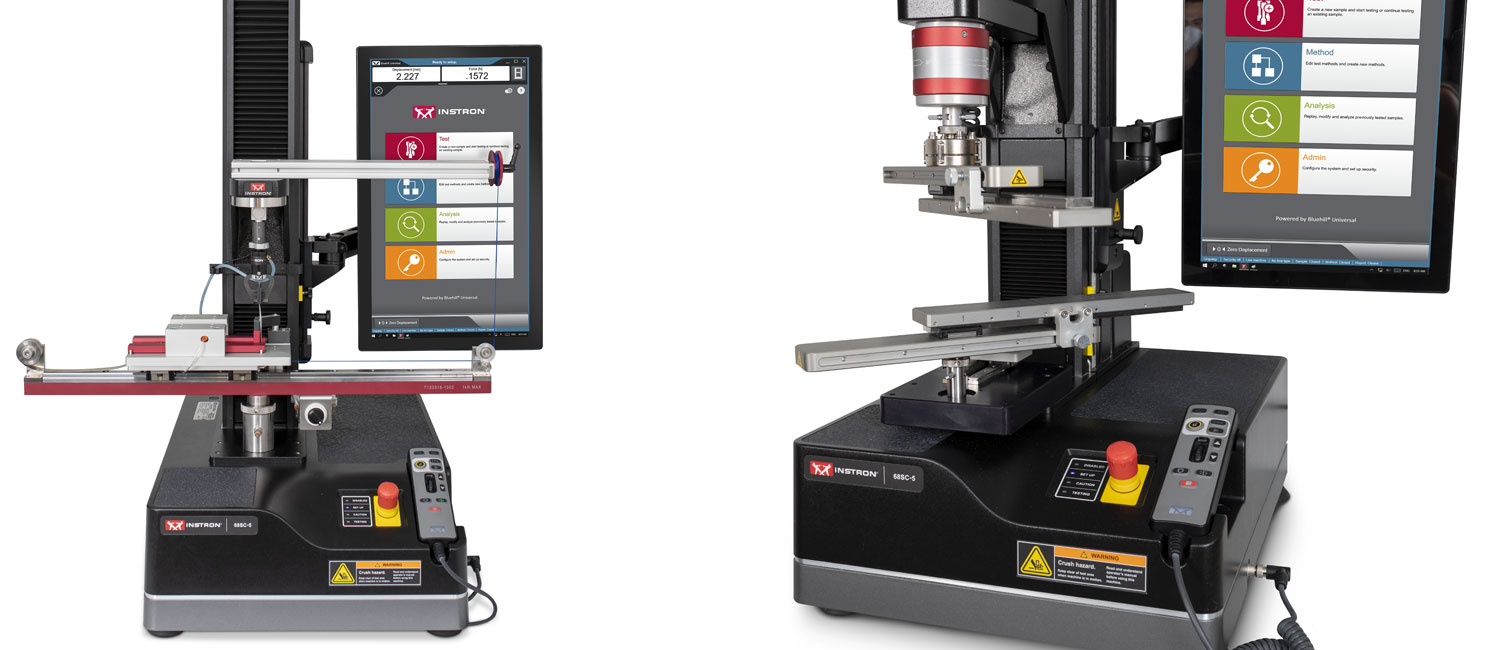
The most commonly performed peel tests are 90° and 180° peel tests. 180° testing has an advantage over 90° testing in simplicity of setup and ease of alignment. This testing can be done using low force grips and load cells along with a substrate that helps the flexible material maintain proper alignment during testing. It is best to consider pneumatic grips and a metal substrate to ensure high throughput and a proper 180° peel throughout each test.

electrode test

90° Peel Test


90° peel testing is commonly seen as an alternative to 180° degree peel testing. The 90° peel test generally involves slightly higher loads than the 180° peel test and can be set up more quickly because it often does not require a substrate. Instron’s most common solutions for this testing are a standard 90° peel fixture or a pneumatic peel fixture designed specifically to test the adhesion of electrodes. The pneumatic 90° peel fixture was developed specifically for electrode adhesion testing and provides improved repeatability and throughput while also aiding the operator in consistent specimen placement and alignment at 90°. For the upper fixture, a pneumatic grip optimizes throughput and repeatability and is recommended for testing delicate materials.

Tack Testing

A tack test is an electrode adhesion test that has been backed by researchers as an additional way to test the adhesion of electrodes to a battery's current collector. Instead of slowly peeling electrodes from the current collector, a tack test focuses on the adhesion strength of an entire predetermined area of electrodes, allowing for quicker evaluation of electrode adhesion over a large area. Instron’s tack testing fixture is designed for ease of specimen preparation as well as high throughput and repeatability. It features predetermined contact areas in addition to a spherically seated and lockable upper fixture, which ensures parallelism between both fixtures. Due to the fast speeds of this testing, a testing system with a very high data rate collection will ensure the best possible results and throughput.


Separator Film Testing for Electric Vehicle Batteries

Electric Vehicle Battery Testing

separator film testing

Separator Film Testing for Electric Vehicle Batteries

A separator is a membrane that separates a battery cell's anode from its cathode. Separator films are a critical part of lithium-ion batteries and other liquid electrolyte batteries. The polymers used for these films must be strong enough to withstand the winding operation during assembly as well as plating of lithium on the anode in an uneven manner due to extensive use. Issues with the selection of the cell separator materials can compromise battery integrity and increase the potential for internal short circuits, leading to thermal runaway, fire, and even explosions. Safer and stronger separator material more effectively prevents contact between the anode and cathode, while thinner material helps reduce the weight of each battery and improve energy density.

The main tests performed to evaluate the mechanical properties of separator film are tensile, puncture, and coefficient of friction tests. Tensile and coefficient of friction testing are critical for ensuring the separator film can withstand manufacturing of the battery, while puncture resistance is a crucial mechanical property used to assess and select the material with the best performance, while reducing the thickness, number of layers, and weight. UL 2591 (Component certification for lithium-ion battery cell separators) was specifically designed
to develop a comprehensive approach to cell separator testing in order to address safety
concerns associated with separators becoming progressively thinner and lighter due to industry trends.


Tensile Test

Tensile testing ensures that separator film can withstand all tensile forces applied during manufacturing and throughout the service life of the battery. There are several standards suitable for tensile testing polymer separators, including ASTM D882 and ISO 527-3. Ensuring proper specimen alignment, insertion, and grip operation are necessary for best repeatability and throughput, as well as to avoid possible damage to a specimen before testing. Instron offers a variety of solutions for tensile testing battery separator films, with both affordable and premium tiers of products designed to provide superior accuracy and throughput for labs requiring them. Testing these materials in accordance to ASTM D882 can be very beneficial for quality control checks as well as during R&D when trying to determine the optimal separator film solution. Additionally, as is the case for many other thin film materials, separator film is anisotropic and so is recommended to be tested in multiple different cutting/testing directions.


Puncture Test

Separator film must be strong enough to withstand punctures from dendrites that form with extensive battery use. This is critical for ensuring the safety and longevity of each cell throughout the lifespan of the battery. Ensuring proper specimen tautness and alignment of the upper probe are critical for this application. ASTM F1306 outlines the puncture testing of flexible barrier films to characterize the material response when a 3.2 mm diameter probe is driven into a clamped specimen. EN 14477 is another standard that characterizes the puncture resistance of thin film materials, however, it uses a smaller probe (0.8 mm) compared to ASTM F1306. High-speed puncture resistance testing to ASTM D3763 can be determined by use of Instron's 9450 Series drop tower.


Coefficient of Friction Test

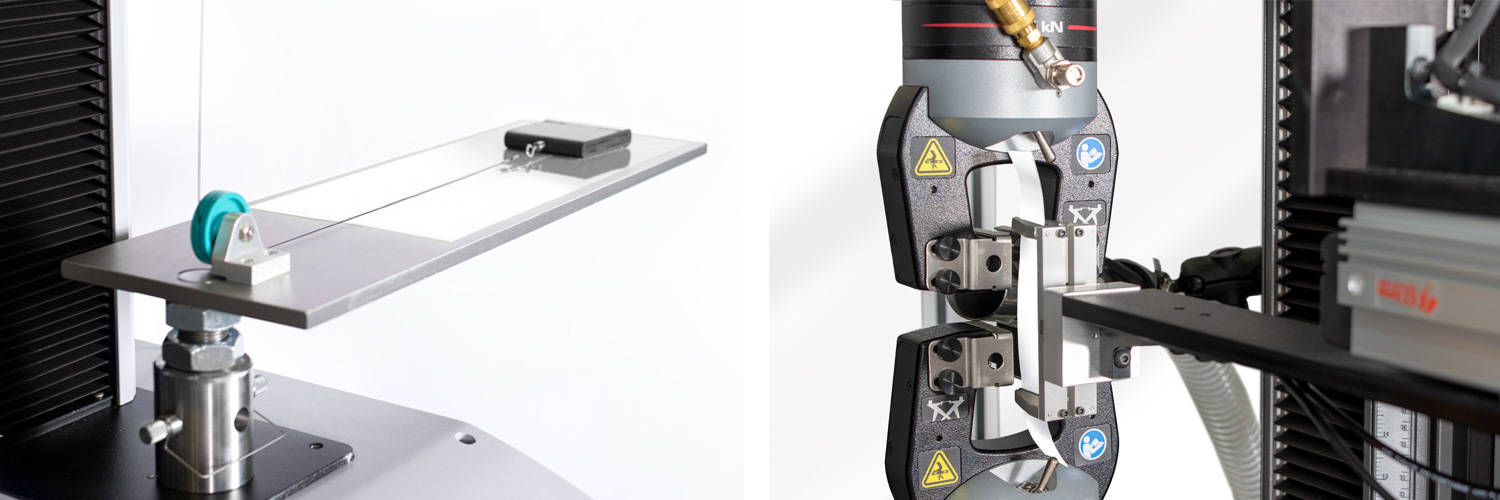
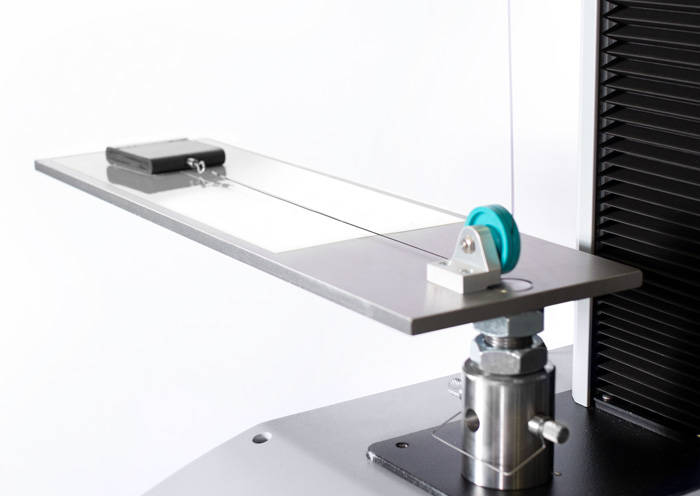
Tight winding creates mechanical loads between the separator film and the electrode coating, and understanding the coefficient of friction can ensure that proper winding processes occur in production. It is common to use ISO 8295 and ASTM D1894-14 as guidance for this testing.

coefficient of friction battery separator film testing 


Automation

Automation systems from Instron introduce a new level of productivity for battery testing. As battery production volumes continue to increase, throughput and efficiency are critical to keep up with demand. Utilizing an automation system with the recommended equipment for each application can free up operators and maximize throughput, while maintaining optimal results.

Foil Testing for Electric Vehicle Batteries

Electric Vehicle Battery Testing

copper foil in tensile testing machine


Foil Testing for Electric Vehicle Batteries


ev battery icon

The electric vehicle battery industry is constantly improving the energy density and safety of their products. A significant focus is on the aluminum and copper foils used in each cell as current collectors. Thinner foil helps to reduce battery weight (contributing to energy density), and longer/wider foil increases production efficiency (contributing to cost reduction). However, as innovation drives foil materials to become thinner, it becomes even more critical to accurately capture their material properties and ensure that adequate quality control measures are in place.

Many companies in the industry are currently working on producing copper foil between 4 and 12 microns thick. However, as copper foil becomes thinner, longer, and wider, improved technology is required to address wrinkling and tearing concerns during production. Given that batteries need to be able to withstand the mechanical loading under normal use, as well as expansion and contraction when charging and discharging over time, the current collector foil must also be able to withstand these factors without yielding. Ensuring that these newer foils are able to withstand the loads required of it during both use and production, increased mechanical testing is needed.

Relevant standards for this application include ASTM E345, EN 546-2, and DIN 50154, which can be used as guidance for testing EV battery foils.

Tensile Test

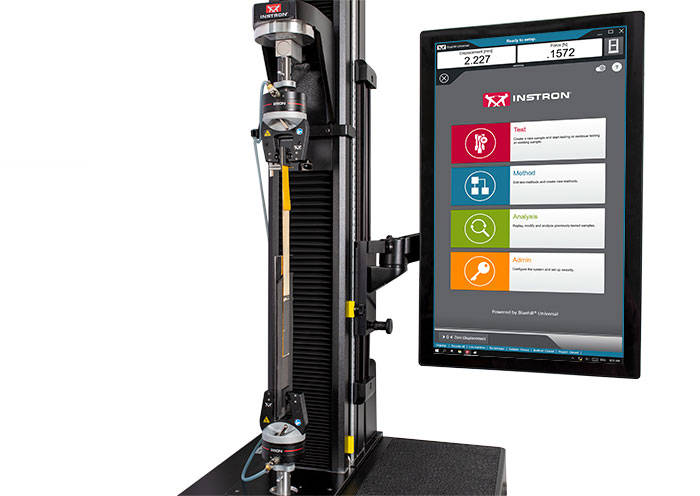
A standard tensile test is the most appropriate way to determine the mechanical properties of aluminum and copper foil specimens. Typically, elongation at break and maximum load are the key material properties that are calculated in mechanical testing, as these properties help ensure the quality of the foil; whether or not it will be able to withstand the mechanical loading and expansion/contraction in use.

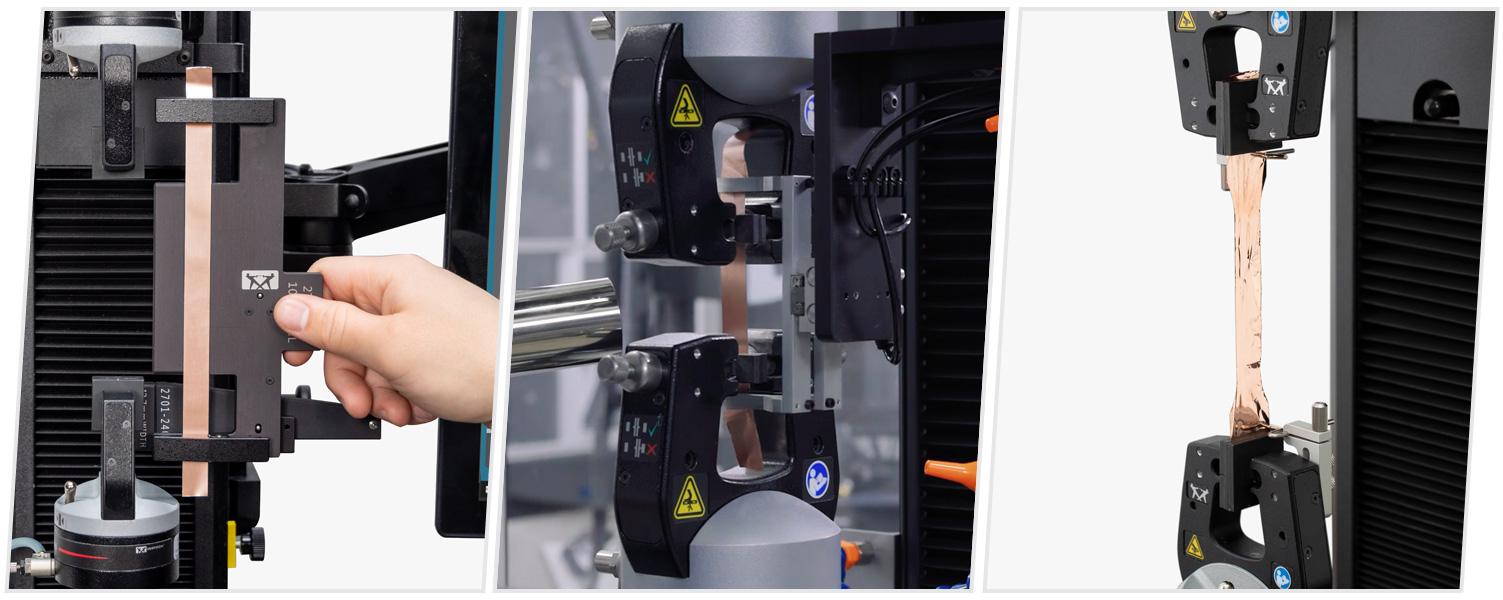
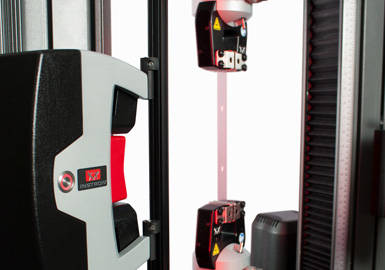
While some standards may call out gripping options, such as wedge action grips, Instron has found that pneumatic side action grips are the optimal solution for foil under 20 microns thick. Pneumatic side action grips offer the ability to fine tune the clamping pressure and they will always provide constant pressure throughout each test. The use of pneumatic grips also improves throughput for these high-volume materials, as quality control labs can test hundreds of specimens per day. An additional factor that must be considered is the type of clamping surface, such as the jaw faces used. The optimal jaw faces to pair with pneumatic side action grips are rubber-coated faces. The soft and pliable rubber is able to adequately hold foil material throughout the duration of a test, while minimizing the stress concentration added by clamping the specimens.

foil testing in universal testing machine


Specimen Preparation and Alignment

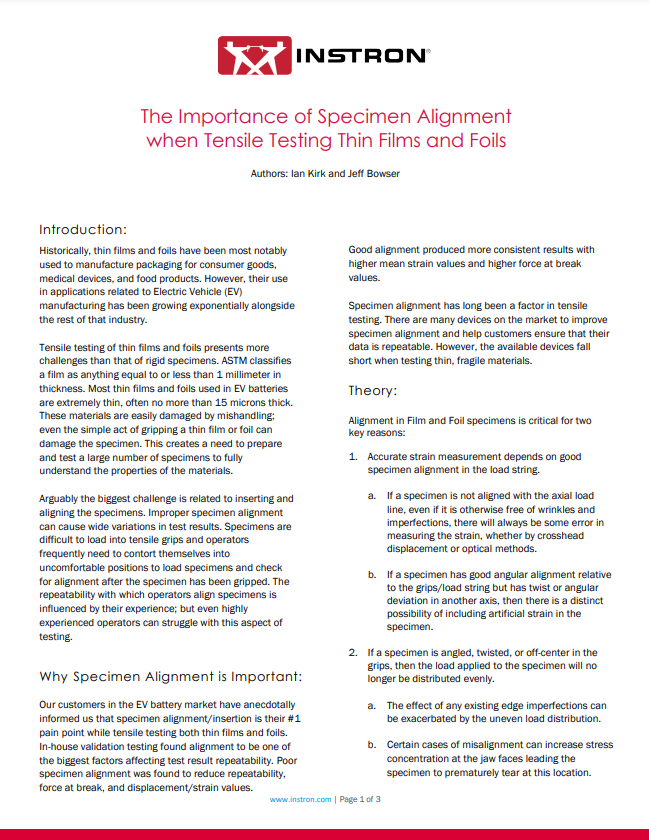
Two of the biggest challenges that come from testing foil material are the preparation and alignment of the specimen. Specimen preparation is extremely critical for such fragile specimens. The better the quality of the cut, the better the quality of the edges will be for each specimen. Poorly cut edges increase the chances of the material breaking prematurely. Premature failure reduces the quality of the test results, and can lead to the need for re-testing.

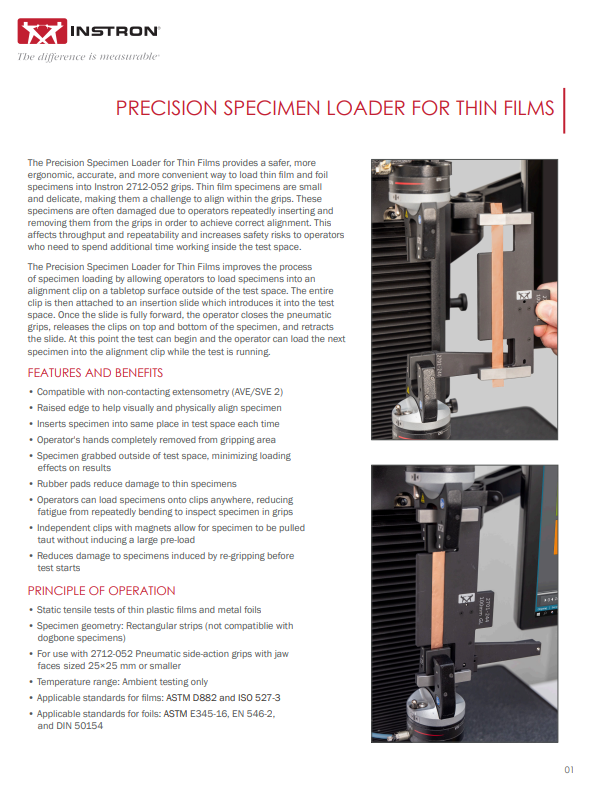
Specimen alignment is also critical for repeatability and protection of the specimen, as thin foils can be noticeably affected by minor misalignment within the grips. Additionally, having to adjust foils within the grips multiple times can sometimes lead to premature breaks due to the damage caused by clamping and unclamping. We highly recommend using Instron’s Precision Specimen Loader to reduce variability in test results while improving ergonomics and safety.

Automation

Automation systems from Instron introduce a new level of productivity for foil testing. As battery production volumes continue to increase, throughput and efficiency are critical to keep up with demand. Utilizing an automation system with the recommended equipment for each application can free up operators and maximize throughput, while maintaining optimal results.