

문헌
브로셔,매뉴얼,백서 및 사례 연구를 위한 문헌 라이브러리

Effect of Frame Alignment on Tensile Strength of Unidirectional Carbon Fiber Laminates
Alignment has always been known to influence results from mechanical testing, but the effect on composites testing can be very significant. Many ASTM and ISO standards include recommendations regarding alignment, and auditing organizations mandate that the alignment is within defined limits. Ensuring good test alignment requires high-quality testing frames, grips, and fixtures, as well as the expertise to validate the alignment. Some companies choose not to align their test frame because they feel that the cost is too high and they believe that the effect on their results is minimal. Read our study that demonstrates the huge impact that alignment can have on test results and the effect that this can have on your company’s bottom line.
Whitepapers 04/30/2014 515.18 KB
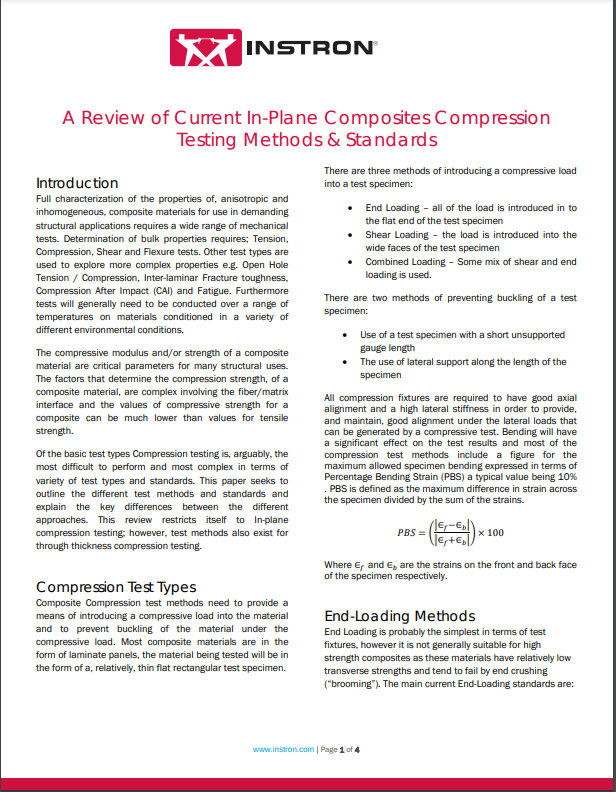
A Review of Current In-Plane Composites Compression Testing
The compressive modulus and/or strength of a composite material are critical parameters for many structural uses. The factors that determine the compression strength are complex and the values of compressive strength for a composite can be much lower than values for tensile strength. One of the challenges in the compression testing of composite laminates is in understanding the various test types and standards. This white paper seeks to document and explain this field.
Whitepapers 04/30/2014 580.64 KB
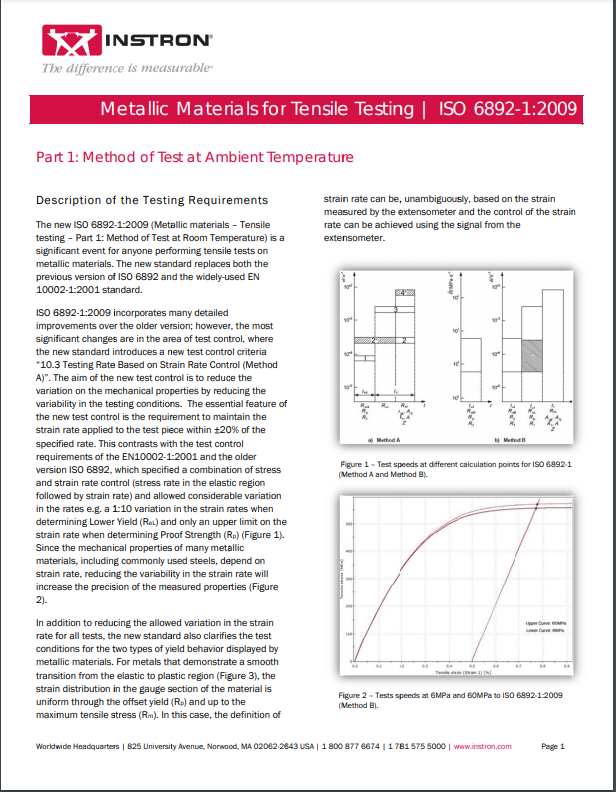
ISO 6892-1:2009 Whitepaper : Metallic Materials for Tensile Testing
This whitepaper provides an in-depth description of how the new standard replaces both the previous version of ISO 6892 and the widely-used EN 10002-1:2001 standard. It is highly relevant reading for anyone performing tensile tests on metallic materials.
Instron testing machines are able to meet the demanding
requirements of ISO 6892-1:2009, both Method A, based
on strain rate control, and Method B, based on stress rate.
Whitepapers 02/14/2013 374.66 KB

Data Acquisition: Bandwidth, Accuracy, and R&R White Paper
This white paper looks at the importance of understanding data acquisition rates and bandwidth settings to ensure accurate and repeatable results.
Whitepapers 11/07/2012 223.68 KB
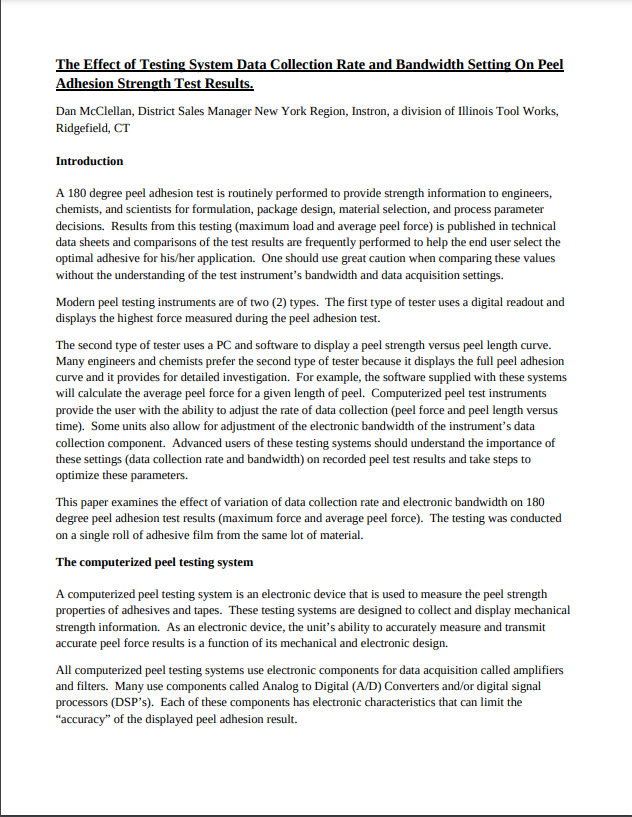
The Effect of Data Collection Rate and Bandwidth Setting on Peel Adhesion Strength Tests
Use caution when comparing the values of a 180 degree peel adhesion test without understanding the test instrument’s bandwidth and data acquisition settings.
Whitepapers 05/09/2012 1.05 MB
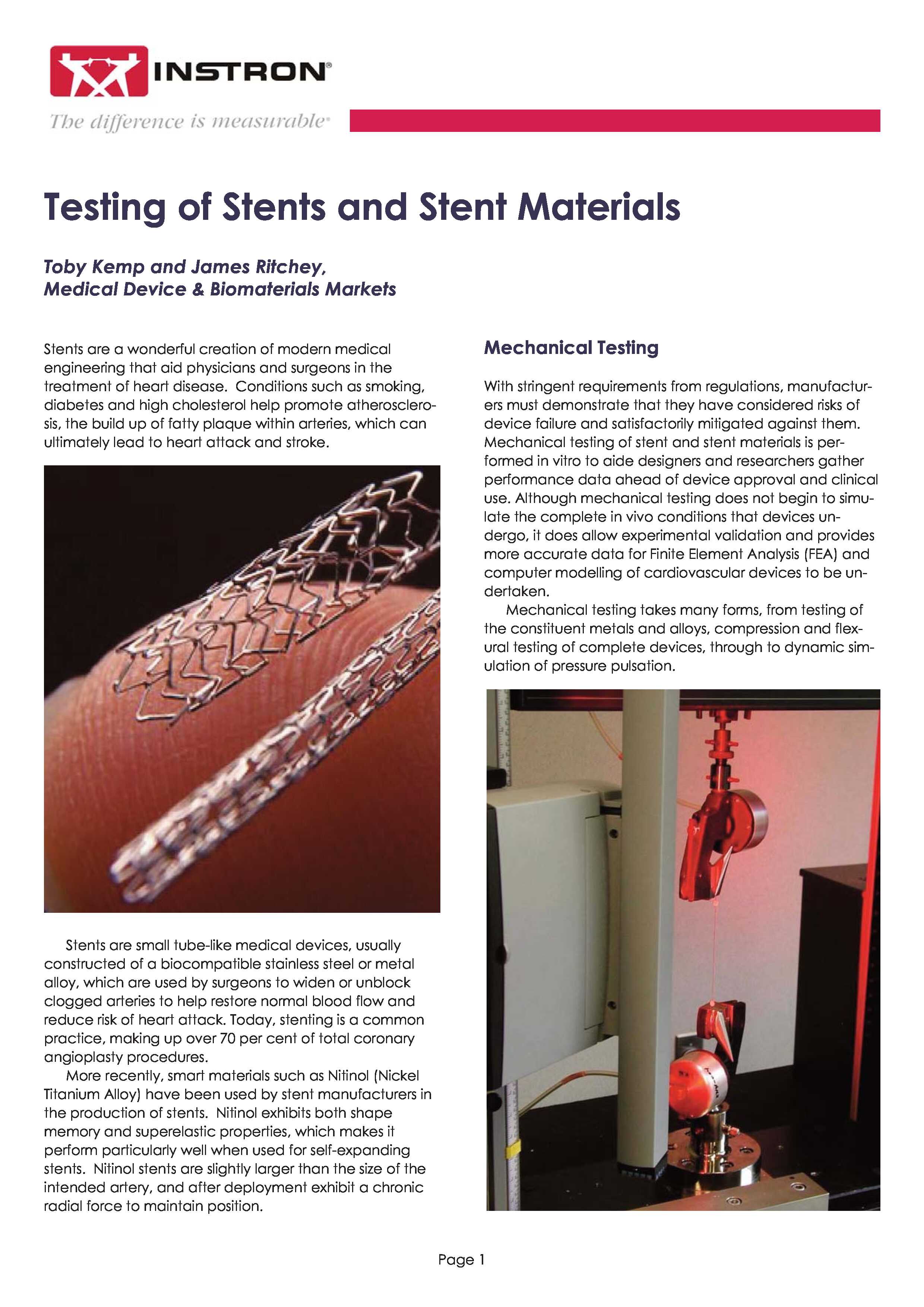
Testing of Stents & Stent Materials
Stents continue to evolve and continued material evaluation and development, as well as the delivery of new testing methods, is important for the evolution and success for these materials.
Whitepapers 03/23/2011 277.85 KB
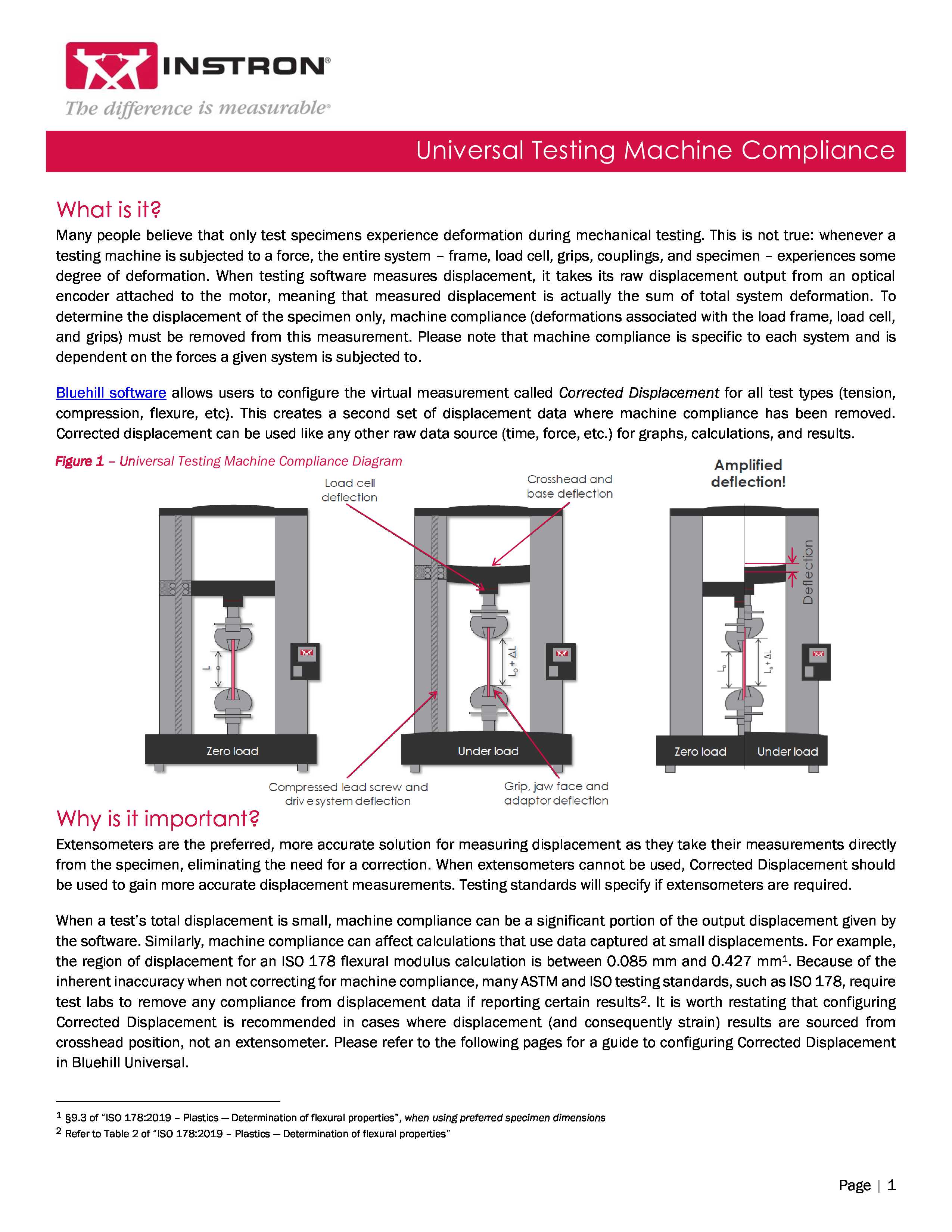
Compliance Correction
When a testing system is subjected to a force, the entire system (frame, load cell, grips, etc.) deforms. The process of removing this deformation, leaving only the results of the deformation of the specimen, is fully described in this white paper.
Whitepapers 12/22/2010 430.09 KB

21 CFR Part 11 Overview for Materials Testing
The paper provides an overview of 21 CFR Part 11 as it pertains to materials testing, electronic records, and electronic signature procedures for industries regulated by the U.S. Food and Drug Administration (FDA). It describes the key elements of 21 CFR Part 11 and provides a methodology for transitioning your lab to a 21 CFR Part 11 compliant laboratory.
Whitepapers 07/25/2008 61.58 KB
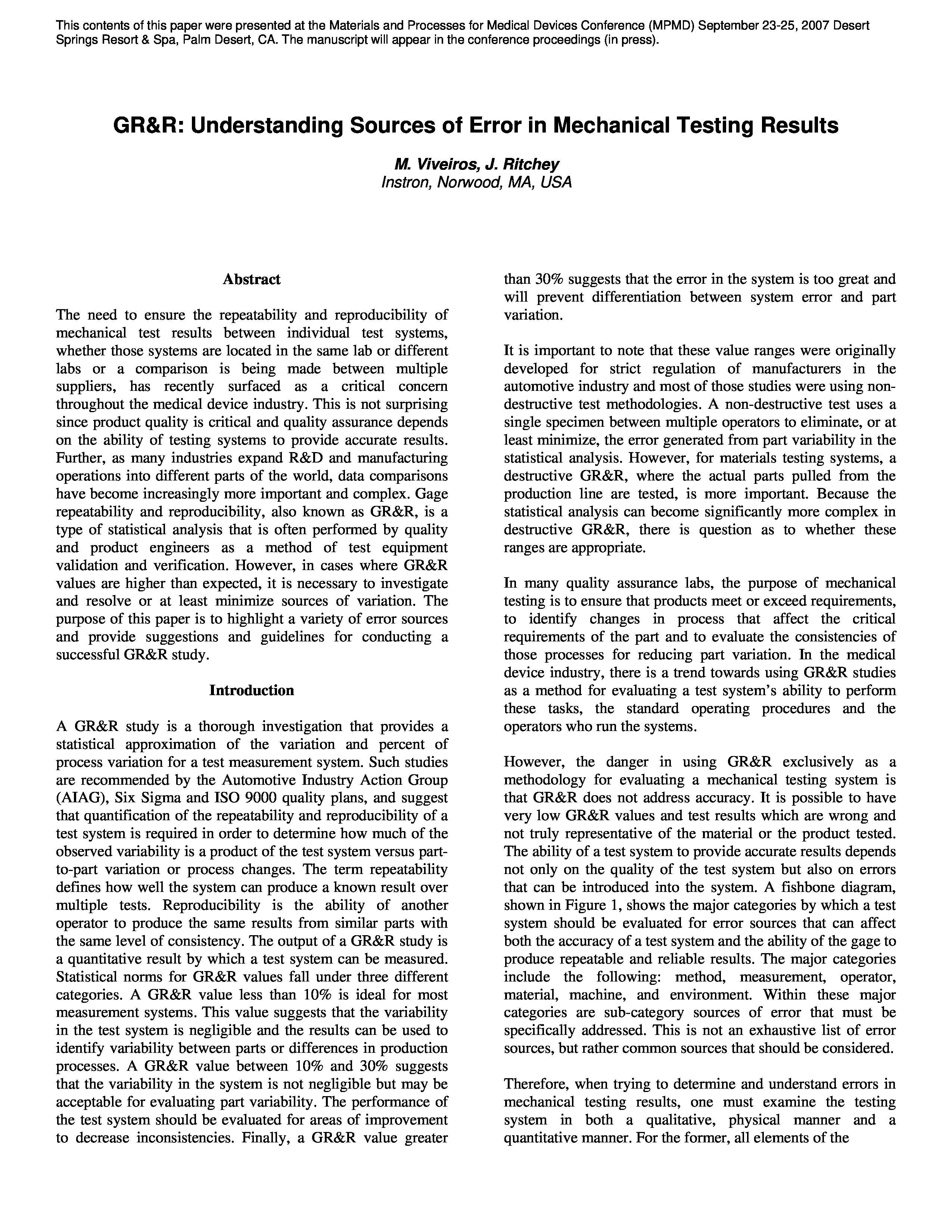
GR&R: Understanding Sources of Error in Mechanical Testing Results
Gage repeatability and reproducibility, also known as GR&R, is a type of statistical analysis that is often performed by quality and product engineers as a method of test equipment validation and verification. The purpose of this paper is to highlight a variety of error sources, and provide suggestions and guidelines for conducting a successful GR&R study.
Whitepapers 06/18/2008 130.69 KB

7 Tips For Materials Testing
Pamphlet of 20 pages that explains seven tips for tests of materials.
Whitepapers 08/09/2006 818.94 KB