
Creep and Stress-Relaxation Test
What is a Creep Test?
A creep test, sometimes referred to as a stress-relaxation test, is used to determine the amount of deformation a material experiences over time while under a continuous tensile or compressive load at a constant temperature. Creep tests are fundamental for materials that are needed to withstand certain operation temperatures under load. For materials such as metals or alloys, their material properties change significantly at higher or lower temperatures. By examining the results from a creep test, engineers can determine a material's expected deformation and avoid failure when designing new systems for different environmental conditions. Creep tests are commonly performed on the following components and materials:
- Metal Working
- Springs
- Soldered Joints
- High-Temperature Materials
How to Perform a Creep Test?
To determine creep properties, a material is subjected to prolonged constant tension or compression loading at constant elevated temperature. While testing, the material's deformation is recorded at specific time intervals and overall data is plotted on a creep vs time diagram. The slope at any point on this curve is known as the creep rate, in which units are expressed in terms of in/in/hr or percent(%) elongation/hr. Maintaining a constant temperature during a creep test is critical due to the possible thermal expansion or shrinkage of the material.
Three Stages of Creep Testing
Specimens pass through three different stages during a creep test. The first stage is primary creep, where the creep rate begins by rising quickly and then slows down and decreases. The secondary stage is where the creep rate remains fairly uniform. During the tertiary stage, when the specimen is expected to reach its breaking point, the creep rate is much steeper than it is in the secondary stage, culminating in specimen failure. If failure occurs, the time for rupture is recorded. If a specimen does not fracture within the creep test period, creep recovery may be measured.
Some examples of standards that require creep testing are ASTM E139, ASTM D2290, ASTM D2291, and ASTM D2294. For more details on testing procedures, please refer to these standards.
How to Determine Stress-Relaxation?
To determine the stress-relaxation of a material, the specimen is deformed a given amount and decrease in stress is recorded over prolonged period of exposure at constant elevated temperature. The stress-relaxation rate is the slope of the curve at any point.

Bluehill Universal 브로슈어
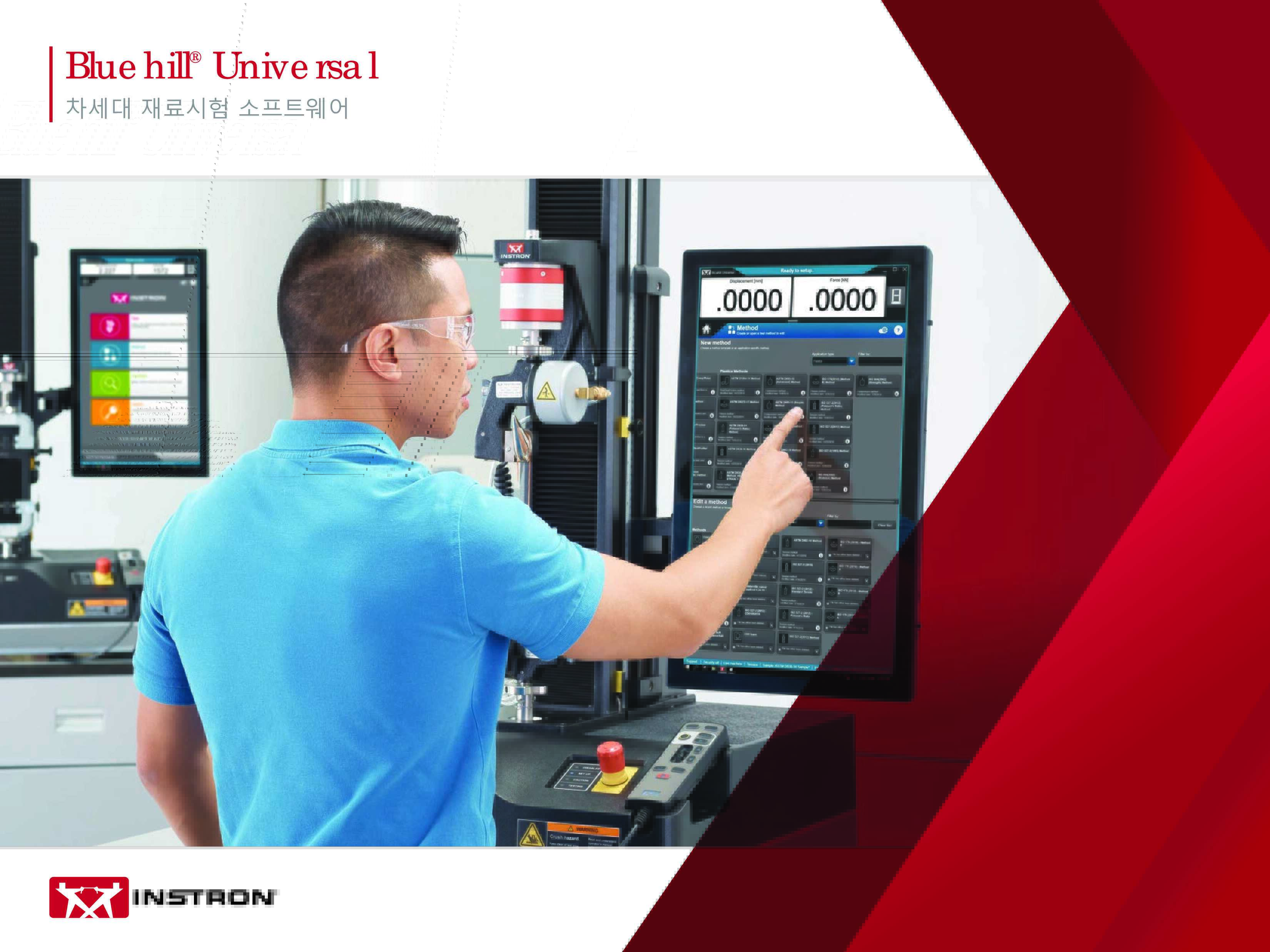
Bluehill Universal은 직관적인 터치 상호 작용과 간소화된 워크플로우를 위해 설계된 Instron의 고급 재료 시험 소프트웨어입니다. 이 소프트웨어는 사전 로드된 시험 방법, 빠른 설정을 위한 QuickTest, 향상된 데이터 내보내기, 그리고 직접적인 서비스 통신을 위한 Instron Connect를 제공합니다. Bluehill 2 및 Bluehill 3 사용자들은 향상된 성능과 사용 편의성을 위해 최신 버전으로 쉽게 업그레이드할 수 있습니다.

6800 시리즈 프리미어 시험기 브로셔
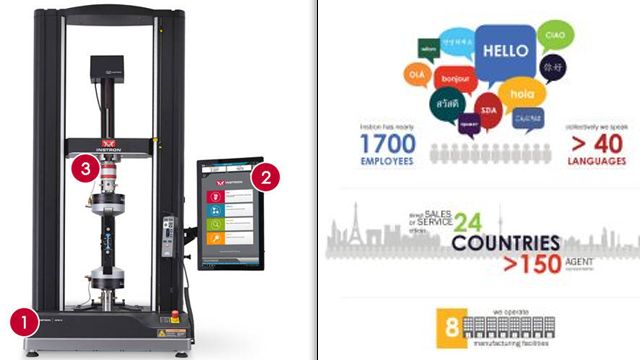
Instron 6800 시리즈 만능 시험기는 최고의 정확도와 신뢰성을 제공합니다. 6800 시리즈는 완전히 새로운 Smart-Close Air Kit 및 Collision Mitigation 기능이 있는 특허 출원 중인 Operator Protect 시스템 아키텍처를 기반으로 하며, 그 어느 때보다 간편하고 스마트하며 안전한 소재 시험을 가능하게 합니다.

