Instron

Schlageigenschaften von Betonträgern
Materials

Schlageigenschaften von Betonträgern

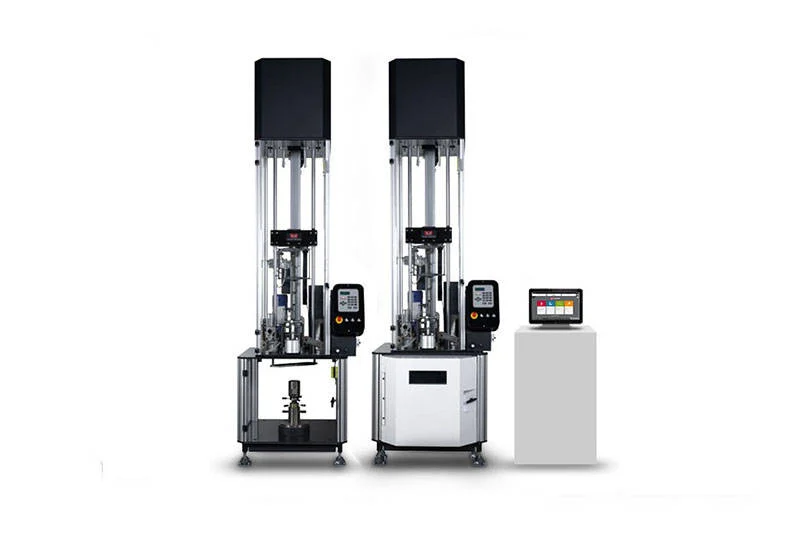
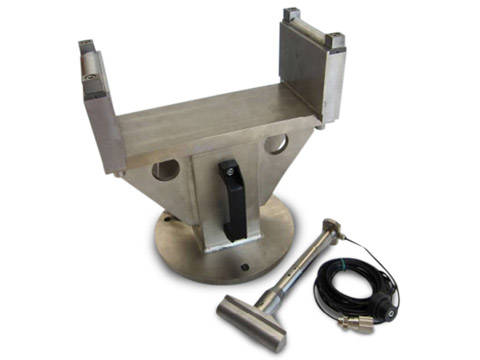
Die Durchführung von Schlagbiegeprüfungen an Betonträgern in einer 3-Punkt-Konfiguration gewinnt immer mehr an Bedeutung. Für diese Prüfungen empfehlen wir je nach der erforderlichen maximalen Energie die Prüfsysteme 9450 oder 9440. Hierfür haben wir eine anwendungsspezifische Vorrichtung mit 300 mm Stützweite und einen speziellen Schlagfinneneinsatz entwickelt. Zur Datenerfassung wurden das Datenerfassungssystem DAS und die die Bluehill Impact -Software eingesetzt.

Die Proben waren 400 mm x 100 mm x 100 mm groß und wurden bei Geschwindigkeiten bis 4,65 m/s geprüft. Bei Bedarf konnte diese Geschwindigkeit erhöht werden. Die Prüfungen zeigten die Versagensmodi und waren so konzipiert, dass damit größere Strukturen simuliert werden konnten, bei denen für die Prüfung wesentlich höhere Energien erforderlich wären, als im Labor erzeugt werden können. Die dabei gewonnenen Ergebnisse waren Gesamtenergieabsorption, Bruchenergie und Bruchverformung.

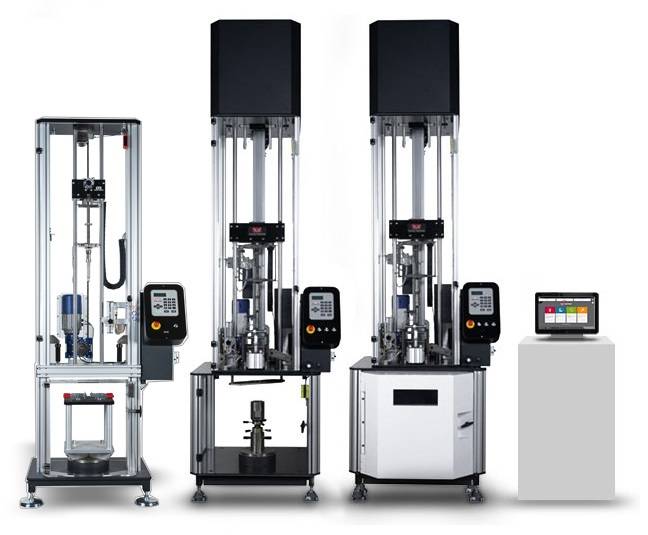
Die Prüfsysteme Serie 9400 eignen sich hervorragend für die Bestimmung des Verhaltens von Werkstoffen bei Einwirkung einer Schlagbelastung. Mit den bei einer solchen instrumentierten Schlagprüfung gewonnenen Daten stehen den Anwendern Referenzwerte zur Verfügung, anhand derer sie die Auswirkungen von Änderungen in der Rohmaterialmischung beurteilen können. Eine breiteres Spektrum von Prüfungen wird durch die Verwendung einer Temperierkammer möglich, mit der Schlageigenschaften bei unterschiedlichen Temperaturen untersucht werden können, oder durch den Einsatz unterschiedlicher Spannvorrichtungen oder Einsätze zur Simulation anderer Stützweiten und Schlagereignisse.

Unterlagen

9400 Series Drop Tower Brochure

Instron Drop Towers are used to develop, fine tune, and validate material models. Testing materials under real impact conditions is a crucial step prior of product design. Using the characterization data obtained with the Instron 9400, coupled with customer supplied high-speed video, you can have confidence in your results and deliver new materials to your customers faster. Our Drop Tower impact systems, fixtures, and tups are designed to meet a wide range of applications and testing standards including: ISO, ASTM, ANSI, Airbus, Boeing, BSI, DIN, EN, FDA, Ford, GM, JIS, NASA, GOST, and more.

  • Produkte
  • 02/05/2020
  • 763.1 KB

9400 Series Dashboard Brochure

Bluehill® Impact is built from the ground up for touch interaction. The Operator Dashboard features large touchpoints to make the user experience simpler and smarter. Easy-to-understand icons and workflows make it easy to train new or experienced users, simplify operator training, and allow you to start testing even faster than ever before

  • Produkte
  • 08/01/2019
  • 2.35 MB

Impact Performance of Composite Decking

Materials

Impact Performance of Composite Decking

Composite Decking
Composite Decking

The backyard deck has taken on an ever increasing role in our lives becoming an extension of a homes interior living space. Traditionally decks have been built from pressure treated lumber, however, cost, life cycle, appearance, construction time, maintenance and environmental concerns are all factors contributing to the huge growth in the use of wood–plastic composites, also known as composite decking.

Made from a wide ranging mixture of wood and plastic, composite decking has certain advantages like durability, color retention and reduced maintenance costs over pressure treated wood. With a material cost 20 to 30 percent more than pressure treated pine, impact performance can be critical. Decks are routinely subjected to a wide range of everyday impact events, dropped tools, patio furniture, ladders and paint cans to name a few, and the types and quantities of the various materials used in the manufacturing of the decking can affect their resistance to impacts.

When approached by a manufacturer of composite decking we recommended a Instron 9450 with optional High energy system, instrumented with a 22.2kN tup, ½” hemispherical tup insert, 1” spherical tup insert, Data Acquisition System and Bluehill Impact software. By varying the tup insert and test velocity we were able to create a range of impact profiles and energies that allowed the customer to simulate a wide variety of impacts that their product might be subjected to.

The 9450 is well suited for helping customers determine the performance characteristics of their materials when subjected to an impact event. The information gathered by doing instrumented impact testing can be used to provide the customer with a data baseline whereby they can determine how changes made in the mix of raw materials will perform in real life situations. A broader range of testing could be accomplished with the inclusion of an environmental chamber to study impact characteristics at different temperatures as well as using different fixtures and inserts to simulate other unsupported spans and impact events.

Literature

9400 Series Drop Tower Brochure

Instron Drop Towers are used to develop, fine tune, and validate material models. Testing materials under real impact conditions is a crucial step prior of product design. Using the characterization data obtained with the Instron 9400, coupled with customer supplied high-speed video, you can have confidence in your results and deliver new materials to your customers faster. Our Drop Tower impact systems, fixtures, and tups are designed to meet a wide range of applications and testing standards including: ISO, ASTM, ANSI, Airbus, Boeing, BSI, DIN, EN, FDA, Ford, GM, JIS, NASA, GOST, and more.

  • Produkte
  • 02/05/2020
  • 763.1 KB

9400 Series Dashboard Brochure

Bluehill® Impact is built from the ground up for touch interaction. The Operator Dashboard features large touchpoints to make the user experience simpler and smarter. Easy-to-understand icons and workflows make it easy to train new or experienced users, simplify operator training, and allow you to start testing even faster than ever before

  • Produkte
  • 08/01/2019
  • 2.35 MB

Drop Tower Impact Testing of Rocks and Stones

Materials

Drop Tower Impact Testing of Rocks and Stones

We have recently been in contact with a customer interested in a non-standard, but extremely interesting, way to perform impact tests. This company is specialized in the development of systems for selective fragmentation of various solids, especially in the mining and geosciences circuits. In these environments, improved methods for mineral comminution are continually being sought, pursuing the goal of achieving the required size reduction at a lower energy consumption level than conventional technology allows. Comminution is probably the largest energy consumer in most mine sites, with major implications for costs as well as environmental pollution. Applying different working conditions with their units they are able to pre-weak the rock or the stone to be comminuted. To understand how much their process is affecting the raw material, we suggest them a basic impact test by a means of a drop tower.

To help them to completely characterize the process, we have offer a 9450 drop tower equipped with a special support and a dedicated tup plus insert. The pre-weakened rock/stone will be placed for the test on the dedicated flat support. This support is connected to a reinforced adjustable height stand, which allows the proper positioning of the specimen for the impact. A dedicated tup, including a special reinforced flat insert, is used in combination with a reinforced tup-holder to impact the stone to be pulverized. Just selecting a specific mass and some basic test conditions (like the impact velocity or a drop height), it is possible to deliver on the specimen a well known amount of energy. The antirebound system is able to catch the tup preventing a second impact on the specimen. The weakened specimen will absorb a part of the impact energy fragmenting in many small pieces. The special box that is covering the impact area will allow to contain all pieces generated during the test, in order to perform further analysis and checks on the tested specimen.

To improve the understanding of the fragmenting process, is also possible to exchange the un-instrumented tup with a special one including a force sensor. The sensor, used in combination with a DAS and its related Bluehill software, will allow acquire the whole impact event and to perform more deeper analysis and studies.

Literature

9400 Series Drop Tower Brochure

Instron Drop Towers are used to develop, fine tune, and validate material models. Testing materials under real impact conditions is a crucial step prior of product design. Using the characterization data obtained with the Instron 9400, coupled with customer supplied high-speed video, you can have confidence in your results and deliver new materials to your customers faster. Our Drop Tower impact systems, fixtures, and tups are designed to meet a wide range of applications and testing standards including: ISO, ASTM, ANSI, Airbus, Boeing, BSI, DIN, EN, FDA, Ford, GM, JIS, NASA, GOST, and more.

  • Produkte
  • 02/05/2020
  • 763.1 KB

9400 Series Dashboard Brochure

Bluehill® Impact is built from the ground up for touch interaction. The Operator Dashboard features large touchpoints to make the user experience simpler and smarter. Easy-to-understand icons and workflows make it easy to train new or experienced users, simplify operator training, and allow you to start testing even faster than ever before

  • Produkte
  • 08/01/2019
  • 2.35 MB