
Hardness Test
Simply stated, hardness is the resistance of a material to permanent indentation. It is important to recognize that hardness is an empirical test and therefore hardness is not a material property. This is because there are several different hardness tests that will each determine a different hardness value for the same piece of material. Therefore, hardness is test method dependent and every test result has to have a label identifying the test method used.
Hardness is, however, used extensively to characterize materials and to determine if they are suitable for their intended use. All of the hardness tests described in this section involve the use of a specifically shaped indenter, significantly harder than the test sample, that is pressed into the surface of the sample using a specific force. Either the depth or size of the indent is measured to determine a hardness value.
Why Use a Hardness Test?
- Easy to perform
- Quick - 1 to 30 seconds
- Relatively inexpensive
- Non-destructive
- Finished parts can be tested - but not ruined
- Virtually any size and shape can be tested
- Practical QC device - incoming, outgoing
The most common uses for hardness tests is to verify the heat treatment of a part and to determine if a material has the properties necessary for its intended use. Establishing a correlation between the hardness result and the desired material property allows this, making hardness tests very useful in industrial and R&D applications.
Hardness Scales
- Brinell - HB
- Knoop - HK
- Rockwell - HR
- Shore - HS
- Vickers - HV
Each of these scales involve the use of a specifically shaped diamond, carbide or hardened steel indenter pressed into the material with a known force using a defined test procedure. The hardness values are determined by measuring either the depth of indenter penetration or the size of the resultant indent. All of the scales are arranged so that the hardness values determined increase as the material gets harder. The hardness values are reported using the proper symbol, HR, HV, HK, etc. indicating the test scale performed.
Five Determining Factors
The following five factors can be used to determine the correct hardness test for your application.
- Material - grain size, metal, rubber, etc.
- Approximate Hardness - hardened steel, rubber, etc.
- Shape - thickness, size, etc.
- Heat Treatment – through or casehardened, annealed, etc.
- Production Requirements - sample or 100%

Broschüre der Universalprüfsysteme der Serie 3400
Instron Universalprüfsysteme der Serie 3400 für Zug-, Druck-, Biege- und andere Materialeigenschaftsprüfungen.

Broschüre Serie 6800 Premier Testing Systems
Universal-Testsysteme der Instron Serie 6800 bieten unvergleichliche Genauigkeit und Zuverlässigkeit. Die 6800 Serie basiert auf einer zum Patent angemeldeten Operator-Protect-Systemarchitektur mit einem brandneuen Smart-Close Air Kit und Collision-Mitigation-Funktionen, wodurch Materialtests einfacher, intelligenter und sicherer sind als je zuvor.
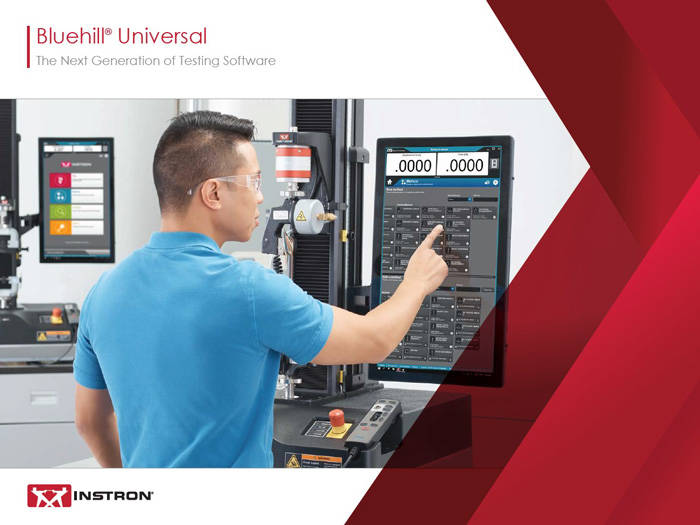
Bluehill Universal Broschüre
Bluehill Universal ist die fortschrittliche Materialprüfsoftware von Instron, entwickelt für intuitive Touch-Interaktion und optimierte Arbeitsabläufe. Sie bietet vorinstallierte Prüfmethoden, QuickTest für eine schnelle Einrichtung, verbesserten Datenexport und Instron Connect für die direkte Servicekommunikation. Anwender von Bluehill 2 und Bluehill 3 können problemlos auf die neueste Version upgraden, um die Leistung und Benutzerfreundlichkeit zu verbessern.
