
Electrode Anode Testing for Electric Vehicle Batteries

There are multiple ways in which batteries can fail. One of the most common modes of failure is caused by the electrode coating material cracking or delaminating from the current collector. This cracking or delaminating is typically caused by the constant charging and discharging of the battery as well as by mechanical loading of the battery in use. It is critical to understand the adhesion strength and longevity of electrodes to ensure that a battery does not fail before the end of its predicted life cycle.
As battery manufacturers work to understand the adhesive properties of their cathode and anode materials, many are also introducing new electrode makeups in an effort to increase the safety and energy density of batteries. Most of these changes are to the anode material with additions such as silicone, which requires further testing and analysis. It is critical to understand how electrode adhesion is influenced by different binders and elements. The three types of testing most commonly used to characterize the adhesive properties and monitor production material for electrodes are 90° peel tests, 180° peel tests, and tack tests.
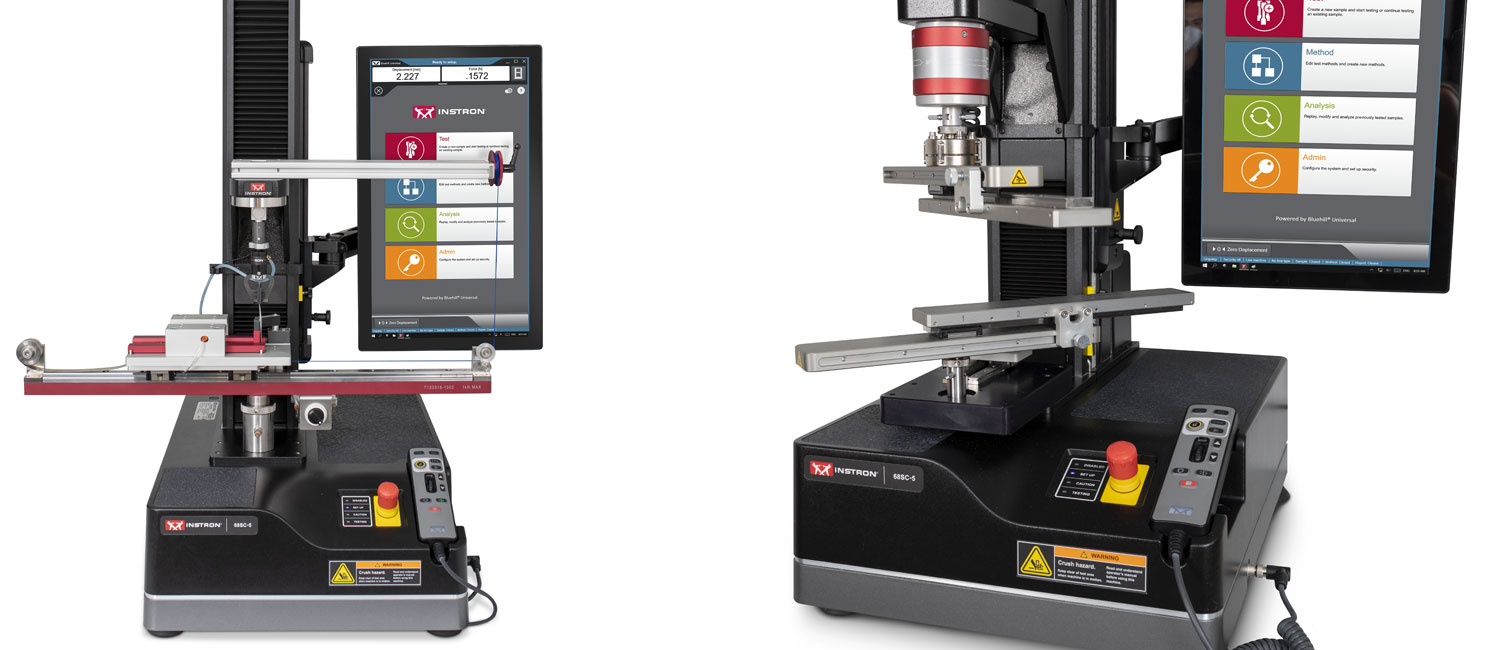
180° Peel Test
The most commonly performed peel tests are 90° and 180° peel tests. 180° testing has an advantage over 90° testing in simplicity of setup and ease of alignment. This testing can be done using low force grips and load cells along with a substrate that helps the flexible material maintain proper alignment during testing. It is best to consider pneumatic grips and a metal substrate to ensure high throughput and a proper 180° peel throughout each test.
90° Peel Test
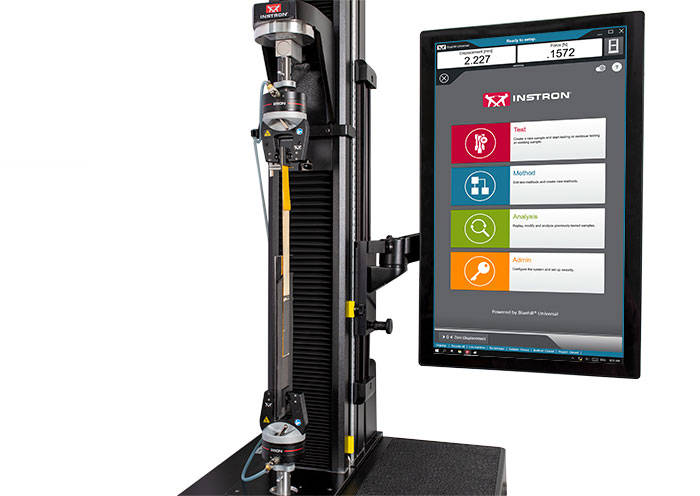
90° peel testing is commonly seen as an alternative to 180° degree peel testing. The 90° peel test generally involves slightly higher loads than the 180° peel test and can be set up more quickly because it often does not require a substrate. Instron’s most common solutions for this testing are a standard 90° peel fixture or a pneumatic peel fixture designed specifically to test the adhesion of electrodes. The pneumatic 90° peel fixture was developed specifically for electrode adhesion testing and provides improved repeatability and throughput while also aiding the operator in consistent specimen placement and alignment at 90°. For the upper fixture, a pneumatic grip optimizes throughput and repeatability and is recommended for testing delicate materials.
A tack test is an electrode adhesion test that has been backed by researchers as an additional way to test the adhesion of electrodes to a battery's current collector. Instead of slowly peeling electrodes from the current collector, a tack test focuses on the adhesion strength of an entire predetermined area of electrodes, allowing for quicker evaluation of electrode adhesion over a large area. Instron’s tack testing fixture is designed for ease of specimen preparation as well as high throughput and repeatability. It features predetermined contact areas in addition to a spherically seated and lockable upper fixture, which ensures parallelism between both fixtures. Due to the fast speeds of this testing, a testing system with a very high data rate collection will ensure the best possible results and throughput.

6800 Series Premier Testing Systems Brochure
Instron 6800 Series Universal Testing Systems provide unparalleled accuracy and reliability. Built on a patent-pending Operator Protect system architecture with an all-new Smart-Close Air Kit and Collision Mitigation features, the 6800 Series makes materials testing simpler, smarter, and safer than ever before.

3400 Series Universal Testing Systems Brochure
Instron 3400 Series universal testing systems for tensile, compression, bend, and other material property tests.

Bluehill Universal Brochure
Bluehill Universal is Instron’s advanced materials testing software, designed for intuitive touch interaction and streamlined workflows. It offers pre-loaded test methods, QuickTest for rapid setup, enhanced data exporting, and Instron Connect for direct service communication. Users of Bluehill 2 and Bluehill 3 can easily upgrade to the latest version for improved performance and usability

2712-04x Series Pneumatic Side Action Grips Data Sheet
Instron’s 2712‑04x Series pneumatic grips deliver reliable, self‑centering gripping for a wide range of materials with options from 1 to 10 kN. Designed for safety and efficiency, they feature tool‑free jaw face changes, adjustable air‑controlled gripping force, robust enclosed mechanisms, and ergonomic components that improve alignment, usability, and operator protection.

Mechanical Testing of Electric Vehicle Batteries White Paper
Static mechanical testing is key to assessing the safety and reliability of electric vehicles (EVs). Soaring EV sales combined with ever-changing battery technology are leading to an expanding range of components and materials that require thorough testing. This white paper examines the key static mechanical testing methods and technologies associated with EV battery applications.
How to Choose the Right Test Machine for You EV Battery Application
Mechanical testing is key to assessing the performance and safety of an electric vehicle’s (EV) battery system. Accurate, efficient, and safe testing equipment is critical for companies trying to increase productivity and decrease time-to-market in this competitive new industry. The e-guide will walk you through three key steps to selecting the most appropriate test equipment for EV battery applications.
