Intervertebral Disc Testing

Biomedical Testing » Orthopedics

Intervertebral Disc Testing

The Challenge

Intervertebral Disc

Intervertebral disc replacement is a surgical technique for the treatment of lower back pain related to degenerative disc disease. The advantage of this technique over traditional spinal fusion is that it preserves or restores motion in the spine, and has the potential to delay the onset of degeneration of healthy discs at adjacent levels in the spine. Disc prostheses are designed to be load bearing over the physiological range of disc motion, and to give years of pain-free and trouble-free operation in the body. Understanding the static and dynamic characteristics of a particular device allows manufacturers and designers to ensure their product is proven and accepted. ASTM F2346 provides a methodology for characterizing the static strength and dynamic fatigue behavior of disc prostheses. The rigorous testing regimes in this standard aim to scientifically validate any prosthesis design. With a typical test run lasting for 10 million cycles and requiring both axial and torsional loading, it is vital that a testing system copes with these performance demands and delivers the highest quality of results. In addition, the requirement to conduct these tests in a wet environment adds to the complexity of the system.

Our Solution 

Intervertebral Disc Testing

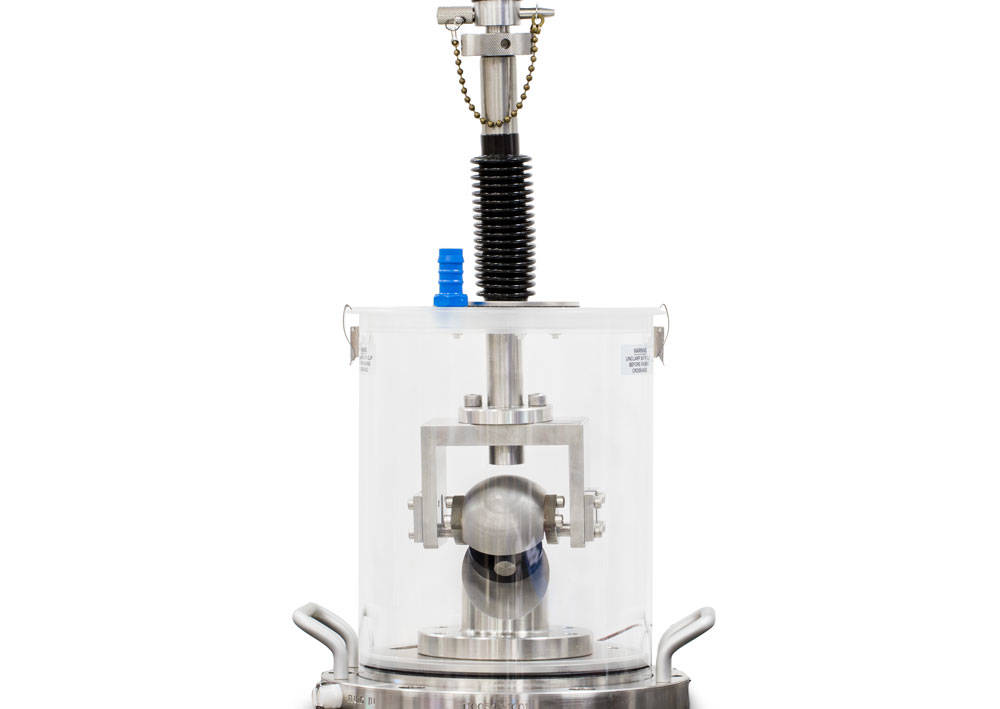
An 8874 axial-torsional system, with the addition of a temperature controller and re-circulator unit, allows device manufacturers and contract research laboratories to conduct both static and cyclic testing on a range of implant designs. The bath, in which saline flow and temperature are controlled, provides a stable environment. With the use of specialized test fixtures, the 8874 system's combined axial-torsional actuator allows for characterization to be conducted in axial compression, compression-shear, and compression-torsion test modes for both articulating discs of traditional metal-on-metal or metal-on-polyethylene design. It's also used for the next generation of prostheses, which feature an elastomeric component to give axial compliance under load that mimic the biomechanics of the natural disc.

Knieprüfung

Biomedical Testing » Orthopedics

Knieprüfung

Die Herausforderung

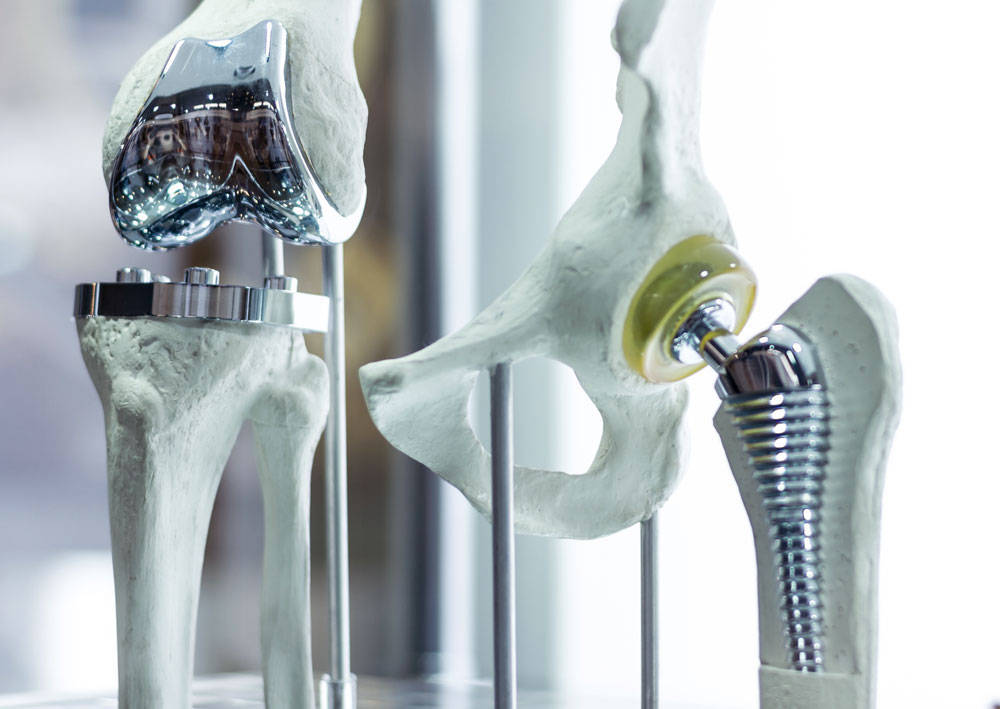
Kniegelenk

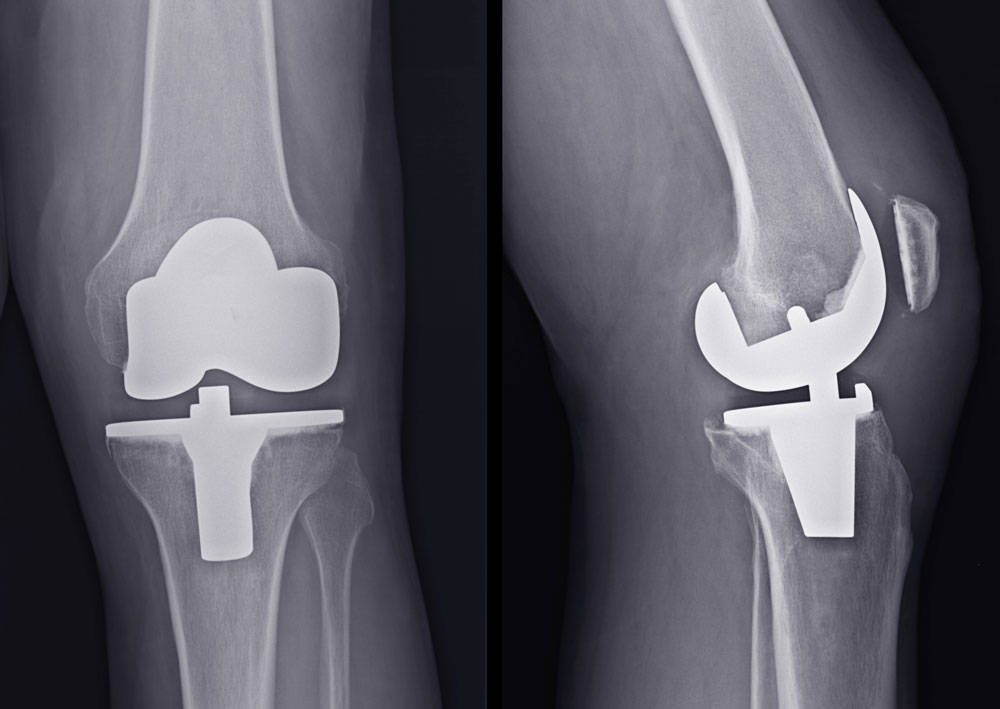
Kniegelenkersatz gehört weltweit zu den häufigsten chirurgischen Eingriffen zur Verbesserung der Lebensqualität. Ermüdungsbrüche von Tibiaplatten sind einer der am häufigsten gemeldeten Versagensmechanismen bei totalem Kniegelenkersatz (TKR). Sie werden durch den Verlust der darunterliegenden Knochenunterstützung verursacht, der aus biologischen Reaktionen wie verschleißinduzierter Osteolyse resultiert. Unter diesen Bedingungen wird die Tibiaplatte mechanisch instabil, und zyklische Belastungen durch normales Gehen verursachen Ermüdungsrisse, die letztendlich zu einem katastrophalen Versagen führen.

Unsere Lösung

Kniegelenkprüfung

Das vollelektrische dynamische Prüfgerät ElectroPuls® unterstützt Konstrukteure, Hersteller und Forscher während des gesamten Produktlebenszyklus – von der Ermittlung grundlegender Materialeigenschaften wie der Widerstandsfähigkeit gegen Ermüdungsrissausbreitung bis hin zur Prüfung der gesamten Tibiaplatte und darüber hinaus. Wir verwenden eine Klemmvorrichtung, um eine Hälfte der Tibiaplatte zu fixieren und damit einen vollständig gestützten Kondylus zu simulieren. Der andere, nicht gestützte Kondylus wird dann einer physiologisch repräsentativen Belastung ausgesetzt. Durch die Verwendung unserer einzigartigen Dynacell®-Kraftmessdose können dynamische Trägheitsfehler, wie sie durch die Vorrichtung und durch Hydrodynamik bei Prüfungen in einem Umgebungsbad entstehen, eliminiert werden. Dies ermöglicht eine genauere Messung der auf die Probe aufgebrachten Last.

Prüfung von Hüftimplantaten


Biomedical Testing
»
Orthopedics


Prüfung von Hüftimplantaten

Die Herausforderung

Hüftimplantat

Nach einer Operation können proximale Lockerung und Stress-Shielding infolge normaler Aktivität auftreten und zu abnormalen Belastungsprofilen führen. Daher müssen die realen Umgebungsbedingungen und Belastungen, denen das Prüfmuster im Körper ausgesetzt sein wird, bei der Prüfung nachgebildet werden. Die Ermüdungsprüfung von Hüftfemurschäften kann aufgrund der Bedeutung einer präzisen Einbettung des Prüfmusters eine Herausforderung darstellen. Die Vorrichtung muss in der Lage sein, Druck-, Biege- und Torsionsspannungen zu unterstützen, um die Anforderungen der Norm ISO 7206 zu erfüllen. Die hohen Prüffrequenzen stellen ebenfalls eine Herausforderung dar, da sie dazu führen können, dass sich das Prüfmuster über ein akzeptables Maß hinaus erwärmt.

Unsere Lösung

Prüfung von Hüftimplantaten

Instron® bietet eine Einbettvorrichtung für Prüfmuster, die sicherstellt, dass die erforderlichen Versatzwinkel und die Einbetttiefe erreicht werden. Die speziell entwickelte korrosionsbeständige Vorrichtung ermöglicht In-vivo-Prüfungen. Die Baugruppe wird komplett mit einem Temperaturregler und einer Umwälzpumpe geliefert, um sicherzustellen, dass die Temperatur niemals die akzeptable Grenze überschreitet, indem die Prüffrequenz automatisch reduziert wird. Die einfach zu installierende Vorrichtung umfasst einen reibungsarmen Belastungskopf und Adapter zur Montage an einem ElectroPuls-System. Die Instron-Software WaveMatrix ermöglicht die Verwendung verschiedener Prüfabbruchkriterien, wie z. B. das Durchführen einer bestimmten Anzahl von Zyklen oder bis zum Versagen des Prüfmusters, das auf verschiedene Weise festgestellt werden kann. Mit einem Paket können Sie die Anforderungen der Normen ISO 7206-4, 7206-6 und 7206-8 zuverlässig erfüllen und übertreffen.

Bone Screw Testing

Biomedical Testing » Orthopedics

Bone Screw Testing

The  Challenge

Bone Screw

Bone screws are used in surgical procedures for securing implants, osteosynthesis devices, and fracture fixation plates to the skeletal system. In normal clinical use, a surgeon applies combined axial and torsional forces to the bone screw as it is implanted within the body. Manufacturers and scientists test bone screws to determine various mechanical properties when evaluating new materials and designs. The most common standard for testing bone screws is ASTM F534. The standard consists of a total of four testing annexes: axial tests, torsion only tests, or a combination of both linear and torsion tests. ASTM F543-17 Test A1 - Test Method for Determining the Torsional Properties of Metallic Bone Screws requires the screw to be sufficiently clamped and a rotational velocity between 1 and 5 rpm to be applied until specimen failure, and to measure the torque profile and the rotational angle. ASTM F534-17 Test A2 - Test Method for Driving Torque of Medical Bone Screws measures the torque required to insert and remove the screw with a constant rotational velocity between 1 and 5 rpm while maintaining an axial load of no more than 10 N in compression. ASTM F543-17 Test A3 - Test Method for Determining the Axial Pull-Out Strength of Medical Bone Screws measures the force required to axially remove the screw that has been fully inserted in the test block using the method from Test A2. The pull-out fixture then applies a tensile load at a constant rate of 5 mm/min until the failure of the bone screw or removal from the test block. ASTM F543-17 Test A4 - Test Method for Determining the Self-Tapping Performance of Self-Tapping Medical Bone Screws specifies the procedure to evaluate the axial loading required to engage a self-tapping bone screw into a standard laboratory material. Although considered a simple clinical procedure, reproduction of this in vitro results in a relatively complex motion due to the interaction between the rotation and linear axes of a test machine. The test requires a continuous rotational velocity of up to 30 rpm while the axial load is incremented during the insertion at a rate of 2 N/s. The objective of this test is to record the torque profile as the bone screw is inserted into the material and then removed.

Our Solution 

Bone Screw Testing

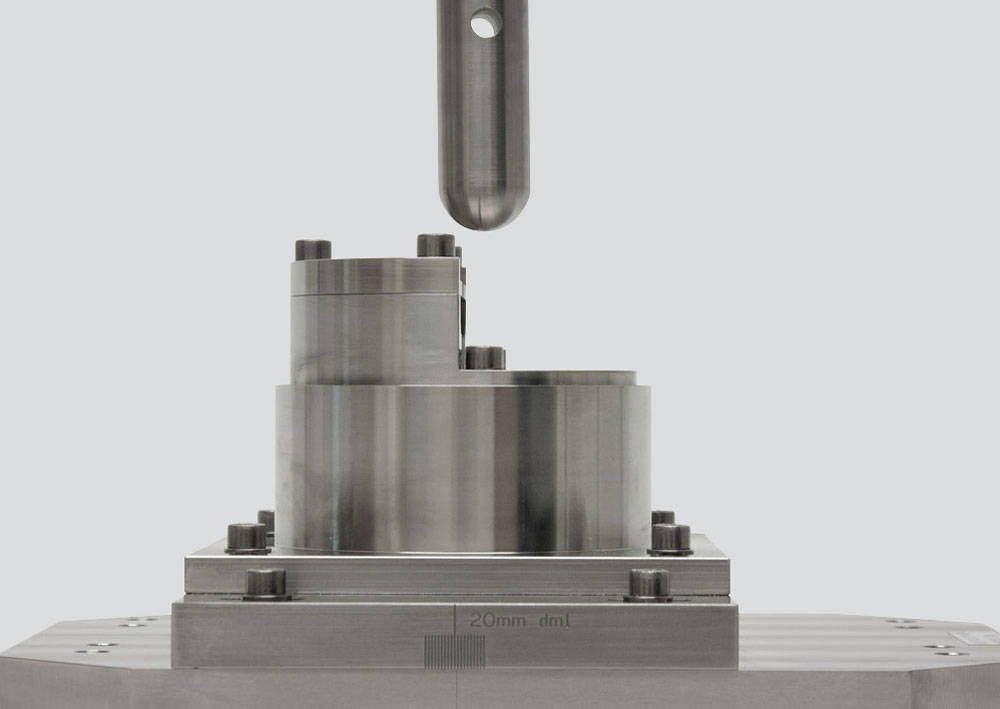
To perform bone screw testing to ASTM F543, either an electromechanical system with a Torsion Add-On 3.0 , or an ElectroPuls™ Linear-Torsion system can be used. The Torsion Add-On 3.0 can be added to any new or existing 6800 Series single column or dual column table top testing machine to add rotational capabilities. The ElectroPuls E10000 and E3000 Linear-Torsion test systems are all-electric dynamic testing systems that provide a unique linear and torsion actuator system that is capable of synchronized linear and multi-rotation testing, which makes them ideal platforms for performing the full range of tests prescribed by the standard. For both the electromechanical system and ElectroPuls system, a bi-axial Dynacell load cell is mounted to the base of the machine. Using WaveMatrix™ dynamic test software on the ElectroPuls system, a user is able to control both axial and rotational axis in closed-loop control. This gives the user the ability to easily set up the multi-axial tests as a series of steps, and displays the required information as the test proceeds. Special fixtures are used to clamp the material to the biaxial load cell, and a drill chuck is used for the drive bits.

Prüfung von Frakturversorgungssystemen


Biomedical Testing
»
Orthopedics


Prüfung von Frakturversorgungssystemen

Die Herausforderung

Frakturversorgung

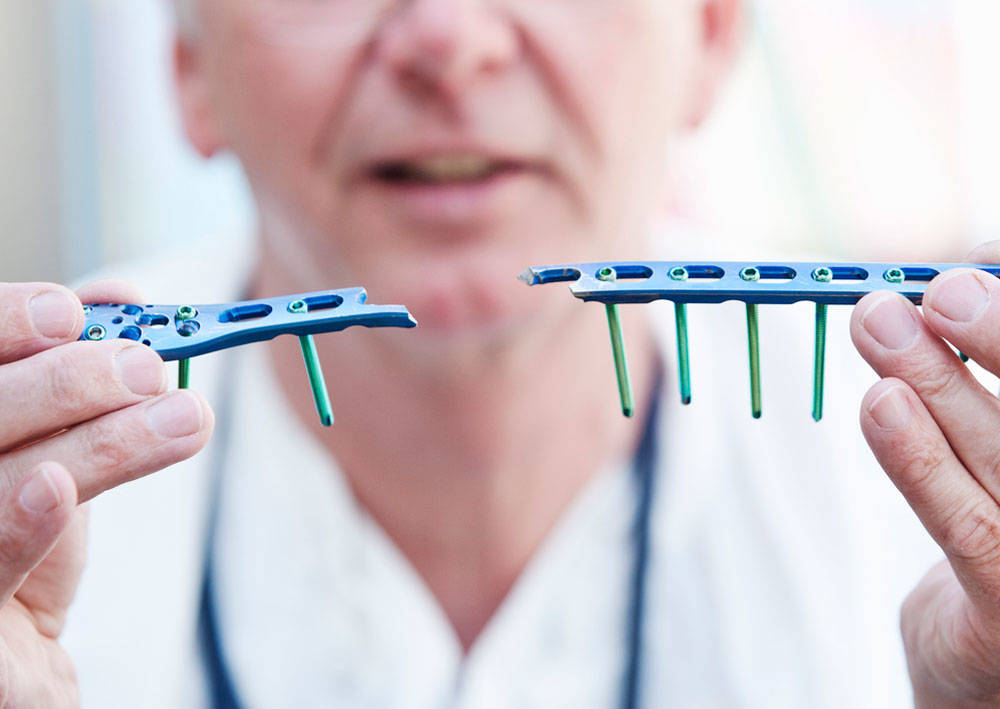
Frakturversorgungsplatten werden zur Immobilisierung von Knochen eingesetzt, die gebrochen oder schwer verletzt sind. Diese Platten bestehen üblicherweise aus Titan oder Edelstahl. Beide weisen ähnliche mechanische Eigenschaften auf, einschließlich Steifigkeit und Zugfestigkeit, wie natürlicher Knochen. Diese Platten haben oft unregelmäßige Geometrien und sind in verschiedenen Größen erhältlich, um unterschiedlich große Knochenbrüche im Körper zu versorgen. Beispielsweise unterscheidet sich eine Platte zur Immobilisierung eines gebrochenen Knochens im Oberschenkel stark von einer Platte für Knöchel, Finger oder Kiefer. Die unregelmäßige Geometrie und die Größenvielfalt von Frakturversorgungsplatten machen sie zu anspruchsvollen Prüfkomponenten. Darüber hinaus verbleiben diese Platten in den meisten Fällen lebenslang im Patienten und müssen über Jahrzehnte hinweg den dynamischen Bewegungen des Körpers standhalten können.

Unsere Lösung

Prüfung von Frakturversorgungssystemen

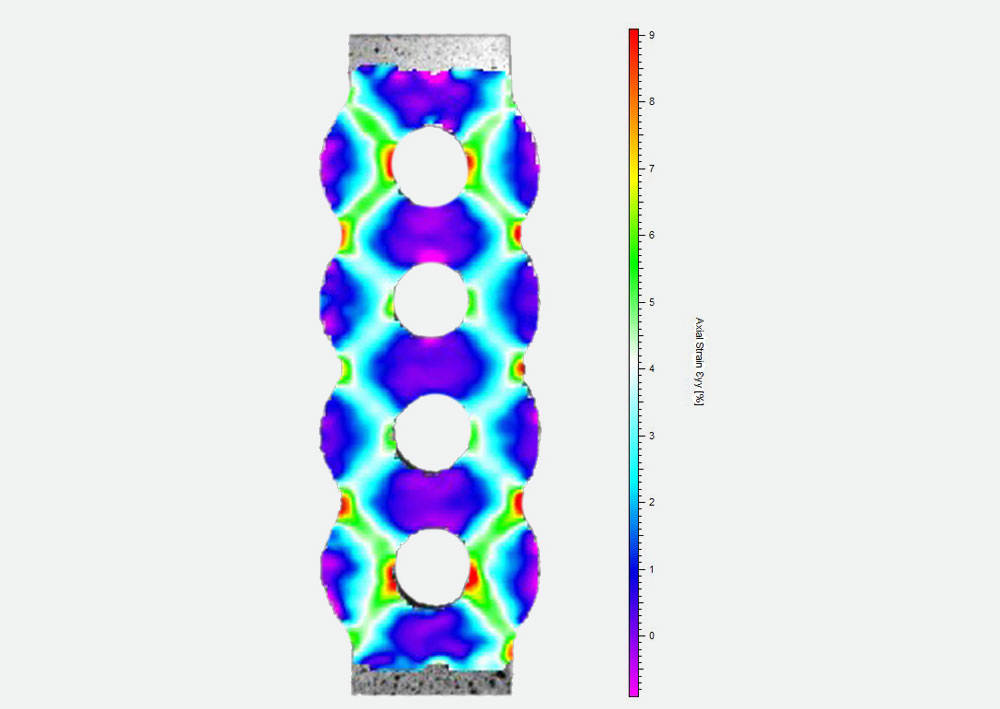
Um die mechanischen Eigenschaften von Frakturversorgungsplatten zu verstehen, ist eine Reihe sowohl statischer als auch dynamischer Prüfungen erforderlich. Monotone Biege-, Zug- und Druckprüfungen sind notwendig, um Modul und Zugfestigkeit zu ermitteln. Aufgrund der unregelmäßigen Geometrie von Frakturversorgungsplatten stellt die Dehnungsmessung eine Herausforderung dar. 2D- und 3D-Modellierungstechniken wie die Finite-Elemente-Analyse werden häufig durchgeführt, um die vollständigen Spannungs- und Dehnungseigenschaften von Frakturversorgungsplatten zu verstehen. Für monotone Zug-, Druck- oder Biegeprüfungen ermöglicht unsere Digital Image Correlation-Software in Kombination mit unserem Advanced Video Extensometer Forschern und Wissenschaftlern die Visualisierung und Quantifizierung der vollständigen Dehnungseigenschaften dieser Platten. Für alle Ermüdungsprüfungen empfehlen wir den Einsatz unserer ElectroPuls-Systeme. Konkret empfehlen wir entweder das E3000- oder das E10000 Linear-Torsions-Prüfsystem. Die Möglichkeit, Platten gleichzeitig unter axialer Belastung und Torsionsbelastung zu prüfen, bildet die realistischen Belastungsbedingungen im menschlichen Körper am besten ab.

Prüfung von Wirbelsäulenimplantaten


Biomedical Testing
»
Orthopedics


Prüfung von Wirbelsäulenimplantaten

Die Herausforderung

Prüfung von Wirbelsäulenimplantaten

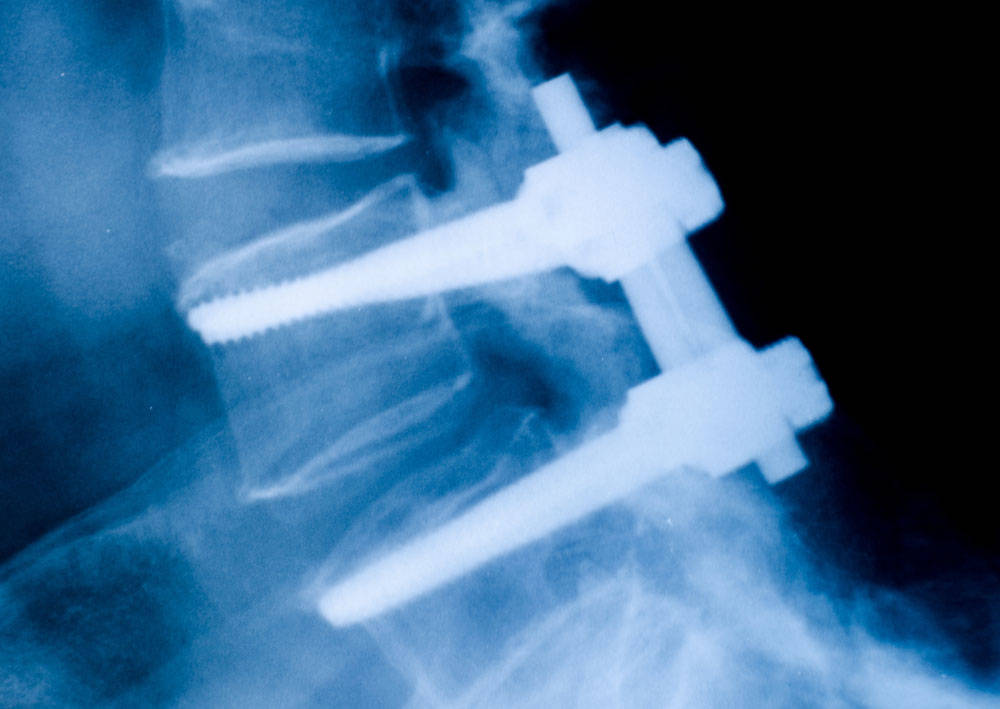
Die Prüfung der Lebensdauer von Wirbelsäulenkonstruktionen ist von entscheidender Bedeutung, da Ermüdungsversagen häufiger auftritt als katastrophales Versagen. Während normaler Patientenaktivität können Wirbelsäulenkonstruktionen hohen In-vivo-Belastungen ausgesetzt sein, die zu katastrophalem Versagen führen können. Zyklische Prüfungen werden durchgeführt, um die Anzahl der Zyklen zu bewerten, die zum Ermüdungsversagen führen. Die Belastung wird typischerweise mit einer lastgesteuerten sinusförmigen Wellenform mit konstanter Amplitude aufgebracht, die über fünf Millionen Zyklen hinausgeht. Einfache statische Prüfungen werden ebenfalls durchgeführt, um die Last zu bewerten, die zu einem Wirbelsäulenbruch führt.

Unsere Lösung

Prüfung von Wirbelsäulenimplantaten

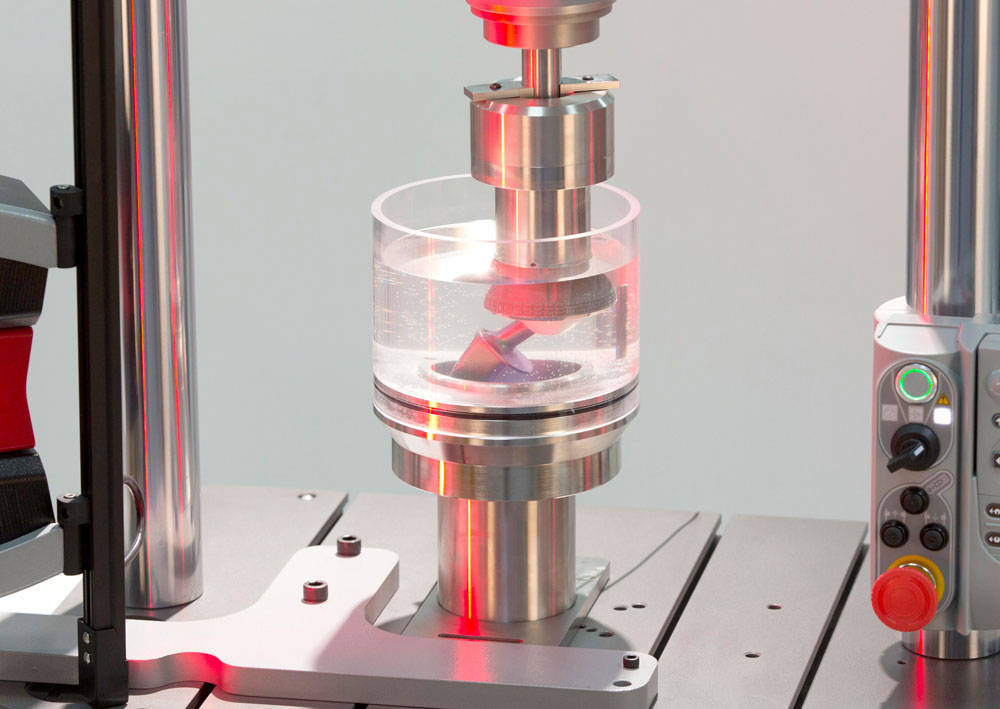
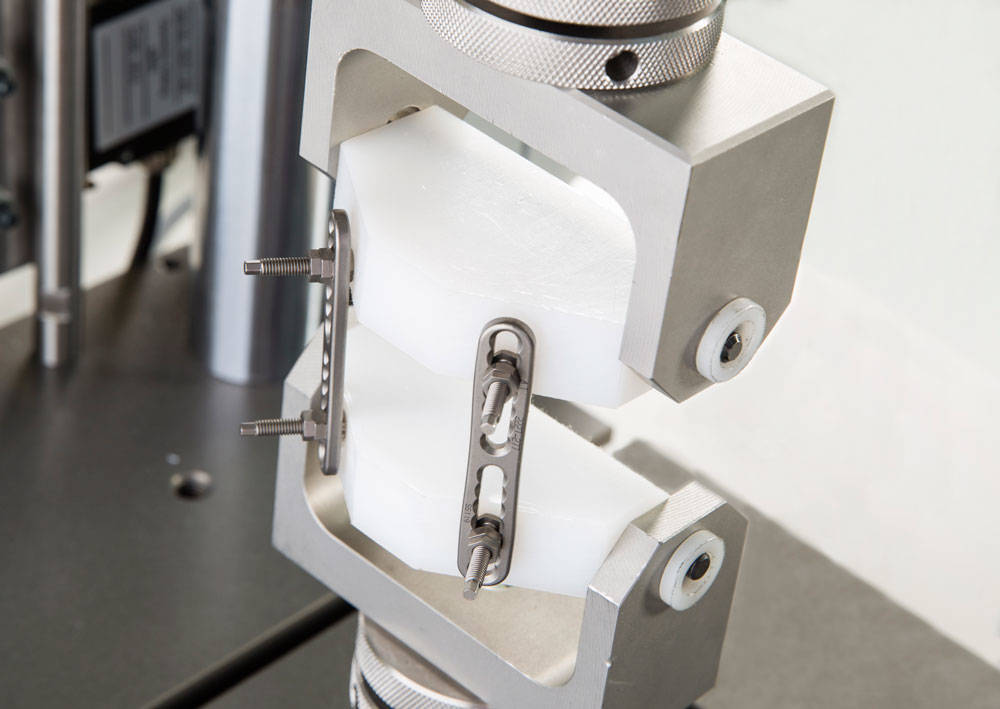
Das Instron® Linear-Torsions-ElectroPuls-System wird empfohlen, da es dem Anwender ermöglicht, sowohl statische als auch dynamische Prüfungen gemäß ASTM F1717-12-Standards auf einer einzigen Maschine durchzuführen. Eine dedizierte Wirbelsäulenvorrichtung kann problemlos an diesem System montiert werden, mit der Option, ein Kochsalzbad auf der Basis für In-vivo-Prüfungen zu montieren. Bei Verwendung des Bades ist die Kraftmessdose so konzipiert, dass sie mit Instrons patentierter Dynacell-Technologie zur Trägheitskompensation am Aktor montiert wird. Instrons patentierter steifigkeitsbasierter Regelungsalgorithmus gewährleistet eine hervorragende Wellenformtreue, selbst bei nichtlinearen Prüfkörpern.