Personal Protective Equipment (PPE) Testing

Biomedical Testing

Personal Protective Equipment (PPE) Testing

Materials Testing Guidance for Personal Protective Equipment

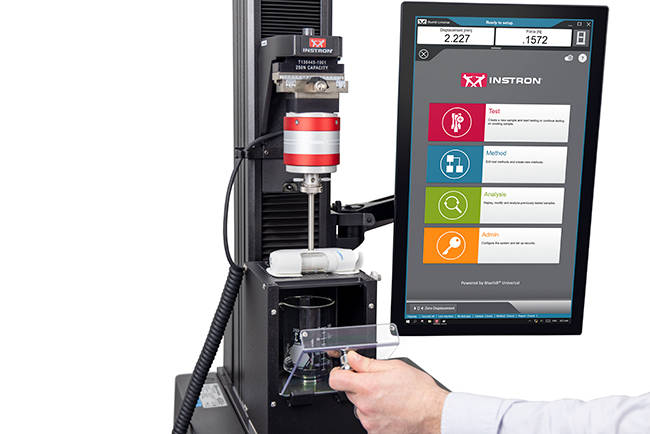
The global demand for medical equipment has skyrocketed in response to the COVID-19 pandemic, with many companies refocusing their efforts to produce personal protective equipment (PPE). With this vast uptick in demand, medical device manufacturers have scrambled to increase their production capacities while non-medical manufacturing companies have transitioned their own production facilities to create items such as masks, gloves, and nasal swabs.

With increased manufacturing comes increased quality control testing, and Instron has received numerous inquiries from companies seeking to expand their testing capacity or reconfigure their existing equipment to test PPE. This guide was created to help familiarize manufacturers with key testing requirements and provide an overview of current FDA regulations. We hope that it will be a useful resource for anyone seeking to aid the fight against COVID-19.

Medical Masks

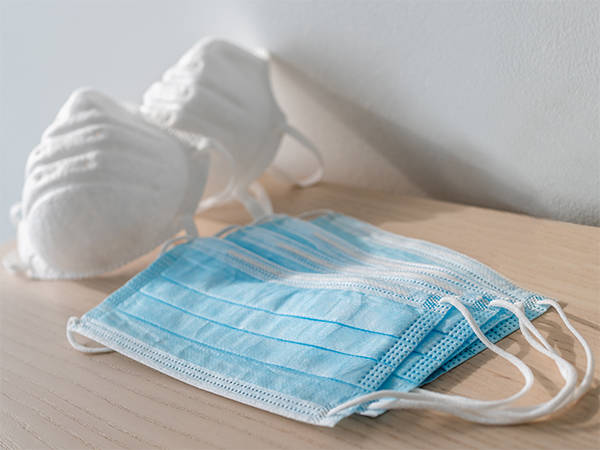
Medical masks come in two primary types: single-use surgical masks and N95 respirator masks. Surgical masks are intended to prevent viral spread by containing droplets produced by the wearer, while respirator masks are designed to protect the wearer from virus particles that have been aerosolized. Both of these masks are relatively easy to manufacture and test, and many textile manufacturers have shifted their operations to produce them in an attempt to meet the current demand. Many of these companies already own materials testing equipment and are able to make small modifications to their existing systems in order to perform the required FDA testing.

mask-fabric-test.jpg

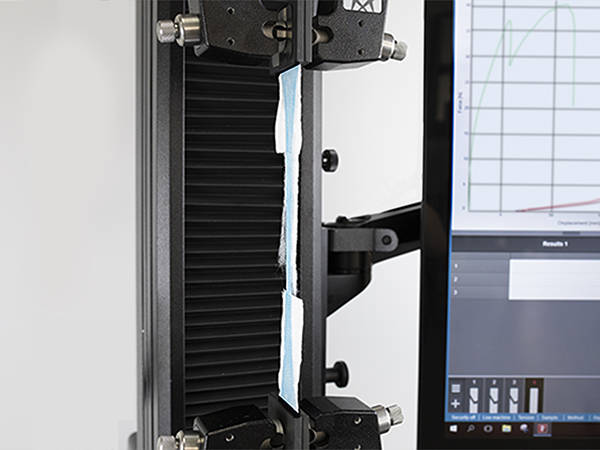
Fabric Test

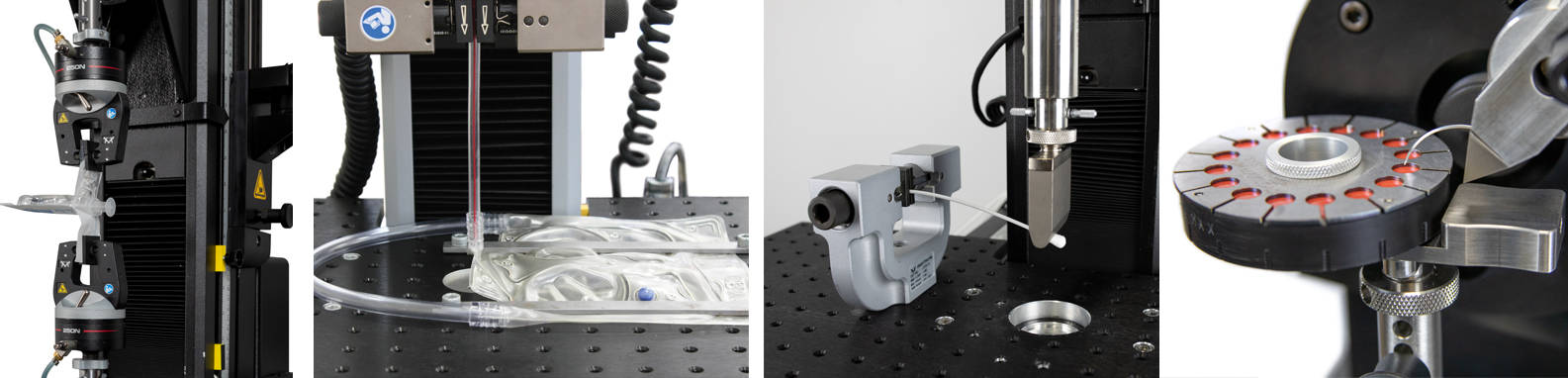
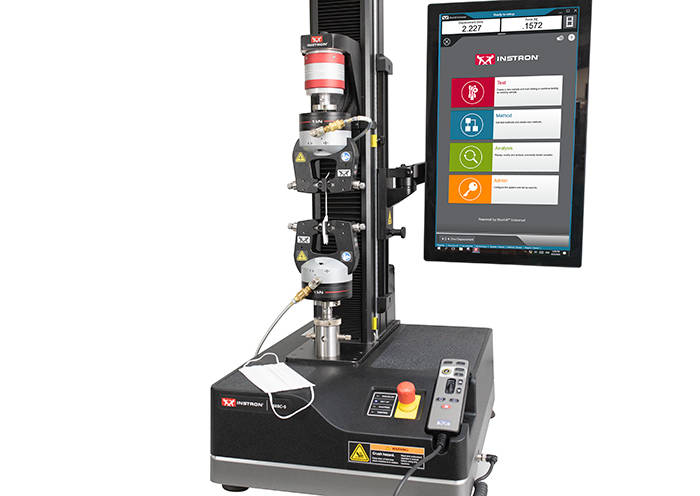
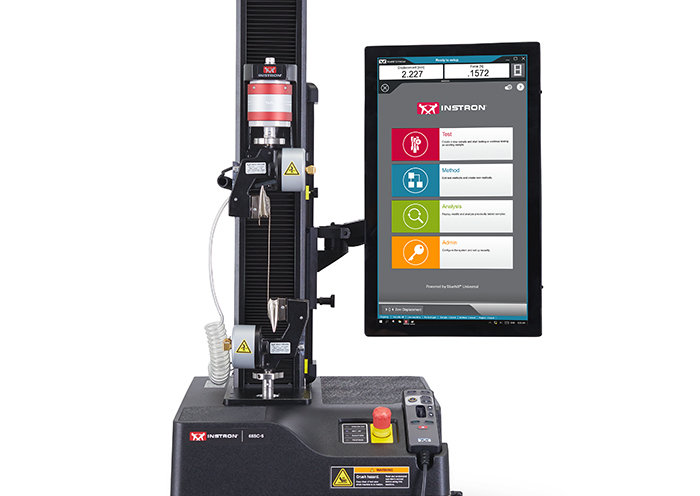
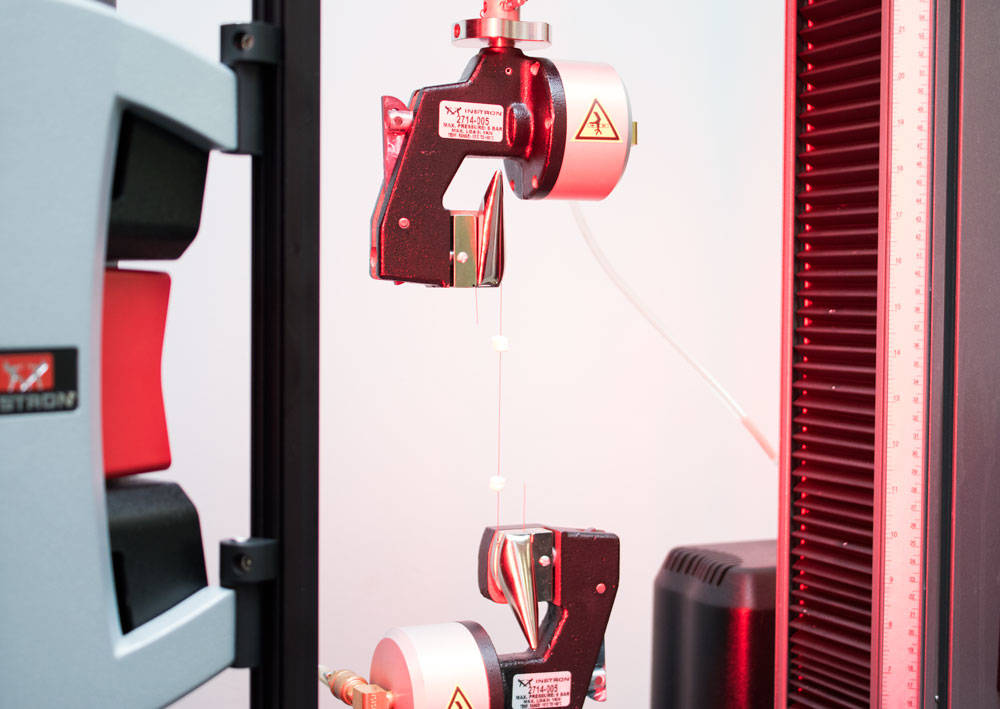
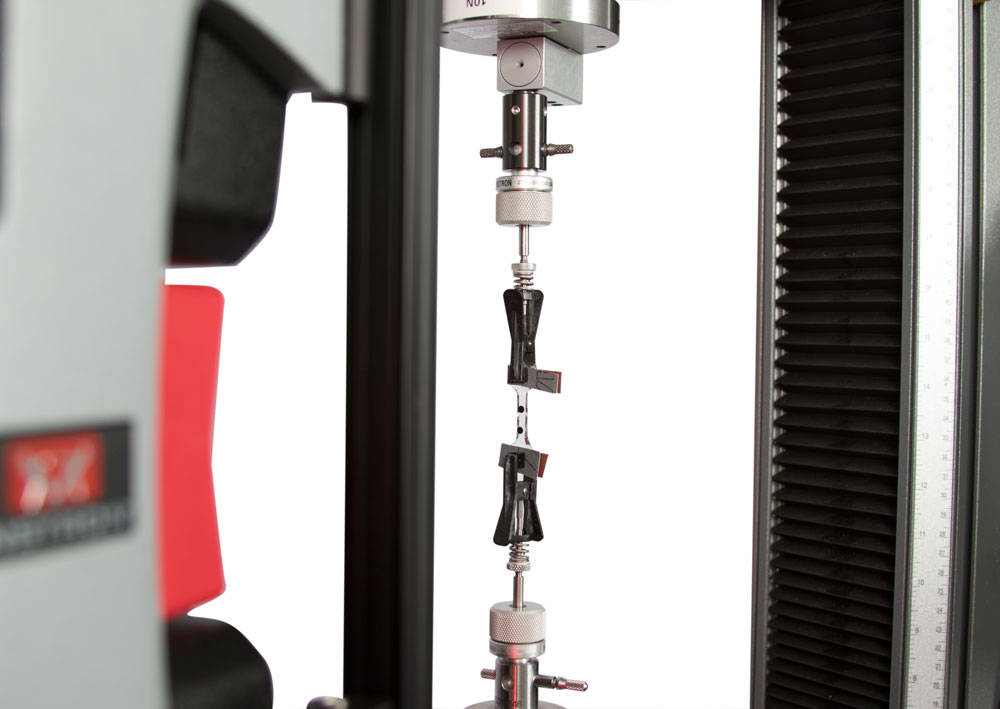
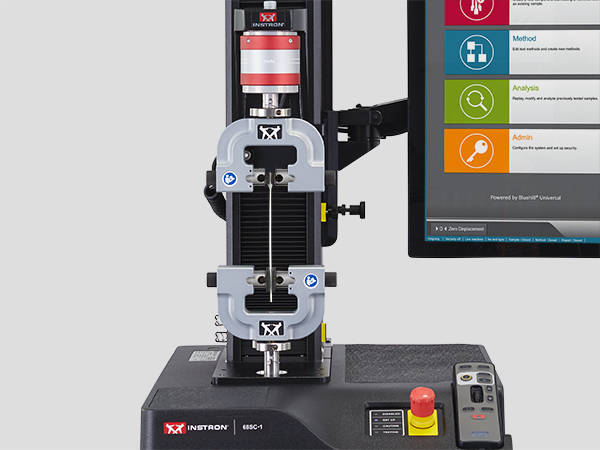
Mask fabric is generally tested in accordance with general textile standards such as ASTM D5034. Because fabric samples are prone to jaw breaks, we recommend pneumatic grips with smooth jaw faces to minimize this risk. In order to capture peaks and troughs generated by individual fiber breaks, we recommend a test system with a high data capture rate, such as Instron's 68SC-5.
mask-elastic-test.jpg

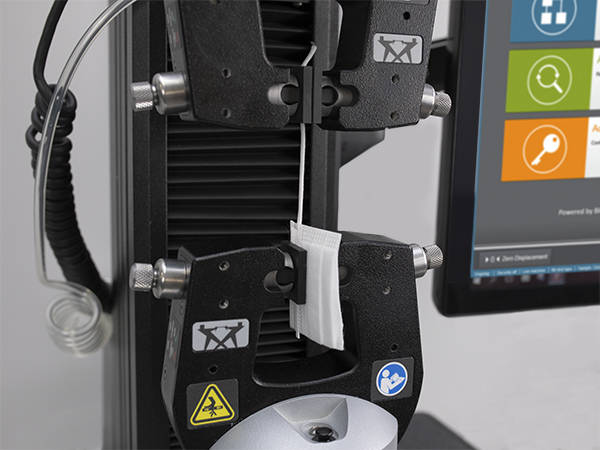
Elastic Test

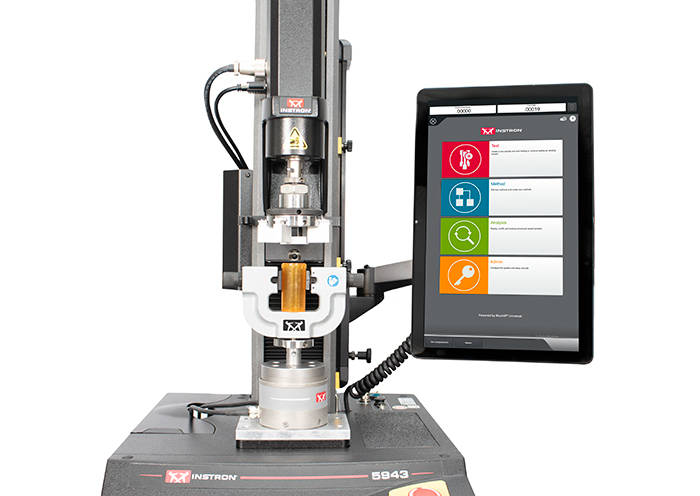
It is important to test the strength of the connection between a mask's fabric and the elastic band that holds it into place. This test is performed by loading the band to a minimum of 10 N and visually evaluating it to ensure there has been no separation. With masks now being worn for longer periods of time than ever, it may also be valuable to perform a relaxation test to determine its durability.
respirator-filter.jpg

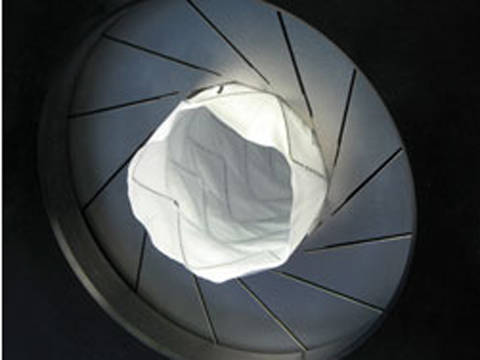
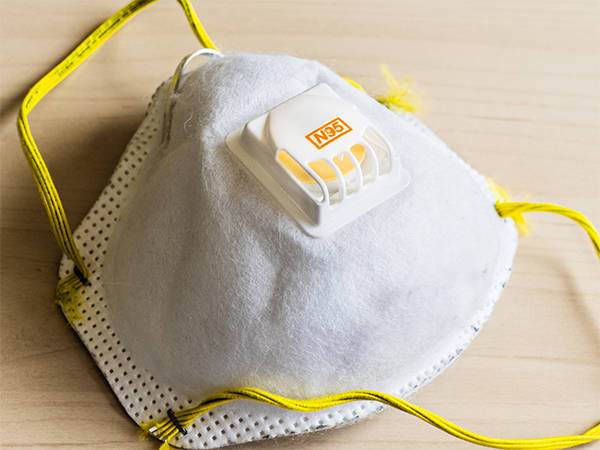
Filter Test

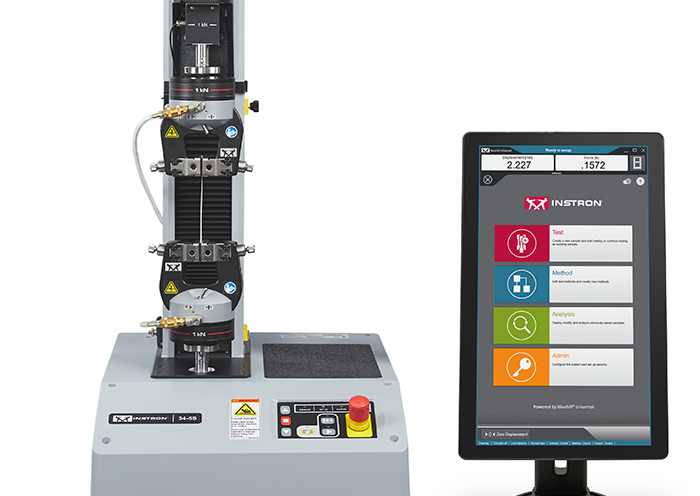
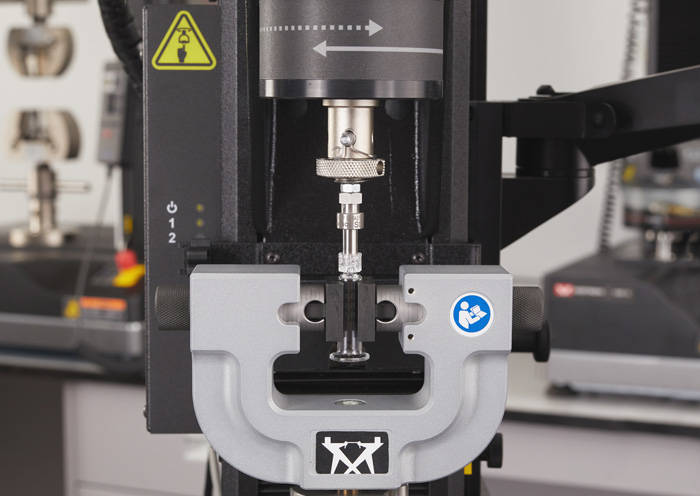
Respirator masks must be tested to ensure the strength of connection between the mask fabric and the respirator valve. This test can be accomplished using a side-acting grip on the base of the system and a custom-made hook fixture attached to the load cell.

Medical Gloves

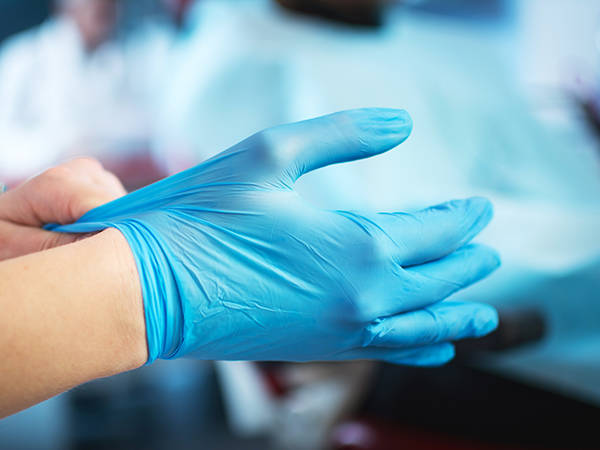
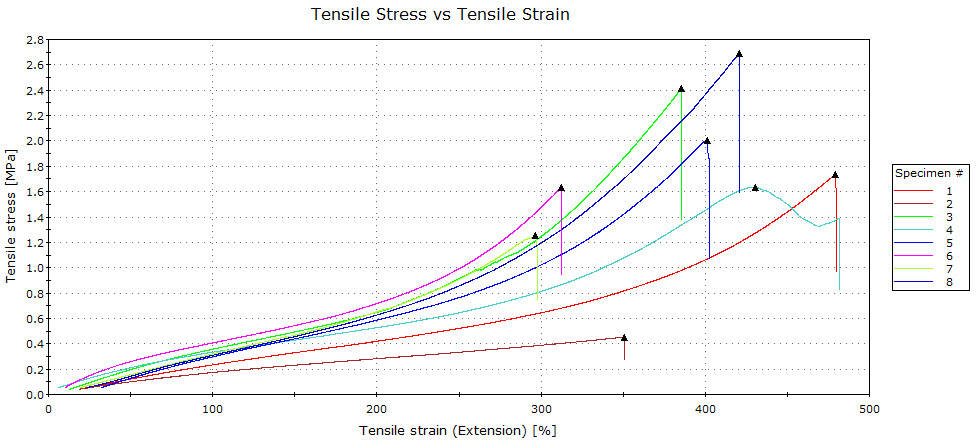
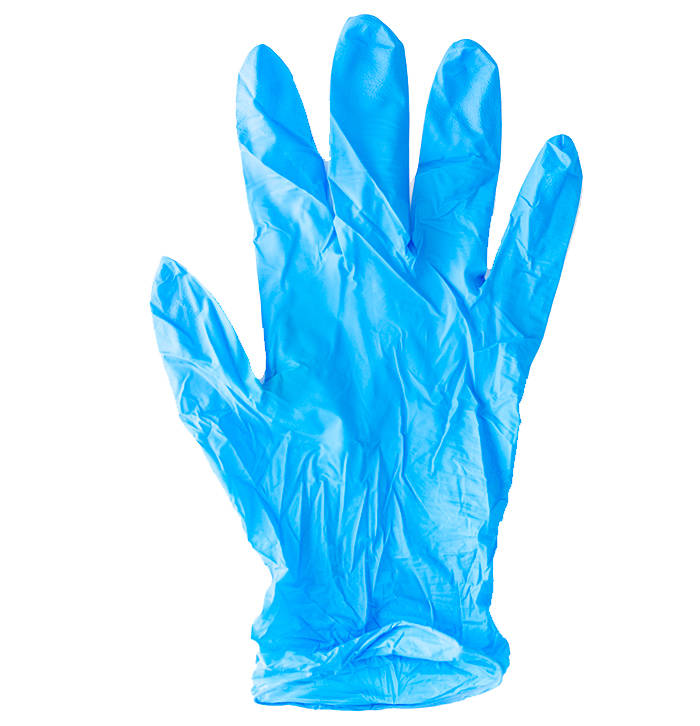
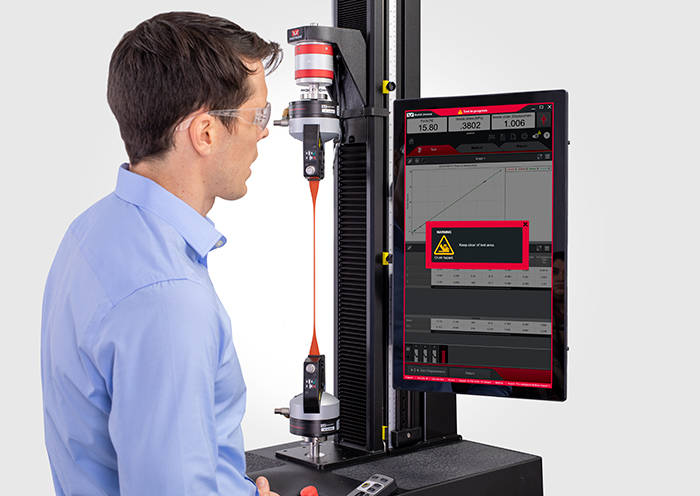
ASTM classifies medical gloves according to their material (latex, nitrile, natural rubber, PVC, or polychloroprene), while ISO classifies them based on their application (patient examination or surgical). Regardless of the testing standard, material, or clinical application, the equipment and general procedure for testing is consistent across all medical glove types. ASTM D6319, ISO 11193, and EN 455-2 are standards used by the biomedical industry to regulate the tensile properties of medical gloves. The key results for all glove testing standards are the tensile strength and ultimate elongation of the material. Rather than testing the entire glove, a dogbone specimen is cut from the finished glove and testing in accordance to the relevant elastomeric standard (ASTM D412 or ISO 37).

Glove Test Setup
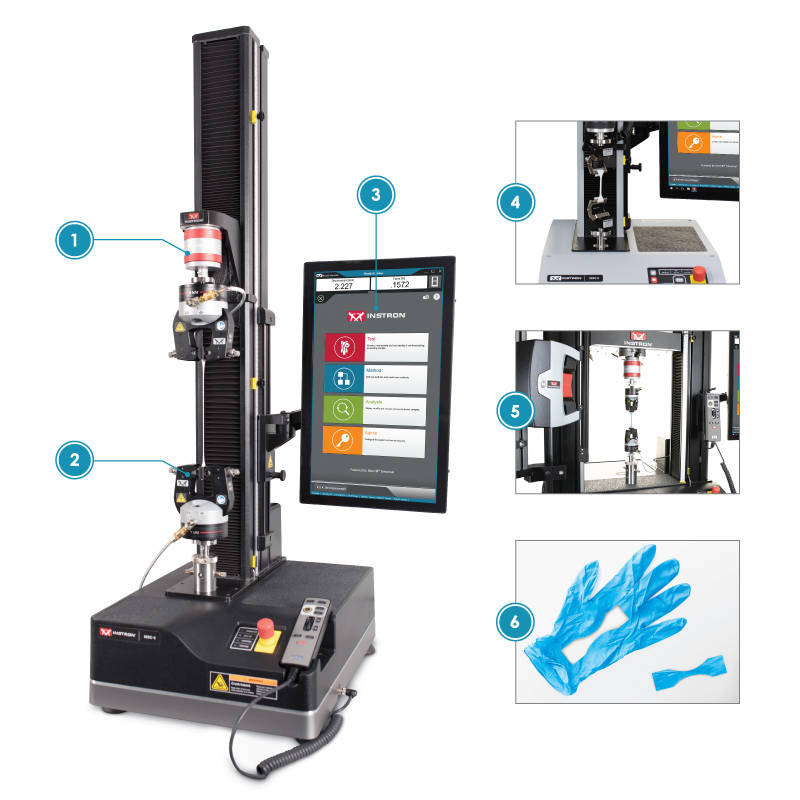
1) Load Cell
A 500N load cell is an appropriate capacity for all glove materials.
2) Pneumatic Grips
Air pressurized grips ensure consistent clamping forces Jaw faces are easily interchangeable to ensure the correct surface texture is used for the material. Elastomeric materials like rubber gloves typically require rubber coated faces due to how thin the specimen is. The rubber coating is able to prevent slippage of the material without damaging the specimen.
3) Bluehill Software
The biomedical method suite includes preconfigured methods for EN455-2
4) Elastomeric Roller Grips
Roller grips provide a cost effective gripping solution for thin elastomers The roller grip utilizes a proportional clamping pressure which increases as more force is applied to the specimen
5) AVE 2.0
An optical non-contacting strain device can be used to ensure more accurate strain measurement
6) Specimen Preparation
All the major ASTM/ISO/EN standards require a dumbbell shaped specimen to be stamped from the palm of the glove EN 455-2 takes into consideration the potential discrepancies in thickness between the palm and the fingertips. The standard compares their thickness and uses a correction factor for the tensile strength of the speicmen.

ppe_gloves_callout-_003.jpg

Nasal Swabs

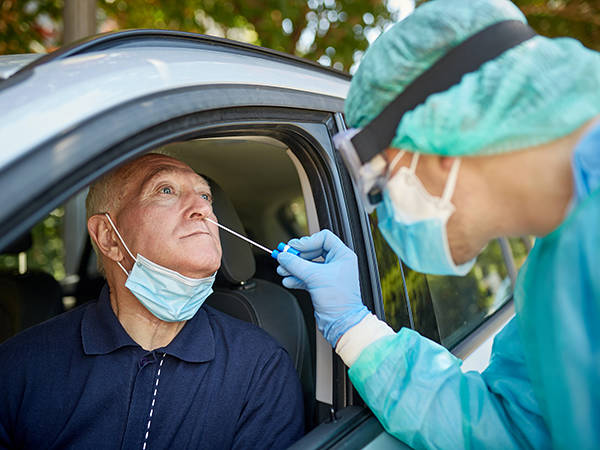
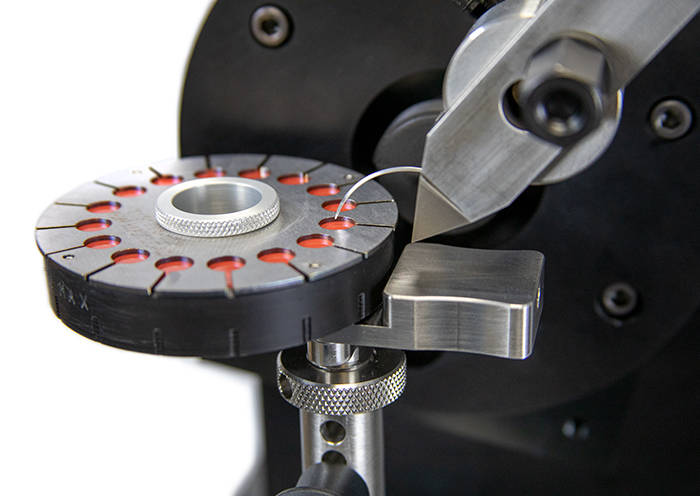
Nasopharyngeal (NP) swabs are crucial tools in the diagnosis of influenza and respiratory diseases. Despite their similar appearance, these swabs are considerably more specialized than the standard cotton swabs used for personal hygiene, using synthetic fibers for the swab staff and tiny bristles for the swab tip. In an effort to bolster the global supply, significant collaborations have occurred between 3D printer manufacturers and medical research teams, which have resulted in a massive increase in production capacity of test quality NP swabs. It is critical to perform mechanical testing to determine if the performance of the 3D printed swabs is comparable to the performance of those produced by standard methods.
nasal-swab-3-point-bend.jpg

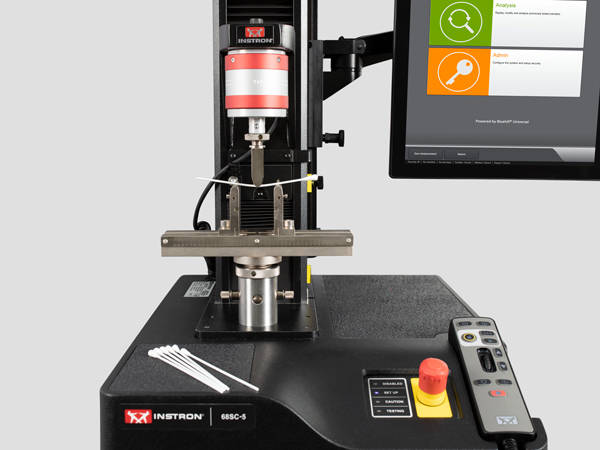
3 Point Bend Test

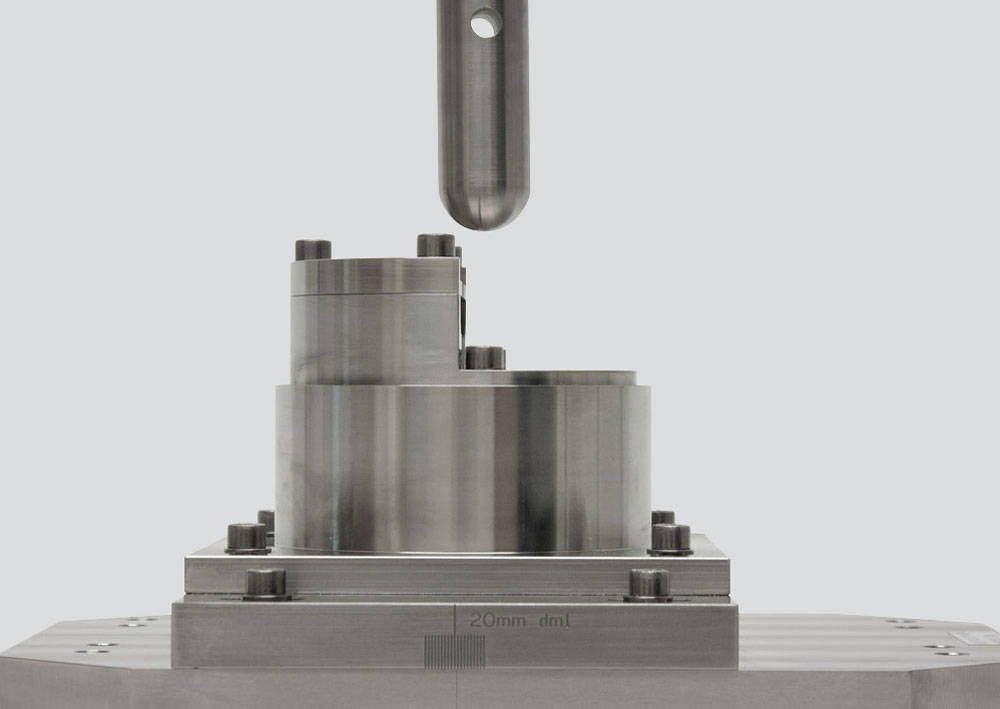
Nasal Swabs are subjected to flexural forces as they travel through the nasal passage. 3 point bend tests help characterize these stresses. It is also important to evaluate the weak point at the tip of the swab which helps achieve the correct size for transport. Instron's standard 2810-400 3-point bend fixture with 10 mm diameter anvils is ideal for these applications.

nasal-swab-cantilever-bend.jpg

Cantilever Bend

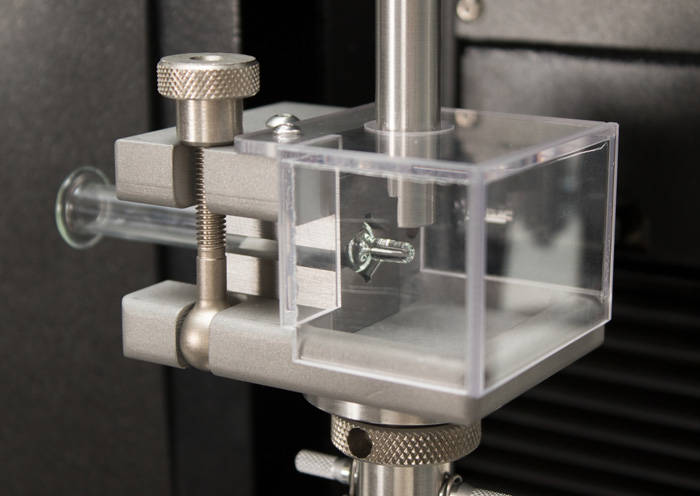
The cantilever bend test best represents the stresses seen when the swab is held during the procedure. The material needs to be flexible enough to ensure it will not fail during the test. This setup is accomplished using a component test plate and an advanced screw action grip to hold the specimen in place. Any probe can be used to deflect the tip of the swab.
nasal-swab-shear-test.jpg

Tip Shear Strength

The tip of an NP swab is made of tiny bristles that allow for maximum sample collection. These bristles need to withstand shear forces as they move across the walls of the nasal passage. In order to test this property, the tip and base of the swab are clamped with advanced screw action grips to evaluate the maximum force required to break the bristles or the tip itself.

FDA Requirements in the Age of COVID-19

The Food and Drug Administration is the main regulatory body overseeing the production and distribution of PPE in the United States. The level of FDA involvement depends on the class of the device, which can range from class 1 to class 3 based on the device’s potential risk of nonconformance. Most types of PPE are labeled as class 1 devices, which have the fewest barriers to approval.

Because it can take months or even years to gain FDA approval, in times of health crisis the FDA issues something called an Emergency Use Authorization (EUA). An EUA essentially loosens the requirements for production and distribution of certain medical products to allow production to ramp up quickly. EUAs are currently being granted to manufacturers of COVID test kits, virus therapies, ventilators, respirators, and PPE. These emergency authorizations are generally granted to specific companies who apply to expedite the approval process, but they are also being released as blanket statements covering certain types of PPE so that smaller companies can also participate with minimal red tape. The EUAs include additional documentation that outline the enforcement policy for PPE manufacturing during the current public health emergency and provides criteria for quality control standards as well as the required labeling of products released under the authorization.

Watch Our PPE Testing Webinar

Intervertebral Disc Testing

Biomedical Testing

Intervertebral Disc Testing

The Challenge

Intervertebral Disc

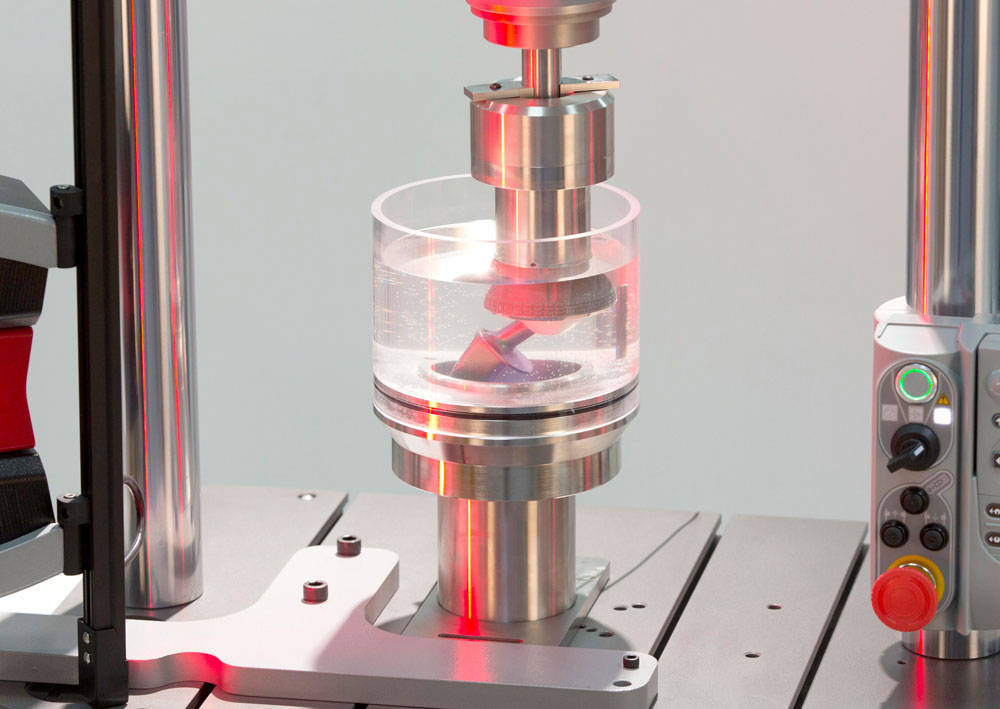
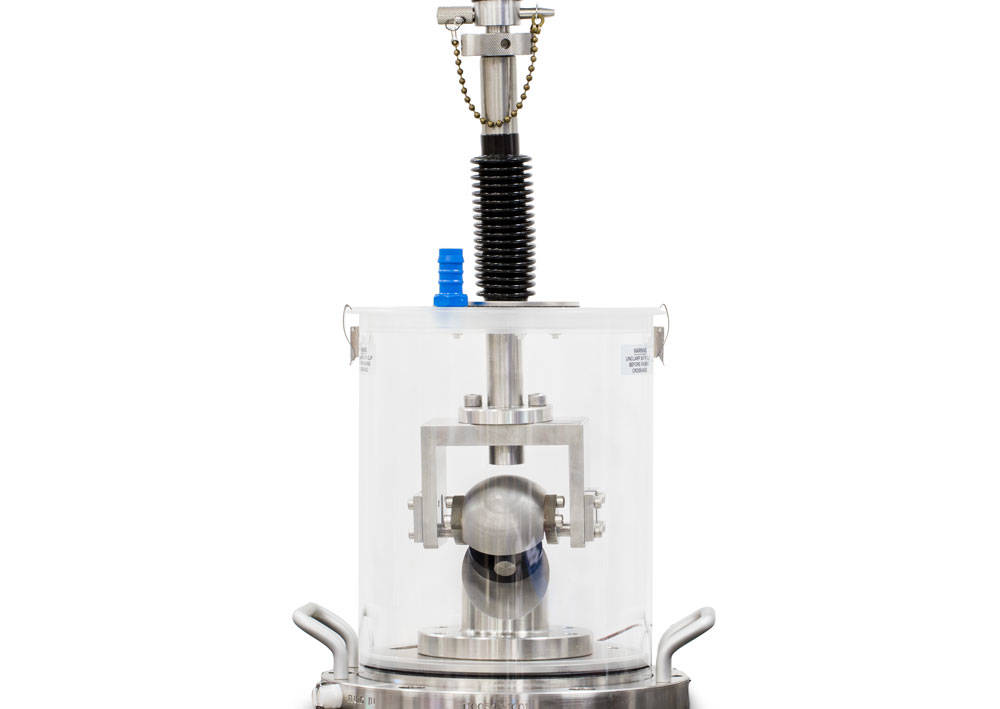
Intervertebral disc replacement is a surgical technique for the treatment of lower back pain related to degenerative disc disease. The advantage of this technique over traditional spinal fusion is that it preserves or restores motion in the spine, and has the potential to delay the onset of degeneration of healthy discs at adjacent levels in the spine. Disc prostheses are designed to be load bearing over the physiological range of disc motion, and to give years of pain-free and trouble-free operation in the body. Understanding the static and dynamic characteristics of a particular device allows manufacturers and designers to ensure their product is proven and accepted. ASTM F2346 provides a methodology for characterizing the static strength and dynamic fatigue behavior of disc prostheses. The rigorous testing regimes in this standard aim to scientifically validate any prosthesis design. With a typical test run lasting for 10 million cycles and requiring both axial and torsional loading, it is vital that a testing system copes with these performance demands and delivers the highest quality of results. In addition, the requirement to conduct these tests in a wet environment adds to the complexity of the system.

Our Solution 

Intervertebral Disc Testing

An 8874 axial-torsional system, with the addition of a temperature controller and re-circulator unit, allows device manufacturers and contract research laboratories to conduct both static and cyclic testing on a range of implant designs. The bath, in which saline flow and temperature are controlled, provides a stable environment. With the use of specialized test fixtures, the 8874 system's combined axial-torsional actuator allows for characterization to be conducted in axial compression, compression-shear, and compression-torsion test modes for both articulating discs of traditional metal-on-metal or metal-on-polyethylene design. It's also used for the next generation of prostheses, which feature an elastomeric component to give axial compliance under load that mimic the biomechanics of the natural disc.

Tensile Testing Polymeric Membranes

Biomedical Testing

Tensile Testing Polymeric Membranes

Synthetic membranes are commonly used in the biomedical field. These polymeric membranes, designed to mimic the natural filtration systems in human bodies, are being researched and developed for use in drug delivery systems, medical devices, and artificial bio-organs.

For example, synthetic membranes are used in hemodialysis, which is a method of removing waste products from the body when the kidneys fail. Blood from the patient is passed through a semi-permeable membrane that is immersed in dialysis solution and waste products such as urea in the blood diffuse across the membrane into the dialysis solution.

Often these synthetic membranes are moist and slippery, and consquently, tensile testing can be challenging. Similar to testing soft tissues, the gripping surface must offer sufficient friction to firmly hold onto the membrane, but also be delicate enough to avoid specimen tearing.

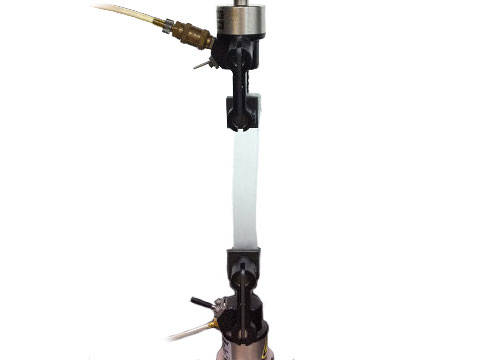
Recently, we were asked to recommend a gripping solution for testing of wet polymeric membranes. In this test, the polymeric membranes were first soaked in water for up to 20 minutes to allow them to soften and swell. The wet specimens were then tested using the 5965 dual column electromechanical machine equipped with pneumatic side action grips and rubber coated jaw faces. Since these membranes are very delicate, the clamping pressure must be carefully controlled as excessive high pressure can cause the specimen to fail prematurely when the grip closes.

Because the specimens are wet, corrosion resistant grips or fixtures should be used. Our 3 Software®Bluehill provides both the test control and results required.

Literature

Bluehill Universal Brochure

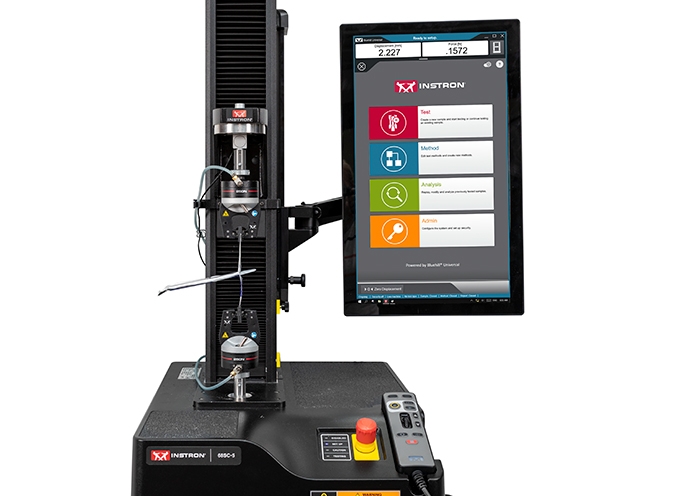
Bluehill Universal is Instron’s advanced materials testing software, designed for intuitive touch interaction and streamlined workflows. It offers pre-loaded test methods, QuickTest for rapid setup, enhanced data exporting, and Instron Connect for direct service communication. Users of Bluehill 2 and Bluehill 3 can easily upgrade to the latest version for improved performance and usability.
  • Produkte
  • 02/26/2017
  • 3.76 MB

Evaluation of Radial Forces from Embolic Filters

Biomedical Testing

Evaluation of Radial Forces from Embolic Filters

Radial Strength Testing of Stent Grafts and Vascular Devices

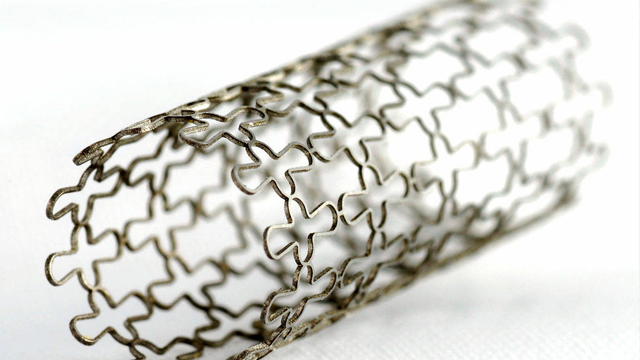
Embolic filters are used within a variety of interventional procedures to capture debris resulting from the deployment of a medical device, like a stent. The stent is used to open arterial paths that may be occluded by plaque. Upon placement of the stent, dislodged plaque (or embolic material) can potentially be responsible for heart attacks, strokes, kidney failure, or death. Firm placement of the embolic filter is a critical requirement for successful procedures.

One of the most critical parameters for proper utilization of the filter is the radial forces it imparts on the arterial wall. In particular, the chronic radial force that the filter imparts over time helps to ensure that the device remains in place as intended. This fit ensures that all material is captured before heading further down the arterial pathways.

The RX575 system has the fidelity to measure the small radial expansion forces of the embolic filter. The unique segment design of the fixture results in small frictional forces, which ensures that your data will present clean results from the radial tests. The radial fixture mounts to electromechanical instruments, as well as into a fluid bath for accurate simulation of body temperatures. Additionally, the fixture provides the capability for tensile tests to evaluate resistance to tearing properties during deployment.

Bluehill® Software provides an interface to run tests, to evaluate the radial strength, and to generate standard reports that can be submitted for regulatory submissions.

Literature

3400 Series Universal Testing Systems Brochure

Instron 3400 Series universal testing systems for tensile, compression, bend, and other material property tests.

  • Produkte
  • 06/27/2022
  • 2.69 MB

6800 Series Premier Testing Systems Brochure

Instron 6800 Series Universal Testing Systems provide unparalleled accuracy and reliability. Built on a patent-pending Operator Protect system architecture with an all-new Smart-Close Air Kit and Collision Mitigation features, the 6800 Series makes materials testing simpler, smarter, and safer than ever before.

  • Produkte
  • 02/10/2020
  • 4.15 MB

Prüfung von Gewebeklebern mit einer Schälvorrichtung mit einstellbarem Abzugswinkel

Biomedical Testing

Prüfung von Gewebeklebern mit einer Schälvorrichtung mit einstellbarem Abzugswinkel

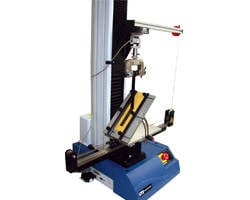
Gewebekleber sind in der Medizin weit verbreitet und werden z.B. als Verband, Sekundärverband oder zum Wundverschluss eingesetzt. Es gibt zwar keine speziellen Normen, die die Prüfung mit einer Vorrichtung mit einstellbarem Winkel spezifizieren, jedoch bestehen andere, ähnliche ASTM-Standards für dieses Prüfverfahren, z.B. ASTM F2255, F2256, F2258 und F2458. Vor dem klinischen Einsatz medizinischer Klebstoffe muss deren Haftfestigkeit nachgewiesen werden. Wenn der Klebstoff keine ausreichende Haftfestigkeit hat, kann dies zu Infektionen und Wundheilungsstörungen führen. Umgekehrt kann eine zu hohe Haftfestigkeit dazu führen, dass das darunter liegende Gewebe beim Entfernen des Verbands verletzt wird.

Wir haben eine solche Prüfung der Haftfestigkeit mit einer Vorrichtung mit einstellbarem Abzugswinkel durchgeführt, die die Verhältnisse beim Abziehen des Verbands am Patienten simuliert. Dazu wurde eine elektromechanische Prüfmaschine 3345 eingesetzt, ausgestattet mit einem Kraftaufnehmer mit einer Nennkraft von 50 N, einem pneumatischen Spannzeug für 250 N Nennkraft, mit 25 mm x 25 mm großen flachen Metall-Klemmbackeneinsätzen und der Schälvorrichtung mit einstellbarem Abzugswinkel. Die Schälvorrichtung wurde dabei zur genauen Simulation der Abzugsrichtung beim normalen Gebrauch des Klebstoffs auf einen Winkel von 135° eingestellt. Als Substrat wurde bei dieser Prüfung Leder verwendet, da mit diesem Material die Oberflächeneigenschaften menschlicher Haut am besten simuliert werden können.

Sehr empfehlenswert für diese Art von Prüfungen ist das Bluehill® 2 -Softwaremodul für Schäl- Reiß- und Reibversuche. Mit diesem Softwaremodul können das erste Kraftmaximum, die mittlere Kraft und die mittlere Kraft bezogen auf die Breite bestimmt werden - die am häufigsten verwendeten Größen bei diesen Prüfungen.

Unterlagen

Broschüre der Universalprüfsysteme der Serie 3400

Instron Universalprüfsysteme der Serie 3400 für Zug-, Druck-, Biege- und andere Materialeigenschaftsprüfungen.

  • Produkte
  • 06/27/2022
  • 2.16 MB

Bluehill Universal Broschüre

Bluehill Universal ist Instrons fortschrittliche Materialprüfsoftware, die für intuitive Touch-Bedienung und optimierte Arbeitsabläufe entwickelt wurde. Sie bietet vorinstallierte Prüfmethoden, QuickTest für schnelle Einrichtung, erweiterte Datenexportfunktionen und Instron Connect für direkte Servicekommunikation. Anwender von Bluehill 2 und Bluehill 3 können problemlos auf die neueste Version upgraden, um von verbesserter Leistung und Benutzerfreundlichkeit zu profitieren.

  • Produkte
  • 02/26/2017
  • 2.37 MB

Impact Tests On Orthopedic Implants

Biomedical Testing

Impact Tests On Orthopedic Implants

A medical condition called Osteoarthritis is caused when there is minimal joint moment in human body. Lack of joint moment can result into damaged or dysfunctional joints. Orthopedic implants are designed to replace the damaged joint (s) and increase the mobility of an affected part in the human body. To name a few, implants used for hip, knee, shoulder or elbow joints are commonly made of stainless steel. It is important for manufacturers of such orthopedic implants to test their components (various implants) to characterize the impact resistance of their product.

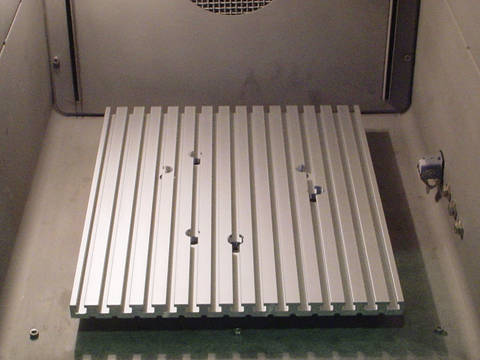
Instron 9400 series is a good fit for such a testing requirement. Since the implants for various body parts are of different shapes & sizes, the testing has to be performed using various custom fixtures. We used a T-slot plate which was bolted at the bottom of 9450. A custom fixture with a clamped knee implant was mounted on the T-slot plate at base of the tower. A 45 kN strain gauge striker was used to impact the knee implant. A Data Acquisition System (DAS) and Bluehill Impact software were used in conjunction with the drop impact machine to collect the force/velocity data and analyze the impact performance.

Alternatively a general purpose plate as seen in the picture can be used instead of a T-slot plate.These versatile plates give flexibility to manufacturers to mount a wide range of custom fixtures as per their own requirements. Such impact tests can be customized to an extent where they can replicate the real life low and high velocity impacts during the actual surgical procedures.

Note: The customer's actual test set up is confidential and hence is not displayed in this application note.

Literature

9400 Series Drop Tower Brochure

Instron Drop Towers are used to develop, fine tune, and validate material models. Testing materials under real impact conditions is a crucial step prior of product design. Using the characterization data obtained with the Instron 9400, coupled with customer supplied high-speed video, you can have confidence in your results and deliver new materials to your customers faster. Our Drop Tower impact systems, fixtures, and tups are designed to meet a wide range of applications and testing standards including: ISO, ASTM, ANSI, Airbus, Boeing, BSI, DIN, EN, FDA, Ford, GM, JIS, NASA, GOST, and more.

  • Produkte
  • 02/05/2020
  • 763.1 KB

9400 Series Dashboard Brochure

Bluehill® Impact is built from the ground up for touch interaction. The Operator Dashboard features large touchpoints to make the user experience simpler and smarter. Easy-to-understand icons and workflows make it easy to train new or experienced users, simplify operator training, and allow you to start testing even faster than ever before

  • Produkte
  • 08/01/2019
  • 2.35 MB

Schlagfestigkeit von Arzneimitteltabletten

Biomedical Testing

Schlagfestigkeit von Arzneimitteltabletten

Support for pharmaceutical tablet impact testing

Handelsübliche Arzneimitteltabletten haben häufig einen Überzug, der das Schlucken der Tabletten erleichtert und eine zeitgesteuerte Freisetzung des Wirkstoffs sowie eine einfache Identifikation und Markenkennzeichnung ermöglicht. Darüber hinaus können die Überzüge zu einer längeren Haltbarkeit des Medikaments beitragen, indem sie das darunter liegende Produkt vor schädlichen Umwelteinflüssen wie z.B. Licht, Temperatur, Feuchtigkeit und mechanischen Kräften schützen. Insbesondere bei der Herstellung und Verpackung unterliegen die Überzüge Schlagbelastungen, die zu Schäden führen können.

Schlagprüfungen liefern den Herstellern wertvolle Daten für die Untersuchung und Entwicklung neuer Überzugsmaterialien und -prozesse. Im Rahmen der laufenden Fertigung kann ein Hersteller ein Qualitätssicherungsprogramm implementieren, bei dem Basisdaten aus einer Schlagprüfung für die kontinuierliche Kontrolle des Prozesses eingesetzt werden.

Ein INSTRON 9440-Prüfsystem, ausgestattet mit einem Piezo-Sensor-Tup mit geringer Last (0,45 kN oder 4,5 kN), einem halbkugelförmigen oder flachen Tup-Einsatz von ½ Zoll und der Bluehill Impact-Software, sind ideal zum Testen von pharmazeutischen Pillen und Tabletten. Zum Befestigen empfehlen wir die Verwendung einer steifen, flachen Metallplatte, die leicht am Tischbereich befestigt werden kann.

Das oben beschriebene Prüfsystem ermöglicht die Bestimmung von Schlageigenschaften von Tabletten; z.B. zur Gewährleistung der Konsistenz zwischen einzelnen Chargen oder zur Bestimmung von Bruchstellen bzw. Stellen des Schädigungsbeginns. Diese Eigenschaften können wiederum vom Überzugsmaterial abhängig sein. Die Kenntnis der Einflussfaktoren, die dazu führen, dass ein Überzugsmaterial eine Tablette verstärkt oder schwächt, ermöglicht eine Verbesserung des Produkts.

Unterlagen

9400 Series Drop Tower Brochure

Instron Drop Towers are used to develop, fine tune, and validate material models. Testing materials under real impact conditions is a crucial step prior of product design. Using the characterization data obtained with the Instron 9400, coupled with customer supplied high-speed video, you can have confidence in your results and deliver new materials to your customers faster. Our Drop Tower impact systems, fixtures, and tups are designed to meet a wide range of applications and testing standards including: ISO, ASTM, ANSI, Airbus, Boeing, BSI, DIN, EN, FDA, Ford, GM, JIS, NASA, GOST, and more.

  • Produkte
  • 02/05/2020
  • 763.1 KB

9400 Series Dashboard Brochure

Bluehill® Impact is built from the ground up for touch interaction. The Operator Dashboard features large touchpoints to make the user experience simpler and smarter. Easy-to-understand icons and workflows make it easy to train new or experienced users, simplify operator training, and allow you to start testing even faster than ever before

  • Produkte
  • 08/01/2019
  • 2.35 MB

Radial Force Evaluation of Stent Grafts

Biomedical Testing

Radial Force Evaluation of Stent Grafts

Stent grafts are used to treat a wide variety of peripheral arterial issues, as well as abdominal and aortic pathologic conditions like abdominal aortic aneurysms (AAA). The success of endovascular stent grafts for AAA’s has provided motivation to adapt similar technology for descending thoracic aortic aneurysms (TAA’s). Survival rates for untreated and traditionally treated (through complex thoracic surgeries) aneurysms are typically quite poor.

Advantages of stent grafts include shorter operative time, avoidance of major thoracic or thoracoabdominal incisions, and significant reductions in morbidity and mortality. Successful surgery requires the accurate placement of the stent graft to ensure it does not move, especially in upper descending thoracic aorta cases.

Typically, secure placement for stent grafts is a function of the proper selection and sizing since physiological movements of the aorta can be significant. Additionally, stent grafts have much larger diameters than coronary stents (30+ mm versus 2-3 mm). Evaluating the radial strength of a stent graft helps manufacturers to ensure efficacy and reliability of the medical device when implanted in vivo.

Instron partners with Machine Solutions Inc. (MSI) to utilize either a RX575 or RX675 stent iris on an Instron system. The fixture can also be customized and used for special specimen types to provide radial strength and stiffness over the entire graft or the securing graft ends. The control software to operate MSI’s RX fixture on an Instron system is standard Bluehill® 3 and TestProfiler. Although room-temperature testing provides excellent comparative results, the system can also be configured with a chamber to provide simulation of body temperature.

Literature

6800 Series Premier Testing Systems Brochure

Instron 6800 Series Universal Testing Systems provide unparalleled accuracy and reliability. Built on a patent-pending Operator Protect system architecture with an all-new Smart-Close Air Kit and Collision Mitigation features, the 6800 Series makes materials testing simpler, smarter, and safer than ever before.

  • Produkte
  • 02/10/2020
  • 4.15 MB

Implantable Devices

Biomaterials

Dental

Orthopedics

Soft Tissue Testing

Biomedical Testing

Soft Tissue Testing

The Challenge

Skin

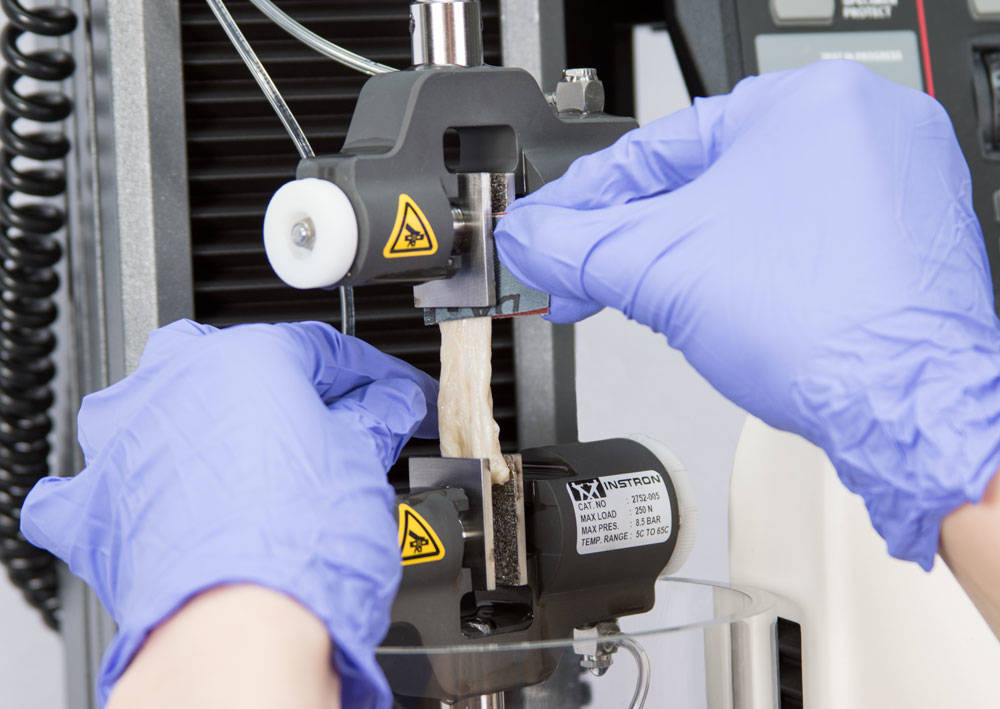
Testing soft tissues, such as skin, tendons, ligaments, and others, presents many challenges. Specimens of this type are delicate; hence they break at low forces. Gripping soft tissues can also be problematic given that these specimens are small, slippery, and compliant in nature. In addition, soft tissues are viscoelastic and often require accurate elongation or strain measurement to properly understand the material properties. Typically, in vivo conditions are needed to test soft tissues, which calls for the test to be performed at body temperature and in a hydrated state. This requires the testing equipment and fixture to be corrosion resistant and "waterproof" to avoid damaging the sensitive electronics of the testing system.  

Our Solution 

Soft Tissue Testing

For testing at physiological conditions, the Instron® BioBath is an ideal solution for keeping a specimen fully hydrated in a saline solution and at 37°C. The BioBath uses a closed-loop temperature control measurement, which can be fed directly into the test system's software to accurately track specimen temperature, in addition to mechanical test data. Pneumatic grips are recommended for consistent clamping pressure that the user can vary up to 90 PSI. A high friction surface is often needed to grip slippery biomaterials to avoid specimen slipping. To avoid this, we recommend using a metallic high friction finish known as surfalloy on the grip face, but grit sandpaper is also a viable option. A stainless steel tray, such as the BioTray, can help protect the system's electronics from damage in the case of spills or messy specimens.

Prüfung von medizinischen Verbrauchsmaterialien


Biomedical Testing


Prüfung medizinischer Verbrauchsmaterialien

PRÜFUNG VON MEDIZINISCHEN VERBRAUCHSMATERIALIEN

Ein Leitfaden für Einweg-Verbrauchsmaterialien wie PSA, chirurgische Instrumente und Produkte zum Wundverschluss
Medizinische Verbrauchsmaterialien stellen die größte Kategorie der biomedizinischen Prüfung dar und umfassen eine Vielzahl von Einwegprodukten wie chirurgische Instrumente, PSA, Produkte zum Wundverschluss, Produkte zur Probenentnahme und mehr. Einrichtungen des Gesundheitswesens verlassen sich auf Einwegprodukte, um das Auftreten von im Krankenhaus erworbenen Infektionen zu verringern und die Patientensicherheit zu gewährleisten. Bei diesen Produkten handelt es sich in der Regel um Medizinprodukte der FDA-Klasse I oder II, die zwar weniger strenge Prüfanforderungen haben als Produkte mit höherem Risiko, aber oft in so großen Mengen hergestellt werden, dass spezifische Schritte unternommen werden müssen, um mechanische Prüfungen mit hohem Volumen zu unterstützen. Um die größeren Volumina zu bewältigen, werden Durchsatz und Wiederholbarkeit zu kritischen Prüfanforderungen, die durch spezialisierte Vorrichtungen, effiziente Arbeitsabläufe für die Bediener und intuitive Software adressiert werden. Eine weitere kritische Komponente in dieser Kategorie ist die medizinische Verpackung für Fertigerzeugnisse, für die eigene Prüfanforderungen gelten. Weitere Informationen zu anderen biomedizinischen Anwendungen finden Sie auf unserer Seite Biomedizinische Industrie.
medizinischer Handschuh

SPEKTRUM DER PRODUKTPRÜFUNG

Die Bewertung dieser Produkte kann an vielen Stellen während der Produktentwicklungs- und Produktionsprozesse erfolgen, was bedeutet, dass die Komplexität der eigentlichen Prüfprobe von Rohmaterialien bis hin zu Unterbaugruppen und Fertigerzeugnissen reichen kann. In der Phase der Rohmaterialien ist die Prüfmethodik oft viel stärker auf genau definierte Normen und bekannte Vorrichtungslösungen ausgerichtet. In vielen Fällen können Standard-Spannzeuge oder Druckplatten verwendet werden, um verschiedene Materialien ordnungsgemäß zu bewerten und Ingenieuren zu helfen, fundierte Entscheidungen hinsichtlich der Materialauswahl für ihr Produkt zu treffen. Auf der Ebene der Komponentenprüfung führt die einzigartige Produktgeometrie zu einem größeren Bedarf an kundenspezifischen Vorrichtungen. Die Verwendung von XY-Tischen oder mit Gewindebohrungen versehenen Prüfplatten bietet Anwendern die Flexibilität, ihr System an viele verschiedene Arten von Komponenten anzupassen. Diese Vorrichtungen ermöglichen es Ihnen auch sicherzustellen, dass die Belastungsachse korrekt auf das interessierende Merkmal am Produkt ausgerichtet ist. Komponenten müssen möglicherweise auf viele verschiedene Arten bewertet werden, um die Leistung des Produkts vollständig zu charakterisieren. Eine vollständige Leistungsbewertung kann zusätzlich zu den gemessenen Last- und Wegdaten auch eine qualitative Bewertung des Versagensmodus erfordern. Integrierte Testcams können hilfreich sein, um ein visuelles Feedback des Versagensereignisses synchronisiert mit den Prüfdaten zu liefern.

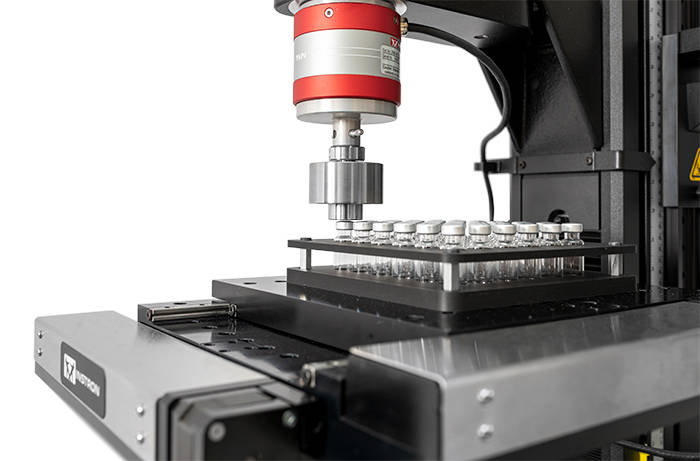
AUTOMATISIERUNGSPOTENZIALInsbesondere im Kontext einer globalen Pandemie hat sich die Nachfrage nach medizinischen Verbrauchsmaterialien, insbesondere PSA, als unvorhersehbar erwiesen. Drastische Verschiebungen im Prüfdurchsatz für diese Produkte sind zur Norm geworden. Die Integration von Automatisierung in ein mechanisches Prüfprogramm kann Verbesserungen beim Durchsatz, der Wiederholbarkeit und der allgemeinen Produktqualität bewirken. In den meisten Fällen ist die Prüfung medizinischer Verbrauchsmaterialien ein „Pick-and-Place“-Prozess, der nur minimale Interaktion durch den Bediener erfordert. Dies macht sie zu einem perfekten Kandidaten für die Automatisierung durch kollaborative Roboter oder automatische XY-Tische. Die Automatisierung kann auch die Integration Ihrer Ausrüstung in bestehende Qualitätsmanagementsysteme umfassen, was dazu dient, einen geschlossenen Regelkreis innerhalb Ihres Herstellungsprozesses zu schaffen. Dieses Feedback kann dazu beitragen, Abfall im Produktionsprozess zu minimieren, indem gesammelte mechanische Daten verwendet werden, um Änderungen an den vorgelagerten Produktionsparametern in Echtzeit vorzunehmen.

Automatisierung biomedizinischer Prüfungen

VERPACKUNG

Medizinprodukte erfordern eine robuste, luftdichte Verpackung, um sicherzustellen, dass die Sterilisation des Produkts bis zum Zeitpunkt der Verwendung aufrechterhalten bleibt. Diese Verpackung ist entscheidend, um jegliche Kontamination zu verhindern, die letztendlich dazu führen würde, dass ein Patient eine Infektion erwirbt. Um die Festigkeit der Verpackungssiegelnaht zu verifizieren, prüfen die meisten Kunden nach ASTM F88, welche die Prüfkriterien für die Bewertung der Naht vorgibt. Die Hauptherausforderungen sind die Probenvorbereitung und die Datenerfassung. Es gibt viele Vorrichtungen zur Probenvorbereitung, um die gemäß der Norm erforderlichen 1 Zoll breiten Streifen gleichmäßig herzustellen. Die Prüfung der Siegelnahtfestigkeit führt zu einer ungleichmäßigen Kurve mit abrupten Änderungen, die eine ausreichend hohe Datenerfassungsrate erfordern, um sicherzustellen, dass Sie das Ereignis genau aufzeichnen. Wenn die Datenerfassungsrate zu niedrig ist, könnte die Lastkurve abgerundet werden und zu einer künstlich niedrigen durchschnittlichen Siegelnahtfestigkeit führen. Pneumatische Spannzeuge mit flachen Spannflächen sind ideal, um die Probenenden wiederholbar zu halten, ohne das Material in irgendeiner Weise zu beschädigen.

FOKUS AUF NACHHALTIGKEIT

Krankenhäuser sind zunehmend besorgt über die Abfallproblematik, die durch ihren Verbrauch an Einweg-Medizinprodukten entsteht. Die Entwicklung von Biokunststoffen ist eine aufstrebende Branche mit einem starken Marktbedarf, und derzeit werden Normen entwickelt, um eine Reihe von Biopolymereigenschaften für viele Anwendungen im Gesundheitswesen zu adressieren. In der Zwischenzeit haben viele typische Kunststoffnormen wie ASTM D638 und ISO 527 ihren Wortlaut aktualisiert, um Biokunststoffe und 3D-gedruckte Kunststoffe einzubeziehen. Die Prüfanforderungen für diese Normen sind gut bekannt, und durch ihre Verwendung zur Bewertung können Forscher klar zwischen den Materialeigenschaften von Erdöl und denen von biologisch basierten Kunststoffen unterscheiden. Forscher müssen möglicherweise Zug-, Druck-, Biege-, Torsions- und andere Formen der Prüfung an diesen neuen nachhaltigen Materialien durchführen, um sie ordnungsgemäß zu charakterisieren. F&E-Einrichtungen benötigen die ihnen zur Verfügung stehenden Werkzeuge, um diese umfassenden Analysen durchzuführen und die regulatorischen Hürden zu nehmen, welche die FDA und andere internationale Organisationen schaffen werden.

Prüfung von Arzneimittelabgabesystemen und -behältern


Biomedical Testing


Prüfung von Arzneimittelabgabesystemen und -behältern

Prüfung von Arzneimittelabgabesystemen und -behältern

Ein Leitfaden zur Prüfung von Spritzen, Karpulen und Durchstechflaschen

Die weltweite Nachfrage nach pharmazeutischen Produkten steigt, angetrieben durch höhere Inzidenzraten chronischer Erkrankungen, eine alternde Bevölkerung und die Bedrohung durch künftige Pandemien. Patienten und Ärzte erwarten, dass Arzneimittelbehälter frei von Mängeln sind und das Medikament während des gesamten Transports und der Anwendung sicher aufbewahren können. Ausfälle können ein erhebliches Risiko für den Patienten darstellen oder zur Entsorgung großer Mengen dringend benötigter Vorräte führen. Aus diesen Gründen erfordern Arzneimittelbehälter und -abgabesysteme eine strenge Bewertung, die von globalen Aufsichtsbehörden durchgesetzt wird, um sicherzustellen, dass sie bestimmungsgemäß funktionieren. Es gibt verschiedene Arten von Arzneimittelbehältern, die für die Lagerung und Abgabe von Medikamenten unter unterschiedlichen Bedingungen konzipiert sind. Diese Seite unterscheidet die verschiedenen Behälter und identifiziert die spezifischen Prüfziele und Herausforderungen, die mit jedem verbunden sind. Weitere Informationen zu anderen biomedizinischen Anwendungen finden Sie auf unserer Seite Biomedizinische Industrie.

Spritze

Spritzen-Tests

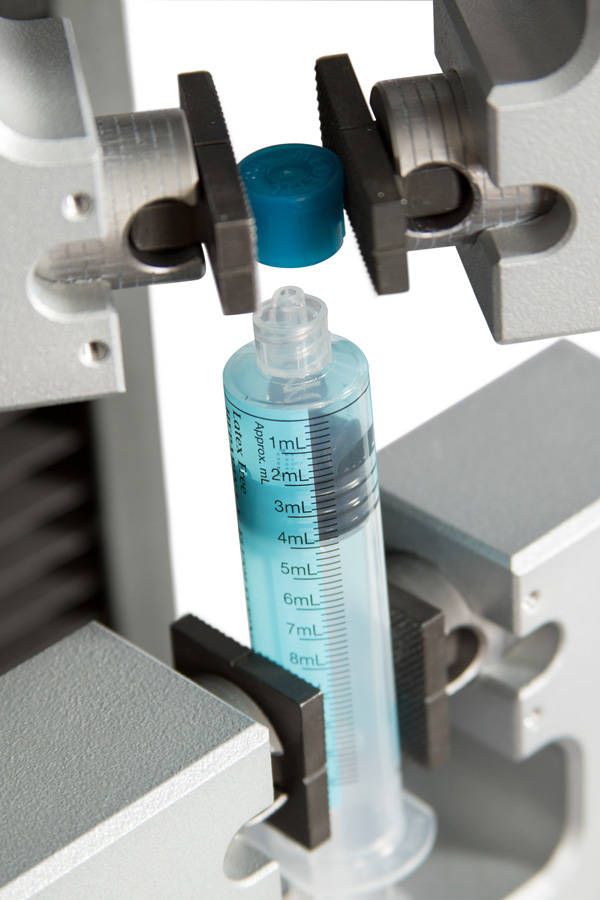
Da sie für die Verabreichung vieler verschiedener Medikamente in vielen verschiedenen Umgebungen verantwortlich sind, werden Spritzen in mehreren Varianten hergestellt. Glasspritzen stellen den größten Marktanteil dar, dicht gefolgt von Kunststoffspritzen, mit einem kleineren Markt für Edelstahlspritzen. Trotz ihrer inhärenten Einfachheit müssen bei der Entwicklung dieser Produkte Hunderte von Konstruktionsüberlegungen berücksichtigt werden, da sie sowohl als Behälter als auch als Arzneimittelabgabesysteme dienen. Mechanische Prüfungen zielen darauf ab, viele dieser Aspekte zu adressieren und Herstellern dabei zu helfen, optimale Leistung zu erzielen und die Produktionsqualität aufrechtzuerhalten.

Die Gebrauchstauglichkeit des Geräts ist eine der wichtigsten Konstruktionsüberlegungen. Bei Spritzen bedeutet dies die Leichtigkeit der Flüssigkeitsabgabe durch Verwendung des Kolbens. Um eine optimale Leistung zu erzielen, können Änderungen an den geometrischen Toleranzen des Zylinders, der Oberflächenrauheit der Innenseite, den Silikonisierungsprozessen, der Geometrie des Kolbenstopfens und mehr erforderlich sein. Hersteller müssen sich während des F&E-Prozesses auf mechanische Prüfungen stützen, um alle Konstruktionsentscheidungen zu qualifizieren und zu bewerten.

Eine weitere wichtige Überlegung sind die Verschluss- und Sicherheitsmechanismen des Geräts. Einige Glasnadeln haben fest eingebettete Nadeln im Konus des Zylinders und benötigen eine Nadelschutzkappe, während die meisten Spritzen eine Luer-Verbindung verwenden, um eine Kappe und eine separate Nadel anzubringen. Sicherheitsmechanismen können als aktiv oder passiv klassifiziert werden, abhängig von der Interaktion des Benutzers. Aktive Sicherheit erfordert eine deutliche Handlung des Bedieners, wie das Anbringen einer Schutzkappe über einer freiliegenden Nadel. Passive Mechanismen verwenden typischerweise eine Feder, um die Nadel nach Gebrauch zu verbergen oder abzudecken und so Verletzungen durch scharfe Gegenstände zu verhindern. Bei beiden Mechanismustypen ist eine der Hauptprüfherausforderungen die Ausrichtung. Konzentrizitätsfehler können die Kraft- und Drehmomentwerte der Messung beeinflussen. Selbstzentrierende Greifer sind ideal für diese Anwendungen und beseitigen Möglichkeiten für Bedienerfehler.

Sowohl vorgefüllte Glasspritzen als auch Karpulen können direkt in automatische Arzneimittelabgabesysteme eingesetzt werden. Diese Geräte sind so konzipiert, dass sie die Arzneimittelabgabe mechanisch aktivieren, nachdem ein Patient einen Knopf drückt oder eine Nadelschutzkappe betätigt. Während der Aktivierung drückt eine gespannte Feder einen Kolben auf den Behälter und gibt Flüssigkeit ab. Automatische Arzneimittelabgabesysteme erhöhen die Benutzerfreundlichkeit für den Patienten erheblich, stellen aber auch zusätzliche Konstruktionskomplexität dar, die die Bewertung vieler Unterkomponenten und Funktionalitäten erforderlich macht. Viele Kunden adressieren dies mit mehreren Prüfsystemen, die jeweils für eine andere Bewertung vorgesehen sind, wie z. B. ausgestoßenes Volumen oder Nadellängen-Einführtiefe. Hersteller können den Durchsatz verbessern, den Einfluss des Bedieners reduzieren und Prüfabläufe vereinfachen, indem sie eine einzige schlüsselfertige Lösung verwenden, um alle erforderlichen Funktionstests durchzuführen.
Spritzenkappenentfernungstest

Karpulenprüfung

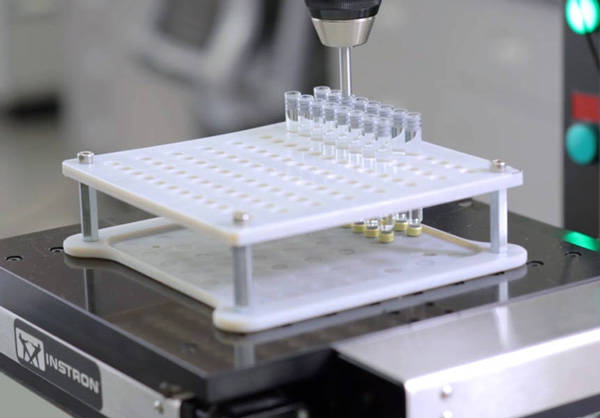
Karpulenprüfung auf automatisiertem XY-Tisch

Cartridge Testing on Automated XY Stage

Karpulen werden am häufigsten in automatisierten Arzneimittelabgabesystemen verwendet, einschließlich Autoinjektoren, Pen-Injektoren und tragbaren Geräten. Sie bieten einzigartige Vorteile für Pharmaunternehmen, da sie einfacher herzustellen sind als Spritzen und kompakter für eine verbesserte Lagereffizienz. Sie sind auch einfach im Design und bestehen aus einem Borosilikatglasbehälter mit elastomerer Dichtung und Stopfen, der von einer Aluminiumkappe umschlossen ist. Die Karpule ist auf zwei externe Mechanismen angewiesen, um Medikamente abzugeben – eine manuelle oder automatisierte Aktion zur Betätigung des Kolbens und eine anbringbare Nadel, um das Medikament in den Körper zu leiten. Die meisten Prüfungen an Karpulen bewerten Ersteres und stellen sicher, dass die zur Abgabe von Flüssigkeit erforderlichen Kräfte innerhalb des Geräts erreicht werden können.

Wie bei Spritzen ist die Ausrichtung eine primäre Herausforderung für das Erreichen wiederholbarer Prüfergebnisse. Ausrichtungsprobleme können durch die Verwendung selbstausrichtender Vorrichtungen und die Möglichkeit, XY-Anpassungen am Arbeitsbereich vorzunehmen, gemildert werden. Die Geometrie von Karpulen stellt einen wesentlichen Unterschied in der für die Prüfung erforderlichen Vorrichtung dar. Sie haben keine Fingerflansche, was bedeutet, dass die gesamte Greifkraft auf die Seiten des Behälters ausgeübt werden muss. Die Spannkräfte müssen kalibriert werden, um Schäden am Behälter zu vermeiden, der aus Glas besteht. Die Verwendung eines Einsatzes zur Unterstützung des Bodens der Karpule kann die Anwendung von Seitenlasten begrenzen und zu einer besseren Wiederholbarkeit bei der Prüfung führen.

Durchstechflaschenprüfung

Durchstechflaschen sind Lagerbehälter für Pharmazeutika und nicht Teil der eigentlichen Arzneimittelabgabe. Sie bestehen im Allgemeinen aus einem Glasbehälter, einer Gummidichtung und einer gecrimten Aluminiumkappe. Eine Spritze wird verwendet, um die Gummidichtung zu durchstechen und die genaue für die Verabreichung erforderliche Dosierung zu entnehmen. Von Interesse für Hersteller von Durchstechflaschen ist die Behälterverschlussintegrität (CCI), eine Reihe von Bewertungen zur Validierung, dass der Verschluss verhindert, dass äußere Partikel das Produkt kontaminieren. Diese Tests selbst sind nicht mechanischer Natur und verwenden elektrische oder druckbasierte Mittel, um die Verschlussintegrität zu bestimmen.

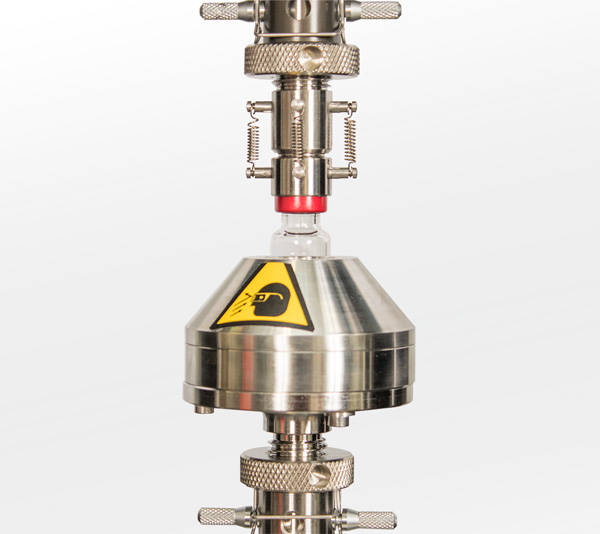
Instron-Systeme helfen dabei, empirische Beweise zu liefern, die die wichtigsten mechanischen Parameter für die elastomere Dichtung und das Crimpverfahren identifizieren, die mit der CCI-Leistung korrelieren. Restdichtkraft (RSF) ist einer der Haupttests, der durchgeführt wird und die Kraft bestimmt, die erforderlich ist, um die inneren Kräfte der elastomeren Dichtung zu überwinden, die den Kontakt zwischen der Durchstechflasche und der Kappe aufrechterhält. Dieser Test ist entscheidend für die Bewertung der vielen Variablen, die letztendlich die CCI beeinflussen können:

  • Zeit seit der Versiegelung
  • Lagertemperatur
  • Lagerluftfeuchtigkeit
  • Stopfendesign
  • Stopfenmaterial
  • Crimptechnik

Die Hauptherausforderungen im Zusammenhang mit RSF-Prüfungen bestehen darin, die ordnungsgemäße Ausrichtung des Geräts und die Bewertung des RSF-Punkts auf der Kraft-Weg-Kurve sicherzustellen. Während viele Bediener den Punkt auf der Kurve manuell auswählen, ermöglicht die Software Bluehill Universal® dem Bediener, erste und zweite Ableitungsmessungen hinzuzufügen, was die automatische Erkennung und Auswahl der mit RSF verbundenen Wendepunkte ermöglicht.

Zusätzliche Prüfungen werden im Zusammenhang mit der Verwendung durch Ärzte und der Kennzeichnung durchgeführt. Die Gruppe für kundenspezifische Produkte von Instron hat spezialisierte Vorrichtungen entwickelt, um die Kunststoffkappe wiederholbar zu entfernen und das Etikett abzuziehen, da es wichtig ist sicherzustellen, dass die Klebkraft bei heißen, kalten oder schwankenden Lagertemperaturen aufrechterhalten werden kann.

Restdichtkrafttest

Verbesserung von Effizienz und Wiederholbarkeit

Wenn Sie sich der Kommerzialisierung eines Produkts nähern, wird die Menge der Prüfungen unweigerlich zunehmen. Effizienz und Wiederholbarkeit sind zwei kritische Parameter, die durch erhöhtes Volumen beeinflusst werden können. Um dies zu adressieren, gibt es viele Lösungen, die genutzt werden können, um den Prozessablauf zu verbessern und Bedienerfehler zu reduzieren. Diese Lösungen können umfassen:

Reales Szenario: Designverifizierungsprüfungen sind beispielsweise immer der letzte Schritt vor Erhalt der Produktzulassung, können aber nur wenige Male im Jahr stattfinden. Sicherzustellen, dass das Labor über die entsprechende Personalausstattung verfügt, um sowohl alle erforderlichen Prüfungen abzuschließen als auch die Dokumentation und Analyse zu erstellen, kann eine Herausforderung sein. Die Nutzung von Automatisierung kann helfen, diese Herausforderungen zu bewältigen, indem die Notwendigkeit entfällt, dass Bediener vor dem System stehen, und sie stattdessen gleichzeitig an anderen erforderlichen Aufgaben arbeiten können. Automatisierung wie der CT-6-Cobot kann helfen, die Effizienz des Labors zu optimieren, sodass ein Laborleiter die Arbeitslast angemessen verteilen und die engen Fristen im Zusammenhang mit der Produktfreigabe einhalten kann.

Cobot-System für Spritzenprüfung

FDA 21 CFR Part 11 Compliance

Biomedical Testing

Materials Testing Lab

FDA 21 CFR PART 11 COMPLIANCE FOR MECHANICAL TESTING LABS

What Is Required and How You Can Achieve It

What is FDA 21 CFR Part 11?

21 CFR Part 11 is a regulation that applies specifically to electronic documentation provided to the FDA. First published in 1997, the original intent was to create a framework that ensured electronic means of recording, approving, and submitting documents was effectively equivalent to handwritten paper documents in terms of security. The objective was to ensure that companies were capable of using electronic record keeping technology as it became more commonly utilized within the industry.

Who Does 21 CFR Part 11 Apply To?

FDA 21 CFR Part 11 applies to any pharmaceutical or medical device manufacturer submitting product documentation to the FDA for approval for sale within the United States or as part of any post-market surveillance activities.

What are the Requirements of 21 CFR Part 11?

Regulatory requirements mainly apply to the processes surrounding electronic record creation, retention and submission. The regulation specifically discusses the need for software validation, use of electronic signatures, a searchable time-stamped audit trail, and access to traceable record copies.


INSTRON PRODUCTS


Compliance is best achieved through a partnership between a manufacturer and its equipment suppliers, where the equipment supplier provides the tools to effectively and efficiently integrate the equipment into the manufacturer's quality management system. Instron's Bluehill® Universal software, compatible with static universal testing systems, offers several features designed to aid in 21 CFR Part 11 compliance. Bluehill Central lab management software allows for centralized management of multiple instances of Bluehill Universal, further simplifying the processes necessary for compliance.


Bluehill Universal
Bluehill Universal

Bluehill Universal is the testing industry's most powerful and advanced testing software. Its intuitive workflows are designed to simplify operator training, increase testing efficiency, and minimize safety hazards.

Learn More


Bluehill Central
Bluehill Central

Bluehill Central software is a laboratory management tool that enables centralized, remote management of Bluehill Universal software applications associated with multiple Instron test frames. The software allows you to remotely manage all Bluehill Universal users, test templates, results, file revision approvals, and audit trail data from multiple Instron systems.

Learn More


TRACEABILITY

Bluehill Universal’s Traceability Module enables users to meet the audit requirements associated with FDA 21 CFR Part 11 as well as those of ISO 17025, Nadcap, and other regulatory bodies. Through seamless integration of electronic approvals, revision history, and an automated audit trail, this powerful add-on combines with Bluehill’s built-in security to provide unmatched data traceability.

  Webinar: Introducing Bluehill Universal's Traceability Module
  Webinar: Protecting Data Integrity and Having Traceability in Your Testing
  FDA 21 CFR Part 11 Implementation White Paper

revision history icon

Revision History

Revision history allows users to view the full revision history of Bluehill methods, tested samples, and report templates. Each revision contains the details of the affected item, including a time stamp, both the previous and the new value, and the name of the users involved with initiating and, if required, approving the change.

electronic approval icon

Electronic Signatures

Electronic signatures serve as electronic approvals and replace the need for manual, hard copy signatures. Electronic signatures can be configured for primary, secondary, and tertiary electronic sign off to ensure that method revisions and test data are reviewed before a change is implemented or data is publicized.

audit trail icon

Audit Trail

Bluehill Universal’s built-in secure and searchable audit trail tracks system level usage, such as log-ins and log-outs and additions, modifications, and deletions to all Bluehill files. The audit trail also captures usernames, dates, and timestamps for all activities, allowing full visibility into all system activities during an audit.


SECURITY

Bluehill Security allows a Lab Manager to configure permissions in the software, granting access to trained personnel, such as super users, and limiting access where needed. Bluehill Security allows login permissions to be configured directly in Bluehill, or linked to the local Windows® login or Windows Active Directory.

  Security in Bluehill Software Whitepaper
  Security Comparison Chart


DATABASE TYPES

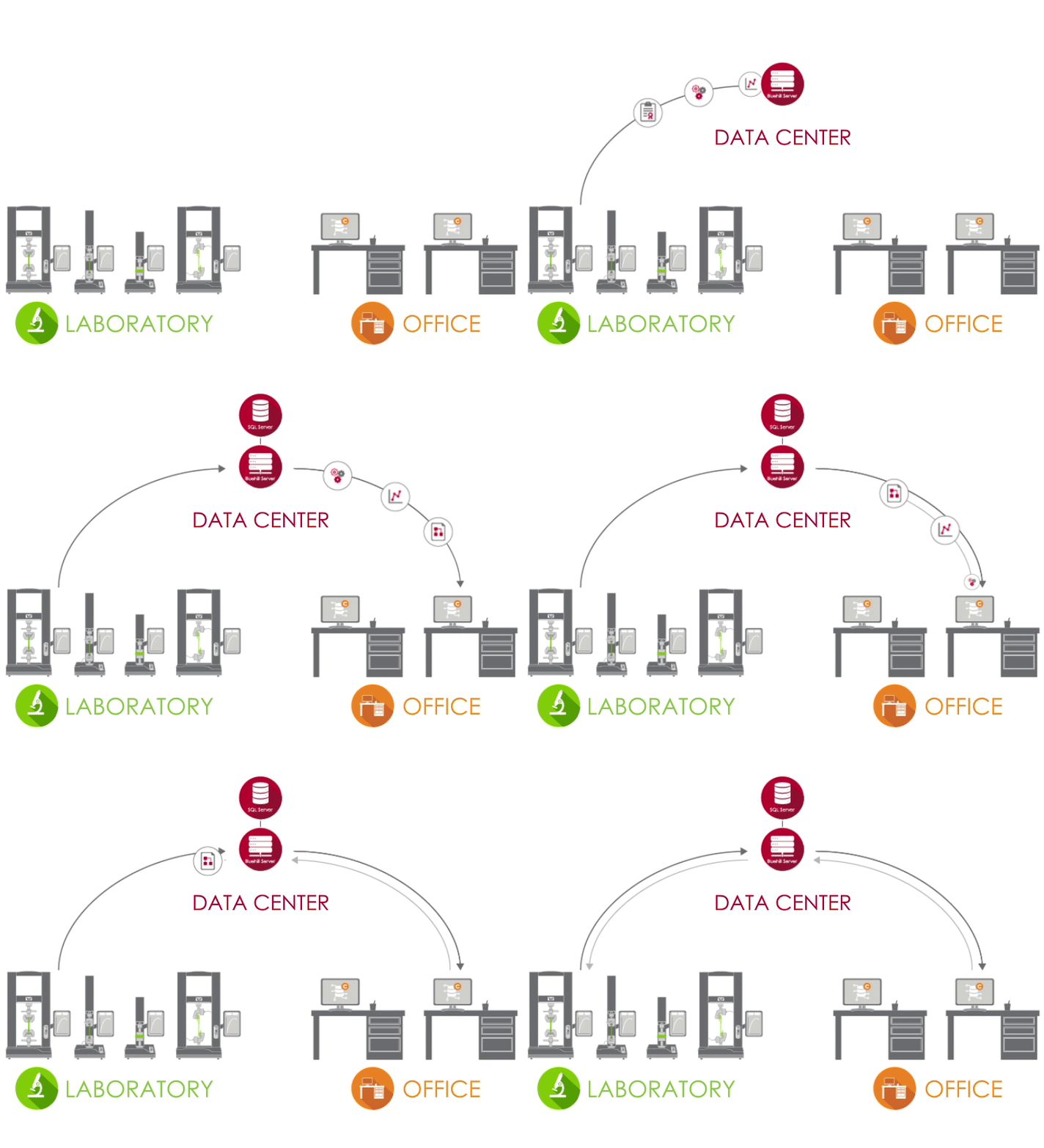
Traceability’s audit trail offers both a network and local database to accommodate your data management preference. A networked, centralized database offers your lab greater efficiencies and reduced risks when compared to locally managed data. Determining your lab’s IT infrastructure and data management preferences is recommended when considering these alternatives.


local systems
Local

Bluehill Universal’s local Traceability module stores audit trail data on a Microsoft SQL Express database that is hosted on the computer running Bluehill Universal connected to the Instron system. The local database model accommodates labs that cannot connect computers to a shared network. Viewing the audit trail and electronically signing files occurs locally on the computer, and each Instron system with a local Traceability database stores its own SQL Express database. Database backup and restore functions can be performed manually in Bluehill Universal.


Bluehill Central Architecture
Network

The network solution for Instron’s Traceability is powered by Bluehill Central, which employs a client/server framework to store all shared audit trail data, files, and settings on a Microsoft SQL Server database. When Bluehill Universal is connected to your lab’s Bluehill Central server, each testing system send and receives data from the centralized database, eliminating the risk of variation and the burden of locally managing each system. Viewing the audit trail, electronically signing files, and user management is performed either remotely in Bluehill Central or locally in Bluehill Universal. Database backup and restore functions can be performed manually in Bluehill Central.


INSTRON SERVICE


Instron field service teams provide validation and documentation services to support IQOQ processes designed to ensure that your Instron testing equipment performs to its intended purposes and produces valid results (per 21 CFR 820.72 and ISO 13845). Validation packages can also include validation of Bluehill Central and Bluehill Traceability to aid in compliance with CFR 21 Part 11. These validation packages contain checks to confirm that certain operations performed in the software are traceable in an audit trail, and provide reference to Instron transducer calibrations (purchased separately) to ensure that the software and system are providing accurate, reliable results. At the conclusion of our services we provide a Completion Certificate for Installation and Operational Qualification that will be signed by the Instron Field Service Engineer who performed the validations.


IQ/OQ

Our field service teams provide validation and documentation services to support IQOQ processes designed to ensure that your Instron testing equipment performs to its intended purposes and produces valid results per 21 CFR 820.72 and ISO 13845. At the conclusion of our services we provide a Completion Certificate for Installation and Operational Qualification that will be signed by the Instron Field Service Engineer who performed the validations.

Learn More


Systems Verification

Instron's field service teams provide speed, displacement, alignment, and temperature verification for your mechanical testing systems to ASTM E2658, ASTM E2309, and other standards.

Learn More


On Body Delivery Systems

Biomedical Testing

mechanical testing of on body delivery systems

TESTING ON BODY DELIVERY SYSTEMS

Testing Wearable Devices Used in the Treatment of Diabetes and Other Chronic Illnesses


Trends in wearable technology follow those of the broader biomedical and electronics industries — devices are getting smaller, smarter, and easier to use. These wearable devices range from on-body drug delivery systems for diabetes and cancer treatment to electrical nerve stimulation patches or sensors t monitor vitals. All treatments increase patient autonomy and are rapidly increasing in popularity in light of higher incidence rates of chronic disease and an aging population. As this trend continues, manufacturers are working to develop robust testing methods to mechanically evaluate all aspects of these devices and ensure that they are performing as expected. For more information on other biomedical applications, visit our Biomedical Industry page.

CHALLENGES OF TESTING WEARABLES

On Body Delivery Systems (OBDS) represent a quickly growing segment of the injectable drug delivery device market. These devices offer unique advantages over more traditional delivery methods. One of their most differentiating features is their ability to support significantly larger volumes of medication than devices like prefilled syringes and autoinjectors, with some OBDS reaching as much as 10 mL of deliverable volume. This is a direct result of the explosion of large molecule biologics, whose efficacy requires higher concentrations and subsequently higher volume in solution. OBDS also simplify patient adherence, as the entire delivery process occurs automatically once the device is placed and activated. In addition, their form factor allows for easier integration of IOT functionality, helping create companion applications to track and monitor patient progress.

stethoscope icon

Though these devices are just recently starting to be commercialized on drug platforms, the testing requirements are becoming more standardized. ISO 11608-6 was released in 2022, which is the first official standard that provides guidance around evaluating the functionality of OBDS. At this point, the testing specifications are still purposefully broad to apply to a range of devices with different form factors. The dose accuracy, injection time, delivery profile, and needle extension are relatively agnostic of the device, requiring additional testing system capabilities such as an integrated scale and camera. Testing around the properties of the medical grade adhesives is subject to the most uncertainty, with references to a wide range of existing adhesive test standards.

Challenge #1 - Flexibility Around Device Form Factors

The overall size and functionality of OBDS can vary greatly between manufacturers, and mechanical testing systems are not inherently designed for evaluating such a varied set of products. The dimensions of OBDS necessitate testing systems with a large fixturing surface that has sufficient anchoring points to accommodate all profiles. The use of a component test plate - a tapped platform with regularly spaces threaded connections - provides the most flexibility for customers to create their own fixturing for their devices. A unique challenge to OBDS is the potential for activation mechanisms and needles which are not collinear. An adjustable load cell mount makes it possible to maintain the needle centered on the injection point while ensuring the load cell is aligned with the activation button.


Challenge #2 - Capturing Extended Dose Profiles

wearable autoinjector being tested

Autoinjectors typically dispense their entire volume of fluid at a consistent rate in the range of 1 to 10 seconds. OBDS will work on a longer time scale to address patient comfort associated with large volume injections. In some cases, the delivery profile will vary throughout the duration of the injection to optimize drug absorption. The use of an integrated scale measurement in Bluehill Universal allows for proper visualization representation of the dose profile , aligning with the guidance of the ISO 11608-6 standard [Annex B].

Challenge #3 - Adhesive Evaluations

ISO 11608-6 points toward established standards like ASTM D3330 for characterizing the fundamental adhesive properties of the adhesive materials used to affix devices to patients' skin. This standard provides an ideal baseline for comparative testing of different adhesives, but does not accurately represent the real-world adhesive properties. To do this, the testing system must also be able to support more realistic substrates and preconditioning parameters such as temperature and moisture. A system with cyclic loading capabilities may provide additional insights in evaluating the degradation of adhesive properties after hours of simulated use.

Metal Ceramic Plastic Braces Testing

Biomedical Testing

Metal Ceramic Plastic Braces Testing

The  Challenge

Braces

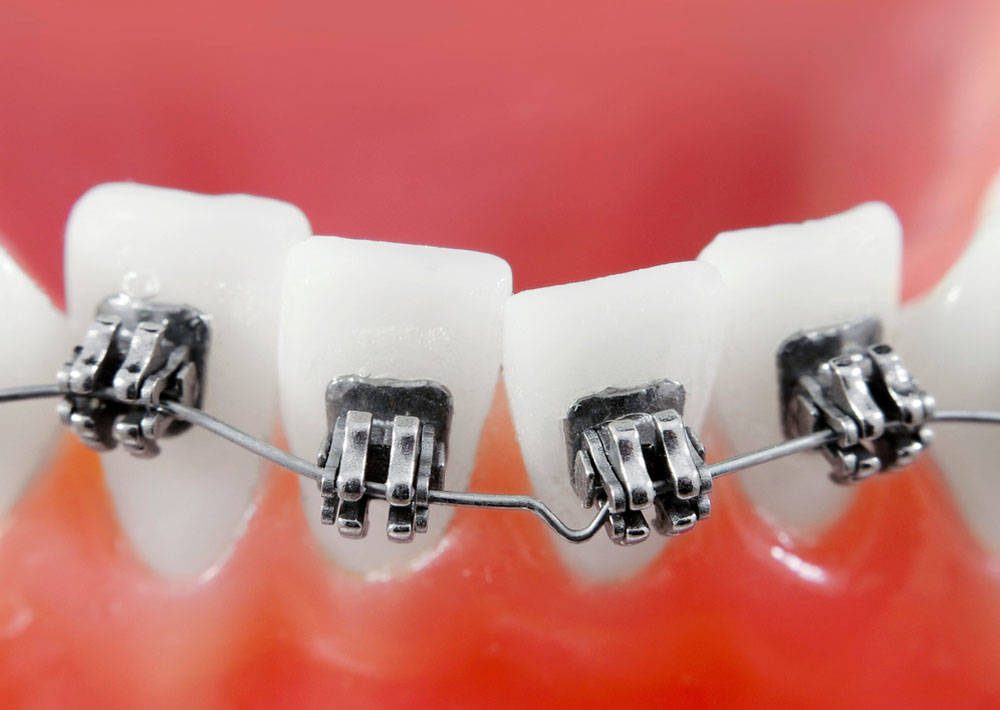
Metal braces are the most common type of braces for correcting misaligned teeth, and are typically made from high quality stainless steel or titanium. The components of metal braces include the brackets that physically attach to the teeth, bonding material like an adhesive to secure the brackets to the teeth, arch wire that connects the brackets together, and elastic which is typically referred to as O-ring material. In recent years, clear braces produced from plastic or ceramic have become a popular alternative to metal braces for cosmetic reasons. For a patient that requires braces, the preparation and application of braces are both expensive and time intensive. It is imperative that braces remain intact during application and during the patient's daily use of eating and drinking. Given the complexity of different patients and the multiple components and materials associated with braces, testing all parts and use cases can be overwhelming.

Our Solution 

Braces Testing

In order to test each component in a set of braces, we recommend using a Universal Testing System, such as the 6800 Series or 3400 Series systems with Bluehill® Universal software. Bluehill Universal's flexible user interface enables users to quickly set up different methods for tensile, compression, flex, peel, tear, and friction tests. This allows users to test the compressive strength properties of the brackets, peel properties of the adhesive, and tensile strength of both the metal wire and O-ring material. For testing the brackets, we recommend using 2-inch compression platens. When testing the adhesive, we recommend performing a 90° peel test with the adhesive bonded to substrates that mimic the tooth. Depending on the thickness of the metal wire, pneumatic cord and yarn grips may be the most preferred gripping solution for wire tensile tests. Finally, for testing the elastomeric O-ring material, Instron® offers a specialized O-ring fixture designed for measuring stiffness, strain, and ultimate tensile strength properties for a variety of O-ring sizes.

Knieprüfung

Biomedical Testing

Knieprüfung

Die Herausforderung

Kniegelenk

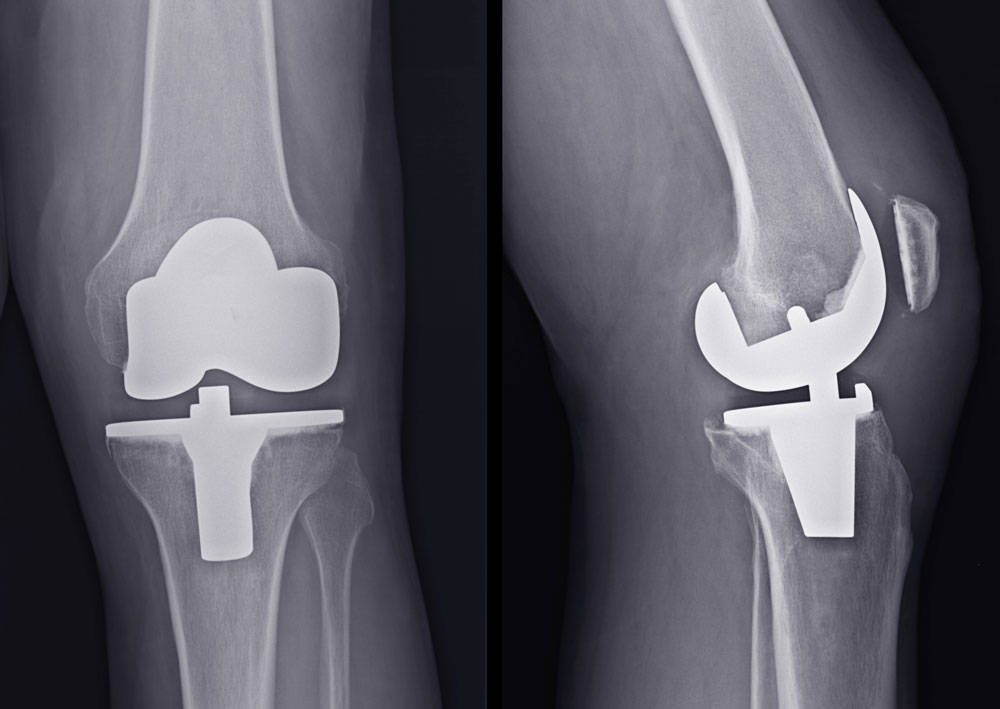
Kniegelenkersatz gehört weltweit zu den häufigsten chirurgischen Eingriffen zur Verbesserung der Lebensqualität. Ermüdungsbrüche von Tibiaplatten sind einer der am häufigsten gemeldeten Versagensmechanismen bei totalem Kniegelenkersatz (TKR). Sie werden durch den Verlust der darunterliegenden Knochenunterstützung verursacht, der aus biologischen Reaktionen wie verschleißinduzierter Osteolyse resultiert. Unter diesen Bedingungen wird die Tibiaplatte mechanisch instabil, und zyklische Belastungen durch normales Gehen verursachen Ermüdungsrisse, die letztendlich zu einem katastrophalen Versagen führen.

Unsere Lösung

Kniegelenkprüfung

Das vollelektrische dynamische Prüfgerät ElectroPuls® unterstützt Konstrukteure, Hersteller und Forscher während des gesamten Produktlebenszyklus – von der Ermittlung grundlegender Materialeigenschaften wie der Widerstandsfähigkeit gegen Ermüdungsrissausbreitung bis hin zur Prüfung der gesamten Tibiaplatte und darüber hinaus. Wir verwenden eine Klemmvorrichtung, um eine Hälfte der Tibiaplatte zu fixieren und damit einen vollständig gestützten Kondylus zu simulieren. Der andere, nicht gestützte Kondylus wird dann einer physiologisch repräsentativen Belastung ausgesetzt. Durch die Verwendung unserer einzigartigen Dynacell®-Kraftmessdose können dynamische Trägheitsfehler, wie sie durch die Vorrichtung und durch Hydrodynamik bei Prüfungen in einem Umgebungsbad entstehen, eliminiert werden. Dies ermöglicht eine genauere Messung der auf die Probe aufgebrachten Last.

Prüfung von Kontaktlinsen


Biomedical Testing


Prüfung von Kontaktlinsen

Die Herausforderung

Kontaktlinse

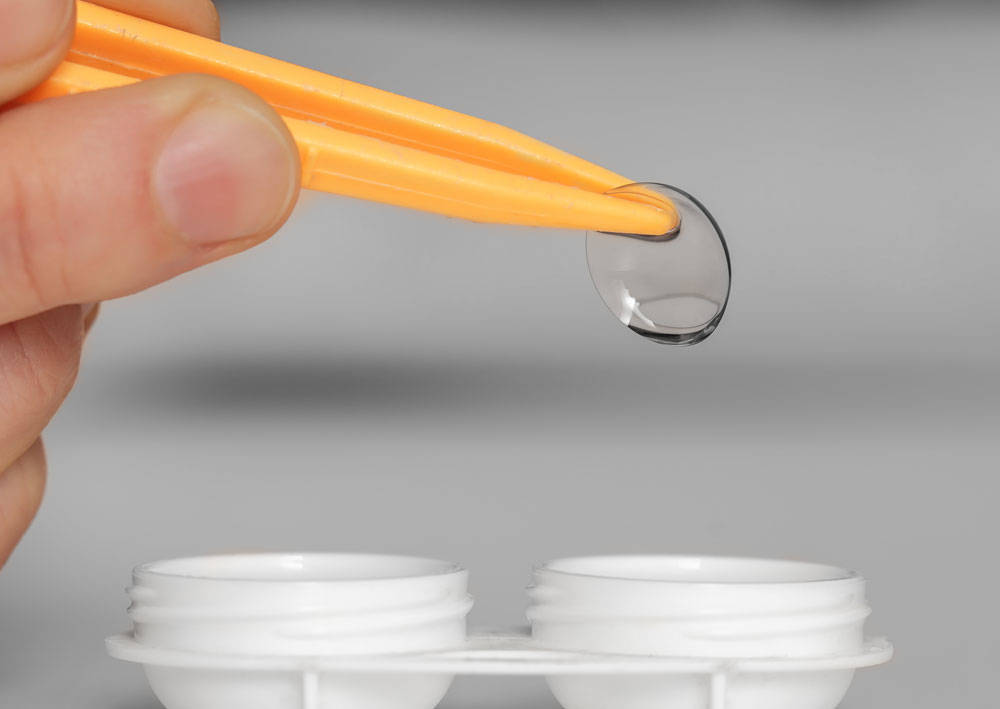
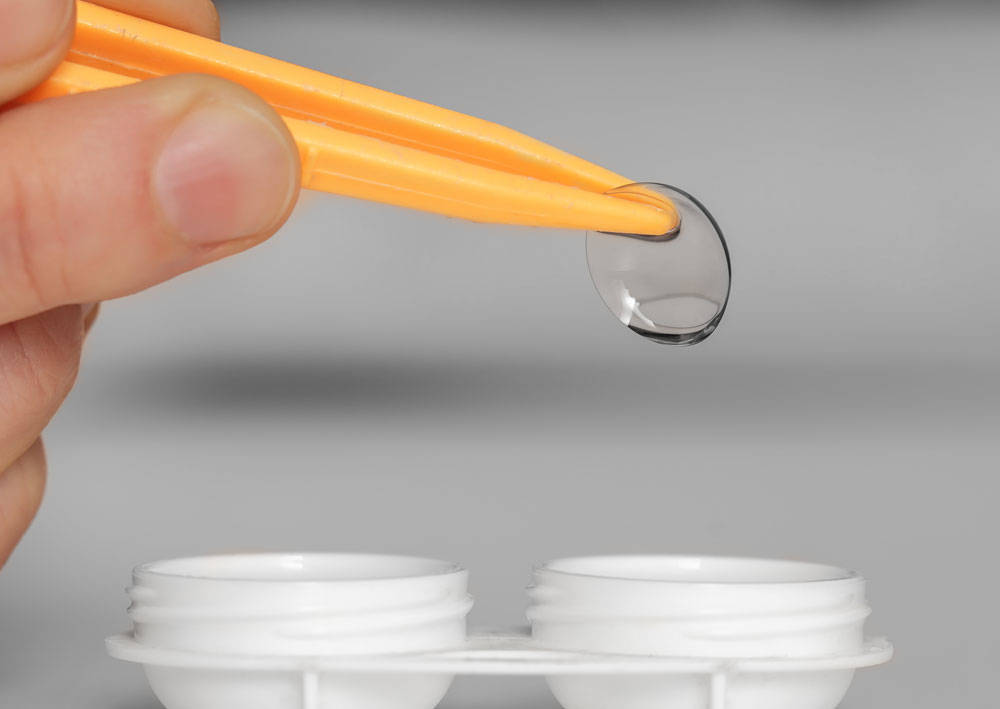
Kontaktlinsen, eines der weltweit am häufigsten verwendeten Medizinprodukte, werden hauptsächlich zur Sehkorrektur eingesetzt, aber auch für ästhetische Verbesserungen und Modifikationen. Sie werden in verschiedenen Formen hergestellt, bestehen jedoch meist aus weichen polymeren Materialien. Da weiches Kontaktlinsenmaterial rutschig und empfindlich in der Handhabung ist, kann das Einspannen der Probe in die Klemmen eine Herausforderung darstellen, und Risse in der Linse treten selbst bei sehr geringen Kräften häufig auf. Um die tatsächliche Verwendung bestmöglich zu simulieren, sollten Kontaktlinsen unter physiologisch relevanten Bedingungen geprüft werden, was erfordert, dass die Linsen in einem auf Körpertemperatur erwärmten Kochsalzbad getestet werden.

Unsere Lösung

Prüfung von Kontaktlinsen

Für die Prüfung von Kontaktlinsen empfehlen wir die Verwendung eines Universalprüfsystems, das mit den BioBath 250 N tauchfähigen pneumatischen Zugklemmen und extra langen Surfalloy-Klemmbacken ausgestattet ist. Die langen Klemmbacken ermöglichen es dem Anwender, die kleine Linse mit ausreichend Bewegungsfreiheit in die Klemmen einzuführen und gleichzeitig einen Klemmabstand von null zu erreichen. Die Linsen können als vollständige Endprodukte, in Streifen geschnitten oder zur Durchführung einer Hosenträger-Reißprüfung aufgeschnitten getestet werden. Eine Kraftmessdose für niedrige Kräfte wird ebenfalls empfohlen, um das Probenversagen präzise zu erfassen. Die pneumatischen tauchfähigen 250-N-Klemmen und die zugehörige Zugstange, die an der Kraftmessdose befestigt werden, sind beide so konzipiert, dass sie Auftriebseffekte bei Prüfungen mit geringen Kräften, wie z. B. bei der Prüfung von Kontaktlinsen, minimieren.

Prüfung von Hüftimplantaten


Biomedical Testing


Prüfung von Hüftimplantaten

Die Herausforderung

Hüftimplantat

Nach einer Operation können proximale Lockerung und Stress-Shielding infolge normaler Aktivität auftreten und zu abnormalen Belastungsprofilen führen. Daher müssen die realen Umgebungsbedingungen und Belastungen, denen das Prüfmuster im Körper ausgesetzt sein wird, bei der Prüfung nachgebildet werden. Die Ermüdungsprüfung von Hüftfemurschäften kann aufgrund der Bedeutung einer präzisen Einbettung des Prüfmusters eine Herausforderung darstellen. Die Vorrichtung muss in der Lage sein, Druck-, Biege- und Torsionsspannungen zu unterstützen, um die Anforderungen der Norm ISO 7206 zu erfüllen. Die hohen Prüffrequenzen stellen ebenfalls eine Herausforderung dar, da sie dazu führen können, dass sich das Prüfmuster über ein akzeptables Maß hinaus erwärmt.

Unsere Lösung

Prüfung von Hüftimplantaten

Instron® bietet eine Einbettvorrichtung für Prüfmuster, die sicherstellt, dass die erforderlichen Versatzwinkel und die Einbetttiefe erreicht werden. Die speziell entwickelte korrosionsbeständige Vorrichtung ermöglicht In-vivo-Prüfungen. Die Baugruppe wird komplett mit einem Temperaturregler und einer Umwälzpumpe geliefert, um sicherzustellen, dass die Temperatur niemals die akzeptable Grenze überschreitet, indem die Prüffrequenz automatisch reduziert wird. Die einfach zu installierende Vorrichtung umfasst einen reibungsarmen Belastungskopf und Adapter zur Montage an einem ElectroPuls-System. Die Instron-Software WaveMatrix ermöglicht die Verwendung verschiedener Prüfabbruchkriterien, wie z. B. das Durchführen einer bestimmten Anzahl von Zyklen oder bis zum Versagen des Prüfmusters, das auf verschiedene Weise festgestellt werden kann. Mit einem Paket können Sie die Anforderungen der Normen ISO 7206-4, 7206-6 und 7206-8 zuverlässig erfüllen und übertreffen.

Prüfung von Augenimplantaten


Biomedical Testing


Prüfung von Augenimplantaten

Die Herausforderung

Augenimplantate

Eine Intraokularlinse (IOL) ist eine synthetische, künstliche Linse, die in das Auge eines Patienten eingesetzt wird, meist nach einer Kataraktoperation. Wenn die natürliche Linse des Patienten aufgrund einer Erkrankung entfernt wird, geht die Fähigkeit des Auges zur erneuten Fokussierung verloren. IOLs werden am häufigsten aus Poly(methylmethacrylat) (PMMA), Silikon, Acryl und anderen weichen Materialien hergestellt, die es ermöglichen, sie leicht zu falten und in das Auge einzusetzen. Während der Operation ist es zwingend erforderlich, dass IOLs nicht einreißen oder reißen, da selbst der kleinste Riss für den Patienten sehr unangenehm sein kann. Zu den größten Herausforderungen bei der Prüfung von IOLs gehören die Simulation des Faltverhaltens während der Operation sowie das Greifen dieser kleinen, etwa münzgroßen, Bauteile.

Unsere Lösung

Prüfung von Augenimplantaten

Für die Prüfung von IOLs empfehlen wir die Verwendung des Moduls TestProfiler, um einen einfachen zyklischen Test durchzuführen, bei dem die IOL sowohl auf Zug als auch auf Druck belastet wird. Für Prüfsysteme empfehlen wir ein Universalprüfsystem der Serie 6800, Faserklemmen und eine Kraftmessdose für geringe Kräfte, z. B. eine 10-N-Kraftmessdose. Darüber hinaus empfehlen wir die Verwendung der Funktion TestCam von Bluehill® Universal in Kombination mit einem USB-Mikroskop. Damit können Anwender ihren Prüfkörper vergrößern, den Test aufzeichnen und das Material nach dem Test wiedergeben. Ein USB-Mikroskop mit mindestens 10x hilft dem Anwender, kleinste Risse zu erkennen, die mit bloßem Auge möglicherweise nicht sichtbar sind.

Bone Screw Testing

Biomedical Testing

Bone Screw Testing

The  Challenge

Bone Screw

Bone screws are used in surgical procedures for securing implants, osteosynthesis devices, and fracture fixation plates to the skeletal system. In normal clinical use, a surgeon applies combined axial and torsional forces to the bone screw as it is implanted within the body. Manufacturers and scientists test bone screws to determine various mechanical properties when evaluating new materials and designs. The most common standard for testing bone screws is ASTM F534. The standard consists of a total of four testing annexes: axial tests, torsion only tests, or a combination of both linear and torsion tests. ASTM F543-17 Test A1 - Test Method for Determining the Torsional Properties of Metallic Bone Screws requires the screw to be sufficiently clamped and a rotational velocity between 1 and 5 rpm to be applied until specimen failure, and to measure the torque profile and the rotational angle. ASTM F534-17 Test A2 - Test Method for Driving Torque of Medical Bone Screws measures the torque required to insert and remove the screw with a constant rotational velocity between 1 and 5 rpm while maintaining an axial load of no more than 10 N in compression. ASTM F543-17 Test A3 - Test Method for Determining the Axial Pull-Out Strength of Medical Bone Screws measures the force required to axially remove the screw that has been fully inserted in the test block using the method from Test A2. The pull-out fixture then applies a tensile load at a constant rate of 5 mm/min until the failure of the bone screw or removal from the test block. ASTM F543-17 Test A4 - Test Method for Determining the Self-Tapping Performance of Self-Tapping Medical Bone Screws specifies the procedure to evaluate the axial loading required to engage a self-tapping bone screw into a standard laboratory material. Although considered a simple clinical procedure, reproduction of this in vitro results in a relatively complex motion due to the interaction between the rotation and linear axes of a test machine. The test requires a continuous rotational velocity of up to 30 rpm while the axial load is incremented during the insertion at a rate of 2 N/s. The objective of this test is to record the torque profile as the bone screw is inserted into the material and then removed.

Our Solution 

Bone Screw Testing

To perform bone screw testing to ASTM F543, either an electromechanical system with a Torsion Add-On 3.0 , or an ElectroPuls™ Linear-Torsion system can be used. The Torsion Add-On 3.0 can be added to any new or existing 6800 Series single column or dual column table top testing machine to add rotational capabilities. The ElectroPuls E10000 and E3000 Linear-Torsion test systems are all-electric dynamic testing systems that provide a unique linear and torsion actuator system that is capable of synchronized linear and multi-rotation testing, which makes them ideal platforms for performing the full range of tests prescribed by the standard. For both the electromechanical system and ElectroPuls system, a bi-axial Dynacell load cell is mounted to the base of the machine. Using WaveMatrix™ dynamic test software on the ElectroPuls system, a user is able to control both axial and rotational axis in closed-loop control. This gives the user the ability to easily set up the multi-axial tests as a series of steps, and displays the required information as the test proceeds. Special fixtures are used to clamp the material to the biaxial load cell, and a drill chuck is used for the drive bits.

Hard Tissue Testing

Biomedical Testing

Hard Tissue Testing

The Challenge

Hard Tissue

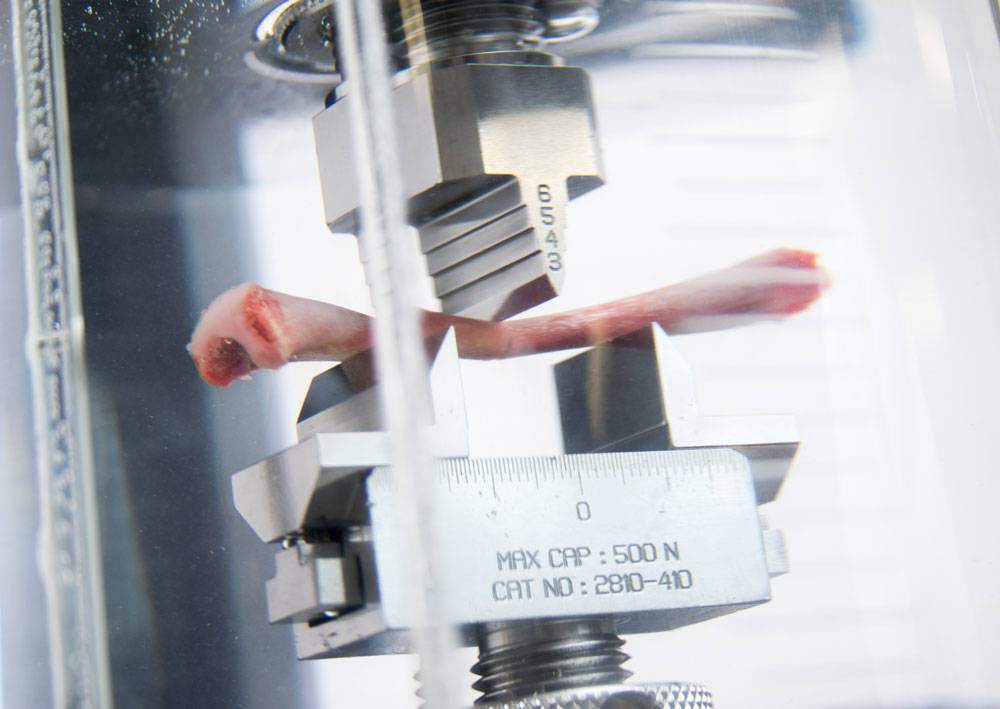
Bone, dentin, and dental enamel are all considered to be hard tissues. Specimens of this type are most commonly tested in compression and flexural. The most common results obtained from a compression or flexural test on hard tissues is modulus and force at fracture. Typically, these specimens come from mice, rats, or other mammals and are small in size. Despite being small in size, hard tissues have high stiffness. A typical challenge with measuring modulus is accurate measurement of displacement. For a given force, a hard tissue such as bone will exhibit small displacement. In addition to compression testing, 3-point and 4-point bend tests are common to quantify force at fracture on bone sections. Often, this testing must be conducted at physiologically relevant test conditions, such as in a hydrated bath and at body temperature.

Our Solution 

Hard Tissue Testing

When conducting compression testing on hard tissues, it is critical that users choose appropriately sized compression platens to closely match specimen size, ensure the compression platens are spherically seated or self-aligning to apply even pressure on the specimen, and use an accurate source to measure system displacement. For example, an accurate measurement source of displacement could be via compliance correction in the software, or by using a strain measuring device, such as a linear variable deflection transducer (LVDT) or a video extensometer. When testing flexural specimens, it is critical that the anvils on the flexural fixture are appropriately sized to the specimen and that the flexural fixture properties, such as span length, are easily entered into the software.

Prüfung von Frakturversorgungssystemen


Biomedical Testing


Prüfung von Frakturversorgungssystemen

Die Herausforderung

Frakturversorgung

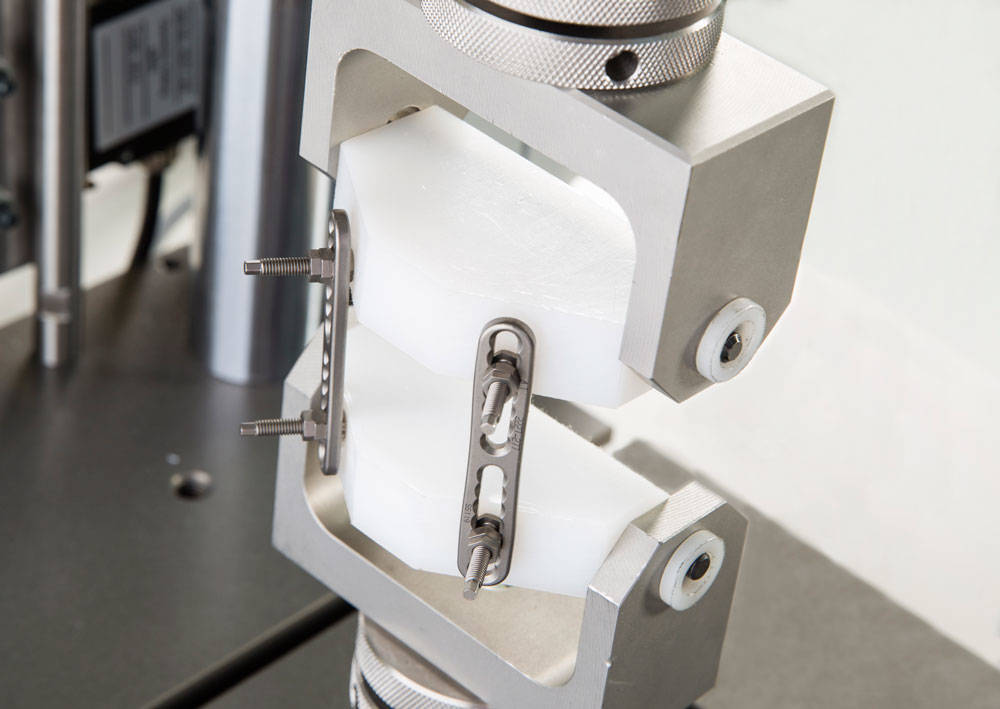
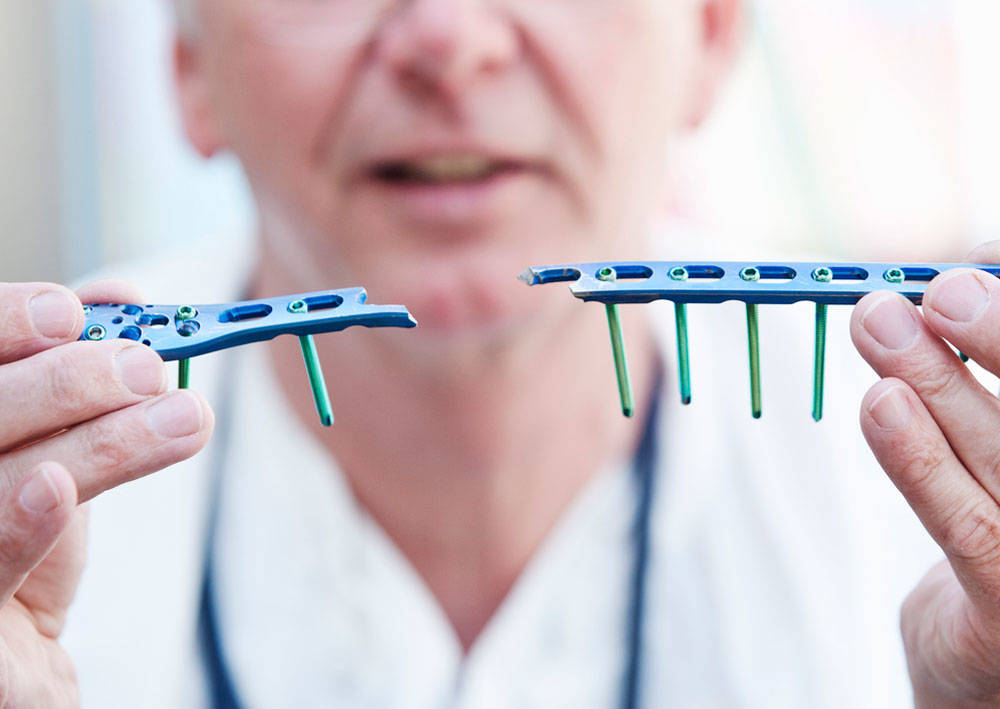
Frakturversorgungsplatten werden zur Immobilisierung von Knochen eingesetzt, die gebrochen oder schwer verletzt sind. Diese Platten bestehen üblicherweise aus Titan oder Edelstahl. Beide weisen ähnliche mechanische Eigenschaften auf, einschließlich Steifigkeit und Zugfestigkeit, wie natürlicher Knochen. Diese Platten haben oft unregelmäßige Geometrien und sind in verschiedenen Größen erhältlich, um unterschiedlich große Knochenbrüche im Körper zu versorgen. Beispielsweise unterscheidet sich eine Platte zur Immobilisierung eines gebrochenen Knochens im Oberschenkel stark von einer Platte für Knöchel, Finger oder Kiefer. Die unregelmäßige Geometrie und die Größenvielfalt von Frakturversorgungsplatten machen sie zu anspruchsvollen Prüfkomponenten. Darüber hinaus verbleiben diese Platten in den meisten Fällen lebenslang im Patienten und müssen über Jahrzehnte hinweg den dynamischen Bewegungen des Körpers standhalten können.

Unsere Lösung

Prüfung von Frakturversorgungssystemen

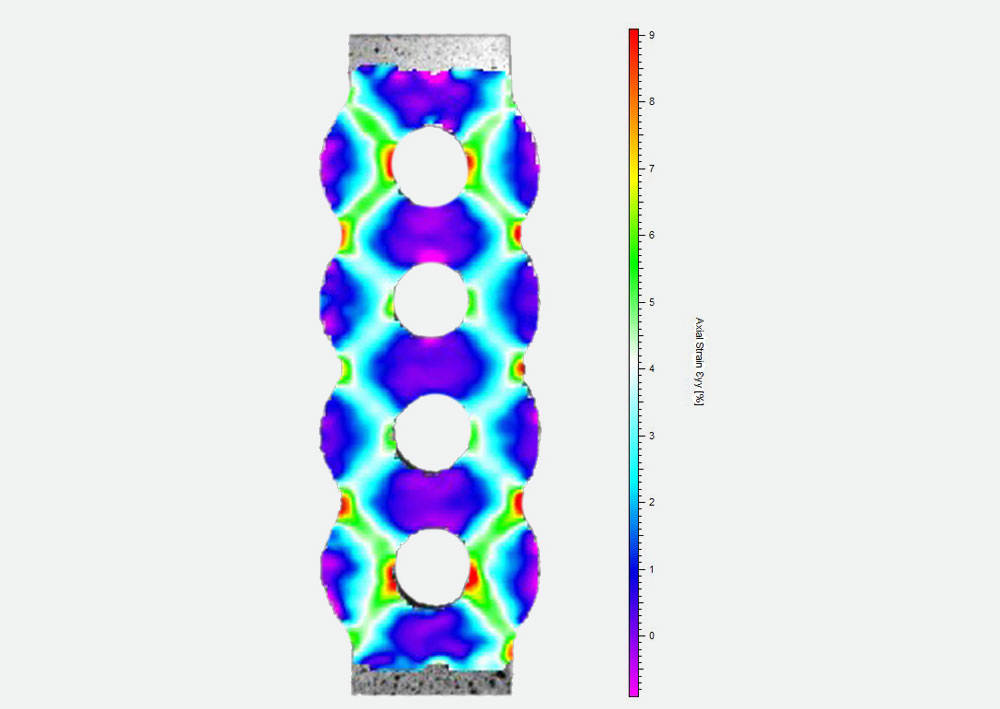
Um die mechanischen Eigenschaften von Frakturversorgungsplatten zu verstehen, ist eine Reihe sowohl statischer als auch dynamischer Prüfungen erforderlich. Monotone Biege-, Zug- und Druckprüfungen sind notwendig, um Modul und Zugfestigkeit zu ermitteln. Aufgrund der unregelmäßigen Geometrie von Frakturversorgungsplatten stellt die Dehnungsmessung eine Herausforderung dar. 2D- und 3D-Modellierungstechniken wie die Finite-Elemente-Analyse werden häufig durchgeführt, um die vollständigen Spannungs- und Dehnungseigenschaften von Frakturversorgungsplatten zu verstehen. Für monotone Zug-, Druck- oder Biegeprüfungen ermöglicht unsere Digital Image Correlation-Software in Kombination mit unserem Advanced Video Extensometer Forschern und Wissenschaftlern die Visualisierung und Quantifizierung der vollständigen Dehnungseigenschaften dieser Platten. Für alle Ermüdungsprüfungen empfehlen wir den Einsatz unserer ElectroPuls-Systeme. Konkret empfehlen wir entweder das E3000- oder das E10000 Linear-Torsions-Prüfsystem. Die Möglichkeit, Platten gleichzeitig unter axialer Belastung und Torsionsbelastung zu prüfen, bildet die realistischen Belastungsbedingungen im menschlichen Körper am besten ab.

Hydrogel Tensile Testing

Biomedical Testing

Hydrogel Tensile Testing

The Challenge

Hydrogel Tensile

Hydrogel testing is most commonly done in both tension and compression. Compression testing on hydrogels poses less of a challenge, as many hydrogels are compliant and compress easily under load. The natural compliance of hydrogels becomes more of a challenge in tensile testing, as these materials can be difficult to grip and exhibit high elongation. Gripping hydrogels with too much pressure typically displaces the material out of the grip faces, which makes gripping ineffective. In addition, a traditional contacting extensometer is not a viable option considering the soft properties of hydrogels. Given the viscoelastic properties of these materials, test speed will greatly affect results, such as force at break and elongation at break. 

Our Solution 

Hydrogel Tensile Testing

When testing hydrogels in compression and tension, most common forces at failure are below 100 N. Given the low forces obtained in hydrogel mechanical testing, it is important that an accurate load cell is used. This can be especially tricky in a compression test as many users restrain from using low capacity load cells out of fear that they will overload the load cell if the compression platens begin to touch during a test. To prevent this from happening, it is imperative that safety limits are set and that the end of test criteria is set to the load cell capacity in the software. For tensile testing, Instron® offers a range of low force grips, including spring loaded, screw side action action, and pneumatic side action grips. Given the compliant nature of hydrogels, often sandpaper needs to be used to increase friction at the gripping contact points. When accurate measurement of strain is required, we recommend using our Advanced Video Extensometer

Prüfung von Wirbelsäulenimplantaten


Biomedical Testing


Prüfung von Wirbelsäulenimplantaten

Die Herausforderung

Prüfung von Wirbelsäulenimplantaten

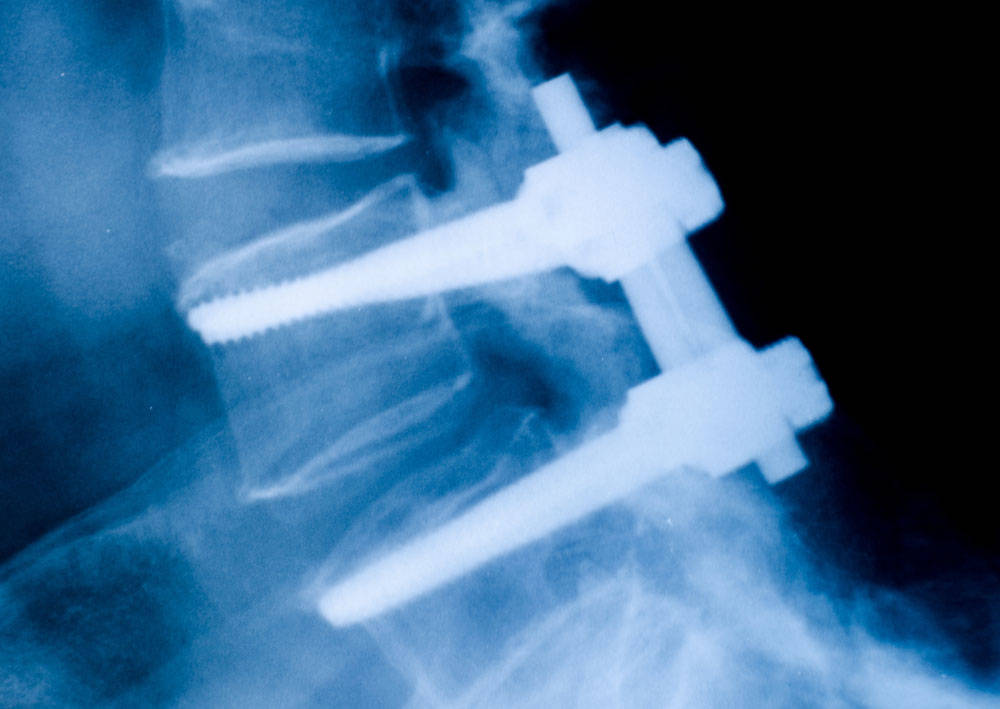
Die Prüfung der Lebensdauer von Wirbelsäulenkonstruktionen ist von entscheidender Bedeutung, da Ermüdungsversagen häufiger auftritt als katastrophales Versagen. Während normaler Patientenaktivität können Wirbelsäulenkonstruktionen hohen In-vivo-Belastungen ausgesetzt sein, die zu katastrophalem Versagen führen können. Zyklische Prüfungen werden durchgeführt, um die Anzahl der Zyklen zu bewerten, die zum Ermüdungsversagen führen. Die Belastung wird typischerweise mit einer lastgesteuerten sinusförmigen Wellenform mit konstanter Amplitude aufgebracht, die über fünf Millionen Zyklen hinausgeht. Einfache statische Prüfungen werden ebenfalls durchgeführt, um die Last zu bewerten, die zu einem Wirbelsäulenbruch führt.

Unsere Lösung

Prüfung von Wirbelsäulenimplantaten

Das Instron® Linear-Torsions-ElectroPuls-System wird empfohlen, da es dem Anwender ermöglicht, sowohl statische als auch dynamische Prüfungen gemäß ASTM F1717-12-Standards auf einer einzigen Maschine durchzuführen. Eine dedizierte Wirbelsäulenvorrichtung kann problemlos an diesem System montiert werden, mit der Option, ein Kochsalzbad auf der Basis für In-vivo-Prüfungen zu montieren. Bei Verwendung des Bades ist die Kraftmessdose so konzipiert, dass sie mit Instrons patentierter Dynacell-Technologie zur Trägheitskompensation am Aktor montiert wird. Instrons patentierter steifigkeitsbasierter Regelungsalgorithmus gewährleistet eine hervorragende Wellenformtreue, selbst bei nichtlinearen Prüfkörpern.

Bioadhesives Peel Testing

Biomedical Testing

Bioadhesives Peel Testing

The Challenge

bio adhesive

Adhesives are widely used in the medical device industry for dental implants, bone cements, and wound closure products. Wound closure products include tissue adhesives that can be found in bandages, secondary dressings, and a variety of surgical sealants. The adhesive strength of these products must be well defined. An adhesive that isn’t strong enough may result in a wound that heals poorly, or it can lead to an infection. If an adhesive is too strong, it may damage the underlying tissue or cause the patient unnecessary pain when removing. A fundamental challenge with testing bio adhesives is characterizing adhesive strength in physiologically relevant conditions. 

Our Solution 

Bioadhesives Peel Testing

Soft tissue substrates should be tested under physiologically relevant conditions, most preferable in a bath or temperature controlled enclosure at 37°C. The BioBath with submersible pneumatic grips is recommended. The grips and pull rod that attach to the force transducer are designed to minimize buoyancy chances during low force testing. We also recommend a low capacity load cell, given that adhesive strength for biological applications is typically under 10-20 N. Bluehill® Universal's Peel, Tear, Friction Module is ideal for this test type in order to measure first peak force, average force over the seal, and average force per width of the specimen. 

Prüfung von Herzschrittmachern


Biomedical Testing


Prüfung von Herzschrittmachern

Die Herausforderung

Herzschrittmacher

Ein Herzschrittmacher ist ein kleines elektronisches Gerät, das unter dem Schlüsselbein eines Patienten implantiert wird und dazu beiträgt, dass das Herz des Patienten regelmäßiger schlägt. Er besteht aus drei Hauptteilen: einem Impulsgenerator, einer oder mehreren Elektrodenleitungen und einer Elektrode an jeder Leitung. Der Impulsgenerator besteht aus einem kleinen Gehäuse, das die Schaltung, eine Batterie und einen Computerchip enthält, der die an das Herz gesendeten elektrischen Impulse reguliert. Die Leitung ist ein isolierter Draht, der mit dem Impulsgenerator verbunden ist und bis zu einer der Herzkammern reicht. Die Elektrode am Ende der Leitung stellt den Kontakt zur Herzwand her und ist für die Abgabe der elektrischen Impulse an das Herz des Patienten verantwortlich. Da jede Komponente eines Herzschrittmachers für seine Funktion entscheidend ist, müssen alle drei Komponenten strengen Tests unterzogen werden. Die Vielfalt der Tests, einschließlich Scherprüfungen an den mikroelektronischen Komponenten, Druckprüfungen an der Batterie und Zugprüfungen an den Leitungen, kann mit nur einem System schwer zu realisieren sein.

Unsere Lösung

Prüfung von Herzschrittmachern

Die Prüfsysteme der Instron® Serie 6800 mit der Software Bluehill® Universal und dem Modul TestProfiler stellen die leistungsfähigsten Universalprüfmaschinen auf dem heutigen Markt dar. Die Flexibilität der Software ermöglicht es den Anwendern, eine Vielzahl verschiedener Methoden mit Leichtigkeit zu programmieren, darunter Zug-, Biege-, Druck-, Schäl-, Weiterreiß- und Reibungsprüfungen. Darüber hinaus hat die Engineered Solutions Group von Instron mit einer Reihe von Elektronik- und Medizintechnikunternehmen zusammengearbeitet, um spezialisierte Vorrichtungen zu entwickeln, darunter spezielle Scherklemmen und Mikro-Biegevorrichtungen. Zusätzlich empfehlen wir die Verwendung von pneumatischen Schnur- und Garnspannzeugen für die Zugprüfung von Elektrodenleitungen.

Stentprüfung


Biomedical Testing


Stentprüfung

Die Herausforderung

Stent

Die mechanische Prüfung von Stents umfasst eine Reihe unterschiedlicher Prüfungen, die sowohl statische als auch Ermüdungsverfahren einschließen. Stents werden am häufigsten aus Nitinoldraht hergestellt, der in einem einfachen zyklischen Test nach ASTM F2516 geprüft werden muss. Eine weitere statische Prüfung, die häufig an Stents durchgeführt wird, ist eine Biegeprüfung gemäß ASTM F2606. Zusätzlich zur Prüfung des Rohmaterials wird die Diamantstruktur des Stentkörpers üblicherweise bei 60 Hz in Lageregelung auf Ermüdung geprüft. Der gesamte Stentkörper wird zudem typischerweise in radialer Kompression als statische Prüfung sowie in pulsierender Ermüdung bzw. zyklischer Ermüdung als dynamische Prüfung getestet. Angesichts der Vielzahl mechanischer Prüfungen, die an einem einzelnen Stent erforderlich sind, ist es häufig schwierig, das geeignete Prüfsystem auszuwählen, um möglichst viele Prüfungen durchführen zu können.

Unsere Lösung

Stentprüfung

Für alle statischen Prüfungen, einschließlich Prüfungen nach ASTM 2516, ASTM F2606 sowie der radialen Kompressionsprüfung am vollständigen Stentkörper, empfehlen wir die Verwendung eines Universalprüfsystems der Serie 6800. Bei der Prüfung von Nitinoldraht nach ASTM 2516 empfehlen wir den Einsatz unseres Advanced Video Extensometer zur präzisen Dehnungsmessung. Bei der Prüfung vollständiger Stentkörper in radialer Kompression arbeitet Instron® mit Machine Solutions Inc. (MSI) zusammen, um eine spezialisierte Vorrichtung bereitzustellen. Die Vorrichtung für die radiale Kompression kann an jedem Instron 68TM tseting system montiert werden und kann die Standardsoftware Bluehill® Universal zur Steuerung der Prüfung verwenden.

Für alle Ermüdungsprüfungen, einschließlich der Prüfung der Diamantstruktur des Stentkörpers oder des gesamten Stents in zyklischer Dehnungsregelung, empfehlen wir den Einsatz unserer ElectroPuls®-Prüfsysteme.

Prüfung von Zahnimplantaten


Biomedical Testing


Prüfung von Zahnimplantaten

Die Herausforderung

Zahnimplantat

Die Form des Implantats und das verwendete Material werden kontinuierlich erforscht, um den Kontakt mit dem Zahnfleisch und die Fusion mit dem Knochen zu verbessern. Daher weisen Zahnimplantate verschiedener Hersteller oft viele Unterschiede auf. Zudem variieren Größe und Form des Implantats je nach Anwendung und Positionierung im Mund. Dies stellt eine Herausforderung bei der Prüfung von Proben sowie beim Vergleich von Materialien und Designs dar.

Unsere Lösung

Prüfung von Zahnimplantaten

Bei einer Vielzahl von Implantatgrößen und -geometrien können abgewinkelte Zahnimplantate in einer Instron® Dental-Winkelvorrichtung für Tests montiert werden. Die Vorrichtung stellt sicher, dass die Montage das Implantat weder übermäßig einschränkt noch große Seitenkräfte erzeugt, die die Wägezelle oder die Prüfmaschine beschädigen könnten. Wie bei geraden Zahnimplantaten können auch vorgewinkelte Zahnimplantate in einer wässrigen Umgebung getestet werden, wenn Korrosionsermüdung zu erwarten ist. Die Vorrichtung kann in ein Flüssigkeitsbad montiert werden, um das Implantat in Salzlösung oder einem anderen physiologischen Medium zu testen, während die Temperatur bei 37 °C gehalten wird.