Personal Protective Equipment (PPE) Testing

Biomedical Testing

Personal Protective Equipment (PPE) Testing 

Materials Testing Guidance for Personal Protective Equipment

stethoscope icon
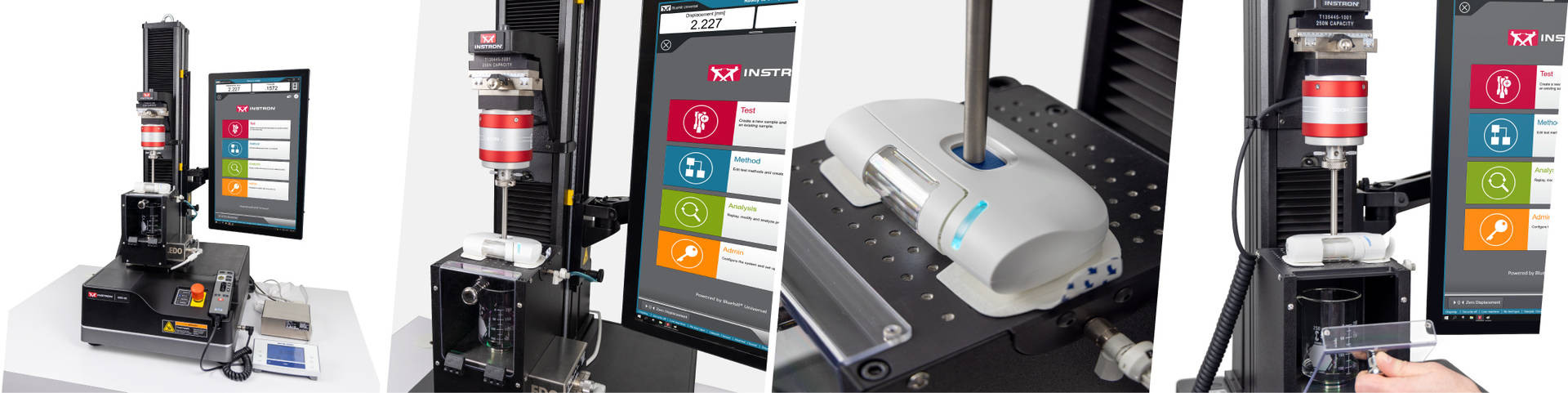
The global demand for medical equipment has skyrocketed in response to the COVID-19 pandemic, with many companies refocusing their efforts to produce personal protective equipment (PPE). With this vast uptick in demand, medical device manufacturers have scrambled to increase their production capacities while non-medical manufacturing companies have transitioned their own production facilities to create items such as masks, gloves, and nasal swabs. With increased manufacturing comes increased quality control testing, and Instron has received numerous inquiries from companies seeking to expand their testing capacity or reconfigure their existing equipment to test PPE. This guide was created to help familiarize manufacturers with key testing requirements and provide an overview of current FDA regulations. We hope that it will be a useful resource for anyone seeking to aid the fight against COVID-19.

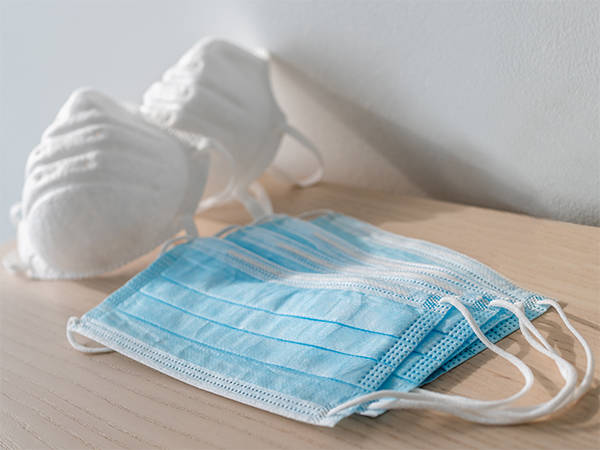
 

Medical Masks

Medical masks come in two primary types: single-use surgical masks and N95 respirator masks. Surgical masks are intended to prevent viral spread by containing droplets produced by the wearer, while respirator masks are designed to protect the wearer from virus particles that have been aerosolized. Both of these masks are relatively easy to manufacture and test, and many textile manufacturers have shifted their operations to produce them in an attempt to meet the current demand. Many of these companies already own materials testing equipment and are able to make small modifications to their existing systems in order to perform the required FDA testing.
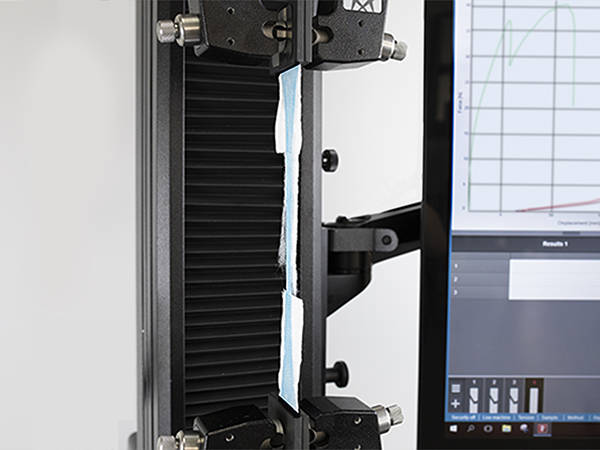

mask-fabric-test.jpg

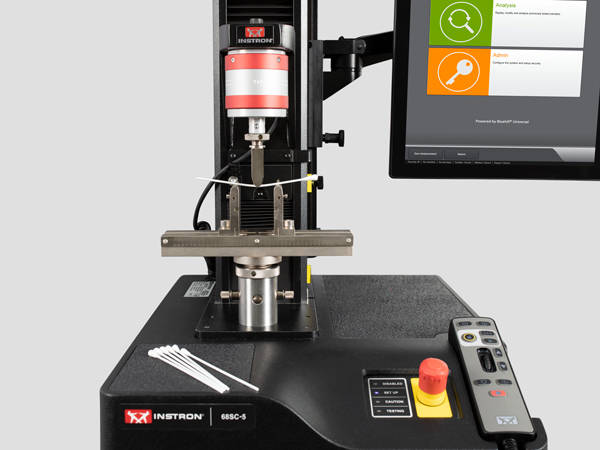
Fabric Test

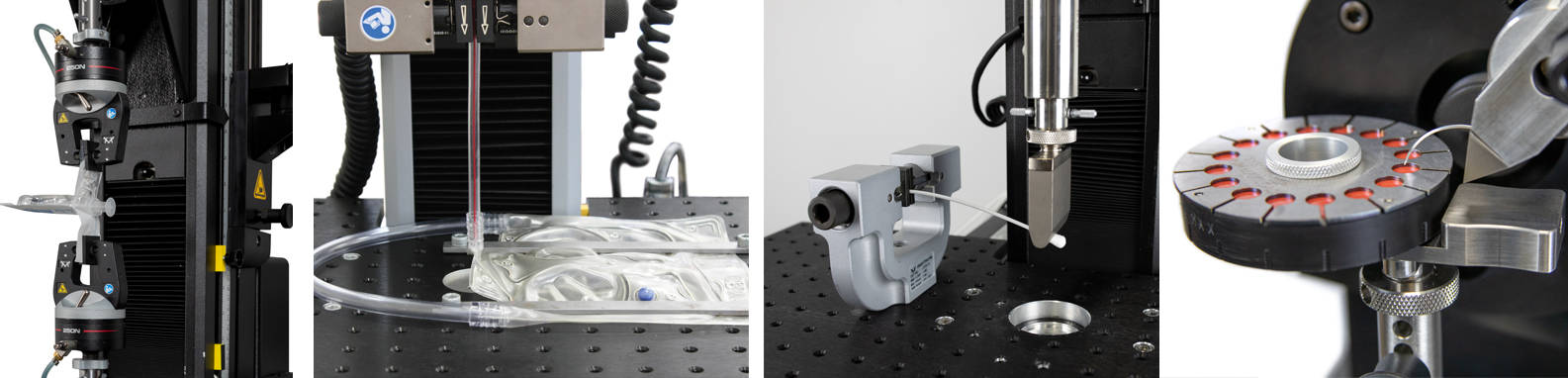
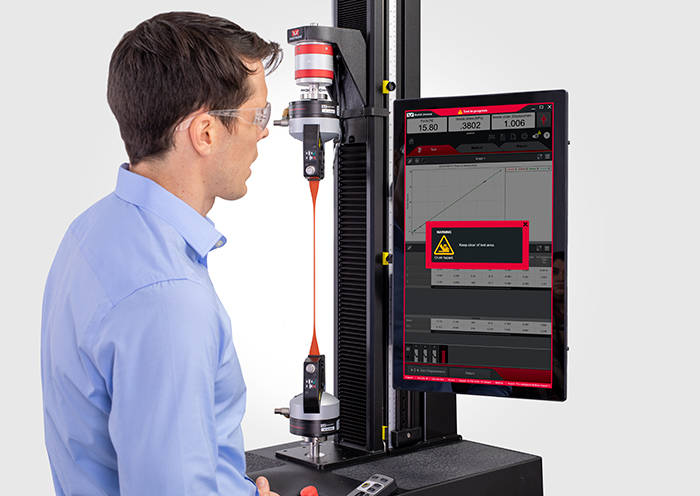
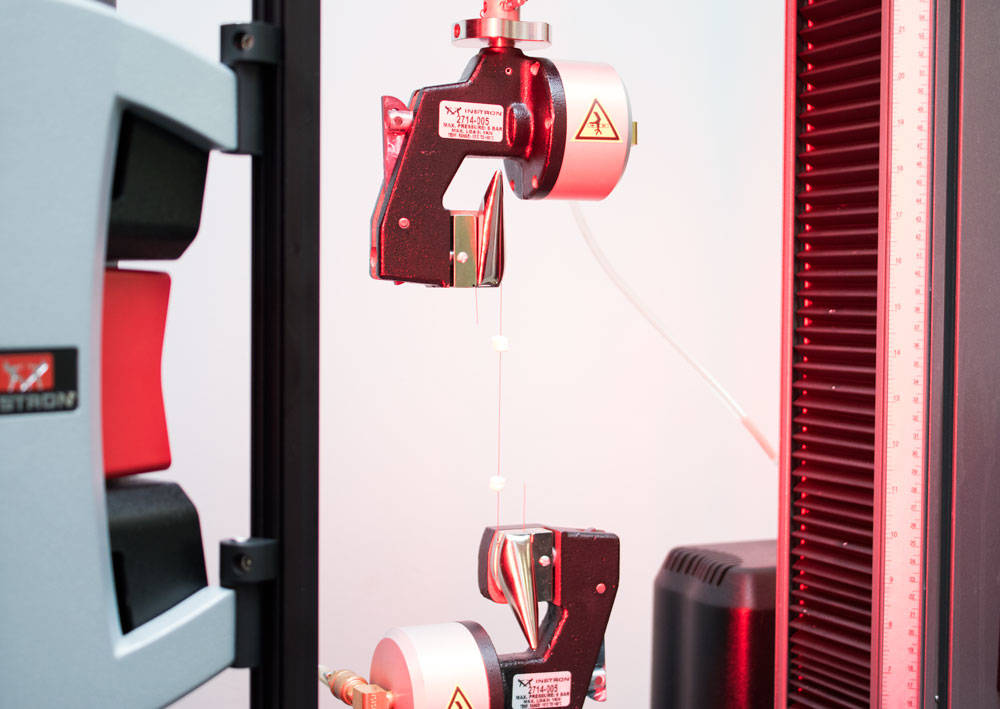
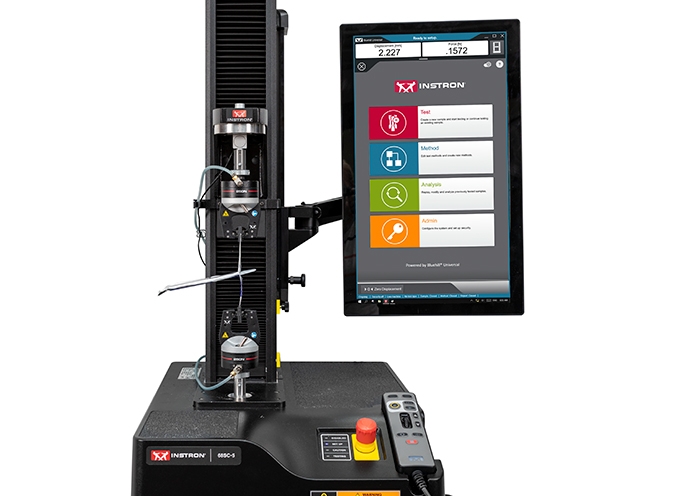
Mask fabric is generally tested in accordance with general textile standards such as ASTM D5034. Because fabric samples are prone to jaw breaks, we recommend pneumatic grips with smooth jaw faces to minimize this risk. In order to capture peaks and troughs generated by individual fiber breaks, we recommend a test system with a high data capture rate, such as Instron's 68SC-5.
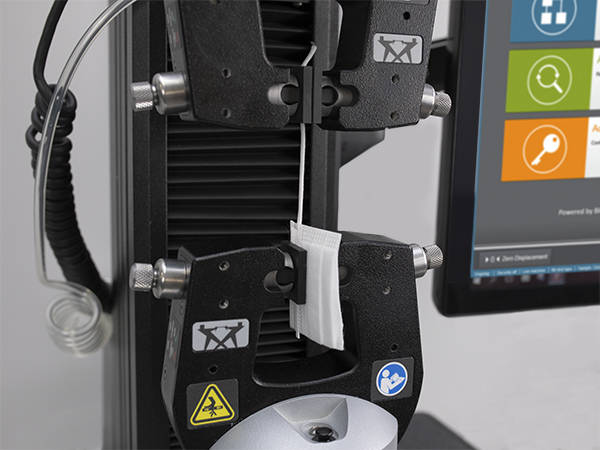
mask-elastic-test.jpg

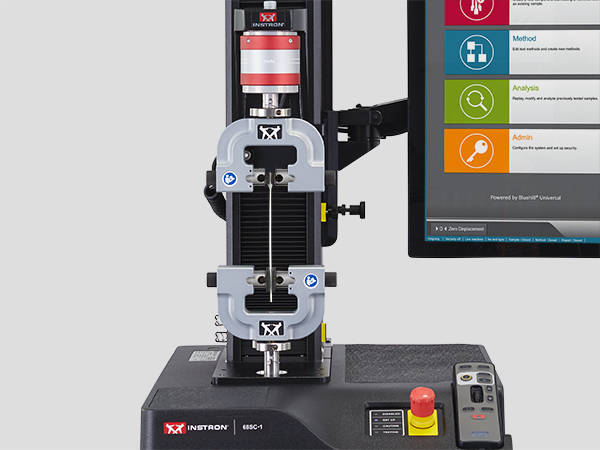
Elastic Test

It is important to test the strength of the connection between a mask's fabric and the elastic band that holds it into place. This test is performed by loading the band to a minimum of 10 N and visually evaluating it to ensure there has been no separation. With masks now being worn for longer periods of time than ever, it may also be valuable to perform a relaxation test to determine its durability.
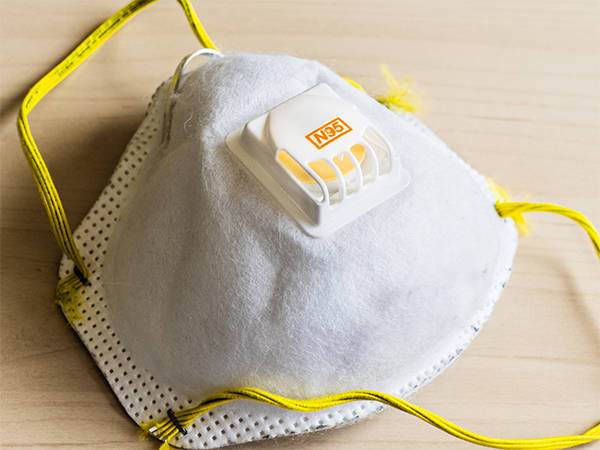
respirator-filter.jpg

Filter Test

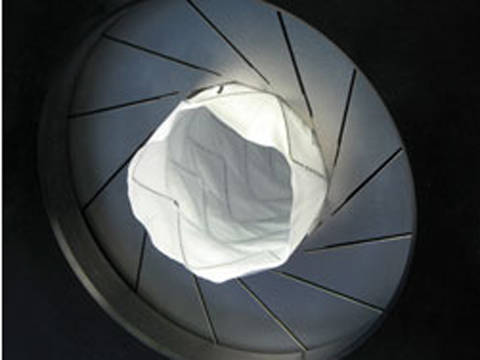
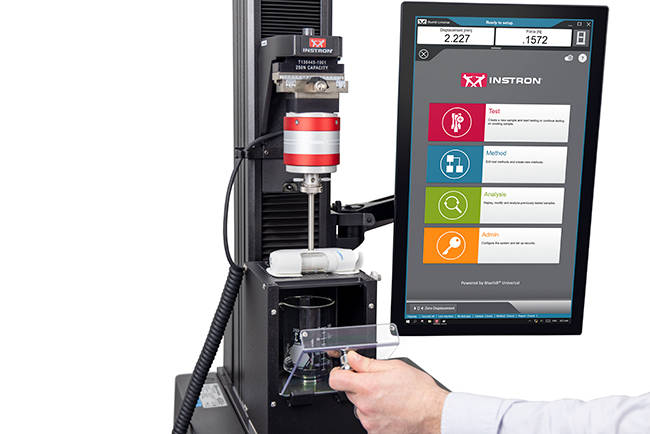
Respirator masks must be tested to ensure the strength of connection between the mask fabric and the respirator valve. This test can be accomplished using a side-acting grip on the base of the system and a custom-made hook fixture attached to the load cell.

Medical Gloves

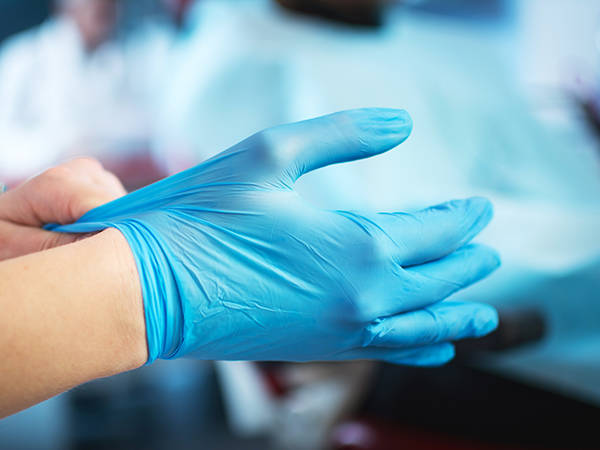
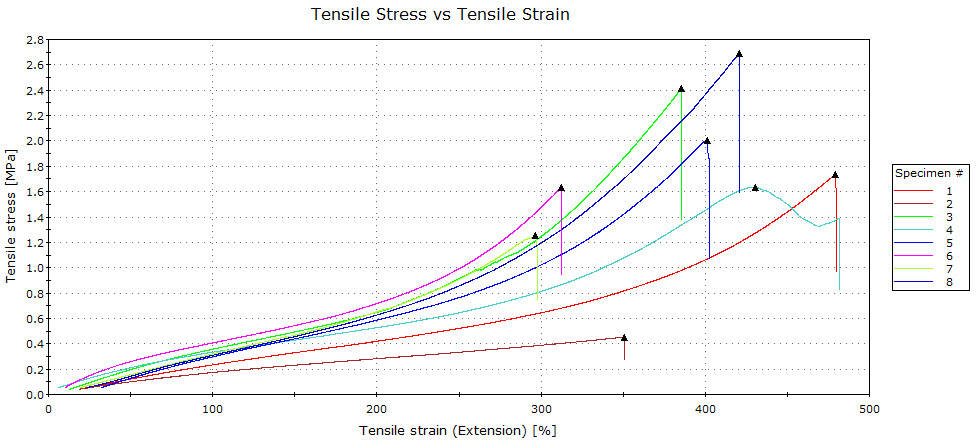
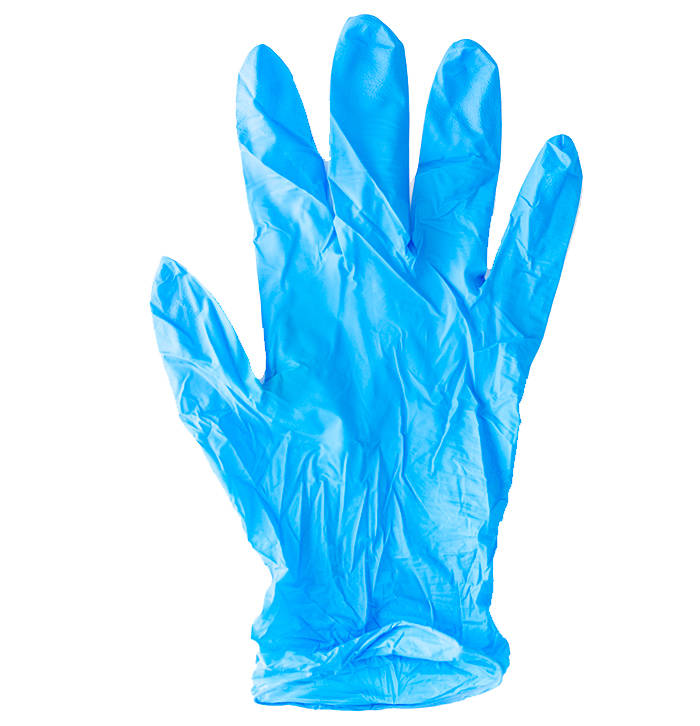
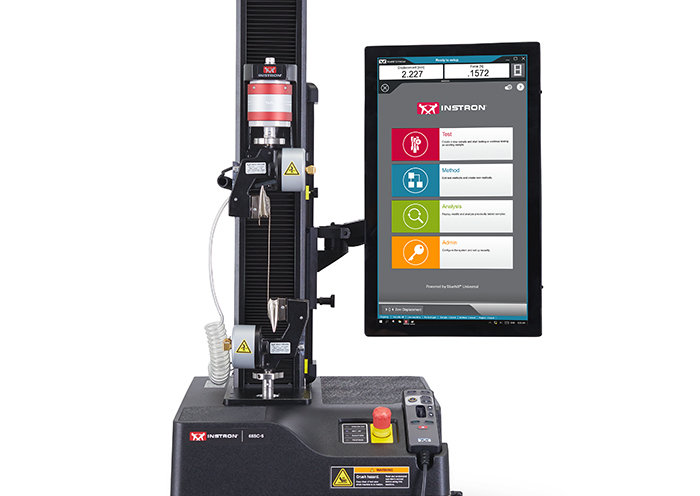
ASTM classifies medical gloves according to their material (latex, nitrile, natural rubber, PVC, or polychloroprene), while ISO classifies them based on their application (patient examination or surgical). Regardless of the testing standard, material, or clinical application, the equipment and general procedure for testing is consistent across all medical glove types. ASTM D6319, ISO 11193, and EN 455-2 are standards used by the biomedical industry to regulate the tensile properties of medical gloves. The key results for all glove testing standards are the tensile strength and ultimate elongation of the material. Rather than testing the entire glove, a dogbone specimen is cut from the finished glove and testing in accordance to the relevant elastomeric standard (ASTM D412 or ISO 37).

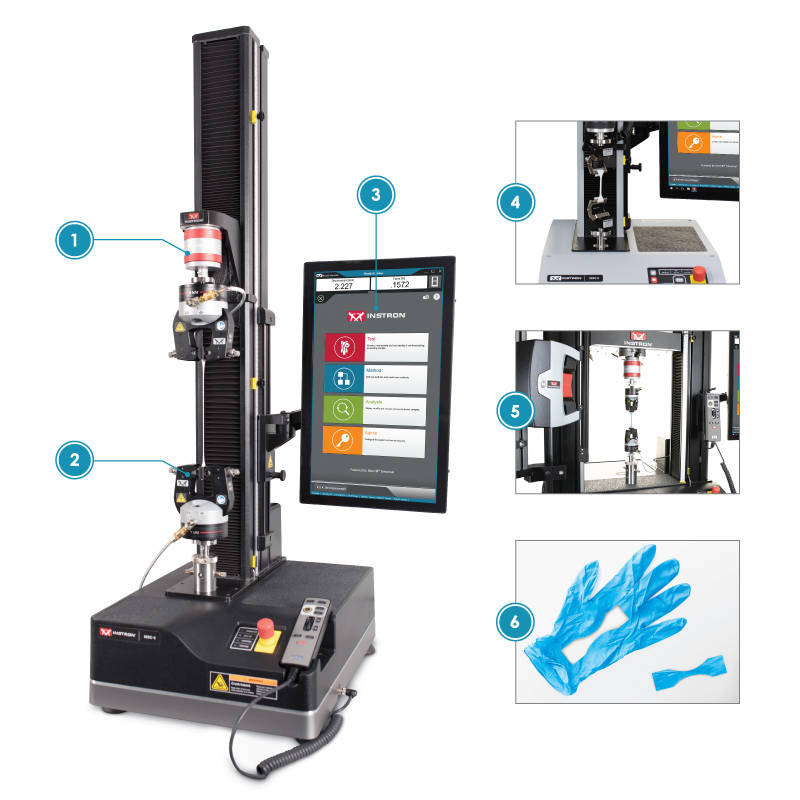
Glove Test Setup
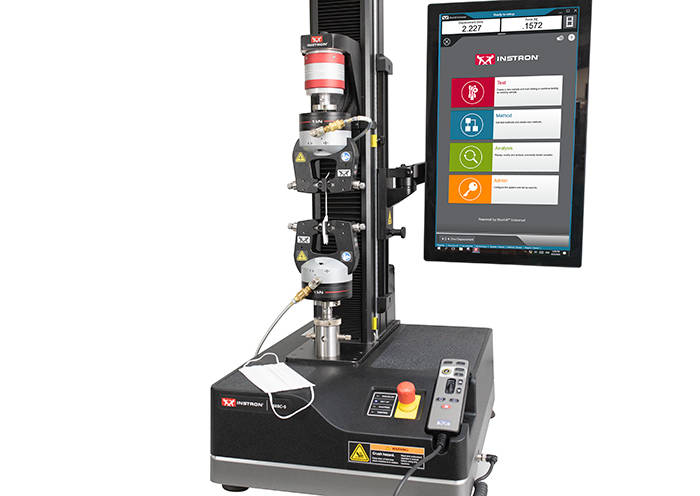
1) Load Cell
A 500N load cell is an appropriate capacity for all glove materials.
2) Pneumatic Grips
Air pressurized grips ensure consistent clamping forces Jaw faces are easily interchangeable to ensure the correct surface texture is used for the material. Elastomeric materials like rubber gloves typically require rubber coated faces due to how thin the specimen is. The rubber coating is able to prevent slippage of the material without damaging the specimen.
3) Bluehill Software
The biomedical method suite includes preconfigured methods for EN455-2
4) Elastomeric Roller Grips
Roller grips provide a cost effective gripping solution for thin elastomers The roller grip utilizes a proportional clamping pressure which increases as more force is applied to the specimen
5) AVE 2.0
An optical non-contacting strain device can be used to ensure more accurate strain measurement
6) Specimen Preparation
All the major ASTM/ISO/EN standards require a dumbbell shaped specimen to be stamped from the palm of the glove EN 455-2 takes into consideration the potential discrepancies in thickness between the palm and the fingertips. The standard compares their thickness and uses a correction factor for the tensile strength of the speicmen.

ppe_gloves_callout-_003.jpg

Nasal Swabs

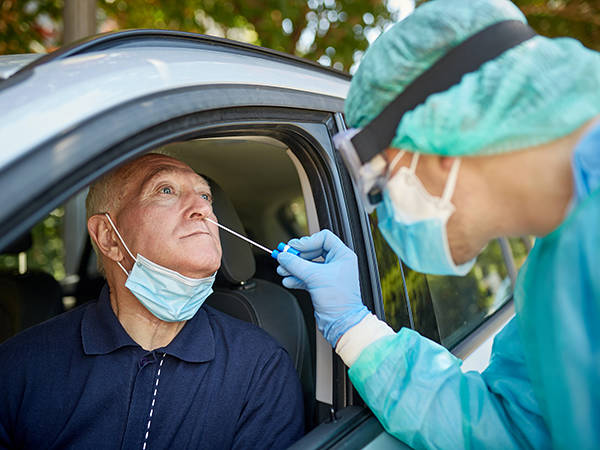
Nasopharyngeal (NP) swabs are crucial tools in the diagnosis of influenza and respiratory diseases. Despite their similar appearance, these swabs are considerably more specialized than the standard cotton swabs used for personal hygiene, using synthetic fibers for the swab staff and tiny bristles for the swab tip. In an effort to bolster the global supply, significant collaborations have occurred between 3D printer manufacturers and medical research teams, which have resulted in a massive increase in production capacity of test quality NP swabs. It is critical to perform mechanical testing to determine if the performance of the 3D printed swabs is comparable to the performance of those produced by standard methods.
nasal-swab-3-point-bend.jpg

3 Point Bend Test

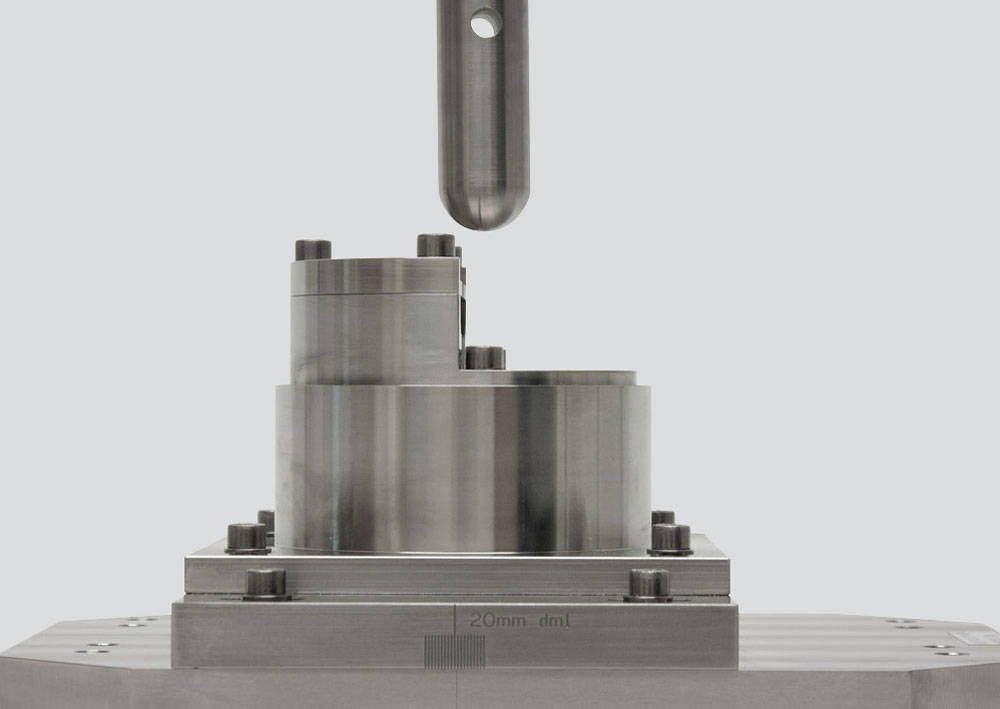
Nasal Swabs are subjected to flexural forces as they travel through the nasal passage. 3 point bend tests help characterize these stresses. It is also important to evaluate the weak point at the tip of the swab which helps achieve the correct size for transport. Instron's standard 2810-400 3 point bend fixture with 10 mm diameter anvils is ideal for these applications.

nasal-swab-cantilever-bend.jpg

Cantilever Bend

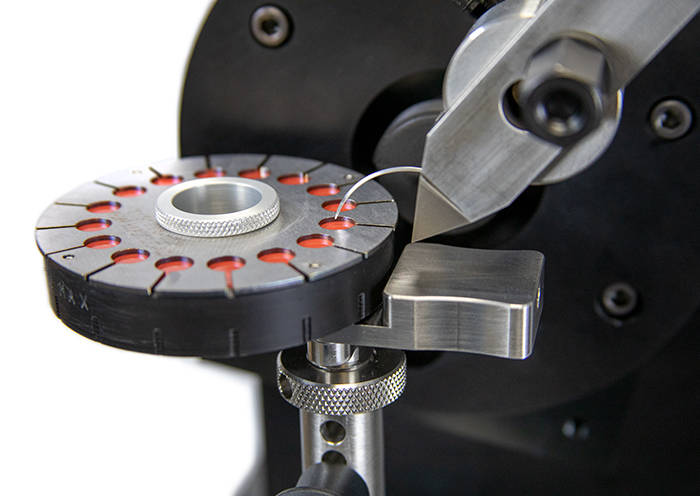
The cantilever bend test best represents the stresses seen when the swab is held during the procedure. The material needs to be flexible enough to ensure it will not fail during the test. This setup is accomplished using a component test plate and an advanced screw action grip to hold the specimen in place. Any probe can be used to deflect the tip of the swab.
nasal-swab-shear-test.jpg

Tip Shear Strength

The tip of an NP swab is made of tiny bristles that allow for maximum sample collection. These bristles need to withstand shear forces as they move across the walls of the nasal passage. In order to test this property, the tip and base of the swab are clamped with advanced screw action grips to evaluate the maximum force required to break the bristles or the tip itself.

FDA Requirements in the Age of COVID-19

The Food and Drug Administration is the main regulatory body overseeing the production and distribution of PPE in the United States. The level of FDA involvement depends on the class of the device, which can range from class 1 to class 3 based on the device’s potential risk of nonconformance. Most types of PPE are labeled as class 1 devices, which have the fewest barriers to approval.

Because it can take months or even years to gain FDA approval, in times of health crisis the FDA issues something called an Emergency Use Authorization (EUA). An EUA essentially loosens the requirements for production and distribution of certain medical products to allow production to ramp up quickly. EUAs are currently being granted to manufacturers of COVID test kits, virus therapies, ventilators, respirators, and PPE. These emergency authorizations are generally granted to specific companies who apply to expedite the approval process, but they are also being released as blanket statements covering certain types of PPE so that smaller companies can also participate with minimal red tape. The EUAs include additional documentation that outline the enforcement policy for PPE manufacturing during the current public health emergency and provides criteria for quality control standards as well as the required labeling of products released under the authorization.

Watch Our PPE Testing Webinar

Intervertebral Disc Testing

Biomedical Testing

Intervertebral Disc Testing

The Challenge

Intervertebral Disc

Intervertebral disc replacement is a surgical technique for the treatment of lower back pain related to degenerative disc disease. The advantage of this technique over traditional spinal fusion is that it preserves or restores motion in the spine, and has the potential to delay the onset of degeneration of healthy discs at adjacent levels in the spine. Disc prostheses are designed to be load bearing over the physiological range of disc motion, and to give years of pain-free and trouble-free operation in the body. Understanding the static and dynamic characteristics of a particular device allows manufacturers and designers to ensure their product is proven and accepted. ASTM F2346 provides a methodology for characterizing the static strength and dynamic fatigue behavior of disc prostheses. The rigorous testing regimes in this standard aim to scientifically validate any prosthesis design. With a typical test run lasting for 10 million cycles and requiring both axial and torsional loading, it is vital that a testing system copes with these performance demands and delivers the highest quality of results. In addition, the requirement to conduct these tests in a wet environment adds to the complexity of the system.

Our Solution 

Intervertebral Disc Testing

An 8874 axial-torsional system, with the addition of a temperature controller and re-circulator unit, allows device manufacturers and contract research laboratories to conduct both static and cyclic testing on a range of implant designs. The bath, in which saline flow and temperature are controlled, provides a stable environment. With the use of specialized test fixtures, the 8874 system's combined axial-torsional actuator allows for characterization to be conducted in axial compression, compression-shear, and compression-torsion test modes for both articulating discs of traditional metal-on-metal or metal-on-polyethylene design. It's also used for the next generation of prostheses, which feature an elastomeric component to give axial compliance under load that mimic the biomechanics of the natural disc.

Tensile Testing Polymeric Membranes

Biomedical Testing

Tensile Testing Polymeric Membranes

Synthetic membranes are commonly used in the biomedical field. These polymeric membranes, designed to mimic the natural filtration systems in human bodies, are being researched and developed for use in drug delivery systems, medical devices, and artificial bio-organs.

For example, synthetic membranes are used in hemodialysis, which is a method of removing waste products from the body when the kidneys fail. Blood from the patient is passed through a semi-permeable membrane that is immersed in dialysis solution and waste products such as urea in the blood diffuse across the membrane into the dialysis solution.

Often these synthetic membranes are moist and slippery, and consquently, tensile testing can be challenging. Similar to testing soft tissues, the gripping surface must offer sufficient friction to firmly hold onto the membrane, but also be delicate enough to avoid specimen tearing.

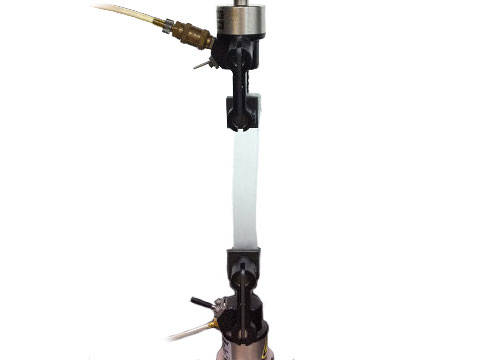
Recently, we were asked to recommend a gripping solution for testing of wet polymeric membranes. In this test, the polymeric membranes were first soaked in water for up to 20 minutes to allow them to soften and swell. The wet specimens were then tested using the 5965 dual column electromechanical machine equipped with pneumatic side action grips and rubber coated jaw faces. Since these membranes are very delicate, the clamping pressure must be carefully controlled as excessive high pressure can cause the specimen to fail prematurely when the grip closes.

Because the specimens are wet, corrosion resistant grips or fixtures should be used. Our 3 Software®Bluehill provides both the test control and results required.

Literature

Bluehill Universal Brochure

Bluehill Universal is Instron’s advanced materials testing software, designed for intuitive touch interaction and streamlined workflows. It offers pre-loaded test methods, QuickTest for rapid setup, enhanced data exporting, and Instron Connect for direct service communication. Users of Bluehill 2 and Bluehill 3 can easily upgrade to the latest version for improved performance and usability.
  • Prodotti
  • 02/26/2017
  • 3.76 MB

Evaluation of Radial Forces from Embolic Filters

Biomedical Testing

Evaluation of Radial Forces from Embolic Filters

Radial Strength Testing of Stent Grafts and Vascular Devices

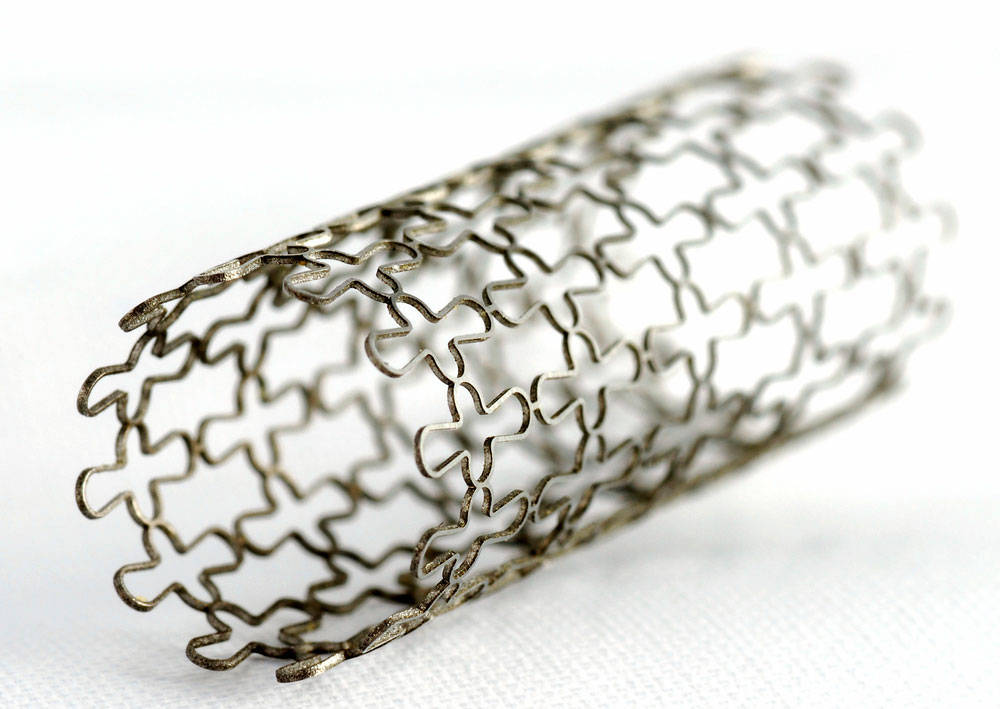
Embolic filters are used within a variety of interventional procedures to capture debris resulting from the deployment of a medical device, like a stent. The stent is used to open arterial paths that may be occluded by plaque. Upon placement of the stent, dislodged plaque (or embolic material) can potentially be responsible for heart attacks, strokes, kidney failure, or death. Firm placement of the embolic filter is a critical requirement for successful procedures.

One of the most critical parameters for proper utilization of the filter is the radial forces it imparts on the arterial wall. In particular, the chronic radial force that the filter imparts over time helps to ensure that the device remains in place as intended. This fit ensures that all material is captured before heading further down the arterial pathways.

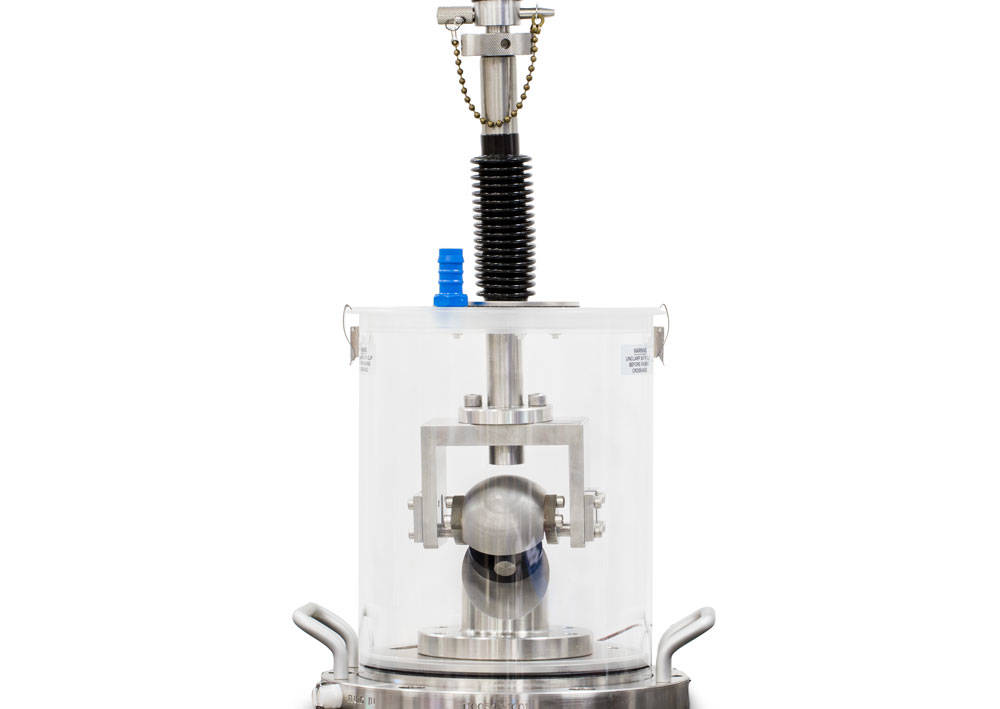
The RX575 system has the fidelity to measure the small radial expansion forces of the embolic filter. The unique segment design of the fixture results in small frictional forces, which ensures that your data will present clean results from the radial tests. The radial fixture mounts to electromechanical instruments, as well as into a fluid bath for accurate simulation of body temperatures. Additionally, the fixture provides the capability for tensile tests to evaluate resistance to tearing properties during deployment.

Bluehill® Software provides an interface to run tests, to evaluate the radial strength, and to generate standard reports that can be submitted for regulatory submissions.

Literature

3400 Series Universal Testing Systems Brochure

Instron 3400 Series universal testing systems for tensile, compression, bend, and other material property tests.

  • Prodotti
  • 06/27/2022
  • 2.69 MB

6800 Series Premier Testing Systems Brochure

Instron 6800 Series Universal Testing Systems provide unparalleled accuracy and reliability. Built on a patent-pending Operator Protect system architecture with an all-new Smart-Close Air Kit and Collision Mitigation features, the 6800 Series makes materials testing simpler, smarter, and safer than ever before.

  • Prodotti
  • 02/10/2020
  • 4.15 MB

Prove su Adesivi per Tessuti Usando un Dispositivo per il Peel ad Angolo Variabile

Biomedical Testing

Prove su Adesivi per Tessuti Usando un Dispositivo per il Peel ad Angolo Variabile

Gli adesivi per tessuti sono ampiamente utilizzati nell'industria biomedica per applicazioni quali bendaggi secondari, e chiusura di ferite. Sebbene non vi siano norme specifiche che guida il test utilizzando un apparecchio ad angolo variabile, altri standard simili ASTM per questo metodo di prova sono: ASTM F2255, F2256, F2258 e F2458. La forza adesiva di questi prodotti devono essere chiaramente definite prima di un uso in ambito clinico. Se l'adesivo non è abbastanza forte, il prodotto può causare infezioni o una non completa guarigione. Se l'adesivo è troppo forte, il tessuto di riferimento si può diventare danneggiare al momento della rimozione.

Abbiamo
condotto un esempio di un test di adesione mediante un apparecchio ad
angolo variabile che simula l'azione del peeling dell’adesivo da un
paziente. Abbiamo usato un telaio elettromeccanico di prova 3345
configurato con una cella di carico da 50 N, un'unica presa pneumatica capacità da 250 N con facce piane metalliche da 25 mm x
25 mm, e il dispositivo per il Peel ad angolo variabile per questo
test. Il dispositivo per il Peel ad angolo variabile
è
stato fissato ad un angolo di 135°, per simulare meglio la linea di
tiro che sarebbe stato visto durante l'uso normale del prodotto
adesivo. Abbiamo usato cuoio come substrato durante questo test per
simulare meglio le proprietà superficiali della pelle umana.

Il
modulo del software Bluehill ® 2 per peel, lacerazione e attrito è
altamente raccomandato per
questo
tipo di prova. Questo modulo del software permette la misurazione del
carico di primo picco, del carico medio e del carico medio per la
larghezza, i calcoli più comunemente utilizzati.

Letteratura

Brochure sui sistemi di test universali serie 3400

Sistemi di prova universali Instron serie 3400 per prove di trazione, compressione, flessione e altre prove di proprietà dei materiali.

  • Prodotti
  • 06/27/2022
  • 2.52 MB

Bluehill Universal Brochure

Bluehill Universal is Instron’s advanced materials testing software, designed for intuitive touch interaction and streamlined workflows. It offers pre-loaded test methods, QuickTest for rapid setup, enhanced data exporting, and Instron Connect for direct service communication. Users of Bluehill 2 and Bluehill 3 can easily upgrade to the latest version for improved performance and usability.

  • Prodotti
  • 02/26/2017
  • 3.76 MB

Prove di Impatto su impianti Ortopedici

Biomedical Testing

Prove di Impatto su impianti Ortopedici

Una condizione medica chiamata osteoartrite è causata quando vi è minimo momento di giunzione nel corpo umano. La mancanza di momenti di giunzione può aversi in articolazioni danneggiate o non funzionali. Gli Impianti ortopedici sono progettati per sostituire il giunto danneggiato (s) e aumentare la mobilità di una parte interessata del corpo umano. Per citarne alcuni, gli impianti utilizzati per anca, ginocchio, spalla o gomito sono comunemente realizzati in acciaio inox. È importante per i produttori di tali impianti ortopedici testare i loro componenti (impianti diversi) per caratterizzare la resistenza all'impatto del loro prodotto.

Instron Serie 9400 può soddisfare i requisiti di prova necessari. Poiché gli impianti per varie parti del corpo sono di diverse forme e dimensioni, la prova deve essere eseguita utilizzando diversi supporti personalizzati. Abbiamo usato una piastra con scanalatura a T che è stata fissata nella parte inferiore di 9450. Un dispositivo personalizzato con una protesi al ginocchio bloccata è stata montata sulla piastra con scanalatura a T alla base della torre. Uno strumento di impatto da 45 kN con misuratore di deformazione è stato utilizzato per colpire l'impianto del ginocchio. Un sistema di acquisizione dati (DAS) e il software Bluehill Impact sono stati utilizzati in combinazione con la macchina di impatto, per raccogliere i dati di forza / velocità e analizzare le prestazioni dell’impatto.

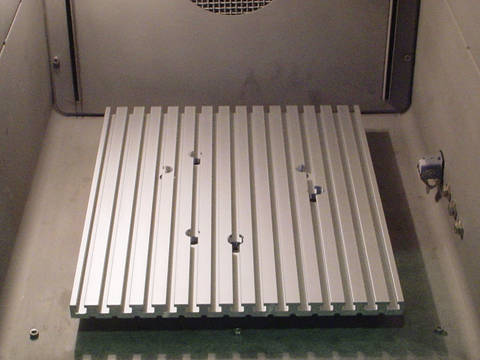
In alternativa una piastra di uso generale, come si vede nella foto può essere usata al posto di una con scanalatura a T. Questre piastre versatili danno flessibilità ai produttori di montare una vasta gamma di apparecchi personalizzati secondo le loro esigenze. Tali prove di impatto possono essere personalizzate in una certa misura in cui possono replicare la reale bassa vita e l’alta velocità di impatto durante le procedure attuali chirurgiche.

Nota: la configurazione della prova reale del cliente è confidenziale e quindi non viene visualizzata in questa nota di applicazione.

Letteratura

9400 Series Drop Tower Brochure

Instron Drop Towers are used to develop, fine tune, and validate material models. Testing materials under real impact conditions is a crucial step prior of product design. Using the characterization data obtained with the Instron 9400, coupled with customer supplied high-speed video, you can have confidence in your results and deliver new materials to your customers faster. Our Drop Tower impact systems, fixtures, and tups are designed to meet a wide range of applications and testing standards including: ISO, ASTM, ANSI, Airbus, Boeing, BSI, DIN, EN, FDA, Ford, GM, JIS, NASA, GOST, and more.

  • Prodotti
  • 02/05/2020
  • 763.1 KB

9400 Series Dashboard Brochure

Bluehill® Impact is built from the ground up for touch interaction. The Operator Dashboard features large touchpoints to make the user experience simpler and smarter. Easy-to-understand icons and workflows make it easy to train new or experienced users, simplify operator training, and allow you to start testing even faster than ever before

  • Prodotti
  • 08/01/2019
  • 2.35 MB

Prestazioni di Impatto delle Compresse Farmaciautiche

Biomedical Testing

Prestazioni di Impatto delle Compresse Farmaciautiche

Support for pharmaceutical tablet impact testing

Comuni
pillole e compresse farmaceutiche di solito sono rifinite con un
rivestimento per facilitare la deglutizione, il tempo di rilascio
graduale del farmaco, identificazione e imprimere il marchio. I
Rivestimenti possono anche contribuire a garantire la lunga durata,
proteggendo il prodotto sottostante da condizioni ambientali
negative, quali luce, temperatura, umidità e sollecitazioni
meccaniche. In particolare, nel processo di produzione e
confezionamento, rivestimenti delle compresse sono soggetti ad urti
che possono causare danni.

Le
prove di impatto possono essere utili al produttore per avere dati
delle prestazioni per la ricerca e lo sviluppo di processi o di
nuovi materiali di rivestimento. Una volta che un prodotto adatto è
stato realizzato, un produttore può implementare un programma di
controllo della qualità che utilizza i dati di base di una prova
sulle prestazioni per fornire la validazione in corso del processo.

Una torre a caduta di grave Instron 9440, dotata di un tup per sensore piezoelettrico a basso carico (0,45 kN o 4,5 kN), inserto tup emisferico o piatto da ½ pollice e il software Bluehill Impact sono ideali per il test di pillole e compresse farmaceutiche.  Per il
fissaggio si consiglia di utilizzare una piastra metallica, rigida,
piana, che può essere fissata al 9440. Utilizzando la
traversa vuota e variando le energie di impatto variando l'altezza di
caduta, le pillole e delle compresse possono essere testate fino a
quando non c’é alcun segno di rottura:

Questa
soluzione di prova di impatto è adatta per la determinazione delle
caratteristiche delle prestazioni di compresse farmaceutiche, come la
consistenza e i punti di rottura o di danneggiamento incipiente.
Queste caratteristiche possono a loro volta essere legate al
materiale di rivestimento utilizzato sul prodotto. Comprendendo come
il rivestimento può rafforzare o indebolire le pillole, si possono
fare cambiamenti per migliorare il prodotto.

Letteratura

9400 Series Drop Tower Brochure

Instron Drop Towers are used to develop, fine tune, and validate material models. Testing materials under real impact conditions is a crucial step prior of product design. Using the characterization data obtained with the Instron 9400, coupled with customer supplied high-speed video, you can have confidence in your results and deliver new materials to your customers faster. Our Drop Tower impact systems, fixtures, and tups are designed to meet a wide range of applications and testing standards including: ISO, ASTM, ANSI, Airbus, Boeing, BSI, DIN, EN, FDA, Ford, GM, JIS, NASA, GOST, and more.

  • Prodotti
  • 02/05/2020
  • 763.1 KB

9400 Series Dashboard Brochure

Bluehill® Impact is built from the ground up for touch interaction. The Operator Dashboard features large touchpoints to make the user experience simpler and smarter. Easy-to-understand icons and workflows make it easy to train new or experienced users, simplify operator training, and allow you to start testing even faster than ever before

  • Prodotti
  • 08/01/2019
  • 2.35 MB

Radial Force Evaluation of Stent Grafts

Biomedical Testing

Radial Force Evaluation of Stent Grafts

Stent grafts are used to treat a wide variety of peripheral arterial issues, as well as abdominal and aortic pathologic conditions like abdominal aortic aneurysms (AAA). The success of endovascular stent grafts for AAA’s has provided motivation to adapt similar technology for descending thoracic aortic aneurysms (TAA’s). Survival rates for untreated and traditionally treated (through complex thoracic surgeries) aneurysms are typically quite poor.

Advantages of stent grafts include shorter operative time, avoidance of major thoracic or thoracoabdominal incisions, and significant reductions in morbidity and mortality. Successful surgery requires the accurate placement of the stent graft to ensure it does not move, especially in upper descending thoracic aorta cases.

Typically, secure placement for stent grafts is a function of the proper selection and sizing since physiological movements of the aorta can be significant. Additionally, stent grafts have much larger diameters than coronary stents (30+ mm versus 2-3 mm). Evaluating the radial strength of a stent graft helps manufacturers to ensure efficacy and reliability of the medical device when implanted in vivo.

Instron partners with Machine Solutions Inc. (MSI) to utilize either a RX575 or RX675 stent iris on an Instron system. The fixture can also be customized and used for special specimen types to provide radial strength and stiffness over the entire graft or the securing graft ends. The control software to operate MSI’s RX fixture on an Instron system is standard Bluehill® 3 and TestProfiler. Although room-temperature testing provides excellent comparative results, the system can also be configured with a chamber to provide simulation of body temperature.

Literature

6800 Series Premier Testing Systems Brochure

Instron 6800 Series Universal Testing Systems provide unparalleled accuracy and reliability. Built on a patent-pending Operator Protect system architecture with an all-new Smart-Close Air Kit and Collision Mitigation features, the 6800 Series makes materials testing simpler, smarter, and safer than ever before.

  • Prodotti
  • 02/10/2020
  • 4.15 MB

Implantable Devices

Biomaterials

Dental

Orthopedics

Soft Tissue Testing

Biomedical Testing

Soft Tissue Testing

The Challenge

Skin

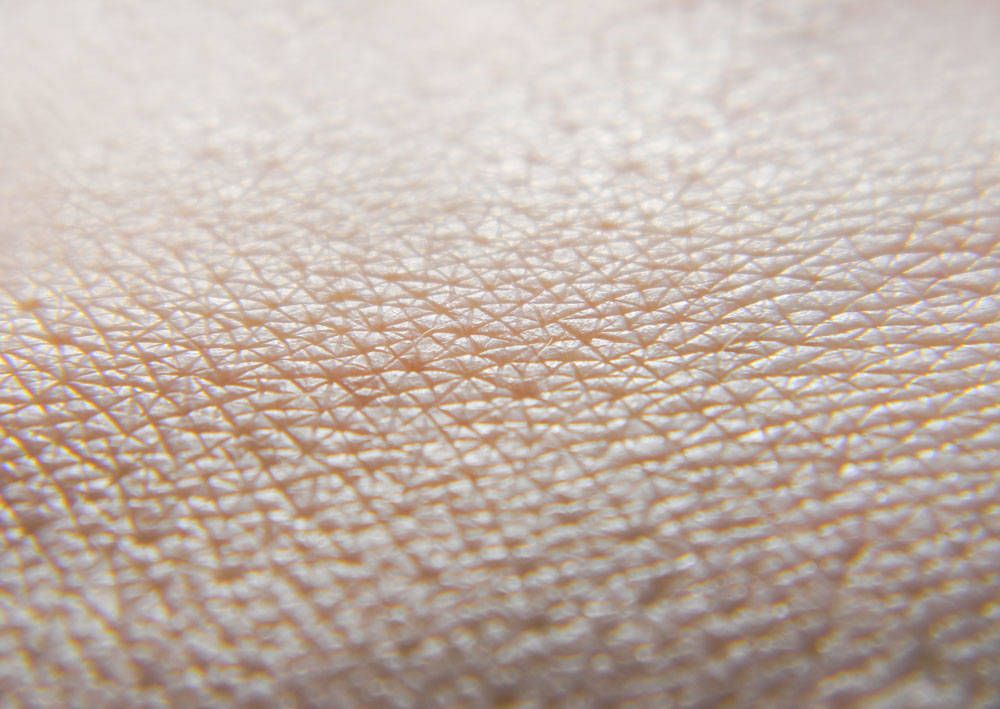
Testing soft tissues, such as skin, tendons, ligaments, and others, presents many challenges. Specimens of this type are delicate; hence they break at low forces. Gripping soft tissues can also be problematic given that these specimens are small, slippery, and compliant in nature. In addition, soft tissues are viscoelastic and often require accurate elongation or strain measurement to properly understand the material properties. Typically, in vivo conditions are needed to test soft tissues, which calls for the test to be performed at body temperature and in a hydrated state. This requires the testing equipment and fixture to be corrosion resistant and "waterproof" to avoid damaging the sensitive electronics of the testing system.  

Our Solution 

Soft Tissue Testing

For testing at physiological conditions, the Instron® BioBath is an ideal solution for keeping a specimen fully hydrated in a saline solution and at 37°C. The BioBath uses a closed-loop temperature control measurement, which can be fed directly into the test system's software to accurately track specimen temperature, in addition to mechanical test data. Pneumatic grips are recommended for consistent clamping pressure that the user can vary up to 90 PSI. A high friction surface is often needed to grip slippery biomaterials to avoid specimen slipping. To avoid this, we recommend using a metallic high friction finish known as surfalloy on the grip face, but grit sandpaper is also a viable option. A stainless steel tray, such as the BioTray, can help protect the system's electronics from damage in the case of spills or messy specimens.

Test sui consumabili medici


Biomedical Testing


Test sui consumabili medici

TEST SUI CONSUMABILI MEDICI

Una guida per i consumabili monouso come DPI, strumenti chirurgici e prodotti per la chiusura delle ferite
I consumabili medici rappresentano la categoria più vasta dei test biomedici e includono un'ampia varietà di prodotti monouso come strumenti chirurgici, DPI, prodotti per la chiusura delle ferite, prodotti per la raccolta di campioni e altro ancora. Le strutture sanitarie si affidano ai prodotti monouso per mitigare l'insorgenza di infezioni correlate all'assistenza e garantire la sicurezza dei pazienti. Questi prodotti sono in genere dispositivi medici di classe FDA I o II che, pur avendo requisiti di prova meno rigorosi rispetto ai prodotti a rischio più elevato, sono spesso prodotti in quantità tali da richiedere misure specifiche per supportare test meccanici ad alto volume. Per compensare i volumi maggiori, la produttività e la ripetibilità diventano requisiti di prova critici, affrontati attraverso afferraggi specializzati, flussi di lavoro efficienti per l'operatore e software intuitivi. Un altro componente critico all'interno di questa categoria è il confezionamento di grado medico utilizzato per i prodotti finiti, che ha il proprio set di requisiti di prova. Per ulteriori informazioni su altre applicazioni biomediche, visita la nostra pagina Industria biomedica.
guanto medico

SPETTRO DEI TEST SUI PRODOTTI

La valutazione di questi dispositivi può avvenire in molti punti dei processi di sviluppo e produzione del prodotto, il che significa che il campione di prova effettivo può variare in complessità dalle materie prime ai sottocomponenti e ai prodotti finiti. Nella fase delle materie prime, la metodologia di prova è spesso molto più prescrittiva rispetto a standard ben definiti e soluzioni di afferraggio note. In molti casi, è possibile utilizzare afferraggi per trazione o piatti di compressione standard per valutare correttamente i diversi materiali e aiutare i progettisti a prendere decisioni informate sulla selezione dei materiali per il loro prodotto. A livello di test sui componenti, la geometria unica del prodotto crea una maggiore necessità di afferraggi personalizzati. L'utilizzo di tavole XY o piastre di prova forate offre agli utenti la flessibilità di adattare il proprio sistema a molti tipi diversi di componenti. Questi accessori consentono inoltre di garantire che l'asse di carico sia correttamente allineato con la caratteristica di interesse sul prodotto. I componenti potrebbero dover essere valutati in molti modi diversi per caratterizzare completamente le prestazioni del dispositivo. Una valutazione completa delle prestazioni può anche richiedere una valutazione qualitativa della modalità di guasto, oltre ai dati misurati di carico e spostamento. Le testcam integrate possono essere utili per fornire un feedback visivo dell'evento di guasto sincronizzato con i dati del test.

POTENZIALE DI AUTOMAZIONESoprattutto nel contesto di una pandemia globale, la domanda di consumabili medici, in particolare i DPI, si è dimostrata imprevedibile. Drastici cambiamenti nella produttività dei test per questi prodotti sono diventati la norma. L'integrazione dell' automazione in un programma di test meccanici può fornire miglioramenti nella produttività, nella ripetibilità e nella qualità complessiva del prodotto. Nella maggior parte dei casi, i test sui consumabili medici sono di tipo "pick and place", e richiedono un'interazione minima da parte dell'operatore. Ciò li rende candidati ideali per l'automazione tramite robot collaborativi o tavole XY automatiche. L'automazione può anche includere l'integrazione delle tue apparecchiature nei sistemi di gestione della qualità esistenti, servendo a creare un feedback a circuito chiuso all'interno del tuo processo di produzione. Questo feedback può aiutare a ridurre al minimo gli sprechi nel processo di produzione, utilizzando i dati meccanici raccolti per apportare modifiche in tempo reale ai parametri di produzione a monte.

automazione dei test biomedici

IMBALLAGGIO

I prodotti medici richiedono imballaggi robusti e a tenuta d'aria per garantire che la sterilizzazione del dispositivo sia mantenuta fino al momento dell'uso. Questo imballaggio è fondamentale per prevenire qualsiasi contaminazione, che alla fine risulterebbe in un'infezione per il paziente. Per verificare la forza di tenuta del sigillo dell'imballaggio, la maggior parte dei clienti esegue i test secondo lo standard ASTM F88, che fornisce i criteri di prova per valutare il sigillo. Le sfide principali sono la preparazione dei provini e la raccolta dei dati. Esistono molti accessori per la preparazione dei provini per produrre uniformemente le strisce larghe 1 pollice necessarie secondo lo standard. Il test della forza di tenuta del sigillo risulterà in una curva non uniforme con variazioni istantanee che richiedono una frequenza di acquisizione dati sufficientemente alta per garantire la registrazione accurata dell'evento. Se la frequenza di acquisizione dati è troppo bassa, la curva di carico potrebbe risultare arrotondata e portare a una forza media di tenuta del sigillo artificialmente bassa. Gli afferraggi pneumatici con facce piane sono ideali per trattenere in modo ripetibile le estremità del provino senza danneggiare il materiale in alcun modo.

FOCUS SULLA SOSTENIBILITÀ

Gli ospedali sono sempre più preoccupati per i problemi di spreco causati dal consumo di prodotti medici monouso. Lo sviluppo delle bioplastiche è un settore in forte espansione con una forte necessità di mercato, e sono attualmente in fase di sviluppo standard per affrontare una gamma di proprietà dei biopolimeri in molte applicazioni sanitarie. Nel frattempo, molti standard tipici per le plastiche come ASTM D638 e ISO 527 hanno aggiornato la loro terminologia per includere le bioplastiche e le plastiche stampate in 3D. I requisiti di prova per questi standard sono ben noti e, utilizzandoli per la valutazione, i ricercatori possono distinguere chiaramente tra le proprietà dei materiali derivati dal petrolio e quelle delle plastiche a base biologica. I ricercatori potrebbero dover eseguire test di trazione, compressione, flessione, torsione e altre forme di test su questi nuovi materiali sostenibili per caratterizzarli correttamente. Le strutture di R&S hanno bisogno di strumenti a loro disposizione per eseguire queste analisi complete e superare gli ostacoli normativi che la FDA e altre organizzazioni internazionali creeranno.

Test di dispositivi e contenitori per la somministrazione di farmaci


Biomedical Testing


Test di dispositivi e contenitori per la somministrazione di farmaci

Test di dispositivi e contenitori per la somministrazione di farmaci

Una guida per testare siringhe, cartucce e flaconcini

La domanda globale di prodotti farmaceutici è in aumento, alimentata da tassi di incidenza più elevati di malattie croniche, dall'invecchiamento della popolazione e dalla minaccia di future pandemie. Pazienti e medici si aspettano che i contenitori per la somministrazione di farmaci siano privi di difetti, in grado di proteggere il medicinale durante il trasporto e l'utilizzo. I guasti possono rappresentare un rischio grave per il paziente o comportare lo smaltimento di grandi quantità di forniture molto necessarie. Per questi motivi, i contenitori e i dispositivi per la somministrazione di farmaci richiedono una valutazione rigorosa, imposta dagli enti regolatori globali, per garantire che possano funzionare come previsto. Esistono diversi tipi di contenitori per farmaci progettati per conservare e somministrare medicinali in circostanze diverse. Questa pagina differenzia i vari contenitori e identifica gli obiettivi e le sfide di test unici associati a ciascuno. Per ulteriori informazioni su altre applicazioni biomediche, visita la nostra pagina Settore biomedico.

Siringa

Test della siringa

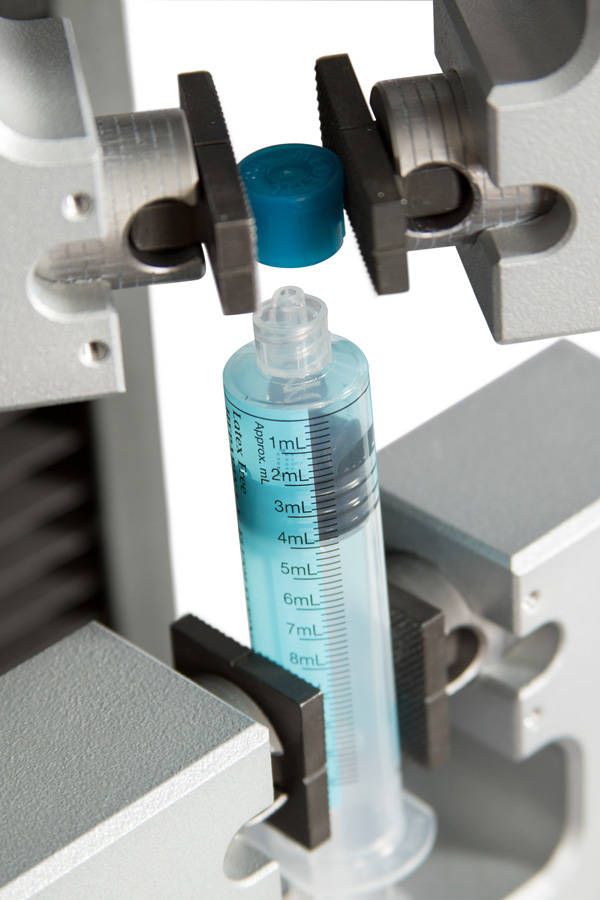
Poiché sono responsabili della somministrazione di molti farmaci diversi in molti contesti diversi, le siringhe sono prodotte in diverse varietà. Le siringhe di vetro rappresentano la percentuale maggiore del mercato, seguite da vicino da quelle in plastica, con un mercato più piccolo per le siringhe in acciaio inossidabile. Nonostante la loro intrinseca semplicità, ci sono centinaia di considerazioni progettuali che devono essere fatte quando si creano questi prodotti, poiché fungono sia da contenitori che da dispositivi per la somministrazione di farmaci. I test meccanici mirano ad affrontare molte di queste e ad assistere i produttori nel raggiungimento di prestazioni ottimali e nel mantenimento della qualità produttiva.

L'usabilità del dispositivo è una delle considerazioni progettuali più importanti. Per le siringhe, questo significa la facilità di erogazione del fluido utilizzando lo stantuffo. Il raggiungimento di prestazioni ottimali può richiedere modifiche alle tolleranze geometriche del cilindro, alla rugosità della superficie interna, ai processi di siliconizzazione, alla geometria del tappo dello stantuffo e altro ancora. I produttori devono fare affidamento sui test meccanici durante il processo di R&S per qualificare e valutare tutte le decisioni progettuali.

Un'altra considerazione importante è la chiusura e i meccanismi di sicurezza del dispositivo. Alcuni aghi di vetro hanno aghi fissati incorporati nel cono del cilindro e richiedono una protezione per l'ago, mentre la maggior parte delle siringhe utilizza una connessione luer per collegare un cappuccio e un ago separato. I meccanismi di sicurezza possono essere classificati come attivi o passivi, a seconda dell'interazione dell'utente. La sicurezza attiva richiede un'azione distinta da parte dell'operatore, come posizionare una protezione su un ago esposto. I meccanismi passivi utilizzano tipicamente una molla per nascondere o coprire l'ago dopo l'uso per prevenire lesioni da taglienti. In entrambi i tipi di meccanismo, una delle principali sfide di test è l'allineamento. Gli errori di concentricità possono influenzare i valori di forza e coppia della misurazione. Le prese autocentranti sono ideali per queste applicazioni e rimuovono le opportunità di errore dell'operatore.
Sia le siringhe preriempite in vetro che le cartucce possono essere inserite direttamente in dispositivi automatici per la somministrazione di farmaci. Questi dispositivi sono progettati per attivare meccanicamente la somministrazione del farmaco dopo che un paziente preme un pulsante o attiva una protezione dell'ago. Durante l'attivazione, una molla caricata spinge uno stantuffo verso il basso sul contenitore ed eroga il fluido. I dispositivi automatici per la somministrazione di farmaci aumentano notevolmente la facilità d'uso per il paziente, ma presentano anche una complessità progettuale aggiuntiva che richiede la valutazione di molti sottocomponenti e funzionalità. Molti clienti affrontano questi aspetti con più sistemi di test, ciascuno designato per una valutazione diversa, come il volume espulso o la profondità di inserimento della lunghezza dell'ago. I produttori possono migliorare la produttività, ridurre l'influenza dell'operatore e semplificare i flussi di lavoro di test utilizzando un'unica soluzione chiavi in mano per eseguire tutti i test funzionali richiesti.

Test di rimozione del cappuccio della siringa

Test di cartucce

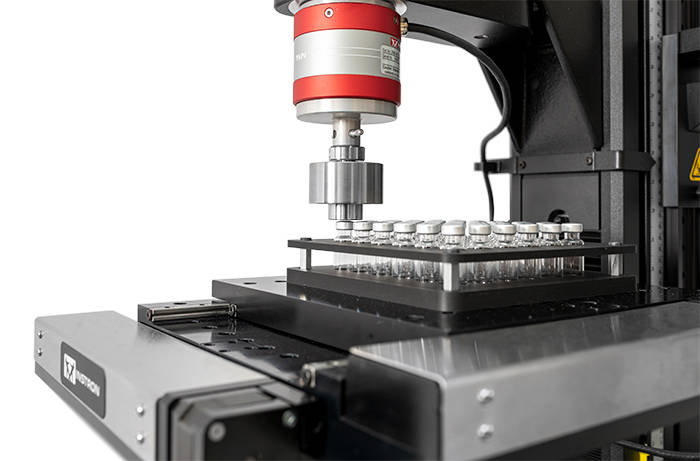
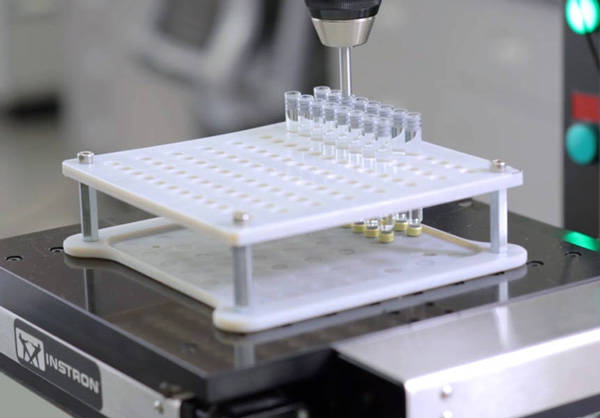
Test di cartucce su piano XY automatizzato

Cartridge Testing on Automated XY Stage

Le cartucce sono più comunemente utilizzate all'interno di sistemi automatizzati di somministrazione di farmaci, inclusi autoiniettori, iniettori a penna e dispositivi indossabili. Presentano vantaggi unici per le aziende farmaceutiche, essendo più semplici da produrre rispetto alle siringhe e più compatte per una migliore efficienza di stoccaggio. Sono anche semplici nel design, costituite da un contenitore in vetro borosilicato con guarnizione e tappo elastomerici, racchiusi da un cappuccio in alluminio. La cartuccia si basa su due meccanismi esterni per somministrare il medicinale: un'azione manuale o automatizzata per azionare lo stantuffo e un ago collegabile per incanalare il medicinale nel corpo. La maggior parte dei test sulle cartucce valuta il primo, garantendo che le forze necessarie per erogare il fluido possano essere raggiunte all'interno del dispositivo.

Come per le siringhe, l'allineamento è una sfida primaria per ottenere risultati di test ripetibili. Le preoccupazioni relative all'allineamento possono essere mitigate utilizzando dispositivi di fissaggio autoallineanti e la capacità di effettuare regolazioni XY allo spazio di lavoro. La geometria delle cartucce presenta una differenza chiave nei dispositivi di fissaggio richiesti per i test. Non hanno flange per le dita, il che significa che tutta la forza di presa deve essere applicata ai lati del contenitore. Le forze di serraggio devono essere calibrate per prevenire danni al contenitore, che è fatto di vetro. L'uso di un inserto per supportare il fondo della cartuccia può limitare l'applicazione di carichi laterali e risultare in una migliore ripetibilità nei test.

Test di flaconcini

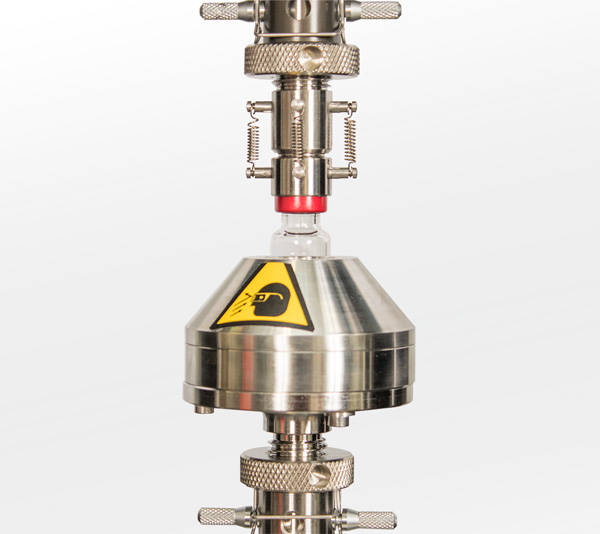
I flaconcini sono contenitori di stoccaggio per prodotti farmaceutici e non fanno parte della somministrazione effettiva del farmaco. Generalmente consistono in un contenitore di vetro, una guarnizione in gomma e un cappuccio in alluminio aggraffato. Una siringa viene utilizzata per perforare la guarnizione in gomma ed estrarre il dosaggio preciso richiesto per la somministrazione. Di interesse per i produttori di flaconcini è l'integrità della chiusura del contenitore (CCI), una serie di valutazioni per convalidare che la chiusura impedisca a particolato esterno di contaminare il prodotto. Questi test stessi non sono di natura meccanica e utilizzano mezzi elettrici o pressurizzati per determinare l'integrità della chiusura.

I sistemi Instron aiutano a fornire prove empiriche identificando i parametri meccanici chiave per la guarnizione elastomerica e la procedura di aggraffatura che si correlano alle prestazioni CCI. La forza residua di tenuta (RSF) è uno dei principali test eseguiti, determinando la forza necessaria per superare le forze interne della guarnizione elastomerica, che mantiene il contatto tra il flaconcino e il cappuccio. Questo test è vitale per valutare le molte variabili che possono in definitiva influenzare la CCI:

  • Tempo dalla sigillatura
  • Temperatura di stoccaggio
  • Umidità di stoccaggio
  • Design del tappo
  • Materiale del tappo
  • Tecnica di aggraffatura

Le principali sfide relative ai test RSF sono garantire il corretto allineamento del dispositivo e la valutazione del punto RSF sulla curva di spostamento del carico. Mentre molti operatori selezioneranno manualmente il punto sulla curva, il software Bluehill Universal® consente all'operatore di aggiungere misurazioni di prima e seconda derivata, permettendo il riconoscimento e la selezione automatici dei punti di inflessione associati alla RSF.

Vengono eseguiti test aggiuntivi relativi all'uso da parte del medico e all'etichettatura. Il gruppo di prodotti personalizzati di Instron ha progettato dispositivi di fissaggio specializzati per rimuovere ripetutamente il cappuccio di plastica e staccare l'etichetta, poiché è importante garantire che la resistenza adesiva possa essere mantenuta attraverso temperature di stoccaggio calde, fredde o fluttuanti.

Test di forza residua di tenuta

Migliorare l'efficienza e la ripetibilità

Man mano che ti avvicini alla commercializzazione di un prodotto, la quantità di test aumenterà inevitabilmente. Efficienza e ripetibilità sono due parametri critici che possono essere influenzati dall'aumento del volume. Per affrontare questo, ci sono molte soluzioni che possono essere utilizzate per migliorare il flusso del processo e ridurre gli errori dell'operatore. Queste soluzioni possono includere:

Scenario reale: i test di verifica del design, ad esempio, sono sempre la spinta finale prima di ricevere l'approvazione del prodotto, ma possono verificarsi solo poche volte all'anno. Garantire che il laboratorio abbia il personale appropriato per completare tutti i test necessari e produrre la documentazione e l'analisi può essere una sfida. L'utilizzo dell'automazione può aiutare a soddisfare queste sfide, eliminando la necessità per gli operatori di stare davanti al sistema e invece lavorare contemporaneamente su altre attività richieste. L'automazione come il cobot CT-6 può aiutare a ottimizzare l'efficienza del laboratorio, consentendo a un responsabile di laboratorio di distribuire adeguatamente il carico di lavoro e rispettare le scadenze strette associate al rilascio del prodotto.

Sistema cobot per test di siringhe

FDA 21 CFR Part 11 Compliance

Biomedical Testing

Materials Testing Lab

FDA 21 CFR PART 11 COMPLIANCE FOR MECHANICAL TESTING LABS

What Is Required and How You Can Achieve It

What is FDA 21 CFR Part 11?

21 CFR Part 11 is a regulation that applies specifically to electronic documentation provided to the FDA. First published in 1997, the original intent was to create a framework that ensured electronic means of recording, approving, and submitting documents was effectively equivalent to handwritten paper documents in terms of security. The objective was to ensure that companies were capable of using electronic record keeping technology as it became more commonly utilized within the industry.

Who Does 21 CFR Part 11 Apply To?

FDA 21 CFR Part 11 applies to any pharmaceutical or medical device manufacturer submitting product documentation to the FDA for approval for sale within the United States or as part of any post-market surveillance activities.

What are the Requirements of 21 CFR Part 11?

Regulatory requirements mainly apply to the processes surrounding electronic record creation, retention and submission. The regulation specifically discusses the need for software validation, use of electronic signatures, a searchable time-stamped audit trail, and access to traceable record copies.


INSTRON PRODUCTS


Compliance is best achieved through a partnership between a manufacturer and its equipment suppliers, where the equipment supplier provides the tools to effectively and efficiently integrate the equipment into the manufacturer's quality management system. Instron's Bluehill® Universal software, compatible with static universal testing systems, offers several features designed to aid in 21 CFR Part 11 compliance. Bluehill Central lab management software allows for centralized management of multiple instances of Bluehill Universal, further simplifying the processes necessary for compliance.


Bluehill Universal
Bluehill Universal

Bluehill Universal is the testing industry's most powerful and advanced testing software. Its intuitive workflows are designed to simplify operator training, increase testing efficiency, and minimize safety hazards.

Learn More


Bluehill Central
Bluehill Central

Bluehill Central software is a laboratory management tool that enables centralized, remote management of Bluehill Universal software applications associated with multiple Instron test frames. The software allows you to remotely manage all Bluehill Universal users, test templates, results, file revision approvals, and audit trail data from multiple Instron systems.

Learn More


TRACEABILITY

Bluehill Universal’s Traceability Module enables users to meet the audit requirements associated with FDA 21 CFR Part 11 as well as those of ISO 17025, Nadcap, and other regulatory bodies. Through seamless integration of electronic approvals, revision history, and an automated audit trail, this powerful add-on combines with Bluehill’s built-in security to provide unmatched data traceability.

  Webinar: Introducing Bluehill Universal's Traceability Module
  Webinar: Protecting Data Integrity and Having Traceability in Your Testing
  FDA 21 CFR Part 11 Implementation White Paper

revision history icon

Revision History

Revision history allows users to view the full revision history of Bluehill methods, tested samples, and report templates. Each revision contains the details of the affected item, including a time stamp, both the previous and the new value, and the name of the users involved with initiating and, if required, approving the change.

electronic approval icon

Electronic Signatures

Electronic signatures serve as electronic approvals and replace the need for manual, hard copy signatures. Electronic signatures can be configured for primary, secondary, and tertiary electronic sign off to ensure that method revisions and test data are reviewed before a change is implemented or data is publicized.

audit trail icon

Audit Trail

Bluehill Universal’s built-in secure and searchable audit trail tracks system level usage, such as log-ins and log-outs and additions, modifications, and deletions to all Bluehill files. The audit trail also captures usernames, dates, and timestamps for all activities, allowing full visibility into all system activities during an audit.


SECURITY

Bluehill Security allows a Lab Manager to configure permissions in the software, granting access to trained personnel, such as super users, and limiting access where needed. Bluehill Security allows login permissions to be configured directly in Bluehill, or linked to the local Windows® login or Windows Active Directory.

  Security in Bluehill Software Whitepaper
  Security Comparison Chart


DATABASE TYPES

Traceability’s audit trail offers both a network and local database to accommodate your data management preference. A networked, centralized database offers your lab greater efficiencies and reduced risks when compared to locally managed data. Determining your lab’s IT infrastructure and data management preferences is recommended when considering these alternatives.


local systems
Local

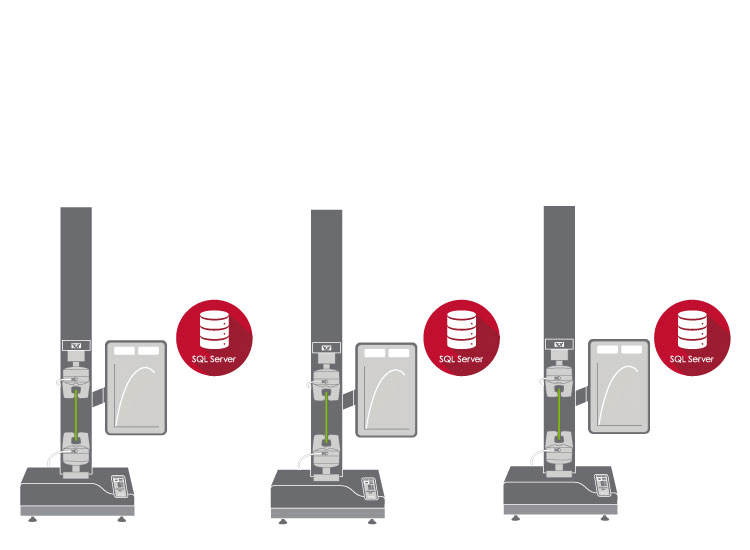
Bluehill Universal’s local Traceability module stores audit trail data on a Microsoft SQL Express database that is hosted on the computer running Bluehill Universal connected to the Instron system. The local database model accommodates labs that cannot connect computers to a shared network. Viewing the audit trail and electronically signing files occurs locally on the computer, and each Instron system with a local Traceability database stores its own SQL Express database. Database backup and restore functions can be performed manually in Bluehill Universal.


Bluehill Central Architecture
Network

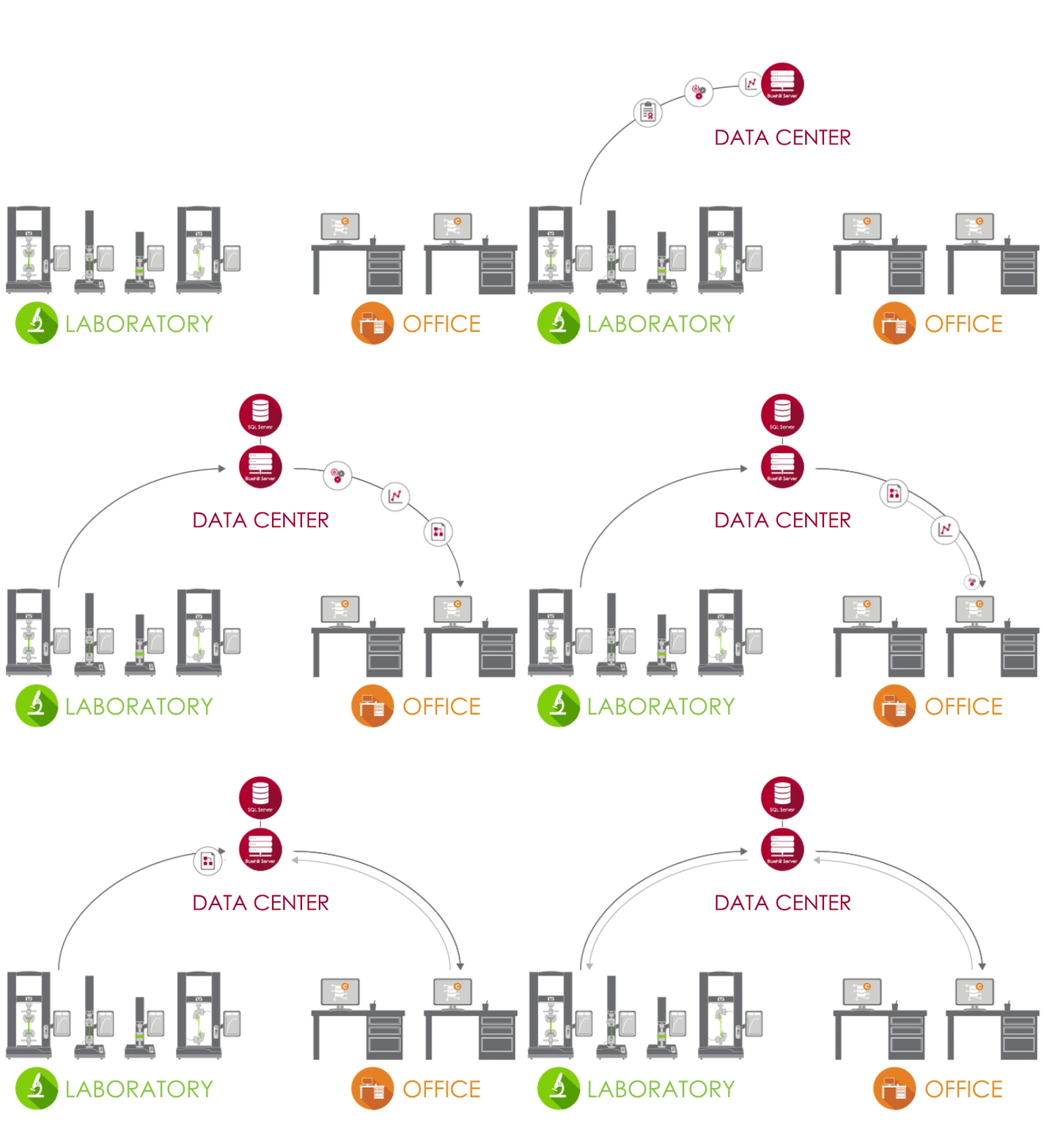
The network solution for Instron’s Traceability is powered by Bluehill Central, which employs a client/server framework to store all shared audit trail data, files, and settings on a Microsoft SQL Server database. When Bluehill Universal is connected to your lab’s Bluehill Central server, each testing system send and receives data from the centralized database, eliminating the risk of variation and the burden of locally managing each system. Viewing the audit trail, electronically signing files, and user management is performed either remotely in Bluehill Central or locally in Bluehill Universal. Database backup and restore functions can be performed manually in Bluehill Central.


INSTRON SERVICE


Instron field service teams provide validation and documentation services to support IQOQ processes designed to ensure that your Instron testing equipment performs to its intended purposes and produces valid results (per 21 CFR 820.72 and ISO 13845). Validation packages can also include validation of Bluehill Central and Bluehill Traceability to aid in compliance with CFR 21 Part 11. These validation packages contain checks to confirm that certain operations performed in the software are traceable in an audit trail, and provide reference to Instron transducer calibrations (purchased separately) to ensure that the software and system are providing accurate, reliable results. At the conclusion of our services we provide a Completion Certificate for Installation and Operational Qualification that will be signed by the Instron Field Service Engineer who performed the validations.


IQ/OQ

Our field service teams provide validation and documentation services to support IQOQ processes designed to ensure that your Instron testing equipment performs to its intended purposes and produces valid results per 21 CFR 820.72 and ISO 13845. At the conclusion of our services we provide a Completion Certificate for Installation and Operational Qualification that will be signed by the Instron Field Service Engineer who performed the validations.

Learn More


Systems Verification

Instron's field service teams provide speed, displacement, alignment, and temperature verification for your mechanical testing systems to ASTM E2658, ASTM E2309, and other standards.

Learn More


On Body Delivery Systems

Biomedical Testing

mechanical testing of on body delivery systems

TESTING ON BODY DELIVERY SYSTEMS

Testing Wearable Devices Used in the Treatment of Diabetes and Other Chronic Illnesses


Trends in wearable technology follow those of the broader biomedical and electronics industries — devices are getting smaller, smarter, and easier to use. These wearable devices range from on-body drug delivery systems for diabetes and cancer treatment to electrical nerve stimulation patches or sensors t monitor vitals. All treatments increase patient autonomy and are rapidly increasing in popularity in light of higher incidence rates of chronic disease and an aging population. As this trend continues, manufacturers are working to develop robust testing methods to mechanically evaluate all aspects of these devices and ensure that they are performing as expected. For more information on other biomedical applications, visit our Biomedical Industry page.

CHALLENGES OF TESTING WEARABLES

On Body Delivery Systems (OBDS) represent a quickly growing segment of the injectable drug delivery device market. These devices offer unique advantages over more traditional delivery methods. One of their most differentiating features is their ability to support significantly larger volumes of medication than devices like prefilled syringes and autoinjectors, with some OBDS reaching as much as 10 mL of deliverable volume. This is a direct result of the explosion of large molecule biologics, whose efficacy requires higher concentrations and subsequently higher volume in solution. OBDS also simplify patient adherence, as the entire delivery process occurs automatically once the device is placed and activated. In addition, their form factor allows for easier integration of IOT functionality, helping create companion applications to track and monitor patient progress.

stethoscope icon

Though these devices are just recently starting to be commercialized on drug platforms, the testing requirements are becoming more standardized. ISO 11608-6 was released in 2022, which is the first official standard that provides guidance around evaluating the functionality of OBDS. At this point, the testing specifications are still purposefully broad to apply to a range of devices with different form factors. The dose accuracy, injection time, delivery profile, and needle extension are relatively agnostic of the device, requiring additional testing system capabilities such as an integrated scale and camera. Testing around the properties of the medical grade adhesives is subject to the most uncertainty, with references to a wide range of existing adhesive test standards.

Challenge #1 - Flexibility Around Device Form Factors

The overall size and functionality of OBDS can vary greatly between manufacturers, and mechanical testing systems are not inherently designed for evaluating such a varied set of products. The dimensions of OBDS necessitate testing systems with a large fixturing surface that has sufficient anchoring points to accommodate all profiles. The use of a component test plate - a tapped platform with regularly spaces threaded connections - provides the most flexibility for customers to create their own fixturing for their devices. A unique challenge to OBDS is the potential for activation mechanisms and needles which are not collinear. An adjustable load cell mount makes it possible to maintain the needle centered on the injection point while ensuring the load cell is aligned with the activation button.


Challenge #2 - Capturing Extended Dose Profiles

wearable autoinjector being tested

Autoinjectors typically dispense their entire volume of fluid at a consistent rate in the range of 1 to 10 seconds. OBDS will work on a longer time scale to address patient comfort associated with large volume injections. In some cases, the delivery profile will vary throughout the duration of the injection to optimize drug absorption. The use of an integrated scale measurement in Bluehill Universal allows for proper visualization representation of the dose profile , aligning with the guidance of the ISO 11608-6 standard [Annex B].

Challenge #3 - Adhesive Evaluations

ISO 11608-6 points toward established standards like ASTM D3330 for characterizing the fundamental adhesive properties of the adhesive materials used to affix devices to patients' skin. This standard provides an ideal baseline for comparative testing of different adhesives, but does not accurately represent the real-world adhesive properties. To do this, the testing system must also be able to support more realistic substrates and preconditioning parameters such as temperature and moisture. A system with cyclic loading capabilities may provide additional insights in evaluating the degradation of adhesive properties after hours of simulated use.

Metal Ceramic Plastic Braces Testing

Biomedical Testing

Metal Ceramic Plastic Braces Testing

The  Challenge

Braces

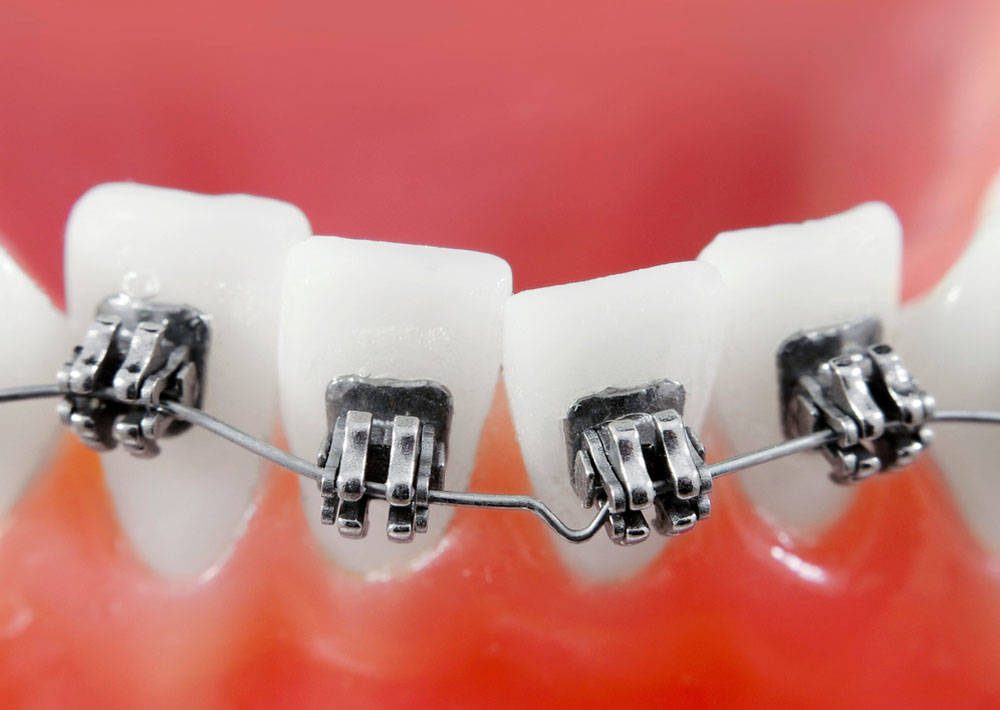
Metal braces are the most common type of braces for correcting misaligned teeth, and are typically made from high quality stainless steel or titanium. The components of metal braces include the brackets that physically attach to the teeth, bonding material like an adhesive to secure the brackets to the teeth, arch wire that connects the brackets together, and elastic which is typically referred to as O-ring material. In recent years, clear braces produced from plastic or ceramic have become a popular alternative to metal braces for cosmetic reasons. For a patient that requires braces, the preparation and application of braces are both expensive and time intensive. It is imperative that braces remain intact during application and during the patient's daily use of eating and drinking. Given the complexity of different patients and the multiple components and materials associated with braces, testing all parts and use cases can be overwhelming.

Our Solution 

Braces Testing

In order to test each component in a set of braces, we recommend using a Universal Testing System, such as the 6800 Series or 3400 Series systems with Bluehill® Universal software. Bluehill Universal's flexible user interface enables users to quickly set up different methods for tensile, compression, flex, peel, tear, and friction tests. This allows users to test the compressive strength properties of the brackets, peel properties of the adhesive, and tensile strength of both the metal wire and O-ring material. For testing the brackets, we recommend using 2-inch compression platens. When testing the adhesive, we recommend performing a 90° peel test with the adhesive bonded to substrates that mimic the tooth. Depending on the thickness of the metal wire, pneumatic cord and yarn grips may be the most preferred gripping solution for wire tensile tests. Finally, for testing the elastomeric O-ring material, Instron® offers a specialized O-ring fixture designed for measuring stiffness, strain, and ultimate tensile strength properties for a variety of O-ring sizes.

Test del ginocchio


Biomedical Testing


Test del ginocchio

La sfida

Articolazione del ginocchio

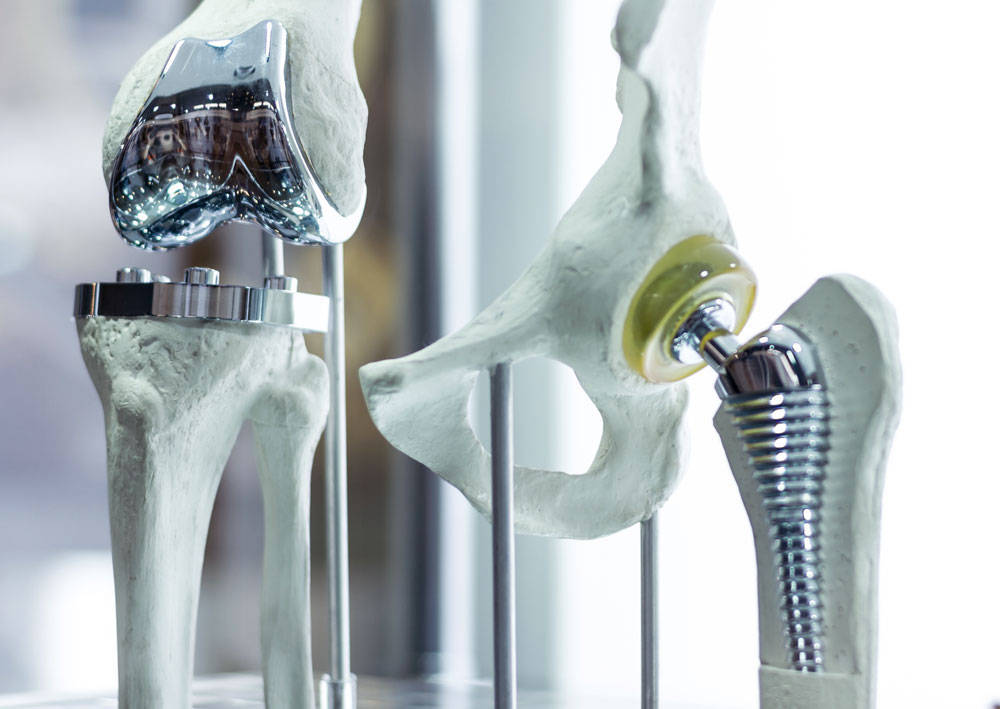
Le sostituzioni del ginocchio sono tra le procedure chirurgiche più diffuse al mondo per migliorare la qualità della vita. La frattura da fatica dei piatti tibiali è uno dei meccanismi di guasto più comunemente segnalati nelle protesi totali di ginocchio (TKR). È causata dalla perdita del supporto osseo sottostante derivante da reazioni biologiche, come l'osteolisi indotta dall'usura. In queste condizioni, il piatto tibiale diventa meccanicamente instabile e il carico ciclico impartito dalla normale camminata causa crepe da fatica, portando infine a un cedimento catastrofico.

La nostra soluzione

Test dell'articolazione del ginocchio

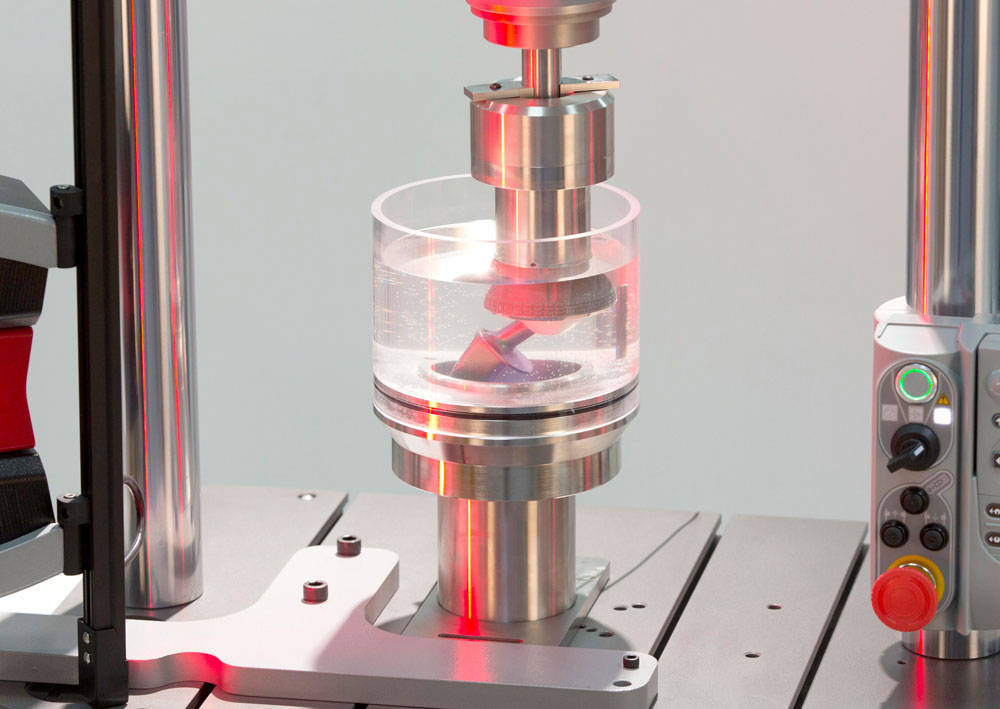
Lo strumento di prova dinamico completamente elettrico ElectroPuls® assiste progettisti, produttori e ricercatori durante tutto il ciclo di vita del prodotto, dalla derivazione delle proprietà fondamentali del materiale, come la resistenza alla propagazione delle cricche da fatica, fino al test dell'intero piatto tibiale e oltre. Utilizziamo un dispositivo di bloccaggio per fissare metà del piatto tibiale, simulando un condilo completamente supportato. L'altro condilo non supportato viene quindi sottoposto a un carico fisiologicamente rappresentativo. Utilizzando la nostra esclusiva cella di carico Dynacell, è possibile eliminare gli errori inerziali dinamici, come quelli causati dal fissaggio e dall'idrodinamica che si verificano durante i test in bagno termostatico. Ciò consente una misurazione più accurata del carico applicato al provino.

Test delle lenti a contatto


Biomedical Testing


Test delle lenti a contatto

La sfida

Lenti a contatto

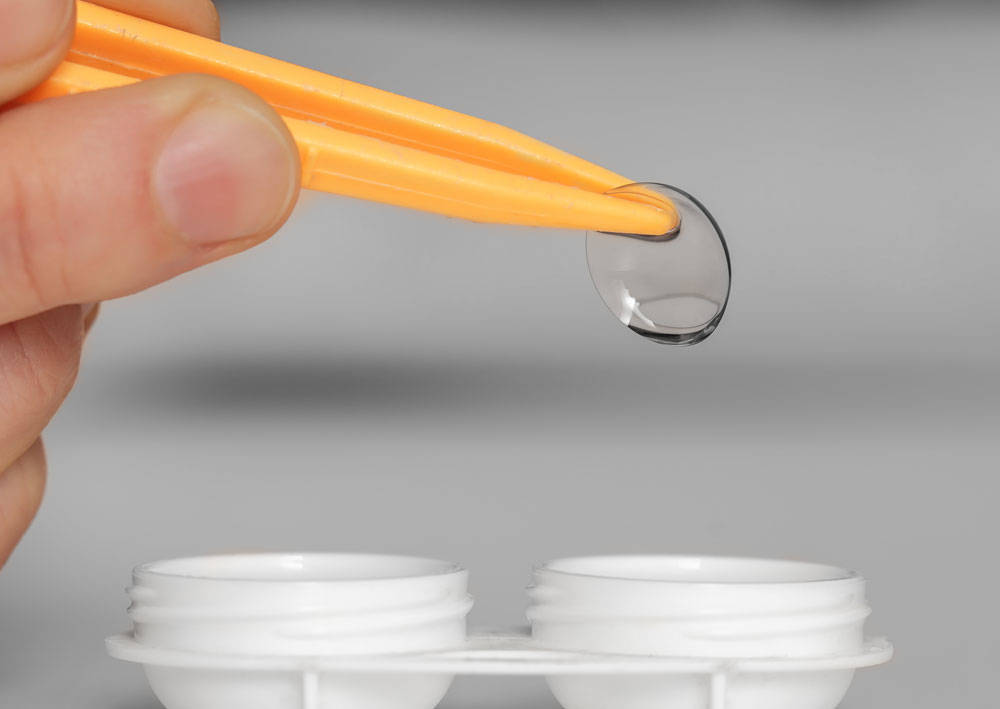
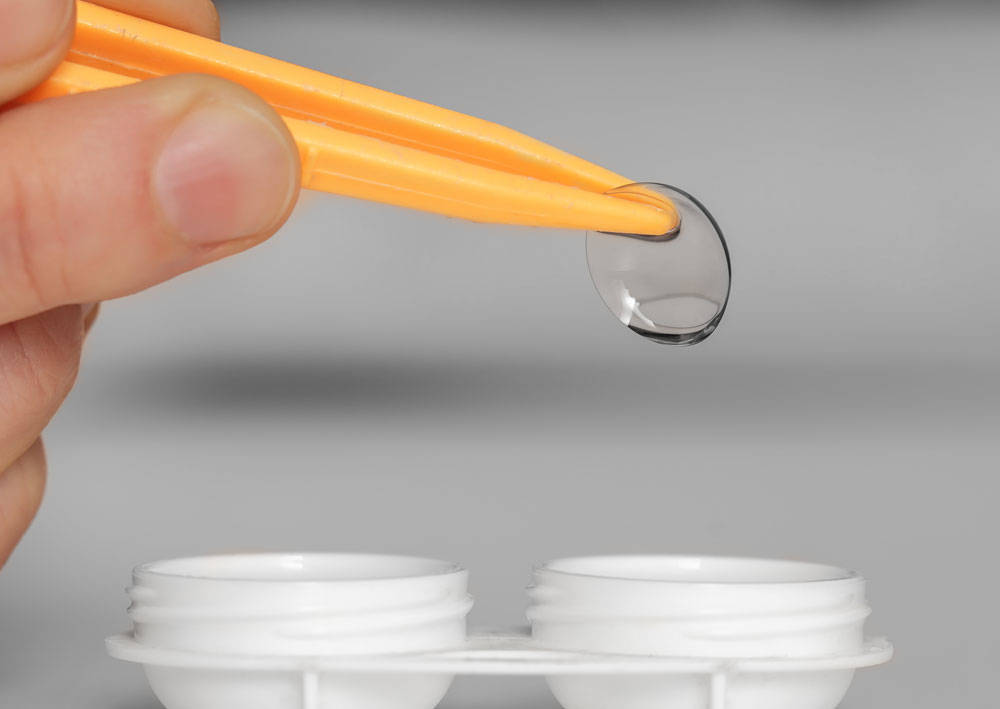
Le lenti a contatto, uno dei dispositivi medici più utilizzati al mondo, servono principalmente per la correzione della vista, ma anche per miglioramenti e modifiche estetiche. Sono prodotte in svariate forme, ma sono comunemente realizzate in materiali polimerici morbidi. Poiché il materiale delle lenti a contatto morbide è scivoloso e delicato da maneggiare, il caricamento del provino negli afferraggi può essere complicato e le lacerazioni della lente sono comuni anche con forze molto basse. Per simulare al meglio il loro utilizzo, le lenti a contatto dovrebbero essere testate in condizioni fisiologicamente rilevanti, il che richiede che le lenti siano testate in un bagno salino, riscaldato alla temperatura corporea.

La nostra soluzione

Test delle lenti a contatto

Per il test delle lenti a contatto, consigliamo l'uso di un sistema di prova universale configurato con afferraggi pneumatici a trazione sommergibili BioBath da 250 N e facce degli afferraggi in surfalloy extra-lunghe. Le facce lunghe degli afferraggi ti permettono di inserire la piccola lente negli afferraggi con spazio sufficiente per manovrare, consentendo al contempo di raggiungere una separazione degli afferraggi pari a zero. Le lenti possono essere testate come prodotti finiti completi, tagliate in strisce o affettate per eseguire un test di lacerazione di tipo "trouser". Si raccomanda inoltre una cella di carico a bassa forza per rilevare con precisione il cedimento del provino. Gli afferraggi pneumatici sommergibili da 250 N e l'asta di trazione associata che si collega alla cella di carico sono entrambi progettati per ridurre al minimo le variazioni di galleggiabilità durante i test a bassa forza, come quelli sulle lenti a contatto.

Test su impianti d’anca


Biomedical Testing


Test su impianti d'anca

La sfida

Impianto d'anca

Dopo l'intervento chirurgico, l'allentamento prossimale e lo stress shielding possono verificarsi a causa dell'attività normale e possono portare a profili di carico anomali. Pertanto, l'ambiente reale e i carichi che il campione sperimenterà all'interno del corpo devono essere replicati nei test. I test di fatica femorale dell'anca possono essere impegnativi a causa dell'importanza di incorporare con precisione il campione. Il dispositivo di fissaggio deve essere in grado di supportare sollecitazioni di compressione, flessione e torsione per soddisfare gli standard ISO 7206. Le alte frequenze di questi test rappresentano anche una sfida poiché possono causare il riscaldamento del campione oltre un limite accettabile.

La nostra soluzione

Test su impianti d'anca

Instron® fornisce un dispositivo di incorporamento del campione che garantisce il raggiungimento degli angoli di offset e della profondità di incorporamento richiesti. Il dispositivo di fissaggio resistente alla corrosione appositamente progettato consente test in vivo. L'assemblaggio è completo di un controllore di temperatura e di una pompa di ricircolo per garantire che la temperatura non superi mai il limite accettabile riducendo automaticamente la frequenza del test. Il dispositivo di fissaggio facile da installare include una testa di carico a basso attrito e adattatori per il montaggio su un sistema ElectroPuls. Il software Instron WaveMatrix consente di utilizzare diversi criteri di fine test, come l'esecuzione di un numero specifico di cicli o fino al rilevamento del cedimento del campione, che può essere determinato in vari modi. Con un unico pacchetto puoi testare con sicurezza e superare i requisiti per ISO 7206-4, 7206-6 e 7206-8.

Test su impianti oculari


Biomedical Testing


Test su impianti oculari

La sfida

Impianti oculari

Una lente intraoculare (IOL) è una lente sintetica artificiale che viene inserita nell'occhio del paziente, più tipicamente dopo un intervento di cataratta. Quando il cristallino naturale del paziente viene rimosso a causa di una malattia, l'occhio perde la capacità di mettere nuovamente a fuoco. Le IOL sono più comunemente realizzate in polimetilmetacrilato (PMMA), silicone, acrilico e altri materiali morbidi che consentono di piegarle facilmente e inserirle nell'occhio. Durante l'intervento chirurgico, è fondamentale che le IOL non si strappino o lacerino, poiché anche il più piccolo strappo può essere molto fastidioso per il paziente. Alcune delle maggiori sfide nel testare le IOL sono la simulazione del comportamento di piegatura sperimentato durante l'intervento chirurgico e l'afferraggio di questi piccoli dispositivi delle dimensioni di una moneta.

La nostra soluzione

Test su impianti oculari

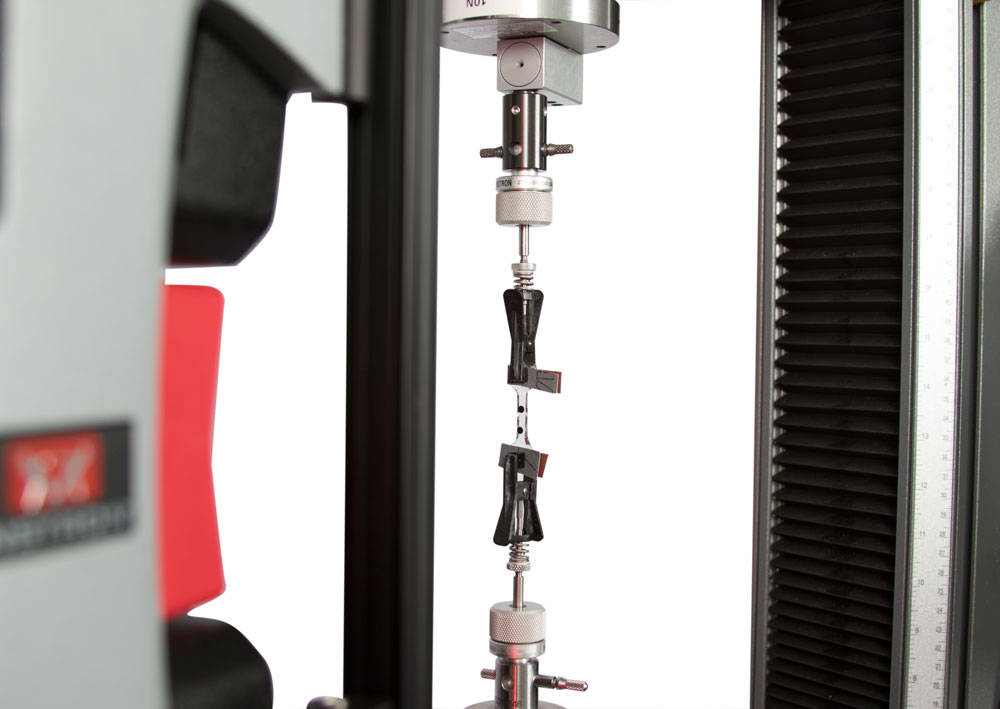
Per testare le IOL, consigliamo di utilizzare il modulo TestProfiler per condurre un semplice test ciclico che sottopone la IOL sia a trazione che a compressione. Per i sistemi di test, consigliamo di utilizzare un sistema di test universale Serie 6800, afferraggi per fibre e una cella di carico a bassa forza, come una cella di carico da 10 N. Inoltre, consigliamo di utilizzare la funzione TestCam di Bluehill® Universal abbinata a un microscopio USB, che consente di ingrandire il campione di test, registrare il test e riprodurre il filmato dopo il test. L'uso di un microscopio USB con almeno 10x aiuta a rilevare eventuali lacerazioni di piccole dimensioni che potrebbero non essere visibili a occhio nudo.

Bone Screw Testing

Biomedical Testing

Bone Screw Testing

The  Challenge

Bone Screw

Bone screws are used in surgical procedures for securing implants, osteosynthesis devices, and fracture fixation plates to the skeletal system. In normal clinical use, a surgeon applies combined axial and torsional forces to the bone screw as it is implanted within the body. Manufacturers and scientists test bone screws to determine various mechanical properties when evaluating new materials and designs. The most common standard for testing bone screws is ASTM F534. The standard consists of a total of four testing annexes: axial tests, torsion only tests, or a combination of both linear and torsion tests. ASTM F543-17 Test A1 - Test Method for Determining the Torsional Properties of Metallic Bone Screws requires the screw to be sufficiently clamped and a rotational velocity between 1 and 5 rpm to be applied until specimen failure, and to measure the torque profile and the rotational angle. ASTM F534-17 Test A2 - Test Method for Driving Torque of Medical Bone Screws measures the torque required to insert and remove the screw with a constant rotational velocity between 1 and 5 rpm while maintaining an axial load of no more than 10 N in compression. ASTM F543-17 Test A3 - Test Method for Determining the Axial Pull-Out Strength of Medical Bone Screws measures the force required to axially remove the screw that has been fully inserted in the test block using the method from Test A2. The pull-out fixture then applies a tensile load at a constant rate of 5 mm/min until the failure of the bone screw or removal from the test block. ASTM F543-17 Test A4 - Test Method for Determining the Self-Tapping Performance of Self-Tapping Medical Bone Screws specifies the procedure to evaluate the axial loading required to engage a self-tapping bone screw into a standard laboratory material. Although considered a simple clinical procedure, reproduction of this in vitro results in a relatively complex motion due to the interaction between the rotation and linear axes of a test machine. The test requires a continuous rotational velocity of up to 30 rpm while the axial load is incremented during the insertion at a rate of 2 N/s. The objective of this test is to record the torque profile as the bone screw is inserted into the material and then removed.

Our Solution 

Bone Screw Testing

To perform bone screw testing to ASTM F543, either an electromechanical system with a Torsion Add-On 3.0 , or an ElectroPuls™ Linear-Torsion system can be used. The Torsion Add-On 3.0 can be added to any new or existing 6800 Series single column or dual column table top testing machine to add rotational capabilities. The ElectroPuls E10000 and E3000 Linear-Torsion test systems are all-electric dynamic testing systems that provide a unique linear and torsion actuator system that is capable of synchronized linear and multi-rotation testing, which makes them ideal platforms for performing the full range of tests prescribed by the standard. For both the electromechanical system and ElectroPuls system, a bi-axial Dynacell load cell is mounted to the base of the machine. Using WaveMatrix™ dynamic test software on the ElectroPuls system, a user is able to control both axial and rotational axis in closed-loop control. This gives the user the ability to easily set up the multi-axial tests as a series of steps, and displays the required information as the test proceeds. Special fixtures are used to clamp the material to the biaxial load cell, and a drill chuck is used for the drive bits.

Hard Tissue Testing

Biomedical Testing

Hard Tissue Testing

The Challenge

Hard Tissue

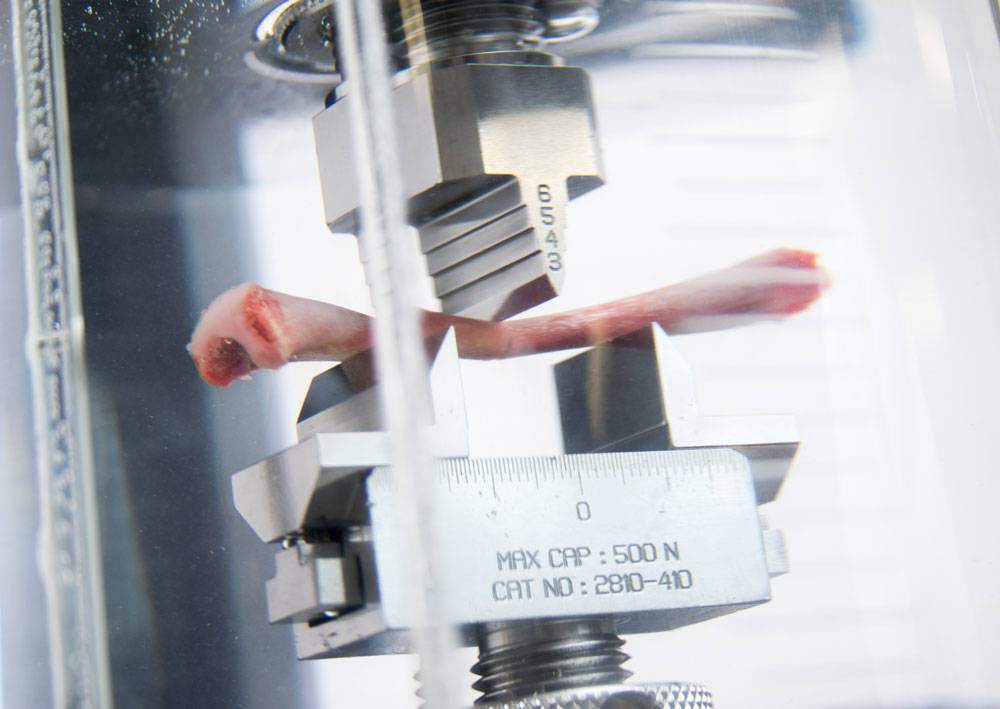
Bone, dentin, and dental enamel are all considered to be hard tissues. Specimens of this type are most commonly tested in compression and flexural. The most common results obtained from a compression or flexural test on hard tissues is modulus and force at fracture. Typically, these specimens come from mice, rats, or other mammals and are small in size. Despite being small in size, hard tissues have high stiffness. A typical challenge with measuring modulus is accurate measurement of displacement. For a given force, a hard tissue such as bone will exhibit small displacement. In addition to compression testing, 3-point and 4-point bend tests are common to quantify force at fracture on bone sections. Often, this testing must be conducted at physiologically relevant test conditions, such as in a hydrated bath and at body temperature.

Our Solution 

Hard Tissue Testing

When conducting compression testing on hard tissues, it is critical that users choose appropriately sized compression platens to closely match specimen size, ensure the compression platens are spherically seated or self-aligning to apply even pressure on the specimen, and use an accurate source to measure system displacement. For example, an accurate measurement source of displacement could be via compliance correction in the software, or by using a strain measuring device, such as a linear variable deflection transducer (LVDT) or a video extensometer. When testing flexural specimens, it is critical that the anvils on the flexural fixture are appropriately sized to the specimen and that the flexural fixture properties, such as span length, are easily entered into the software.

Test dei dispositivi di fissazione delle fratture


Biomedical Testing


Test dei dispositivi di fissazione delle fratture

La sfida

Fissazione delle fratture

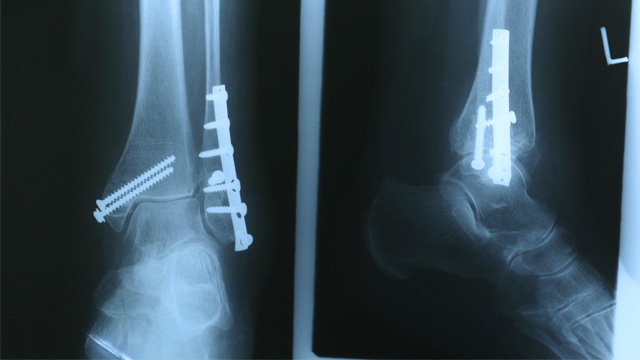
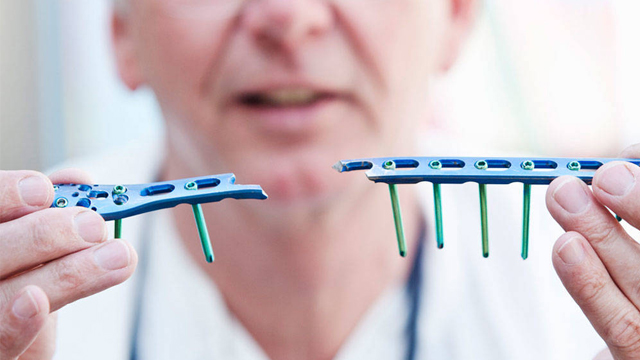
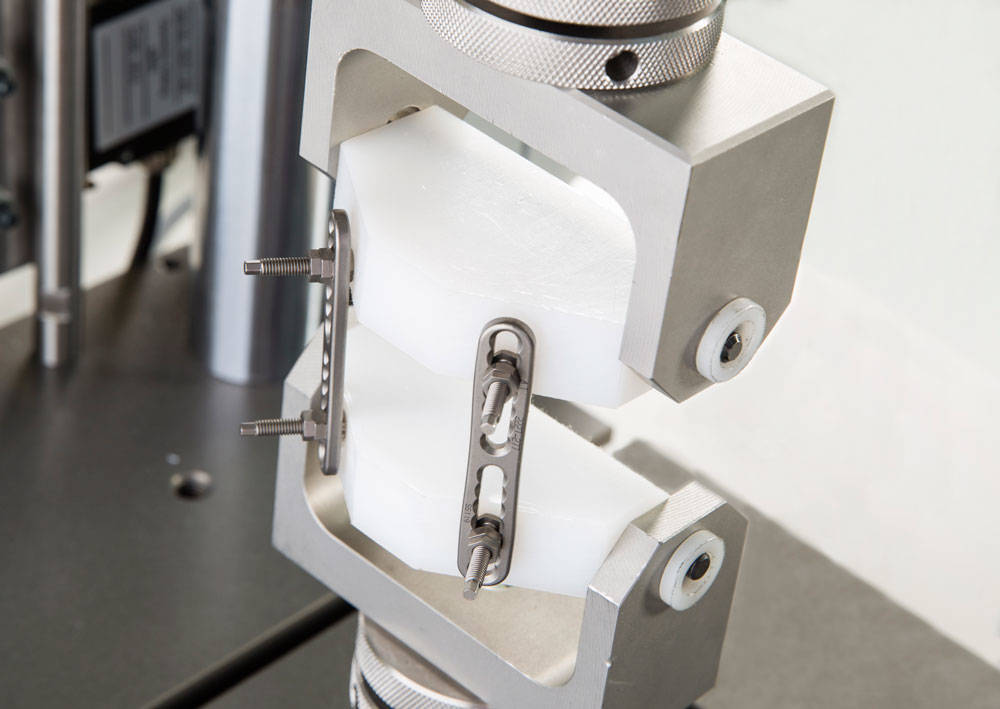
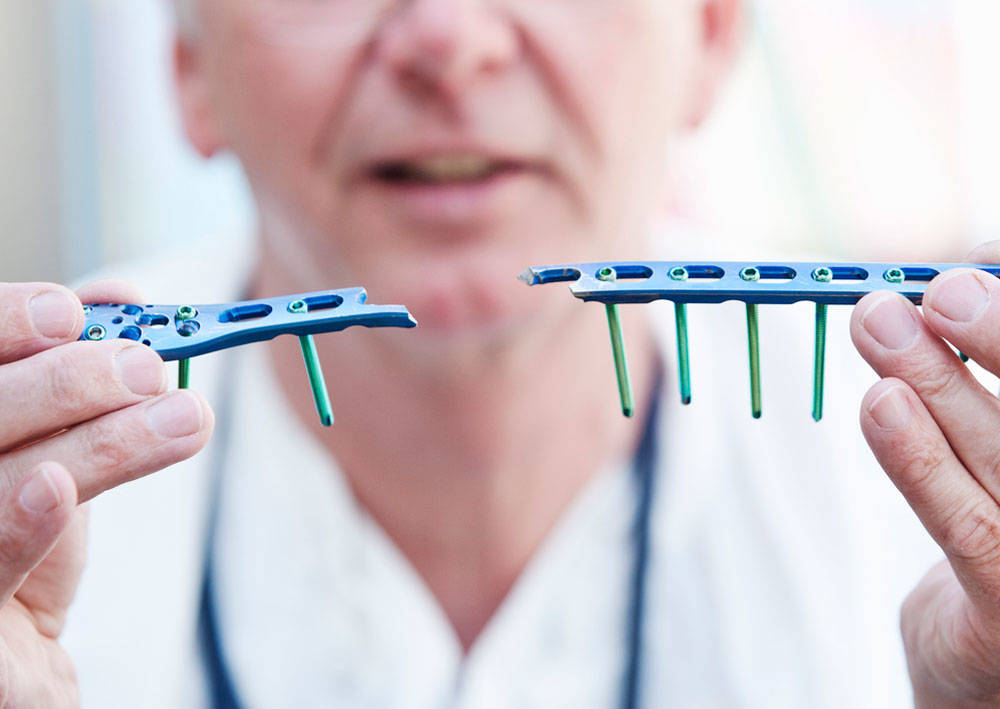
Le placche per la fissazione delle fratture vengono utilizzate per immobilizzare le ossa fratturate o gravemente rotte. Queste placche sono solitamente realizzate in titanio o acciaio inossidabile. Entrambi i materiali presentano proprietà meccaniche simili all'osso naturale, inclusi rigidezza e resistenza alla trazione massima. Queste placche hanno spesso geometrie irregolari e sono disponibili in varie dimensioni per adattarsi alle diverse fratture ossee del corpo. Ad esempio, una placca utilizzata per immobilizzare un femore fratturato sarà molto diversa da una utilizzata per una caviglia, un dito o una mascella. La geometria irregolare e la gamma di dimensioni delle placche per la fissazione delle fratture le rendono componenti difficili da testare. Inoltre, nella maggior parte dei casi, queste placche rimangono all'interno del paziente per tutta la vita e devono essere in grado di resistere al movimento dinamico del corpo per decenni.

La nostra soluzione

Test dei dispositivi di fissazione delle fratture

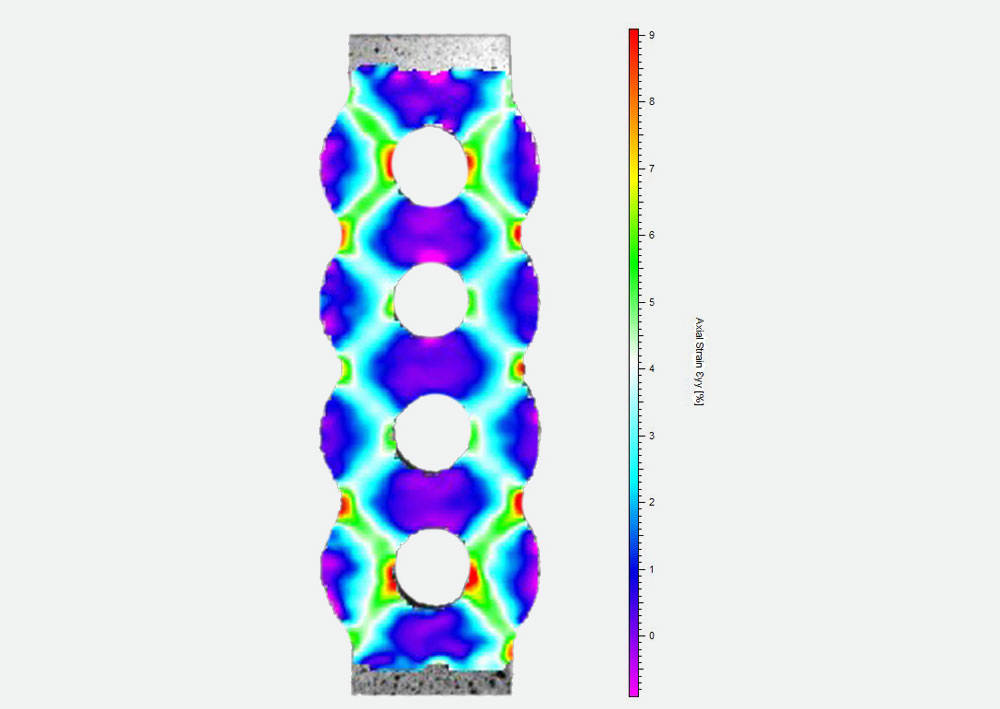
Per comprendere le proprietà meccaniche delle placche per la fissazione delle fratture, è necessaria una serie di test sia statici che dinamici. I test monotoni di flessione, trazione e compressione sono necessari per comprendere il modulo e la resistenza alla trazione massima. Data la geometria irregolare delle placche per la fissazione delle fratture, la misurazione della deformazione rappresenta una sfida. Tecniche di modellazione 2D e 3D, come l'analisi agli elementi finiti, vengono spesso condotte per comprendere le proprietà di sollecitazione e deformazione a campo intero delle placche. Per i test monotoni di trazione, compressione o flessione, il nostro software di Digital Image Correlation abbinato al nostro Advanced Video Extensometer consente a ricercatori e scienziati di visualizzare e quantificare le proprietà di deformazione a campo intero di queste placche. Per tutti i test di fatica, consigliamo di utilizzare i nostri sistemi ElectroPuls. Nello specifico, consigliamo il sistema di prova E3000 o E10000 Linear-Torsions. La capacità di testare le placche simultaneamente con carico assiale e torsionale rappresenta al meglio le condizioni di carico reali nel corpo umano.

Hydrogel Tensile Testing

Biomedical Testing

Hydrogel Tensile Testing

The Challenge

Hydrogel Tensile

Hydrogel testing is most commonly done in both tension and compression. Compression testing on hydrogels poses less of a challenge, as many hydrogels are compliant and compress easily under load. The natural compliance of hydrogels becomes more of a challenge in tensile testing, as these materials can be difficult to grip and exhibit high elongation. Gripping hydrogels with too much pressure typically displaces the material out of the grip faces, which makes gripping ineffective. In addition, a traditional contacting extensometer is not a viable option considering the soft properties of hydrogels. Given the viscoelastic properties of these materials, test speed will greatly affect results, such as force at break and elongation at break. 

Our Solution 

Hydrogel Tensile Testing

When testing hydrogels in compression and tension, most common forces at failure are below 100 N. Given the low forces obtained in hydrogel mechanical testing, it is important that an accurate load cell is used. This can be especially tricky in a compression test as many users restrain from using low capacity load cells out of fear that they will overload the load cell if the compression platens begin to touch during a test. To prevent this from happening, it is imperative that safety limits are set and that the end of test criteria is set to the load cell capacity in the software. For tensile testing, Instron® offers a range of low force grips, including spring loaded, screw side action action, and pneumatic side action grips. Given the compliant nature of hydrogels, often sandpaper needs to be used to increase friction at the gripping contact points. When accurate measurement of strain is required, we recommend using our Advanced Video Extensometer

Test sugli impianti spinali


Biomedical Testing


Test sugli impianti spinali

La sfida

Test sugli impianti spinali

Il test della durata di servizio dei costrutti spinali è fondamentale poiché il cedimento per fatica è più comune del cedimento catastrofico. Durante la normale attività del paziente, i costrutti spinali possono essere sottoposti a elevati carichi in vivo, che possono causare un cedimento catastrofico. I test ciclici vengono eseguiti per valutare il numero di cicli necessari affinché si verifichi il cedimento per fatica. Il carico viene generalmente applicato con una forma d'onda sinusoidale controllata a carico di ampiezza costante che supera i cinque milioni di cicli. Vengono eseguiti anche semplici test statici per valutare il carico necessario per causare la frattura spinale.

La nostra soluzione

Test sugli impianti spinali

Il sistema ElectroPuls lineare-torsionale Instron® è consigliato in quanto consente di completare sia test statici che dinamici secondo gli standard ASTM F1717-12 su un'unica macchina. Un dispositivo spinale dedicato può essere facilmente montato su questo sistema con la possibilità di montare un bagno salino sulla base per test in vivo. Quando si utilizza il bagno, la cella di carico è progettata per essere montata sull'attuatore utilizzando la tecnologia brevettata Dynacell di Instron per la compensazione dell'inerzia. L'algoritmo di regolazione basato sulla rigidità brevettato da Instron garantisce un'eccellente fedeltà della forma d'onda, anche con campioni non lineari.

Bioadhesives Peel Testing

Biomedical Testing

Bioadhesives Peel Testing

The Challenge

bio adhesive

Adhesives are widely used in the medical device industry for dental implants, bone cements, and wound closure products. Wound closure products include tissue adhesives that can be found in bandages, secondary dressings, and a variety of surgical sealants. The adhesive strength of these products must be well defined. An adhesive that isn’t strong enough may result in a wound that heals poorly, or it can lead to an infection. If an adhesive is too strong, it may damage the underlying tissue or cause the patient unnecessary pain when removing. A fundamental challenge with testing bio adhesives is characterizing adhesive strength in physiologically relevant conditions. 

Our Solution 

Bioadhesives Peel Testing

Soft tissue substrates should be tested under physiologically relevant conditions, most preferable in a bath or temperature controlled enclosure at 37°C. The BioBath with submersible pneumatic grips is recommended. The grips and pull rod that attach to the force transducer are designed to minimize buoyancy chances during low force testing. We also recommend a low capacity load cell, given that adhesive strength for biological applications is typically under 10-20 N. Bluehill® Universal's Peel, Tear, Friction Module is ideal for this test type in order to measure first peak force, average force over the seal, and average force per width of the specimen. 

Test sui pacemaker cardiaci


Biomedical Testing


Test sui pacemaker cardiaci

La sfida

Pacemaker cardiaco

Un pacemaker è un piccolo dispositivo elettronico, impiantato sotto la clavicola del paziente, che aiuta il cuore del paziente a battere più regolarmente. È composto da tre parti principali: un generatore di impulsi, uno o più elettrocateteri e un elettrodo su ciascun elettrocatetere. Il generatore di impulsi è costituito da un piccolo involucro che contiene circuiti, una batteria e un chip che regola gli impulsi elettrici inviati al cuore. L'elettrocatetere è un filo isolato che si collega al generatore di impulsi e si estende fino a una delle camere del cuore. L'elettrodo all'estremità dell'elettrocatetere entra in contatto con la parete del cuore ed è responsabile dell'invio degli impulsi elettrici al cuore del paziente. Considerando che ogni componente di un pacemaker è fondamentale per il suo funzionamento, tutti e tre i componenti devono essere sottoposti a test rigorosi. La varietà di test, tra cui test di taglio sui componenti microelettronici, test di compressione sulla batteria e test di trazione sugli elettrocateteri, può essere difficile da soddisfare con un solo sistema.

La nostra soluzione

Test sui pacemaker cardiaci

I sistemi di prova ® Serie 6800 Instron, con il software Bluehill® Universal e il modulo TestProfiler, rappresentano le macchine di prova universali più performanti oggi sul mercato. La flessibilità del software offre agli utenti la possibilità di programmare una moltitudine di metodi diversi con semplicità, tra cui trazione, flessione, compressione, pelatura, lacerazione e attrito. Inoltre, il gruppo Engineered Solutions di Instron ha collaborato con numerose aziende di elettronica e dispositivi medici per sviluppare attrezzature specializzate, tra cui morsetti di taglio speciali e dispositivi di flessione micro. Inoltre, consigliamo di utilizzare afferraggi pneumatici per cavi e fili per i test di trazione sugli elettrocateteri.

Test di stent


Biomedical Testing


Test di stent

La sfida

Stent

Il collaudo meccanico degli stent comporta una serie di test diversi che comprendono metodi sia statici che a fatica. Gli stent sono comunemente realizzati in filo di Nitinol, che deve essere testato secondo la norma ASTM F2516 in un semplice test ciclico. Un altro test statico spesso eseguito sugli stent è la prova di flessione in conformità alla norma ASTM F2606. Oltre a testare la materia prima, la struttura a diamante del corpo dello stent viene comunemente testata a fatica a 60 Hz in controllo di posizione. L'intero corpo dello stent viene solitamente testato anche in compressione radiale come test statico, e in fatica pulsatile o ciclica come test dinamico. Considerando che per ogni singolo stent è richiesta una tale varietà di test meccanici, è spesso difficile selezionare il sistema di prova appropriato per eseguire il maggior numero di test possibile.

La nostra soluzione

Test di stent

Per tutti i test statici, inclusi i test secondo ASTM 2516, ASTM F2606 e i test di compressione radiale sull'intero corpo dello stent, consigliamo l'uso di un sistema di prova universale Serie 6800. Per il collaudo del filo di Nitinol secondo ASTM 2516, consigliamo di utilizzare il nostro estensimetro video avanzato per una misurazione accurata della deformazione. Per il collaudo dei corpi degli stent in compressione radiale, Instron® collabora con Machine Solutions Inc. (MSI) per fornire un'attrezzatura specializzata. L'accessorio per la compressione radiale può essere montato su qualsiasi sistema di prova Instron 68TM e può utilizzare il software standard Bluehill® Universal per controllare il test.

Per tutti i test a fatica, inclusi i test sulla struttura a diamante del corpo dello stent o sull'intero stent in controllo di estensione ciclica, consigliamo di utilizzare i nostri sistemi di prova ElectroPuls®.

Testing di impianti dentali


Biomedical Testing


Testing di impianti dentali

La sfida

Impianto dentale

La forma dell'impianto e il materiale utilizzato sono oggetto di continue ricerche per migliorare il contatto con la gengiva e l'integrazione con l'osso. Pertanto, gli impianti dentali progettati da diversi produttori tendono a presentare molte differenze. Inoltre, le dimensioni e la forma dell'impianto variano a seconda della loro applicazione e del punto in cui vengono posizionati nella bocca. Ciò crea una sfida durante il testing dei campioni e il confronto tra materiali e design.

La nostra soluzione

Testing di impianti dentali

Grazie a una vasta gamma di dimensioni e geometrie, gli impianti dentali angolati possono essere montati su un afferraggio dentale ad angolo variabile Instron® per il testing. L'afferraggio assicura che il montaggio non vincoli eccessivamente l'impianto né generi grandi forze laterali che potrebbero danneggiare la cella di carico o la macchina di prova. Come per gli impianti dentali diritti, anche quelli pre-angolati possono essere testati in un ambiente acquoso, qualora si preveda l'insorgere di fatica da corrosione. L'afferraggio può essere montato in un bagno fluido per testare l'impianto in soluzione salina, o in un altro mezzo fisiologico, mantenendo la temperatura a 37 °C.