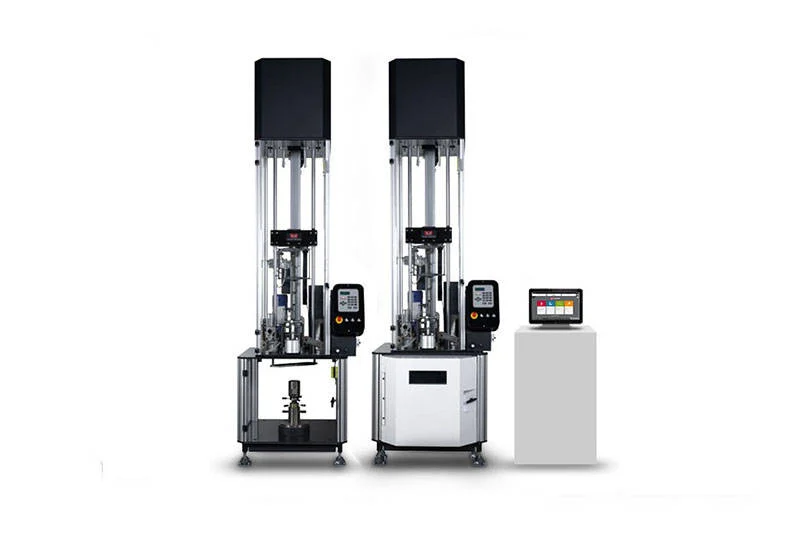
Personal Protective Equipment (PPE) Testing

Biomedical Testing

Personal Protective Equipment (PPE) Testing 

Materials Testing Guidance for Personal Protective Equipment

stethoscope icon
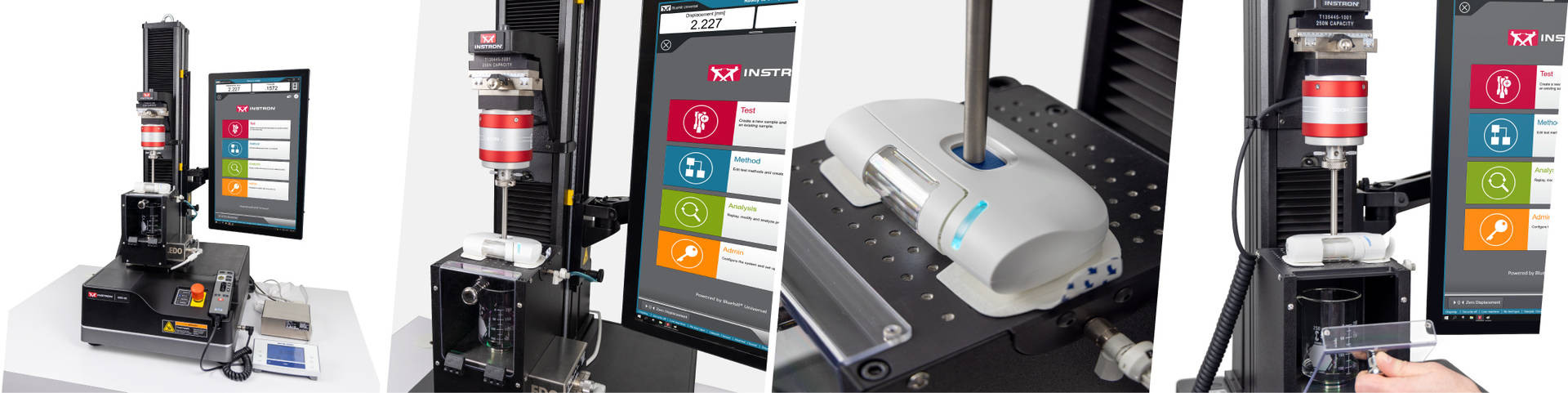
The global demand for medical equipment has skyrocketed in response to the COVID-19 pandemic, with many companies refocusing their efforts to produce personal protective equipment (PPE). With this vast uptick in demand, medical device manufacturers have scrambled to increase their production capacities while non-medical manufacturing companies have transitioned their own production facilities to create items such as masks, gloves, and nasal swabs. With increased manufacturing comes increased quality control testing, and Instron has received numerous inquiries from companies seeking to expand their testing capacity or reconfigure their existing equipment to test PPE. This guide was created to help familiarize manufacturers with key testing requirements and provide an overview of current FDA regulations. We hope that it will be a useful resource for anyone seeking to aid the fight against COVID-19.

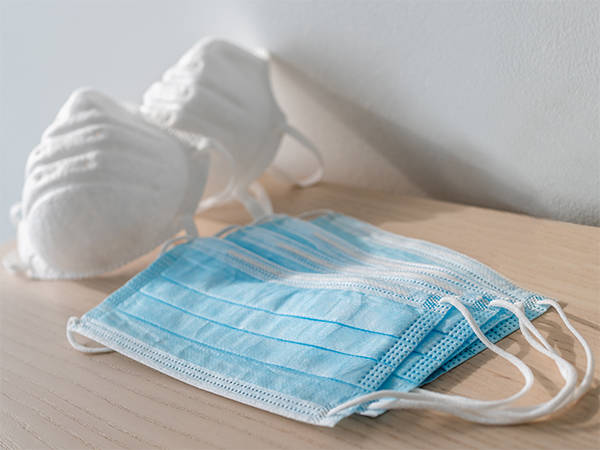
 

Medical Masks

Medical masks come in two primary types: single-use surgical masks and N95 respirator masks. Surgical masks are intended to prevent viral spread by containing droplets produced by the wearer, while respirator masks are designed to protect the wearer from virus particles that have been aerosolized. Both of these masks are relatively easy to manufacture and test, and many textile manufacturers have shifted their operations to produce them in an attempt to meet the current demand. Many of these companies already own materials testing equipment and are able to make small modifications to their existing systems in order to perform the required FDA testing.
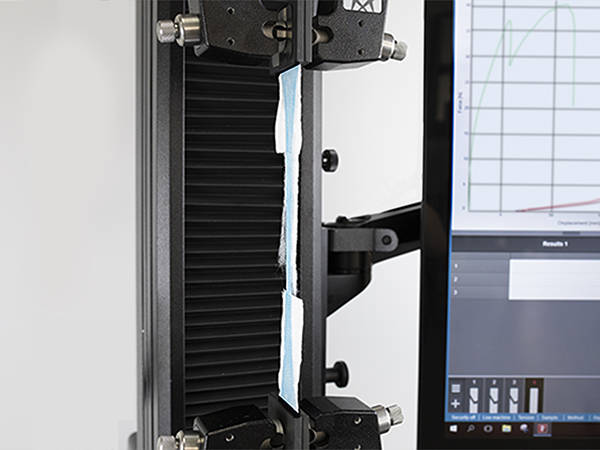

mask-fabric-test.jpg

Fabric Test

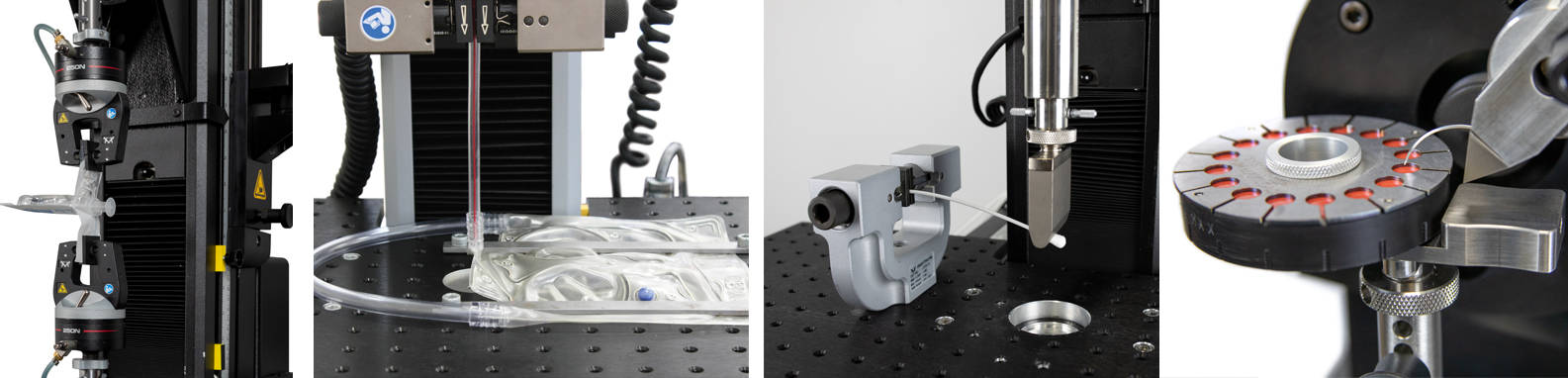
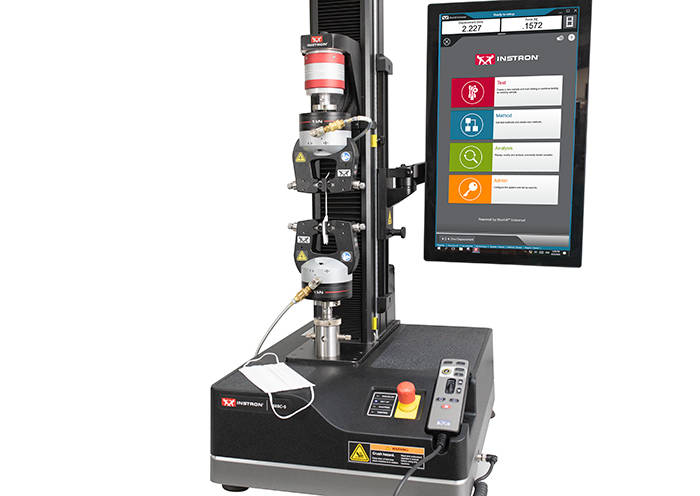
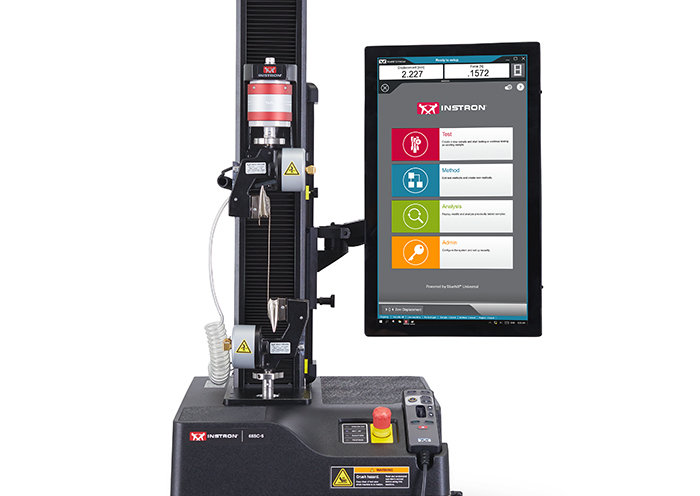
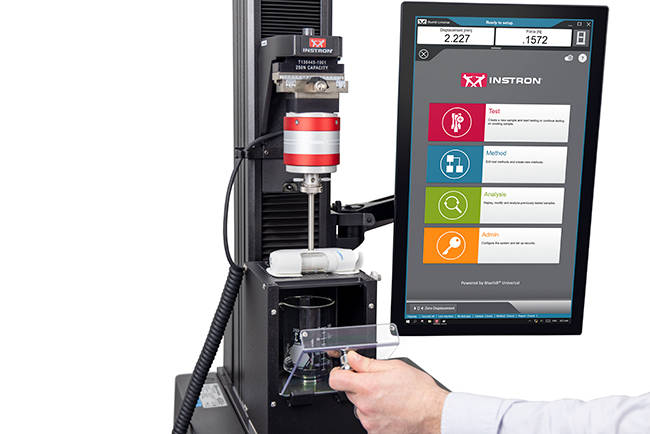
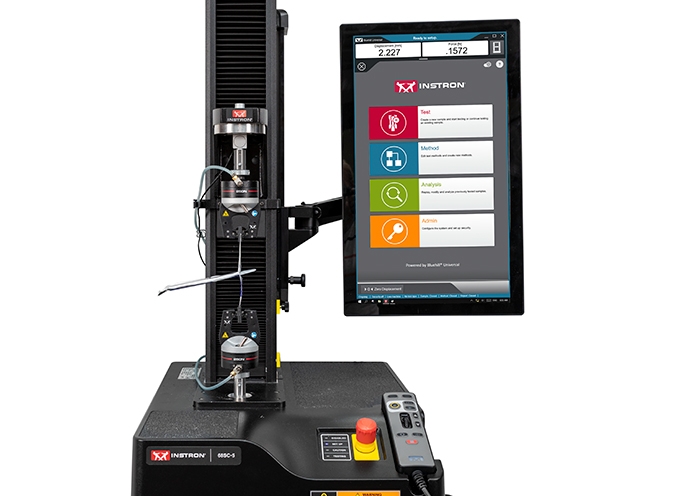
Mask fabric is generally tested in accordance with general textile standards such as ASTM D5034. Because fabric samples are prone to jaw breaks, we recommend pneumatic grips with smooth jaw faces to minimize this risk. In order to capture peaks and troughs generated by individual fiber breaks, we recommend a test system with a high data capture rate, such as Instron's 68SC-5.
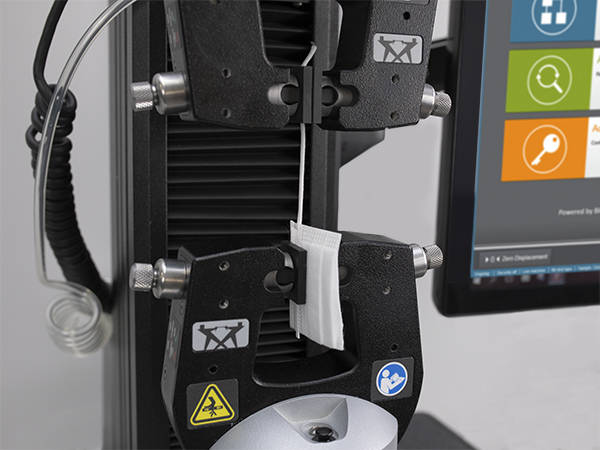
mask-elastic-test.jpg

Elastic Test

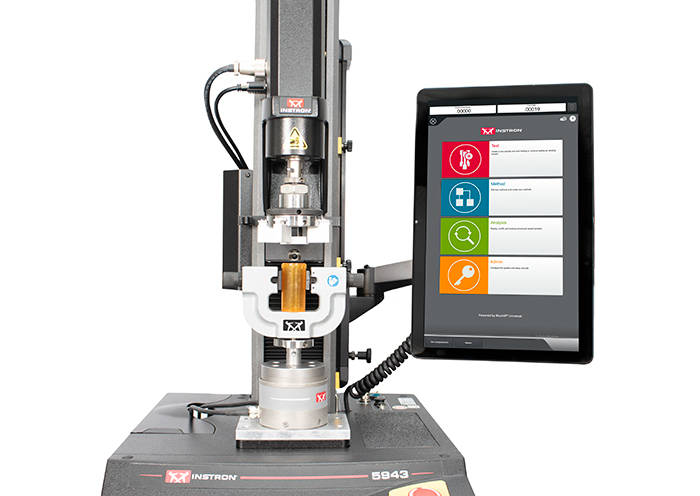
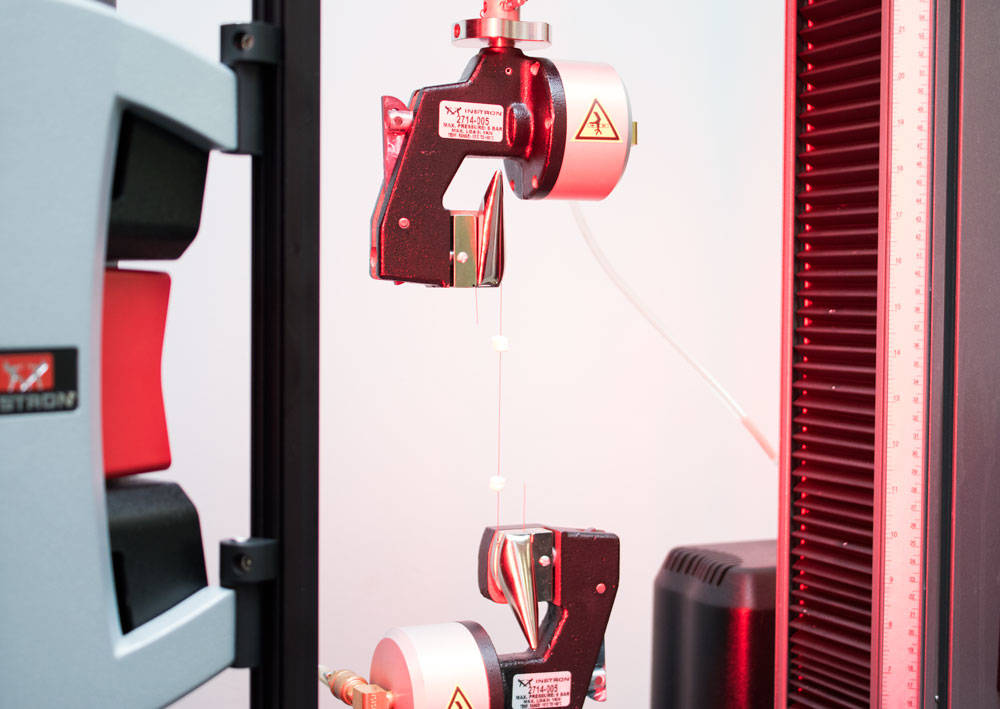
It is important to test the strength of the connection between a mask's fabric and the elastic band that holds it into place. This test is performed by loading the band to a minimum of 10 N and visually evaluating it to ensure there has been no separation. With masks now being worn for longer periods of time than ever, it may also be valuable to perform a relaxation test to determine its durability.
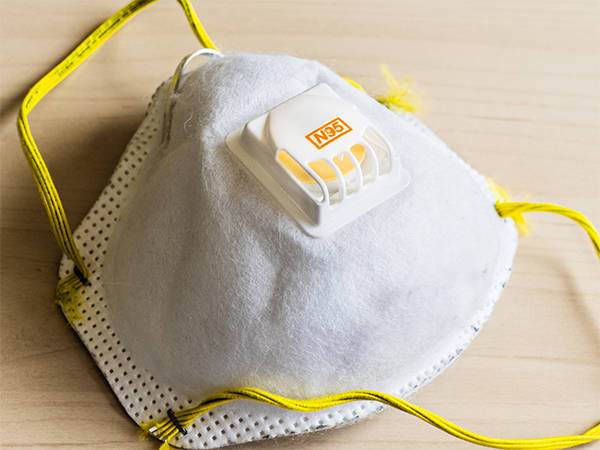
respirator-filter.jpg

Filter Test

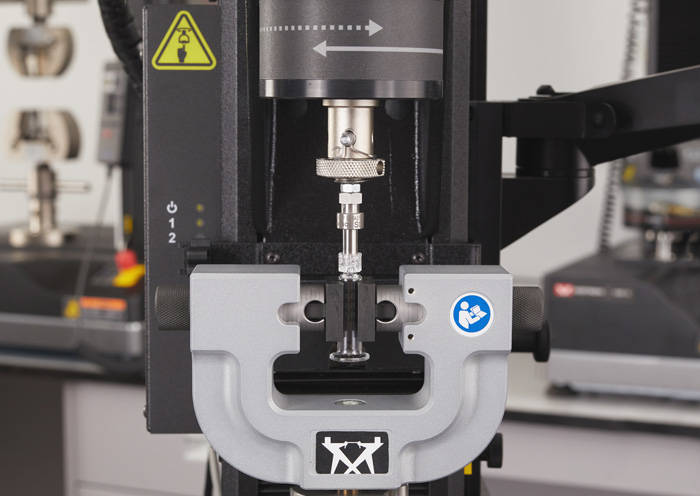
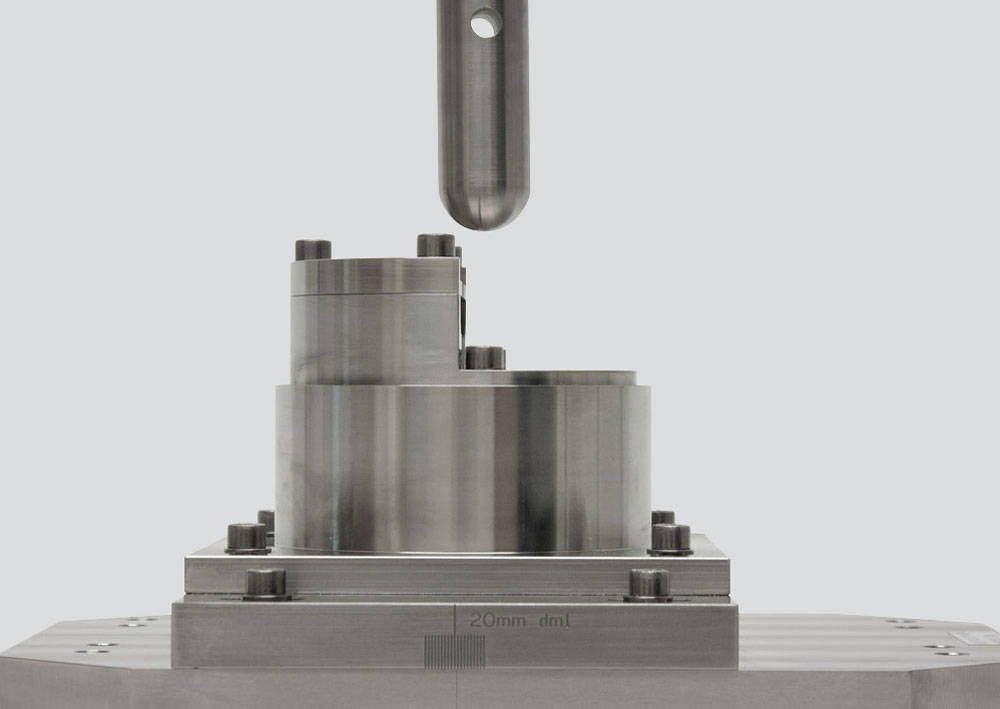
Respirator masks must be tested to ensure the strength of connection between the mask fabric and the respirator valve. This test can be accomplished using a side-acting grip on the base of the system and a custom-made hook fixture attached to the load cell.

Medical Gloves

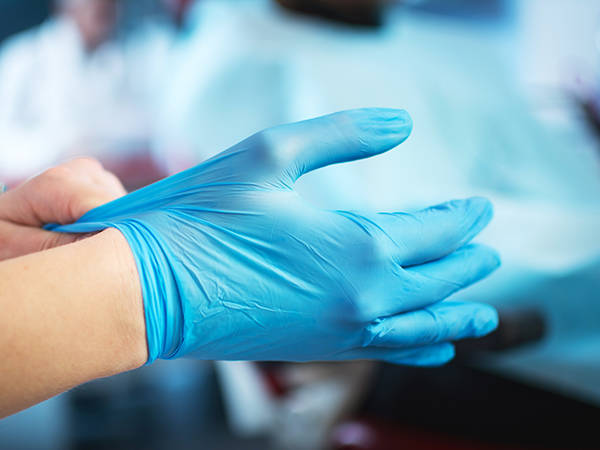
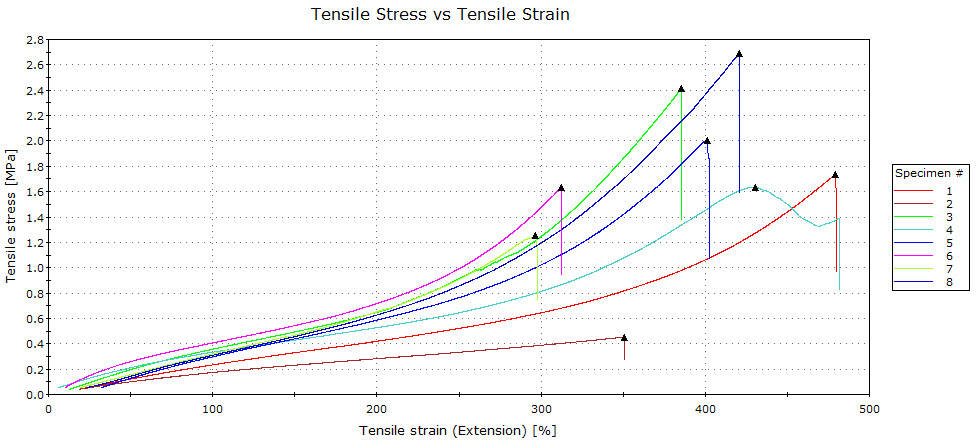
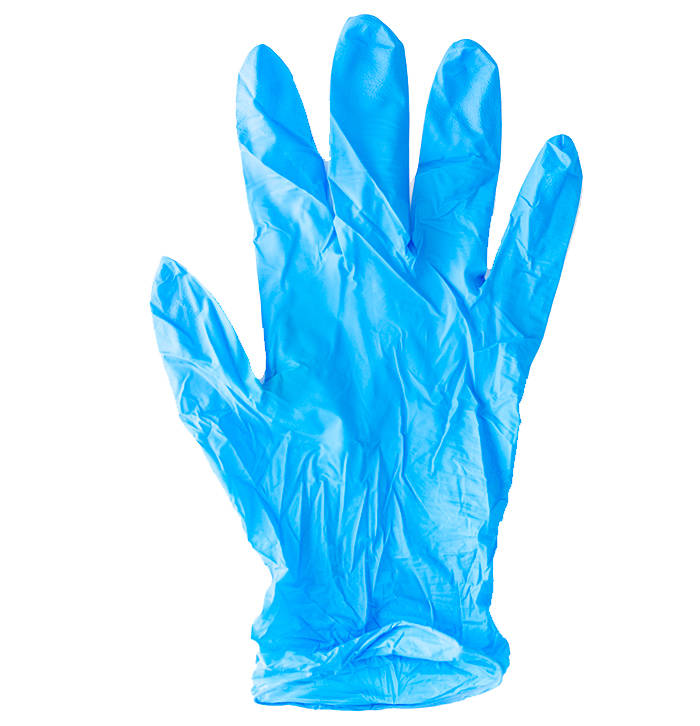
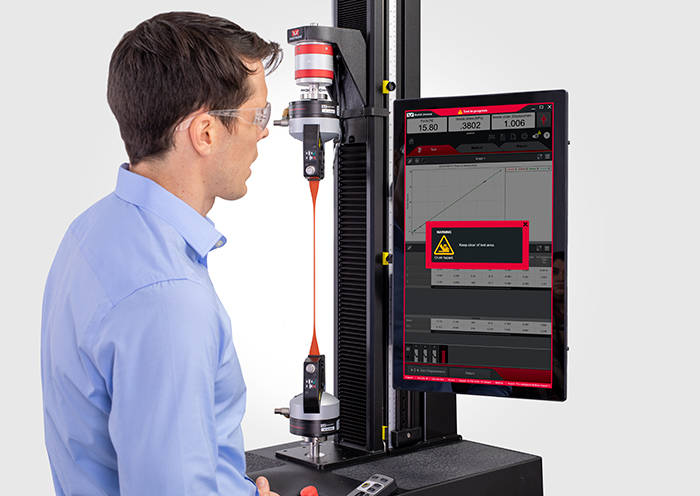
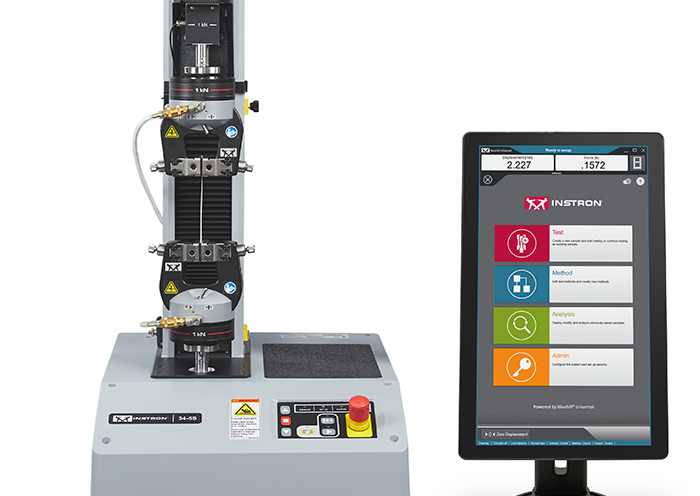
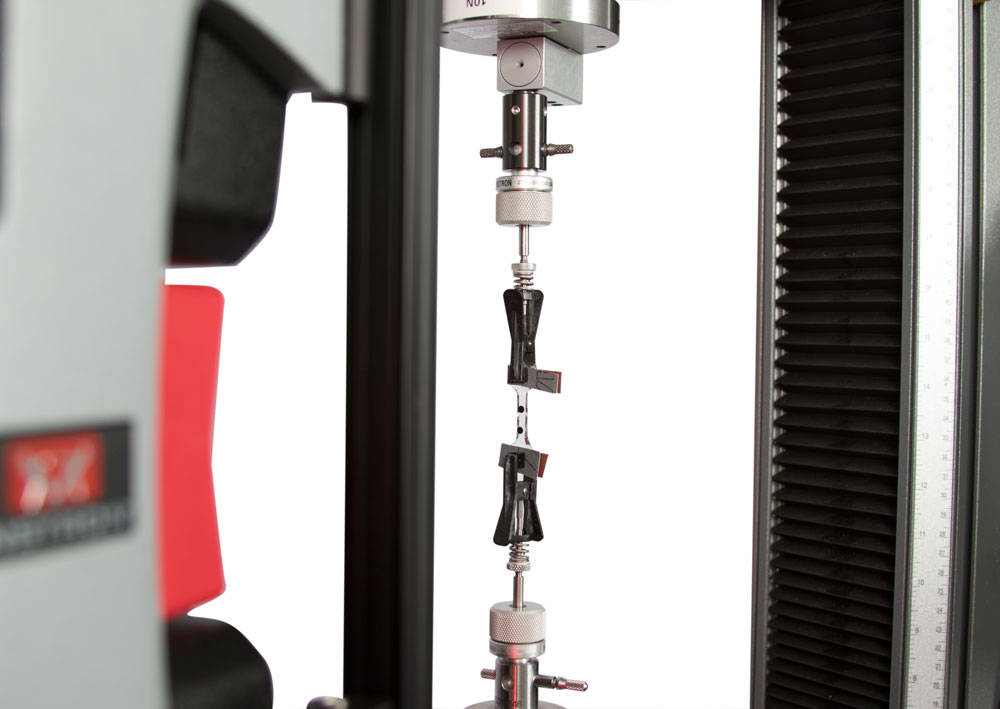
ASTM classifies medical gloves according to their material (latex, nitrile, natural rubber, PVC, or polychloroprene), while ISO classifies them based on their application (patient examination or surgical). Regardless of the testing standard, material, or clinical application, the equipment and general procedure for testing is consistent across all medical glove types. ASTM D6319, ISO 11193, and EN 455-2 are standards used by the biomedical industry to regulate the tensile properties of medical gloves. The key results for all glove testing standards are the tensile strength and ultimate elongation of the material. Rather than testing the entire glove, a dogbone specimen is cut from the finished glove and testing in accordance to the relevant elastomeric standard (ASTM D412 or ISO 37).

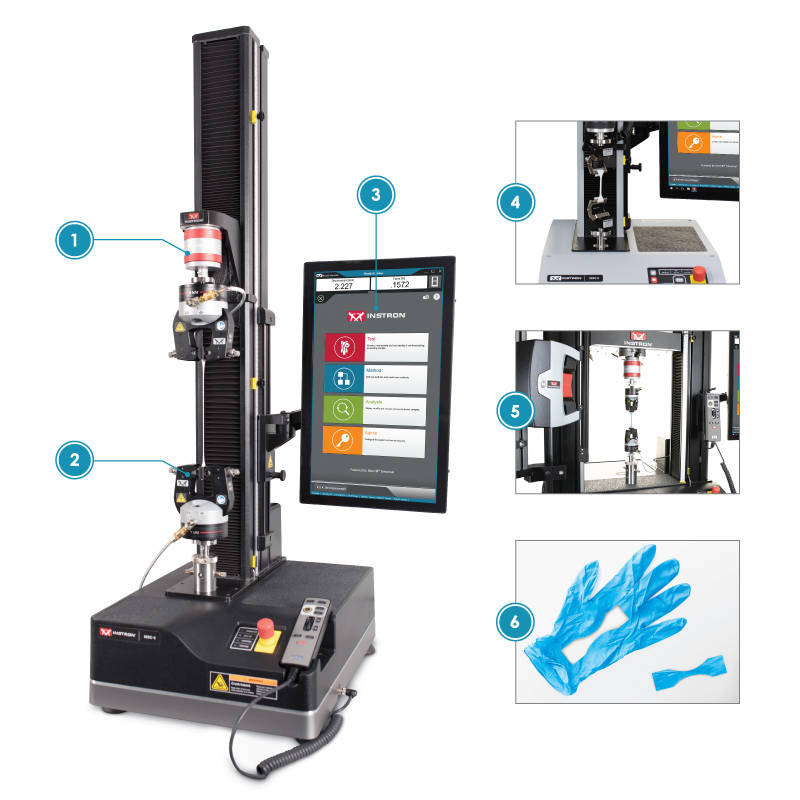
Glove Test Setup
1) Load Cell
A 500N load cell is an appropriate capacity for all glove materials.
2) Pneumatic Grips
Air pressurized grips ensure consistent clamping forces Jaw faces are easily interchangeable to ensure the correct surface texture is used for the material. Elastomeric materials like rubber gloves typically require rubber coated faces due to how thin the specimen is. The rubber coating is able to prevent slippage of the material without damaging the specimen.
3) Bluehill Software
The biomedical method suite includes preconfigured methods for EN455-2
4) Elastomeric Roller Grips
Roller grips provide a cost effective gripping solution for thin elastomers The roller grip utilizes a proportional clamping pressure which increases as more force is applied to the specimen
5) AVE 2.0
An optical non-contacting strain device can be used to ensure more accurate strain measurement
6) Specimen Preparation
All the major ASTM/ISO/EN standards require a dumbbell shaped specimen to be stamped from the palm of the glove EN 455-2 takes into consideration the potential discrepancies in thickness between the palm and the fingertips. The standard compares their thickness and uses a correction factor for the tensile strength of the speicmen.

ppe_gloves_callout-_003.jpg

Nasal Swabs

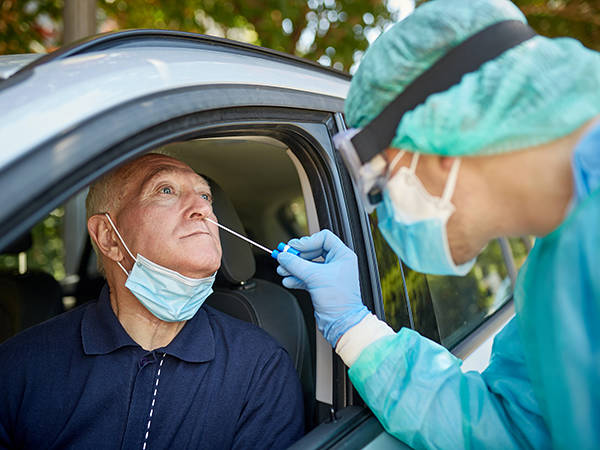
Nasopharyngeal (NP) swabs are crucial tools in the diagnosis of influenza and respiratory diseases. Despite their similar appearance, these swabs are considerably more specialized than the standard cotton swabs used for personal hygiene, using synthetic fibers for the swab staff and tiny bristles for the swab tip. In an effort to bolster the global supply, significant collaborations have occurred between 3D printer manufacturers and medical research teams, which have resulted in a massive increase in production capacity of test quality NP swabs. It is critical to perform mechanical testing to determine if the performance of the 3D printed swabs is comparable to the performance of those produced by standard methods.
nasal-swab-3-point-bend.jpg

3 Point Bend Test

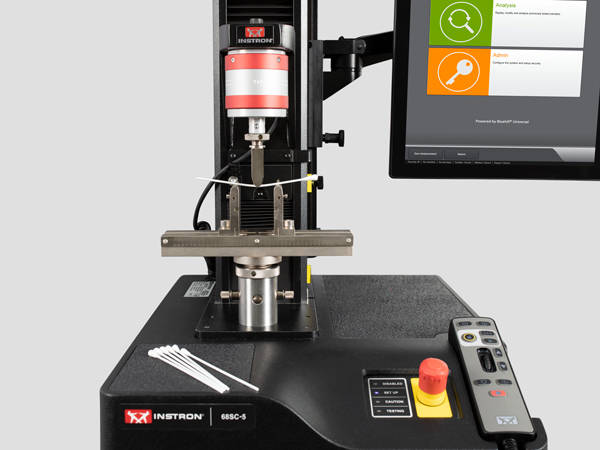
Nasal Swabs are subjected to flexural forces as they travel through the nasal passage. 3 point bend tests help characterize these stresses. It is also important to evaluate the weak point at the tip of the swab which helps achieve the correct size for transport. Instron's standard 2810-400 3 point bend fixture with 10 mm diameter anvils is ideal for these applications.

nasal-swab-cantilever-bend.jpg

Cantilever Bend

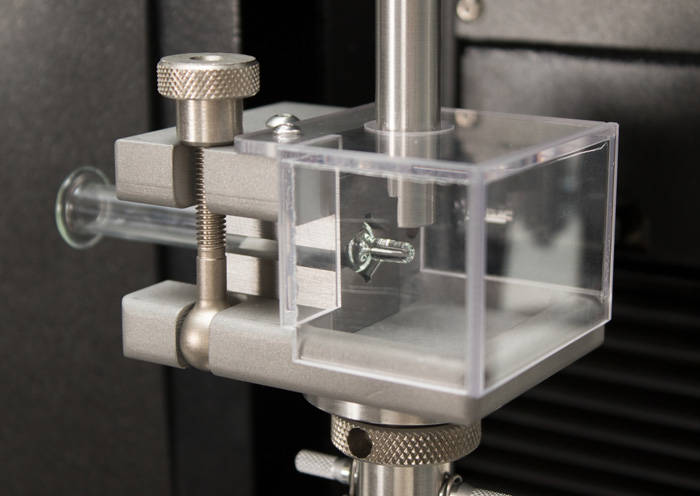
The cantilever bend test best represents the stresses seen when the swab is held during the procedure. The material needs to be flexible enough to ensure it will not fail during the test. This setup is accomplished using a component test plate and an advanced screw action grip to hold the specimen in place. Any probe can be used to deflect the tip of the swab.
nasal-swab-shear-test.jpg

Tip Shear Strength

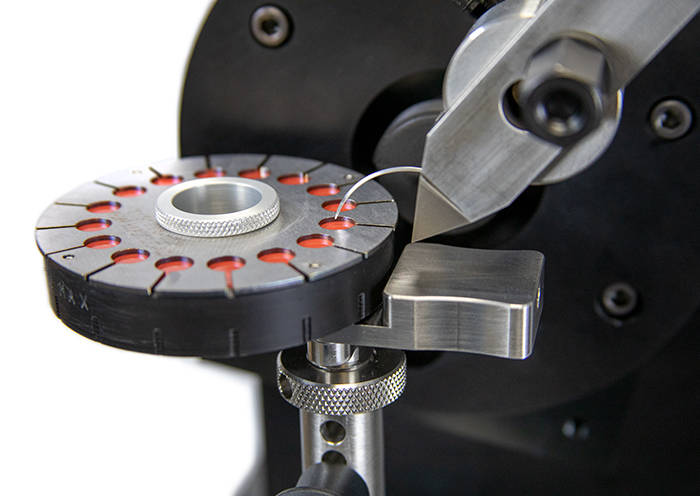
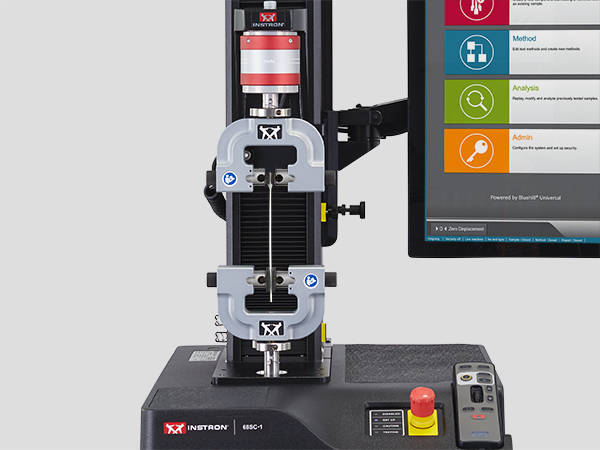
The tip of an NP swab is made of tiny bristles that allow for maximum sample collection. These bristles need to withstand shear forces as they move across the walls of the nasal passage. In order to test this property, the tip and base of the swab are clamped with advanced screw action grips to evaluate the maximum force required to break the bristles or the tip itself.

FDA Requirements in the Age of COVID-19

The Food and Drug Administration is the main regulatory body overseeing the production and distribution of PPE in the United States. The level of FDA involvement depends on the class of the device, which can range from class 1 to class 3 based on the device’s potential risk of nonconformance. Most types of PPE are labeled as class 1 devices, which have the fewest barriers to approval.

Because it can take months or even years to gain FDA approval, in times of health crisis the FDA issues something called an Emergency Use Authorization (EUA). An EUA essentially loosens the requirements for production and distribution of certain medical products to allow production to ramp up quickly. EUAs are currently being granted to manufacturers of COVID test kits, virus therapies, ventilators, respirators, and PPE. These emergency authorizations are generally granted to specific companies who apply to expedite the approval process, but they are also being released as blanket statements covering certain types of PPE so that smaller companies can also participate with minimal red tape. The EUAs include additional documentation that outline the enforcement policy for PPE manufacturing during the current public health emergency and provides criteria for quality control standards as well as the required labeling of products released under the authorization.

Watch Our PPE Testing Webinar

Intervertebral Disc Testing

Biomedical Testing

Intervertebral Disc Testing

The Challenge

Intervertebral Disc

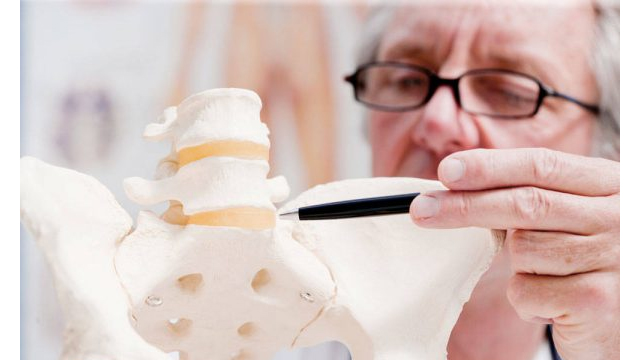
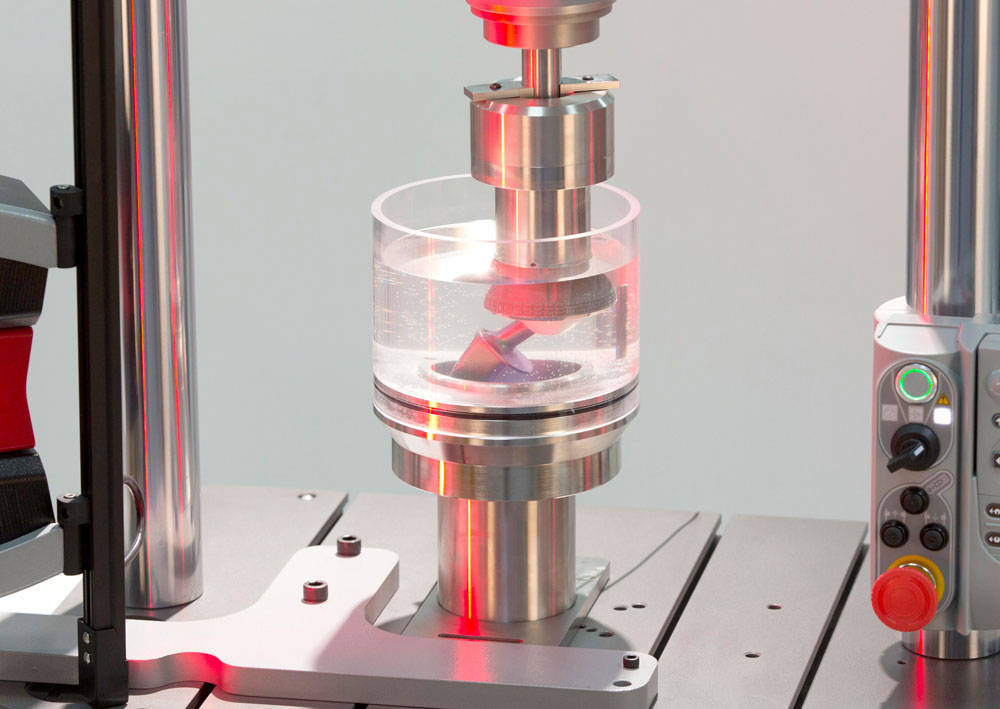
Intervertebral disc replacement is a surgical technique for the treatment of lower back pain related to degenerative disc disease. The advantage of this technique over traditional spinal fusion is that it preserves or restores motion in the spine, and has the potential to delay the onset of degeneration of healthy discs at adjacent levels in the spine. Disc prostheses are designed to be load bearing over the physiological range of disc motion, and to give years of pain-free and trouble-free operation in the body. Understanding the static and dynamic characteristics of a particular device allows manufacturers and designers to ensure their product is proven and accepted. ASTM F2346 provides a methodology for characterizing the static strength and dynamic fatigue behavior of disc prostheses. The rigorous testing regimes in this standard aim to scientifically validate any prosthesis design. With a typical test run lasting for 10 million cycles and requiring both axial and torsional loading, it is vital that a testing system copes with these performance demands and delivers the highest quality of results. In addition, the requirement to conduct these tests in a wet environment adds to the complexity of the system.

Our Solution 

Intervertebral Disc Testing

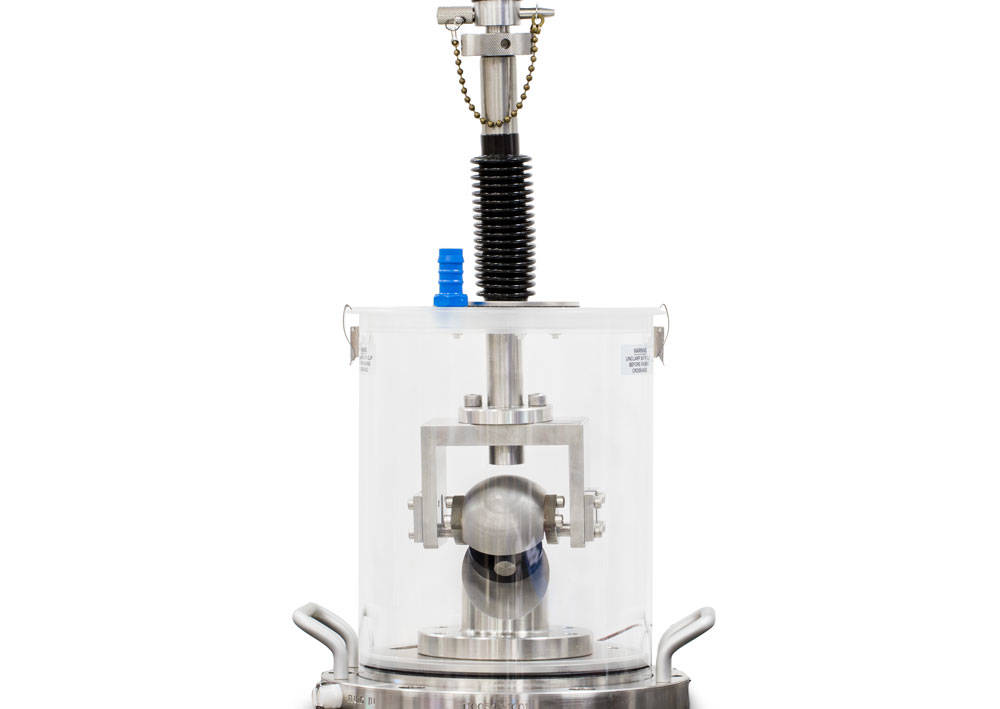
An 8874 axial-torsional system, with the addition of a temperature controller and re-circulator unit, allows device manufacturers and contract research laboratories to conduct both static and cyclic testing on a range of implant designs. The bath, in which saline flow and temperature are controlled, provides a stable environment. With the use of specialized test fixtures, the 8874 system's combined axial-torsional actuator allows for characterization to be conducted in axial compression, compression-shear, and compression-torsion test modes for both articulating discs of traditional metal-on-metal or metal-on-polyethylene design. It's also used for the next generation of prostheses, which feature an elastomeric component to give axial compliance under load that mimic the biomechanics of the natural disc.

Tensile Testing Polymeric Membranes

Biomedical Testing

Tensile Testing Polymeric Membranes

Synthetic membranes are commonly used in the biomedical field. These polymeric membranes, designed to mimic the natural filtration systems in human bodies, are being researched and developed for use in drug delivery systems, medical devices, and artificial bio-organs.

For example, synthetic membranes are used in hemodialysis, which is a method of removing waste products from the body when the kidneys fail. Blood from the patient is passed through a semi-permeable membrane that is immersed in dialysis solution and waste products such as urea in the blood diffuse across the membrane into the dialysis solution.

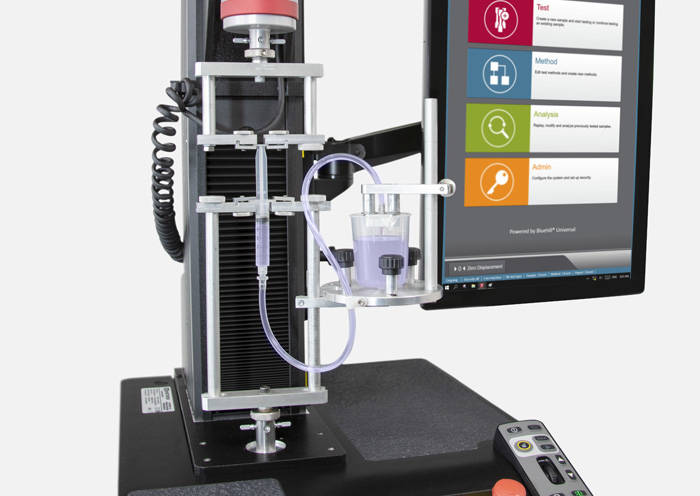
Often these synthetic membranes are moist and slippery, and consquently, tensile testing can be challenging. Similar to testing soft tissues, the gripping surface must offer sufficient friction to firmly hold onto the membrane, but also be delicate enough to avoid specimen tearing.

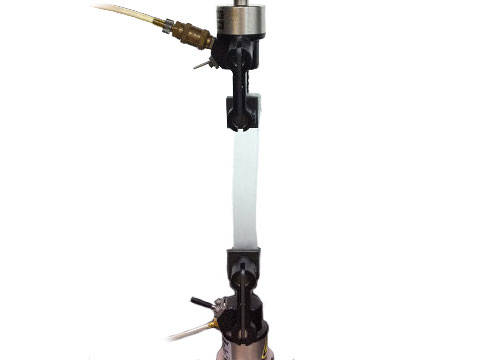
Recently, we were asked to recommend a gripping solution for testing of wet polymeric membranes. In this test, the polymeric membranes were first soaked in water for up to 20 minutes to allow them to soften and swell. The wet specimens were then tested using the 5965 dual column electromechanical machine equipped with pneumatic side action grips and rubber coated jaw faces. Since these membranes are very delicate, the clamping pressure must be carefully controlled as excessive high pressure can cause the specimen to fail prematurely when the grip closes.

Because the specimens are wet, corrosion resistant grips or fixtures should be used. Our 3 Software®Bluehill provides both the test control and results required.

Literature

Bluehill Universal Brochure

Bluehill Universal is Instron’s advanced materials testing software, designed for intuitive touch interaction and streamlined workflows. It offers pre-loaded test methods, QuickTest for rapid setup, enhanced data exporting, and Instron Connect for direct service communication. Users of Bluehill 2 and Bluehill 3 can easily upgrade to the latest version for improved performance and usability.
  • Productos
  • 02/26/2017
  • 3.76 MB

Evaluation of Radial Forces from Embolic Filters

Biomedical Testing

Evaluation of Radial Forces from Embolic Filters

Radial Strength Testing of Stent Grafts and Vascular Devices

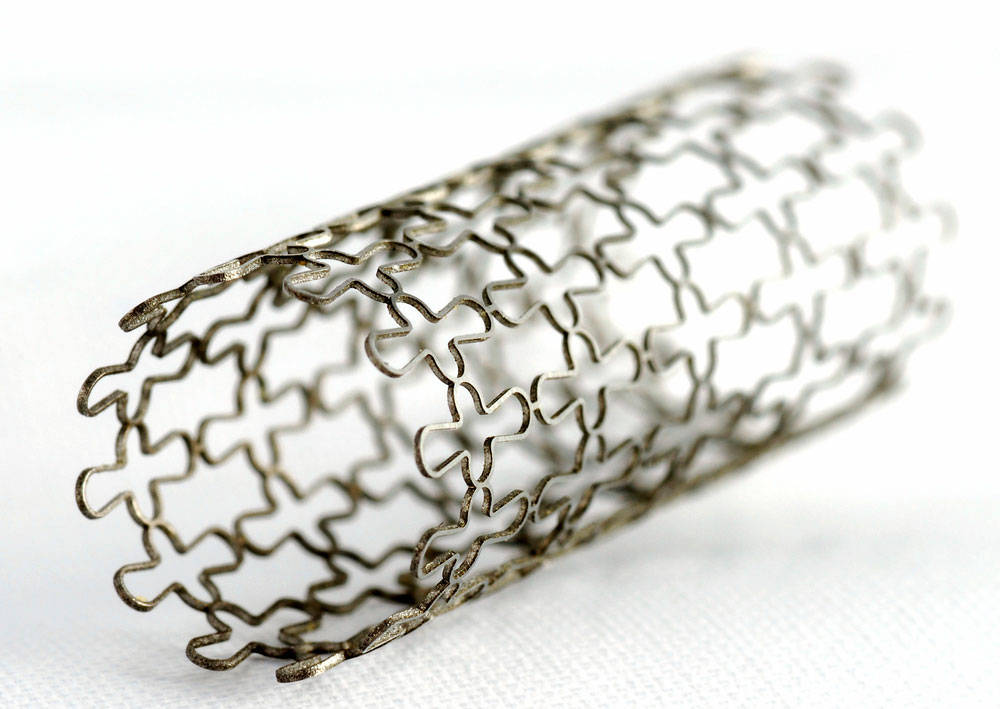
Embolic filters are used within a variety of interventional procedures to capture debris resulting from the deployment of a medical device, like a stent. The stent is used to open arterial paths that may be occluded by plaque. Upon placement of the stent, dislodged plaque (or embolic material) can potentially be responsible for heart attacks, strokes, kidney failure, or death. Firm placement of the embolic filter is a critical requirement for successful procedures.

One of the most critical parameters for proper utilization of the filter is the radial forces it imparts on the arterial wall. In particular, the chronic radial force that the filter imparts over time helps to ensure that the device remains in place as intended. This fit ensures that all material is captured before heading further down the arterial pathways.

The RX575 system has the fidelity to measure the small radial expansion forces of the embolic filter. The unique segment design of the fixture results in small frictional forces, which ensures that your data will present clean results from the radial tests. The radial fixture mounts to electromechanical instruments, as well as into a fluid bath for accurate simulation of body temperatures. Additionally, the fixture provides the capability for tensile tests to evaluate resistance to tearing properties during deployment.

Bluehill® Software provides an interface to run tests, to evaluate the radial strength, and to generate standard reports that can be submitted for regulatory submissions.

Literature

3400 Series Universal Testing Systems Brochure

Instron 3400 Series universal testing systems for tensile, compression, bend, and other material property tests.

  • Productos
  • 06/27/2022
  • 2.69 MB

6800 Series Premier Testing Systems Brochure

Instron 6800 Series Universal Testing Systems provide unparalleled accuracy and reliability. Built on a patent-pending Operator Protect system architecture with an all-new Smart-Close Air Kit and Collision Mitigation features, the 6800 Series makes materials testing simpler, smarter, and safer than ever before.

  • Productos
  • 02/10/2020
  • 4.15 MB

Ensayo de adhesivos para tejidos en la fijación de ángulo variable.

Biomedical Testing

Ensayo de adhesivos para tejidos en la fijación de ángulo variable.

Los adhesivos para tejidos se utilizan ampliamente en la industria biomédica para aplicaciones tales como vendajes, apósitos secundarios, y el cierre de heridas. Aunque no hay normas específicas para los ensayos con ángulo variable, existen normas similares ASTM para este método de ensayo son: ASTM F2255, F2256, F2258 y F2458. La fuerza adhesiva de estos productos debe ser claramente definida antes de un uso en un entorno clínico. Si el adhesivo no es lo suficientemente fuerte, el producto puede dar lugar a una infección o mala cicatrización. Si el adhesivo es demasiado fuerte, el tejido subyacente puede dañarse si se retira.

Se realizó un ensayo de adhesivo mediante el uso de un accesorio de ángulo variable que simula la acción de pelado del adhesivo en un paciente. El bastidor utilizado fue un equipo electromecánico 3345 configurado con una célula de carga 50 N, una mordaza neumática de acción lateral de 250 N con mandíbulas metálicas de 25 mm x 25 mm, y el accesorio de ángulo variable. El ángulo del accesorio se fijó a 135 °, para simular mejor la línea de tracción que se observa durante el uso normal del producto adhesivo. Durante el ensayo se utilizó cuero como sustrato para simular mejor las propiedades superficiales de la piel humana.

El Modulo de pelado, desgarramiento y fricción del software Bluehill ®2 es altamente recomendable para este tipo de prueba. Este módulo de software permite la medición de la carga pico, la carga media y la carga media por anchura, que son los cálculos más comúnmente utilizados.

Literatura

Folleto de sistemas de ensayo universales serie 3400

Sistemas de ensayo universales Instron Serie 3400 para ensayos de tracción, compresión, flexión y otras propiedades de materiales.

  • Productos
  • 06/27/2022
  • 2.31 MB

Bluehill Universal Brochure

Bluehill Universal is Instron’s advanced materials testing software, designed for intuitive touch interaction and streamlined workflows. It offers pre-loaded test methods, QuickTest for rapid setup, enhanced data exporting, and Instron Connect for direct service communication. Users of Bluehill 2 and Bluehill 3 can easily upgrade to the latest version for improved performance and usability.

  • Productos
  • 02/26/2017
  • 3.76 MB

Ensayos de Impacto en Implantes Ortopédicos

Biomedical Testing

Ensayos de Impacto en Implantes Ortopédicos

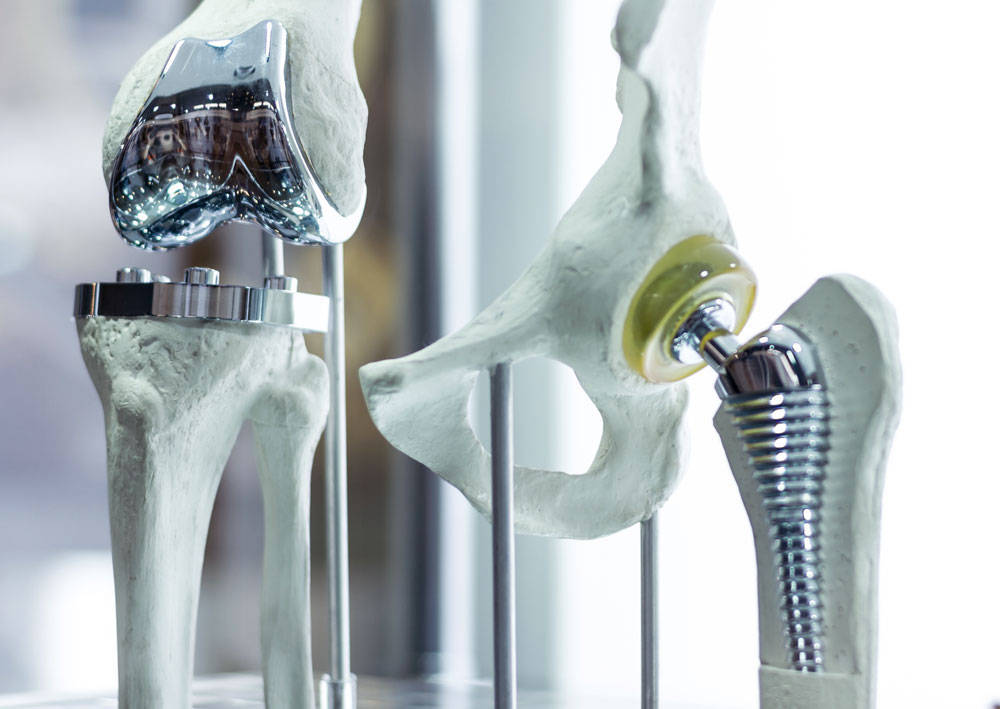
Una dolencia llamada osteoartritis es causada cuando existe un momento mínimo en una articulación en el cuerpo humano. La falta de momento en la articulación puede causar daños o disfunciones. Los implantes ortopédicos están diseñados para sustituir la articulación dañada y aumentar la movilidad de laparte afectada en el cuerpo humano. Por nombrar algunos, implantes utilizado para cadera, articulaciones de la rodilla, hombro o el codo comúnmente están hechos de acero inoxidable. Es importante para los fabricantes de estos implantes ortopédicos ensayar sus componentes (varios implantes) para caracterizar la resistencia al impacto de su producto.

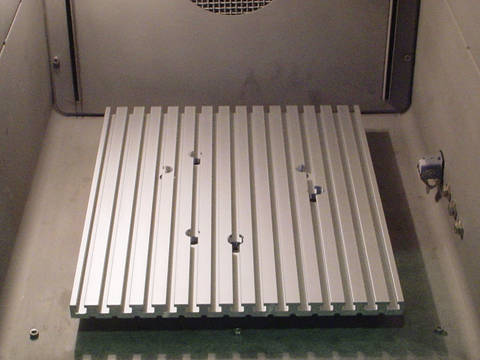
Instron 9450 es una buena opción para un ensayo de tales requisitos. Puesto que los implantes de diversas partes del cuerpo son de diferentes formas, el ensayo debe realizarse con varios accesorios personalizados. Se utilizó una placa ranurada en T que se atornilla a la parte inferior de la 9450. Un elemento con un implante de rodilla fue montado en la placa de la ranurada en T en la base de la torre. Una célula de cargas extensométricas de 45 kN fue utilizado para impactar el implante de rodilla. Un Sistema de Adquisición de Datos (DAS) y el Software Bluehill Impact fueron utilizados junto a una máquina de impacto por caída líbre para registrar los datos de fuerza versus velocidad y analizar las prestaciones ante el impacto.

Alternativamente puede utilizarse una placa de uso general, como se ve en la imagen, en lugar de una placa ranurada en T. Estas placas versátiles dan flexibilidad a los fabricantes para montar una amplia gama de accesorios personalizados según sus propios requisitos. Tales pruebas de impacto pueden ser personalizados hasta el punto donde puedan replicar los impactos de baja y alta velocidad de la vida real durante los procedimientos quirúrgicos reales.

Nota: Esta configuación de ensayo de este cliente es confidencial por lo que no se muestra en esta nota sobre aplicaciones.

Literatura

9400 Series Drop Tower Brochure

Instron Drop Towers are used to develop, fine tune, and validate material models. Testing materials under real impact conditions is a crucial step prior of product design. Using the characterization data obtained with the Instron 9400, coupled with customer supplied high-speed video, you can have confidence in your results and deliver new materials to your customers faster. Our Drop Tower impact systems, fixtures, and tups are designed to meet a wide range of applications and testing standards including: ISO, ASTM, ANSI, Airbus, Boeing, BSI, DIN, EN, FDA, Ford, GM, JIS, NASA, GOST, and more.

  • Productos
  • 02/05/2020
  • 763.1 KB

9400 Series Dashboard Brochure

Bluehill® Impact is built from the ground up for touch interaction. The Operator Dashboard features large touchpoints to make the user experience simpler and smarter. Easy-to-understand icons and workflows make it easy to train new or experienced users, simplify operator training, and allow you to start testing even faster than ever before

  • Productos
  • 08/01/2019
  • 2.35 MB

Comportamiento de impacto sobre fármacos en formato pastilla

Biomedical Testing

Comportamiento de impacto sobre fármacos en formato pastilla

Support for pharmaceutical tablet impact testing

Las pastillas suelen tener un recubrimiento para facilitar su deglución, liberar de manera gradual la medicación, o estampar la identificación o la marca. Estos recubrimientos también pueden ayudar a alargar la vida del producto en condiciones ambientales negativas, tales como la exposición a la luz, temperatura, humedad y carga mecánica. En particular, en el proceso de fabricación y embalaje, los revestimientos de los comprimidos estás sujetos a impactos que pueden causar daños.

Los ensayos de impacto pueden proporcionar datos valiosos para los fabricantes con la finalidad de conocer el rendimiento de los materiales de revestimiento o el desarrollo de materiales nuevos. El fabricante puede implementar también un control de calidad que permita validar el proceso en curso utilizando los datos obtenidos por un ensayo de impacto.

Para realizar estos ensayos una torre de caída INSTRON 9440, equipada con un sensor piezoeléctrico de baja carga Tup (0,45 kN o 4,5 kN), inserto semiesférico o plano de ½ pulgada y el software Bluehill Impact son ideales para la prueba de píldoras y tabletas farmacéuticas. Para la fijación, recomendamos utilizar una placa de metal rígida, plana, que se puede asegurar fácilmente al área de la mesa.

Esta solución de ensayo de impacto es muy adecuada para determinar las características de resistencia al impacto de comprimidos farmacéuticos, así como la consistencia del lote o los puntos de daño incipiente. Estas características pueden estar, a su vez, relacionadas con el material de recubrimiento utilizado en el producto. Al comprender como el recubrimiento puede fortalecer o debilitar las píldoras se podrán realizar mejoras en el producto.

Literatura

9400 Series Drop Tower Brochure

Instron Drop Towers are used to develop, fine tune, and validate material models. Testing materials under real impact conditions is a crucial step prior of product design. Using the characterization data obtained with the Instron 9400, coupled with customer supplied high-speed video, you can have confidence in your results and deliver new materials to your customers faster. Our Drop Tower impact systems, fixtures, and tups are designed to meet a wide range of applications and testing standards including: ISO, ASTM, ANSI, Airbus, Boeing, BSI, DIN, EN, FDA, Ford, GM, JIS, NASA, GOST, and more.

  • Productos
  • 02/05/2020
  • 763.1 KB

9400 Series Dashboard Brochure

Bluehill® Impact is built from the ground up for touch interaction. The Operator Dashboard features large touchpoints to make the user experience simpler and smarter. Easy-to-understand icons and workflows make it easy to train new or experienced users, simplify operator training, and allow you to start testing even faster than ever before

  • Productos
  • 08/01/2019
  • 2.35 MB

Radial Force Evaluation of Stent Grafts

Biomedical Testing

Radial Force Evaluation of Stent Grafts

Stent grafts are used to treat a wide variety of peripheral arterial issues, as well as abdominal and aortic pathologic conditions like abdominal aortic aneurysms (AAA). The success of endovascular stent grafts for AAA’s has provided motivation to adapt similar technology for descending thoracic aortic aneurysms (TAA’s). Survival rates for untreated and traditionally treated (through complex thoracic surgeries) aneurysms are typically quite poor.

Advantages of stent grafts include shorter operative time, avoidance of major thoracic or thoracoabdominal incisions, and significant reductions in morbidity and mortality. Successful surgery requires the accurate placement of the stent graft to ensure it does not move, especially in upper descending thoracic aorta cases.

Typically, secure placement for stent grafts is a function of the proper selection and sizing since physiological movements of the aorta can be significant. Additionally, stent grafts have much larger diameters than coronary stents (30+ mm versus 2-3 mm). Evaluating the radial strength of a stent graft helps manufacturers to ensure efficacy and reliability of the medical device when implanted in vivo.

Instron partners with Machine Solutions Inc. (MSI) to utilize either a RX575 or RX675 stent iris on an Instron system. The fixture can also be customized and used for special specimen types to provide radial strength and stiffness over the entire graft or the securing graft ends. The control software to operate MSI’s RX fixture on an Instron system is standard Bluehill® 3 and TestProfiler. Although room-temperature testing provides excellent comparative results, the system can also be configured with a chamber to provide simulation of body temperature.

Literature

6800 Series Premier Testing Systems Brochure

Instron 6800 Series Universal Testing Systems provide unparalleled accuracy and reliability. Built on a patent-pending Operator Protect system architecture with an all-new Smart-Close Air Kit and Collision Mitigation features, the 6800 Series makes materials testing simpler, smarter, and safer than ever before.

  • Productos
  • 02/10/2020
  • 4.15 MB

Implantable Devices

Biomaterials

Dental

Orthopedics

Soft Tissue Testing

Biomedical Testing

Soft Tissue Testing

The Challenge

Skin

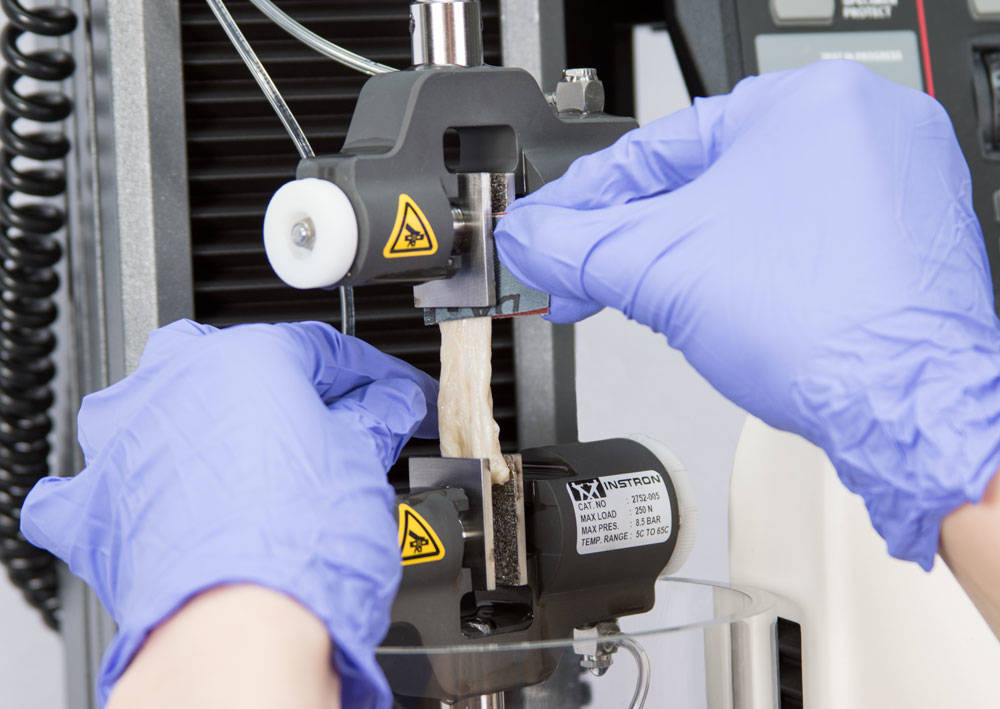
Testing soft tissues, such as skin, tendons, ligaments, and others, presents many challenges. Specimens of this type are delicate; hence they break at low forces. Gripping soft tissues can also be problematic given that these specimens are small, slippery, and compliant in nature. In addition, soft tissues are viscoelastic and often require accurate elongation or strain measurement to properly understand the material properties. Typically, in vivo conditions are needed to test soft tissues, which calls for the test to be performed at body temperature and in a hydrated state. This requires the testing equipment and fixture to be corrosion resistant and "waterproof" to avoid damaging the sensitive electronics of the testing system.  

Our Solution 

Soft Tissue Testing

For testing at physiological conditions, the Instron® BioBath is an ideal solution for keeping a specimen fully hydrated in a saline solution and at 37°C. The BioBath uses a closed-loop temperature control measurement, which can be fed directly into the test system's software to accurately track specimen temperature, in addition to mechanical test data. Pneumatic grips are recommended for consistent clamping pressure that the user can vary up to 90 PSI. A high friction surface is often needed to grip slippery biomaterials to avoid specimen slipping. To avoid this, we recommend using a metallic high friction finish known as surfalloy on the grip face, but grit sandpaper is also a viable option. A stainless steel tray, such as the BioTray, can help protect the system's electronics from damage in the case of spills or messy specimens.

Ensayos de consumibles médicos


Biomedical Testing


Ensayos de consumibles médicos

ENSAYOS DE CONSUMIBLES MÉDICOS

Una guía para consumibles de un solo uso, como EPI, instrumentos quirúrgicos y productos de cierre de heridas
Los consumibles médicos representan la categoría más amplia de ensayos biomédicos e incluyen una gran variedad de productos de un solo uso, como instrumentos quirúrgicos, EPI, productos de cierre de heridas, productos para la recogida de muestras y más. Los entornos sanitarios dependen de los productos de un solo uso para reducir la incidencia de infecciones adquiridas en el hospital y garantizar la seguridad del paciente. Estos productos suelen ser dispositivos médicos de clase I o II de la FDA que, pese a tener requisitos de ensayo menos estrictos que los productos de mayor riesgo, a menudo se fabrican en cantidades tan elevadas que deben adoptarse medidas específicas para respaldar los ensayos mecánicos de alto volumen. Para compensar los mayores volúmenes, el rendimiento y la repetibilidad se convierten en requisitos de ensayo críticos, que se abordan mediante utillaje especializado, flujos de trabajo eficientes para el operario y un software intuitivo. Otro componente crítico dentro de esta categoría es el embalaje de grado médico utilizado para los productos terminados, que tiene su propio conjunto de requisitos de ensayo. Para obtener más información sobre otras aplicaciones biomédicas, visite nuestra página de Industria biomédica.
guante médico

ESPECTRO DE ENSAYOS DE PRODUCTO

La evaluación de estos dispositivos puede realizarse en muchos puntos a lo largo de los procesos de desarrollo y producción del producto, lo que significa que la muestra real de ensayo puede variar en complejidad, desde materias primas hasta subconjuntos y productos terminados. En la fase de materia prima, la metodología de ensayo suele ser mucho más prescriptiva, con normas bien definidas y soluciones de utillaje conocidas. En muchos casos, pueden utilizarse mordazas de tracción o platos de compresión estándar para evaluar correctamente distintos materiales y ayudar a los ingenieros a tomar decisiones fundamentadas sobre la selección de materiales para su producto. En el nivel de ensayo de componentes, la geometría única del producto genera una mayor necesidad de utillaje personalizado. El uso de mesas XY o placas de ensayo roscadas proporciona a los usuarios la flexibilidad necesaria para adaptar su sistema a muchos tipos diferentes de componentes. Estos útiles también permiten garantizar que el eje de carga esté correctamente alineado con la característica de interés del producto. Es posible que los componentes deban evaluarse de muchas formas distintas para caracterizar plenamente el rendimiento del dispositivo. Una evaluación completa del rendimiento también puede requerir una valoración cualitativa del modo de fallo, además de los datos medidos de carga y desplazamiento. Las testcams integradas pueden ser útiles para proporcionar información visual del evento de fallo sincronizada con los datos del ensayo.

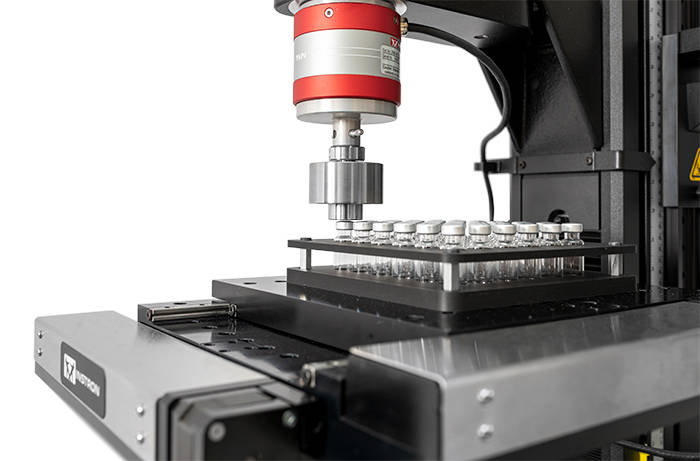
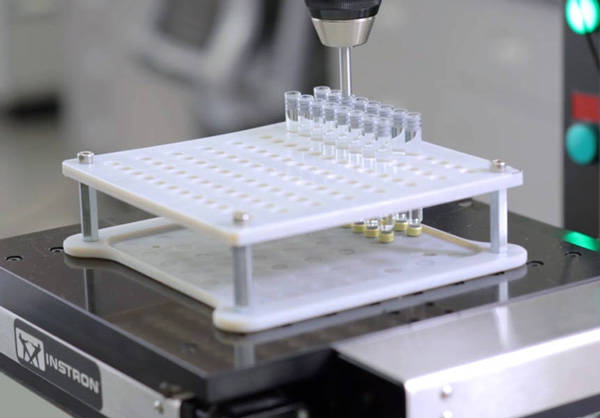
POTENCIAL DE AUTOMATIZACIÓNEspecialmente en el contexto de una pandemia global, se ha demostrado que la demanda de consumibles médicos, en particular de EPI, es impredecible. Los cambios drásticos en el rendimiento de los ensayos de estos productos se han convertido en la norma. Integrar la automatización en un programa de ensayos mecánicos puede aportar mejoras en el rendimiento, la repetibilidad y la calidad global del producto. En la mayoría de los casos, el ensayo de consumibles médicos es de tipo “pick and place”, y requiere una interacción mínima del operario. Esto lo convierte en un candidato perfecto para automatizar mediante robots colaborativos o etapas XY automáticas. La automatización también puede incluir la integración de su equipo en los sistemas de gestión de calidad existentes, lo que permite crear una retroalimentación de bucle cerrado dentro de su proceso de fabricación. Esta retroalimentación puede ayudar a minimizar los residuos en el proceso de producción, utilizando los datos mecánicos recopilados para realizar cambios en tiempo real en los parámetros de producción aguas arriba.

automatización de ensayos biomédicos

EMBALAJE

Los productos médicos requieren un embalaje hermético y robusto para garantizar que la esterilización del dispositivo se mantenga hasta el momento de uso. Este embalaje es fundamental para evitar cualquier contaminación, que en última instancia podría provocar que el paciente contraiga una infección. Para verificar la resistencia del sellado del embalaje, la mayoría de los clientes ensayan conforme a ASTM F88, que proporciona los criterios de ensayo para evaluar el sellado. Los principales retos son la preparación de las probetas y la recopilación de datos. Existen muchos útiles de preparación de probetas para producir de forma uniforme las tiras de 1 pulgada de ancho necesarias según la norma. El ensayo de resistencia del sellado dará como resultado una curva no uniforme con cambios instantáneos, lo que requiere una tasa de captura de datos lo suficientemente alta como para garantizar que se registre el evento con precisión. Si la tasa de captura de datos es demasiado baja, la curva de carga podría redondearse y dar lugar a una resistencia media del sellado artificialmente baja. Las mordazas neumáticas con caras planas son ideales para sujetar de forma repetible las colas de la probeta sin dañar el material en modo alguno.

ENFOQUE EN LA SOSTENIBILIDAD

Los hospitales están cada vez más preocupados por los problemas de residuos derivados de su consumo de productos médicos de un solo uso. El desarrollo de bioplásticos es una industria en auge con una fuerte necesidad de mercado, y actualmente se están elaborando normas para abordar una gama de propiedades de los biopolímeros en numerosas aplicaciones sanitarias. Mientras tanto, muchas normas típicas de plásticos, como ASTM D638 e ISO 527, han actualizado su redacción para incluir bioplásticos y plásticos impresos en 3D. Los requisitos de ensayo de estas normas son bien conocidos y, al utilizarlas para la evaluación, los investigadores pueden distinguir claramente entre las propiedades de los materiales derivados del petróleo y las de los plásticos de base biológica. Es posible que los investigadores deban realizar ensayos de tracción, compresión, flexión, torsión y otras formas de ensayo en estos nuevos materiales sostenibles para caracterizarlos adecuadamente. Los centros de I+D necesitan disponer de las herramientas necesarias para realizar estos análisis exhaustivos y superar los obstáculos normativos que impondrán la FDA y otras organizaciones internacionales.

Pruebas de dispositivos y contenedores de administración de fármacos


Biomedical Testing


Pruebas de dispositivos y contenedores de administración de fármacos

Pruebas de dispositivos y contenedores de administración de fármacos

Una guía para el ensayo de jeringas, cartuchos y viales

La demanda global de productos farmacéuticos está en aumento, impulsada por mayores tasas de incidencia de enfermedades crónicas, una población envejecida y la amenaza de futuras pandemias. Los pacientes y los médicos esperan que los contenedores de administración de fármacos estén libres de defectos, capaces de asegurar el medicamento durante su transporte y despliegue. Los fallos pueden suponer un riesgo grave para el paciente o resultar en la eliminación de grandes cantidades de suministros muy necesarios. Por estas razones, los contenedores y dispositivos de administración de fármacos requieren una evaluación rigurosa, impuesta por los organismos reguladores globales, para garantizar que puedan funcionar según lo previsto. Existen múltiples tipos de contenedores de fármacos diseñados para almacenar y administrar medicamentos bajo diversas circunstancias. Esta página diferencia los distintos contenedores e identifica los objetivos y desafíos de ensayo únicos asociados a cada uno. Para obtener más información sobre otras aplicaciones biomédicas, visite nuestra página de la Industria Biomédica.

Jeringa

Prueba de jeringas

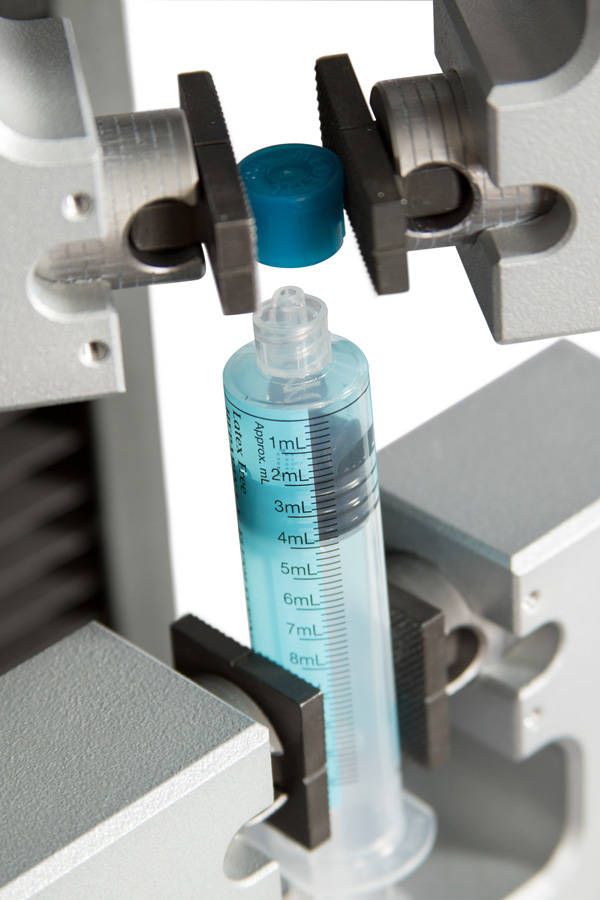
Dado que son responsables de administrar muchos fármacos diferentes en muchos entornos distintos, las jeringas se fabrican en varias variedades. Las jeringas de vidrio representan el mayor porcentaje del mercado, seguidas de cerca por las de plástico, con un mercado más pequeño para las jeringas de acero inoxidable. A pesar de su simplicidad inherente, hay cientos de consideraciones de diseño que deben tenerse en cuenta al crear estos productos, ya que sirven tanto como contenedores como dispositivos de administración de fármacos. El ensayo mecánico tiene como objetivo abordar muchas de estas y ayudar a los fabricantes a lograr un rendimiento óptimo y mantener la calidad de producción.

La usabilidad del dispositivo es una de las consideraciones de diseño más importantes. Para las jeringas, esto significa la facilidad de dispensar fluido utilizando el émbolo. Lograr un rendimiento óptimo puede requerir modificaciones en las tolerancias geométricas del cilindro, la rugosidad de la superficie interior, los procesos de siliconización, la geometría del tope del émbolo y más. Los fabricantes deben apoyarse en el ensayo mecánico durante el proceso de I+D para calificar y evaluar todas las decisiones de diseño.

Otra consideración importante son los mecanismos de cierre y seguridad del dispositivo. Algunas agujas de vidrio tienen agujas fijas incrustadas en el cono del cilindro y requieren un protector de aguja, mientras que la mayoría de las jeringas utilizan una conexión Luer para acoplar un capuchón y una aguja separada. Los mecanismos de seguridad pueden clasificarse como activos o pasivos, dependiendo de la interacción del usuario. La seguridad activa requiere una acción distinta del operador, como colocar un protector sobre una aguja expuesta. Los mecanismos pasivos suelen utilizar un muelle para ocultar o cubrir la aguja después de su uso y evitar lesiones por pinchazo. En ambos tipos de mecanismo, uno de los principales desafíos de ensayo es la alineación. Los errores de concentricidad pueden afectar a los valores de fuerza y par de la medición. Las mordazas autocentrantes son ideales para estas aplicaciones y eliminan las oportunidades de error del operador.

Tanto las jeringas de vidrio precargadas como los cartuchos pueden colocarse directamente en dispositivos automáticos de administración de fármacos. Estos dispositivos están diseñados para activar mecánicamente la administración de fármacos después de que un paciente presione un botón o active un protector de aguja. Durante la activación, un muelle cargado empuja un émbolo hacia abajo en el contenedor y dispensa fluido. Los dispositivos automáticos de administración de fármacos aumentan drásticamente la facilidad de uso para el paciente, pero también presentan una complejidad de diseño adicional que requiere la evaluación de muchos subcomponentes y funcionalidades. Muchos clientes abordan esto con múltiples sistemas de ensayo, cada uno designado para una evaluación diferente, como el volumen eyectado o la profundidad de inserción de la aguja. Los fabricantes pueden mejorar el rendimiento, reducir la influencia del operador y simplificar los flujos de trabajo de ensayo utilizando una solución integral única para realizar todas las pruebas funcionales requeridas.

Ensayo de extracción del capuchón de la jeringa

Ensayo de cartuchos

Ensayo de cartuchos en etapa XY automatizada

Cartridge Testing on Automated XY Stage

Los cartuchos se utilizan más comúnmente en sistemas automatizados de administración de fármacos, incluyendo autoinyectores, inyectores tipo pluma y dispositivos vestibles. Presentan ventajas únicas para las empresas farmacéuticas, siendo más sencillos de fabricar que las jeringas y más compactos para una mayor eficiencia de almacenamiento. También son de diseño simple, consistiendo en un contenedor de vidrio de borosilicato con un sello y un tapón elastoméricos, encerrados por un capuchón de aluminio. El cartucho depende de dos mecanismos externos para administrar el medicamento: una acción manual o automatizada para accionar el émbolo, y una aguja acoplable para canalizar el medicamento al cuerpo. La mayoría de los ensayos en cartuchos evalúan lo primero, asegurando que las fuerzas necesarias para dispensar fluido se puedan lograr dentro del dispositivo.
Al igual que con las jeringas, la alineación es un desafío principal para lograr resultados de ensayo repetibles. Las preocupaciones de alineación pueden mitigarse utilizando fijaciones autoalineables y la capacidad de realizar ajustes XY en el espacio de trabajo. La geometría de los cartuchos presenta una diferencia clave en la fijación requerida para el ensayo. No tienen aletas para los dedos, lo que significa que toda la fuerza de agarre debe aplicarse a los lados del contenedor. Las fuerzas de sujeción deben calibrarse para evitar daños al contenedor, que está hecho de vidrio. El uso de un inserto para soportar la parte inferior del cartucho puede limitar la aplicación de cargas laterales y resultar en una mejor repetibilidad en el ensayo.

Ensayo de viales

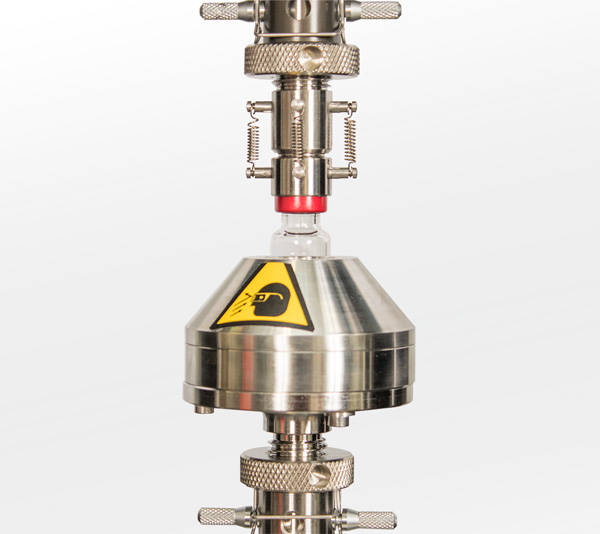
Los viales son contenedores de almacenamiento para productos farmacéuticos y no forman parte de la administración real del fármaco. Generalmente consisten en un contenedor de vidrio, un sello de goma y un capuchón de aluminio engarzado. Se utiliza una jeringa para perforar el sello de goma y extraer la dosis precisa requerida para la administración. La integridad del cierre del contenedor (CCI) es una preocupación para los fabricantes de viales, una serie de evaluaciones para validar que el cierre evita que las partículas externas contaminen el producto. Estas pruebas en sí mismas no son de naturaleza mecánica y utilizan medios eléctricos o presurizados para determinar la integridad del cierre.

Los sistemas Instron ayudan a proporcionar evidencia empírica que identifica los parámetros mecánicos clave para el sello elastomérico y el procedimiento de engarce que se correlacionan con el rendimiento de la CCI. La Fuerza de Sellado Residual (RSF) es una de las pruebas principales que se realizan, determinando la fuerza requerida para superar las fuerzas internas del sello elastomérico, que mantiene el contacto entre el vial y el capuchón. Esta prueba es vital para evaluar las muchas variables que pueden afectar en última instancia a la CCI:

  • Tiempo desde el sellado
  • Temperatura de almacenamiento
  • Humedad de almacenamiento
  • Diseño del tapón
  • Material del tapón
  • Técnica de engarce

Los principales desafíos relacionados con el ensayo de RSF son asegurar la alineación adecuada del dispositivo y la evaluación del punto de RSF en la curva de carga-desplazamiento. Si bien muchos operadores seleccionarán manualmente el punto en la curva, el software Bluehill Universal® permite al operador añadir mediciones de primera y segunda derivada, lo que permite el reconocimiento y la selección automáticos de los puntos de inflexión asociados con la RSF.

Se realizan pruebas adicionales relacionadas con el uso médico y el etiquetado. El grupo de productos personalizados de Instron ha diseñado fijaciones especializadas para retirar de forma repetible el capuchón de plástico y despegar la etiqueta, ya que es importante asegurar que la fuerza adhesiva se pueda mantener a través de temperaturas de almacenamiento cálidas, frías o fluctuantes.

Ensayo de fuerza de sellado residual

Mejora de la eficiencia y la repetibilidad

A medida que se avanza hacia la comercialización de un producto, la cantidad de ensayos aumentará inevitablemente. La eficiencia y la repetibilidad son dos parámetros críticos que pueden verse afectados por un mayor volumen. Para abordar esto, existen muchas soluciones que se pueden utilizar para mejorar el flujo del proceso y reducir los errores del operador. Estas soluciones pueden incluir:

Escenario del mundo real: El ensayo de verificación del diseño, por ejemplo, es siempre el empuje final antes de recibir la aprobación del producto, pero puede ocurrir solo unas pocas veces al año. Asegurar que el laboratorio tenga el personal adecuado para completar todos los ensayos necesarios y producir la documentación y el análisis puede ser un desafío. La utilización de la automatización puede ayudar a afrontar estos desafíos, eliminando la necesidad de que los operadores estén frente al sistema y, en su lugar, trabajen simultáneamente en otras tareas requeridas. La automatización, como el cobot CT-6, puede ayudar a optimizar la eficiencia del laboratorio, permitiendo a un gerente de laboratorio distribuir adecuadamente la carga de trabajo y cumplir con los plazos ajustados asociados con el lanzamiento del producto.

Sistema Cobot para ensayo de jeringas

FDA 21 CFR Part 11 Compliance

Biomedical Testing

Materials Testing Lab

FDA 21 CFR PART 11 COMPLIANCE FOR MECHANICAL TESTING LABS

What Is Required and How You Can Achieve It

What is FDA 21 CFR Part 11?

21 CFR Part 11 is a regulation that applies specifically to electronic documentation provided to the FDA. First published in 1997, the original intent was to create a framework that ensured electronic means of recording, approving, and submitting documents was effectively equivalent to handwritten paper documents in terms of security. The objective was to ensure that companies were capable of using electronic record keeping technology as it became more commonly utilized within the industry.

Who Does 21 CFR Part 11 Apply To?

FDA 21 CFR Part 11 applies to any pharmaceutical or medical device manufacturer submitting product documentation to the FDA for approval for sale within the United States or as part of any post-market surveillance activities.

What are the Requirements of 21 CFR Part 11?

Regulatory requirements mainly apply to the processes surrounding electronic record creation, retention and submission. The regulation specifically discusses the need for software validation, use of electronic signatures, a searchable time-stamped audit trail, and access to traceable record copies.


INSTRON PRODUCTS


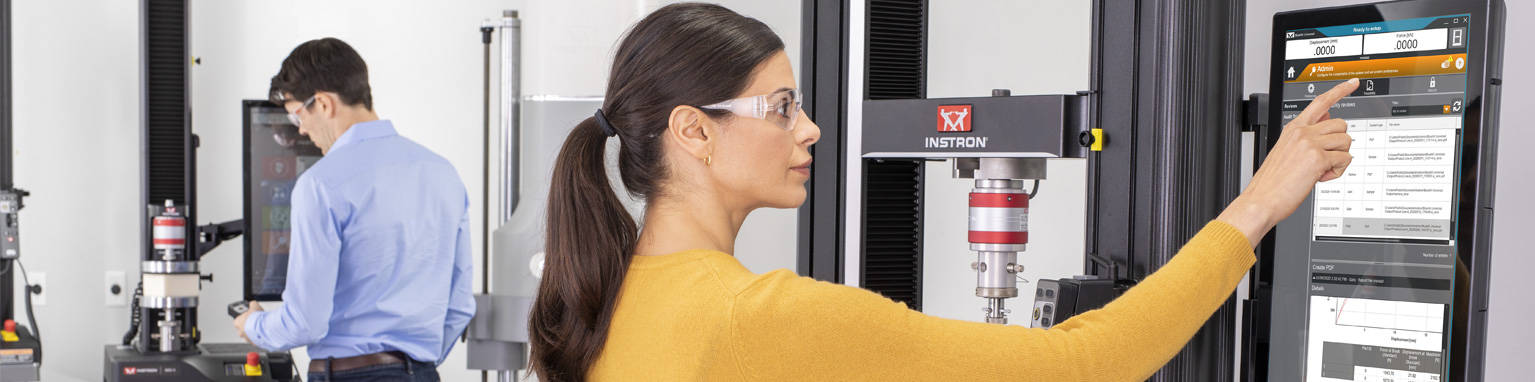
Compliance is best achieved through a partnership between a manufacturer and its equipment suppliers, where the equipment supplier provides the tools to effectively and efficiently integrate the equipment into the manufacturer's quality management system. Instron's Bluehill® Universal software, compatible with static universal testing systems, offers several features designed to aid in 21 CFR Part 11 compliance. Bluehill Central lab management software allows for centralized management of multiple instances of Bluehill Universal, further simplifying the processes necessary for compliance.


Bluehill Universal
Bluehill Universal

Bluehill Universal is the testing industry's most powerful and advanced testing software. Its intuitive workflows are designed to simplify operator training, increase testing efficiency, and minimize safety hazards.

Learn More


Bluehill Central
Bluehill Central

Bluehill Central software is a laboratory management tool that enables centralized, remote management of Bluehill Universal software applications associated with multiple Instron test frames. The software allows you to remotely manage all Bluehill Universal users, test templates, results, file revision approvals, and audit trail data from multiple Instron systems.

Learn More


TRACEABILITY

Bluehill Universal’s Traceability Module enables users to meet the audit requirements associated with FDA 21 CFR Part 11 as well as those of ISO 17025, Nadcap, and other regulatory bodies. Through seamless integration of electronic approvals, revision history, and an automated audit trail, this powerful add-on combines with Bluehill’s built-in security to provide unmatched data traceability.

  Webinar: Introducing Bluehill Universal's Traceability Module
  Webinar: Protecting Data Integrity and Having Traceability in Your Testing
  FDA 21 CFR Part 11 Implementation White Paper

revision history icon

Revision History

Revision history allows users to view the full revision history of Bluehill methods, tested samples, and report templates. Each revision contains the details of the affected item, including a time stamp, both the previous and the new value, and the name of the users involved with initiating and, if required, approving the change.

electronic approval icon

Electronic Signatures

Electronic signatures serve as electronic approvals and replace the need for manual, hard copy signatures. Electronic signatures can be configured for primary, secondary, and tertiary electronic sign off to ensure that method revisions and test data are reviewed before a change is implemented or data is publicized.

audit trail icon

Audit Trail

Bluehill Universal’s built-in secure and searchable audit trail tracks system level usage, such as log-ins and log-outs and additions, modifications, and deletions to all Bluehill files. The audit trail also captures usernames, dates, and timestamps for all activities, allowing full visibility into all system activities during an audit.


SECURITY

Bluehill Security allows a Lab Manager to configure permissions in the software, granting access to trained personnel, such as super users, and limiting access where needed. Bluehill Security allows login permissions to be configured directly in Bluehill, or linked to the local Windows® login or Windows Active Directory.

  Security in Bluehill Software Whitepaper
  Security Comparison Chart


DATABASE TYPES

Traceability’s audit trail offers both a network and local database to accommodate your data management preference. A networked, centralized database offers your lab greater efficiencies and reduced risks when compared to locally managed data. Determining your lab’s IT infrastructure and data management preferences is recommended when considering these alternatives.


local systems
Local

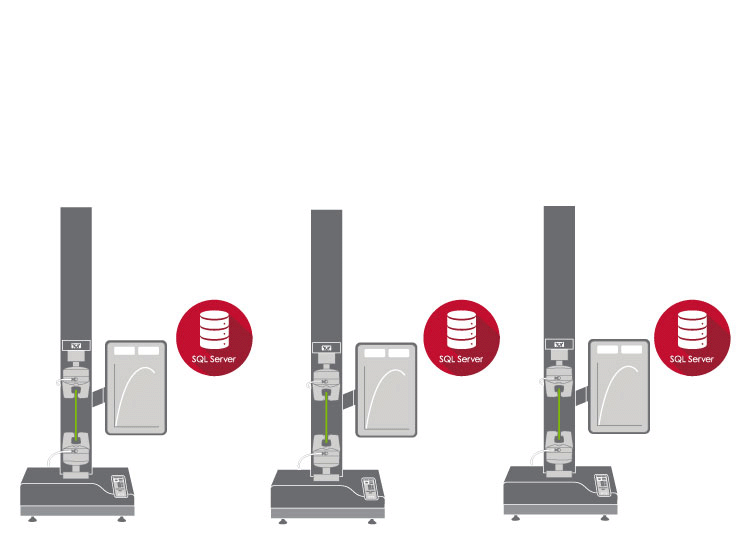
Bluehill Universal’s local Traceability module stores audit trail data on a Microsoft SQL Express database that is hosted on the computer running Bluehill Universal connected to the Instron system. The local database model accommodates labs that cannot connect computers to a shared network. Viewing the audit trail and electronically signing files occurs locally on the computer, and each Instron system with a local Traceability database stores its own SQL Express database. Database backup and restore functions can be performed manually in Bluehill Universal.


Bluehill Central Architecture
Network

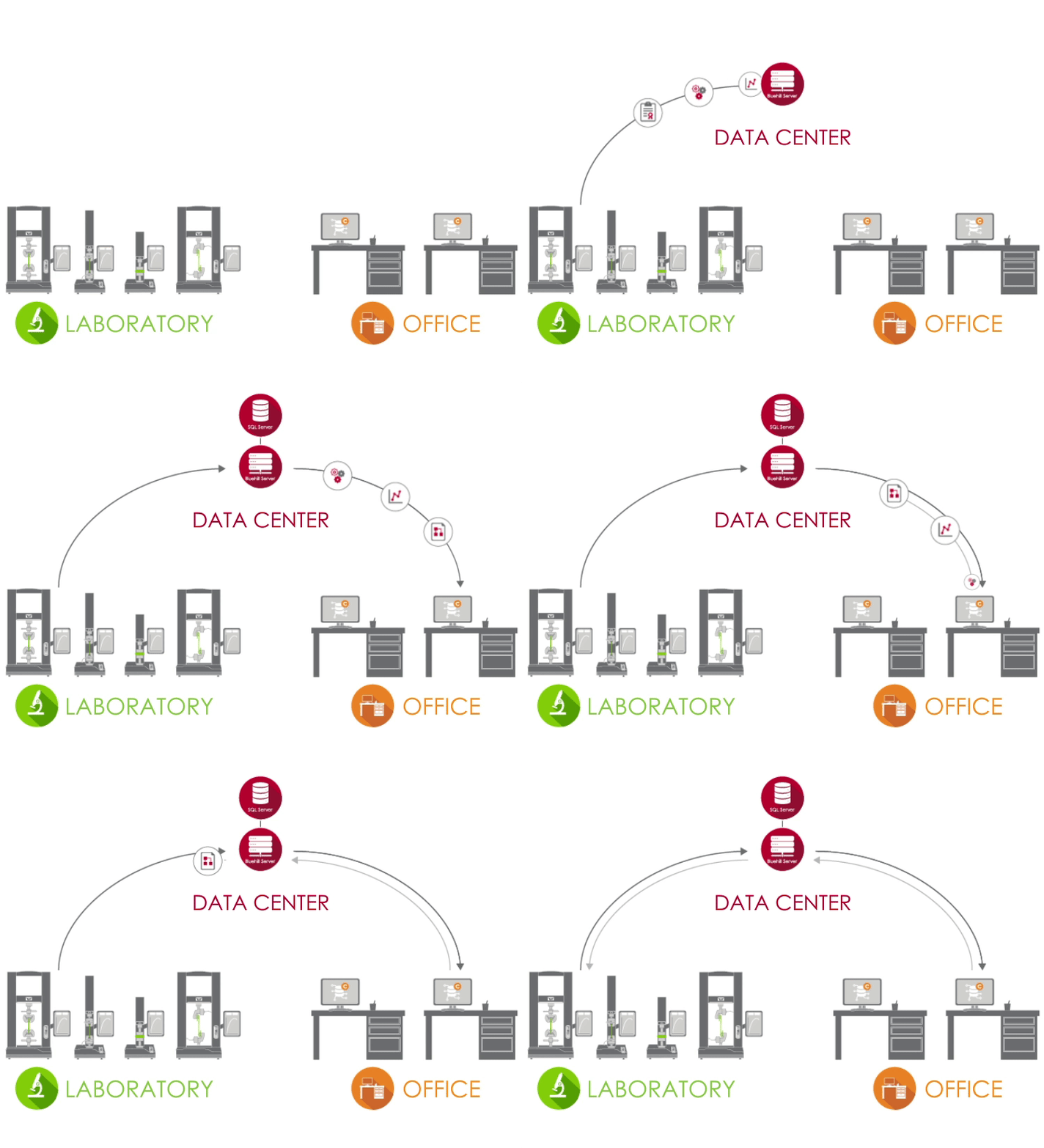
The network solution for Instron’s Traceability is powered by Bluehill Central, which employs a client/server framework to store all shared audit trail data, files, and settings on a Microsoft SQL Server database. When Bluehill Universal is connected to your lab’s Bluehill Central server, each testing system send and receives data from the centralized database, eliminating the risk of variation and the burden of locally managing each system. Viewing the audit trail, electronically signing files, and user management is performed either remotely in Bluehill Central or locally in Bluehill Universal. Database backup and restore functions can be performed manually in Bluehill Central.


INSTRON SERVICE


Instron field service teams provide validation and documentation services to support IQOQ processes designed to ensure that your Instron testing equipment performs to its intended purposes and produces valid results (per 21 CFR 820.72 and ISO 13845). Validation packages can also include validation of Bluehill Central and Bluehill Traceability to aid in compliance with CFR 21 Part 11. These validation packages contain checks to confirm that certain operations performed in the software are traceable in an audit trail, and provide reference to Instron transducer calibrations (purchased separately) to ensure that the software and system are providing accurate, reliable results. At the conclusion of our services we provide a Completion Certificate for Installation and Operational Qualification that will be signed by the Instron Field Service Engineer who performed the validations.


IQ/OQ

Our field service teams provide validation and documentation services to support IQOQ processes designed to ensure that your Instron testing equipment performs to its intended purposes and produces valid results per 21 CFR 820.72 and ISO 13845. At the conclusion of our services we provide a Completion Certificate for Installation and Operational Qualification that will be signed by the Instron Field Service Engineer who performed the validations.

Learn More


Systems Verification

Instron's field service teams provide speed, displacement, alignment, and temperature verification for your mechanical testing systems to ASTM E2658, ASTM E2309, and other standards.

Learn More


On Body Delivery Systems

Biomedical Testing

mechanical testing of on body delivery systems

TESTING ON BODY DELIVERY SYSTEMS

Testing Wearable Devices Used in the Treatment of Diabetes and Other Chronic Illnesses


Trends in wearable technology follow those of the broader biomedical and electronics industries — devices are getting smaller, smarter, and easier to use. These wearable devices range from on-body drug delivery systems for diabetes and cancer treatment to electrical nerve stimulation patches or sensors t monitor vitals. All treatments increase patient autonomy and are rapidly increasing in popularity in light of higher incidence rates of chronic disease and an aging population. As this trend continues, manufacturers are working to develop robust testing methods to mechanically evaluate all aspects of these devices and ensure that they are performing as expected. For more information on other biomedical applications, visit our Biomedical Industry page.

CHALLENGES OF TESTING WEARABLES

On Body Delivery Systems (OBDS) represent a quickly growing segment of the injectable drug delivery device market. These devices offer unique advantages over more traditional delivery methods. One of their most differentiating features is their ability to support significantly larger volumes of medication than devices like prefilled syringes and autoinjectors, with some OBDS reaching as much as 10 mL of deliverable volume. This is a direct result of the explosion of large molecule biologics, whose efficacy requires higher concentrations and subsequently higher volume in solution. OBDS also simplify patient adherence, as the entire delivery process occurs automatically once the device is placed and activated. In addition, their form factor allows for easier integration of IOT functionality, helping create companion applications to track and monitor patient progress.

stethoscope icon

Though these devices are just recently starting to be commercialized on drug platforms, the testing requirements are becoming more standardized. ISO 11608-6 was released in 2022, which is the first official standard that provides guidance around evaluating the functionality of OBDS. At this point, the testing specifications are still purposefully broad to apply to a range of devices with different form factors. The dose accuracy, injection time, delivery profile, and needle extension are relatively agnostic of the device, requiring additional testing system capabilities such as an integrated scale and camera. Testing around the properties of the medical grade adhesives is subject to the most uncertainty, with references to a wide range of existing adhesive test standards.

Challenge #1 - Flexibility Around Device Form Factors

The overall size and functionality of OBDS can vary greatly between manufacturers, and mechanical testing systems are not inherently designed for evaluating such a varied set of products. The dimensions of OBDS necessitate testing systems with a large fixturing surface that has sufficient anchoring points to accommodate all profiles. The use of a component test plate - a tapped platform with regularly spaces threaded connections - provides the most flexibility for customers to create their own fixturing for their devices. A unique challenge to OBDS is the potential for activation mechanisms and needles which are not collinear. An adjustable load cell mount makes it possible to maintain the needle centered on the injection point while ensuring the load cell is aligned with the activation button.


Challenge #2 - Capturing Extended Dose Profiles

wearable autoinjector being tested

Autoinjectors typically dispense their entire volume of fluid at a consistent rate in the range of 1 to 10 seconds. OBDS will work on a longer time scale to address patient comfort associated with large volume injections. In some cases, the delivery profile will vary throughout the duration of the injection to optimize drug absorption. The use of an integrated scale measurement in Bluehill Universal allows for proper visualization representation of the dose profile , aligning with the guidance of the ISO 11608-6 standard [Annex B].

Challenge #3 - Adhesive Evaluations

ISO 11608-6 points toward established standards like ASTM D3330 for characterizing the fundamental adhesive properties of the adhesive materials used to affix devices to patients' skin. This standard provides an ideal baseline for comparative testing of different adhesives, but does not accurately represent the real-world adhesive properties. To do this, the testing system must also be able to support more realistic substrates and preconditioning parameters such as temperature and moisture. A system with cyclic loading capabilities may provide additional insights in evaluating the degradation of adhesive properties after hours of simulated use.

Metal Ceramic Plastic Braces Testing

Biomedical Testing

Metal Ceramic Plastic Braces Testing

The  Challenge

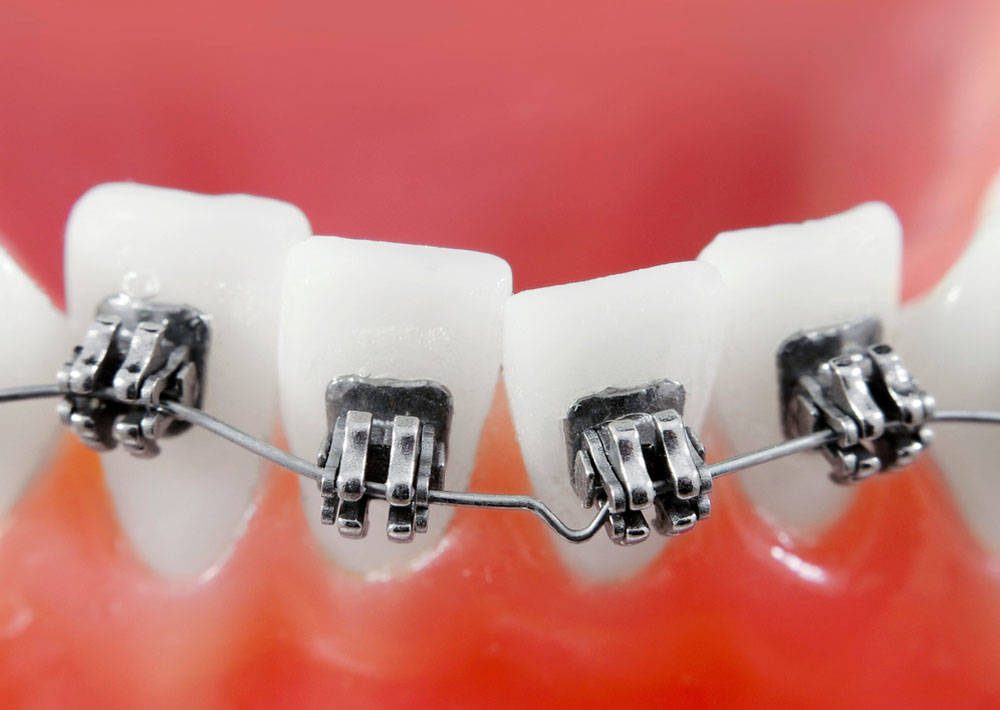
Braces

Metal braces are the most common type of braces for correcting misaligned teeth, and are typically made from high quality stainless steel or titanium. The components of metal braces include the brackets that physically attach to the teeth, bonding material like an adhesive to secure the brackets to the teeth, arch wire that connects the brackets together, and elastic which is typically referred to as O-ring material. In recent years, clear braces produced from plastic or ceramic have become a popular alternative to metal braces for cosmetic reasons. For a patient that requires braces, the preparation and application of braces are both expensive and time intensive. It is imperative that braces remain intact during application and during the patient's daily use of eating and drinking. Given the complexity of different patients and the multiple components and materials associated with braces, testing all parts and use cases can be overwhelming.

Our Solution 

Braces Testing

In order to test each component in a set of braces, we recommend using a Universal Testing System, such as the 6800 Series or 3400 Series systems with Bluehill® Universal software. Bluehill Universal's flexible user interface enables users to quickly set up different methods for tensile, compression, flex, peel, tear, and friction tests. This allows users to test the compressive strength properties of the brackets, peel properties of the adhesive, and tensile strength of both the metal wire and O-ring material. For testing the brackets, we recommend using 2-inch compression platens. When testing the adhesive, we recommend performing a 90° peel test with the adhesive bonded to substrates that mimic the tooth. Depending on the thickness of the metal wire, pneumatic cord and yarn grips may be the most preferred gripping solution for wire tensile tests. Finally, for testing the elastomeric O-ring material, Instron® offers a specialized O-ring fixture designed for measuring stiffness, strain, and ultimate tensile strength properties for a variety of O-ring sizes.

Pruebas de rodilla


Biomedical Testing


Pruebas de rodilla

El desafío

Articulación de la rodilla

Las prótesis de rodilla se encuentran entre los procedimientos quirúrgicos más importantes a nivel mundial para mejorar la calidad de vida. La fractura por fatiga de las bandejas tibiales de rodilla es uno de los mecanismos de fallo más comúnmente reportados en las prótesis totales de rodilla (PTR). Es causada por la pérdida de soporte óseo subyacente resultante de reacciones biológicas, como la osteólisis inducida por el desgaste. Bajo estas condiciones, la bandeja tibial se vuelve mecánicamente inestable, y la carga cíclica impartida por la marcha normal provoca grietas por fatiga, lo que finalmente conduce a un fallo catastrófico.

Nuestra solución

Ensayo de articulaciones de rodilla

El instrumento de ensayo dinámico totalmente eléctrico ElectroPuls ayuda a diseñadores, fabricantes e investigadores a lo largo del proceso del ciclo de vida del producto, desde la derivación de propiedades fundamentales del material, como la resistencia a la propagación de grietas por fatiga, hasta el ensayo de la bandeja tibial completa y más allá. Utilizamos un dispositivo de sujeción para asegurar una mitad de la bandeja tibial, simulando un cóndilo totalmente soportado. El otro cóndilo no soportado se somete entonces a una carga fisiológicamente representativa. Al utilizar nuestra exclusiva célula de carga Dynacell, se pueden eliminar los errores inerciales dinámicos, como los causados por la fijación y por la hidrodinámica que resulta al realizar ensayos en un baño ambiental. Esto permite una medición más precisa de la carga aplicada a la probeta.

Ensayo de lentes de contacto


Biomedical Testing


Ensayo de lentes de contacto

El desafío

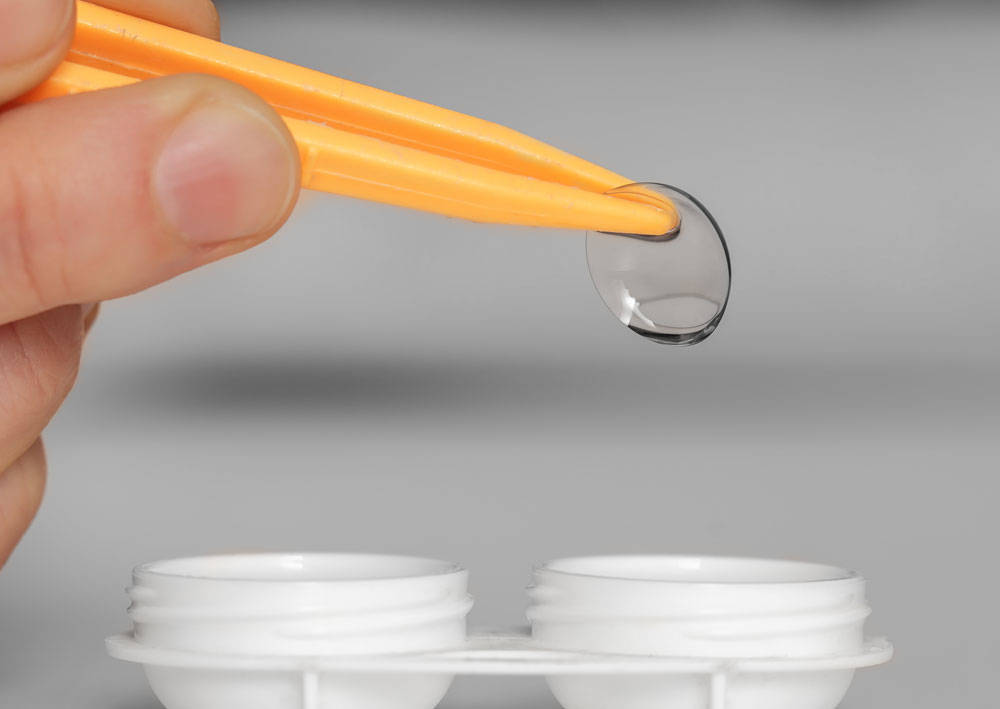
Lente de contacto

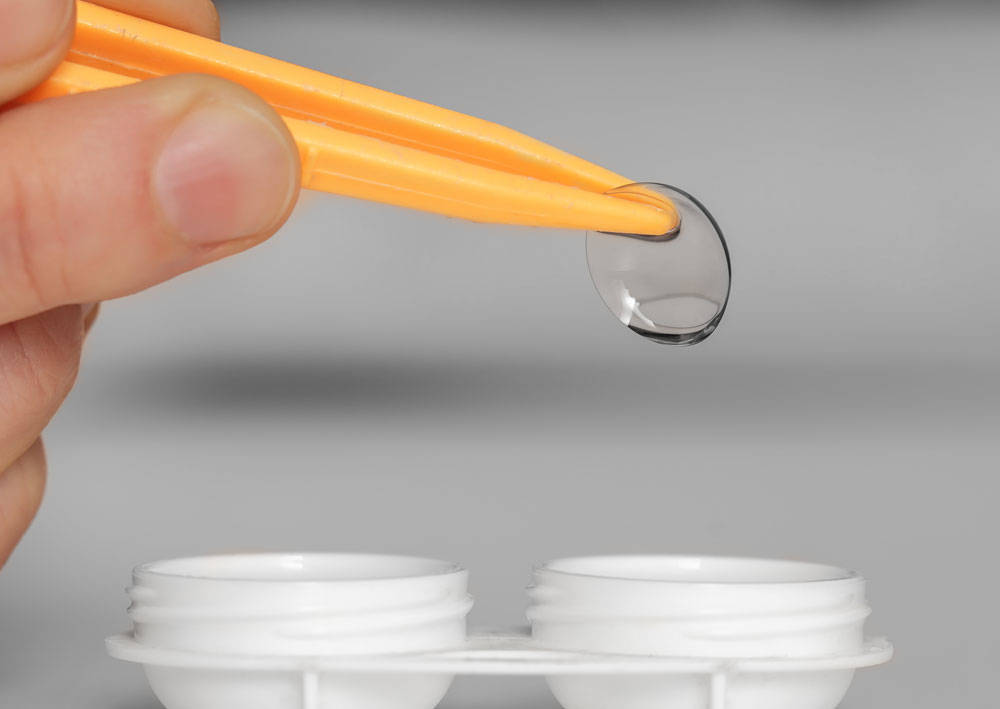
Las lentes de contacto, uno de los dispositivos médicos más utilizados en el mundo, se emplean principalmente para la corrección de la vista, pero también para mejoras y modificaciones estéticas. Se fabrican en una variedad de formas, pero lo más habitual es que estén hechas de materiales poliméricos blandos. Dado que el material de las lentes de contacto blandas es resbaladizo y delicado de manipular, la carga de la muestra en las mordazas puede ser un desafío, y las roturas en la lente son comunes incluso bajo fuerzas muy bajas. Para simular mejor cómo se utilizarán, las lentes de contacto deben ensayarse en condiciones fisiológicamente relevantes, lo que requiere que las lentes se ensayen en un baño salino, calentado a la temperatura corporal.

Nuestra solución

Ensayo de lentes de contacto

Para el ensayo de lentes de contacto, recomendamos utilizar un sistema de ensayo universal configurado con las mordazas de tracción neumáticas sumergibles BioBath de 250 N y caras de mordaza extra largas de aleación de superficie. Las caras de mordaza largas permiten al usuario insertar la pequeña lente en las mordazas con suficiente espacio para maniobrar, al tiempo que le permiten lograr una separación de mordazas nula. Las lentes se pueden ensayar como productos finales completos, cortadas en tiras o rebanadas para realizar un ensayo de desgarro tipo pantalón. También se recomienda una célula de carga de baja fuerza para detectar con precisión el fallo de la muestra. Tanto las mordazas neumáticas sumergibles de 250 N como la varilla de tracción asociada que se acopla a la célula de carga están diseñadas para minimizar las posibilidades de flotabilidad durante ensayos de baja fuerza, como el ensayo de lentes de contacto.

Ensayo de implantes de cadera


Biomedical Testing


Ensayo de implantes de cadera

El desafío

Implante de cadera

Tras la cirugía, pueden producirse aflojamiento proximal y protección contra tensiones como resultado de la actividad normal, lo que puede dar lugar a perfiles de carga anormales. Por lo tanto, es necesario replicar en el ensayo el entorno real y las cargas que experimentará la muestra mientras se encuentre en el cuerpo. El ensayo de fatiga femoral de cadera puede resultar difícil debido a la importancia de incrustar la muestra con precisión. El dispositivo de fijación debe ser capaz de soportar tensiones de compresión, flexión y torsión para cumplir las normas ISO 7206. Las altas frecuencias de estos ensayos también plantean un desafío, ya que pueden hacer que la muestra se caliente más allá de un límite aceptable.

Nuestra solución

Ensayo de implantes de cadera

Instron® proporciona un dispositivo de incrustación de muestras que garantiza que se alcancen los ángulos de desplazamiento y la profundidad de incrustación requeridos. El dispositivo de fijación resistente a la corrosión, diseñado específicamente para este fin, permite realizar ensayos in vivo. El conjunto incluye un controlador de temperatura y una bomba de recirculación para garantizar que la temperatura nunca supere el límite aceptable mediante la reducción automática de la frecuencia del ensayo. El dispositivo de fijación de fácil instalación incluye un cabezal de carga de baja fricción y adaptadores para montarlo en un sistema ElectroPuls. El software WaveMatrix de Instron permite utilizar varios criterios de finalización del ensayo, como ejecutar un número específico de ciclos o hasta que se detecte el fallo de la muestra, lo que puede determinarse de varias formas. Con un solo paquete puede realizar ensayos con confianza para cumplir y superar los requisitos de las normas ISO 7206-4, 7206-6 y 7206-8.

Ensayos de implantes oculares


Biomedical Testing


Ensayos de implantes oculares

El desafío

Implantes oculares

Una lente intraocular (LIO) es una lente sintética y artificial que se implanta en el ojo de un paciente, generalmente después de una cirugía de cataratas. Cuando el cristalino natural del paciente se extrae debido a una enfermedad, el ojo pierde su capacidad de reenfocar. Las LIO se fabrican más comúnmente con Poli(metacrilato de metilo) (PMMA), silicona, acrílico y otros materiales blandos que permiten plegarlas e insertarlas fácilmente en el ojo. Durante la cirugía, es imperativo que las LIO no se rasguen ni se rompan, ya que incluso el desgarro más pequeño puede resultar muy incómodo para el paciente. Algunos de los mayores desafíos en los ensayos de LIO son simular el comportamiento de plegado experimentado durante la cirugía y sujetar estos pequeños dispositivos del tamaño de una moneda de diez céntimos.

Nuestra solución

Ensayos de implantes oculares

Para los ensayos de LIO, recomendamos utilizar el módulo TestProfiler para realizar un ensayo cíclico simple que someta la LIO tanto a tensión como a compresión. Para los sistemas de ensayo, recomendamos utilizar un sistema de ensayo universal de la Serie 6800, mordazas de fibra y una célula de carga de baja fuerza, como una célula de carga de 10 N. Además, recomendamos utilizar la función TestCam de Bluehill® Universal junto con un microscopio USB, lo que permite a los usuarios ampliar su probeta, registrar el ensayo y reproducir las imágenes después del ensayo. El uso de un microscopio USB con al menos 10 aumentos ayuda al usuario a detectar cualquier desgarro pequeño que pueda no ser visible a simple vista.

Bone Screw Testing

Biomedical Testing

Bone Screw Testing

The  Challenge

Bone Screw

Bone screws are used in surgical procedures for securing implants, osteosynthesis devices, and fracture fixation plates to the skeletal system. In normal clinical use, a surgeon applies combined axial and torsional forces to the bone screw as it is implanted within the body. Manufacturers and scientists test bone screws to determine various mechanical properties when evaluating new materials and designs. The most common standard for testing bone screws is ASTM F534. The standard consists of a total of four testing annexes: axial tests, torsion only tests, or a combination of both linear and torsion tests. ASTM F543-17 Test A1 - Test Method for Determining the Torsional Properties of Metallic Bone Screws requires the screw to be sufficiently clamped and a rotational velocity between 1 and 5 rpm to be applied until specimen failure, and to measure the torque profile and the rotational angle. ASTM F534-17 Test A2 - Test Method for Driving Torque of Medical Bone Screws measures the torque required to insert and remove the screw with a constant rotational velocity between 1 and 5 rpm while maintaining an axial load of no more than 10 N in compression. ASTM F543-17 Test A3 - Test Method for Determining the Axial Pull-Out Strength of Medical Bone Screws measures the force required to axially remove the screw that has been fully inserted in the test block using the method from Test A2. The pull-out fixture then applies a tensile load at a constant rate of 5 mm/min until the failure of the bone screw or removal from the test block. ASTM F543-17 Test A4 - Test Method for Determining the Self-Tapping Performance of Self-Tapping Medical Bone Screws specifies the procedure to evaluate the axial loading required to engage a self-tapping bone screw into a standard laboratory material. Although considered a simple clinical procedure, reproduction of this in vitro results in a relatively complex motion due to the interaction between the rotation and linear axes of a test machine. The test requires a continuous rotational velocity of up to 30 rpm while the axial load is incremented during the insertion at a rate of 2 N/s. The objective of this test is to record the torque profile as the bone screw is inserted into the material and then removed.

Our Solution 

Bone Screw Testing

To perform bone screw testing to ASTM F543, either an electromechanical system with a Torsion Add-On 3.0 , or an ElectroPuls™ Linear-Torsion system can be used. The Torsion Add-On 3.0 can be added to any new or existing 6800 Series single column or dual column table top testing machine to add rotational capabilities. The ElectroPuls E10000 and E3000 Linear-Torsion test systems are all-electric dynamic testing systems that provide a unique linear and torsion actuator system that is capable of synchronized linear and multi-rotation testing, which makes them ideal platforms for performing the full range of tests prescribed by the standard. For both the electromechanical system and ElectroPuls system, a bi-axial Dynacell load cell is mounted to the base of the machine. Using WaveMatrix™ dynamic test software on the ElectroPuls system, a user is able to control both axial and rotational axis in closed-loop control. This gives the user the ability to easily set up the multi-axial tests as a series of steps, and displays the required information as the test proceeds. Special fixtures are used to clamp the material to the biaxial load cell, and a drill chuck is used for the drive bits.

Hard Tissue Testing

Biomedical Testing

Hard Tissue Testing

The Challenge

Hard Tissue

Bone, dentin, and dental enamel are all considered to be hard tissues. Specimens of this type are most commonly tested in compression and flexural. The most common results obtained from a compression or flexural test on hard tissues is modulus and force at fracture. Typically, these specimens come from mice, rats, or other mammals and are small in size. Despite being small in size, hard tissues have high stiffness. A typical challenge with measuring modulus is accurate measurement of displacement. For a given force, a hard tissue such as bone will exhibit small displacement. In addition to compression testing, 3-point and 4-point bend tests are common to quantify force at fracture on bone sections. Often, this testing must be conducted at physiologically relevant test conditions, such as in a hydrated bath and at body temperature.

Our Solution 

Hard Tissue Testing

When conducting compression testing on hard tissues, it is critical that users choose appropriately sized compression platens to closely match specimen size, ensure the compression platens are spherically seated or self-aligning to apply even pressure on the specimen, and use an accurate source to measure system displacement. For example, an accurate measurement source of displacement could be via compliance correction in the software, or by using a strain measuring device, such as a linear variable deflection transducer (LVDT) or a video extensometer. When testing flexural specimens, it is critical that the anvils on the flexural fixture are appropriately sized to the specimen and that the flexural fixture properties, such as span length, are easily entered into the software.

Ensayos de dispositivos de fijación de fracturas


Biomedical Testing


Ensayos de dispositivos de fijación de fracturas

El desafío

Fijación de fracturas

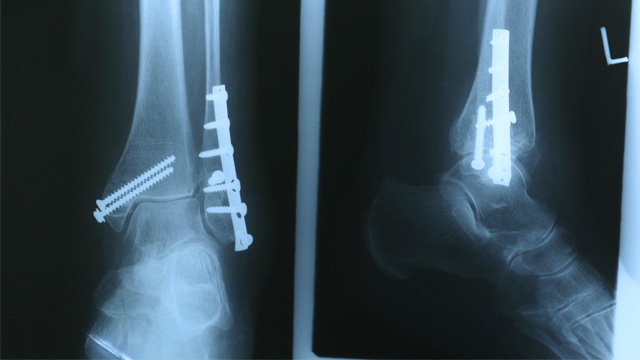
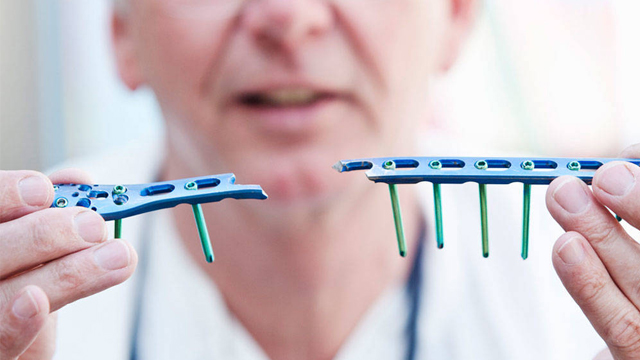
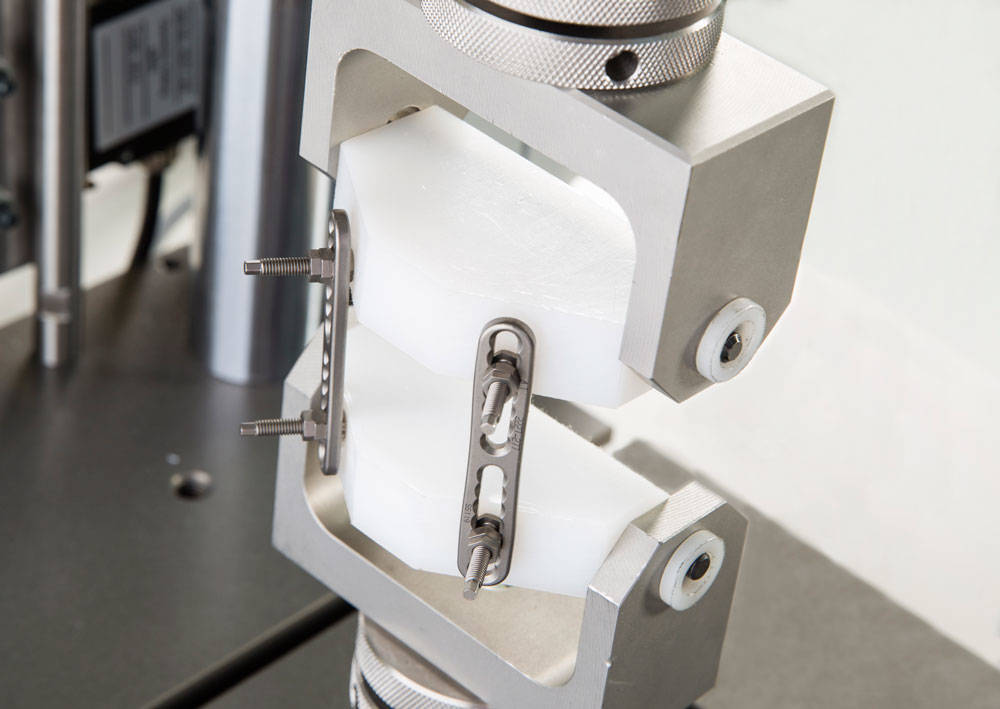
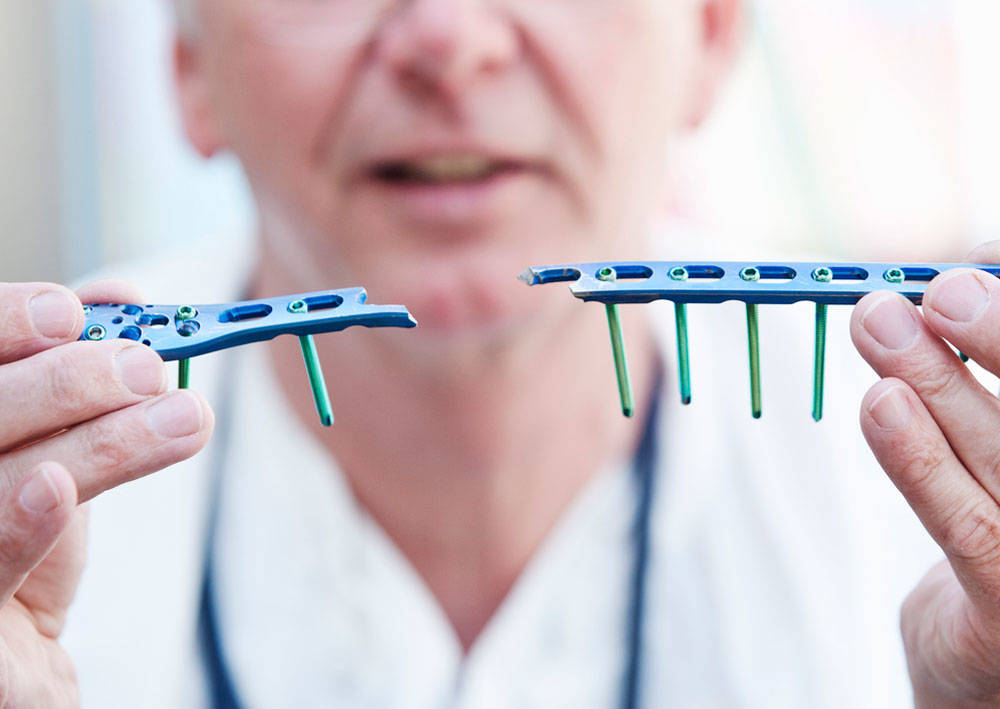
Las placas de fijación de fracturas se utilizan para inmovilizar huesos que se han fracturado o roto gravemente. Estas placas suelen fabricarse de titanio o acero inoxidable. Ambos materiales presentan propiedades mecánicas similares, incluida la rigidez y la resistencia última a tracción, a las del hueso nativo. Estas placas suelen tener geometrías irregulares y se presentan en una amplia variedad de tamaños para adaptarse a fracturas óseas de distinto tamaño en el cuerpo. Por ejemplo, una placa utilizada para inmovilizar un hueso fracturado en un fémur será muy diferente de la utilizada en un tobillo, un dedo o la mandíbula. La geometría irregular y el rango de tamaños de las placas de fijación de fracturas las convierten en componentes difíciles de ensayar. Además, en la mayoría de los casos, estas placas permanecen en el paciente de por vida y deben ser capaces de soportar el movimiento dinámico del cuerpo durante décadas.

Nuestra solución

Ensayos de dispositivos de fijación de fracturas

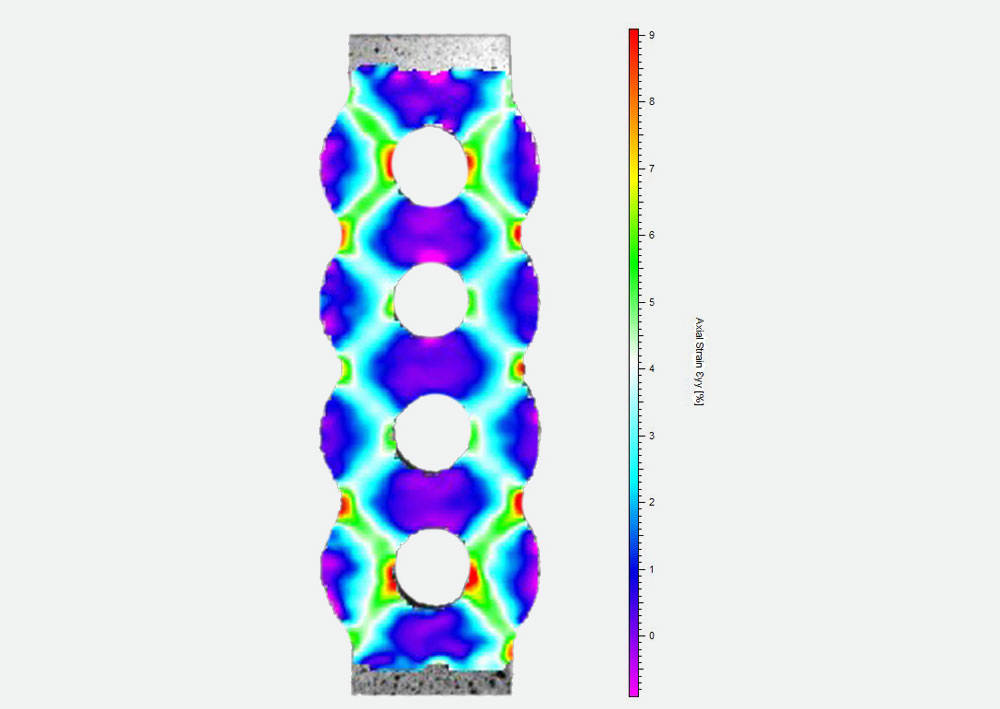
Para comprender las propiedades mecánicas de las placas de fijación de fracturas, se requiere una gama de ensayos tanto estáticos como dinámicos. Los ensayos monotónicos de flexión, tracción y compresión son necesarios para comprender el módulo y la resistencia última a tracción. Dada la geometría irregular de las placas de fijación de fracturas, la medición de la deformación es un reto. A menudo se emplean técnicas de modelado 2D y 3D, como el análisis de elementos finitos, para comprender las propiedades de tensión y deformación de campo completo de las placas de fijación de fracturas. Para los ensayos monotónicos de tracción, compresión o flexión, nuestro software de correlación digital de imágenes, junto con nuestro extensómetro de vídeo avanzado, permite a investigadores y científicos visualizar y cuantificar las propiedades de deformación de campo completo de estas placas. Para todos los ensayos de fatiga, recomendamos utilizar nuestros sistemas ElectroPuls. En concreto, recomendamos el sistema de ensayo E3000 o el sistema de ensayo E10000 Linear-Torsions. La capacidad de ensayar placas simultáneamente con carga axial y carga torsional representa mejor las condiciones de carga reales en el cuerpo humano.

Hydrogel Tensile Testing

Biomedical Testing

Hydrogel Tensile Testing

The Challenge

Hydrogel Tensile

Hydrogel testing is most commonly done in both tension and compression. Compression testing on hydrogels poses less of a challenge, as many hydrogels are compliant and compress easily under load. The natural compliance of hydrogels becomes more of a challenge in tensile testing, as these materials can be difficult to grip and exhibit high elongation. Gripping hydrogels with too much pressure typically displaces the material out of the grip faces, which makes gripping ineffective. In addition, a traditional contacting extensometer is not a viable option considering the soft properties of hydrogels. Given the viscoelastic properties of these materials, test speed will greatly affect results, such as force at break and elongation at break. 

Our Solution 

Hydrogel Tensile Testing

When testing hydrogels in compression and tension, most common forces at failure are below 100 N. Given the low forces obtained in hydrogel mechanical testing, it is important that an accurate load cell is used. This can be especially tricky in a compression test as many users restrain from using low capacity load cells out of fear that they will overload the load cell if the compression platens begin to touch during a test. To prevent this from happening, it is imperative that safety limits are set and that the end of test criteria is set to the load cell capacity in the software. For tensile testing, Instron® offers a range of low force grips, including spring loaded, screw side action action, and pneumatic side action grips. Given the compliant nature of hydrogels, often sandpaper needs to be used to increase friction at the gripping contact points. When accurate measurement of strain is required, we recommend using our Advanced Video Extensometer

Ensayos de implantes espinales


Biomedical Testing


Ensayos de implantes espinales

El desafío

Ensayos de implantes espinales

Los ensayos de vida útil de las construcciones espinales son fundamentales, ya que el fallo por fatiga es más frecuente que el fallo catastrófico. Durante la actividad normal del paciente, las construcciones espinales pueden estar sometidas a elevadas cargas in vivo, lo que puede dar lugar a un fallo catastrófico. Se realizan ensayos cíclicos para evaluar el número de ciclos necesarios para que se produzca el fallo por fatiga. La carga suele aplicarse con una forma de onda sinusoidal de amplitud constante controlada por carga, que supera los cinco millones de ciclos. También se realizan ensayos estáticos sencillos para evaluar la carga necesaria para provocar una fractura espinal.

Nuestra solución

Ensayos de implantes espinales

Se recomienda el sistema Instron® ElectroPuls de torsión lineal, ya que permite al usuario realizar tanto ensayos estáticos como dinámicos conforme a las normas ASTM F1717-12 en una sola máquina. Se puede montar fácilmente en este sistema un utillaje espinal específico, con la opción de montar un baño de solución salina en la base para ensayos in vivo. Al utilizar el baño, la célula de carga está diseñada para montarse en el actuador mediante la tecnología patentada Dynacell de Instron para la compensación de inercia. El algoritmo patentado de ajuste basado en la rigidez de Instron garantiza una excelente fidelidad de la forma de onda, incluso con probetas no lineales.

Bioadhesives Peel Testing

Biomedical Testing

Bioadhesives Peel Testing

The Challenge

bio adhesive

Adhesives are widely used in the medical device industry for dental implants, bone cements, and wound closure products. Wound closure products include tissue adhesives that can be found in bandages, secondary dressings, and a variety of surgical sealants. The adhesive strength of these products must be well defined. An adhesive that isn’t strong enough may result in a wound that heals poorly, or it can lead to an infection. If an adhesive is too strong, it may damage the underlying tissue or cause the patient unnecessary pain when removing. A fundamental challenge with testing bio adhesives is characterizing adhesive strength in physiologically relevant conditions. 

Our Solution 

Bioadhesives Peel Testing

Soft tissue substrates should be tested under physiologically relevant conditions, most preferable in a bath or temperature controlled enclosure at 37°C. The BioBath with submersible pneumatic grips is recommended. The grips and pull rod that attach to the force transducer are designed to minimize buoyancy chances during low force testing. We also recommend a low capacity load cell, given that adhesive strength for biological applications is typically under 10-20 N. Bluehill® Universal's Peel, Tear, Friction Module is ideal for this test type in order to measure first peak force, average force over the seal, and average force per width of the specimen. 

Pruebas de marcapasos cardíacos


Biomedical Testing


Pruebas de marcapasos cardíacos

El desafío

Marcapasos cardíaco

Un marcapasos es un pequeño dispositivo electrónico, implantado bajo la clavícula del paciente, que ayuda a que su corazón lata con más regularidad. Se compone de tres partes principales: un generador de impulsos, uno o más cables y un electrodo en cada cable. El generador de impulsos consiste en una pequeña carcasa que contiene la circuitería, una batería y un chip informático que regula los impulsos eléctricos enviados al corazón. El cable es un hilo conductor aislado que se conecta al generador de impulsos y se extiende hasta una de las cavidades del corazón. El electrodo situado en el extremo del cable entra en contacto con la pared del corazón y es el responsable de la transmisión de los impulsos eléctricos al corazón del paciente. Teniendo en cuenta que cada componente de un marcapasos es crítico para su funcionamiento, los tres componentes deben someterse a pruebas rigurosas. La variedad de pruebas, que incluyen ensayos de cizalladura en los componentes microelectrónicos, ensayos de compresión en la batería y ensayos de tracción en los cables, puede ser difícil de realizar con un solo sistema.

Nuestra solución

Pruebas de marcapasos cardíacos

Los sistemas de ensayo Instron® Serie 6800, con el software Bluehill® Universal y el módulo TestProfiler, representan las máquinas de ensayos universales más capaces del mercado actual. La flexibilidad del software ofrece a los usuarios la capacidad de programar multitud de métodos diferentes con sencillez, incluyendo tracción, flexión, compresión, pelado, desgarro y fricción. Además, el Grupo de Soluciones de Ingeniería de Instron se ha asociado con diversas empresas de electrónica y de dispositivos médicos para desarrollar utillajes especializados, incluyendo mordazas de cizalladura especiales y utillajes de microflexión. Asimismo, recomendamos el uso de mordazas neumáticas para cordones e hilos para los ensayos de tracción de los cables.

Ensayo de stents


Biomedical Testing


Ensayo de stents

El desafío

Stent

El ensayo mecánico de stents implica una variedad de pruebas diferentes que abarcan tanto métodos estáticos como de fatiga. Los stents se fabrican más comúnmente con alambre de Nitinol, que debe ensayarse según la norma ASTM F2516 en una prueba cíclica simple. Otra prueba estática que se realiza frecuentemente en stents es un ensayo de flexión de acuerdo con la norma ASTM F2606. Además de ensayar la materia prima, la estructura de diamante del cuerpo del stent se ensaya comúnmente en fatiga a 60 Hz en control de posición. El cuerpo completo del stent también se ensaya típicamente en compresión radial como prueba estática, y en fatiga pulsátil o fatiga cíclica como prueba dinámica. Considerando que se requiere tal variedad de ensayos mecánicos en un solo stent, a menudo resulta difícil seleccionar el sistema de ensayo apropiado para realizar la mayor cantidad de pruebas posible.

Nuestra solución

Ensayo de stents

Para todos los ensayos estáticos, incluidos los ensayos según ASTM F2516, ASTM F2606 y ensayos de compresión radial en el cuerpo completo del stent, recomendamos utilizar un sistema de ensayo universal Serie 6800. Al ensayar alambre de Nitinol según ASTM F2516, recomendamos utilizar nuestro extensómetro de vídeo avanzado para una medición precisa de la deformación. Al ensayar cuerpos completos de stents en compresión radial, Instron® colabora con Machine Solutions Inc. (MSI) para proporcionar un dispositivo especializado. El dispositivo de compresión radial puede montarse en cualquier sistema de ensayo Instron 68TM y puede utilizar el software estándar Bluehill® Universal para controlar el ensayo.

Para todos los ensayos de fatiga, incluido el ensayo de la estructura de diamante del cuerpo del stent o del stent completo en control de extensión cíclica, recomendamos utilizar nuestros sistemas de ensayo ElectroPuls®.

Ensayos de implantes dentales


Biomedical Testing


Ensayos de implantes dentales

El desafío

Implante dental

La forma del implante y el material utilizado se investigan continuamente para mejorar el contacto con la encía y la fusión con el hueso. Por lo tanto, los implantes dentales diseñados por diversos fabricantes suelen presentar muchas diferencias. Además, el tamaño y la forma del implante varían en función de su aplicación y de su ubicación en la boca. Esto supone un desafío a la hora de ensayar muestras y comparar materiales y diseños.

Nuestra solución

Ensayos de implantes dentales

Con una gran variedad de tamaños y geometrías de implantes, los implantes dentales angulados pueden montarse en un dispositivo de ángulo variable dental Instron® para su ensayo. El dispositivo garantiza que el montaje no restrinja excesivamente el implante ni genere grandes fuerzas laterales que puedan dañar la célula de carga o la máquina de ensayo. Al igual que con los implantes dentales rectos, los implantes dentales preangulados también pueden ensayarse en un entorno acuoso, si se espera que se produzca fatiga por corrosión. El dispositivo puede montarse en un baño de fluido para ensayar el implante en solución salina, u otro medio fisiológico, mientras se mantiene la temperatura a 37 °C.