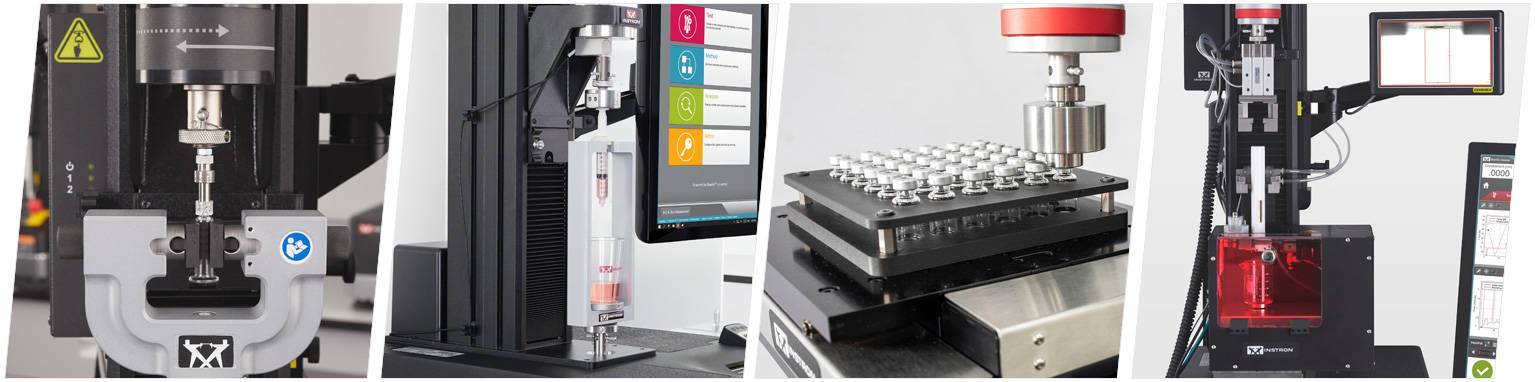
Personal Protective Equipment (PPE) Testing

Biomedical Testing

Personal Protective Equipment (PPE) Testing

Materials Testing Guidance for Personal Protective Equipment

The global demand for medical equipment has skyrocketed in response to the COVID-19 pandemic, with many companies refocusing their efforts to produce personal protective equipment (PPE). With this vast uptick in demand, medical device manufacturers have scrambled to increase their production capacities while non-medical manufacturing companies have transitioned their own production facilities to create items such as masks, gloves, and nasal swabs.

With increased manufacturing comes increased quality control testing, and Instron has received numerous inquiries from companies seeking to expand their testing capacity or reconfigure their existing equipment to test PPE. This guide was created to help familiarize manufacturers with key testing requirements and provide an overview of current FDA regulations. We hope that it will be a useful resource for anyone seeking to aid the fight against COVID-19.

Medical Masks

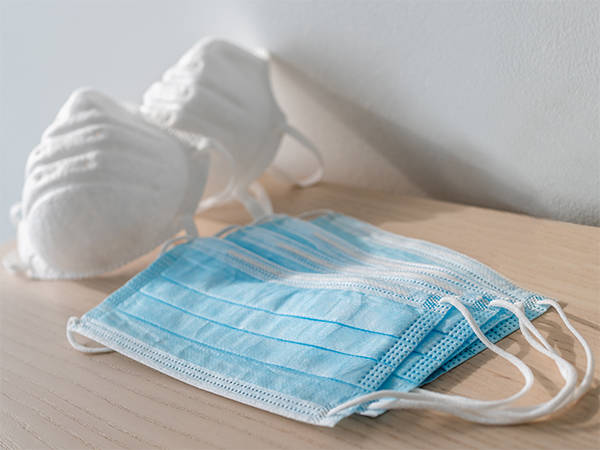
Medical masks come in two primary types: single-use surgical masks and N95 respirator masks. Surgical masks are intended to prevent viral spread by containing droplets produced by the wearer, while respirator masks are designed to protect the wearer from virus particles that have been aerosolized. Both of these masks are relatively easy to manufacture and test, and many textile manufacturers have shifted their operations to produce them in an attempt to meet the current demand. Many of these companies already own materials testing equipment and are able to make small modifications to their existing systems in order to perform the required FDA testing.
mask-fabric-test.jpg

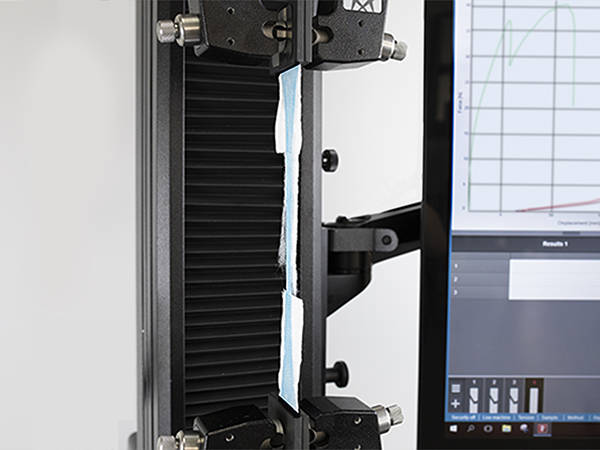
Fabric Test

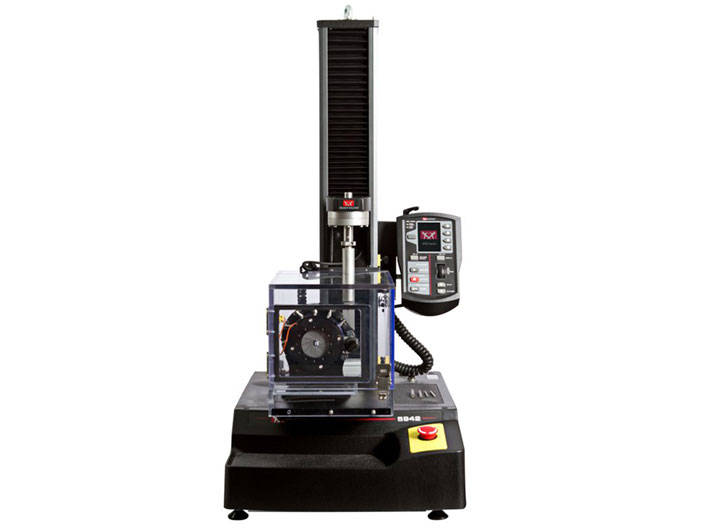
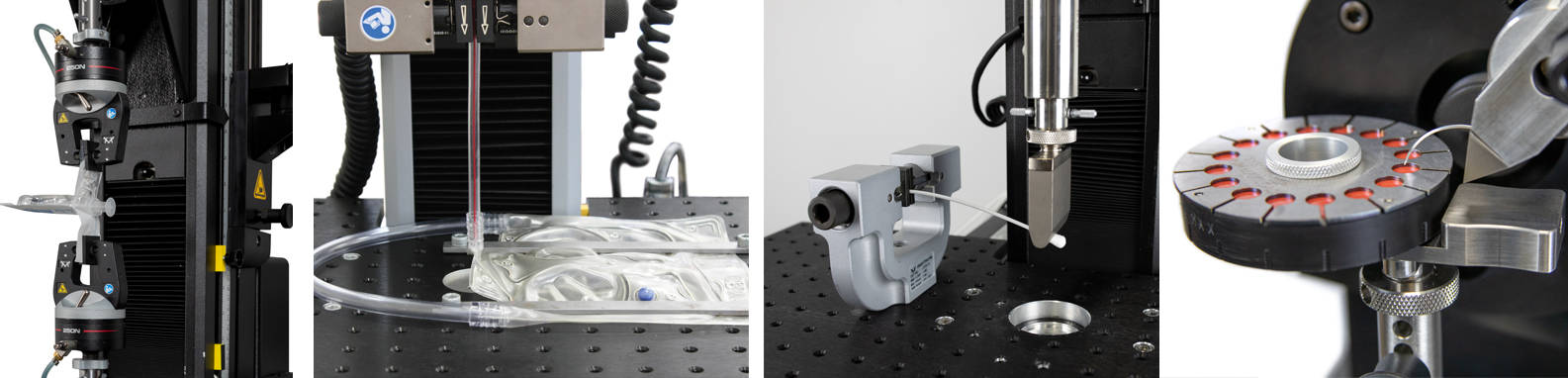
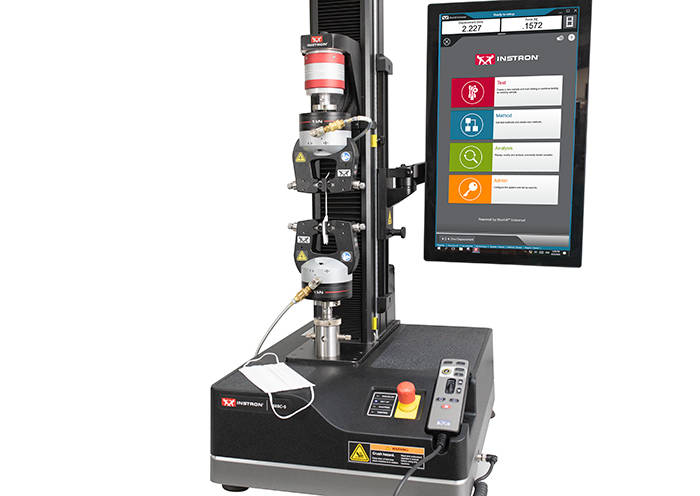
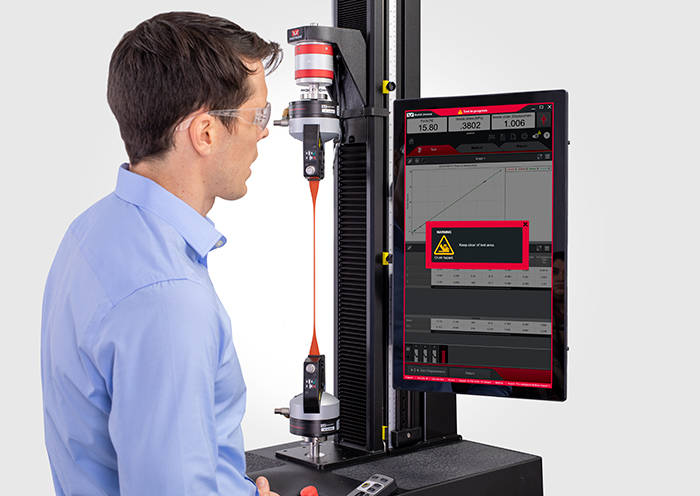
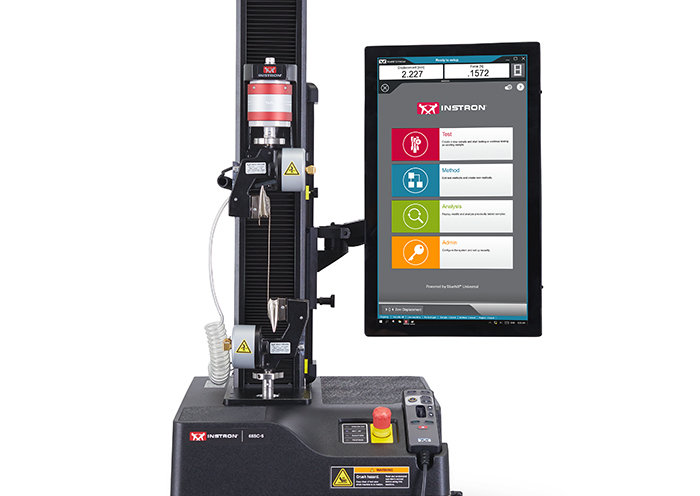
Mask fabric is generally tested in accordance with general textile standards such as ASTM D5034. Because fabric samples are prone to jaw breaks, we recommend pneumatic grips with smooth jaw faces to minimize this risk. In order to capture peaks and troughs generated by individual fiber breaks, we recommend a test system with a high data capture rate, such as Instron's 68SC-5.
mask-elastic-test.jpg

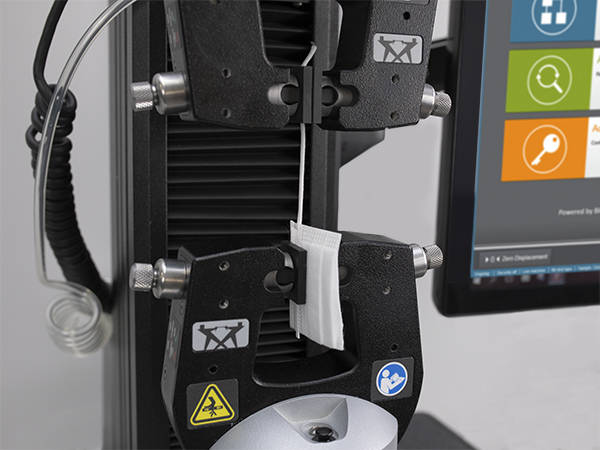
Elastic Test

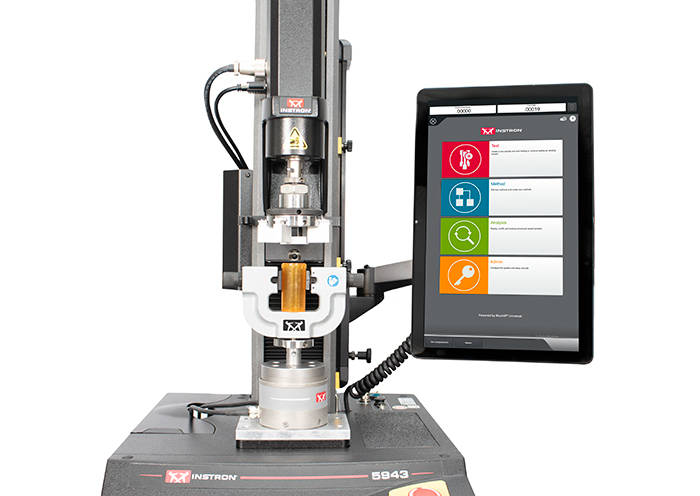
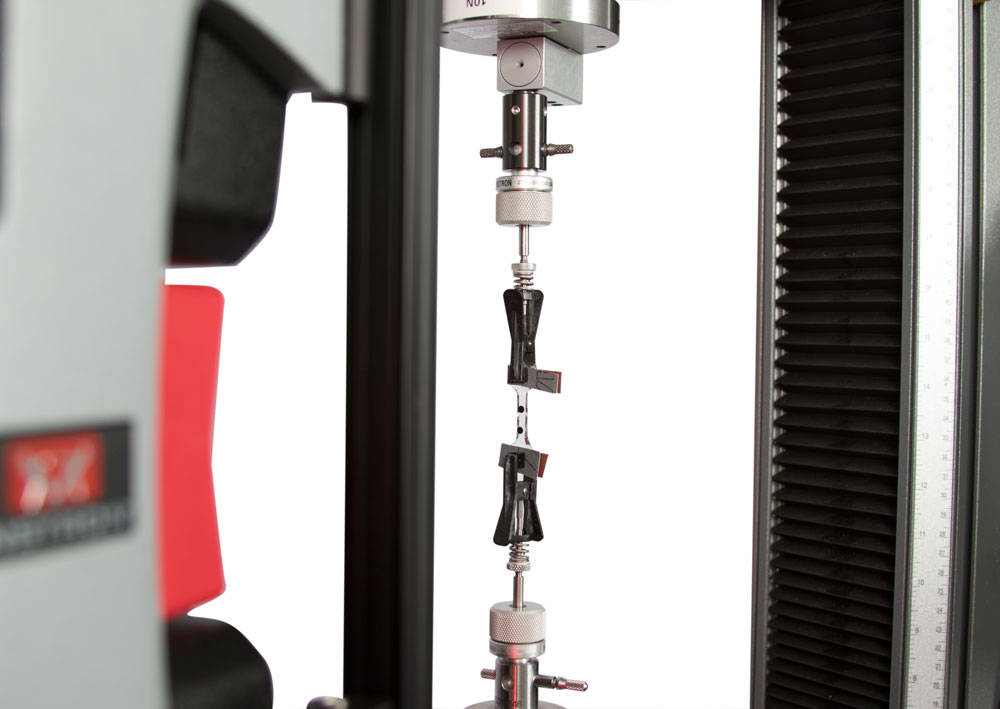
It is important to test the strength of the connection between a mask's fabric and the elastic band that holds it into place. This test is performed by loading the band to a minimum of 10 N and visually evaluating it to ensure there has been no separation. With masks now being worn for longer periods of time than ever, it may also be valuable to perform a relaxation test to determine its durability.
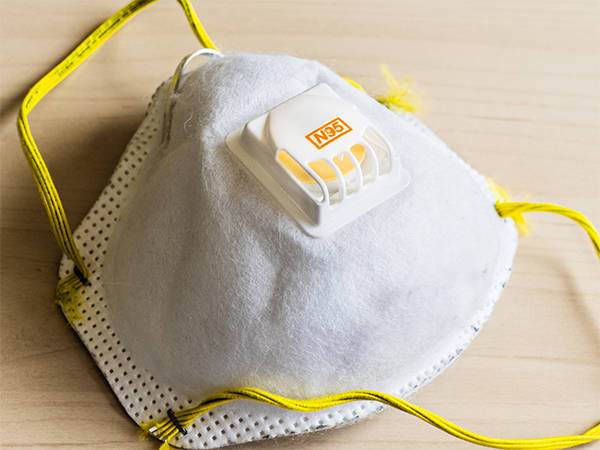
respirator-filter.jpg

Filter Test

Respirator masks must be tested to ensure the strength of connection between the mask fabric and the respirator valve. This test can be accomplished using a side-acting grip on the base of the system and a custom-made hook fixture attached to the load cell.

Medical Gloves

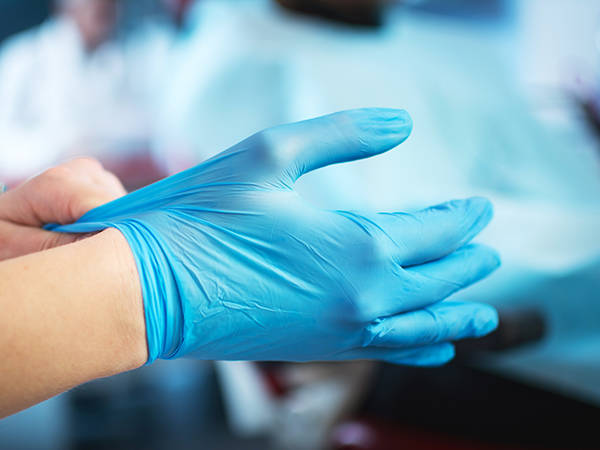
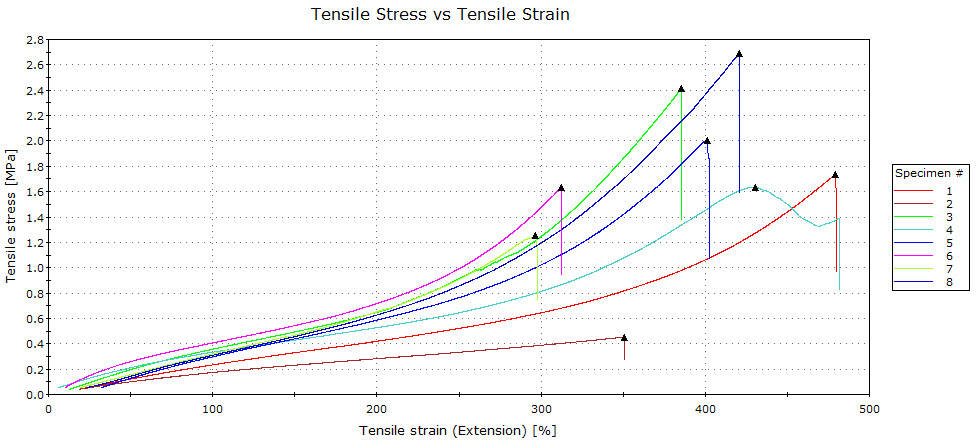
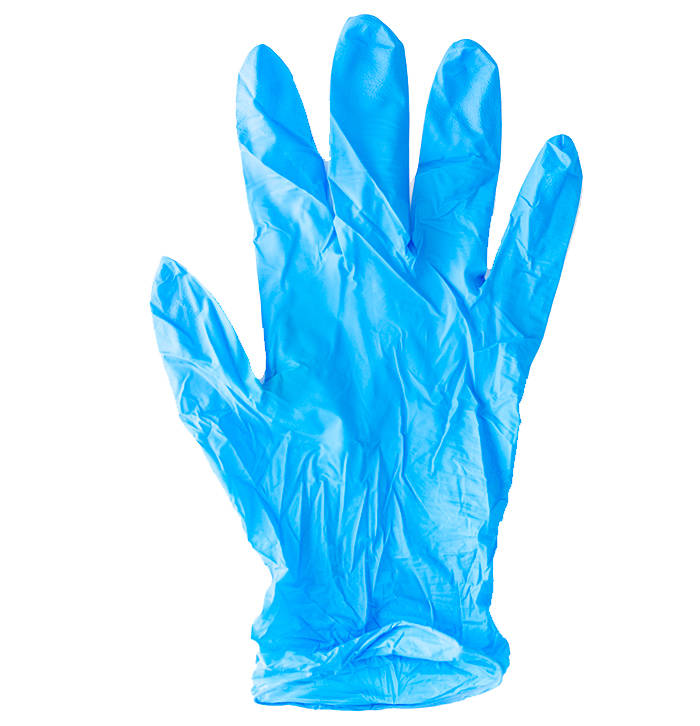
ASTM classifies medical gloves according to their material (latex, nitrile, natural rubber, PVC, or polychloroprene), while ISO classifies them based on their application (patient examination or surgical). Regardless of the testing standard, material, or clinical application, the equipment and general procedure for testing is consistent across all medical glove types. ASTM D6319, ISO 11193, and EN 455-2 are standards used by the biomedical industry to regulate the tensile properties of medical gloves. The key results for all glove testing standards are the tensile strength and ultimate elongation of the material. Rather than testing the entire glove, a dogbone specimen is cut from the finished glove and testing in accordance to the relevant elastomeric standard (ASTM D412 or ISO 37).

Glove Test Setup
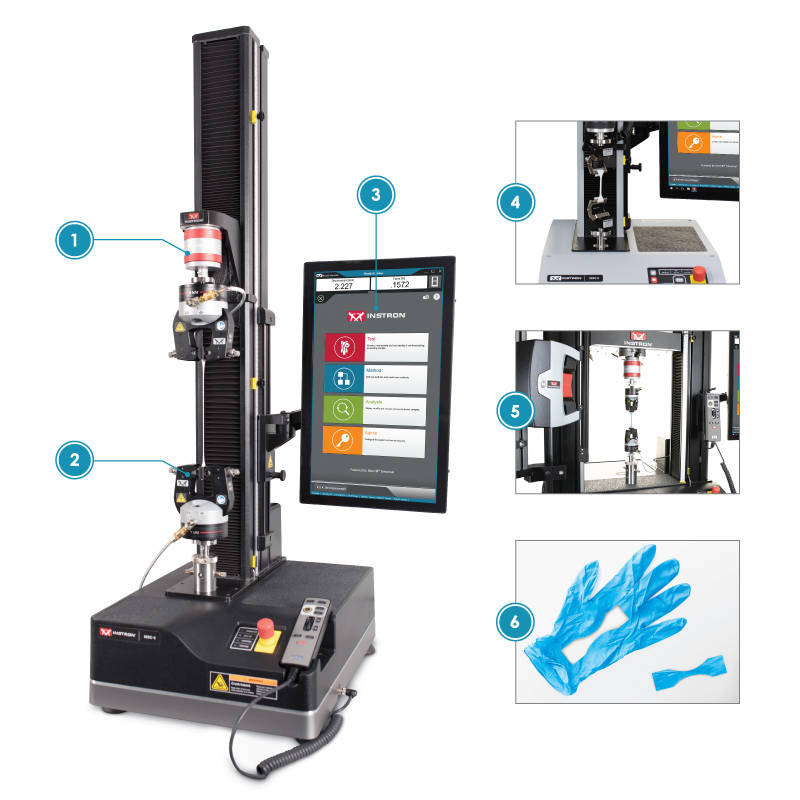
1) Load Cell
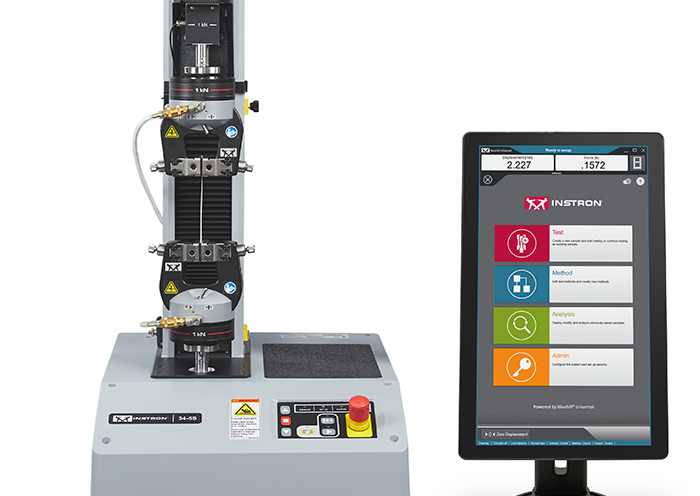
A 500N load cell is an appropriate capacity for all glove materials.
2) Pneumatic Grips
Air pressurized grips ensure consistent clamping forces Jaw faces are easily interchangeable to ensure the correct surface texture is used for the material. Elastomeric materials like rubber gloves typically require rubber coated faces due to how thin the specimen is. The rubber coating is able to prevent slippage of the material without damaging the specimen.
3) Bluehill Software
The biomedical method suite includes preconfigured methods for EN455-2
4) Elastomeric Roller Grips
Roller grips provide a cost effective gripping solution for thin elastomers The roller grip utilizes a proportional clamping pressure which increases as more force is applied to the specimen
5) AVE 2.0
An optical non-contacting strain device can be used to ensure more accurate strain measurement
6) Specimen Preparation
All the major ASTM/ISO/EN standards require a dumbbell shaped specimen to be stamped from the palm of the glove EN 455-2 takes into consideration the potential discrepancies in thickness between the palm and the fingertips. The standard compares their thickness and uses a correction factor for the tensile strength of the speicmen.

ppe_gloves_callout-_003.jpg

Nasal Swabs

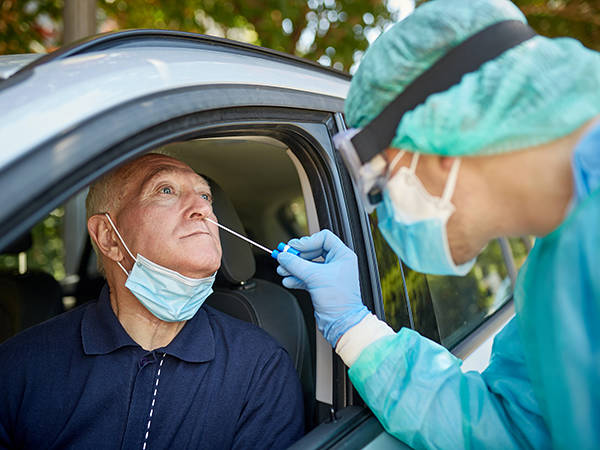
Nasopharyngeal (NP) swabs are crucial tools in the diagnosis of influenza and respiratory diseases. Despite their similar appearance, these swabs are considerably more specialized than the standard cotton swabs used for personal hygiene, using synthetic fibers for the swab staff and tiny bristles for the swab tip. In an effort to bolster the global supply, significant collaborations have occurred between 3D printer manufacturers and medical research teams, which have resulted in a massive increase in production capacity of test quality NP swabs. It is critical to perform mechanical testing to determine if the performance of the 3D printed swabs is comparable to the performance of those produced by standard methods.
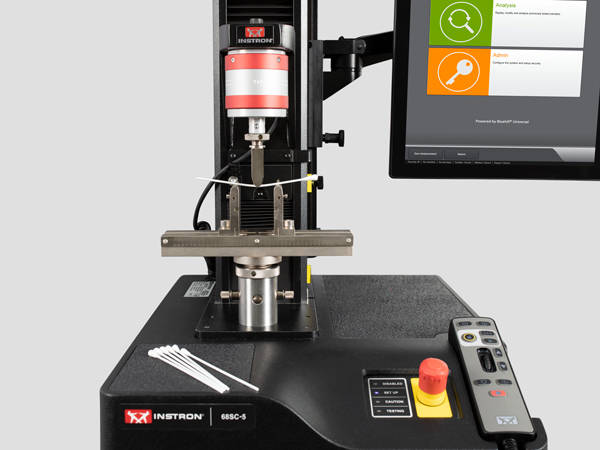
nasal-swab-3-point-bend.jpg

3 Point Bend Test

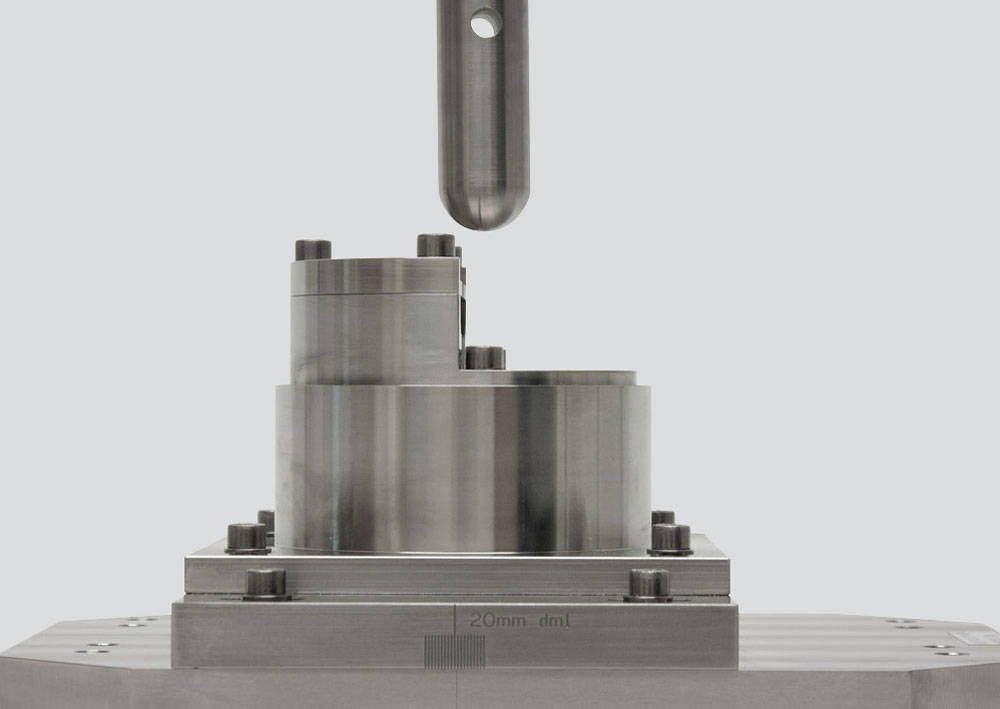
Nasal Swabs are subjected to flexural forces as they travel through the nasal passage. 3 point bend tests help characterize these stresses. It is also important to evaluate the weak point at the tip of the swab which helps achieve the correct size for transport. Instron's standard 2810-400 3-point bend fixture with 10 mm diameter anvils is ideal for these applications.

nasal-swab-cantilever-bend.jpg

Cantilever Bend

The cantilever bend test best represents the stresses seen when the swab is held during the procedure. The material needs to be flexible enough to ensure it will not fail during the test. This setup is accomplished using a component test plate and an advanced screw action grip to hold the specimen in place. Any probe can be used to deflect the tip of the swab.
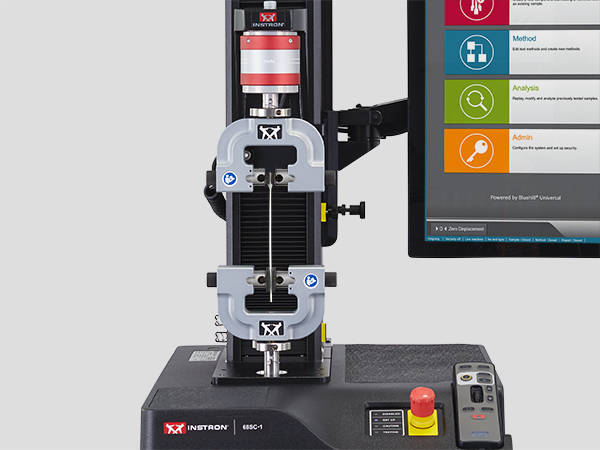
nasal-swab-shear-test.jpg

Tip Shear Strength

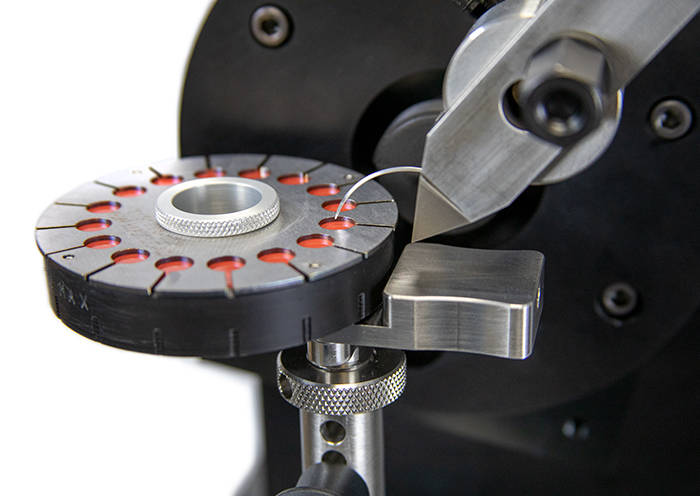
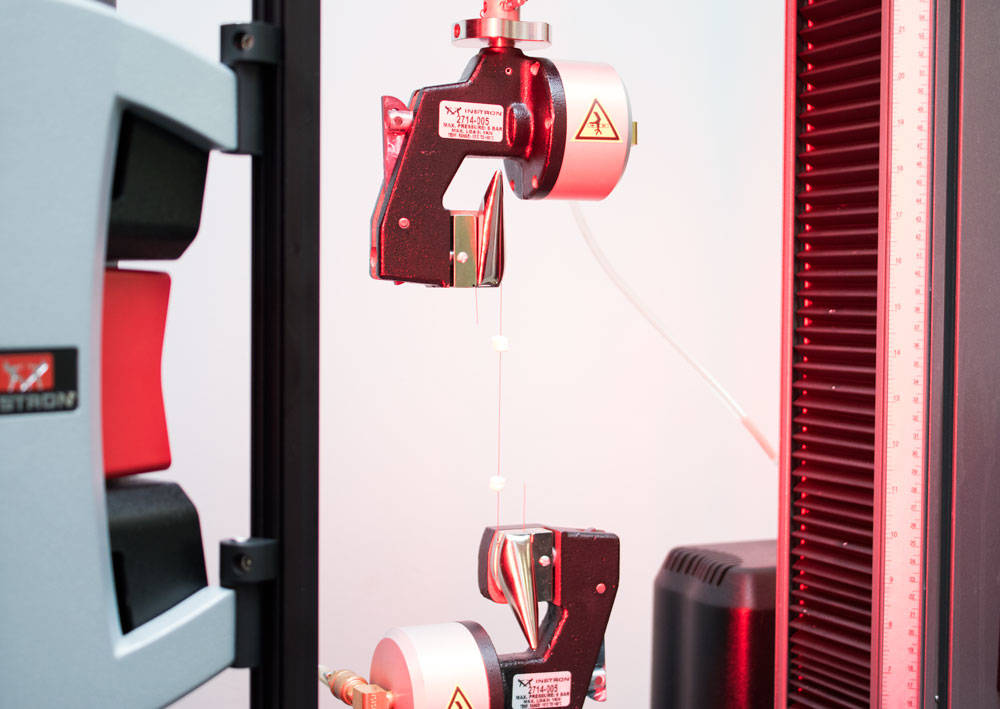
The tip of an NP swab is made of tiny bristles that allow for maximum sample collection. These bristles need to withstand shear forces as they move across the walls of the nasal passage. In order to test this property, the tip and base of the swab are clamped with advanced screw action grips to evaluate the maximum force required to break the bristles or the tip itself.

FDA Requirements in the Age of COVID-19

The Food and Drug Administration is the main regulatory body overseeing the production and distribution of PPE in the United States. The level of FDA involvement depends on the class of the device, which can range from class 1 to class 3 based on the device’s potential risk of nonconformance. Most types of PPE are labeled as class 1 devices, which have the fewest barriers to approval.

Because it can take months or even years to gain FDA approval, in times of health crisis the FDA issues something called an Emergency Use Authorization (EUA). An EUA essentially loosens the requirements for production and distribution of certain medical products to allow production to ramp up quickly. EUAs are currently being granted to manufacturers of COVID test kits, virus therapies, ventilators, respirators, and PPE. These emergency authorizations are generally granted to specific companies who apply to expedite the approval process, but they are also being released as blanket statements covering certain types of PPE so that smaller companies can also participate with minimal red tape. The EUAs include additional documentation that outline the enforcement policy for PPE manufacturing during the current public health emergency and provides criteria for quality control standards as well as the required labeling of products released under the authorization.

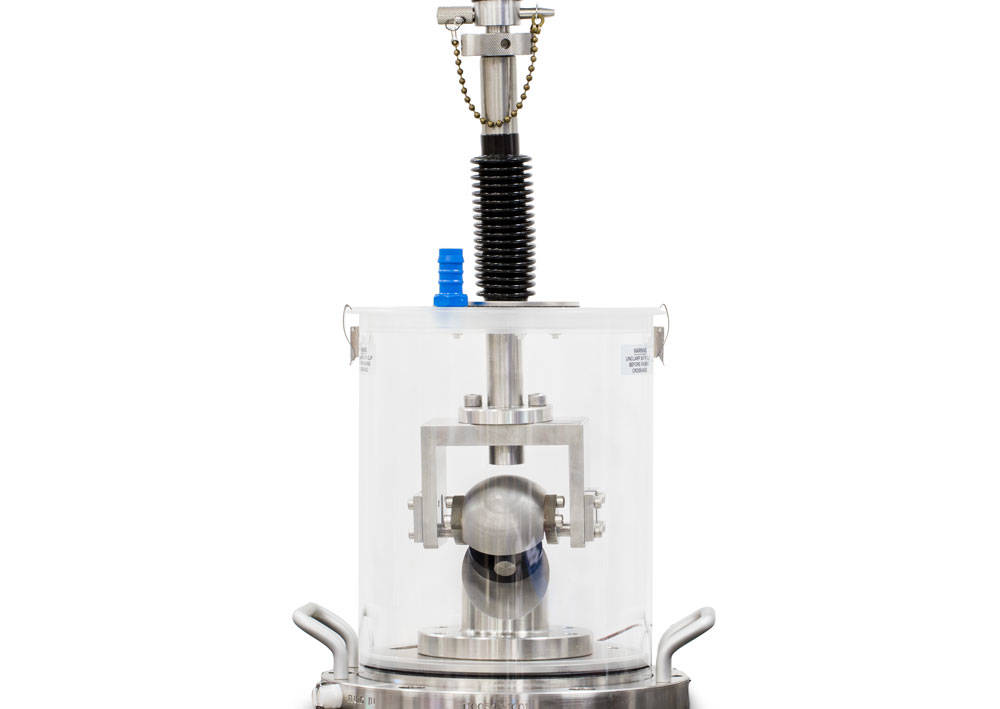
Watch Our PPE Testing Webinar

Intervertebral Disc Testing

Biomedical Testing

Intervertebral Disc Testing

The Challenge

Intervertebral Disc

Intervertebral disc replacement is a surgical technique for the treatment of lower back pain related to degenerative disc disease. The advantage of this technique over traditional spinal fusion is that it preserves or restores motion in the spine, and has the potential to delay the onset of degeneration of healthy discs at adjacent levels in the spine. Disc prostheses are designed to be load bearing over the physiological range of disc motion, and to give years of pain-free and trouble-free operation in the body. Understanding the static and dynamic characteristics of a particular device allows manufacturers and designers to ensure their product is proven and accepted. ASTM F2346 provides a methodology for characterizing the static strength and dynamic fatigue behavior of disc prostheses. The rigorous testing regimes in this standard aim to scientifically validate any prosthesis design. With a typical test run lasting for 10 million cycles and requiring both axial and torsional loading, it is vital that a testing system copes with these performance demands and delivers the highest quality of results. In addition, the requirement to conduct these tests in a wet environment adds to the complexity of the system.

Our Solution 

Intervertebral Disc Testing

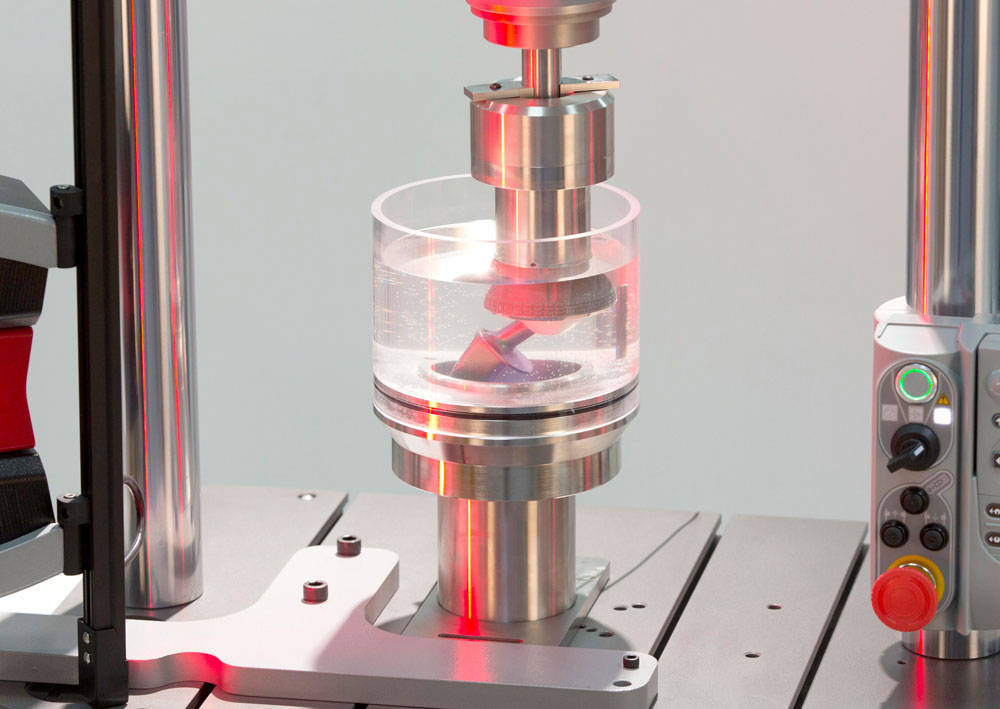
An 8874 axial-torsional system, with the addition of a temperature controller and re-circulator unit, allows device manufacturers and contract research laboratories to conduct both static and cyclic testing on a range of implant designs. The bath, in which saline flow and temperature are controlled, provides a stable environment. With the use of specialized test fixtures, the 8874 system's combined axial-torsional actuator allows for characterization to be conducted in axial compression, compression-shear, and compression-torsion test modes for both articulating discs of traditional metal-on-metal or metal-on-polyethylene design. It's also used for the next generation of prostheses, which feature an elastomeric component to give axial compliance under load that mimic the biomechanics of the natural disc.

Tensile Testing Polymeric Membranes

Biomedical Testing

Tensile Testing Polymeric Membranes

Synthetic membranes are commonly used in the biomedical field. These polymeric membranes, designed to mimic the natural filtration systems in human bodies, are being researched and developed for use in drug delivery systems, medical devices, and artificial bio-organs.

For example, synthetic membranes are used in hemodialysis, which is a method of removing waste products from the body when the kidneys fail. Blood from the patient is passed through a semi-permeable membrane that is immersed in dialysis solution and waste products such as urea in the blood diffuse across the membrane into the dialysis solution.

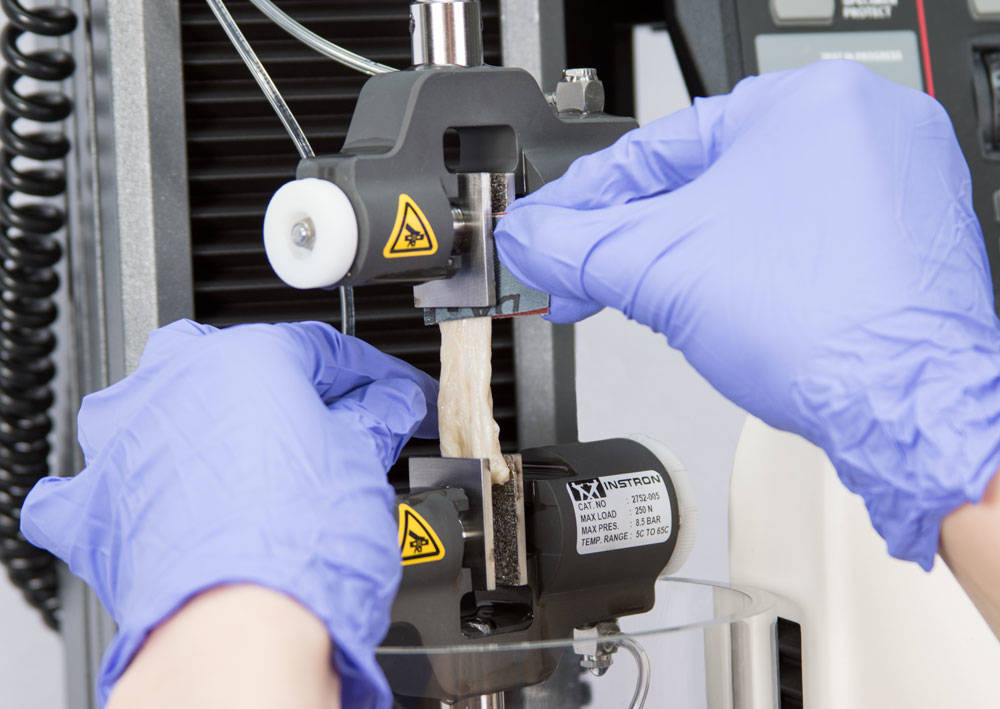
Often these synthetic membranes are moist and slippery, and consquently, tensile testing can be challenging. Similar to testing soft tissues, the gripping surface must offer sufficient friction to firmly hold onto the membrane, but also be delicate enough to avoid specimen tearing.

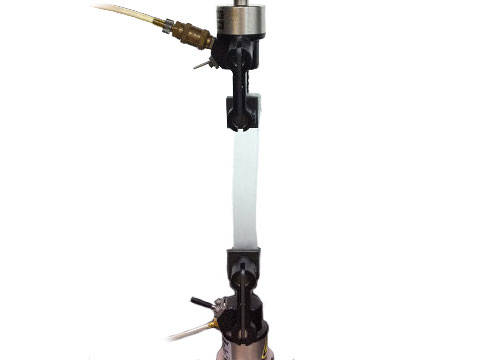
Recently, we were asked to recommend a gripping solution for testing of wet polymeric membranes. In this test, the polymeric membranes were first soaked in water for up to 20 minutes to allow them to soften and swell. The wet specimens were then tested using the 5965 dual column electromechanical machine equipped with pneumatic side action grips and rubber coated jaw faces. Since these membranes are very delicate, the clamping pressure must be carefully controlled as excessive high pressure can cause the specimen to fail prematurely when the grip closes.

Because the specimens are wet, corrosion resistant grips or fixtures should be used. Our 3 Software®Bluehill provides both the test control and results required.

Literature

Bluehill Universal Brochure

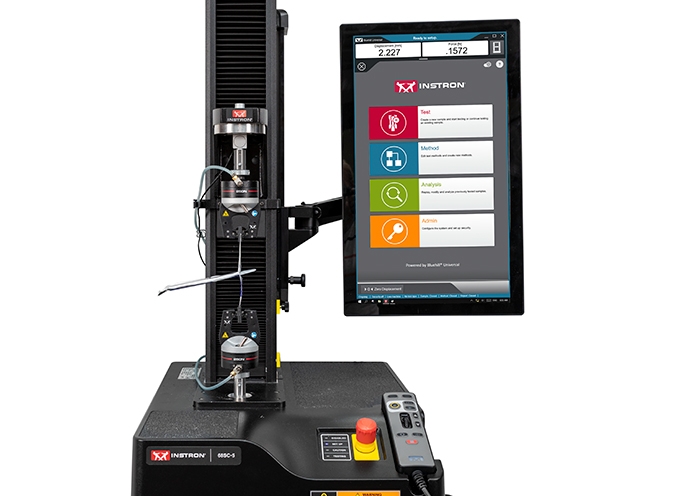
Bluehill Universal is Instron’s advanced materials testing software, designed for intuitive touch interaction and streamlined workflows. It offers pre-loaded test methods, QuickTest for rapid setup, enhanced data exporting, and Instron Connect for direct service communication. Users of Bluehill 2 and Bluehill 3 can easily upgrade to the latest version for improved performance and usability.
  • Produtos
  • 02/26/2017
  • 3.76 MB

Evaluation of Radial Forces from Embolic Filters

Biomedical Testing

Evaluation of Radial Forces from Embolic Filters

Radial Strength Testing of Stent Grafts and Vascular Devices

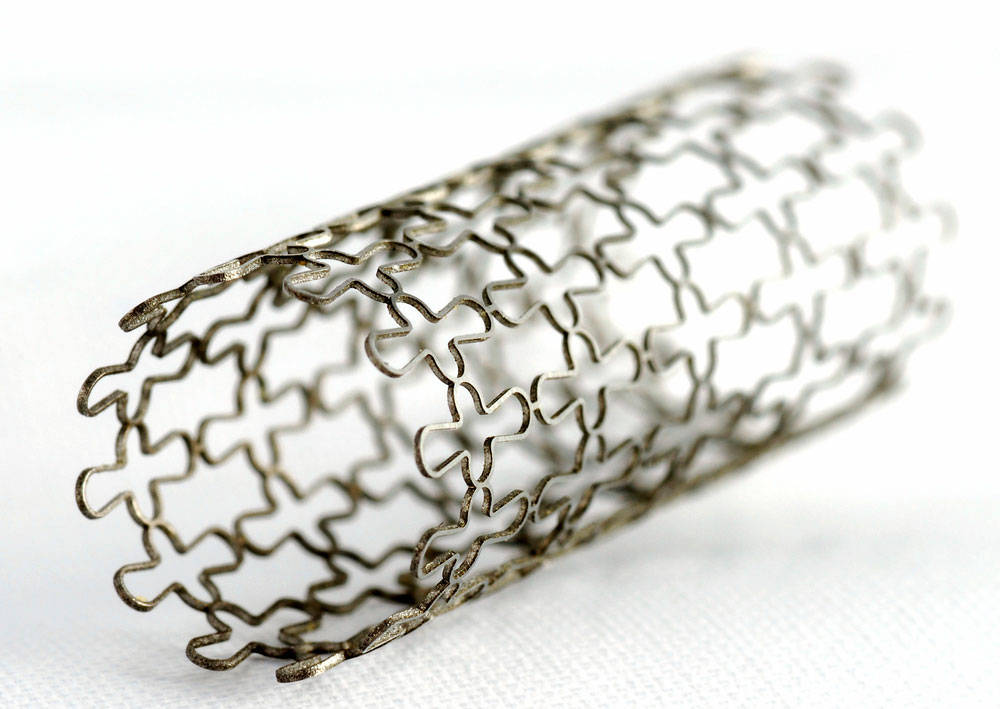
Embolic filters are used within a variety of interventional procedures to capture debris resulting from the deployment of a medical device, like a stent. The stent is used to open arterial paths that may be occluded by plaque. Upon placement of the stent, dislodged plaque (or embolic material) can potentially be responsible for heart attacks, strokes, kidney failure, or death. Firm placement of the embolic filter is a critical requirement for successful procedures.

One of the most critical parameters for proper utilization of the filter is the radial forces it imparts on the arterial wall. In particular, the chronic radial force that the filter imparts over time helps to ensure that the device remains in place as intended. This fit ensures that all material is captured before heading further down the arterial pathways.

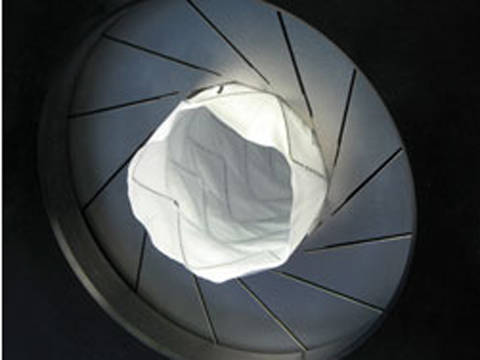
The RX575 system has the fidelity to measure the small radial expansion forces of the embolic filter. The unique segment design of the fixture results in small frictional forces, which ensures that your data will present clean results from the radial tests. The radial fixture mounts to electromechanical instruments, as well as into a fluid bath for accurate simulation of body temperatures. Additionally, the fixture provides the capability for tensile tests to evaluate resistance to tearing properties during deployment.

Bluehill® Software provides an interface to run tests, to evaluate the radial strength, and to generate standard reports that can be submitted for regulatory submissions.

Literature

3400 Series Universal Testing Systems Brochure

Instron 3400 Series universal testing systems for tensile, compression, bend, and other material property tests.

  • Produtos
  • 06/27/2022
  • 2.69 MB

6800 Series Premier Testing Systems Brochure

Instron 6800 Series Universal Testing Systems provide unparalleled accuracy and reliability. Built on a patent-pending Operator Protect system architecture with an all-new Smart-Close Air Kit and Collision Mitigation features, the 6800 Series makes materials testing simpler, smarter, and safer than ever before.

  • Produtos
  • 02/10/2020
  • 4.15 MB

Tissue Adhesives Testing Using a Variable Angle Peel Fixture

Biomedical Testing

Tissue Adhesives Testing Using a Variable Angle Peel Fixture

Tissue adhesives are widely used in the biomedical industry for applications such as bandages, secondary dressings, and wound closure. Although there are no specific standards that address testing using a variable angle fixture, other similar ASTM standards for this test method include: ASTM F2255, F2256, F2258 and F2458. The adhesive strength of these products must be clearly defined before put to use in a clinical setting. If the adhesive is not strong enough, the product may lead to infection or poor healing. If the adhesive is too strong, the underlying tissue may become damaged upon removal.

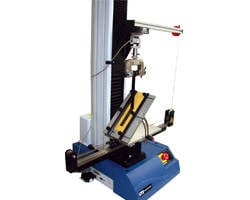
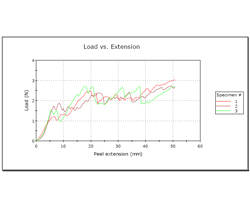
We conducted one example of an adhesive test by using a variable angle fixture that would simulate the action of peeling the adhesive off a patient. We used a 3345 electromechanical test frame configured with a 50 N load cell, a single 250 N capacity pneumatic grip with 25 mm x 25 mm flat metallic faces, and the variable angle peel fixture for this test. The variable angle peel fixture was set at a 135° angle, to best simulate the line of pull that would be seen during normal use of the adhesive product. We used leather as the substrate during this test to best simulate the surface properties of human skin.

The 3 Peel, Tear and Friction Software Module®Bluehill is highly recommended for this type of test. This software module allows for measurement of the first peak load, average load and average load per width, the most commonly used calculations.

Literature

3400 Series Universal Testing Systems Brochure

Instron 3400 Series universal testing systems for tensile, compression, bend, and other material property tests.

  • Produtos
  • 06/27/2022
  • 2.69 MB

Bluehill Universal Brochure

Bluehill Universal is Instron’s advanced materials testing software, designed for intuitive touch interaction and streamlined workflows. It offers pre-loaded test methods, QuickTest for rapid setup, enhanced data exporting, and Instron Connect for direct service communication. Users of Bluehill 2 and Bluehill 3 can easily upgrade to the latest version for improved performance and usability.

  • Produtos
  • 02/26/2017
  • 3.76 MB

Impact Tests On Orthopedic Implants

Biomedical Testing

Impact Tests On Orthopedic Implants

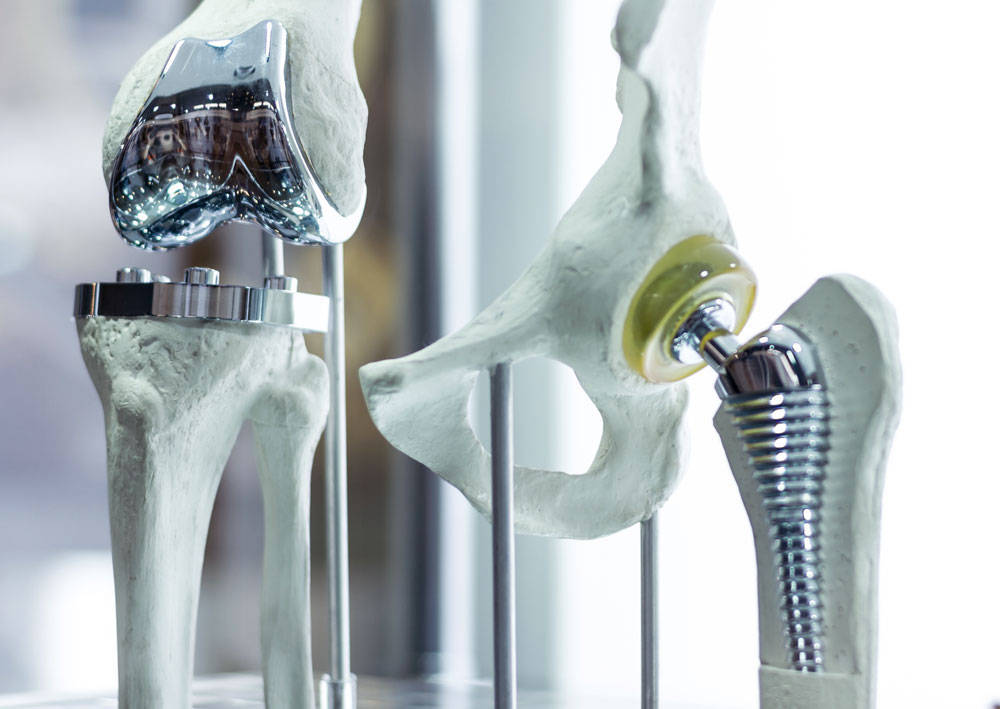
A medical condition called Osteoarthritis is caused when there is minimal joint moment in human body. Lack of joint moment can result into damaged or dysfunctional joints. Orthopedic implants are designed to replace the damaged joint (s) and increase the mobility of an affected part in the human body. To name a few, implants used for hip, knee, shoulder or elbow joints are commonly made of stainless steel. It is important for manufacturers of such orthopedic implants to test their components (various implants) to characterize the impact resistance of their product.

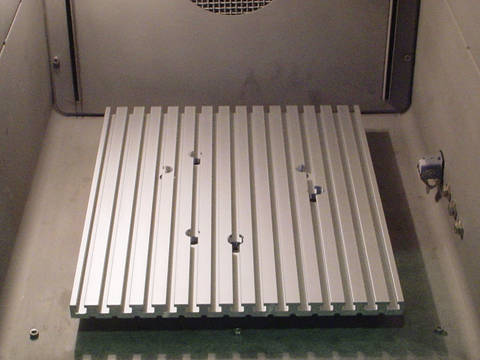
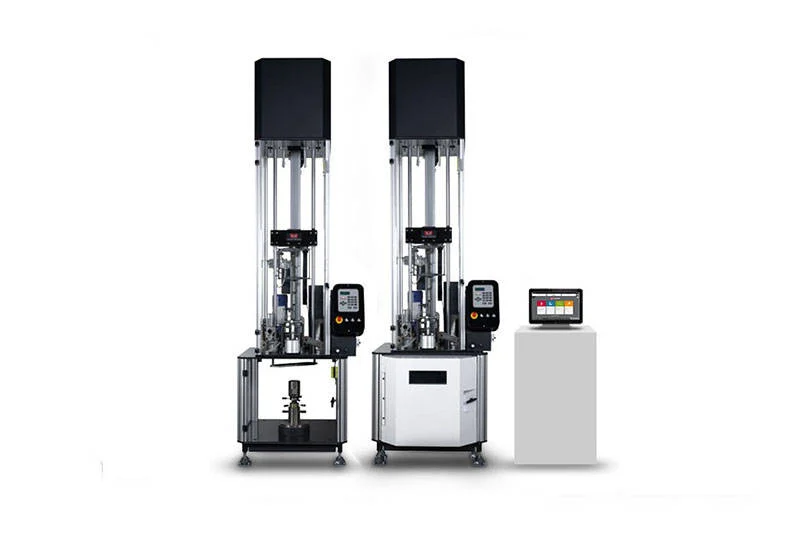
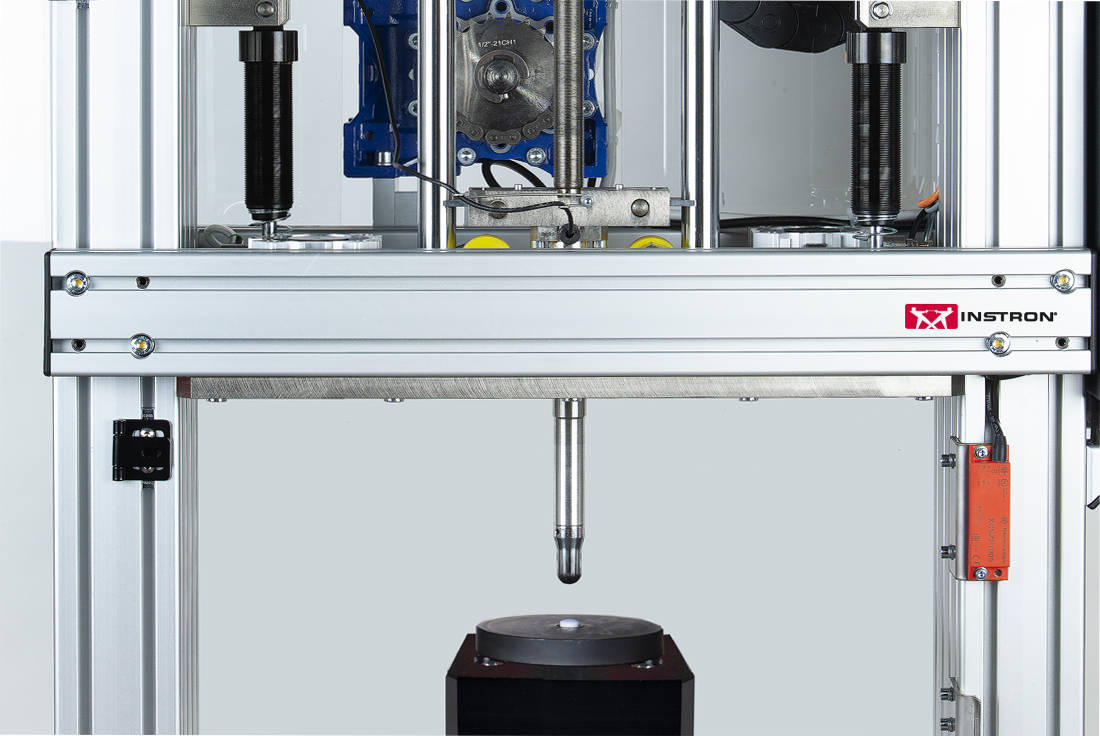
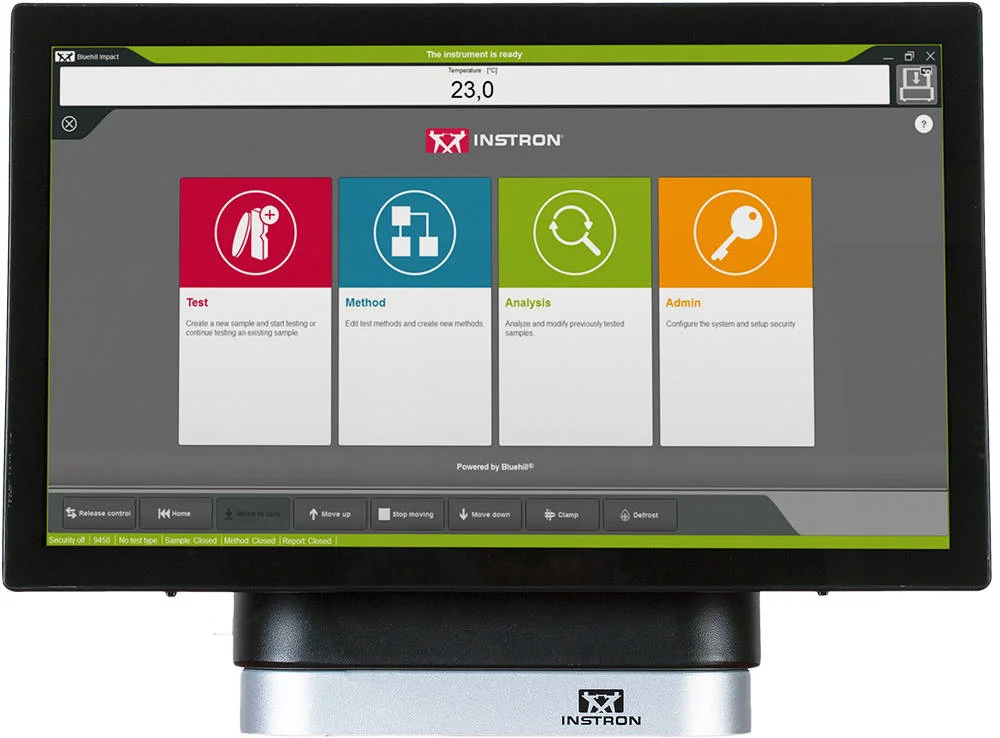
Instron 9400 series is a good fit for such a testing requirement. Since the implants for various body parts are of different shapes & sizes, the testing has to be performed using various custom fixtures. We used a T-slot plate which was bolted at the bottom of 9450. A custom fixture with a clamped knee implant was mounted on the T-slot plate at base of the tower. A 45 kN strain gauge striker was used to impact the knee implant. A Data Acquisition System (DAS) and Bluehill Impact software were used in conjunction with the drop impact machine to collect the force/velocity data and analyze the impact performance.

Alternatively a general purpose plate as seen in the picture can be used instead of a T-slot plate.These versatile plates give flexibility to manufacturers to mount a wide range of custom fixtures as per their own requirements. Such impact tests can be customized to an extent where they can replicate the real life low and high velocity impacts during the actual surgical procedures.

Note: The customer's actual test set up is confidential and hence is not displayed in this application note.

Literature

9400 Series Drop Tower Brochure

Instron Drop Towers are used to develop, fine tune, and validate material models. Testing materials under real impact conditions is a crucial step prior of product design. Using the characterization data obtained with the Instron 9400, coupled with customer supplied high-speed video, you can have confidence in your results and deliver new materials to your customers faster. Our Drop Tower impact systems, fixtures, and tups are designed to meet a wide range of applications and testing standards including: ISO, ASTM, ANSI, Airbus, Boeing, BSI, DIN, EN, FDA, Ford, GM, JIS, NASA, GOST, and more.

  • Produtos
  • 02/05/2020
  • 763.1 KB

9400 Series Dashboard Brochure

Bluehill® Impact is built from the ground up for touch interaction. The Operator Dashboard features large touchpoints to make the user experience simpler and smarter. Easy-to-understand icons and workflows make it easy to train new or experienced users, simplify operator training, and allow you to start testing even faster than ever before

  • Produtos
  • 08/01/2019
  • 2.35 MB

Impact Performance of Pharmaceutical Tablets

Biomedical Testing

Impact Performance of Pharmaceutical Tablets

Support for pharmaceutical tablet impact testing

Common pharmaceutical pills and tablets are usually finished with a coating to facilitate swallowing, time phased release of the medication, identification and branding. Coatings may also help ensure long shelf life by protecting the underlying product from negative environmental conditions such as light, temperature, moisture and mechanical loading. Particularly in the manufacturing and packaging process, tablet coatings are subject to impacts that can cause damage.

Impact testing can deliver value to the manufacturer in the form of performance data for research and development of new coating materials or processes. Once a suitable product has been established, a manufacturer can implement a quality control program utilizing baseline data from an impact performance test to provide ongoing process validation.

An INSTRON 9440 Drop Tower, instrumented with a low load piezo sensor tup (0.45kN or 4.5kN), ½ inch hemispherical or flat tup insert, and Bluehill Impact software are ideal for the testing of pharmaceutical pills and tablets. For fixturing we recommend using a stiff, flat, metal plate which can be easily secured to the table area.

This impact test solution is well suited for determining the impact performance characteristics of pharmaceutical tablets, such as lot consistency and failure or incipient damage points. These characteristics may in turn be related to the coating material used on the product. By understanding how the coating may strengthen or weaken the pills, changes to improve the product can be made.

Literature

9400 Series Drop Tower Brochure

Instron Drop Towers are used to develop, fine tune, and validate material models. Testing materials under real impact conditions is a crucial step prior of product design. Using the characterization data obtained with the Instron 9400, coupled with customer supplied high-speed video, you can have confidence in your results and deliver new materials to your customers faster. Our Drop Tower impact systems, fixtures, and tups are designed to meet a wide range of applications and testing standards including: ISO, ASTM, ANSI, Airbus, Boeing, BSI, DIN, EN, FDA, Ford, GM, JIS, NASA, GOST, and more.

  • Produtos
  • 02/05/2020
  • 763.1 KB

9400 Series Dashboard Brochure

Bluehill® Impact is built from the ground up for touch interaction. The Operator Dashboard features large touchpoints to make the user experience simpler and smarter. Easy-to-understand icons and workflows make it easy to train new or experienced users, simplify operator training, and allow you to start testing even faster than ever before

  • Produtos
  • 08/01/2019
  • 2.35 MB

Radial Force Evaluation of Stent Grafts

Biomedical Testing

Radial Force Evaluation of Stent Grafts

Stent grafts are used to treat a wide variety of peripheral arterial issues, as well as abdominal and aortic pathologic conditions like abdominal aortic aneurysms (AAA). The success of endovascular stent grafts for AAA’s has provided motivation to adapt similar technology for descending thoracic aortic aneurysms (TAA’s). Survival rates for untreated and traditionally treated (through complex thoracic surgeries) aneurysms are typically quite poor.

Advantages of stent grafts include shorter operative time, avoidance of major thoracic or thoracoabdominal incisions, and significant reductions in morbidity and mortality. Successful surgery requires the accurate placement of the stent graft to ensure it does not move, especially in upper descending thoracic aorta cases.

Typically, secure placement for stent grafts is a function of the proper selection and sizing since physiological movements of the aorta can be significant. Additionally, stent grafts have much larger diameters than coronary stents (30+ mm versus 2-3 mm). Evaluating the radial strength of a stent graft helps manufacturers to ensure efficacy and reliability of the medical device when implanted in vivo.

Instron partners with Machine Solutions Inc. (MSI) to utilize either a RX575 or RX675 stent iris on an Instron system. The fixture can also be customized and used for special specimen types to provide radial strength and stiffness over the entire graft or the securing graft ends. The control software to operate MSI’s RX fixture on an Instron system is standard Bluehill® 3 and TestProfiler. Although room-temperature testing provides excellent comparative results, the system can also be configured with a chamber to provide simulation of body temperature.

Literature

6800 Series Premier Testing Systems Brochure

Instron 6800 Series Universal Testing Systems provide unparalleled accuracy and reliability. Built on a patent-pending Operator Protect system architecture with an all-new Smart-Close Air Kit and Collision Mitigation features, the 6800 Series makes materials testing simpler, smarter, and safer than ever before.

  • Produtos
  • 02/10/2020
  • 4.15 MB

Implantable Devices

Biomaterials

Dental

Orthopedics

Soft Tissue Testing

Biomedical Testing

Soft Tissue Testing

The Challenge

Skin

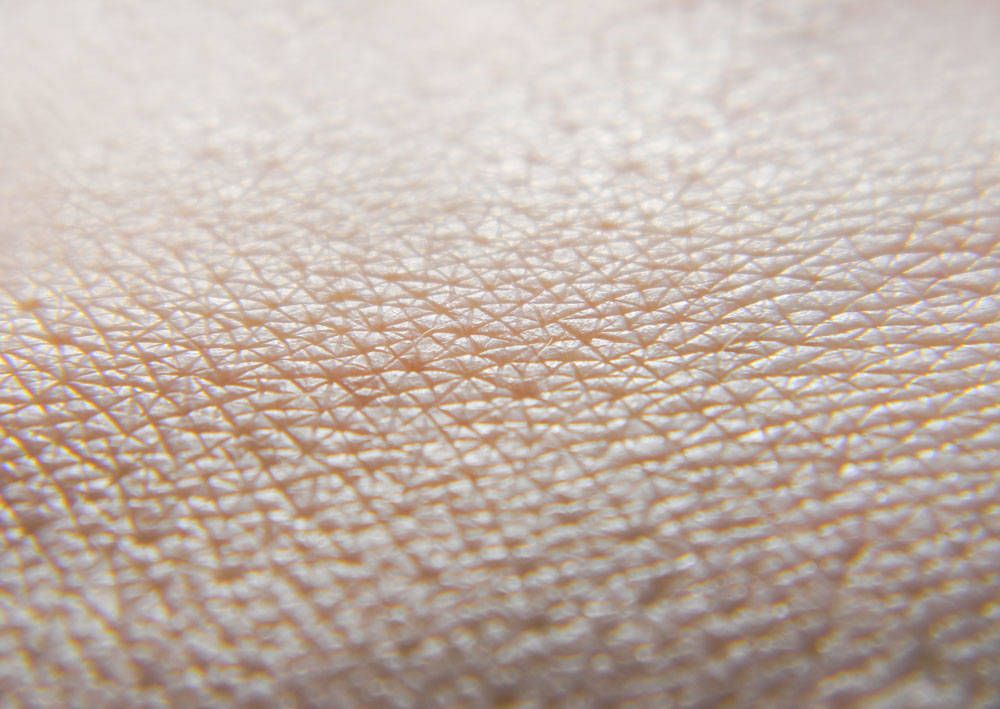
Testing soft tissues, such as skin, tendons, ligaments, and others, presents many challenges. Specimens of this type are delicate; hence they break at low forces. Gripping soft tissues can also be problematic given that these specimens are small, slippery, and compliant in nature. In addition, soft tissues are viscoelastic and often require accurate elongation or strain measurement to properly understand the material properties. Typically, in vivo conditions are needed to test soft tissues, which calls for the test to be performed at body temperature and in a hydrated state. This requires the testing equipment and fixture to be corrosion resistant and "waterproof" to avoid damaging the sensitive electronics of the testing system.  

Our Solution 

Soft Tissue Testing

For testing at physiological conditions, the Instron® BioBath is an ideal solution for keeping a specimen fully hydrated in a saline solution and at 37°C. The BioBath uses a closed-loop temperature control measurement, which can be fed directly into the test system's software to accurately track specimen temperature, in addition to mechanical test data. Pneumatic grips are recommended for consistent clamping pressure that the user can vary up to 90 PSI. A high friction surface is often needed to grip slippery biomaterials to avoid specimen slipping. To avoid this, we recommend using a metallic high friction finish known as surfalloy on the grip face, but grit sandpaper is also a viable option. A stainless steel tray, such as the BioTray, can help protect the system's electronics from damage in the case of spills or messy specimens.

Ensaios de Consumíveis Médicos


Biomedical Testing


Ensaios de Consumíveis Médicos

ENSAIOS DE CONSUMÍVEIS MÉDICOS

Um Guia para Consumíveis de Uso Único, como EPIs, Ferramentas Cirúrgicas e Produtos para Fechamento de Feridas
Os consumíveis médicos representam a maior categoria de ensaios biomédicos e incluem uma ampla variedade de produtos de uso único, como ferramentas cirúrgicas, EPIs, produtos para fechamento de feridas, produtos para coleta de amostras e muito mais. Os ambientes de saúde dependem de produtos de uso único para mitigar a ocorrência de infecções hospitalares e garantir a segurança do paciente. Esses produtos são normalmente dispositivos médicos da classe I ou II da FDA, que, apesar de terem requisitos de teste menos rigorosos do que os produtos de maior risco, são frequentemente produzidos em quantidades tão grandes que etapas específicas devem ser tomadas para dar suporte a ensaios mecânicos de alto volume. Para compensar os volumes maiores, a produtividade e a repetibilidade tornam-se requisitos de teste críticos, abordados por meio de garras especializadas, fluxos de trabalho eficientes para o operador e software intuitivo. Outro componente crítico nesta categoria é a embalagem de grau médico usada para produtos acabados, que possui seu próprio conjunto de requisitos de ensaio. Para obter mais informações sobre outras aplicações biomédicas, visite nossa página da Indústria Biomédica.
luva médica

ESPECTRO DE ENSAIOS DE PRODUTOS

A avaliação desses dispositivos pode ocorrer em muitos pontos ao longo dos processos de desenvolvimento e produção do produto, o que significa que a amostra real do ensaio pode variar em complexidade, desde matérias-primas até subcomponentes e produtos acabados. No estágio de matéria-prima, a metodologia de ensaio é frequentemente muito mais prescritiva para padrões bem definidos e soluções de garras conhecidas. Em muitos casos, garras de tração ou pratos de compressão padrão podem ser utilizados para avaliar adequadamente diferentes materiais e ajudar os engenheiros a tomar decisões informadas em relação à seleção de materiais para seu produto. No nível de ensaio de componentes, a geometria exclusiva do produto cria uma maior necessidade de garras personalizadas. A utilização de mesas XY ou placas de ensaio perfuradas oferece aos usuários a flexibilidade de adaptar seu sistema a muitos tipos diferentes de componentes. Essas garras também permitem garantir que o eixo de carga esteja devidamente alinhado com a característica de interesse no produto. Os componentes podem precisar ser avaliados de muitas maneiras diferentes para caracterizar totalmente o desempenho do dispositivo. Uma avaliação de desempenho completa também pode exigir uma avaliação qualitativa do modo de falha, além dos dados medidos de carga e deslocamento. Câmeras de ensaio integradas podem ser úteis para fornecer feedback visual do evento de falha sincronizado com os dados do ensaio.

POTENCIAL DE AUTOMAÇÃOEspecialmente no contexto de uma pandemia global, a demanda por consumíveis médicos, especialmente EPIs, mostrou-se imprevisível. Mudanças drásticas na produtividade dos ensaios para esses produtos tornaram-se a norma. A integração da automação em um programa de ensaios mecânicos pode proporcionar melhorias na produtividade, repetibilidade e qualidade geral do produto. Na maioria dos casos, o ensaio de consumíveis médicos é do tipo "pegar e colocar", exigindo interação mínima do operador. Isso o torna um candidato perfeito para automação por meio de robôs colaborativos ou mesas XY automáticas. A automação também pode incluir a integração de seu equipamento aos sistemas de gestão de qualidade existentes, servindo para criar um feedback de malha fechada em seu processo de fabricação. Esse feedback pode ajudar a minimizar o desperdício no processo de produção, usando dados mecânicos coletados para fazer alterações em tempo real nos parâmetros de produção upstream.

automação de ensaios biomédicos

EMBALAGEM

Os produtos médicos exigem embalagens herméticas robustas para garantir que a esterilização do dispositivo seja mantida até o momento do uso. Esta embalagem é crítica para evitar qualquer contaminação, o que resultaria, em última instância, em um paciente adquirindo uma infecção. Para verificar a resistência da selagem da embalagem, a maioria dos clientes realiza ensaios de acordo com a ASTM F88, que fornece os critérios de ensaio para avaliar a selagem. Os principais desafios são a preparação da amostra e a coleta de dados. Existem muitas garras de preparação de amostras para produzir uniformemente as tiras de 1 polegada de largura necessárias de acordo com a norma. O ensaio de resistência de selagem resultará em uma curva não uniforme com mudanças instantâneas que exigem uma taxa de captura de dados alta o suficiente para garantir que você esteja registrando o evento com precisão. Se a taxa de captura de dados for muito baixa, a curva de carga poderá ser arredondada e resultar em uma resistência média de selagem artificialmente baixa. Garras pneumáticas com faces planas são ideais para segurar repetidamente as extremidades da amostra sem danificar o material de forma alguma.

FOCO EM SUSTENTABILIDADE

Os hospitais estão cada vez mais preocupados com as questões de resíduos causadas pelo consumo de produtos médicos de uso único. O desenvolvimento de bioplásticos é uma indústria em expansão com uma forte necessidade de mercado, e normas estão atualmente em desenvolvimento para abordar uma gama de propriedades de biopolímeros em muitas aplicações de saúde. Enquanto isso, muitas normas típicas de plásticos, como ASTM D638 e ISO 527, atualizaram sua redação para incluir bioplásticos e plásticos impressos em 3D. Os requisitos de ensaio para essas normas são bem conhecidos e, ao usá-los para avaliação, os pesquisadores podem distinguir claramente entre as propriedades materiais do petróleo e as dos plásticos de base biológica. O pesquisador pode precisar realizar ensaios de tração, compressão, flexão, torção e outras formas de ensaio nesses novos materiais sustentáveis para caracterizá-los adequadamente. As instalações de P&D precisam das ferramentas à sua disposição para realizar essas análises abrangentes e superar os obstáculos regulatórios que a FDA e outras organizações internacionais criarão.

Ensaios de Dispositivos de Administração de Medicamentos e Recipientes


Biomedical Testing


Ensaios de Dispositivos de Administração de Medicamentos e Recipientes

Ensaios de Dispositivos de Administração de Medicamentos e Recipientes

Um Guia para Ensaios de Seringas, Cartuchos e Frascos

A demanda global por produtos farmacêuticos está em ascensão, impulsionada por maiores taxas de incidência de doenças crônicas, pelo envelhecimento da população e pela ameaça de futuras pandemias. Pacientes e médicos esperam que os recipientes de administração de medicamentos estejam isentos de defeitos, sendo capazes de proteger o medicamento durante todo o seu transporte e implementação. Falhas podem representar um risco grave ao paciente ou resultar no descarte de grandes quantidades de suprimentos essenciais. Por essas razões, os recipientes e dispositivos de administração de medicamentos exigem uma avaliação rigorosa, imposta por órgãos reguladores globais, para garantir que funcionem conforme pretendido. Existem múltiplos tipos de recipientes de medicamentos projetados para armazenar e administrar remédios sob diversas circunstâncias. Esta página diferencia os vários recipientes e identifica os objetivos e desafios de ensaio exclusivos associados a cada um. Para mais informações sobre outras aplicações biomédicas, visite nossa página da Indústria Biomédica.

Seringa

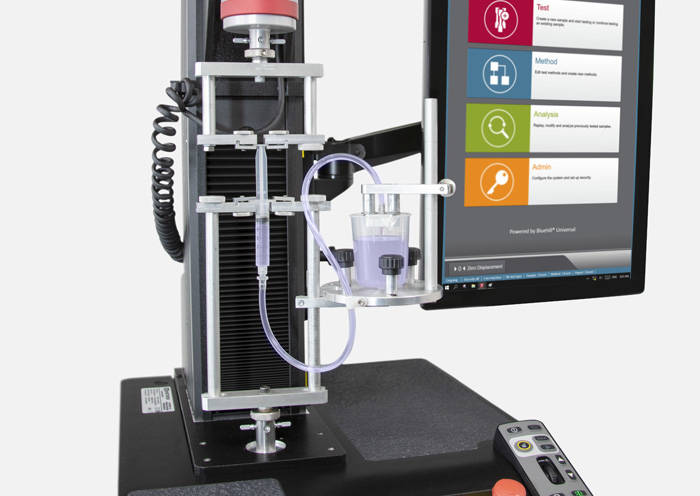
Teste de seringas

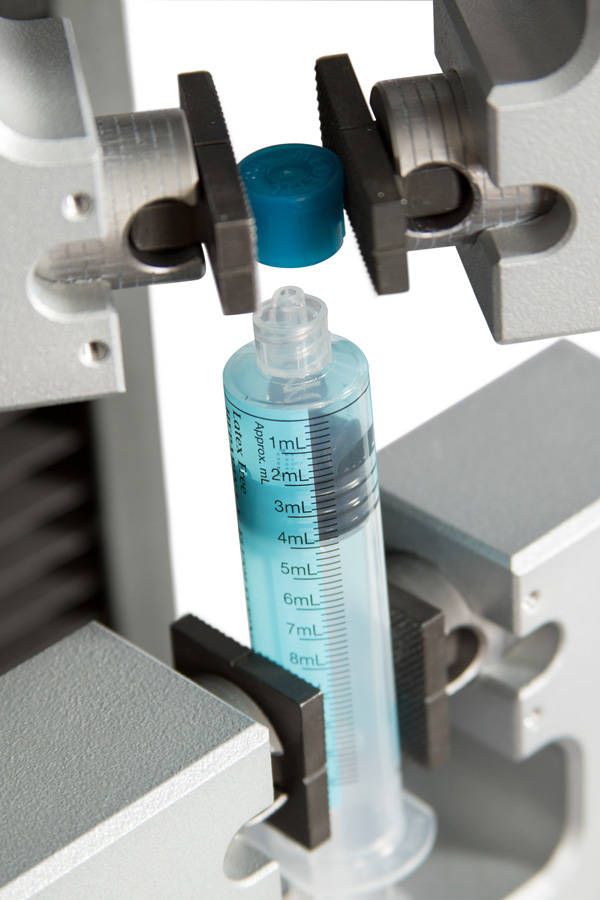
Como são responsáveis pela administração de muitos medicamentos diferentes em diversos cenários, as seringas são fabricadas em várias variedades. As seringas de vidro representam a maior porcentagem do mercado, seguidas de perto pelas de plástico, com um mercado menor para seringas de aço inoxidável. Apesar de sua simplicidade inerente, existem centenas de considerações de design que devem ser feitas ao criar esses produtos, pois servem tanto como recipientes quanto como dispositivos de administração de medicamentos. Os ensaios mecânicos visam abordar muitas dessas questões e auxiliar os fabricantes a alcançar o desempenho ideal e manter a qualidade da produção.

A usabilidade do dispositivo é uma das considerações de design mais importantes. Para seringas, isso significa a facilidade de dispensar o fluido usando o êmbolo. Alcançar o desempenho ideal pode exigir modificações nas tolerâncias geométricas do cilindro, na rugosidade da superfície interna, nos processos de siliconização, na geometria do batente do êmbolo e muito mais. Os fabricantes devem contar com ensaios mecânicos durante o processo de P&D para qualificar e avaliar todas as decisões de design.

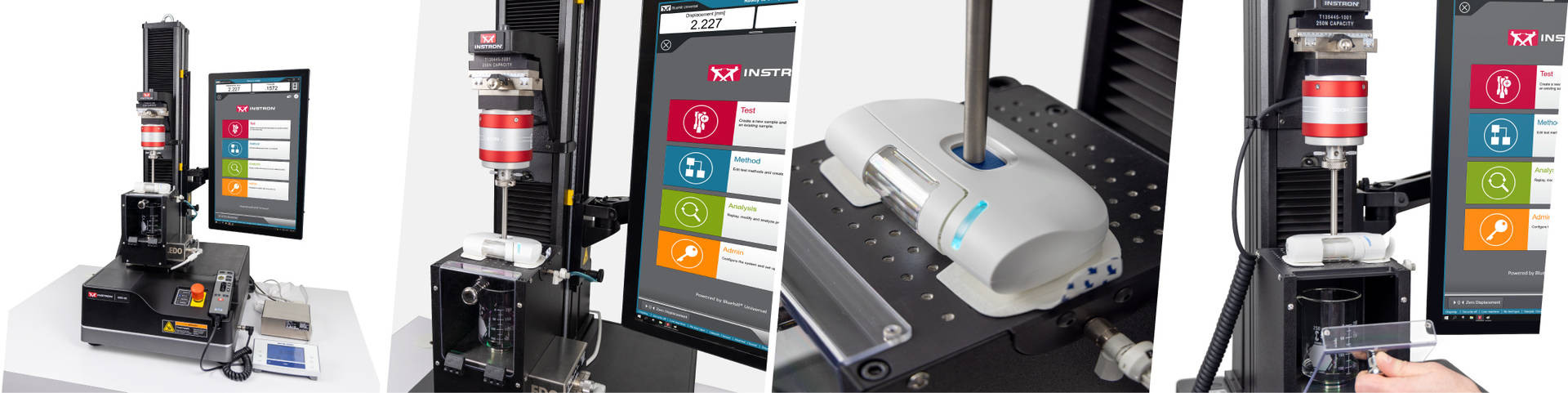
Outra consideração importante são os mecanismos de fechamento e segurança do dispositivo. Algumas agulhas de vidro possuem agulhas fixas inseridas no cone do cilindro e exigem um protetor de agulha, enquanto a maioria das seringas utiliza uma conexão luer para fixar uma tampa e uma agulha separada. Os mecanismos de segurança podem ser classificados como ativos ou passivos, dependendo da interação do usuário. A segurança ativa requer uma ação distinta do operador, como colocar um protetor sobre uma agulha exposta. Mecanismos passivos normalmente usam uma mola para esconder ou cobrir a agulha após o uso para evitar ferimentos por perfurocortantes. Em ambos os tipos de mecanismo, um dos principais desafios de ensaio é o alinhamento. Erros de concentricidade podem afetar os valores de força e torque da medição. Garras autocentrantes são ideais para essas aplicações e eliminam oportunidades de erro do operador.

Tanto as seringas de vidro pré-cheias quanto os cartuchos podem ser colocados diretamente em dispositivos automáticos de administração de medicamentos. Esses dispositivos são projetados para acionar mecanicamente a administração do medicamento após o paciente pressionar um botão ou acionar um protetor de agulha. Durante a ativação, uma mola carregada empurra um êmbolo no recipiente e dispensa o fluido. Dispositivos automáticos de administração de medicamentos aumentam drasticamente a facilidade de uso para o paciente, mas também apresentam complexidade de design adicional que exige a avaliação de muitos subcomponentes e funcionalidades. Muitos clientes abordam isso com múltiplos sistemas de ensaio, cada um designado para uma avaliação diferente, como volume ejetado ou profundidade de inserção do comprimento da agulha. Os fabricantes podem melhorar a produtividade, reduzir a influência do operador e simplificar os fluxos de trabalho de ensaio utilizando uma solução única pronta para o uso para realizar todos os ensaios funcionais necessários.

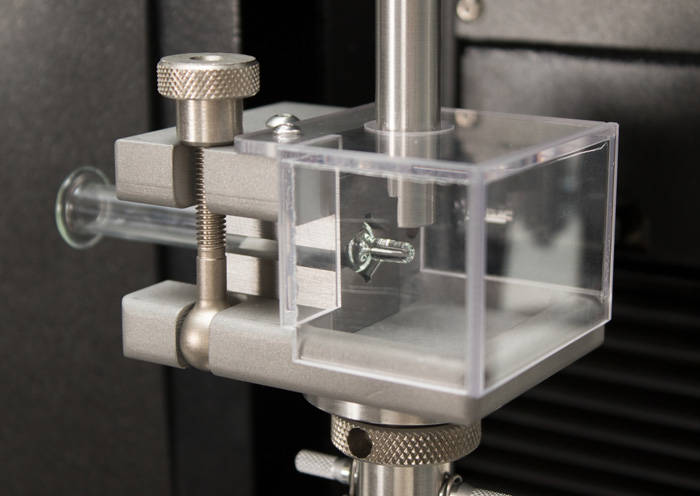
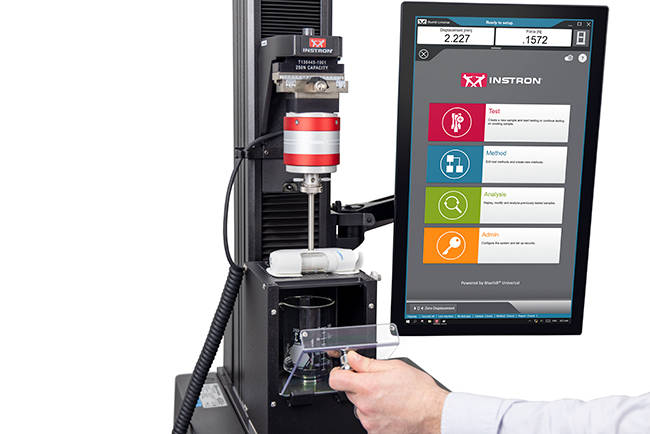
Ensaio de Remoção da Tampa da Seringa

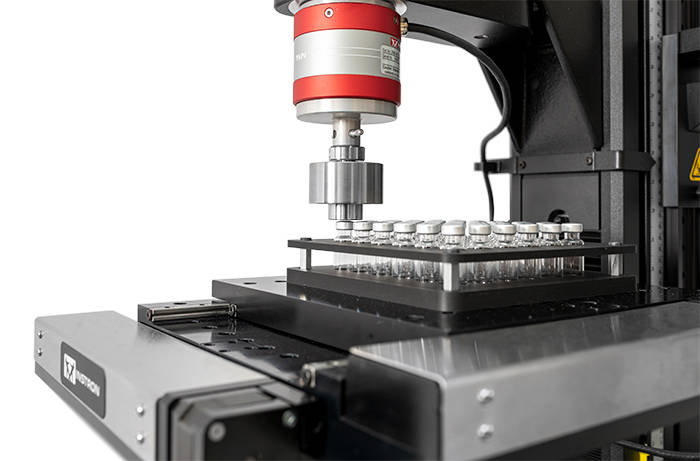
Ensaios de Cartuchos

Ensaio de Cartucho em Estágio XY Automatizado

Cartridge Testing on Automated XY Stage

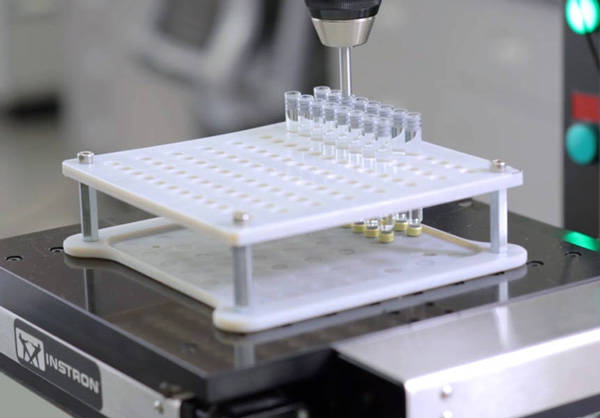
Os cartuchos são mais comumente usados em sistemas automatizados de administração de medicamentos, incluindo autoinjetores, canetas injetoras e dispositivos vestíveis (wearables). Eles apresentam vantagens exclusivas para empresas farmacêuticas, sendo mais simples de fabricar do que as seringas e mais compactos para uma melhor eficiência de armazenamento. Eles também possuem um design simples, consistindo em um recipiente de vidro borossilicato com vedação elastomérica e batente, fechado por uma tampa de alumínio. O cartucho depende de dois mecanismos externos para administrar o medicamento – uma ação manual ou automatizada para acionar o êmbolo, e uma agulha acoplável para canalizar o medicamento para o corpo. A maioria dos ensaios em cartuchos avalia o primeiro, garantindo que as forças necessárias para dispensar o fluido possam ser alcançadas dentro do dispositivo.

Assim como nas seringas, o alinhamento é um desafio primordial para obter resultados de ensaio repetíveis. As preocupações com o alinhamento podem ser mitigadas usando dispositivos de fixação autoalinháveis e a capacidade de fazer ajustes XY na área de trabalho. A geometria dos cartuchos apresenta uma diferença fundamental na fixação necessária para os ensaios. Eles não possuem flanges para os dedos, o que significa que toda a força de fixação deve ser aplicada nas laterais do recipiente. As forças de fixação devem ser calibradas para evitar danos ao recipiente, que é feito de vidro. O uso de um inserto para apoiar o fundo do cartucho pode limitar a aplicação de cargas laterais e resultar em melhor repetibilidade nos ensaios.

Ensaios de Frascos

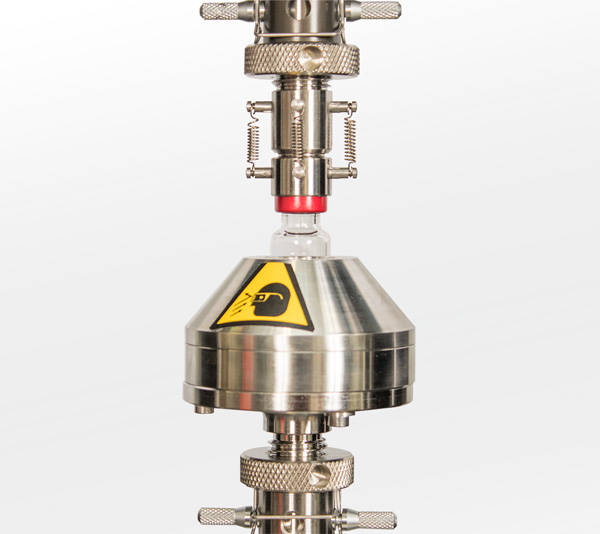
Os frascos são recipientes de armazenamento para produtos farmacêuticos e não fazem parte da administração real do medicamento. Eles geralmente consistem em um recipiente de vidro, vedação de borracha e uma tampa de alumínio lacrada. Uma seringa é usada para perfurar a vedação de borracha e extrair a dosagem precisa necessária para a administração. Uma preocupação para os fabricantes de frascos é a integridade do fechamento do recipiente (CCI), uma série de avaliações para validar se o fechamento evita que partículas externas contaminem o produto. Esses ensaios em si não são de natureza mecânica e utilizam meios elétricos ou pressurizados para determinar a integridade do fechamento.

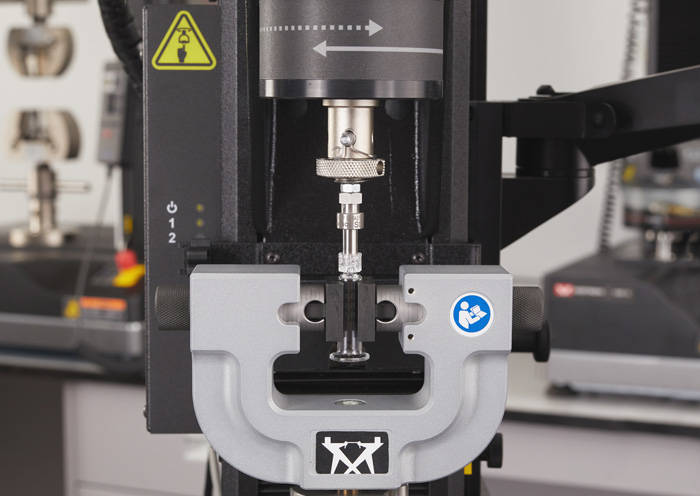
Os sistemas da Instron ajudam a fornecer evidências empíricas identificando os principais parâmetros mecânicos para a vedação elastomérica e o procedimento de lacração que se correlacionam com o desempenho da CCI. A Força de Vedação Residual (RSF) é um dos principais ensaios realizados, determinando a força necessária para superar as forças internas da vedação elastomérica, que mantém o contato entre o frasco e a tampa. Este ensaio é vital para avaliar as muitas variáveis que podem, em última análise, afetar a CCI:

  • Tempo desde a Vedação
  • Temperatura de Armazenamento
  • Umidade de Armazenamento
  • Design do Batente
  • Material do Batente
  • Técnica de Lacração

Os principais desafios relacionados ao ensaio de RSF são garantir o alinhamento adequado do dispositivo e a avaliação do ponto de RSF na curva de deslocamento de carga. Embora muitos operadores selecionem manualmente o ponto na curva, o software Bluehill Universal® permite que o operador adicione medições de primeira e segunda derivada, permitindo o reconhecimento e a seleção automática dos pontos de inflexão associados à RSF.

Ensaios adicionais são realizados em relação ao uso médico e à rotulagem. O grupo de produtos personalizados da Instron projetou dispositivos de fixação especializados para remover repetidamente a tampa plástica e retirar o rótulo, pois é importante garantir que a força de adesão possa ser mantida em temperaturas de armazenamento quentes, frias ou flutuantes.

Ensaio de Força de Vedação Residual

Melhorando a Eficiência e a Repetibilidade

À medida que você avança para a comercialização de um produto, a quantidade de ensaios aumentará inevitavelmente. Eficiência e repetibilidade são dois parâmetros críticos que podem ser afetados pelo aumento do volume. Para lidar com isso, existem muitas soluções que podem ser utilizadas para melhorar o fluxo do processo e reduzir erros do operador. Essas soluções podem incluir:

Cenário do Mundo Real: O ensaio de verificação de design, por exemplo, é sempre o esforço final antes de receber a aprovação do produto, mas pode ocorrer apenas algumas vezes por ano. Garantir que o laboratório tenha a equipe apropriada para concluir todos os ensaios necessários e produzir a documentação e análise pode ser um desafio. A utilização da automação pode ajudar a enfrentar esses desafios, eliminando a necessidade de os operadores ficarem à frente do sistema e, em vez disso, trabalharem simultaneamente em outras tarefas exigidas. A automação, como o cobot CT-6, pode ajudar a otimizar a eficiência do laboratório, permitindo que um gerente de laboratório distribua adequadamente a carga de trabalho e cumpra os prazos apertados associados ao lançamento do produto.

Sistema Cobot para Ensaios de Seringas

FDA 21 CFR Part 11 Compliance

Biomedical Testing

Materials Testing Lab

FDA 21 CFR PART 11 COMPLIANCE FOR MECHANICAL TESTING LABS

What Is Required and How You Can Achieve It

What is FDA 21 CFR Part 11?

21 CFR Part 11 is a regulation that applies specifically to electronic documentation provided to the FDA. First published in 1997, the original intent was to create a framework that ensured electronic means of recording, approving, and submitting documents was effectively equivalent to handwritten paper documents in terms of security. The objective was to ensure that companies were capable of using electronic record keeping technology as it became more commonly utilized within the industry.

Who Does 21 CFR Part 11 Apply To?

FDA 21 CFR Part 11 applies to any pharmaceutical or medical device manufacturer submitting product documentation to the FDA for approval for sale within the United States or as part of any post-market surveillance activities.

What are the Requirements of 21 CFR Part 11?

Regulatory requirements mainly apply to the processes surrounding electronic record creation, retention and submission. The regulation specifically discusses the need for software validation, use of electronic signatures, a searchable time-stamped audit trail, and access to traceable record copies.


INSTRON PRODUCTS


Compliance is best achieved through a partnership between a manufacturer and its equipment suppliers, where the equipment supplier provides the tools to effectively and efficiently integrate the equipment into the manufacturer's quality management system. Instron's Bluehill® Universal software, compatible with static universal testing systems, offers several features designed to aid in 21 CFR Part 11 compliance. Bluehill Central lab management software allows for centralized management of multiple instances of Bluehill Universal, further simplifying the processes necessary for compliance.


Bluehill Universal
Bluehill Universal

Bluehill Universal is the testing industry's most powerful and advanced testing software. Its intuitive workflows are designed to simplify operator training, increase testing efficiency, and minimize safety hazards.

Learn More


Bluehill Central
Bluehill Central

Bluehill Central software is a laboratory management tool that enables centralized, remote management of Bluehill Universal software applications associated with multiple Instron test frames. The software allows you to remotely manage all Bluehill Universal users, test templates, results, file revision approvals, and audit trail data from multiple Instron systems.

Learn More


TRACEABILITY

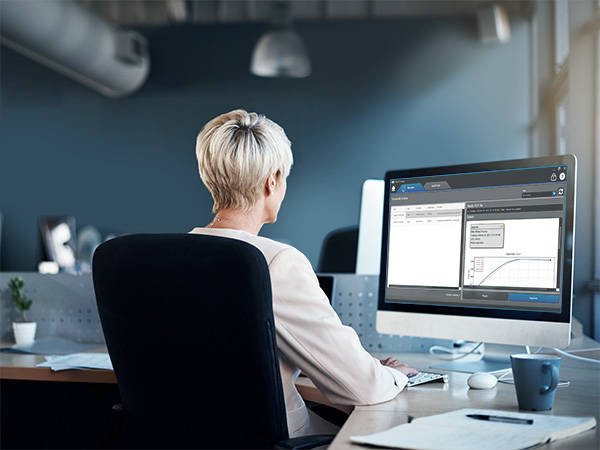
Bluehill Universal’s Traceability Module enables users to meet the audit requirements associated with FDA 21 CFR Part 11 as well as those of ISO 17025, Nadcap, and other regulatory bodies. Through seamless integration of electronic approvals, revision history, and an automated audit trail, this powerful add-on combines with Bluehill’s built-in security to provide unmatched data traceability.

  Webinar: Introducing Bluehill Universal's Traceability Module
  Webinar: Protecting Data Integrity and Having Traceability in Your Testing
  FDA 21 CFR Part 11 Implementation White Paper

revision history icon

Revision History

Revision history allows users to view the full revision history of Bluehill methods, tested samples, and report templates. Each revision contains the details of the affected item, including a time stamp, both the previous and the new value, and the name of the users involved with initiating and, if required, approving the change.

electronic approval icon

Electronic Signatures

Electronic signatures serve as electronic approvals and replace the need for manual, hard copy signatures. Electronic signatures can be configured for primary, secondary, and tertiary electronic sign off to ensure that method revisions and test data are reviewed before a change is implemented or data is publicized.

audit trail icon

Audit Trail

Bluehill Universal’s built-in secure and searchable audit trail tracks system level usage, such as log-ins and log-outs and additions, modifications, and deletions to all Bluehill files. The audit trail also captures usernames, dates, and timestamps for all activities, allowing full visibility into all system activities during an audit.


SECURITY

Bluehill Security allows a Lab Manager to configure permissions in the software, granting access to trained personnel, such as super users, and limiting access where needed. Bluehill Security allows login permissions to be configured directly in Bluehill, or linked to the local Windows® login or Windows Active Directory.

  Security in Bluehill Software Whitepaper
  Security Comparison Chart


DATABASE TYPES

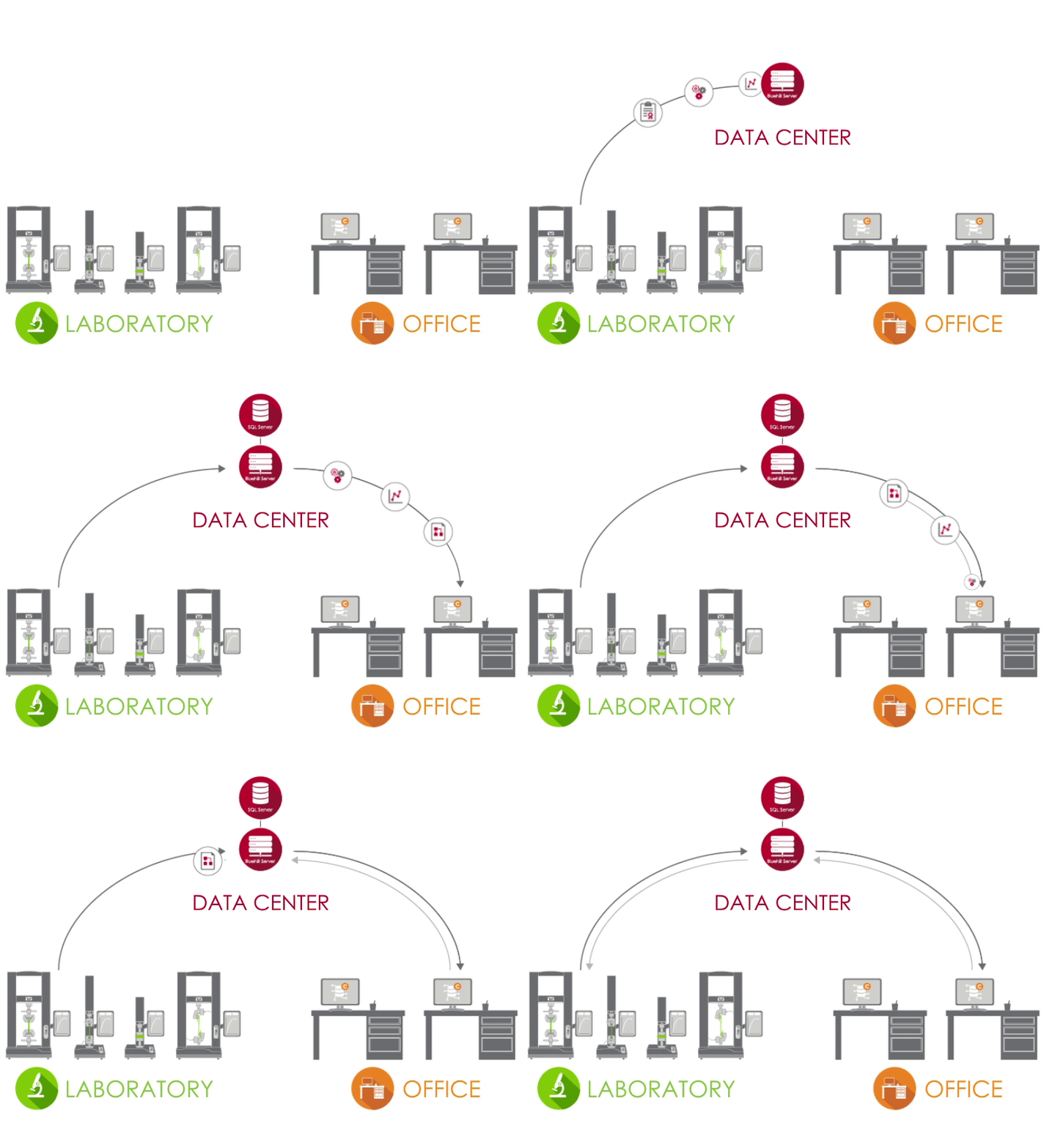
Traceability’s audit trail offers both a network and local database to accommodate your data management preference. A networked, centralized database offers your lab greater efficiencies and reduced risks when compared to locally managed data. Determining your lab’s IT infrastructure and data management preferences is recommended when considering these alternatives.


local systems
Local

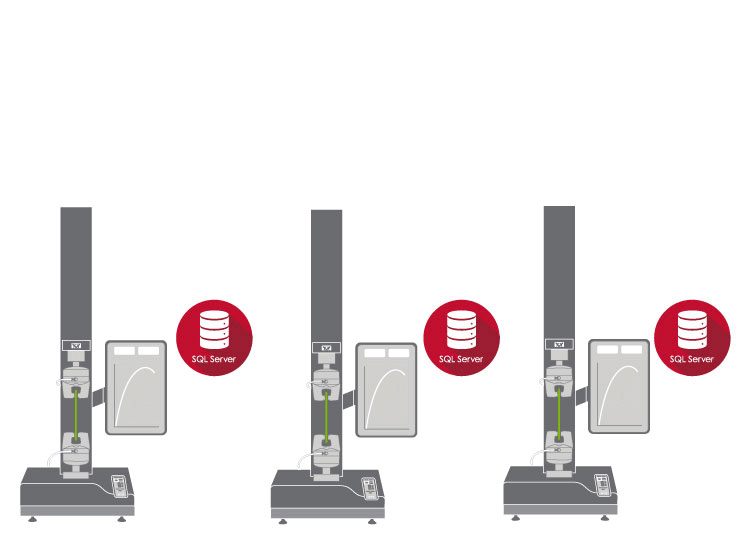
Bluehill Universal’s local Traceability module stores audit trail data on a Microsoft SQL Express database that is hosted on the computer running Bluehill Universal connected to the Instron system. The local database model accommodates labs that cannot connect computers to a shared network. Viewing the audit trail and electronically signing files occurs locally on the computer, and each Instron system with a local Traceability database stores its own SQL Express database. Database backup and restore functions can be performed manually in Bluehill Universal.


Bluehill Central Architecture
Network

The network solution for Instron’s Traceability is powered by Bluehill Central, which employs a client/server framework to store all shared audit trail data, files, and settings on a Microsoft SQL Server database. When Bluehill Universal is connected to your lab’s Bluehill Central server, each testing system send and receives data from the centralized database, eliminating the risk of variation and the burden of locally managing each system. Viewing the audit trail, electronically signing files, and user management is performed either remotely in Bluehill Central or locally in Bluehill Universal. Database backup and restore functions can be performed manually in Bluehill Central.


INSTRON SERVICE


Instron field service teams provide validation and documentation services to support IQOQ processes designed to ensure that your Instron testing equipment performs to its intended purposes and produces valid results (per 21 CFR 820.72 and ISO 13845). Validation packages can also include validation of Bluehill Central and Bluehill Traceability to aid in compliance with CFR 21 Part 11. These validation packages contain checks to confirm that certain operations performed in the software are traceable in an audit trail, and provide reference to Instron transducer calibrations (purchased separately) to ensure that the software and system are providing accurate, reliable results. At the conclusion of our services we provide a Completion Certificate for Installation and Operational Qualification that will be signed by the Instron Field Service Engineer who performed the validations.


IQ/OQ

Our field service teams provide validation and documentation services to support IQOQ processes designed to ensure that your Instron testing equipment performs to its intended purposes and produces valid results per 21 CFR 820.72 and ISO 13845. At the conclusion of our services we provide a Completion Certificate for Installation and Operational Qualification that will be signed by the Instron Field Service Engineer who performed the validations.

Learn More


Systems Verification

Instron's field service teams provide speed, displacement, alignment, and temperature verification for your mechanical testing systems to ASTM E2658, ASTM E2309, and other standards.

Learn More


On Body Delivery Systems

Biomedical Testing

mechanical testing of on body delivery systems

TESTING ON BODY DELIVERY SYSTEMS

Testing Wearable Devices Used in the Treatment of Diabetes and Other Chronic Illnesses


Trends in wearable technology follow those of the broader biomedical and electronics industries — devices are getting smaller, smarter, and easier to use. These wearable devices range from on-body drug delivery systems for diabetes and cancer treatment to electrical nerve stimulation patches or sensors t monitor vitals. All treatments increase patient autonomy and are rapidly increasing in popularity in light of higher incidence rates of chronic disease and an aging population. As this trend continues, manufacturers are working to develop robust testing methods to mechanically evaluate all aspects of these devices and ensure that they are performing as expected. For more information on other biomedical applications, visit our Biomedical Industry page.

CHALLENGES OF TESTING WEARABLES

On Body Delivery Systems (OBDS) represent a quickly growing segment of the injectable drug delivery device market. These devices offer unique advantages over more traditional delivery methods. One of their most differentiating features is their ability to support significantly larger volumes of medication than devices like prefilled syringes and autoinjectors, with some OBDS reaching as much as 10 mL of deliverable volume. This is a direct result of the explosion of large molecule biologics, whose efficacy requires higher concentrations and subsequently higher volume in solution. OBDS also simplify patient adherence, as the entire delivery process occurs automatically once the device is placed and activated. In addition, their form factor allows for easier integration of IOT functionality, helping create companion applications to track and monitor patient progress.

stethoscope icon

Though these devices are just recently starting to be commercialized on drug platforms, the testing requirements are becoming more standardized. ISO 11608-6 was released in 2022, which is the first official standard that provides guidance around evaluating the functionality of OBDS. At this point, the testing specifications are still purposefully broad to apply to a range of devices with different form factors. The dose accuracy, injection time, delivery profile, and needle extension are relatively agnostic of the device, requiring additional testing system capabilities such as an integrated scale and camera. Testing around the properties of the medical grade adhesives is subject to the most uncertainty, with references to a wide range of existing adhesive test standards.

Challenge #1 - Flexibility Around Device Form Factors

The overall size and functionality of OBDS can vary greatly between manufacturers, and mechanical testing systems are not inherently designed for evaluating such a varied set of products. The dimensions of OBDS necessitate testing systems with a large fixturing surface that has sufficient anchoring points to accommodate all profiles. The use of a component test plate - a tapped platform with regularly spaces threaded connections - provides the most flexibility for customers to create their own fixturing for their devices. A unique challenge to OBDS is the potential for activation mechanisms and needles which are not collinear. An adjustable load cell mount makes it possible to maintain the needle centered on the injection point while ensuring the load cell is aligned with the activation button.


Challenge #2 - Capturing Extended Dose Profiles

wearable autoinjector being tested

Autoinjectors typically dispense their entire volume of fluid at a consistent rate in the range of 1 to 10 seconds. OBDS will work on a longer time scale to address patient comfort associated with large volume injections. In some cases, the delivery profile will vary throughout the duration of the injection to optimize drug absorption. The use of an integrated scale measurement in Bluehill Universal allows for proper visualization representation of the dose profile , aligning with the guidance of the ISO 11608-6 standard [Annex B].

Challenge #3 - Adhesive Evaluations

ISO 11608-6 points toward established standards like ASTM D3330 for characterizing the fundamental adhesive properties of the adhesive materials used to affix devices to patients' skin. This standard provides an ideal baseline for comparative testing of different adhesives, but does not accurately represent the real-world adhesive properties. To do this, the testing system must also be able to support more realistic substrates and preconditioning parameters such as temperature and moisture. A system with cyclic loading capabilities may provide additional insights in evaluating the degradation of adhesive properties after hours of simulated use.
Metal Ceramic Plastic Braces Testing

Biomedical Testing

Metal Ceramic Plastic Braces Testing

The  Challenge

Braces

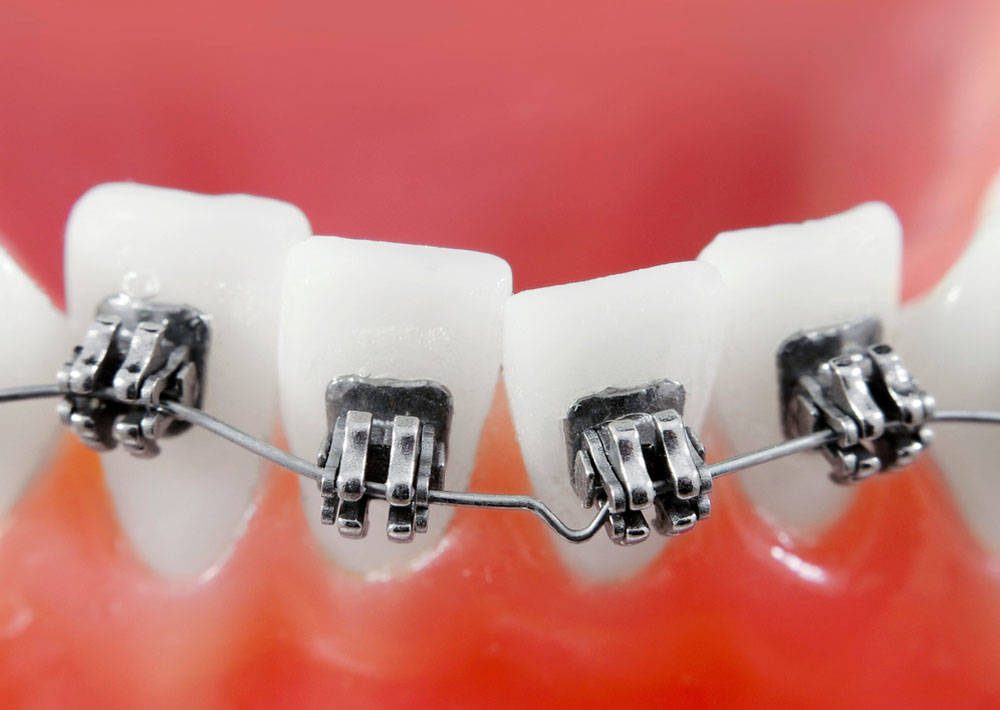
Metal braces are the most common type of braces for correcting misaligned teeth, and are typically made from high quality stainless steel or titanium. The components of metal braces include the brackets that physically attach to the teeth, bonding material like an adhesive to secure the brackets to the teeth, arch wire that connects the brackets together, and elastic which is typically referred to as O-ring material. In recent years, clear braces produced from plastic or ceramic have become a popular alternative to metal braces for cosmetic reasons. For a patient that requires braces, the preparation and application of braces are both expensive and time intensive. It is imperative that braces remain intact during application and during the patient's daily use of eating and drinking. Given the complexity of different patients and the multiple components and materials associated with braces, testing all parts and use cases can be overwhelming.

Our Solution 

Braces Testing

In order to test each component in a set of braces, we recommend using a Universal Testing System, such as the 6800 Series or 3400 Series systems with Bluehill® Universal software. Bluehill Universal's flexible user interface enables users to quickly set up different methods for tensile, compression, flex, peel, tear, and friction tests. This allows users to test the compressive strength properties of the brackets, peel properties of the adhesive, and tensile strength of both the metal wire and O-ring material. For testing the brackets, we recommend using 2-inch compression platens. When testing the adhesive, we recommend performing a 90° peel test with the adhesive bonded to substrates that mimic the tooth. Depending on the thickness of the metal wire, pneumatic cord and yarn grips may be the most preferred gripping solution for wire tensile tests. Finally, for testing the elastomeric O-ring material, Instron® offers a specialized O-ring fixture designed for measuring stiffness, strain, and ultimate tensile strength properties for a variety of O-ring sizes.

Teste de Joelho


Biomedical Testing


Teste de Joelho

O desafio

Articulação do Joelho

As próteses de joelho estão entre os principais procedimentos cirúrgicos em todo o mundo para melhorar a qualidade de vida. A fratura por fadiga das bandejas tibiais de joelho é um dos mecanismos de falha mais comumente relatados em próteses totais de joelho (PTJ). Ela é causada pela perda de suporte ósseo subjacente resultante de reações biológicas, como a osteólise induzida por desgaste. Sob essas condições, a bandeja tibial torna-se mecanicamente instável, e o carregamento cíclico provocado pela caminhada normal causa trincas por fadiga, levando, em última análise, à falha catastrófica.

Nossa Solução

Teste de Articulação do Joelho

O Instrumento de Teste Dinâmico Totalmente Elétrico ElectroPuls auxilia projetistas, fabricantes e pesquisadores durante o processo de ciclo de vida do produto, desde a obtenção de propriedades fundamentais do material, como resistência à propagação de trincas por fadiga, até o teste da bandeja tibial completa e além. Utilizamos uma fixação de fixação para prender uma metade da bandeja tibial, simulando um côndilo totalmente suportado. O outro côndilo não suportado é então submetido a carregamento fisiologicamente representativo. Ao usar nossa célula de carga Dynacell exclusiva, erros inerciais dinâmicos, como aqueles causados pela fixação e pela hidrodinâmica que resulta ao testar em banho ambiental, podem ser removidos. Isso permite uma medição mais precisa da carga aplicada ao corpo de prova.

Ensaios de Lentes de Contato


Biomedical Testing


Ensaios de Lentes de Contato

O desafio

Lente de Contato

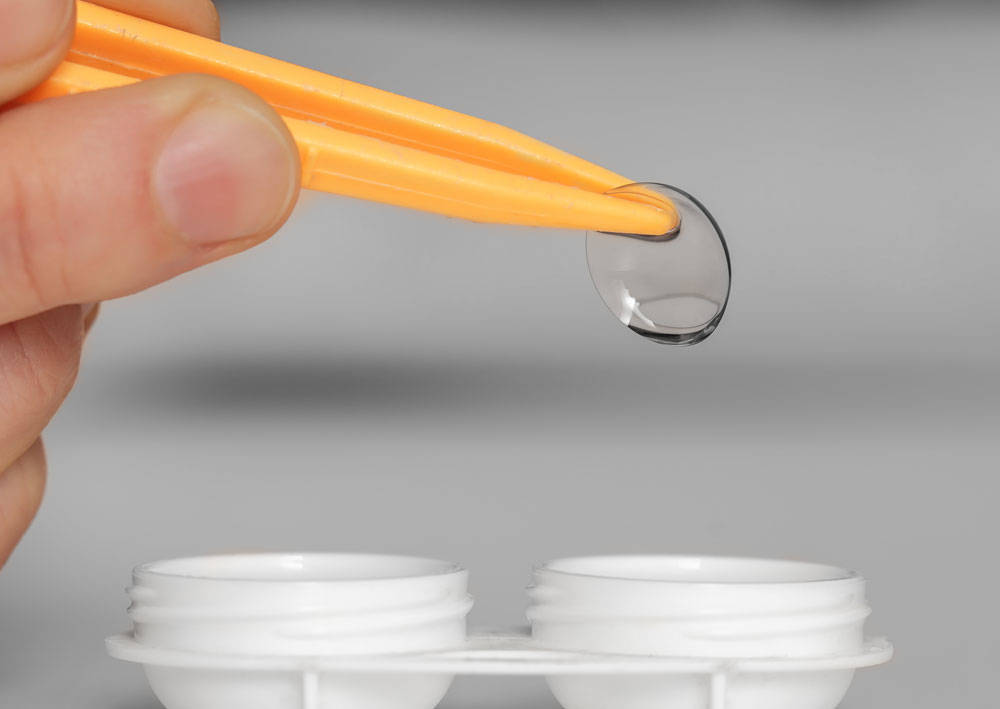
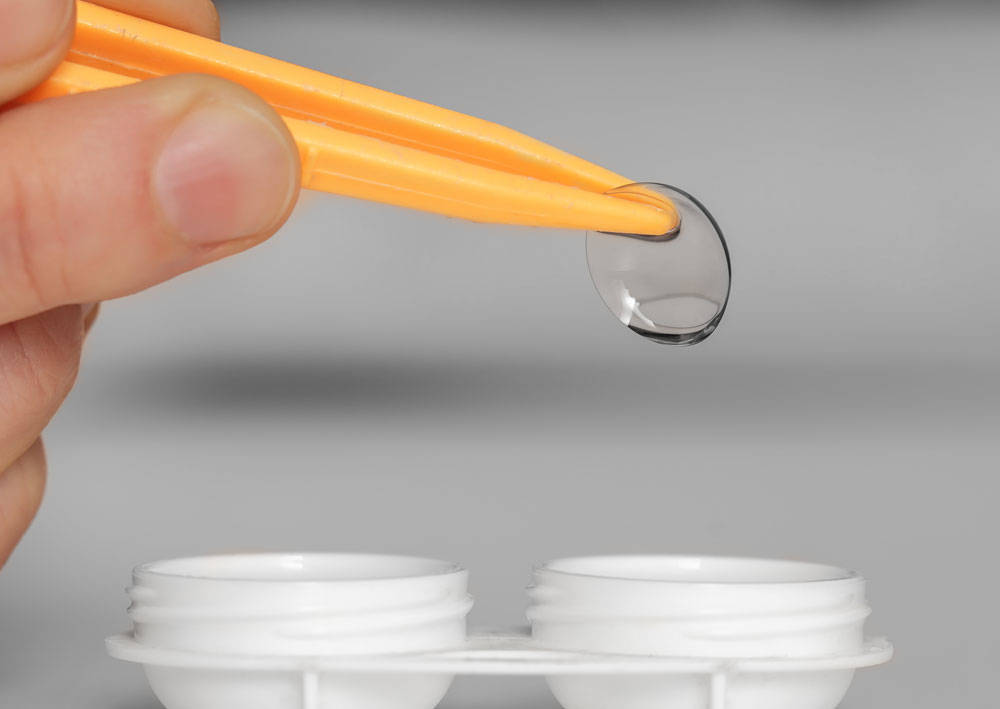
As lentes de contato, um dos dispositivos médicos mais utilizados no mundo, são usadas principalmente para correção da visão, mas também para aprimoramentos e modificações estéticas. Elas são fabricadas em diversas formas, mas, na maioria das vezes, são feitas de materiais poliméricos macios. Como o material das lentes de contato gelatinosas é escorregadio e delicado de manusear, carregar o corpo de prova nas garras pode ser desafiador, e rasgos na lente são comuns mesmo sob forças muito baixas. Para simular da melhor forma como serão utilizadas, as lentes de contato devem ser ensaiadas em condições fisiologicamente relevantes, o que exige que sejam testadas em um banho de solução salina, aquecido à temperatura corporal.

Nossa Solução

Ensaios de Lentes de Contato

Para ensaios de lentes de contato, recomendamos o uso de um sistema universal de ensaios configurado com as garras pneumáticas submersíveis de tração BioBath 250 N e faces de garra surfalloy extralongas. As faces longas permitem que o usuário insira a lente pequena nas garras com espaço suficiente para manobrar, ao mesmo tempo em que possibilitam obter separação zero entre as garras. As lentes podem ser ensaiadas como produtos finais completos, cortadas em tiras ou fatiadas para realizar um ensaio do tipo rasgo em calça (trouser tear). Também se recomenda uma célula de carga de baixa força para detectar com precisão a falha do corpo de prova. As garras pneumáticas submersíveis de 250 N e a haste de tração associada, que se conecta à célula de carga, foram projetadas para minimizar a possibilidade de flutuabilidade durante ensaios de baixa força, como os ensaios de lentes de contato.

Ensaios de Implantes de Quadril


Biomedical Testing


Ensaios de Implantes de Quadril

O desafio

Implante de Quadril

Após a cirurgia, podem ocorrer afrouxamento proximal e blindagem de tensões como resultado da atividade normal, o que pode levar a perfis de carregamento anormais. Portanto, é necessário replicar nos ensaios o ambiente e as cargas reais que o corpo de prova experimentará no corpo. Os ensaios de fadiga femoral de quadril podem ser desafiadores devido à importância de embutir o corpo de prova com precisão. O dispositivo de fixação precisa ser capaz de suportar tensões de compressão, flexão e torção para atender às normas ISO 7206. As altas frequências desses ensaios também representam um desafio, pois podem fazer com que o corpo de prova aqueça além de um limite aceitável.

Nossa Solução

Ensaios de Implantes de Quadril

A Instron® fornece um dispositivo de embutimento do corpo de prova que garante o alcance dos ângulos de deslocamento e da profundidade de embutimento exigidos. O dispositivo de fixação, desenvolvido especificamente e resistente à corrosão, permite ensaios in vivo. O conjunto é fornecido completo com um controlador de temperatura e uma bomba de recirculação para garantir que a temperatura nunca exceda o limite aceitável, reduzindo automaticamente a frequência do ensaio. O dispositivo de fixação, de fácil instalação, inclui uma cabeça de carregamento de baixo atrito e adaptadores para montá-lo em um sistema ElectroPuls. O software Instron WaveMatrix permite o uso de diversos critérios de término do ensaio, como executar um número específico de ciclos ou até que seja detectada a falha do corpo de prova, o que pode ser determinado de várias maneiras. Com um único pacote, é possível realizar ensaios com confiança para atender e exceder os requisitos das normas ISO 7206-4, 7206-6 e 7206-8.

Ensaios de Implantes Oculares


Biomedical Testing


Ensaios de Implantes Oculares

O desafio

Implantes Oculares

Uma lente intraocular (LIO) é uma lente artificial sintética colocada no interior do olho de um paciente, geralmente após uma cirurgia de catarata. Quando a lente natural do paciente é removida devido a uma doença, a capacidade de foco do olho é perdida. As LIOs são comumente fabricadas em poli(metacrilato de metila) (PMMA), silicone, acrílico e outros materiais macios que permitem que sejam facilmente dobradas e inseridas no olho. Durante a cirurgia, é imperativo que as LIOs não se rompam ou rasguem, pois mesmo o menor rasgo pode ser muito desconfortável para o paciente. Alguns dos maiores desafios nos ensaios de LIOs são a simulação do comportamento de dobra ocorrido durante a cirurgia e a fixação desses dispositivos pequenos, do tamanho de uma moeda.

Nossa Solução

Ensaios de Implantes Oculares

Para o ensaio de LIOs, recomendamos o uso do módulo TestProfiler para realizar um ensaio cíclico simples que submete a LIO a tração e compressão. Para sistemas de ensaio, recomendamos o uso de um sistema de ensaio universal da Série 6800, garras de fibra e uma célula de carga de baixa força, como uma célula de carga de 10 N. Além disso, recomendamos o uso do recurso TestCam do Bluehill® Universal em conjunto com um microscópio USB, que permite aos usuários ampliar o corpo de prova, gravar o ensaio e reproduzir as imagens após o teste. O uso de um microscópio USB com pelo menos 10x de aumento ajuda o usuário a detectar quaisquer rasgos de tamanho reduzido que possam não ser visíveis a olho nu.

Bone Screw Testing

Biomedical Testing

Bone Screw Testing

The  Challenge

Bone Screw

Bone screws are used in surgical procedures for securing implants, osteosynthesis devices, and fracture fixation plates to the skeletal system. In normal clinical use, a surgeon applies combined axial and torsional forces to the bone screw as it is implanted within the body. Manufacturers and scientists test bone screws to determine various mechanical properties when evaluating new materials and designs. The most common standard for testing bone screws is ASTM F534. The standard consists of a total of four testing annexes: axial tests, torsion only tests, or a combination of both linear and torsion tests. ASTM F543-17 Test A1 - Test Method for Determining the Torsional Properties of Metallic Bone Screws requires the screw to be sufficiently clamped and a rotational velocity between 1 and 5 rpm to be applied until specimen failure, and to measure the torque profile and the rotational angle. ASTM F534-17 Test A2 - Test Method for Driving Torque of Medical Bone Screws measures the torque required to insert and remove the screw with a constant rotational velocity between 1 and 5 rpm while maintaining an axial load of no more than 10 N in compression. ASTM F543-17 Test A3 - Test Method for Determining the Axial Pull-Out Strength of Medical Bone Screws measures the force required to axially remove the screw that has been fully inserted in the test block using the method from Test A2. The pull-out fixture then applies a tensile load at a constant rate of 5 mm/min until the failure of the bone screw or removal from the test block. ASTM F543-17 Test A4 - Test Method for Determining the Self-Tapping Performance of Self-Tapping Medical Bone Screws specifies the procedure to evaluate the axial loading required to engage a self-tapping bone screw into a standard laboratory material. Although considered a simple clinical procedure, reproduction of this in vitro results in a relatively complex motion due to the interaction between the rotation and linear axes of a test machine. The test requires a continuous rotational velocity of up to 30 rpm while the axial load is incremented during the insertion at a rate of 2 N/s. The objective of this test is to record the torque profile as the bone screw is inserted into the material and then removed.

Our Solution 

Bone Screw Testing

To perform bone screw testing to ASTM F543, either an electromechanical system with a Torsion Add-On 3.0 , or an ElectroPuls™ Linear-Torsion system can be used. The Torsion Add-On 3.0 can be added to any new or existing 6800 Series single column or dual column table top testing machine to add rotational capabilities. The ElectroPuls E10000 and E3000 Linear-Torsion test systems are all-electric dynamic testing systems that provide a unique linear and torsion actuator system that is capable of synchronized linear and multi-rotation testing, which makes them ideal platforms for performing the full range of tests prescribed by the standard. For both the electromechanical system and ElectroPuls system, a bi-axial Dynacell load cell is mounted to the base of the machine. Using WaveMatrix™ dynamic test software on the ElectroPuls system, a user is able to control both axial and rotational axis in closed-loop control. This gives the user the ability to easily set up the multi-axial tests as a series of steps, and displays the required information as the test proceeds. Special fixtures are used to clamp the material to the biaxial load cell, and a drill chuck is used for the drive bits.

Hard Tissue Testing

Biomedical Testing

Hard Tissue Testing

The Challenge

Hard Tissue

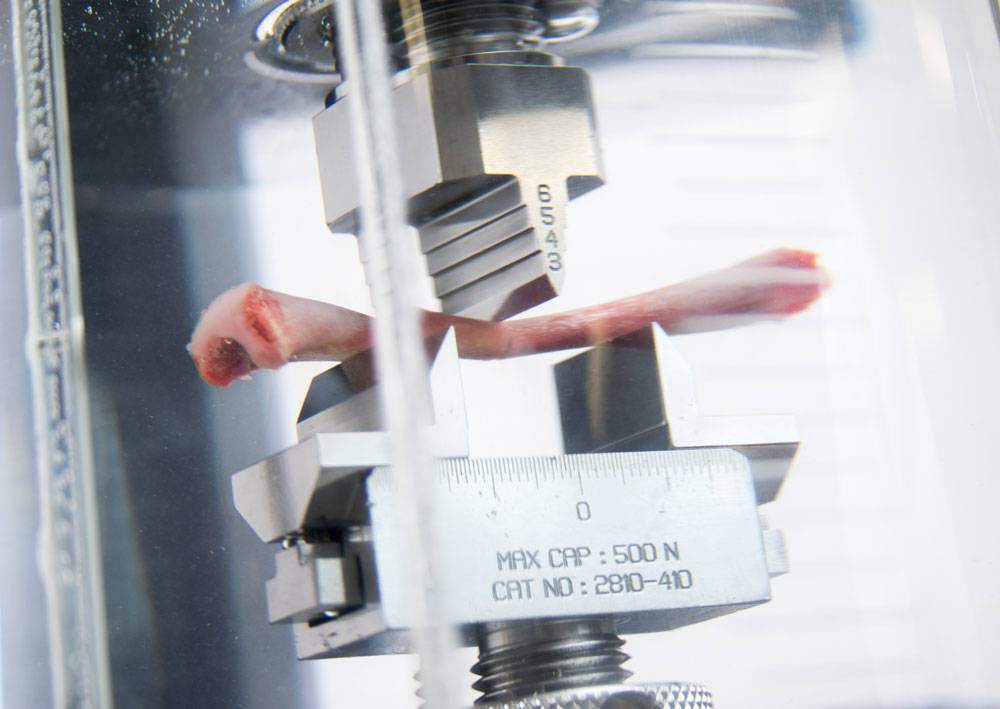
Bone, dentin, and dental enamel are all considered to be hard tissues. Specimens of this type are most commonly tested in compression and flexural. The most common results obtained from a compression or flexural test on hard tissues is modulus and force at fracture. Typically, these specimens come from mice, rats, or other mammals and are small in size. Despite being small in size, hard tissues have high stiffness. A typical challenge with measuring modulus is accurate measurement of displacement. For a given force, a hard tissue such as bone will exhibit small displacement. In addition to compression testing, 3-point and 4-point bend tests are common to quantify force at fracture on bone sections. Often, this testing must be conducted at physiologically relevant test conditions, such as in a hydrated bath and at body temperature.

Our Solution 

Hard Tissue Testing

When conducting compression testing on hard tissues, it is critical that users choose appropriately sized compression platens to closely match specimen size, ensure the compression platens are spherically seated or self-aligning to apply even pressure on the specimen, and use an accurate source to measure system displacement. For example, an accurate measurement source of displacement could be via compliance correction in the software, or by using a strain measuring device, such as a linear variable deflection transducer (LVDT) or a video extensometer. When testing flexural specimens, it is critical that the anvils on the flexural fixture are appropriately sized to the specimen and that the flexural fixture properties, such as span length, are easily entered into the software.

Ensaio de Dispositivos de Fixação de Fraturas


Biomedical Testing


Ensaio de Dispositivos de Fixação de Fraturas

O desafio

Fixação de Fraturas

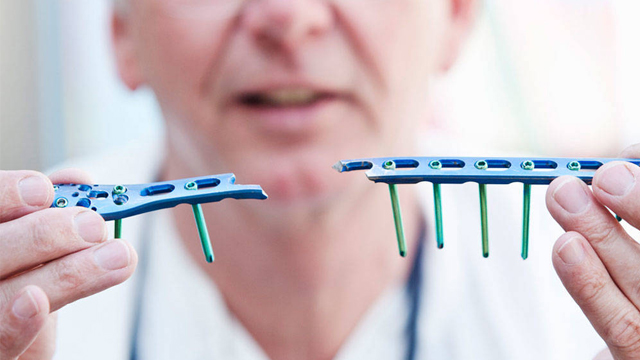
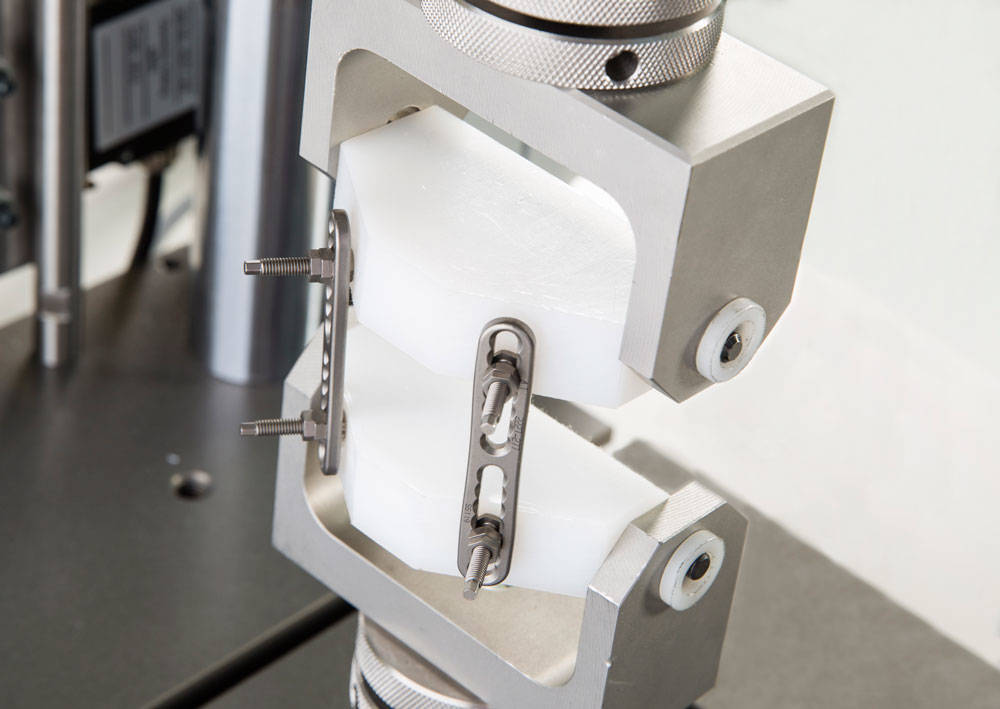
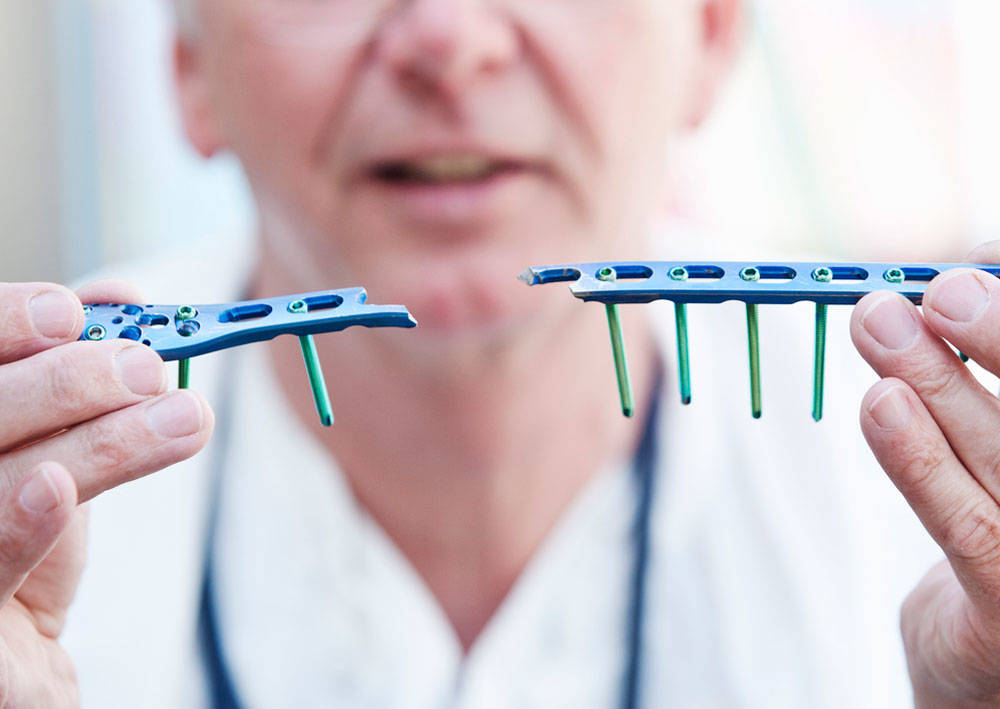
As placas de fixação de fraturas são utilizadas para imobilizar ossos que foram fraturados ou gravemente quebrados. Essas placas são mais comumente feitas de titânio ou aço inoxidável. Ambos possuem propriedades mecânicas semelhantes, incluindo rigidez e resistência à tração final, às do osso nativo. Essas placas frequentemente apresentam geometrias irregulares e vêm em uma variedade de tamanhos para acomodar fraturas ósseas de diferentes dimensões no corpo. Por exemplo, uma placa usada para imobilizar um osso fraturado em um fêmur será muito diferente de uma usada em um tornozelo, dedo ou mandíbula. A geometria irregular e a gama de tamanhos das placas de fixação de fraturas as tornam componentes desafiadores para ensaiar. Além disso, na maioria dos casos, essas placas permanecem no paciente por toda a vida e devem ser capazes de suportar o movimento dinâmico do corpo ao longo de décadas.

Nossa Solução

Ensaio de Dispositivos de Fixação de Fraturas

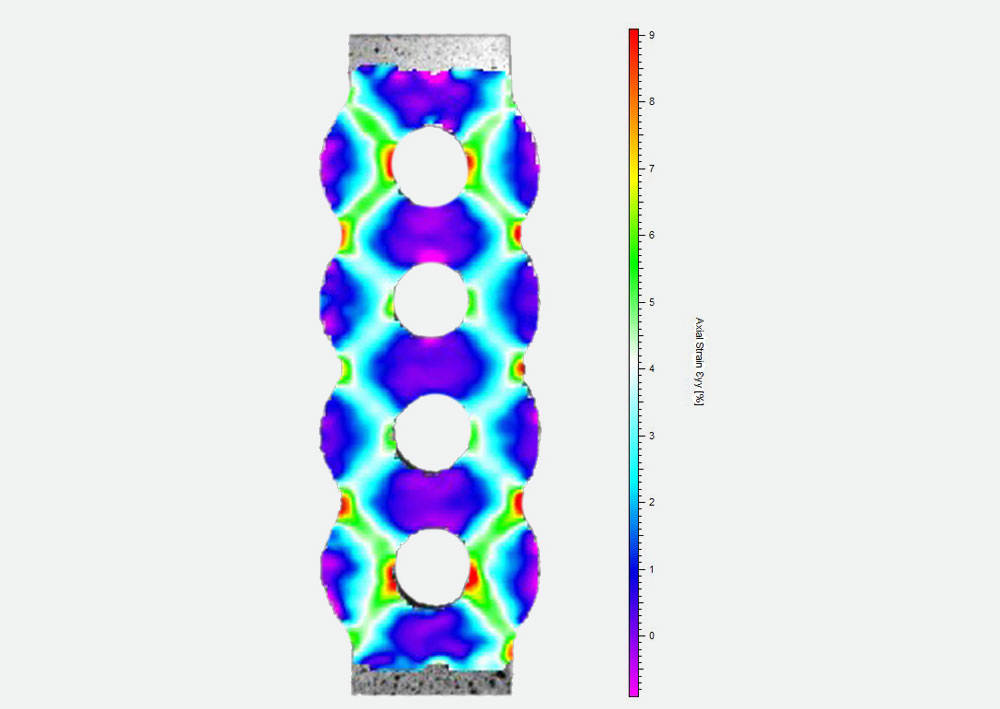
Para compreender as propriedades mecânicas das placas de fixação de fraturas, é necessária uma gama de ensaios estáticos e dinâmicos. Ensaios monotônicos de flexão, tração e compressão são necessários para entender o módulo e a resistência à tração final. Dada a geometria irregular das placas de fixação de fraturas, medir a deformação é um desafio. Técnicas de modelagem 2D e 3D, como a análise de elementos finitos, são frequentemente realizadas para entender as propriedades de tensão e deformação de campo total das placas de fixação de fraturas. Para ensaios monotônicos de tração, compressão ou flexão, nosso software de Correlação de Imagem Digital, combinado com nosso Extensômetro de Vídeo Avançado, permite que pesquisadores e cientistas visualizem e quantifiquem as propriedades de deformação de campo total dessas placas. Para todos os ensaios de fadiga, recomendamos o uso de nossos sistemas ElectroPuls. Especificamente, recomendamos o sistema de ensaio E3000 ou o E10000 Linear-Torsion. A capacidade de ensaiar placas simultaneamente em carregamento axial e carregamento torsional representa melhor as condições de carregamento realistas no corpo humano.

Hydrogel Tensile Testing

Biomedical Testing

Hydrogel Tensile Testing

The Challenge

Hydrogel Tensile

Hydrogel testing is most commonly done in both tension and compression. Compression testing on hydrogels poses less of a challenge, as many hydrogels are compliant and compress easily under load. The natural compliance of hydrogels becomes more of a challenge in tensile testing, as these materials can be difficult to grip and exhibit high elongation. Gripping hydrogels with too much pressure typically displaces the material out of the grip faces, which makes gripping ineffective. In addition, a traditional contacting extensometer is not a viable option considering the soft properties of hydrogels. Given the viscoelastic properties of these materials, test speed will greatly affect results, such as force at break and elongation at break. 

Our Solution 

Hydrogel Tensile Testing

When testing hydrogels in compression and tension, most common forces at failure are below 100 N. Given the low forces obtained in hydrogel mechanical testing, it is important that an accurate load cell is used. This can be especially tricky in a compression test as many users restrain from using low capacity load cells out of fear that they will overload the load cell if the compression platens begin to touch during a test. To prevent this from happening, it is imperative that safety limits are set and that the end of test criteria is set to the load cell capacity in the software. For tensile testing, Instron® offers a range of low force grips, including spring loaded, screw side action action, and pneumatic side action grips. Given the compliant nature of hydrogels, often sandpaper needs to be used to increase friction at the gripping contact points. When accurate measurement of strain is required, we recommend using our Advanced Video Extensometer

Ensaios de Implantes da Coluna


Biomedical Testing


Ensaios de Implantes da Coluna

O desafio

Ensaios de Implantes da Coluna

Os ensaios de vida útil de construções da coluna são críticos, pois a falha por fadiga é mais comum do que a falha catastrófica. Durante a atividade normal do paciente, as construções da coluna podem ser submetidas a altas cargas in vivo, o que pode resultar em falha catastrófica. Ensaios cíclicos são realizados para avaliar o número de ciclos necessário para que ocorra a falha por fadiga. A carga normalmente é aplicada com uma forma de onda senoidal de amplitude constante, controlada por carga, excedendo cinco milhões de ciclos. Ensaios estáticos simples também são realizados para avaliar a carga necessária para resultar em fratura da coluna.

Nossa Solução

Ensaios de Implantes da Coluna

Recomenda-se o sistema Instron® Linear-Torsion ElectroPuls, pois permite ao usuário realizar ensaios estáticos e dinâmicos de acordo com as normas ASTM F1717-12 em uma única máquina. Um dispositivo dedicado para coluna pode ser facilmente montado nesse sistema, com a opção de montar um banho de solução salina na base para ensaios in vivo. Ao utilizar o banho, a célula de carga é projetada para ser montada no atuador, utilizando a tecnologia patenteada Dynacell da Instron para compensação de inércia. O algoritmo patenteado da Instron de ajuste baseado em rigidez garante excelente fidelidade da forma de onda, mesmo com corpos de prova não lineares.

Bioadhesives Peel Testing

Biomedical Testing

Bioadhesives Peel Testing

The Challenge

bio adhesive

Adhesives are widely used in the medical device industry for dental implants, bone cements, and wound closure products. Wound closure products include tissue adhesives that can be found in bandages, secondary dressings, and a variety of surgical sealants. The adhesive strength of these products must be well defined. An adhesive that isn’t strong enough may result in a wound that heals poorly, or it can lead to an infection. If an adhesive is too strong, it may damage the underlying tissue or cause the patient unnecessary pain when removing. A fundamental challenge with testing bio adhesives is characterizing adhesive strength in physiologically relevant conditions. 

Our Solution 

Bioadhesives Peel Testing

Soft tissue substrates should be tested under physiologically relevant conditions, most preferable in a bath or temperature controlled enclosure at 37°C. The BioBath with submersible pneumatic grips is recommended. The grips and pull rod that attach to the force transducer are designed to minimize buoyancy chances during low force testing. We also recommend a low capacity load cell, given that adhesive strength for biological applications is typically under 10-20 N. Bluehill® Universal's Peel, Tear, Friction Module is ideal for this test type in order to measure first peak force, average force over the seal, and average force per width of the specimen. 

Teste de Marca-passo Cardíaco


Biomedical Testing


Teste de Marca-passo Cardíaco

O desafio

Marca-passo Cardíaco

Um marca-passo é um pequeno dispositivo eletrônico, implantado sob a clavícula de um paciente, que ajuda o coração do paciente a bater com mais regularidade. É composto por três partes principais: um gerador de pulso, um ou mais eletrodos condutores e um eletrodo em cada condutor. O gerador de pulso consiste em uma pequena caixa que contém circuitos, uma bateria e um chip de computador que regula os impulsos elétricos enviados ao coração. O eletrodo condutor é um fio isolado que se conecta ao gerador de pulso e se estende até uma das câmaras do coração. O eletrodo na extremidade do condutor faz contato com a parede do coração e é responsável pela entrega de impulsos elétricos ao coração do paciente. Considerando que cada componente de um marca-passo é crítico para sua função, todos os três componentes devem passar por testes rigorosos. A variedade de testes, incluindo teste de cisalhamento nos componentes microeletrônicos, teste de compressão na bateria e teste de tração nos eletrodos condutores, pode ser desafiadora de atender com apenas um sistema.

Nossa Solução

Teste de Marca-passo Cardíaco

Os sistemas de teste Instron® Série 6800, com software Bluehill® Universal e módulo TestProfiler, representam as máquinas de teste universal mais capazes do mercado atualmente. A flexibilidade do software oferece aos usuários a capacidade de programar uma infinidade de métodos diferentes com simplicidade, incluindo tração, flexão, compressão, descascamento, rasgamento e fricção. Além disso, o Grupo de Soluções de Engenharia da Instron estabeleceu parcerias com várias empresas de eletrônicos e empresas de dispositivos médicos para desenvolver dispositivos especializados, incluindo garras de cisalhamento especiais e dispositivos de flexão micro. Além disso, recomendamos o uso de garras pneumáticas para cordas e fios para teste de tração em eletrodos condutores.

Teste de stent


Biomedical Testing


Teste de stent

O desafio

Stent

O ensaio mecânico de stents envolve uma variedade de testes diferentes que abrangem métodos estáticos e de fadiga. Os stents são mais comumente fabricados com fio de Nitinol, que deve ser testado de acordo com a norma ASTM F2516 em um teste cíclico simples. Outro teste estático frequentemente realizado em stents é o teste de flexão, em conformidade com a norma ASTM F2606. Além de testar a matéria-prima, a estrutura de diamante do corpo do stent é comumente testada em fadiga a 60 Hz em controle de posição. O corpo inteiro do stent também é tipicamente testado em compressão radial como um teste estático, e em fadiga pulsátil ou fadiga cíclica como um teste dinâmico. Considerando que tal variedade de testes mecânicos é necessária para qualquer stent individual, muitas vezes é um desafio selecionar o sistema de teste apropriado para realizar o maior número possível de testes.

Nossa Solução

Teste de stent

Para todos os ensaios estáticos, incluindo testes conforme ASTM 2516, ASTM F2606 e testes de compressão radial no corpo completo do stent, recomendamos o uso de um sistema de ensaio universal da Série 6800. Ao testar fio de Nitinol conforme a norma ASTM 2516, recomendamos a utilização do nosso Extensômetro de Vídeo Avançado para uma medição precisa de deformação. Ao testar corpos de stent completos em compressão radial, a Instron® faz parceria com a Machine Solutions Inc. (MSI) para fornecer um dispositivo especializado. O dispositivo de compressão radial pode ser montado em qualquer sistema de ensaio Instron 68TM e pode utilizar o software padrão Bluehill® Universal para controlar o teste.

Para todos os testes de fadiga, incluindo o teste da estrutura de diamante do corpo do stent ou do stent inteiro em controle de extensão cíclica, recomendamos o uso de nossos sistemas de teste ElectroPuls®.

Testes de Implantes Dentários


Biomedical Testing


Testes de Implantes Dentários

O desafio

Implante Dentário

A forma do implante e o material utilizado são continuamente pesquisados para melhorar o contato com a gengiva e a fusão com o osso. Portanto, os implantes dentários projetados por vários fabricantes tendem a apresentar muitas diferenças. Além disso, o tamanho e a forma do implante variam dependendo de sua aplicação e de onde são colocados na boca. Isso cria um desafio ao testar amostras e comparar materiais e projetos.

Nossa Solução

Testes de Implantes Dentários

Com uma variedade de tamanhos e geometrias de implantes, os implantes dentários angulados podem ser montados em um dispositivo de ângulo variável para implantes dentários Instron® para testes. O dispositivo garante que a montagem não restrinja excessivamente o implante nem gere grandes forças laterais que possam danificar a célula de carga ou a máquina de ensaio. Assim como os implantes dentários retos, os implantes dentários pré-angulados também podem ser testados em ambiente aquoso, se houver expectativa de ocorrência de fadiga por corrosão. O dispositivo pode ser montado em um banho de fluido para testar o implante em solução salina, ou outro meio fisiológico, enquanto a temperatura é mantida a 37 °C.