


Tensile Testing of Surgical Sutures
Methods and Equipment for Suture Testing
Sutures are some the most commonly used hospital consumables. Used in most surgeries and wound closures to join body tissues, sutures are typically either absorbable, meaning they will naturally decompose after the wound has healed, or non-absorbable and need to be removed by a physician. They can also be coated or non-coated, with a coating typically exhibiting antibiotic properties to reduce the chances of infection.
It is extremely important that suture manufacturers are confident in the tensile strength of their products. Sutures are first subjected to tensile strength during the application process and then need to maintain near constant tension on tissues while the healing process occurs. The risks of failure are high: sutures used internally can cause internal bleeding or other fatal complications should they break or become too slack.
Tensile properties vary by material, diameter, and coating. Neither ASTM nor ISO maintains a standard dedicated specifically to suture testing, but suture manufacturers routinely perform tensile tests to build a complete mechanical profile of each product. Tensile strength varies with and without a knot, so sutures are typically tested both ways to reflect real-world surgical use.
Recommended Equipment for Suture Tensile Testing
Materials Testing System
Suture tensile testing is typically performed on a single-column materials testing system, such as Instron's 3400 Series (Model 34SC). Because suture testing generally requires only peak (maximum) load measurement, a single-column system is usually sufficient for the test itself.
Labs that test a wide range of materials beyond sutures may benefit from a more versatile platform, such as Instron's 6800 Series. The 6800 Series offers enhanced load measurement accuracy capabilities, additional data acquisition channels, advanced accessory compatibility including Torsion Add-On and the AT2 automated XY stage, and built-in Specimen Protection and Auto Positioning functionality — making it a strong fit for labs running a broader range of test methods on a single frame.
Load Cell
Suture diameter varies by application, ranging from as small as 0.01 mm up to 1 mm. Because tensile strength also varies across this range, we recommend selecting a load cell with a maximum capacity appropriate for the specific suture being tested — generally between 10 N and 500 N — to ensure the suture's breaking load falls safely within the load cell's accurate measurement range.

Grips and Fixtures
The most difficult part of suture testing is finding the right gripping solution. Coated sutures in particular can be extremely slippery, requiring specialized jaw face surfaces to maintain contact through failure without slipping or damaging the specimen. Instron offers a range of jaw face options engineered specifically for slippery, low-diameter materials.
Grip selection depends largely on suture diameter:
- Pneumatic cord and yarn grips — best suited for smaller-diameter sutures
- Pneumatic side action grips — better suited for larger-diameter sutures
Automation
For labs testing high volumes of sutures, Instron's AT6 automation system can be configured for high-throughput suture testing.
Manual specimen loading and unloading is one of the most repetitive and time-consuming parts of suture testing — and one of the biggest sources of operator-to-operator variability. Automating this step with a 6-axis robotic system delivers several key advantages:
- Higher throughput — specimens are loaded, tested, and unloaded continuously without operator intervention between tests
- Improved repeatability — consistent specimen handling and grip alignment reduce variability introduced by manual loading
- Better use of operator time — technicians are freed from repetitive loading tasks and can focus on higher-value work, such as data review, method development, and quality investigations
For labs running large batches of sutures on a recurring basis, automation can significantly reduce total operator time at the machine while improving the consistency of results across operators and shifts.
Updated:
July 9, 2026

Written By:
Landon Goldfarb
Edited By:
Nick Erickson
Reviewed By:
Meredith Bernstein
Explore Instron Solutions for Suture Tensile Testing
From the testing system to the grips to the software, Instron has the solutions medical device teams need to validate suture tensile strength.

Specialized grips engineered to securely hold slippery, small-diameter specimens for accurate tensile testing of sutures.
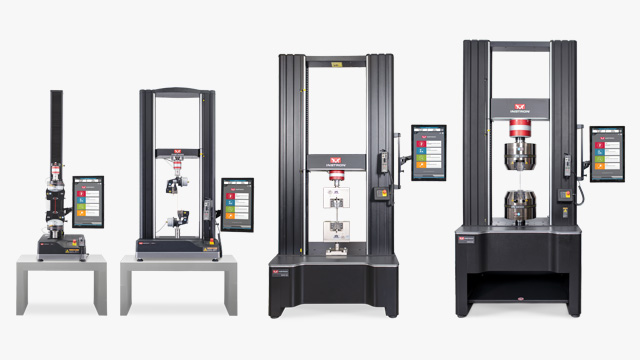
Test systems with the force measurement accuracy and accessory compatibility for suture and other medical device testing.

Specialized fixtures for a wide range of medical device testing, along with automated solutions well suited for biomedical applications.
or

Talk to an Instron Expert
Get application-specific guidance on testing sutures and other medical devices.
About the Author
Landon Goldfarb
Landon Goldfarb is Lead Product Manager at Instron, where he oversees the static testing product management team — collaborating closely with customers and engineering to drive customer-backed innovation across Instron's full static testing portfolio. With deep expertise in highly regulated industries, Landon and his team partner with organizations across a wide range of markets to advance their testing programs — from general quality control to advanced R&D — bringing particular depth and experience to pharmaceutical and medical device customers worldwide.
A trusted industry voice, he contributes to standards development and shares actionable insights through technical publications and conference presentations — championing best practices and advancing the science of medical device testing on a global stage.