
Calibration
Calibration is the process of comparing an unknown value to a known value. To calibrate a device is to compare a characteristic of that device with the characteristic of a similar device called a “standard.” Using load cells as an example, the load cell being calibrated and the standard load cell are mounted together in series and a range of loads is applied. Both load cells experience the same load and therefore the output values should ideally be identical. A calibration result most often indicates a difference between the two values.
A common misconception is that calibration means adjusting the output of a device to bring its performance “within limits.” Any adjustment made to the output of the device is separate from the calibration and verification process, and must be followed by a further calibration and verification to prove the adjustment was successful.
NOTE: It is important not to confuse CALIBRATION with the term "calibrate" that is sometimes used on instruments to refer to the actions of setting up a transducer such as a loadcell or extensometer to work with the system.
Below are the definitions as defined by the International Vocabulary of Metrology.
2.39 (6.11) calibration
Operation that, under specified conditions, in a first step, establishes a relation between the quantity values with measurement uncertainties provided by measurement standards and corresponding indications with associated measurement uncertainties and, in a second step, uses this information to establish a relation for obtaining a measurement result from an indication
NOTE 1: A calibration may be expressed by a statement, calibration function, calibration diagram, calibration curve, or calibration table. In some cases, it may consist of an additive or multiplicative correction of the indication with associated measurement uncertainty.
NOTE 2: Calibration should not be confused with adjustment of a measuring system, often mistakenly called "self-calibration," nor with verification of calibration.

Alignment Test | Instron Professional Services
Instron Field Service and Calibration Engineers have developed and established materials testing alignment services complying with the guidelines and calculations detailed within ASTM E1012 and Nadcap standards.
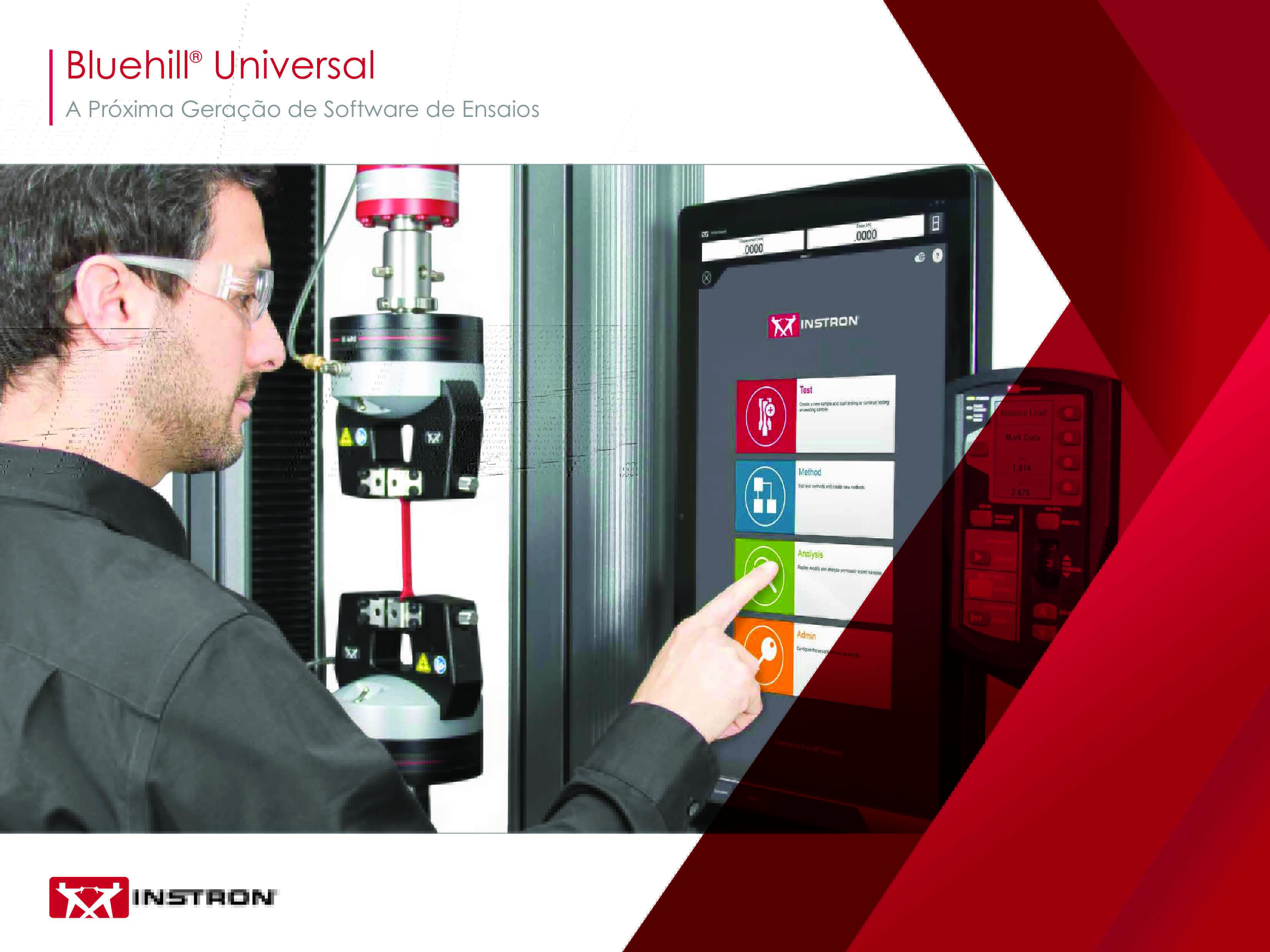
Brochura do Bluehill Universal
O Bluehill Universal é o software de teste de materiais avançado da Instron, projetado para interação tátil intuitiva e fluxos de trabalho simplificados. Ele oferece métodos de teste pré-carregados, QuickTest para configuração rápida, exportação de dados aprimorada e Instron Connect para comunicação direta com o serviço. Os usuários do Bluehill 2 e do Bluehill 3 podem atualizar facilmente para a versão mais recente para melhor desempenho e usabilidade
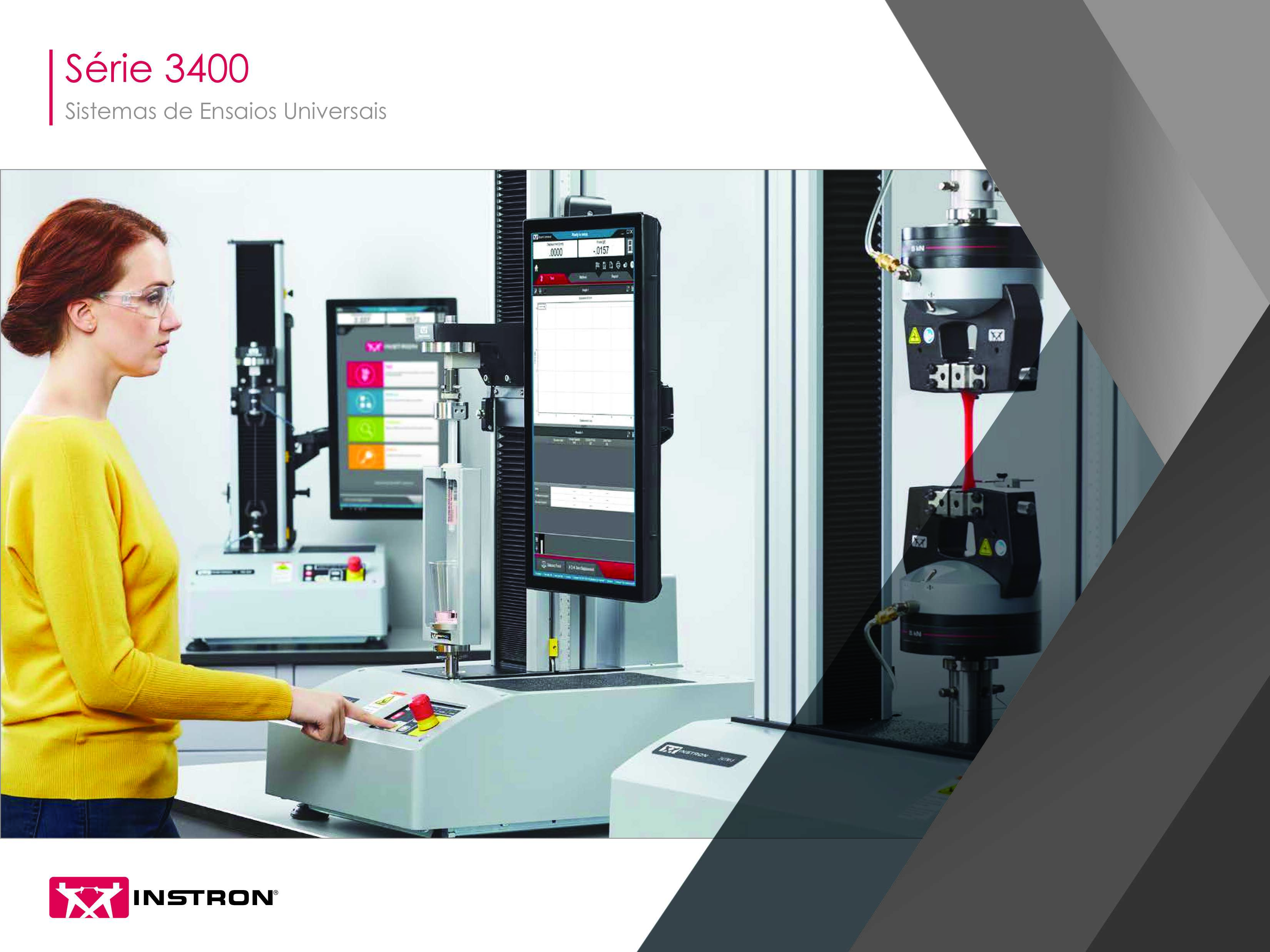
Série 3400 – Soluções de teste acessíveis
Sistemas de teste universal Instron série 3400 para testes de tração, compressão, curvatura e outros testes de propriedades de materiais.

6800 Series Premier Testing Systems Brochure
Instron 6800 Series Universal Testing Systems provide unparalleled accuracy and reliability. Built on a patent-pending Operator Protect system architecture with an all-new Smart-Close Air Kit and Collision Mitigation features, the 6800 Series makes materials testing simpler, smarter, and safer than ever before.
