Instron

Tensile Testing Polymeric Membranes

Biomedical Testing » Biomaterials

Tensile Testing Polymeric Membranes

Synthetic membranes are commonly used in the biomedical field. These polymeric membranes, designed to mimic the natural filtration systems in human bodies, are being researched and developed for use in drug delivery systems, medical devices, and artificial bio-organs.

For example, synthetic membranes are used in hemodialysis, which is a method of removing waste products from the body when the kidneys fail. Blood from the patient is passed through a semi-permeable membrane that is immersed in dialysis solution and waste products such as urea in the blood diffuse across the membrane into the dialysis solution.

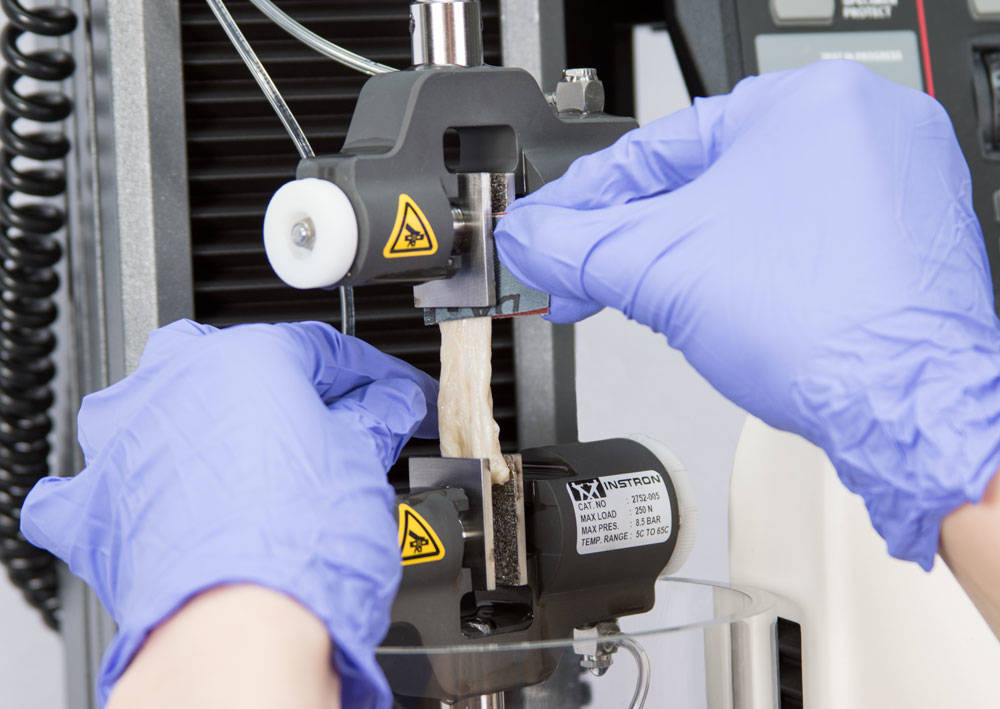
Often these synthetic membranes are moist and slippery, and consquently, tensile testing can be challenging. Similar to testing soft tissues, the gripping surface must offer sufficient friction to firmly hold onto the membrane, but also be delicate enough to avoid specimen tearing.

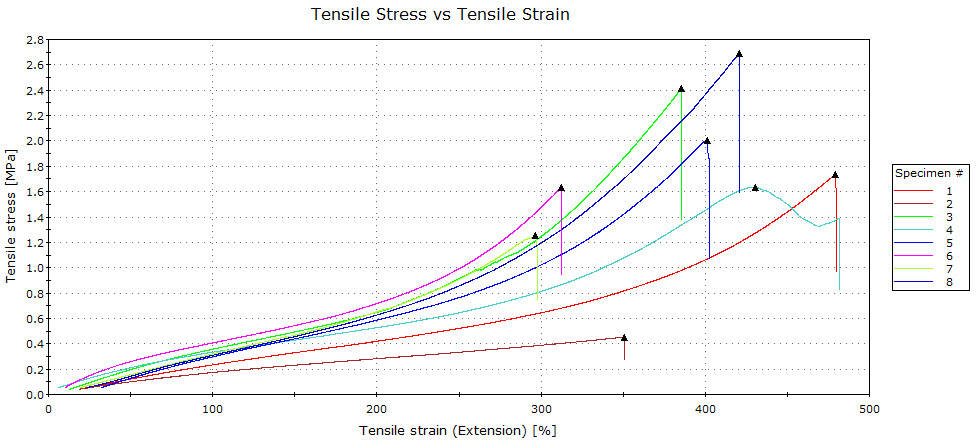
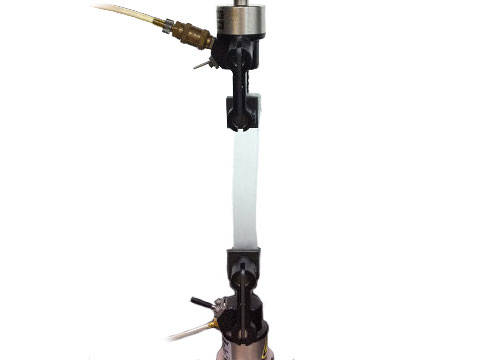
Recently, we were asked to recommend a gripping solution for testing of wet polymeric membranes. In this test, the polymeric membranes were first soaked in water for up to 20 minutes to allow them to soften and swell. The wet specimens were then tested using the 5965 dual column electromechanical machine equipped with pneumatic side action grips and rubber coated jaw faces. Since these membranes are very delicate, the clamping pressure must be carefully controlled as excessive high pressure can cause the specimen to fail prematurely when the grip closes.

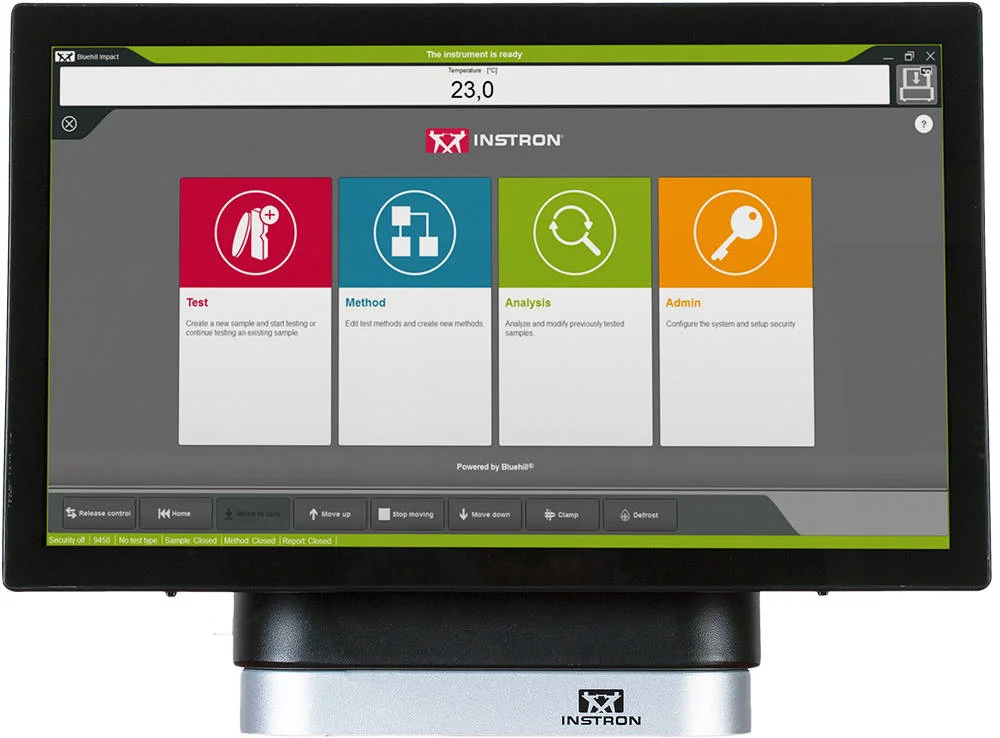
Because the specimens are wet, corrosion resistant grips or fixtures should be used. Our 3 Software®Bluehill provides both the test control and results required.

Literature

Bluehill Universal Brochure

Bluehill Universal is Instron’s advanced materials testing software, designed for intuitive touch interaction and streamlined workflows. It offers pre-loaded test methods, QuickTest for rapid setup, enhanced data exporting, and Instron Connect for direct service communication. Users of Bluehill 2 and Bluehill 3 can easily upgrade to the latest version for improved performance and usability

  • ผลิตภัณฑ์
  • 02/26/2017
  • 3.77 MB

การทดสอบกาวเนื้อเยื่อโดยใช้ฟิกซ์เจอร์การลอกแบบมุมแปรผัน

Biomedical Testing » Biomaterials

การทดสอบกาวเนื้อเยื่อโดยใช้ฟิกซ์เจอร์การลอกแบบมุมแปรผัน

กาวเนื้อเยื่อถูกใช้งานอย่างกว้างขวางในอุตสาหกรรมชีวการแพทย์สำหรับงานประเภทต่าง ๆ เช่น พลาสเตอร์ปิดแผล และผ้าปิดแผล ถึงแม้ว่าจะยังไม่มีมาตรฐานการทดสอบเฉพาะโดยตรงสำหรับการใช้งานฟิกซ์เจอร์แบบมุมแปรผันในการทดสอบ แต่จะมีมาตรฐานการทดสอบของ ASTM ที่คล้ายคลึงกับการทดสอบนี้ ได้แก่ ASTM F2255, F2256, F2258 และ F2458 ความแข็งแรงของการยึดเกาะของผลิตภัณฑ์เหล่านี้จะต้องได้รับการกำหนดก่อนที่จะนำไปใช้ในทางคลินิก หากกาวนี้ไม่มีความแข็งแรงเพียงพอ ผลิตภัณฑ์อาจจะส่งผลให้เกิดการติดเชื้อหรือการรักษาตัวของแผลที่ไม่ดี แต่หากกาวนี้มีความแข็งแรงมากเกินไป เนื้อเยื่อด้านล่างอาจจะเกิดความเสียหายในระหว่างการนำผลิตภัณฑ์ออก


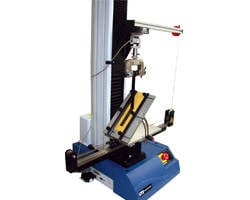
เราทำการทดสอบแรงยึดติดของกาวโดยการใช้ฟิกซ์เจอร์แบบมุมแปรผันเพื่อเป็นการจำลองสิ่งที่จะเกิดขึ้นเมื่อทำการลอกกาวออกจากผู้ป่วย เราใช้ เครื่องทดสอบระบบไฟฟ้าเชิงกลรุ่น 3345 พร้อมกับโหลดเซลล์ขนาด 50 นิวตัน พร้อมกับอุปกรณ์จับยึดแบบ pneumatic grip ขนาด 250 นิวตันและใช้พื้นผิวปากจับแบบโลหะที่เรียบขนาด 25 มม.x 25 มม. และฟิกซ์เจอร์การลอกแบบมุมแปรผัน โดยฟิกซ์เจอร์การลอกแบบมุมแปรผันนี้ถูกตั้งรูปแบบที่มุม 135 องศา เพื่อที่จะเป็นการจำลองแนวการดึงที่ใกล้เคียงที่สุดสำหรับการใช้งานที่จะเกิดขึ้นจริงสำหรับผลิตภัณฑ์กาวนี้ เราใช้หนังสัตว์เป็นวัสดุฐานรองสำหรับการทดสอบเพื่อจำลองสมบัติทางพื้นผิวของผิวหนังมนุษย์


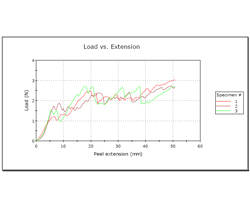
โปรแกรมทดสอบวัสดุ Bluehill® 2 พร้อมโมดูลการทดสอบ Peel, Tear and Friction เหมาะสมกับการทดสอบประเภทนี้ โดยโมดูลการทดสอบนี้จะช่วยให้สามารถตรวจวัดค่าของแรงที่จุดสูงสุดจุดแรก ค่าแรงเฉลี่ย และค่าแรงเฉลี่ยต่อความกว้าง ซึ่งเป็นผลการทดสอบที่มักถูกเลือกใช้งาน
วรรณกรรม

3400 Series – โซลูชันการทดสอบราคาประหยัด

ระบบทดสอบอเนกประสงค์ Instron 3400 ซีรีส์สำหรับการทดสอบแรงดึง แรงอัด การดัดงอ และคุณสมบัติอื่น ๆ ของวัสดุ

  • ผลิตภัณฑ์
  • 06/27/2022
  • 2.58 MB

Bluehill Universal Brochure

Bluehill Universal is Instron’s advanced materials testing software, designed for intuitive touch interaction and streamlined workflows. It offers pre-loaded test methods, QuickTest for rapid setup, enhanced data exporting, and Instron Connect for direct service communication. Users of Bluehill 2 and Bluehill 3 can easily upgrade to the latest version for improved performance and usability

  • ผลิตภัณฑ์
  • 02/26/2017
  • 3.77 MB

การทดสอบแรงกระแทกของอุปกรณ์ฝังในทางออร์โธพีดิกส์

Biomedical Testing » Biomaterials

การทดสอบแรงกระแทกของอุปกรณ์ฝังในทางออร์โธพีดิกส์

โรคข้อเสื่อมนั้นเกิดขึ้นเมื่อการเคลื่อนไหวของข้อในร่างกายเรามีได้น้อยมาก การขาดการเคลื่อนไหวของข้อนั้นจะส่งผลให้ข้อเกิดการเสียหายหรือไม่สามารถใช้งานได้ตามปรกติ   วัสดุฝังในทางออร์โธพีดิกส์ได้รับการออกแบบเพื่อเปลี่ยนทดแทนข้อที่เสียหายและเพิ่มการเคลื่อนไหวของชิ้นส่วนดังกล่าวในร่างกาย เช่น ข้อสะโพก, ข้อเข่า, ข้อไหล่ หรือข้อศอก ซึ่งมักผลิตขึ้นจากเหล็กสเตนเลส ดังนั้นจึงมีความสำคัญสำหรับผู้ผลิตของวัสดุฝังในทางออร์โธพีดิกส์ที่จะต้องทดสอบชิ้นส่วนต่าง ๆ ของวัสดุฝังในดังกล่าวเพื่อศึกษาถึงความต้านทานแรงกระแทกของผลิตภัณฑ์

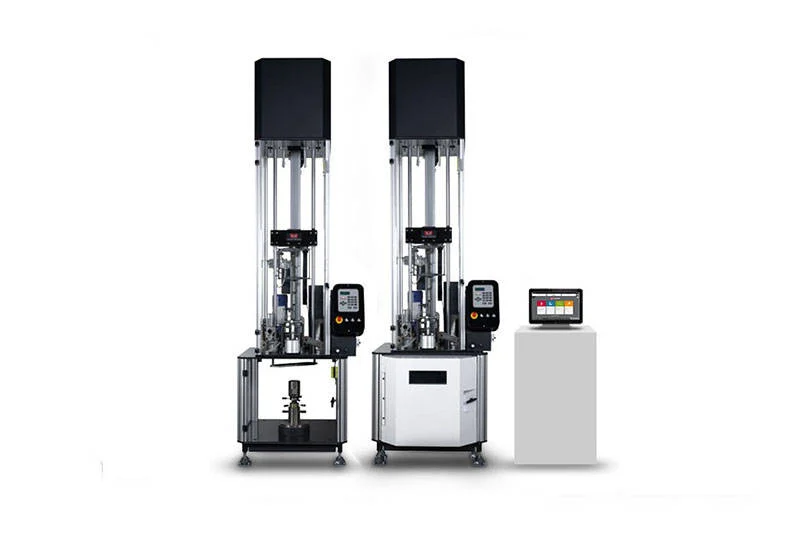
เครื่องทดสอบรุ่น Instron 9450 นั้นเหมาะต่อการทดสอบที่ต้องการ ทั้งนี้เนื่องจากวัสดุฝังในสำหรับแต่ละส่วนของร่างกายนั้นจะมีหลากหลายขนาดและรูปทรง ดังนั้นการทดสอบจะดำเนินการโดยใช้ฟิกซ์เจอร์เฉพาะทางแบบต่าง ๆ เราใช้แผ่นฐานร่องตัวทียึดเข้ากับด้านล่างของเครื่องทดสอบ จากนั้นติดตั้งฟิกซ์เจอร์เฉพาะทางที่จับยึดข้อเข่าเทียมเข้ากับแผ่นฐานร่องตัวทีดังกล่าวที่ฐานของเครื่องทดสอบ หัวทดสอบที่ติดตั้งเกจน์วัดความเครียดขนาด 45 กิโลนิวตันนั้นถูกใช้วัดแรงกระแทกของข้อเข่าเทียม อุปกรณ์จัดเก็บข้อมูล (DAS) และโปรแกรม Bluehill Impact ถูกใช้งานร่วมกับเครื่องทดสอบแรงกระแทกแบบปล่อยตกกระทบด้วยแรงโน้มถ่วงเพื่อจัดเก็บข้อมูลของแรงและความเร็ว เพื่อวิเคราะห์สมรรถนะด้านแรงกระแทก

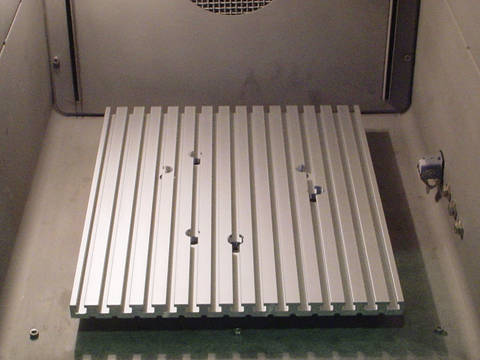
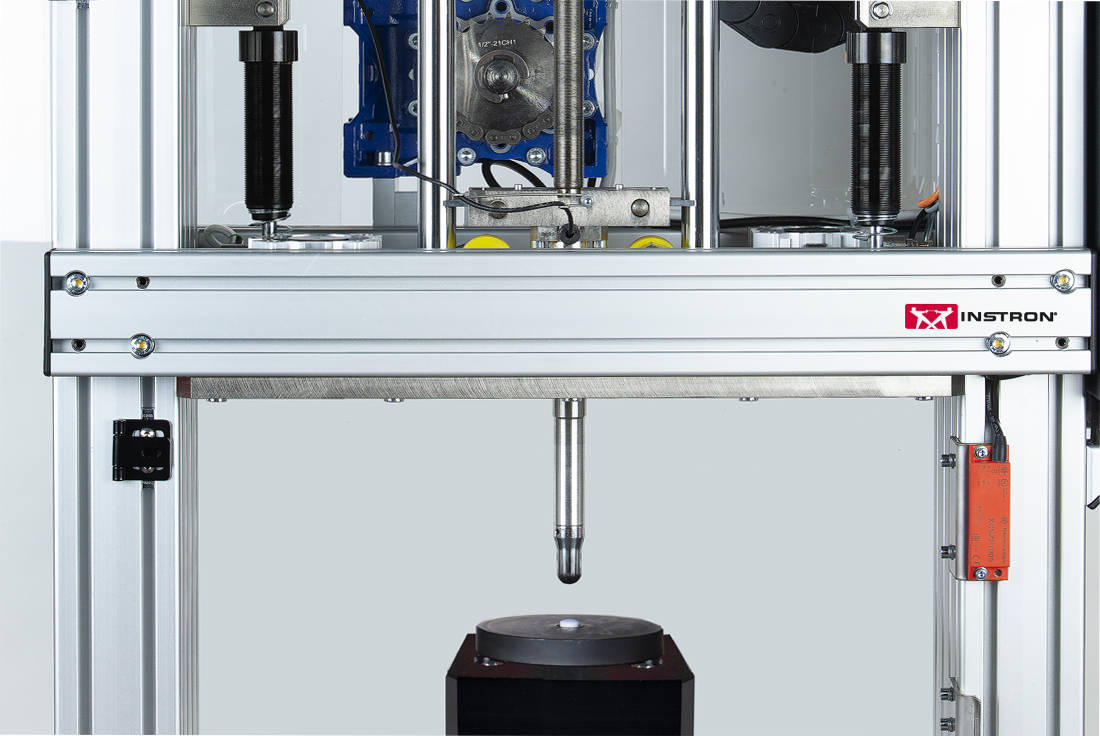
นอกจากนี้ยังสามารถใช้แผ่นฐานอเนกประสงค์ดังแสดงในภาพแทนที่จะใช้แผ่นฐานร่องตัวที โดยแผ่นฐานนี้จะให้ความยืดหยุ่นต่อบริษัทผู้ผลิตที่จะติดตั้งฟิกซ์เจอร์เฉพาะทางต่าง ๆ เข้าได้ตามความต้องการ โดยการทดสอบแรงกระแทกดังกล่าวสามารถปรับแต่งให้คล้ายคลึงกับสภาวะของแรงกระแทกพลังงานต่ำและสูงที่จะเกิดขึ้นจริงในขั้นตอนการผ่าตัด

หมายเหตุ: รูปแบบการทดสอบจริงนั้นถือเป็นความลับของลูกค้า จึงไม่สามารถแสดงได้ในตัวอย่างการใช้งานนี้

วรรณกรรม

9400 Series Drop Tower Brochure

Instron Drop Towers are used to develop, fine tune, and validate material models. Testing materials under real impact conditions is a crucial step prior of product design. Using the characterization data obtained with the Instron 9400, coupled with customer supplied high-speed video, you can have confidence in your results and deliver new materials to your customers faster. Our Drop Tower impact systems, fixtures, and tups are designed to meet a wide range of applications and testing standards including: ISO, ASTM, ANSI, Airbus, Boeing, BSI, DIN, EN, FDA, Ford, GM, JIS, NASA, GOST, and more.

  • ผลิตภัณฑ์
  • 02/05/2020
  • 763.1 KB

9400 Series Dashboard Brochure

Bluehill® Impact is built from the ground up for touch interaction. The Operator Dashboard features large touchpoints to make the user experience simpler and smarter. Easy-to-understand icons and workflows make it easy to train new or experienced users, simplify operator training, and allow you to start testing even faster than ever before

  • ผลิตภัณฑ์
  • 08/01/2019
  • 2.35 MB

ความต้านทานแรงกระแทกของเม็ดยาทางเภสัชกรรม

Biomedical Testing » Biomaterials

ความต้านทานแรงกระแทกของเม็ดยาทางเภสัชกรรม

Support for pharmaceutical tablet impact testing

เม็ดยาทางเภสัชกรรมนั้นโดยทั่วไปมักจะมีการเคลือบผิวเพื่อช่วยในการกลืน, การควบคุมการปลอดปล่อยยาเพื่อผลการรักษา, การแยกแยะ และการแยกผู้ผลิต นอกจากนี้ การเคลือบผิวมักจะช่วยให้แน่ใจว่าสามารถมีอายุการจัดเก็บได้นานโดยการป้องกันเม็ดยาจากสภาพแวดล้อมที่มีผลกระทบ เช่น แสงสว่าง, อุณหภูมิ, ความชื้น และแรงกระทำทางกล โดยเฉพาะในระหว่างกระบวนการผลิตและบรรจุซึ่งผิวเคลือบของเม็ดยานี้จะถูกกระแทกที่สามารถทำให้เกิดความเสียหายได้

การทดสอบแรงกระแทกนั้นสามารถสร้างมูลค่าให้แก่ผู้ผลิตในรูปแบบของข้อมูลประสิทธิภาพสำหรับงานวิจัยและพัฒนาของวัสดุผิวเคลือบชนิดใหม่หรือกระบวนการผลิตใหม่ เมื่อได้ผลิตภัณฑ์ที่เหมาะสมแล้ว ผู้ผลิตยังสามารถที่จะจัดทำขั้นตอนการควบคุมคุณภาพโดยใช้ข้อมูลที่อ้างอิงจากการทดสอบความต้านทานแรงกระแทกนี้เพื่อเป็นการตรวจสอบกระบวนการผลิตได้อีกด้วย

INSTRON 9440 Drop Tower ประกอบไปด้วยเซ็นเซอร์ Piezo โหลดต่ำ (0.45kN หรือ 4.5kN), insert นิ้วซีกแทรกหรือแบนทับ tup และซอฟต์แวร์ Bluehill Impact เหมาะสำหรับการทดสอบยาและแท็บเล็ตยา สำหรับการแก้ไขเราขอแนะนำให้ใช้แผ่นโลหะที่แข็งแบนและสามารถยึดกับพื้นที่โต๊ะได้อย่างง่ายดาย


ระบบการทดสอบแรงกระแทกนี้เหมาะสำหรับการวิเคราะห์หาประสิทธิภาพในการต้านทานแรงกระแทกของเม็ดยาทางเภสัชกรรม เช่น ความสม่ำเสมอของแต่ละล็อตการผลิตและการเสียหายหรือการเสียหายจากส่วนผสม ซึ่งสมบัติเหล่านี้จะมีความสัมพันธ์กับวัสดุเคลือบผิวที่ใช้สำหรับเม็ดยา ด้วยการเข้าใจถึงการที่ผิวเคลือบจะเพิ่มหรือลดความแข็งแรงของเม็ดยานั้นจะทำให้สามารถเพิ่มสมบัติของผลิตภัณฑ์ได้

วรรณกรรม

9400 Series Drop Tower Brochure

Instron Drop Towers are used to develop, fine tune, and validate material models. Testing materials under real impact conditions is a crucial step prior of product design. Using the characterization data obtained with the Instron 9400, coupled with customer supplied high-speed video, you can have confidence in your results and deliver new materials to your customers faster. Our Drop Tower impact systems, fixtures, and tups are designed to meet a wide range of applications and testing standards including: ISO, ASTM, ANSI, Airbus, Boeing, BSI, DIN, EN, FDA, Ford, GM, JIS, NASA, GOST, and more.

  • ผลิตภัณฑ์
  • 02/05/2020
  • 763.1 KB

9400 Series Dashboard Brochure

Bluehill® Impact is built from the ground up for touch interaction. The Operator Dashboard features large touchpoints to make the user experience simpler and smarter. Easy-to-understand icons and workflows make it easy to train new or experienced users, simplify operator training, and allow you to start testing even faster than ever before

  • ผลิตภัณฑ์
  • 08/01/2019
  • 2.35 MB

Soft Tissue Testing

Biomedical Testing » Biomaterials

Soft Tissue Testing

The Challenge

Skin

Testing soft tissues, such as skin, tendons, ligaments, and others, presents many challenges. Specimens of this type are delicate; hence they break at low forces. Gripping soft tissues can also be problematic given that these specimens are small, slippery, and compliant in nature. In addition, soft tissues are viscoelastic and often require accurate elongation or strain measurement to properly understand the material properties. Typically, in vivo conditions are needed to test soft tissues, which calls for the test to be performed at body temperature and in a hydrated state. This requires the testing equipment and fixture to be corrosion resistant and "waterproof" to avoid damaging the sensitive electronics of the testing system.  

Our Solution 

Soft Tissue Testing

For testing at physiological conditions, the Instron® BioBath is an ideal solution for keeping a specimen fully hydrated in a saline solution and at 37°C. The BioBath uses a closed-loop temperature control measurement, which can be fed directly into the test system's software to accurately track specimen temperature, in addition to mechanical test data. Pneumatic grips are recommended for consistent clamping pressure that the user can vary up to 90 PSI. A high friction surface is often needed to grip slippery biomaterials to avoid specimen slipping. To avoid this, we recommend using a metallic high friction finish known as surfalloy on the grip face, but grit sandpaper is also a viable option. A stainless steel tray, such as the BioTray, can help protect the system's electronics from damage in the case of spills or messy specimens.

Hard Tissue Testing

Biomedical Testing » Biomaterials

Hard Tissue Testing

The Challenge

Hard Tissue

Bone, dentin, and dental enamel are all considered to be hard tissues. Specimens of this type are most commonly tested in compression and flexural. The most common results obtained from a compression or flexural test on hard tissues is modulus and force at fracture. Typically, these specimens come from mice, rats, or other mammals and are small in size. Despite being small in size, hard tissues have high stiffness. A typical challenge with measuring modulus is accurate measurement of displacement. For a given force, a hard tissue such as bone will exhibit small displacement. In addition to compression testing, 3-point and 4-point bend tests are common to quantify force at fracture on bone sections. Often, this testing must be conducted at physiologically relevant test conditions, such as in a hydrated bath and at body temperature.

Our Solution 

Hard Tissue Testing

When conducting compression testing on hard tissues, it is critical that users choose appropriately sized compression platens to closely match specimen size, ensure the compression platens are spherically seated or self-aligning to apply even pressure on the specimen, and use an accurate source to measure system displacement. For example, an accurate measurement source of displacement could be via compliance correction in the software, or by using a strain measuring device, such as a linear variable deflection transducer (LVDT) or a video extensometer. When testing flexural specimens, it is critical that the anvils on the flexural fixture are appropriately sized to the specimen and that the flexural fixture properties, such as span length, are easily entered into the software.

Hydrogel Tensile Testing

Biomedical Testing » Biomaterials

Hydrogel Tensile Testing

The Challenge

Hydrogel Tensile

Hydrogel testing is most commonly done in both tension and compression. Compression testing on hydrogels poses less of a challenge, as many hydrogels are compliant and compress easily under load. The natural compliance of hydrogels becomes more of a challenge in tensile testing, as these materials can be difficult to grip and exhibit high elongation. Gripping hydrogels with too much pressure typically displaces the material out of the grip faces, which makes gripping ineffective. In addition, a traditional contacting extensometer is not a viable option considering the soft properties of hydrogels. Given the viscoelastic properties of these materials, test speed will greatly affect results, such as force at break and elongation at break. 

Our Solution 

Hydrogel Tensile Testing

When testing hydrogels in compression and tension, most common forces at failure are below 100 N. Given the low forces obtained in hydrogel mechanical testing, it is important that an accurate load cell is used. This can be especially tricky in a compression test as many users restrain from using low capacity load cells out of fear that they will overload the load cell if the compression platens begin to touch during a test. To prevent this from happening, it is imperative that safety limits are set and that the end of test criteria is set to the load cell capacity in the software. For tensile testing, Instron® offers a range of low force grips, including spring loaded, screw side action action, and pneumatic side action grips. Given the compliant nature of hydrogels, often sandpaper needs to be used to increase friction at the gripping contact points. When accurate measurement of strain is required, we recommend using our Advanced Video Extensometer

Bioadhesives Peel Testing

Biomedical Testing » Biomaterials

Bioadhesives Peel Testing

The Challenge

bio adhesive

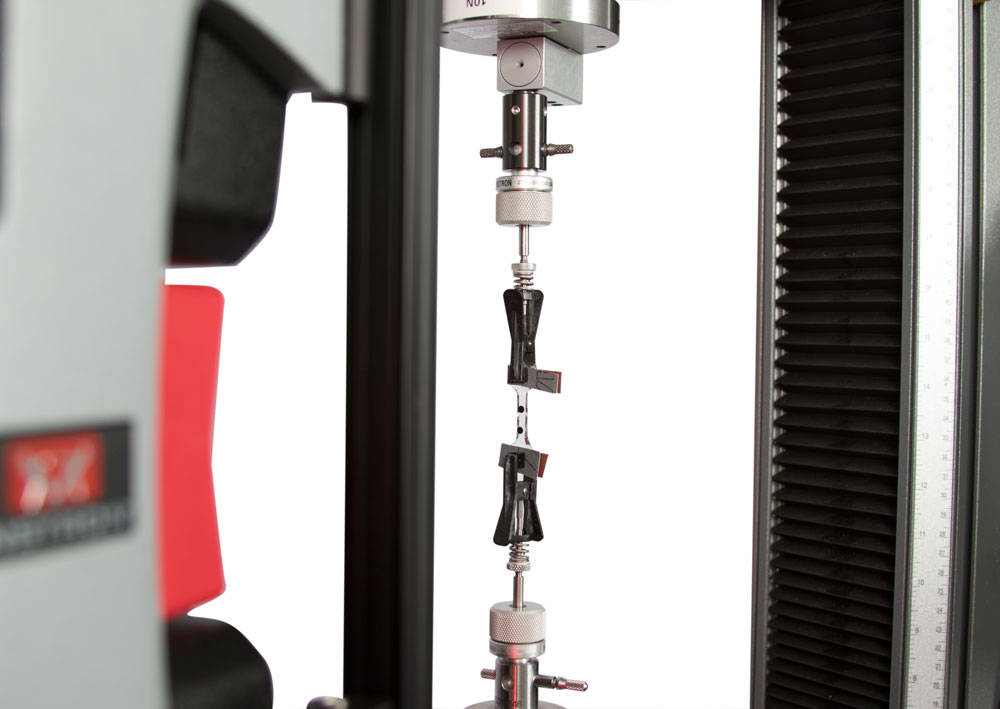
Adhesives are widely used in the medical device industry for dental implants, bone cements, and wound closure products. Wound closure products include tissue adhesives that can be found in bandages, secondary dressings, and a variety of surgical sealants. The adhesive strength of these products must be well defined. An adhesive that isn’t strong enough may result in a wound that heals poorly, or it can lead to an infection. If an adhesive is too strong, it may damage the underlying tissue or cause the patient unnecessary pain when removing. A fundamental challenge with testing bio adhesives is characterizing adhesive strength in physiologically relevant conditions. 

Our Solution 

Bioadhesives Peel Testing

Soft tissue substrates should be tested under physiologically relevant conditions, most preferable in a bath or temperature controlled enclosure at 37°C. The BioBath with submersible pneumatic grips is recommended. The grips and pull rod that attach to the force transducer are designed to minimize buoyancy chances during low force testing. We also recommend a low capacity load cell, given that adhesive strength for biological applications is typically under 10-20 N. Bluehill® Universal's Peel, Tear, Friction Module is ideal for this test type in order to measure first peak force, average force over the seal, and average force per width of the specimen.