Instron

Metal Bolt Testing

Automotive » Joining

Metal Bolt Testing

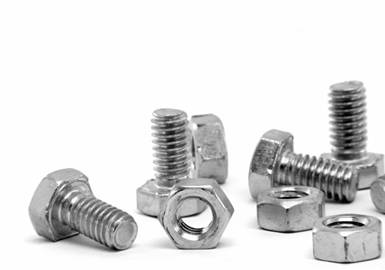
In the manufacture of automobiles, metallic bolts are used in large volumes ranging in application from high strength required for structural assembly to securing lightweight parts to the vehicle. Whatever the application they are used for, testing is critical to determine if they will be suitable for the application and/or to ensure they are meeting the quality standard.

Quality Control for High Volume Production

THE CHALLENGE

Bolts are typically produced in extremely large
quantities, testing needs to be completed as quickly as possible to ensure the
product can be shipped.

our Solution

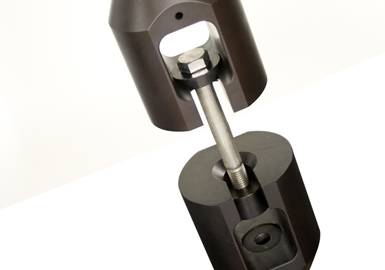
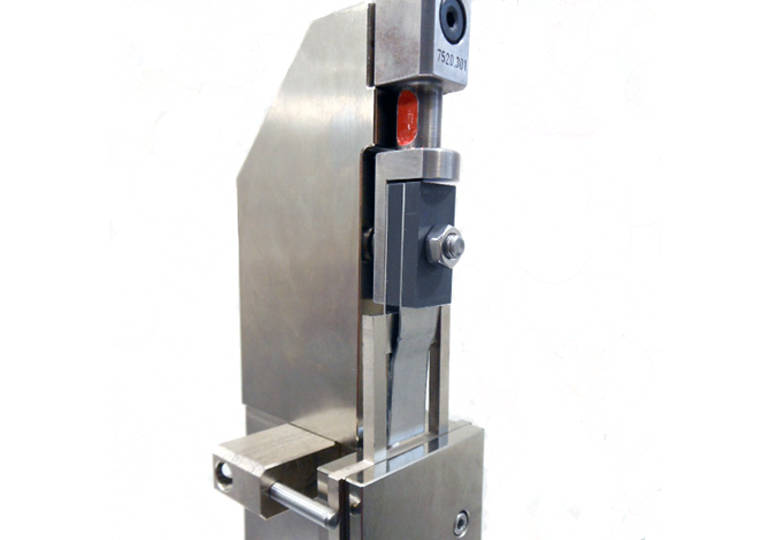
Bolt testing accessories enable proof tests, axial and wedge tensile tests, and cone stripping tests on most standard bolts, screws, studs, and nuts. They are compatible with most universal and tensile testing machines. Available accessories consist of: Bolt holders, washers, short bolt adapters, nut proof loading assemblies, and holder reducing assemblies.

Each bolt holder has a key slot that allows the operator to quickly and correctly load the specimen. A recessed circular area in the bottom of each bolt holder ensures that the washer will fit snugly (sheet metal alignment device is used on Series E holders). This reduces loading time and occurrences of slippage, because a secure, centered seating is ensured for each test.

Short Bolt Lengths

THE CHALLENGE

The length of each type of bolt can vary hugely depending on
the application. Many are quite short, which can make gripping these for a
tension test extremely challenging. The typical tension test setup for bolts
uses a high strength plain and threaded washer, the thickness of these two
components can often mean that there is not sufficient shank left exposed to test.

OUR SOLUTION

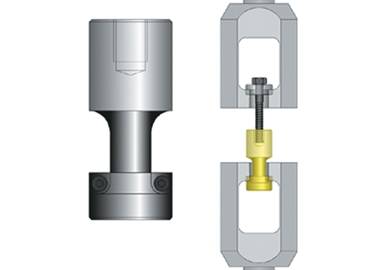
"Top Hat" or "Dumbell" type accessories protrude out of the bold
holder fixtures allowing shorter lengths of bolts to be tested.

Nut Proof Loading

THE CHALLENGE

As well as testing the bolt, the nuts that secure to
the bolts also need to be tested. This requires attaching the nut to a mandrel
that is stronger than the threads of the nut to determine what the maximum load of the threads within the nut are. 

our Solution

Using high strength nut proof load assemblies
allows mounting into the standard bolt holders to complete this test quickly
and easily.

Measuring Strain and Multi Step Loading

THE CHALLENGE

For some testing, an extensometer may be required to accurately determine the yield strength and stiffness of the bolt, however, the extensometer needs to be removed during the test to prevent damage to the instrument due to high energy failures. To do this after yield has been determined, the test needs to return to zero load and then continue the test once removed to test through failure.

our Solution

Bluehill Universal

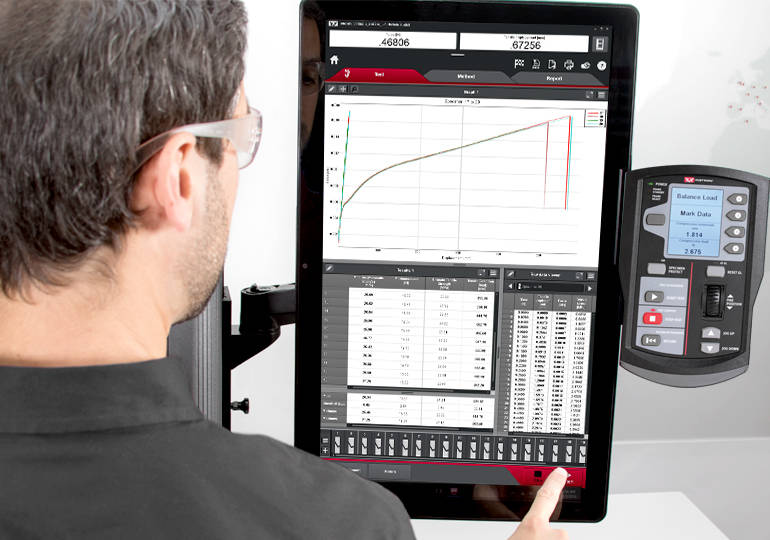
Using Bluehill® Universal software with TestProfiler allows for complex ramp loading during the test. Enabling seamless and automatic switch over meeting the requirements of the standards while allowing safe removal of the extensometer.

Shear Strength

THE CHALLENGE

In their application, bolts are often subjected to shear
forces, these can be in single shear or in double shear. It is important to
understand how the bolts will perform under these shear forces to ensure there
are no product failures.

our Solution

Instron’s single or double shear fixtures can attach simply to any universal testing machine. The double shear test is completed in compression against a fixture supporting either side of a punch, whereas the single shear is conducted in tension as the bolt is mounted through the fixture. These tests are typically performed until the initial yield in shear, further elongation may cause damage to the fixtures.

Learn more about our automotive solutions
Joining High Strain Rate Testing

Automotive » Joining

Joining High Strain Rate Testing

The ChallengeJoining

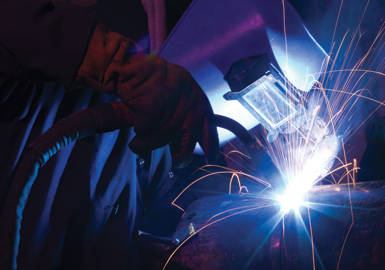
Welding and bolting are widely used techniques to join metal components while adhesives are increasingly popular as a more cost-effective joining method while offering a better reduction in vibration noises and improving aesthetics of vehicles. The constant demand for new materials that are lighter or stronger necessitates advancements in joining techniques, which facilitate the joining of new combinations of materials and have potential contributions to the overall lightweighting of a vehicle. Materials exhibit different behavior under high strain rate conditions. Therefore, by investigating materials and their corresponding joined structures at various strain rates, engineers are able to understand the merits of new materials and joining techniques against established methods during crash impacts, validate and improve upon existing crash simulations.

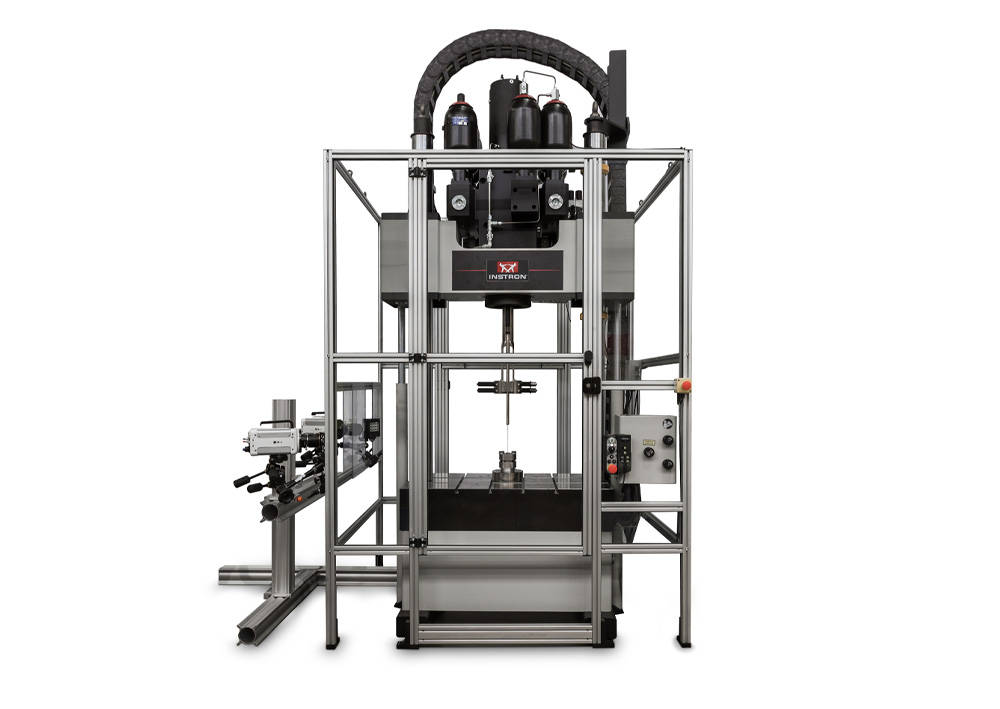
Our SolutionHigh Strain Rate VHS Testing System with Fast Jaw Grips

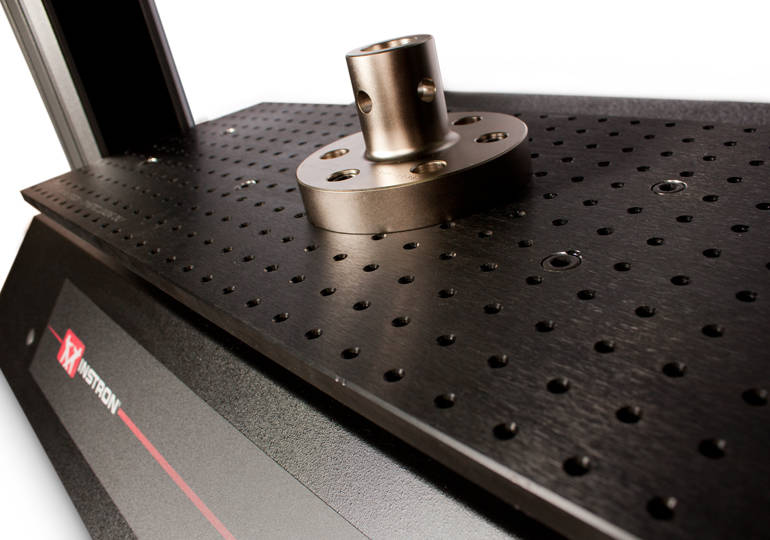
In order to accommodate investigation of joined structures in high strain rate impact, Instron provides a wide range of accessories that will allow mounting of various structures, including any offset mounting and custom fixtures. Instron VHS also includes a high-stiffness frame that will provide greater repeatability and higher system resonance and t-slot tables come as standard on all VHS systems for easy mounting of components, providing a reliable and fully integrated high strain rate testing solution that is intuitive to use.

Plastic Welds Tensile Testing

Plastic Welds Tensile Testing

Automotive » Joining

Plastic Welds Tensile Testing

Specimen Gripping

As more and more components of cars are made using plastic, testing must be done to ensure that different plastic components will stay bonded together.  From dashboards to gas caps, polymeric materials ranging from nylon to polypropylene can be found throughout vehicles.  Plastic welding techniques such as vibration and laser welding are used to join different plastic components, in addition to traditional adhesive methods.  To ensure that the bonds are sufficiently strong, tensile testing can be performed both during product development and quality control.

THE CHALLENGE


Testing bonded materials can often result in gripping challenges. The specimen tabs are often not in a straight line, which can cause off-center loading and inaccurate results.

our Solution


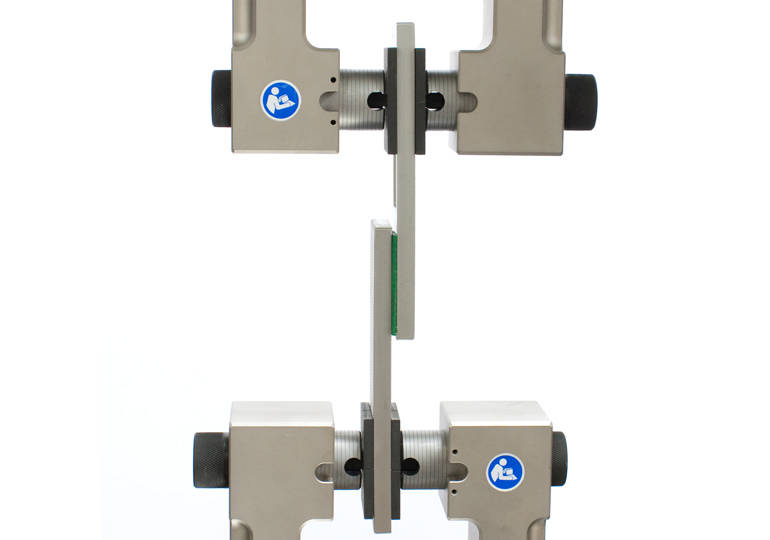
Intron’s advanced screw action and 5 kN and 10 kN pneumatic side action grips can be adjusted to be offset to ensure that the bonded area is in the center of the load string and the load is applied axially. Both types of grips can be equipped with a variety of different jaw faces suitable for almost any material.

For testing specimens that cannot be gripped with traditional methods, Instron offers component test plates and t-slot tables enabling operators to grip specimens of any shape and size.


Learn more about our automotive solutions
粘合剂试验

Automotive » Joining

粘合剂试验

对轻量化的追求促使汽车使用材料的范围扩大,因此,能可靠地连接这些材料变得越来越重要。粘结技术能够连接不同的材料,并且相对传统方法而言能提升性能。但是,需要严格的检定和质量控制以确保可靠的结果。

粘合剂动静态测试

面临的挑战

随着粘合剂被用在更为艰巨的汽车应用,需要了解它在不同环境条件下的静态和疲劳性能。

粘合接头的力学性能(例如强度和刚度)可以用多种技术来测试。测量刚性部件之间的粘合接头一般用搭接剪切试验。各种形式的剥离试验用于测量柔性和刚性/柔性部件之间粘合接头的强度。

一般利用断裂韧性试验来研究在静态和疲劳加载中的裂纹扩展。通过断裂韧性试验的测试结果,能更好的理解粘接机制及接头失效的原因。

我们的解决方案

Instron电子万能材料试验机动态试验机非常适合所有类型的粘合接头测试。一系列的夹具和工装可用来评估粘合剂的强度。搭接剪切试样的试验通常使用楔形夹具、手动平推夹具气动夹具。剥离测试夹具包括:90°剥离可变角度浮辊旋转轮类型。Bluehill® Universal软件适用于静态粘合试验,带有一个可选的粘合剂应用模块,包括多个符合ASTM,EN和ISO标准的预配置的测试方法。

可以使用动态试验机上疲劳手动或液压夹具来对粘合接头进行疲劳测试。我们可用环境箱来对粘合剂进行各种环境条件下的测试。

粘合剂冲击试验

面临的挑战

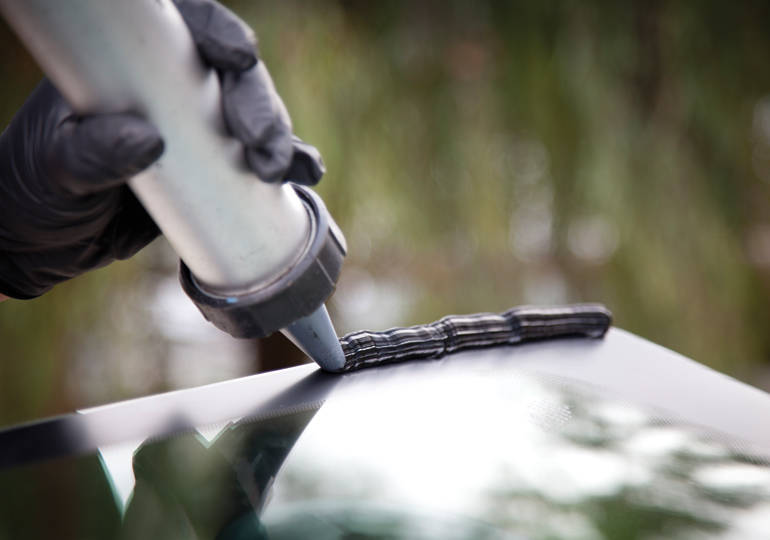
随着汽车设计的发展,粘合剂正迅速取代机械紧固件,作为连接许多金属、塑料、橡胶和玻璃的常见解决方案。专门配制的粘合剂是用于粘接结构框架组件、挡风玻璃和其他组件,并且可以提升美观、降低噪声和振动(NVH)、以及降低制造成本。随着粘合剂的使用越来越多,汽车和粘合剂供应商必须开发新的测试草案,以确保在所有可能的条件下结构的完整性。碰撞中的冲击力可能导致车架或挡风玻璃的粘合区域失效,造成车辆乘客严重受伤。

我们的解决方案

汽车和粘合剂供应商通常使用ISO 11343楔形剥离冲击试验方法来比较各种产品和工艺变量对抗冲击性能的影响。我们开发了自己的标准以及基于ISO 11343的自定义测试配置。包括一个独特的支持工装和锤头排列用于冲击粘合在汽车框架组件上的挡风玻璃试样。这个冲击试验系统含有一个Instron恒温环境试验箱,而且能让研究和开发设施尝试不同的物质组成、固化条件和温度来优化产品的性能和遵守政府法规。

了解更多汽车测试解决方案