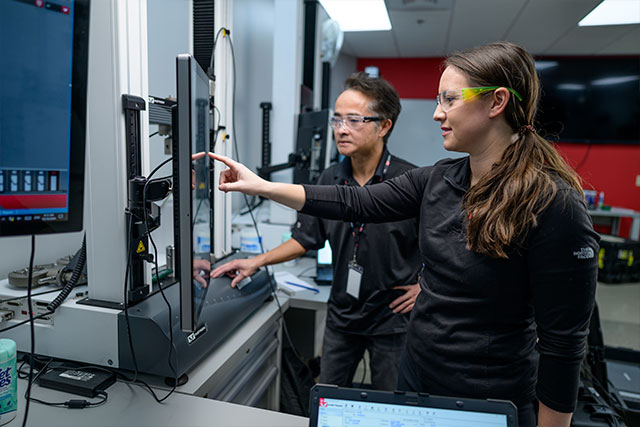
이 원데이 코스에서 수강생들은 재료 시험에 대해 배우게 됩니다. 본 과정은 기계적 성질, 다양한 시험 유형, 응력/변형률 시험 곡선, 탄성 계수, 항복 및 컴퓨터 제어 재료 시험 장비를 이용한 시연을 포함하여 재료 시험의 기초를 강조합니다. 수강생들은 인장, 압축, 굴곡 및 박리 시험을 관찰하며 시험 곡선과 계산된 결과를 해석하는 방법을 익힙니다. 전체 프로그램을 확인하시려면 교육 과정 개요를 다운로드하십시오.
이 과정을 마치면 다음을 수행할 수 있습니다.
- 기초 재료 시험 용어, 이론 및 개념 이해
- 전형적인 하중/변위 시험 곡선을 이해하고 서로 다른 유형의 곡선 구분
- 일반적인 인장, 압축, 굴곡 및 박리 시험 수행 시 주의 사항 숙지
- 컴퓨터 제어 시험 장비를 사용하여 인장, 압축, 굴곡 및 박리 시험을 수행할 때의 올바른 시험 절차 습득
- 데이터 정확성을 위한 시스템 교정의 중요성 학습
- 시편 형상 및 시편 치수의 중요성 이해
- 응력, 변형률, 연신율, 탄성 계수, 오프셋 항복 및 기타 고급 계산 수행
- 시험 곡선 해석 및 주요 지점과 결과 표시
- 다양한 유형의 변형 측정 및 장치 이해
이 교육 과정 등록하기
이 1일 과정에서 수강생들은 재료 시험에 대해 배웁니다. 이 과정은 기계적 특성, 다양한 시험 유형, 응력/변형률 시험 곡선, 탄성 계수, 항복 및 컴퓨터화된 재료 시험 장비를 사용한 시연을 통한 응용 시험 등 재료 시험의 기본을 강조합니다. 수강생들은 인장, 압축, 굴곡 및 박리 시험을 관찰하여 시험 곡선과 계산된 결과를 해석하는 방법을 배웁니다. 전체 프로그램을 보려면 강의 개요를 다운로드하세요.
이 과정을 완료하면 다음을 수행할 수 있습니다:
- 기본 재료 시험 용어, 이론 및 개념 이해
- 일반적인 힘/변위 시험 곡선을 이해하고 다양한 유형의 곡선을 구별할 수 있음
- 일반적인 인장, 압축, 굴곡 및 박리 시험 실행 시 주의사항
- 컴퓨터화된 시험 장비를 사용하여 인장, 압축, 굴곡 및 박리 시험을 수행할 때의 우수 시험 절차 학습
- 데이터 정확성을 위한 시스템 교정의 중요성 학습
- 시편 형상 및 시편 치수의 중요성 이해
- 응력, 변형률, 신장률, 탄성 계수, 오프셋 항복 및 기타 고급 계산 수행
- 시험 곡선을 해석하고 주요 지점과 결과에 레이블을 지정할 수 있음
- 다양한 유형의 변형률 측정 및 장치 이해
이 과정 등록하기
이 1일 과정에서 수강생은 재료 시험에 대해 학습합니다. 이 과정에서는 기계적 물성, 다양한 시험 유형, 응력/변형률 시험 곡선, 탄성계수, 항복, 그리고 컴퓨터화된 재료 시험 장비를 활용한 시연을 통해 응용 시험 등 재료 시험의 기본을 중점적으로 다룹니다. 수강생은 인장, 압축, 굽힘, 박리 시험을 관찰하며 시험 곡선과 계산 결과를 해석하는 방법을 익히게 됩니다. 전체 프로그램을 확인하려면 과정 개요를 다운로드하세요.
이 과정을 수료하면 다음을 수행할 수 있습니다:
- 재료 시험의 기본 용어, 이론 및 개념 이해
- 일반적인 힘/변위 시험 곡선을 이해하고 서로 다른 곡선 유형을 구분할 수 있음
- 일반적인 인장, 압축, 굽힘, 박리 시험 수행 시 해야 할 것과 하지 말아야 할 것
- 컴퓨터화된 시험 장비를 사용해 인장, 압축, 굽힘 및 박리 시험을 수행할 때의 올바른 시험 절차 학습
- 데이터 정확도를 위한 시스템 교정의 중요성 학습
- 시편 형상과 시편 치수의 중요성 이해
- 응력, 변형률, 연신율, 탄성계수, 오프셋 항복 및 기타 고급 계산 수행
- 시험 곡선을 해석하고 주요 지점과 결과를 표시할 수 있음
- 다양한 변형률 측정 방식과 장치 이해
이 과정 등록하기
이 1일 과정에서 수강생들은 재료 시험에 대해 배우게 됩니다. 이 과정은 기계적 특성, 다양한 시험 유형, 응력/변형률 시험 곡선, 탄성계수, 항복점, 그리고 컴퓨터화된 재료 시험 장비를 사용한 응용 시험 시연을 포함한 재료 시험의 기초를 다룹니다. 수강생들은 인장, 압축, 굽힘, 박리 시험을 관찰하며 시험 곡선과 계산된 결과를 해석하는 방법을 배우게 됩니다. 전체 프로그램을 확인하려면 과정 개요를 다운로드하세요.
이 과정을 마치면 다음을 수행할 수 있습니다:
- 기본 재료 시험 용어, 이론 및 개념 이해
- 일반적인 힘/변위 시험 곡선을 이해하고 다양한 유형의 곡선을 구별할 수 있음
- 일반적인 인장, 압축, 굽힘, 박리 시험 수행 시 해야 할 것과 하지 말아야 할 것
- 컴퓨터화된 시험 장비를 사용하여 인장, 압축, 굽힘, 박리 시험을 수행할 때 올바른 시험 절차 학습
- 데이터 정확도를 위한 시스템 교정의 중요성 학습
- 시편 형상 및 시편 치수의 중요성 이해
- 응력, 변형률, 신장률, 탄성계수, 오프셋 항복점 및 기타 고급 계산 수행
- 시험 곡선을 해석하고 주요 지점과 결과를 표시할 수 있음
- 다양한 유형의 변형률 측정 방법 및 장치 이해
이 과정 등록하기
이 1일 과정에서 수강생은 재료 시험에 대해 학습합니다. 이 과정에서는 기계적 물성, 다양한 시험 유형, 응력/변형률 시험 곡선, 탄성계수, 항복, 그리고 컴퓨터 기반 재료 시험 장비를 활용한 시연을 통해 응용 시험 등 재료 시험의 기초를 중점적으로 다룹니다. 수강생은 인장, 압축, 굽힘, 박리 시험을 관찰하며 시험 곡선과 계산 결과를 해석하는 방법을 익히게 됩니다. 전체 프로그램을 확인하려면 과정 개요를 다운로드하세요.
이 과정을 수료하면 다음을 할 수 있습니다:
- 재료 시험의 기본 용어, 이론 및 개념 이해
- 일반적인 힘/변위 시험 곡선을 이해하고 서로 다른 유형의 곡선을 구분할 수 있음
- 일반적인 인장, 압축, 굽힘 및 박리 시험 수행 시 해야 할 것과 하지 말아야 할 것
- 컴퓨터 기반 시험 장비를 사용해 인장, 압축, 굽힘 및 박리 시험을 수행할 때의 올바른 시험 절차 학습
- 데이터 정확도를 위한 시스템 교정의 중요성 학습
- 시편 형상과 시편 치수의 중요성 이해
- 응력, 변형률, 연신율, 탄성계수, 오프셋 항복 및 기타 고급 계산 수행
- 시험 곡선을 해석하고 주요 지점과 결과를 표시할 수 있음
- 다양한 변형률 측정 방식과 장치 이해
이 과정 등록하기
이 1일 과정에서는 재료 시험에 대해 학습합니다. 이 과정은 기계적 물성, 다양한 시험 유형, 응력/변형률 시험 곡선, 탄성률, 항복, 그리고 컴퓨터 기반 재료 시험 장비를 활용한 시연을 통해 응용 시험을 포함한 재료 시험의 기초를 다룹니다. 수강생은 인장, 압축, 굽힘, 박리 시험을 관찰하며 시험 곡선과 계산 결과를 해석하는 방법을 배웁니다. 전체 프로그램을 확인하려면 과정 개요를 다운로드하세요.
이 과정을 수료하면 다음을 할 수 있습니다:
- 재료 시험의 기본 용어, 이론 및 개념 이해
- 일반적인 힘/변위 시험 곡선을 이해하고 서로 다른 곡선 유형을 구분할 수 있음
- 일반적인 인장, 압축, 굽힘, 박리 시험 수행 시 주의사항(Do’s & Don’ts)
- 컴퓨터 기반 시험 장비로 인장, 압축, 굽힘 및 박리 시험을 수행할 때의 올바른 시험 절차 학습
- 데이터 정확도를 위한 시스템 교정의 중요성 학습
- 시편 형상과 시편 치수의 중요성 이해
- 응력, 변형률, 연신율, 탄성률, 오프셋 항복 및 기타 고급 계산 수행
- 시험 곡선을 해석하고 주요 지점과 결과를 표시할 수 있음
- 다양한 변형률 측정 방식과 장치 이해
이 과정 등록하기
이 1일 과정에서는 재료 시험에 대해 학습합니다. 이 과정은 기계적 물성, 다양한 시험 유형, 응력/변형률 시험 곡선, 탄성계수, 항복, 그리고 컴퓨터 기반 재료 시험 장비를 활용한 시연을 통해 응용 시험 등 재료 시험의 기초를 중점적으로 다룹니다. 학생들은 인장, 압축, 굽힘, 박리 시험을 관찰하며 시험 곡선과 계산 결과를 해석하는 방법을 익히게 됩니다. 전체 프로그램을 확인하려면 과정 개요를 다운로드하세요.
이 과정을 수료하면 다음을 할 수 있습니다:
- 재료 시험의 기본 용어, 이론 및 개념 이해
- 일반적인 힘/변위 시험 곡선을 이해하고 서로 다른 곡선 유형을 구분할 수 있음
- 일반적인 인장, 압축, 굽힘 및 박리 시험 수행 시 해야 할 것과 하지 말아야 할 것
- 컴퓨터 기반 시험 장비로 인장, 압축, 굽힘 및 박리 시험을 수행할 때의 올바른 시험 절차 학습
- 데이터 정확도를 위한 시스템 교정의 중요성 학습
- 시편 형상과 시편 치수의 중요성 이해
- 응력, 변형률, 연신율, 탄성계수, 오프셋 항복 및 기타 고급 계산 수행
- 시험 곡선을 해석하고 주요 지점과 결과에 라벨을 지정할 수 있음
- 다양한 변형률 측정 유형과 장치 이해
이 과정 등록하기

In this one-day course, students will learn about materials testing. The course highlights the basics of materials testing including mechanical properties, different types of testing, stress/strain test curves, modulus, yield, and application testing with demonstrations on computerized materials test instruments. Students will observe tensile, compressive, flexural, and peel tests to learn to interpret test curves and calculated results. Download the course outline to see the full program.
After completing this course, you will be able to:
- Understand basic materials testing terminology, theory and concepts
- Understand typical force/displacement test curves and be able to distinguish between different types of curves
- Do’s and Dont’s when running typical tensile, compression, flexure, and peel tests
- Learn good testing procedures when using a computerized testing instrument to perform tension, compression, flexural and peel testing
- Learn the importance of system calibration for data accuracy
- Understand specimen geometry and the importance of specimen dimensions
- Calculate stress, strain, elongation, modulus, offset yield, and other advanced calculations
- Be able to interpret test curves and to label major points and results
- Understand different types of strain measurements and devices
Register for This Course
In this one-day course, students will learn about materials testing. The course highlights the basics of materials testing including mechanical properties, different types of testing, stress/strain test curves, modulus, yield, and application testing with demonstrations on computerized materials test instruments. Students will observe tensile, compressive, flexural, and peel tests to learn to interpret test curves and calculated results. Download the course outline to see the full program.
After completing this course, you will be able to:
- Understand basic materials testing terminology, theory and concepts
- Understand typical force/displacement test curves and be able to distinguish between different types of curves
- Do’s and Dont’s when running typical tensile, compression, flexure, and peel tests
- Learn good testing procedures when using a computerized testing instrument to perform tension, compression, flexural and peel testing
- Learn the importance of system calibration for data accuracy
- Understand specimen geometry and the importance of specimen dimensions
- Calculate stress, strain, elongation, modulus, offset yield, and other advanced calculations
- Be able to interpret test curves and to label major points and results
- Understand different types of strain measurements and devices
Register for This Course
In this one-day course, students will learn about materials testing. The course highlights the basics of materials testing including mechanical properties, different types of testing, stress/strain test curves, modulus, yield, and application testing with demonstrations on computerized materials test instruments. Students will observe tensile, compressive, flexural, and peel tests to learn to interpret test curves and calculated results. Download the course outline to see the full program.
After completing this course, you will be able to:
- Understand basic materials testing terminology, theory and concepts
- Understand typical force/displacement test curves and be able to distinguish between different types of curves
- Do’s and Dont’s when running typical tensile, compression, flexure, and peel tests
- Learn good testing procedures when using a computerized testing instrument to perform tension, compression, flexural and peel testing
- Learn the importance of system calibration for data accuracy
- Understand specimen geometry and the importance of specimen dimensions
- Calculate stress, strain, elongation, modulus, offset yield, and other advanced calculations
- Be able to interpret test curves and to label major points and results
- Understand different types of strain measurements and devices
Register for This Course

In this one-day course, students will learn about materials testing. The course highlights the basics of materials testing including mechanical properties, different types of testing, stress/strain test curves, modulus, yield, and application testing with demonstrations on computerized materials test instruments. Students will observe tensile, compressive, flexural, and peel tests to learn to interpret test curves and calculated results. Download the course outline to see the full program.
After completing this course, you will be able to:
- Understand basic materials testing terminology, theory and concepts
- Understand typical force/displacement test curves and be able to distinguish between different types of curves
- Do’s and Dont’s when running typical tensile, compression, flexure, and peel tests
- Learn good testing procedures when using a computerized testing instrument to perform tension, compression, flexural and peel testing
- Learn the importance of system calibration for data accuracy
- Understand specimen geometry and the importance of specimen dimensions
- Calculate stress, strain, elongation, modulus, offset yield, and other advanced calculations
- Be able to interpret test curves and to label major points and results
- Understand different types of strain measurements and devices
Register for This Course
In this one-day course, students will learn about materials testing. The course highlights the basics of materials testing including mechanical properties, different types of testing, stress/strain test curves, modulus, yield, and application testing with demonstrations on computerized materials test instruments. Students will observe tensile, compressive, flexural, and peel tests to learn to interpret test curves and calculated results. Download the course outline to see the full program.
After completing this course, you will be able to:
- Understand basic materials testing terminology, theory and concepts
- Understand typical force/displacement test curves and be able to distinguish between different types of curves
- Do’s and Dont’s when running typical tensile, compression, flexure, and peel tests
- Learn good testing procedures when using a computerized testing instrument to perform tension, compression, flexural and peel testing
- Learn the importance of system calibration for data accuracy
- Understand specimen geometry and the importance of specimen dimensions
- Calculate stress, strain, elongation, modulus, offset yield, and other advanced calculations
- Be able to interpret test curves and to label major points and results
- Understand different types of strain measurements and devices
Register for This Course