
What is Compression Testing?
An Introduction
Compression testing is one of the most fundamental types of mechanical testing, alongside tensile and flexion tests. Compression tests are used to determine a material’s behavior under applied crushing loads, and are typically conducted by applying compressive pressure to a test specimen (usually of either a cuboid or cylindrical geometry) using platens or specialized fixtures on a universal testing machine. During the test, various properties of the material are calculated and plotted as a stress-strain diagram which is used to determine qualities such as elastic limit, proportional limit, yield point, yield strength, and, for some materials, compressive strength.
Why Perform a Compression Test?
Compression testing allows manufacturers to assess the integrity and safety of materials, components, and products during several phases of the manufacturing process. In order for a material to be selected for a new application or product, it needs to demonstrate the ability to withstand whatever mechanical forces it will encounter in its end-use application. The potential applications can vary from strength testing of a car windshield to endurance testing of concrete beams used in construction. Foam used in seating must be comfortable for the consumer while drug delivery devices must be easy for medical providers to deploy. Furthermore, materials and products might be exposed to mechanical forces for short or long periods of time, through cyclical or repeated use, and in a wide variety of different temperature and environmental conditions. Seating cushions are expected to last for a certain length of time, while automotive tires must maintain their elasticity in all types of weather. Materials that exhibit high tensile strength tend to (but do not always!) exhibit low compressive strength. Likewise, materials high in compressive strength tend to exhibit low tensile strength. Therefore, compression testing is often used on brittle materials such as concrete, metals, plastics, ceramics, composites, and corrugated materials like cardboard. These materials are often used in a load-bearing capacity where their integrity under compressive forces is critical.
Unlike tensile tests, which are usually conducted to determine the tensile properties of a specific material, compression tests are often performed on finished products. Common items such as tennis balls, golf balls, water bottles, protective cases, plastic pipes, and furniture are all examples of products that need to be evaluated for their compressive strength. For example, an engineer may want to conserve plastic by creating water bottles with thinner walls, but the bottles must still be strong enough to be packed in pallets and stacked on top of each other for transport. Compression testing can help the engineer fine tune the balance between product strength and material conservation.
In addition to its importance to the R&D process, compression testing is also used by quality assurance departments to ensure that batches of finished product are meeting the required specifications for compressive properties. This is important from both a safety and a business perspective, as defective products can be dangerous to the end user and can also cause significant harm to manufacturers in the form of product delays, lost revenue, and damaged reputations.
HOW TO PERFORM A COMPRESSION TEST
The Basic Principles of Compression Testing
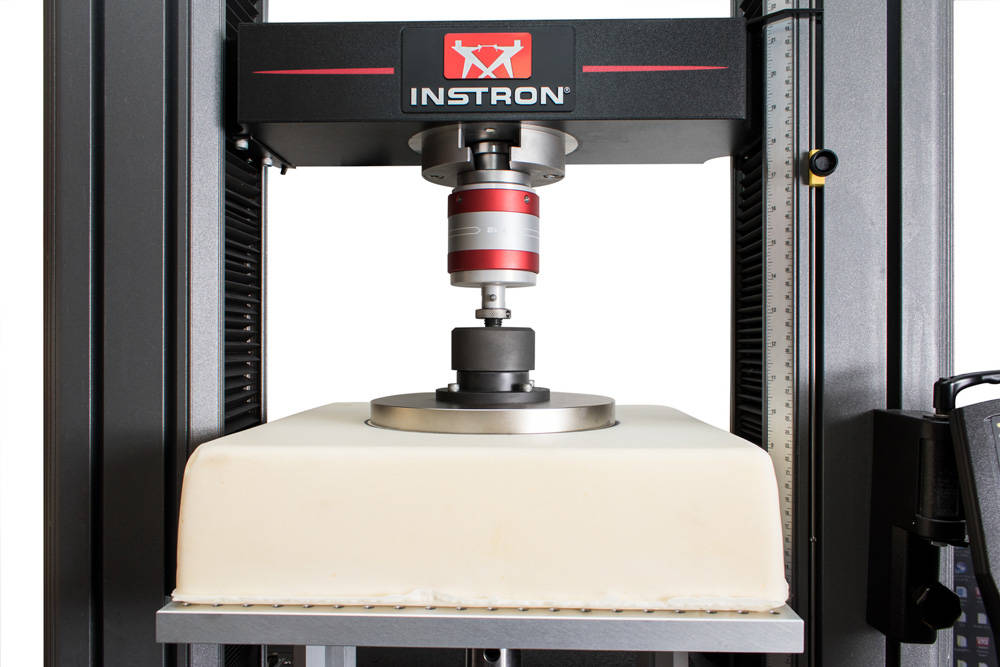
Compression tests are performed on universal testing machines, also known as compression testing machines. These machines consists of a single or dual column frame equipped with a load cell, testing software, and application-specific platens and accessories. Universal testing machines come in a wide variety of force capacities ranging from 0.02 N to 2,000 kN. Most low force testing is performed on a tabletop machine such as Instron's 6800 Series, while higher force applications require floor model frames such as those found in Instron's Industrial Series. These systems can be configured with different fixtures to test any product, component, or material.

| Compression Testing Machine | |
|---|---|
| Load Frame
Compression testing machines can come in single or dual column configurations depending on their force capacity. |
|
| Software
Test software is where operators configure test methods and output results. |
|
| Load Cell
The load cell is a transducer that measures the force applied to the test specimen. Instron load cells are accurate down to 1/1000 of load cell capacity. |
|
Compression Platens A wide variety of compression platens and other compressive fixtures are available to accommodate test specimens of different materials, shapes, and sizes. |
|
INSTRON COMPRESSION TESTING EQUIPMENT
Systems, Components, and Parts
Compression testing machines are available in a variety of different sizes and force capacities ranging from 0.02 N to 2,000 kN. Most low force testing is performed on an electromechanical single-column or dual-column tabletop machine, while higher force applications require floor model frames. Instron's 6800 Series systems are available in capacity ranges up to 300 kN and can perform a wide range of different test types, including tensile, compression, bend, peel, tear, shear, friction, torsion, puncture, and more. Instron's Industrial Series servohydraulic systems are designed for even higher capacity testing of high strength metals, alloys, and advanced composites.
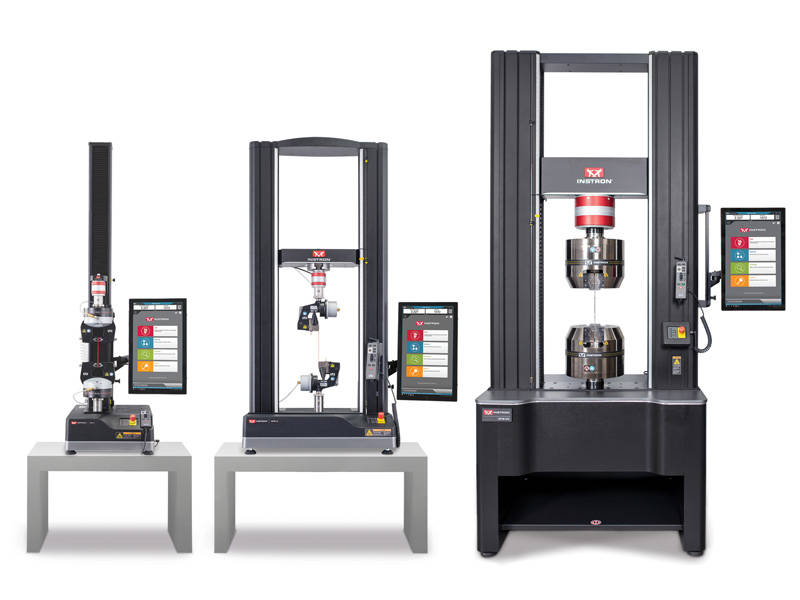
Universal Testing Systems up to 300 kN
Single and dual column table model and floor model testing systems with a force capacity range of 0.02 N (2 gf) to 300 kN.
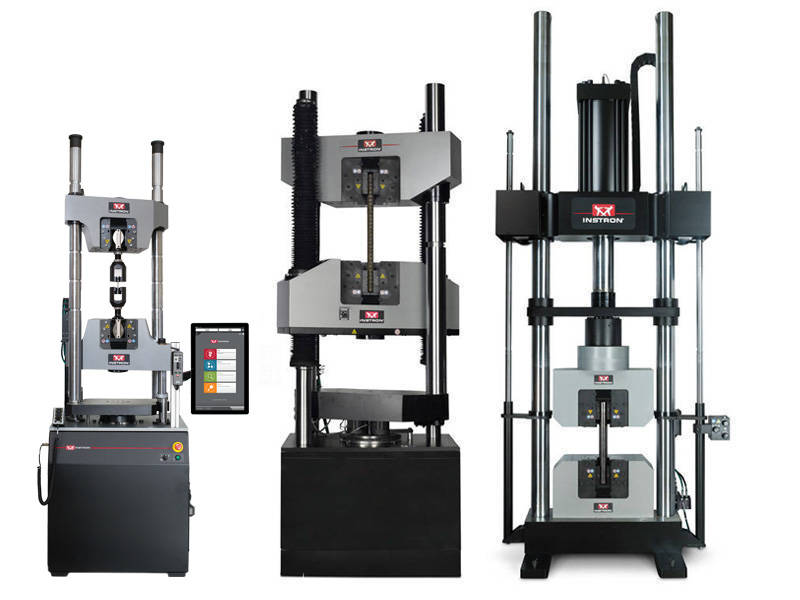
Industrial Universal Testing Systems up to 2000 kN
Instron’s Industrial Series includes frames with single or dual test spaces and range in force capacity from 300 kN to 2000 kN.
Self-Aligning | High Force | Fatigue Rated
Compression platens are used to perform compression tests on a wide range of materials and components. When installed in a universal testing machine they allow a variety of tests to be performed to determine properties such as compression modulus, compression strength, and compression yield strength.
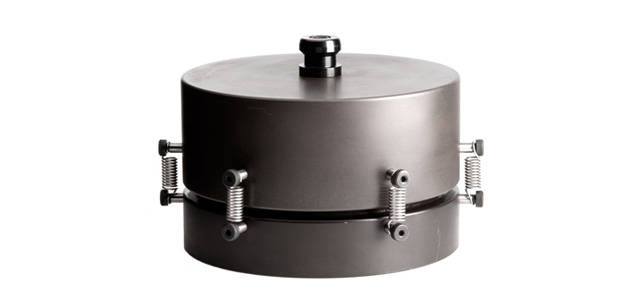
50 N - 600 kN Load Capacities
For Static and Dynamic Testing Applications
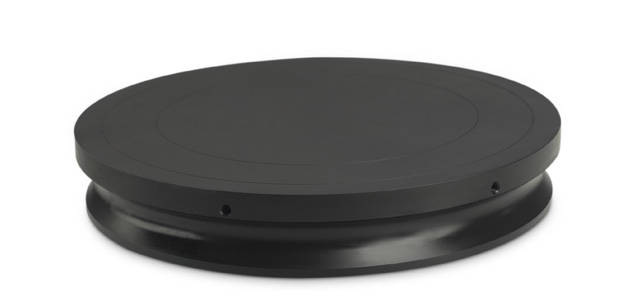
600 kN - 5000 kN Load Capacities


Catalog no. 2810-130
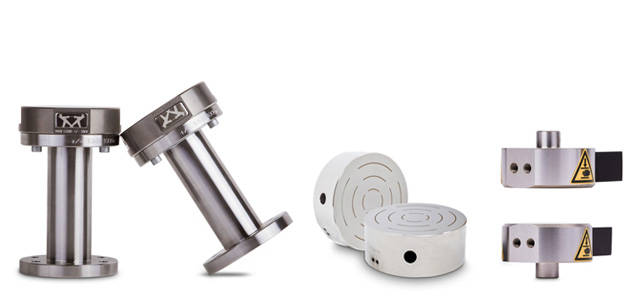
200 kN - 2000 kN Static Load Capacities | 100 kN - 1000 kN Dynamic Load Capacities

690 MPa (100,000 psi) Pressure Rating
COMPRESSION TESTING STANDARDS
Standards for Testing Plastics, Elastomers, and Metals
Most compression testing is performed to established standards published by standards organizations such as ASTM and ISO. Testing standards prescribe acceptable test parameters and results for different types of raw materials such as metals and concrete used for infrastructure projects, as well as finished products such as medical devices and consumer electronics. These standards ensure that materials and products entering the supply chain display predictable mechanical properties and are not likely to fail in their expected end use. For example, the furniture, automotive, and mattress industries follow ASTM D3574, which measures the indention force deflection of polyurethane foam. This test measures the initial softness of the foam by measuring the force when the foam is compressed to 25% of its original thickness. The test then measures how supportive it is by measuring the force when it is compressed to 65% of its original thickness. Automotive seating engineers specify the indentation force deflection value of the foam they want in their final product, and the manufacturing location will perform the test several times per shift to guarantee that each and every seat being manufactured has the same feel in regards to softness and supportiveness. Since the cost and safety implications of product failure cannot be overstated, companies are encouraged to invest in high-quality, accurate testing equipment that is designed to help them easily determine whether or not their products meet applicable standards.
The following is a listing of some of the most common international tensile testing standards.
- ASTM C109 | Compression testing 2-inch concrete cubes
- ASTM C170 | Compression strength of dimension stone
- ASTM C365 Compression testing of sandwich core materials
- ASTM C39 | Compression testing concrete cylinders
- ASTM D1621 | Compressive properties rigid cellular plastics
- ASTM D2844 | Moisture exudation test compacted soils
- ASTM D3410 | Compressive strength of polymer matrix composites
- ASTM D575-91 | Standard test method for rubber properties in compression
- ASTM D6484 | Open hole compressive strength of polymer matrix composite laminates
- ASTM D6641 | Compressive properties of polymer matrix composite materials using a combined loading compression (CLC) test fixture
- ASTM D695 | Compression testing rigid plastics
- ASTM D7137 | Compressive residual strength properties of damaged polymer matrix composite plates
- ASTM F1306 | Slow rate penetration resistance of flexible barrier films and laminates
- ASTM D3574 | Standard test methods for flexible cellular materials
