
BLOG
Insights for Materials Testing Professionals
Stay current on industry trends, international testing standards, application guidance, and equipment best practices. Explore the latest articles from Instron's engineers and specialists, and subscribe to our newsletter to get new content delivered directly to your inbox.
Filter Blog
April 17, 2014

The Truth About Strain Gauge Load Cells vs. Pressure Transducers
Load cells independently and directly measure the force being applied to specimens. Pressure transducers measure force indirectly from the oil pressure observed in the cylinder. Which is superior? The answer is simple: Load cell technology due to the fact that some of the pressure in a hydraulic system has nothing to do with the load being applied to the specimen.
April 17, 2014
Thermoset and Thermoplastic Composites … What’s the Difference?
Thermoplastic polymers can be molded, melted, and remolded without altering their physical properties. Thermoset polymers cannot.
April 11, 2014
Testing United States Bridges at Columbia University
Testing United States Bridges at Columbia University With recent events causing concern about the stability of major bridges, the Department of Civil Engineering and Engineering Mechanics at Columbia University is […]
March 25, 2014
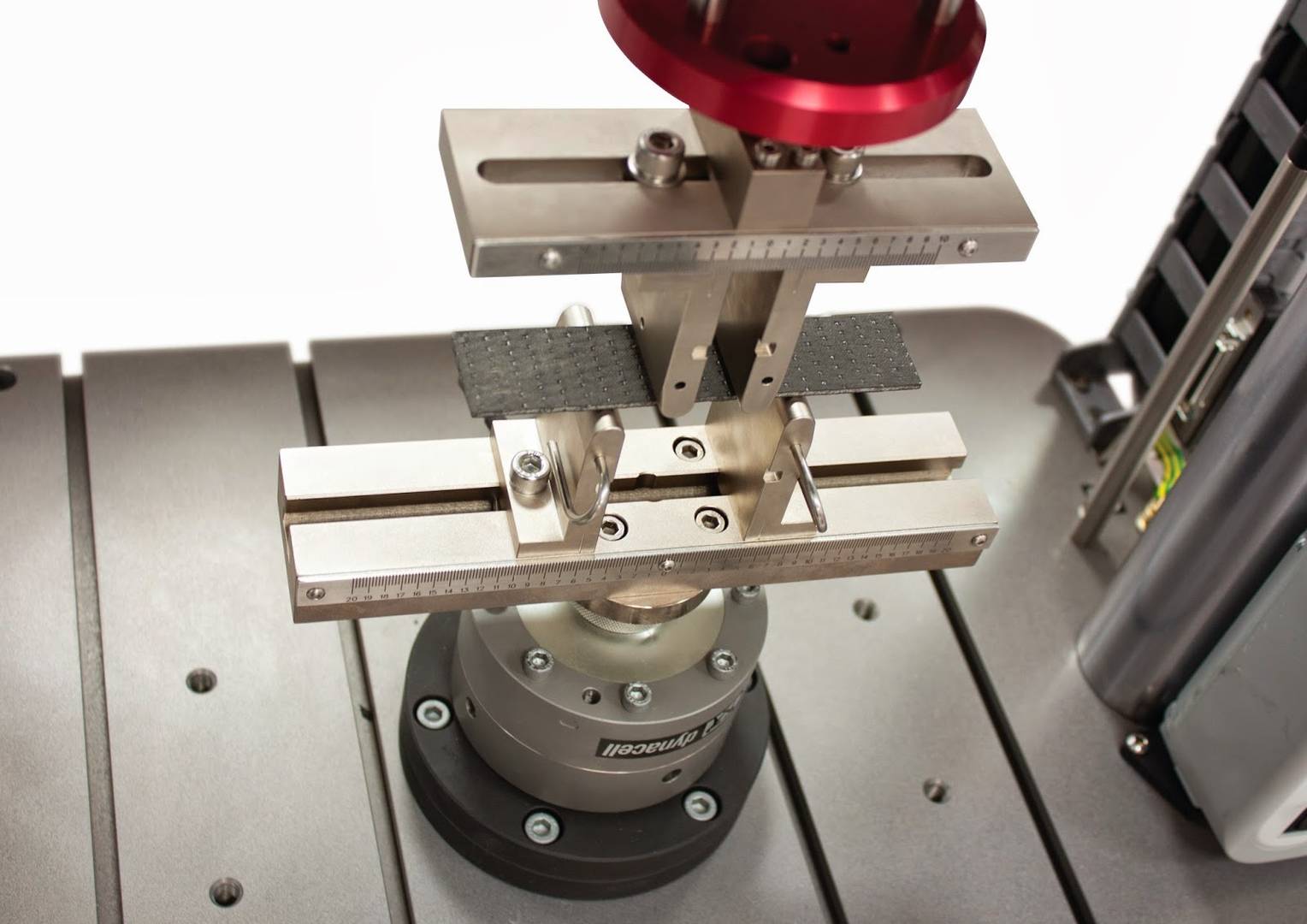
4-Point Bend Testing of Carbon Fiber
4-Point Bend Testing of Carbon Fiber Carbon fiber is an extremely strong material. Depending on the manufacturing process, this textile can have typical modulus values of about 138 Gpa and […]
March 17, 2014
Changes Pipe & Tube Manufacturers and Suppliers Should Know
This presentation, Challenges of Pipe and Tube Testing, provides an in‑depth look at the evolving demands facing pipe and tube manufacturers as drilling technologies, material strengths, and testing standards continue to advance. It outlines the impact of industry trends such as horizontal drilling, fracking, and increased pipeline development, and connects these changes to the growing need for higher load capacities, greater test volumes, and more robust testing systems. The embedded PDF highlights common testing challenges—including curved specimen geometry, full‑section testing, strain measurement on non‑flat surfaces, and high‑energy impact requirements—and demonstrates how specialized grips, fixtures, extensometers, and impact systems can help laboratories achieve accurate, repeatable results. This overview serves as a practical guide for labs evaluating whether their current equipment is prepared for the next generation of pipe and tube testing demands.
March 7, 2014
Charpy Impact Testing: Minimizing Hammer Changes
Charpy Impact Testing Minimizing Hammer Changes
February 25, 2014
Software Module Increases Test Frequency for Fatigue Testing of Composites and Polymers
Software Module Increases Test Frequency for Fatigue Testing of Composites and Polymers Senior Applications Specialist for Dynamic Systems, Peter Bailey shares with AZoM how the Specimen Self-Heating Control (SSHC) module […]
January 31, 2014
What is The Difference Between Proportional and Non-proportional Clamping Force?
What is The Difference Between Proportional and Non-proportional Clamping Force? David Fry While there are many varieties of gripping technologies (wedge, screw, hydraulic, pneumatic, etc.), they all can be classified […]
January 16, 2014
What is the Best Way to Check the Functionality of my ElectroPuls™ Load Cell?
What is the Best Way to Check the Functionality of my ElectroPuls™ Load Cell? Sarah Jastram Instron load cells are robust and built to last. Therefore, checking the load cell’s […]