
High vs. Low Flow Materials: 4 Testing Solutions to Enhance Reliability and Accuracy of Your Results
Unveiling the Secrets of Plastic Behavior for Enhanced Product Development
In the plastics industry, understanding the behavior of materials under different processing conditions is critical to product development. These behaviors are studied by a science called Rheology.
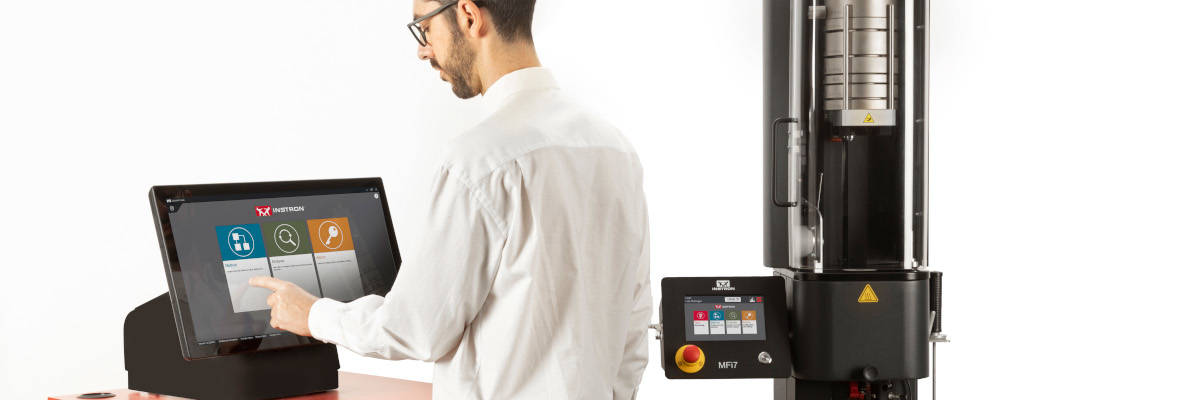
One tool used to measure the properties of polymeric materials is the Melt Flow Index test, which is facilitated by equipment such as Melt Flow testers.
What is Rheology?
Rheology is the science that studies the behavior of materials with regard to deformation and flow when under an applied force. This field of study is fundamental not only in industry, but also in our daily lives. Objects we use daily, such as toothpaste, shampoo, and ink in pens, are practical examples of applications of rheology.
For example, the viscosity of toothpaste is designed to ensure that it does not slip between the bristles of the toothbrush, while shampoo's viscosity is optimized so that it does not run off the palm of the hand. Even the ink in pens is subject to rheological studies to ensure smooth and consistent writing. This science not only helps to understand the behavior of materials under stress, but also to develop and refine many different types of products.
Melt Flow Index (MFI)
The Melt Flow Index is a decisive parameter in the polymer industry. It is primarily used to evaluate the quality and characteristics of plastic materials. It measures the performance of a plastic material in its molten state to flow under a given pressure, offering insight into the polymer's processability and behavior during manufacturing processes.
The Melt Flow Index (MFI) is determined by having molten polymer flow through a nozzle with dimensions conforming to ISO 1133 and ASTM D1238 test standards while under the weight of a specified mass. The amount of material flowing out of the nozzle is then measured, usually in grams every ten minutes, to provide an estimate of the flowability of the material at that particular temperature and pressure.
Where is the Melt Flow Index found?
The value of a material's Melt Flow Index can be found in datasheets and technical information sheets provided by plastics manufacturers. In fact, these documents contain detailed information on the physical, chemical and mechanical properties of the polymer.
The datasheets also include the standard temperature and applied mass conditions used to measure MFI, allowing laboratory tests to be replicated to confirm the values provided.
Specialized online databases that collect information on a wide range of plastic materials can be consulted, and indicate reference values for the MFI and corresponding test conditions.

Application areas of the MFI
Quality Control
The MFI is critical to ensure that plastic resins meet the required specifications before being used in manufacturing processes. Manufacturers use the MFI to verify the consistency of material received from suppliers, preventing production problems and defects in finished products.
Research and Development
In research and development, the MFI helps users understand how changes in the chemical composition of the polymer affect the material's flow properties. This information makes it possible to develop new materials with optimal properties for specific applications.
Recycling Plastics
The MFI is important for evaluating recycled plastic materials, determining their suitability for reuse in manufacturing processes and ensuring that recycled materials can be combined with virgin materials without compromising the quality of the final product.
How is it measured? MFR and MVR
The Melt Flow Index can be measured in two ways:
- Melt Mass-Flow Rate (MFR): measures the grams of material flowing through a nozzle in 10 minutes.
- Melt Volume-Rate (MVR): measures the volume of material in cubic centimeters flowing in the same time interval.
The relationship between MFR and MVR is derived from the formula:
MFR = MVR x material density at test temperature
Classification According to Flow Rate
- High Flow Materials: They have a high MFI of up to 1600 g/10 min. They are characterized by low viscosity and high fluidity and are ideal for applications such as injection molding.
- Low Flow Materials: They have a low MFI, generally less than 4 g/10 min. They are characterized by high viscosity and lower flow capacity, and are preferred for applications such as extrusion, which allows the production of tubes and foils.
What Solutions Can Be Adopted
Specific solutions can be adopted to carry out testing according to the time and manner required by international standards.

Zero Gravity Piston


Unit for Automatic Compacting and Purging
Low-velocity materials, characterized by a lower Melt Flow Rate, have a higher viscosity and reduced flow capacity than high-velocity materials. These polymers require special consideration during testing and processing, as their highly viscous nature implies unique challenges for accurate measurement and handling in manufacturing processes.
The extrusion of these materials takes place at lower deformation speeds to avoid the formation of defects such as bubbles or fractures, which could compromise the product's mechanical properties. Testing materials at low speeds requires that the polymer be completely free of air bubbles and well compacted, as any air entrapment could cause significant variations in the test results. Compaction of the material during the preheating phase is particularly critical. Using a unit for automatic compacting and purging can help apply a specified amount of pressure evenly and repeatably to the material, eliminating trapped air and ensuring optimal compaction.
This intelligent system can adjust the applied pressure according to the response of the material, keeping the pressure value constant throughout the preheating process. In addition, at the end of the test it will help purge the material left inside the barrel by promoting faster and easier cleaning of the barrel.
