

Hair Fiber Tensile Testing Equipment
How Shampoo and Conditioner Manufacturers Validate Product Performance
The global hair care market is fiercely competitive. Shampoo and conditioner manufacturers invest heavily in R&D to differentiate their formulations — but consumer claims like "strengthens hair 2× vs. the leading brand" must be backed by rigorous, reproducible lab data.
This article explains two of the primary mechanical tests used by hair product formulators: single hair fiber tensile testing and hair combability testing. Both methods use universal testing machines — such as Instron 6800 or 3400 Series systems — to generate the quantitative data needed to substantiate marketing claims and pass regulatory scrutiny.
Why Mechanical Testing Matters for Hair Care
Hair is a biological fiber with measurable mechanical properties. When a shampoo or conditioner alters the fiber's structure — through protein deposition, cuticle smoothing, or moisture retention — those changes show up as measurable differences in:
- Tensile strength at break (fiber integrity)
- Frictional force during combing (smoothness and hydration)
Mechanical testing converts subjective "feels smoother" claims into objective, publishable data. Regulatory bodies and retail buyers increasingly expect this level of substantiation.
Test 1: Single Hair Fiber Tensile Testing

What It Measures
A tensile test measures the force required to break a single hair fiber after it has been treated with a specific shampoo-conditioner combination. The result is a direct indicator of how a formulation affects hair strength.
Standard Test Protocol
- A batch of 10 or more individual fibers is washed under identical, controlled conditions using the target formulation.
- Each fiber is mounted between the grips of a universal testing machine (e.g., an Instron system).
- The crosshead pulls the fiber at a constant speed until it breaks. The peak force at break is recorded.
- Optional: The average diameter of each fiber is measured to calculate its cross-sectional area. Dividing force by area yields a normalized stress value — expressed in megapascals (MPa) or pounds per square inch (psi) — which is comparable across studies and fiber types.
How Results Support Commercial Claims
By comparing the mean stress-at-break of hair treated with the test formulation against an untreated control or a competitor product, manufacturers can substantiate claims such as "clinically shown to strengthen hair by 40%."
Test 2: Hair Combability Testing
What It Measures
Combability testing quantifies the frictional resistance encountered as a standardized comb passes through a hair tress. Lower friction values indicate better moisture and smoothness — the performance attributes consumers associate with effective conditioners.
Standard Test Protocol
- A hair tress is washed under the same controlled conditions as the single fiber test.
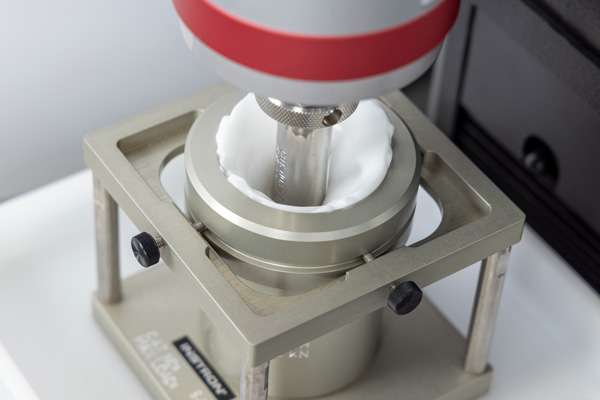
- After washing, the tress is mounted in the test fixture of a universal testing machine.
- The length of the tress is drawn through a comb with standardized geometry at constant speed.
- The frictional force is recorded continuously over the full stroke and then averaged.
Tresses are available from specialist suppliers in standardized weights and lengths and in a wide range of hair types. Using certified tresses ensures the results are comparable across different labs and test dates.
Interpreting Combability Results
A lower mean frictional force equals a more effective conditioner. Formulators use these values to rank candidate formulations, optimize ingredient concentrations, and provide the quantitative evidence required for "moisturizing," "hydrating," and "frizz control" label claims. This technique is used by both finished-product manufacturers and suppliers validating their active ingredients.
Choosing the Right Testing Equipment
Both tests require a universal testing machine with:
- A load cell rated for low-force measurement — typically 1–10 N for single fiber testing
- Precise, constant crosshead speed control
- Grips or comb fixtures for hair specimens
- Software that calculates stress, averages frictional profiles, and exports data for statistical analysis
Universal testing systems from manufacturers such as Instron are routinely used for both applications and can be configured with the specific fixtures required for hair testing. Speak with an Instron materials testing specialist about fixture compatibility for your specific protocol.
Frequently Asked Questions (FAQs)
Hair testing requires a system with excellent low-force measurement accuracy and precise speed control. A single-column tabletop universal testing machine is typically sufficient for both single fiber tensile testing and combability testing, as the forces involved are relatively low compared to many other materials testing applications. The more critical decision is selecting the right load cell and fixtures for your specific protocol.
Not sure which test setup is right for your formulation?
Our team works with R&D and quality labs across the cosmetics and personal care industry to help build testing protocols that support everything from identifying the right formulation to substantiating final product claims. Tell us about your application, and we'll recommend the right equipment configuration.
About the Author

Dan McClellan
Dan McClellan has spent more than 30 years at Instron working closely with R&D and quality labs across the cosmetics and personal care industry. His deep application knowledge and long-standing customer relationships make him a trusted resource for manufacturers looking to develop and validate mechanical testing protocols. Dan helps labs find the right testing approach for their specific application, from early-stage formulation work through final product claim substantiation.