Instron

Tensile Testing Polymeric Membranes

Biomedical Testing » Biomaterials

Tensile Testing Polymeric Membranes

Synthetic membranes are commonly used in the biomedical field. These polymeric membranes, designed to mimic the natural filtration systems in human bodies, are being researched and developed for use in drug delivery systems, medical devices, and artificial bio-organs.

For example, synthetic membranes are used in hemodialysis, which is a method of removing waste products from the body when the kidneys fail. Blood from the patient is passed through a semi-permeable membrane that is immersed in dialysis solution and waste products such as urea in the blood diffuse across the membrane into the dialysis solution.

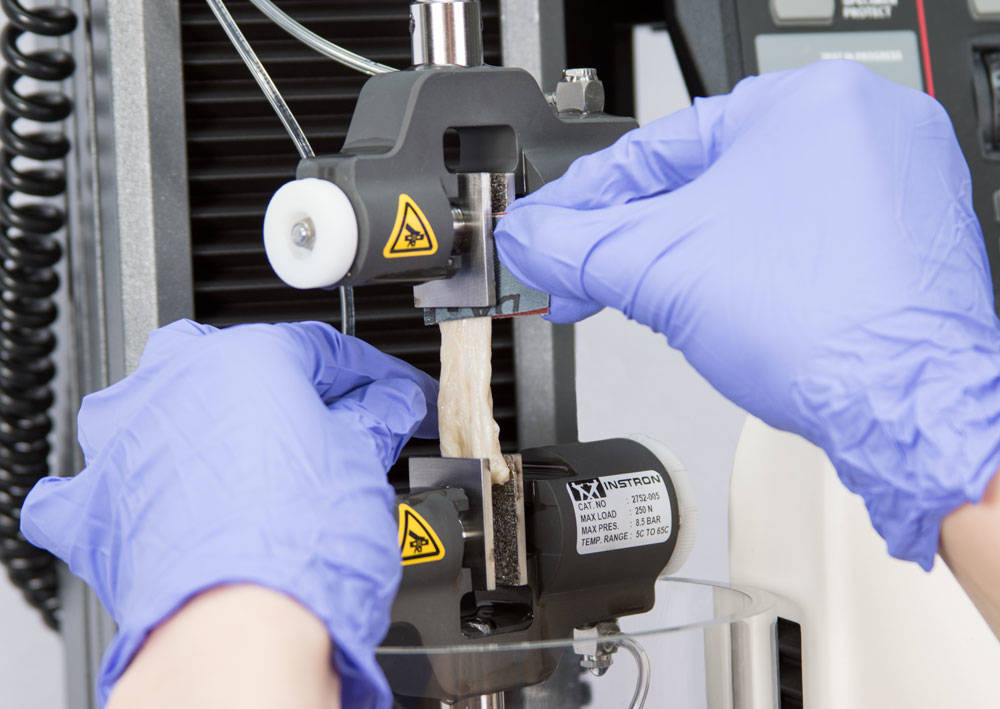
Often these synthetic membranes are moist and slippery, and consquently, tensile testing can be challenging. Similar to testing soft tissues, the gripping surface must offer sufficient friction to firmly hold onto the membrane, but also be delicate enough to avoid specimen tearing.

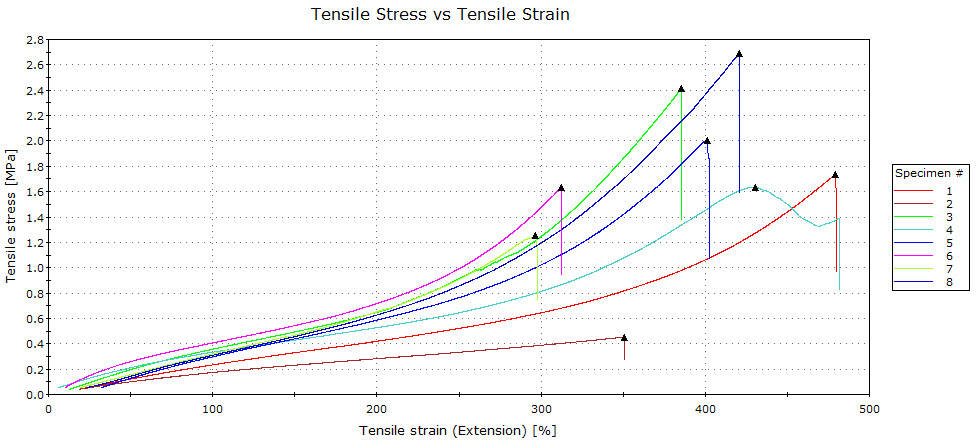
Recently, we were asked to recommend a gripping solution for testing of wet polymeric membranes. In this test, the polymeric membranes were first soaked in water for up to 20 minutes to allow them to soften and swell. The wet specimens were then tested using the 5965 dual column electromechanical machine equipped with pneumatic side action grips and rubber coated jaw faces. Since these membranes are very delicate, the clamping pressure must be carefully controlled as excessive high pressure can cause the specimen to fail prematurely when the grip closes.

Because the specimens are wet, corrosion resistant grips or fixtures should be used. Our 3 Software®Bluehill provides both the test control and results required.

Literature

Bluehill Universal Brochure

Bluehill Universal is Instron’s advanced materials testing software, designed for intuitive touch interaction and streamlined workflows. It offers pre-loaded test methods, QuickTest for rapid setup, enhanced data exporting, and Instron Connect for direct service communication. Users of Bluehill 2 and Bluehill 3 can easily upgrade to the latest version for improved performance and usability

  • Productos
  • 02/26/2017
  • 3.77 MB

Ensayo de adhesivos para tejidos en la fijación de ángulo variable.

Biomedical Testing » Biomaterials

Ensayo de adhesivos para tejidos en la fijación de ángulo variable.

Los adhesivos para tejidos se utilizan ampliamente en la industria biomédica para aplicaciones tales como vendajes, apósitos secundarios, y el cierre de heridas. Aunque no hay normas específicas para los ensayos con ángulo variable, existen normas similares ASTM para este método de ensayo son: ASTM F2255, F2256, F2258 y F2458. La fuerza adhesiva de estos productos debe ser claramente definida antes de un uso en un entorno clínico. Si el adhesivo no es lo suficientemente fuerte, el producto puede dar lugar a una infección o mala cicatrización. Si el adhesivo es demasiado fuerte, el tejido subyacente puede dañarse si se retira.

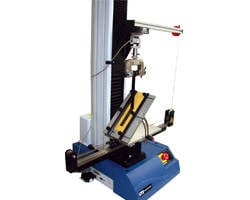
Se realizó un ensayo de adhesivo mediante el uso de un accesorio de ángulo variable que simula la acción de pelado del adhesivo en un paciente. El bastidor utilizado fue un equipo electromecánico 3345 configurado con una célula de carga 50 N, una mordaza neumática de acción lateral de 250 N con mandíbulas metálicas de 25 mm x 25 mm, y el accesorio de ángulo variable. El ángulo del accesorio se fijó a 135 °, para simular mejor la línea de tracción que se observa durante el uso normal del producto adhesivo. Durante el ensayo se utilizó cuero como sustrato para simular mejor las propiedades superficiales de la piel humana.

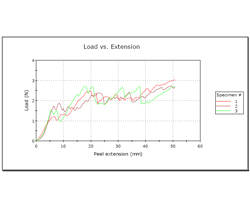
El Modulo de pelado, desgarramiento y fricción del software Bluehill ®2 es altamente recomendable para este tipo de prueba. Este módulo de software permite la medición de la carga pico, la carga media y la carga media por anchura, que son los cálculos más comúnmente utilizados.

Literatura

Serie 3400 – Soluciones de ensayo asequibles

Sistemas de ensayo universales Instron Serie 3400 para ensayos de tracción, compresión, flexión y otras propiedades de los materiales.

  • Productos
  • 06/27/2022
  • 2.31 MB

Bluehill Universal Brochure

Bluehill Universal is Instron’s advanced materials testing software, designed for intuitive touch interaction and streamlined workflows. It offers pre-loaded test methods, QuickTest for rapid setup, enhanced data exporting, and Instron Connect for direct service communication. Users of Bluehill 2 and Bluehill 3 can easily upgrade to the latest version for improved performance and usability

  • Productos
  • 02/26/2017
  • 3.77 MB

Ensayos de Impacto en Implantes Ortopédicos

Biomedical Testing » Biomaterials

Ensayos de Impacto en Implantes Ortopédicos

Una dolencia llamada osteoartritis es causada cuando existe un momento mínimo en una articulación en el cuerpo humano. La falta de momento en la articulación puede causar daños o disfunciones. Los implantes ortopédicos están diseñados para sustituir la articulación dañada y aumentar la movilidad de laparte afectada en el cuerpo humano. Por nombrar algunos, implantes utilizado para cadera, articulaciones de la rodilla, hombro o el codo comúnmente están hechos de acero inoxidable. Es importante para los fabricantes de estos implantes ortopédicos ensayar sus componentes (varios implantes) para caracterizar la resistencia al impacto de su producto.

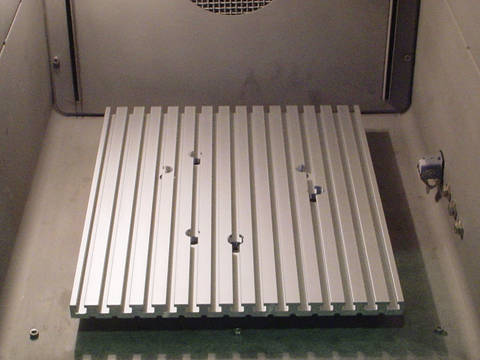
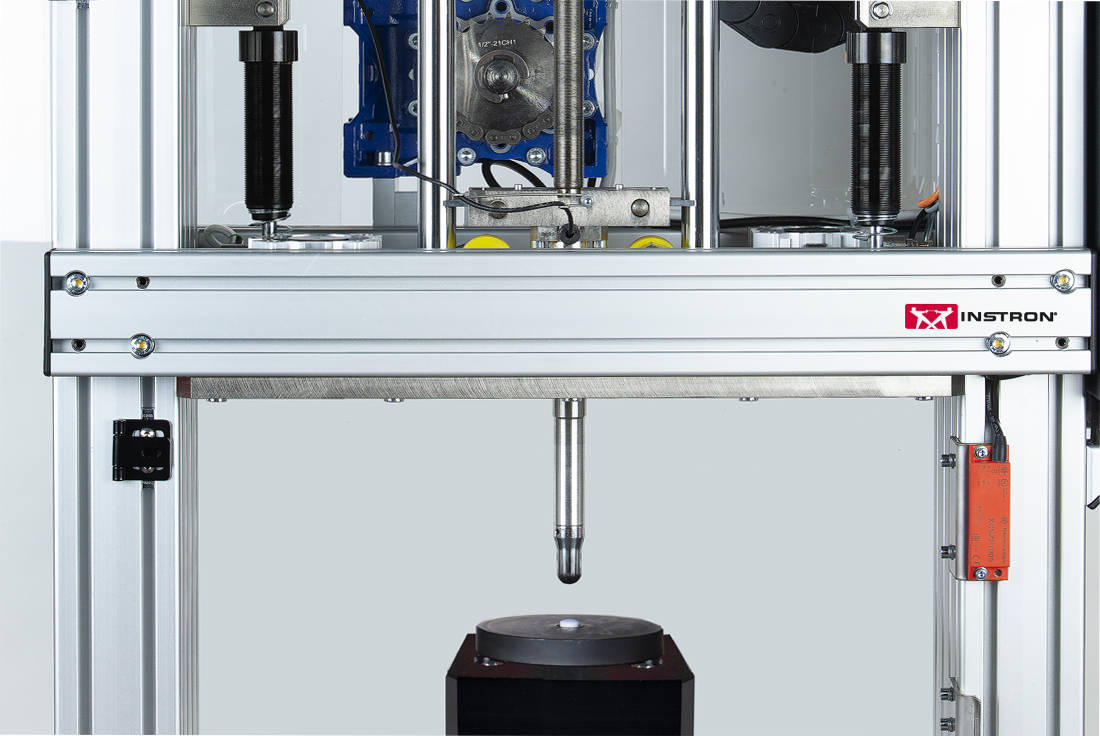
Instron 9450 es una buena opción para un ensayo de tales requisitos. Puesto que los implantes de diversas partes del cuerpo son de diferentes formas, el ensayo debe realizarse con varios accesorios personalizados. Se utilizó una placa ranurada en T que se atornilla a la parte inferior de la 9450. Un elemento con un implante de rodilla fue montado en la placa de la ranurada en T en la base de la torre. Una célula de cargas extensométricas de 45 kN fue utilizado para impactar el implante de rodilla. Un Sistema de Adquisición de Datos (DAS) y el Software Bluehill Impact fueron utilizados junto a una máquina de impacto por caída líbre para registrar los datos de fuerza versus velocidad y analizar las prestaciones ante el impacto.

Alternativamente puede utilizarse una placa de uso general, como se ve en la imagen, en lugar de una placa ranurada en T. Estas placas versátiles dan flexibilidad a los fabricantes para montar una amplia gama de accesorios personalizados según sus propios requisitos. Tales pruebas de impacto pueden ser personalizados hasta el punto donde puedan replicar los impactos de baja y alta velocidad de la vida real durante los procedimientos quirúrgicos reales.

Nota: Esta configuación de ensayo de este cliente es confidencial por lo que no se muestra en esta nota sobre aplicaciones.

Literatura

9400 Series Drop Tower Brochure

Instron Drop Towers are used to develop, fine tune, and validate material models. Testing materials under real impact conditions is a crucial step prior of product design. Using the characterization data obtained with the Instron 9400, coupled with customer supplied high-speed video, you can have confidence in your results and deliver new materials to your customers faster. Our Drop Tower impact systems, fixtures, and tups are designed to meet a wide range of applications and testing standards including: ISO, ASTM, ANSI, Airbus, Boeing, BSI, DIN, EN, FDA, Ford, GM, JIS, NASA, GOST, and more.

  • Productos
  • 02/05/2020
  • 763.1 KB

9400 Series Dashboard Brochure

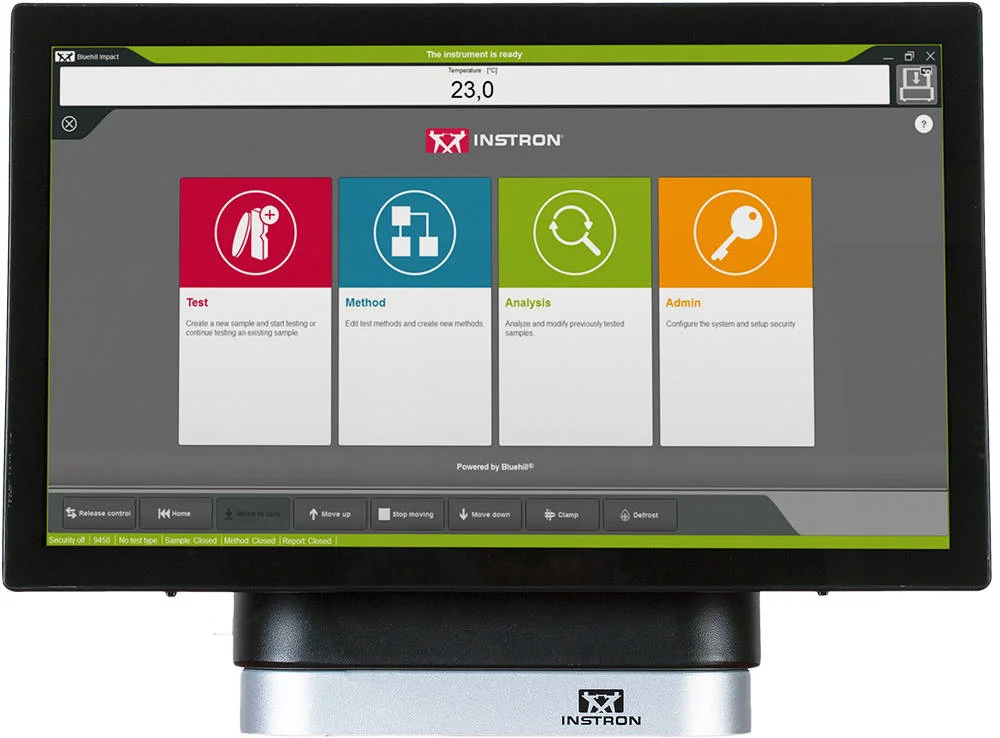
Bluehill® Impact is built from the ground up for touch interaction. The Operator Dashboard features large touchpoints to make the user experience simpler and smarter. Easy-to-understand icons and workflows make it easy to train new or experienced users, simplify operator training, and allow you to start testing even faster than ever before

  • Productos
  • 08/01/2019
  • 2.35 MB

Comportamiento de impacto sobre fármacos en formato pastilla

Biomedical Testing » Biomaterials

Comportamiento de impacto sobre fármacos en formato pastilla

Support for pharmaceutical tablet impact testing

Las pastillas suelen tener un recubrimiento para facilitar su deglución, liberar de manera gradual la medicación, o estampar la identificación o la marca. Estos recubrimientos también pueden ayudar a alargar la vida del producto en condiciones ambientales negativas, tales como la exposición a la luz, temperatura, humedad y carga mecánica. En particular, en el proceso de fabricación y embalaje, los revestimientos de los comprimidos estás sujetos a impactos que pueden causar daños.

Los ensayos de impacto pueden proporcionar datos valiosos para los fabricantes con la finalidad de conocer el rendimiento de los materiales de revestimiento o el desarrollo de materiales nuevos. El fabricante puede implementar también un control de calidad que permita validar el proceso en curso utilizando los datos obtenidos por un ensayo de impacto.

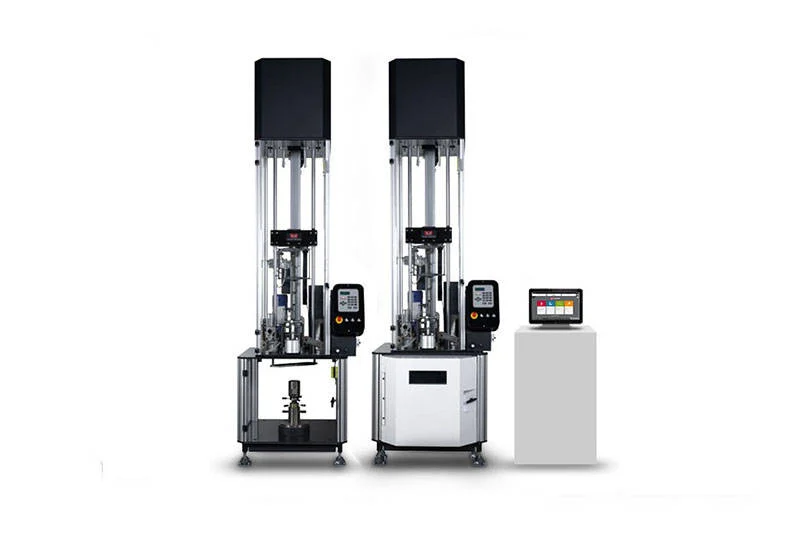
Para realizar estos ensayos una torre de caída INSTRON 9440, equipada con un sensor piezoeléctrico de baja carga Tup (0,45 kN o 4,5 kN), inserto semiesférico o plano de ½ pulgada y el software Bluehill Impact son ideales para la prueba de píldoras y tabletas farmacéuticas. Para la fijación, recomendamos utilizar una placa de metal rígida, plana, que se puede asegurar fácilmente al área de la mesa.

Esta solución de ensayo de impacto es muy adecuada para determinar las características de resistencia al impacto de comprimidos farmacéuticos, así como la consistencia del lote o los puntos de daño incipiente. Estas características pueden estar, a su vez, relacionadas con el material de recubrimiento utilizado en el producto. Al comprender como el recubrimiento puede fortalecer o debilitar las píldoras se podrán realizar mejoras en el producto.

Literatura

9400 Series Drop Tower Brochure

Instron Drop Towers are used to develop, fine tune, and validate material models. Testing materials under real impact conditions is a crucial step prior of product design. Using the characterization data obtained with the Instron 9400, coupled with customer supplied high-speed video, you can have confidence in your results and deliver new materials to your customers faster. Our Drop Tower impact systems, fixtures, and tups are designed to meet a wide range of applications and testing standards including: ISO, ASTM, ANSI, Airbus, Boeing, BSI, DIN, EN, FDA, Ford, GM, JIS, NASA, GOST, and more.

  • Productos
  • 02/05/2020
  • 763.1 KB

9400 Series Dashboard Brochure

Bluehill® Impact is built from the ground up for touch interaction. The Operator Dashboard features large touchpoints to make the user experience simpler and smarter. Easy-to-understand icons and workflows make it easy to train new or experienced users, simplify operator training, and allow you to start testing even faster than ever before

  • Productos
  • 08/01/2019
  • 2.35 MB

Soft Tissue Testing

Biomedical Testing » Biomaterials

Soft Tissue Testing

The Challenge

Skin

Testing soft tissues, such as skin, tendons, ligaments, and others, presents many challenges. Specimens of this type are delicate; hence they break at low forces. Gripping soft tissues can also be problematic given that these specimens are small, slippery, and compliant in nature. In addition, soft tissues are viscoelastic and often require accurate elongation or strain measurement to properly understand the material properties. Typically, in vivo conditions are needed to test soft tissues, which calls for the test to be performed at body temperature and in a hydrated state. This requires the testing equipment and fixture to be corrosion resistant and "waterproof" to avoid damaging the sensitive electronics of the testing system.  

Our Solution 

Soft Tissue Testing

For testing at physiological conditions, the Instron® BioBath is an ideal solution for keeping a specimen fully hydrated in a saline solution and at 37°C. The BioBath uses a closed-loop temperature control measurement, which can be fed directly into the test system's software to accurately track specimen temperature, in addition to mechanical test data. Pneumatic grips are recommended for consistent clamping pressure that the user can vary up to 90 PSI. A high friction surface is often needed to grip slippery biomaterials to avoid specimen slipping. To avoid this, we recommend using a metallic high friction finish known as surfalloy on the grip face, but grit sandpaper is also a viable option. A stainless steel tray, such as the BioTray, can help protect the system's electronics from damage in the case of spills or messy specimens.

Hard Tissue Testing

Biomedical Testing » Biomaterials

Hard Tissue Testing

The Challenge

Hard Tissue

Bone, dentin, and dental enamel are all considered to be hard tissues. Specimens of this type are most commonly tested in compression and flexural. The most common results obtained from a compression or flexural test on hard tissues is modulus and force at fracture. Typically, these specimens come from mice, rats, or other mammals and are small in size. Despite being small in size, hard tissues have high stiffness. A typical challenge with measuring modulus is accurate measurement of displacement. For a given force, a hard tissue such as bone will exhibit small displacement. In addition to compression testing, 3-point and 4-point bend tests are common to quantify force at fracture on bone sections. Often, this testing must be conducted at physiologically relevant test conditions, such as in a hydrated bath and at body temperature.

Our Solution 

Hard Tissue Testing

When conducting compression testing on hard tissues, it is critical that users choose appropriately sized compression platens to closely match specimen size, ensure the compression platens are spherically seated or self-aligning to apply even pressure on the specimen, and use an accurate source to measure system displacement. For example, an accurate measurement source of displacement could be via compliance correction in the software, or by using a strain measuring device, such as a linear variable deflection transducer (LVDT) or a video extensometer. When testing flexural specimens, it is critical that the anvils on the flexural fixture are appropriately sized to the specimen and that the flexural fixture properties, such as span length, are easily entered into the software.

Hydrogel Tensile Testing

Biomedical Testing » Biomaterials

Hydrogel Tensile Testing

The Challenge

Hydrogel Tensile

Hydrogel testing is most commonly done in both tension and compression. Compression testing on hydrogels poses less of a challenge, as many hydrogels are compliant and compress easily under load. The natural compliance of hydrogels becomes more of a challenge in tensile testing, as these materials can be difficult to grip and exhibit high elongation. Gripping hydrogels with too much pressure typically displaces the material out of the grip faces, which makes gripping ineffective. In addition, a traditional contacting extensometer is not a viable option considering the soft properties of hydrogels. Given the viscoelastic properties of these materials, test speed will greatly affect results, such as force at break and elongation at break. 

Our Solution 

Hydrogel Tensile Testing

When testing hydrogels in compression and tension, most common forces at failure are below 100 N. Given the low forces obtained in hydrogel mechanical testing, it is important that an accurate load cell is used. This can be especially tricky in a compression test as many users restrain from using low capacity load cells out of fear that they will overload the load cell if the compression platens begin to touch during a test. To prevent this from happening, it is imperative that safety limits are set and that the end of test criteria is set to the load cell capacity in the software. For tensile testing, Instron® offers a range of low force grips, including spring loaded, screw side action action, and pneumatic side action grips. Given the compliant nature of hydrogels, often sandpaper needs to be used to increase friction at the gripping contact points. When accurate measurement of strain is required, we recommend using our Advanced Video Extensometer

Bioadhesives Peel Testing

Biomedical Testing » Biomaterials

Bioadhesives Peel Testing

The Challenge

bio adhesive

Adhesives are widely used in the medical device industry for dental implants, bone cements, and wound closure products. Wound closure products include tissue adhesives that can be found in bandages, secondary dressings, and a variety of surgical sealants. The adhesive strength of these products must be well defined. An adhesive that isn’t strong enough may result in a wound that heals poorly, or it can lead to an infection. If an adhesive is too strong, it may damage the underlying tissue or cause the patient unnecessary pain when removing. A fundamental challenge with testing bio adhesives is characterizing adhesive strength in physiologically relevant conditions. 

Our Solution 

Bioadhesives Peel Testing

Soft tissue substrates should be tested under physiologically relevant conditions, most preferable in a bath or temperature controlled enclosure at 37°C. The BioBath with submersible pneumatic grips is recommended. The grips and pull rod that attach to the force transducer are designed to minimize buoyancy chances during low force testing. We also recommend a low capacity load cell, given that adhesive strength for biological applications is typically under 10-20 N. Bluehill® Universal's Peel, Tear, Friction Module is ideal for this test type in order to measure first peak force, average force over the seal, and average force per width of the specimen.