
Calibration
Calibration is the process of comparing an unknown value to a known value. To calibrate a device is to compare a characteristic of that device with the characteristic of a similar device called a “standard.” Using load cells as an example, the load cell being calibrated and the standard load cell are mounted together in series and a range of loads is applied. Both load cells experience the same load and therefore the output values should ideally be identical. A calibration result most often indicates a difference between the two values.
A common misconception is that calibration means adjusting the output of a device to bring its performance “within limits.” Any adjustment made to the output of the device is separate from the calibration and verification process, and must be followed by a further calibration and verification to prove the adjustment was successful.
NOTE: It is important not to confuse CALIBRATION with the term "calibrate" that is sometimes used on instruments to refer to the actions of setting up a transducer such as a loadcell or extensometer to work with the system.
Below are the definitions as defined by the International Vocabulary of Metrology.
2.39 (6.11) calibration
Operation that, under specified conditions, in a first step, establishes a relation between the quantity values with measurement uncertainties provided by measurement standards and corresponding indications with associated measurement uncertainties and, in a second step, uses this information to establish a relation for obtaining a measurement result from an indication
NOTE 1: A calibration may be expressed by a statement, calibration function, calibration diagram, calibration curve, or calibration table. In some cases, it may consist of an additive or multiplicative correction of the indication with associated measurement uncertainty.
NOTE 2: Calibration should not be confused with adjustment of a measuring system, often mistakenly called "self-calibration," nor with verification of calibration.

Calibración alineamiento
Los ingenieros de servicio TÉCNICO y calibración de Instron trabajan directamente con ASTM y Nadcap para comprender los requisitos de alineación de los sistemas de ensayo de materiales.
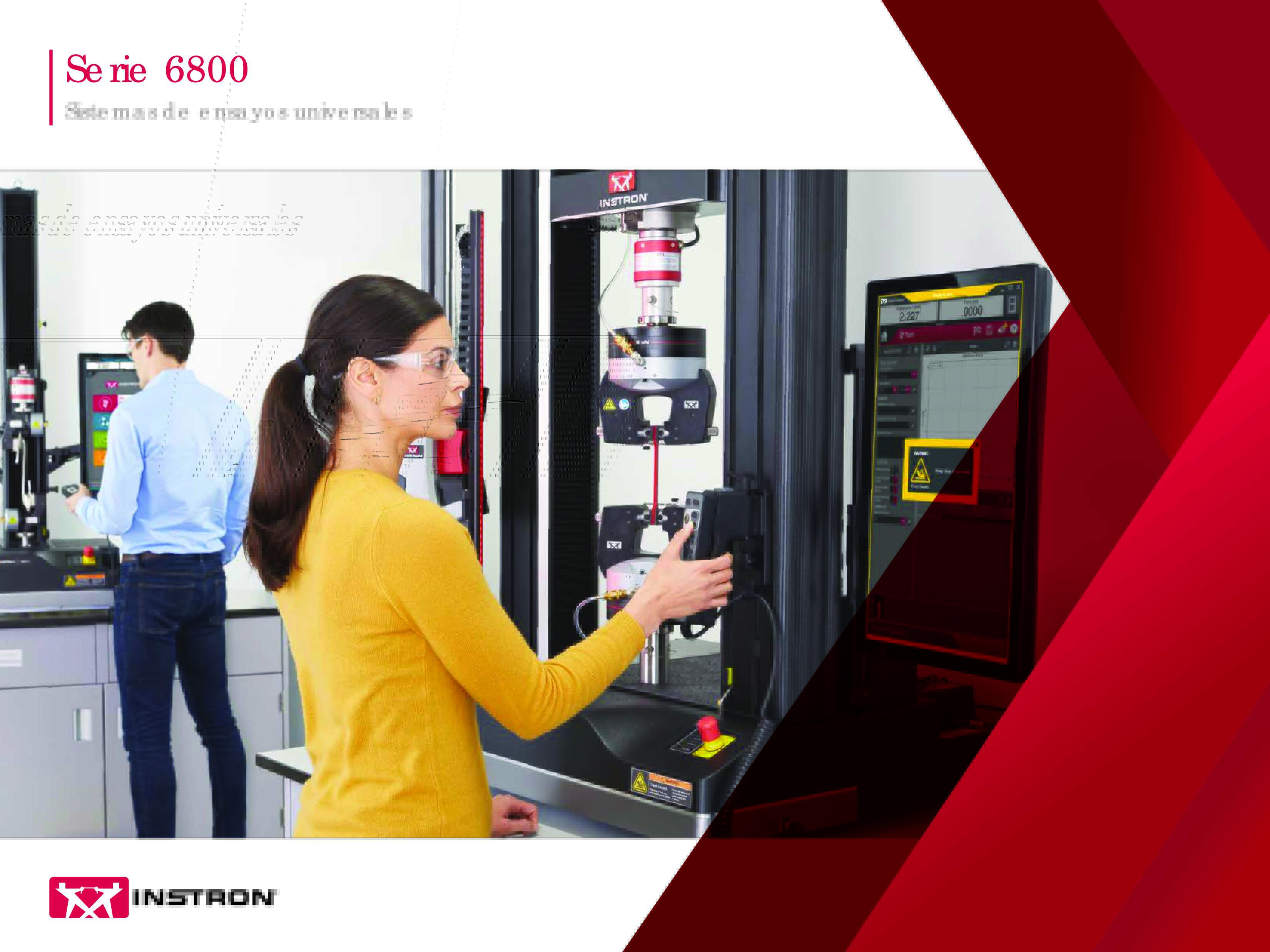
Catálogo de sistemas de ensayo Serie 6800 Premier
Los sistemas de ensayo universales Serie 6800 de Instron proporcionan una precisión y fiabilidad sin igual. Construida sobre una arquitectura de sistema Operator Protect pendiente de patente, con un kit Smart-Close totalmente nuevo y funciones de mitigación de colisiones, la Serie 6800 hace que los ensayos de materiales sean más sencillos, limpios y seguros que nunca.
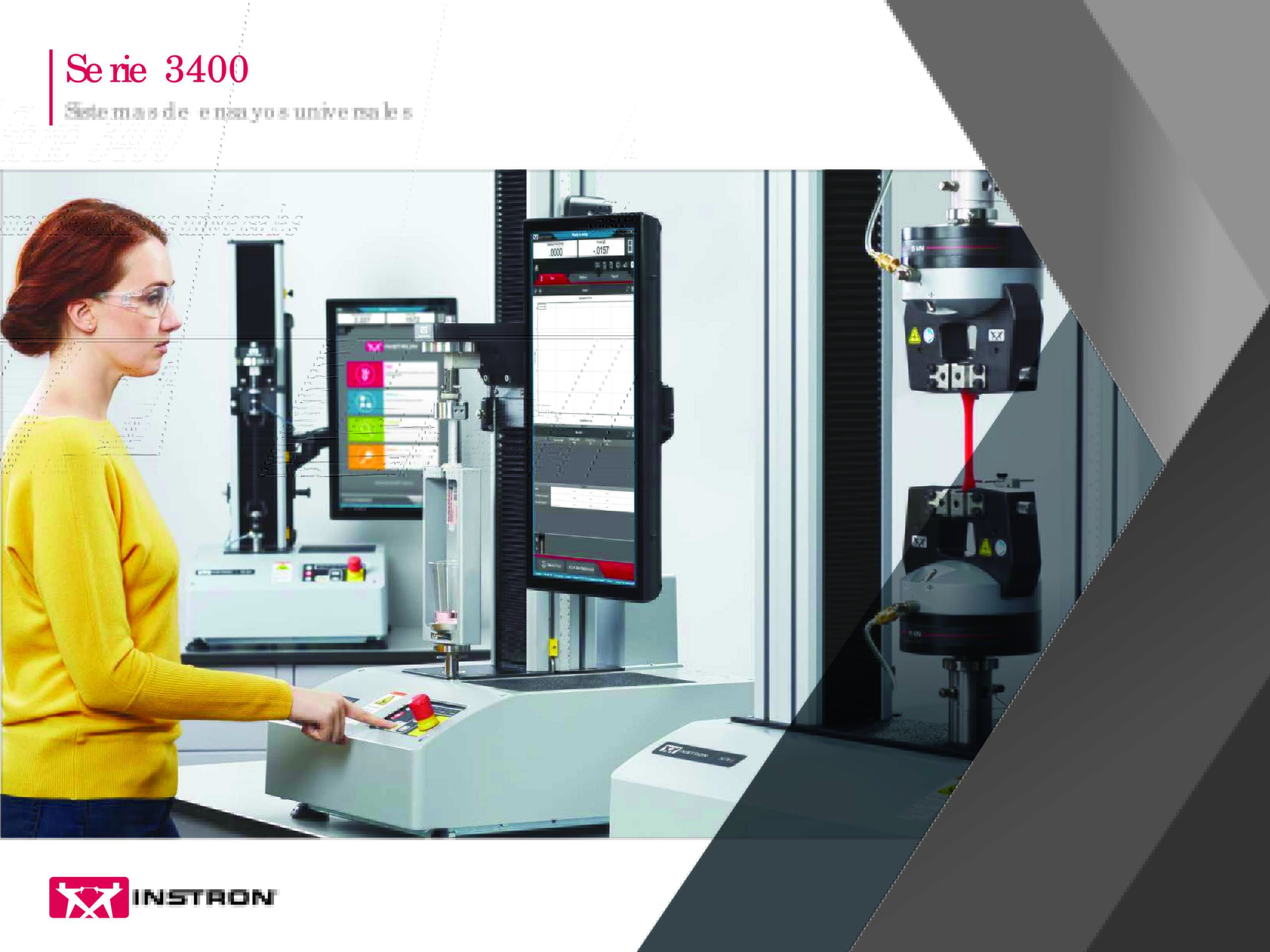
Serie 3400 – Soluciones de ensayo asequibles
Sistemas de ensayo universales Instron Serie 3400 para ensayos de tracción, compresión, flexión y otras propiedades de los materiales.
