Instron

Tensile Testing Polymeric Membranes

Biomedical Testing » Biomaterials

Tensile Testing Polymeric Membranes

Synthetic membranes are commonly used in the biomedical field. These polymeric membranes, designed to mimic the natural filtration systems in human bodies, are being researched and developed for use in drug delivery systems, medical devices, and artificial bio-organs.

For example, synthetic membranes are used in hemodialysis, which is a method of removing waste products from the body when the kidneys fail. Blood from the patient is passed through a semi-permeable membrane that is immersed in dialysis solution and waste products such as urea in the blood diffuse across the membrane into the dialysis solution.

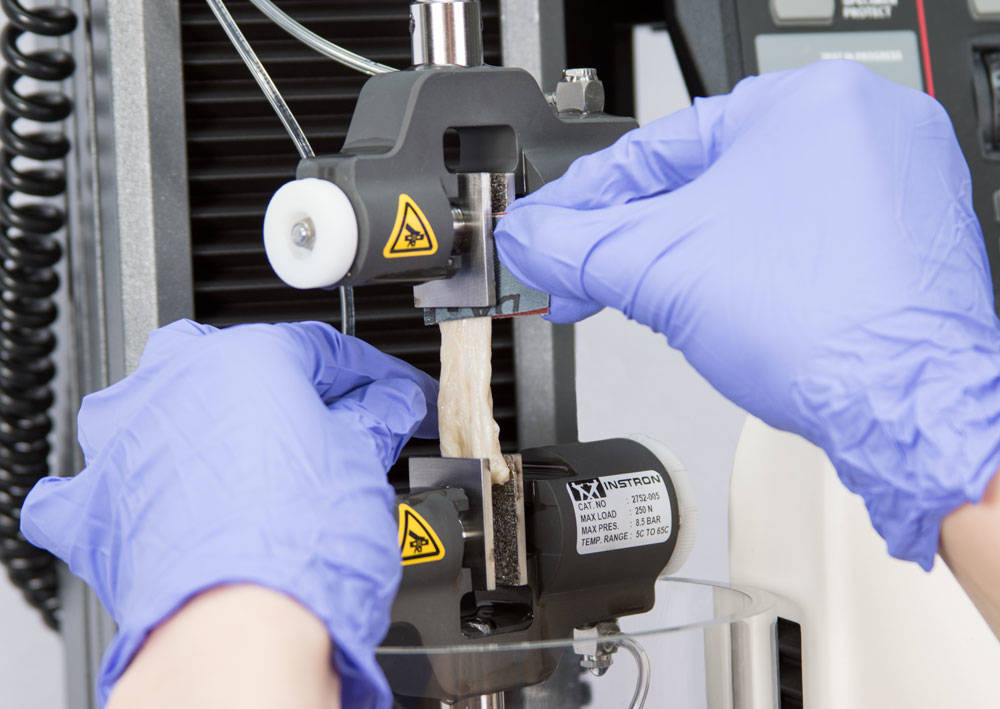
Often these synthetic membranes are moist and slippery, and consquently, tensile testing can be challenging. Similar to testing soft tissues, the gripping surface must offer sufficient friction to firmly hold onto the membrane, but also be delicate enough to avoid specimen tearing.

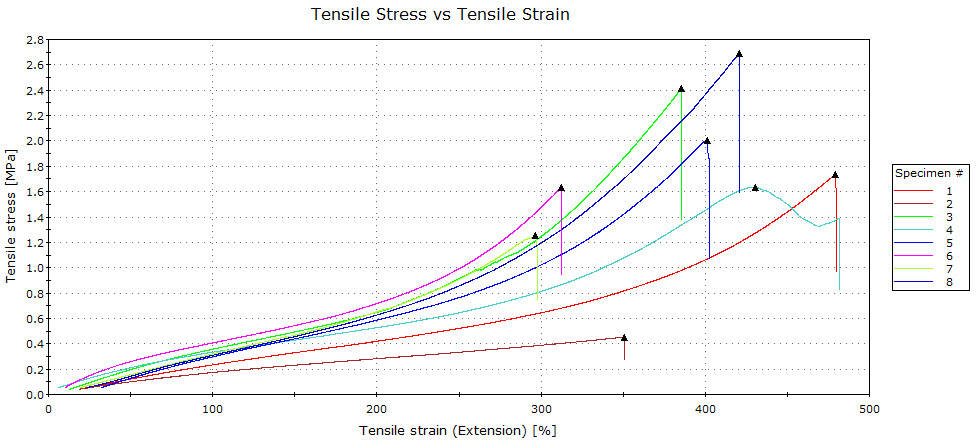
Recently, we were asked to recommend a gripping solution for testing of wet polymeric membranes. In this test, the polymeric membranes were first soaked in water for up to 20 minutes to allow them to soften and swell. The wet specimens were then tested using the 5965 dual column electromechanical machine equipped with pneumatic side action grips and rubber coated jaw faces. Since these membranes are very delicate, the clamping pressure must be carefully controlled as excessive high pressure can cause the specimen to fail prematurely when the grip closes.

Because the specimens are wet, corrosion resistant grips or fixtures should be used. Our 3 Software®Bluehill provides both the test control and results required.

Literature

Bluehill Universal Brochure

Bluehill Universal is Instron’s advanced materials testing software, designed for intuitive touch interaction and streamlined workflows. It offers pre-loaded test methods, QuickTest for rapid setup, enhanced data exporting, and Instron Connect for direct service communication. Users of Bluehill 2 and Bluehill 3 can easily upgrade to the latest version for improved performance and usability

  • Prodotti
  • 02/26/2017
  • 3.77 MB

Prove su Adesivi per Tessuti Usando un Dispositivo per il Peel ad Angolo Variabile

Biomedical Testing » Biomaterials

Prove su Adesivi per Tessuti Usando un Dispositivo per il Peel ad Angolo Variabile

Gli adesivi per tessuti sono ampiamente utilizzati nell'industria biomedica per applicazioni quali bendaggi secondari, e chiusura di ferite. Sebbene non vi siano norme specifiche che guida il test utilizzando un apparecchio ad angolo variabile, altri standard simili ASTM per questo metodo di prova sono: ASTM F2255, F2256, F2258 e F2458. La forza adesiva di questi prodotti devono essere chiaramente definite prima di un uso in ambito clinico. Se l'adesivo non è abbastanza forte, il prodotto può causare infezioni o una non completa guarigione. Se l'adesivo è troppo forte, il tessuto di riferimento si può diventare danneggiare al momento della rimozione.

Abbiamo
condotto un esempio di un test di adesione mediante un apparecchio ad
angolo variabile che simula l'azione del peeling dell’adesivo da un
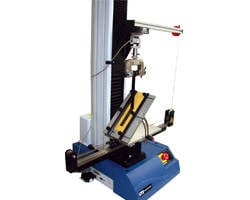
paziente. Abbiamo usato un telaio elettromeccanico di prova 3345
configurato con una cella di carico da 50 N, un'unica presa pneumatica capacità da 250 N con facce piane metalliche da 25 mm x
25 mm, e il dispositivo per il Peel ad angolo variabile per questo
test. Il dispositivo per il Peel ad angolo variabile
è
stato fissato ad un angolo di 135°, per simulare meglio la linea di
tiro che sarebbe stato visto durante l'uso normale del prodotto
adesivo. Abbiamo usato cuoio come substrato durante questo test per
simulare meglio le proprietà superficiali della pelle umana.

Il
modulo del software Bluehill ® 2 per peel, lacerazione e attrito è
altamente raccomandato per
questo
tipo di prova. Questo modulo del software permette la misurazione del
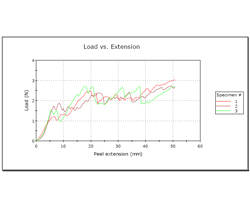
carico di primo picco, del carico medio e del carico medio per la
larghezza, i calcoli più comunemente utilizzati.

Letteratura

Serie 3400 – Soluzioni di test convenienti

Sistemi di prova universale Instron serie 3400 per prove di trazione, compressione, piegatura e altre proprietà dei materiali.

  • Prodotti
  • 06/27/2022
  • 2.52 MB

Bluehill Universal Brochure

Bluehill Universal is Instron’s advanced materials testing software, designed for intuitive touch interaction and streamlined workflows. It offers pre-loaded test methods, QuickTest for rapid setup, enhanced data exporting, and Instron Connect for direct service communication. Users of Bluehill 2 and Bluehill 3 can easily upgrade to the latest version for improved performance and usability

  • Prodotti
  • 02/26/2017
  • 3.77 MB

Prove di Impatto su impianti Ortopedici

Biomedical Testing » Biomaterials

Prove di Impatto su impianti Ortopedici

Una condizione medica chiamata osteoartrite è causata quando vi è minimo momento di giunzione nel corpo umano. La mancanza di momenti di giunzione può aversi in articolazioni danneggiate o non funzionali. Gli Impianti ortopedici sono progettati per sostituire il giunto danneggiato (s) e aumentare la mobilità di una parte interessata del corpo umano. Per citarne alcuni, gli impianti utilizzati per anca, ginocchio, spalla o gomito sono comunemente realizzati in acciaio inox. È importante per i produttori di tali impianti ortopedici testare i loro componenti (impianti diversi) per caratterizzare la resistenza all'impatto del loro prodotto.

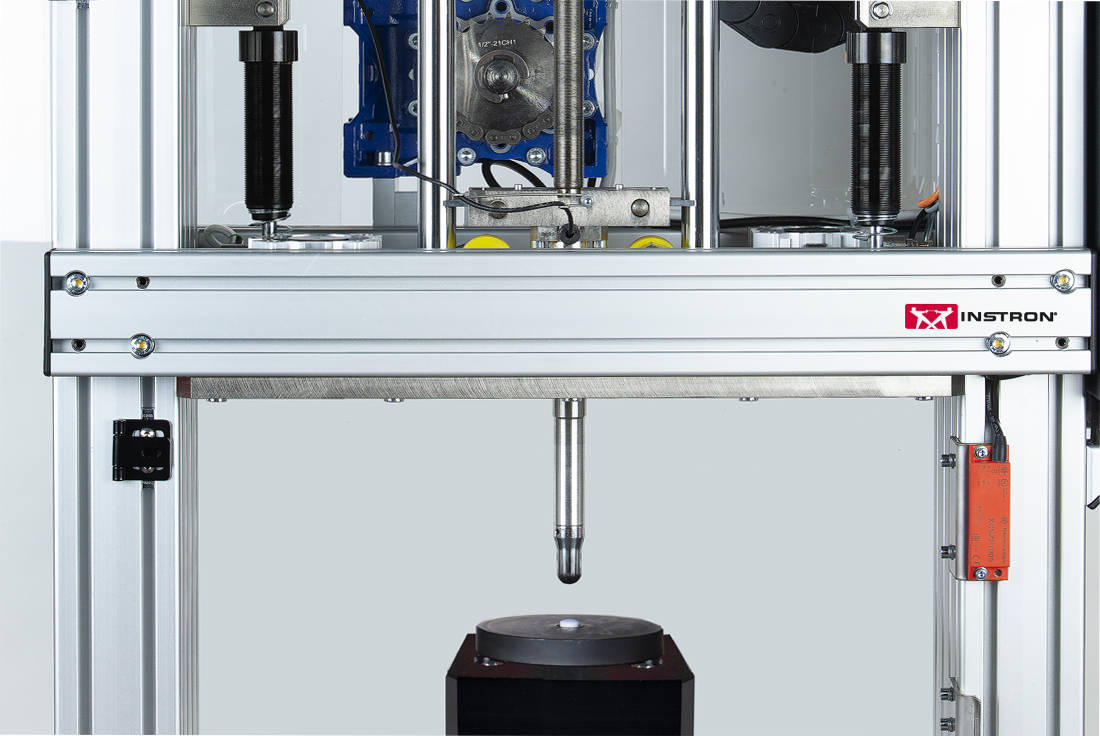
Instron Serie 9400 può soddisfare i requisiti di prova necessari. Poiché gli impianti per varie parti del corpo sono di diverse forme e dimensioni, la prova deve essere eseguita utilizzando diversi supporti personalizzati. Abbiamo usato una piastra con scanalatura a T che è stata fissata nella parte inferiore di 9450. Un dispositivo personalizzato con una protesi al ginocchio bloccata è stata montata sulla piastra con scanalatura a T alla base della torre. Uno strumento di impatto da 45 kN con misuratore di deformazione è stato utilizzato per colpire l'impianto del ginocchio. Un sistema di acquisizione dati (DAS) e il software Bluehill Impact sono stati utilizzati in combinazione con la macchina di impatto, per raccogliere i dati di forza / velocità e analizzare le prestazioni dell’impatto.

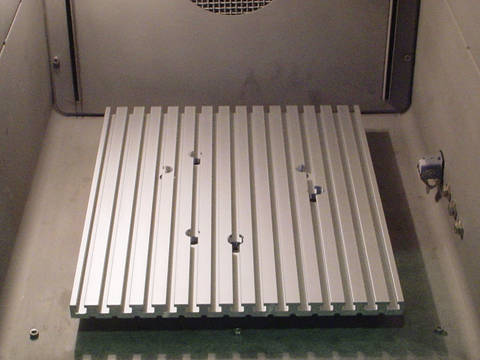
In alternativa una piastra di uso generale, come si vede nella foto può essere usata al posto di una con scanalatura a T. Questre piastre versatili danno flessibilità ai produttori di montare una vasta gamma di apparecchi personalizzati secondo le loro esigenze. Tali prove di impatto possono essere personalizzate in una certa misura in cui possono replicare la reale bassa vita e l’alta velocità di impatto durante le procedure attuali chirurgiche.

Nota: la configurazione della prova reale del cliente è confidenziale e quindi non viene visualizzata in questa nota di applicazione.

Letteratura

9400 Series Drop Tower Brochure

Instron Drop Towers are used to develop, fine tune, and validate material models. Testing materials under real impact conditions is a crucial step prior of product design. Using the characterization data obtained with the Instron 9400, coupled with customer supplied high-speed video, you can have confidence in your results and deliver new materials to your customers faster. Our Drop Tower impact systems, fixtures, and tups are designed to meet a wide range of applications and testing standards including: ISO, ASTM, ANSI, Airbus, Boeing, BSI, DIN, EN, FDA, Ford, GM, JIS, NASA, GOST, and more.

  • Prodotti
  • 02/05/2020
  • 763.1 KB

9400 Series Dashboard Brochure

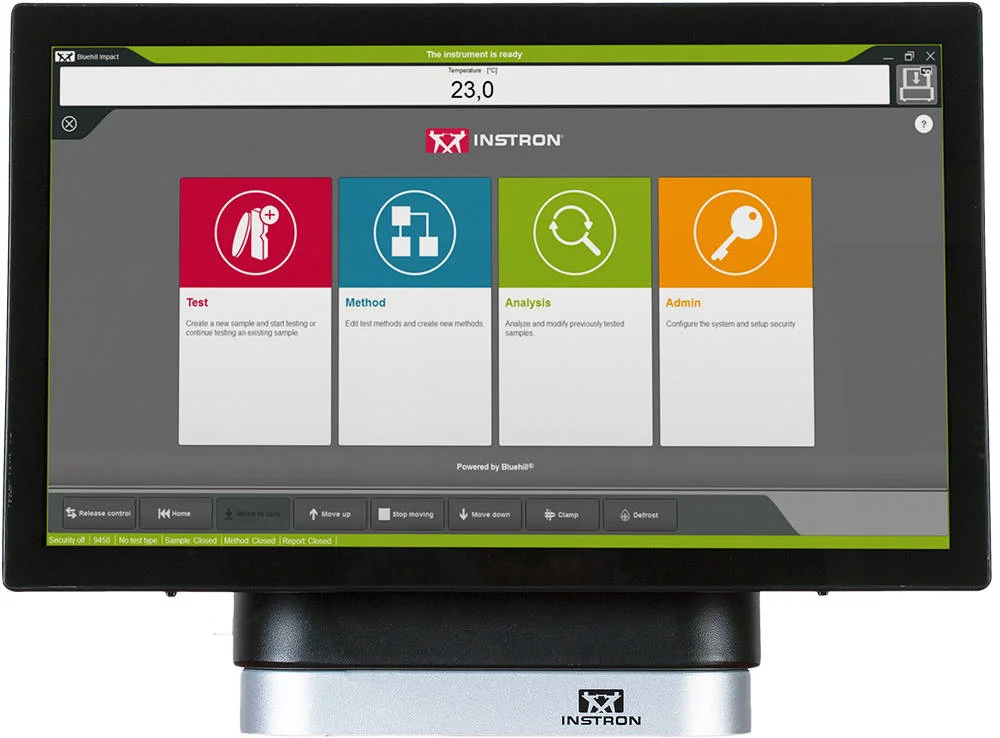
Bluehill® Impact is built from the ground up for touch interaction. The Operator Dashboard features large touchpoints to make the user experience simpler and smarter. Easy-to-understand icons and workflows make it easy to train new or experienced users, simplify operator training, and allow you to start testing even faster than ever before

  • Prodotti
  • 08/01/2019
  • 2.35 MB

Prestazioni di Impatto delle Compresse Farmaciautiche

Biomedical Testing » Biomaterials

Prestazioni di Impatto delle Compresse Farmaciautiche

Support for pharmaceutical tablet impact testing

Comuni
pillole e compresse farmaceutiche di solito sono rifinite con un
rivestimento per facilitare la deglutizione, il tempo di rilascio
graduale del farmaco, identificazione e imprimere il marchio. I
Rivestimenti possono anche contribuire a garantire la lunga durata,
proteggendo il prodotto sottostante da condizioni ambientali
negative, quali luce, temperatura, umidità e sollecitazioni
meccaniche. In particolare, nel processo di produzione e
confezionamento, rivestimenti delle compresse sono soggetti ad urti
che possono causare danni.

Le
prove di impatto possono essere utili al produttore per avere dati
delle prestazioni per la ricerca e lo sviluppo di processi o di
nuovi materiali di rivestimento. Una volta che un prodotto adatto è
stato realizzato, un produttore può implementare un programma di
controllo della qualità che utilizza i dati di base di una prova
sulle prestazioni per fornire la validazione in corso del processo.

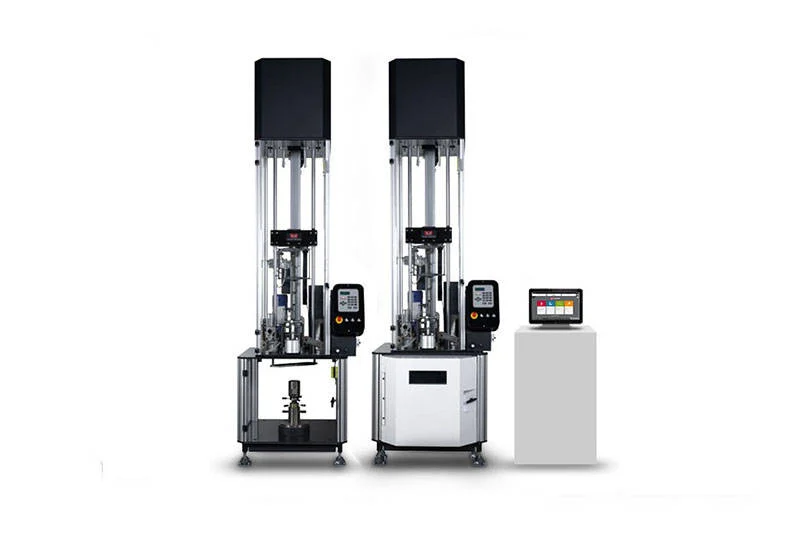
Una torre a caduta di grave Instron 9440, dotata di un tup per sensore piezoelettrico a basso carico (0,45 kN o 4,5 kN), inserto tup emisferico o piatto da ½ pollice e il software Bluehill Impact sono ideali per il test di pillole e compresse farmaceutiche.  Per il
fissaggio si consiglia di utilizzare una piastra metallica, rigida,
piana, che può essere fissata al 9440. Utilizzando la
traversa vuota e variando le energie di impatto variando l'altezza di
caduta, le pillole e delle compresse possono essere testate fino a
quando non c’é alcun segno di rottura:

Questa
soluzione di prova di impatto è adatta per la determinazione delle
caratteristiche delle prestazioni di compresse farmaceutiche, come la
consistenza e i punti di rottura o di danneggiamento incipiente.
Queste caratteristiche possono a loro volta essere legate al
materiale di rivestimento utilizzato sul prodotto. Comprendendo come
il rivestimento può rafforzare o indebolire le pillole, si possono
fare cambiamenti per migliorare il prodotto.

Letteratura

9400 Series Drop Tower Brochure

Instron Drop Towers are used to develop, fine tune, and validate material models. Testing materials under real impact conditions is a crucial step prior of product design. Using the characterization data obtained with the Instron 9400, coupled with customer supplied high-speed video, you can have confidence in your results and deliver new materials to your customers faster. Our Drop Tower impact systems, fixtures, and tups are designed to meet a wide range of applications and testing standards including: ISO, ASTM, ANSI, Airbus, Boeing, BSI, DIN, EN, FDA, Ford, GM, JIS, NASA, GOST, and more.

  • Prodotti
  • 02/05/2020
  • 763.1 KB

9400 Series Dashboard Brochure

Bluehill® Impact is built from the ground up for touch interaction. The Operator Dashboard features large touchpoints to make the user experience simpler and smarter. Easy-to-understand icons and workflows make it easy to train new or experienced users, simplify operator training, and allow you to start testing even faster than ever before

  • Prodotti
  • 08/01/2019
  • 2.35 MB

Soft Tissue Testing

Biomedical Testing » Biomaterials

Soft Tissue Testing

The Challenge

Skin

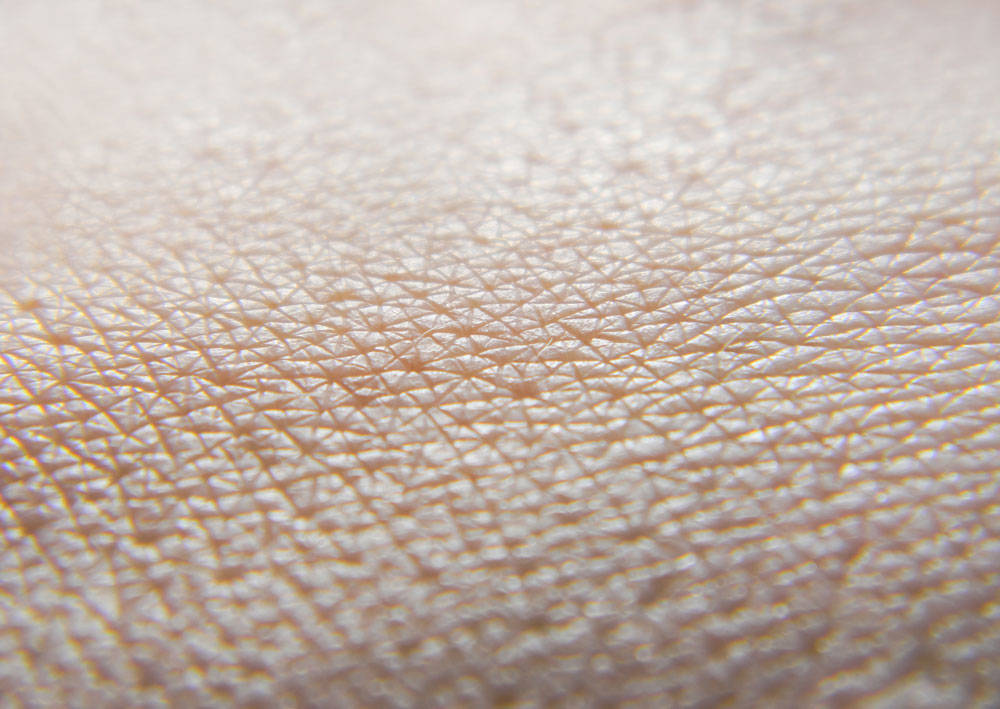
Testing soft tissues, such as skin, tendons, ligaments, and others, presents many challenges. Specimens of this type are delicate; hence they break at low forces. Gripping soft tissues can also be problematic given that these specimens are small, slippery, and compliant in nature. In addition, soft tissues are viscoelastic and often require accurate elongation or strain measurement to properly understand the material properties. Typically, in vivo conditions are needed to test soft tissues, which calls for the test to be performed at body temperature and in a hydrated state. This requires the testing equipment and fixture to be corrosion resistant and "waterproof" to avoid damaging the sensitive electronics of the testing system.  

Our Solution 

Soft Tissue Testing

For testing at physiological conditions, the Instron® BioBath is an ideal solution for keeping a specimen fully hydrated in a saline solution and at 37°C. The BioBath uses a closed-loop temperature control measurement, which can be fed directly into the test system's software to accurately track specimen temperature, in addition to mechanical test data. Pneumatic grips are recommended for consistent clamping pressure that the user can vary up to 90 PSI. A high friction surface is often needed to grip slippery biomaterials to avoid specimen slipping. To avoid this, we recommend using a metallic high friction finish known as surfalloy on the grip face, but grit sandpaper is also a viable option. A stainless steel tray, such as the BioTray, can help protect the system's electronics from damage in the case of spills or messy specimens.

Hard Tissue Testing

Biomedical Testing » Biomaterials

Hard Tissue Testing

The Challenge

Hard Tissue

Bone, dentin, and dental enamel are all considered to be hard tissues. Specimens of this type are most commonly tested in compression and flexural. The most common results obtained from a compression or flexural test on hard tissues is modulus and force at fracture. Typically, these specimens come from mice, rats, or other mammals and are small in size. Despite being small in size, hard tissues have high stiffness. A typical challenge with measuring modulus is accurate measurement of displacement. For a given force, a hard tissue such as bone will exhibit small displacement. In addition to compression testing, 3-point and 4-point bend tests are common to quantify force at fracture on bone sections. Often, this testing must be conducted at physiologically relevant test conditions, such as in a hydrated bath and at body temperature.

Our Solution 

Hard Tissue Testing

When conducting compression testing on hard tissues, it is critical that users choose appropriately sized compression platens to closely match specimen size, ensure the compression platens are spherically seated or self-aligning to apply even pressure on the specimen, and use an accurate source to measure system displacement. For example, an accurate measurement source of displacement could be via compliance correction in the software, or by using a strain measuring device, such as a linear variable deflection transducer (LVDT) or a video extensometer. When testing flexural specimens, it is critical that the anvils on the flexural fixture are appropriately sized to the specimen and that the flexural fixture properties, such as span length, are easily entered into the software.

Hydrogel Tensile Testing

Biomedical Testing » Biomaterials

Hydrogel Tensile Testing

The Challenge

Hydrogel Tensile

Hydrogel testing is most commonly done in both tension and compression. Compression testing on hydrogels poses less of a challenge, as many hydrogels are compliant and compress easily under load. The natural compliance of hydrogels becomes more of a challenge in tensile testing, as these materials can be difficult to grip and exhibit high elongation. Gripping hydrogels with too much pressure typically displaces the material out of the grip faces, which makes gripping ineffective. In addition, a traditional contacting extensometer is not a viable option considering the soft properties of hydrogels. Given the viscoelastic properties of these materials, test speed will greatly affect results, such as force at break and elongation at break. 

Our Solution 

Hydrogel Tensile Testing

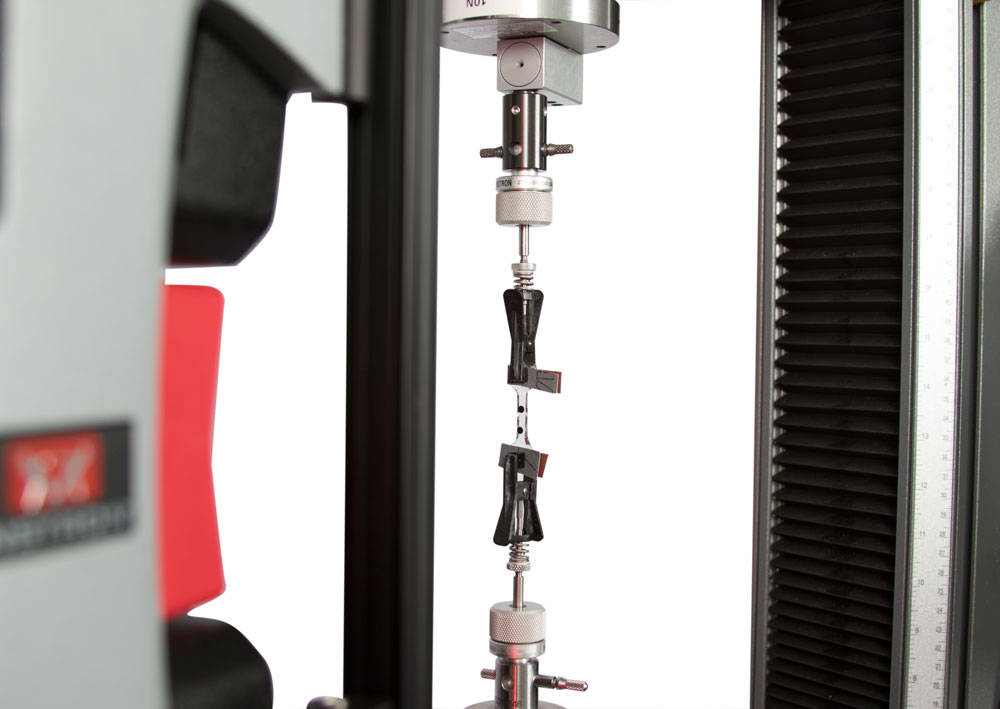
When testing hydrogels in compression and tension, most common forces at failure are below 100 N. Given the low forces obtained in hydrogel mechanical testing, it is important that an accurate load cell is used. This can be especially tricky in a compression test as many users restrain from using low capacity load cells out of fear that they will overload the load cell if the compression platens begin to touch during a test. To prevent this from happening, it is imperative that safety limits are set and that the end of test criteria is set to the load cell capacity in the software. For tensile testing, Instron® offers a range of low force grips, including spring loaded, screw side action action, and pneumatic side action grips. Given the compliant nature of hydrogels, often sandpaper needs to be used to increase friction at the gripping contact points. When accurate measurement of strain is required, we recommend using our Advanced Video Extensometer

Bioadhesives Peel Testing

Biomedical Testing » Biomaterials

Bioadhesives Peel Testing

The Challenge

bio adhesive

Adhesives are widely used in the medical device industry for dental implants, bone cements, and wound closure products. Wound closure products include tissue adhesives that can be found in bandages, secondary dressings, and a variety of surgical sealants. The adhesive strength of these products must be well defined. An adhesive that isn’t strong enough may result in a wound that heals poorly, or it can lead to an infection. If an adhesive is too strong, it may damage the underlying tissue or cause the patient unnecessary pain when removing. A fundamental challenge with testing bio adhesives is characterizing adhesive strength in physiologically relevant conditions. 

Our Solution 

Bioadhesives Peel Testing

Soft tissue substrates should be tested under physiologically relevant conditions, most preferable in a bath or temperature controlled enclosure at 37°C. The BioBath with submersible pneumatic grips is recommended. The grips and pull rod that attach to the force transducer are designed to minimize buoyancy chances during low force testing. We also recommend a low capacity load cell, given that adhesive strength for biological applications is typically under 10-20 N. Bluehill® Universal's Peel, Tear, Friction Module is ideal for this test type in order to measure first peak force, average force over the seal, and average force per width of the specimen.