
Adhesive Peel Impact Test Method
Test the High Performance and Structural Integrity of the Adhesive Bonds Under Real Life Conditions
An adhesive peel impact test measures the resistance of of high-strength structural adhesives to cleavage fracture at defined velocity and user-defined temperatures. This test method is specified by the ISO 11343 standard.
The specific setup for the adhesive peel impact test consists of a wedge with a defined shape and mass, being driven at a defined velocity into an adhesive bond securing two metallic surfaces. The test causes the bond to fracture and the adherents to peel apart. The adherents are made from aluminum or steel, which are the most used substrates most commonly in the automotive industry.
The adhesive peel impact test provides the data to calculate the dynamic resistance to cleavage, which is defined as the force per unit of width necessary to bring an adhesive joint to failure. This vital information can help manufacturers involved in the research and development of new adhesives. When a suitable product has been developed, both manufacturer and end-user can implement a quality control program utilizing baseline data from the impact performance tests to provide ongoing process validation and quality control.
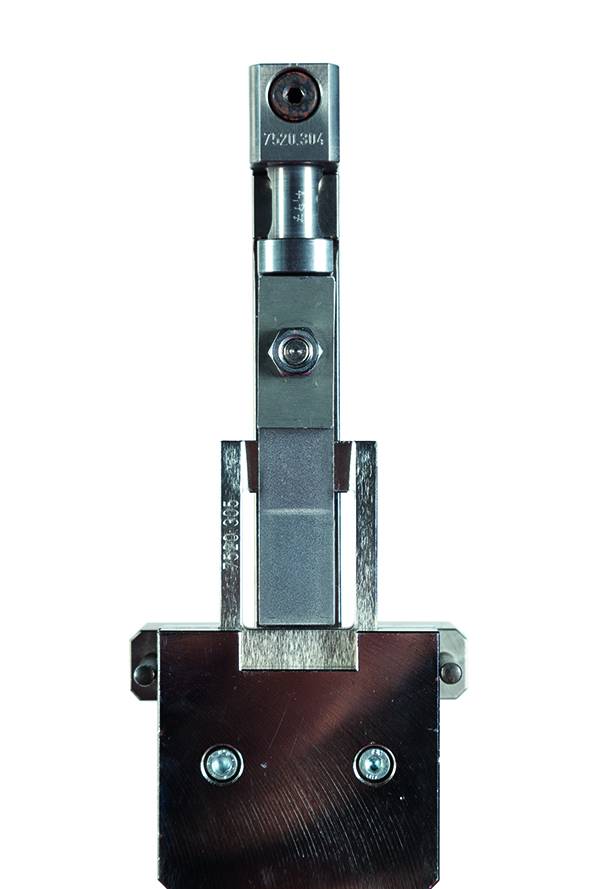
- A dedicated striker;
- A vice equipped with a strain-gauge sensor (15 kN), a clamp for adhesive bond specimen;
- Both symmetric and asymmetric wedges with shape according ISO requirements;
- A Data Acquisition System with a strain-gauge channel
The thermostatic chamber enables the user to test at low and high temperatures and experiment with different material compositions, cure conditions and climatic temperatures to optimize product performance and comply with government regulations. Real life testing scenarios can be simulated within the range from -40°C to +80°C, very typical climatic conditions for the automotive industry.
Consult accessories, such as supports, tup holders and tup inserts for Adhesive Peel Impact Test
