Instron

Non-ambient Plastics Tensile Testing

Automotive » Engine

Non-ambient Plastics Tensile Testing

Maintaining Specimen Temperature

When working in automotive R&D, awareness of how various materials act at ambient temperature as well as normal operating temperature is important. Many original equipment manufactures have unique temperature requirements that all components need to achieve, for example: -30oC to 80oC. However, engine and transmission components get considerably hotter. It is extremely important to subject the material to these temperatures during testing to understand their performance.

THE CHALLENGE
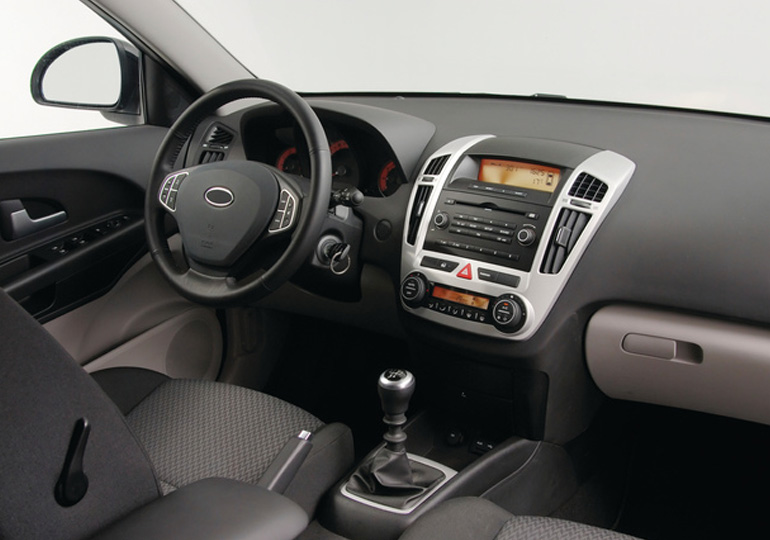

In order to determine the material's performance at high temperature, it is critical that the temperature of the material is carefully controlled at the required temperature.

our Solution

Environmental Chamber
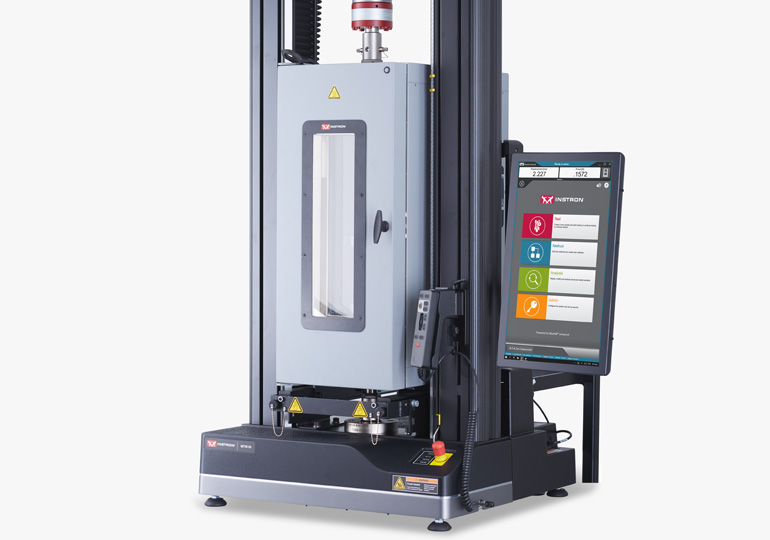
Instron’s 3119-600 series environmental chambers can accurately control the temperature from -150°C up to 600°C (-240°F to 1110°F) making them suitable for materials of all types within the engine bay.  Optional roller mounting brackets make it easy to move the chamber in and out of the test space to quickly change between ambient and non-ambient testing.  The temperature soak time can be automatically set in Bluehill® Universal and, once complete, the test will start. Alternatively, utilizing TestProfiler you can have different temperatures under different loading conditions during the same test.

Strain Measurement at Non-Ambient Conditions

THE CHALLENGE


When testing inside of an environmental chamber, calculating the modulus of plastics with a traditional clip-on extensometer can be challenging.  When the extensometer needs to be removed during a test, the door to the chamber must be opened.  This can result in a temperature swing in the middle of testing as ambient air floods the chamber.

our Solution

Environmental Chamber
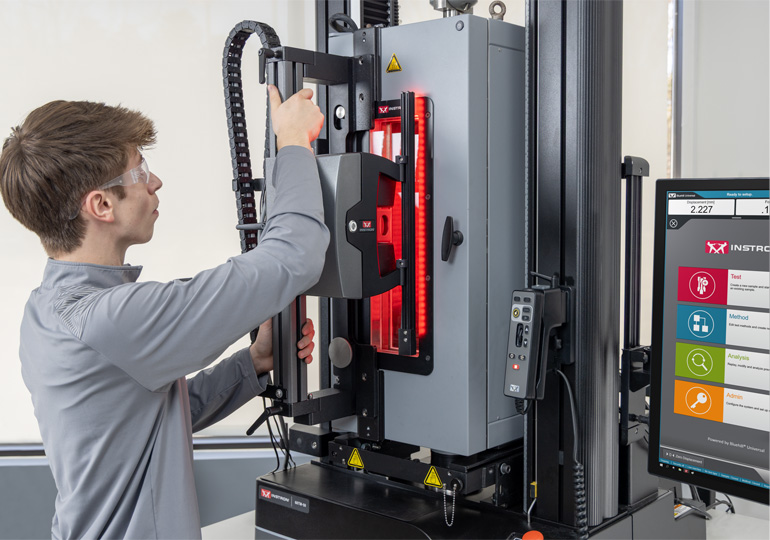
The Advanced Video Extensometer (AVE 2) is designed to work through the optical quality glass on the front of the 3119-600 series environmental chambers.  The AVE 2 is a non-contacting video extensometer and can measure the strain through failure, eliminating the need to open the chamber door during testing, increasing operator safety and enabling accurate strain measurement throughout the test.
 

Learn more about our automotive solutions

Internal Combustion Fatigue Testing

Automotive » Engine

Internal Combustion Fatigue Testing

THE CHALLENGE

internal combustion simulation

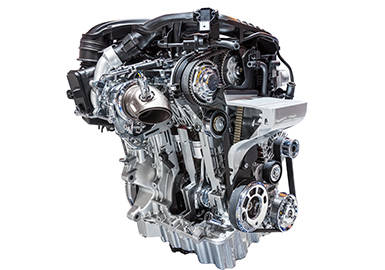
High pressure gas pulses within the combustion chamber introduce high loads into the engine block, pistons and connecting rods. To accelerate the development process recorded cylinder pressure pulses can be reproduced in the laboratory using hydraulic pressure control.

our Solution

internal combustion simulation

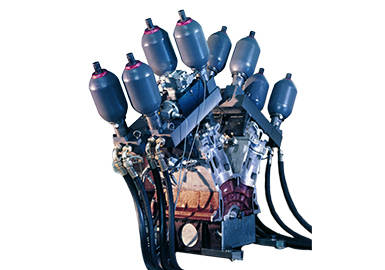
Instron Hydropuls® pressure control units allow the simulation of alternating pressure loads within the combustion chamber. These dynamic pressure test systems can be used to evaluate the fatigue life of various components including the engine block, piston, gudgeon pin, connecting rod, cylinder head and gasket.

Learn more about our automotive solutions

Crankshaft Torsional Fatigue Testing

Automotive » Engine

Crankshaft Torsional Fatigue Testing

THE CHALLENGE

crankshaft

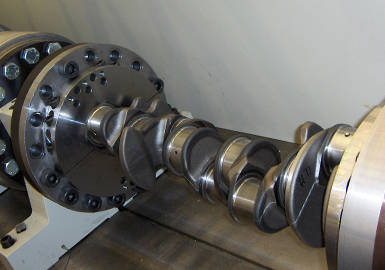
Crankshafts convert the forces generated within the cylinder during combustion into torque. During this process, crankshafts are exposed to severe cyclic fatigue loads and the design must be optimized to deliver the required service life. Fatigue testing is therefore essential to validate the design and manufacturing process for these key components.

our Solution

crankshaft

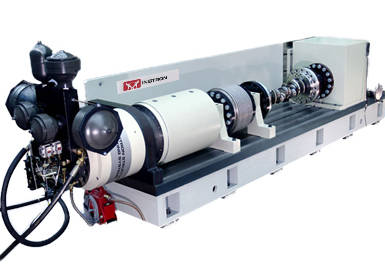
Torsional fatigue testing of the crankshafts of passenger cars and commercial vehicles can be conducted efficiently and reliably with Hydropuls® rotary actuators. Accelerated testing by running at the crankshaft torsional resonant frequency is also possible.
To cover a wide spectrum of test scenarios we offer a variety of rotary actuators with different capacities. We also offer numerous accessories for compensating eccentricity, misalignment, or shortening of specimens under load. Climatic chambers for simulating environmental conditions and temperature are also available.

Non-ambient Metals Tensile Testing

Automotive » Engine

Non-ambient Metals Tensile Testing

When working in automotive R&D, awareness of how various materials act at ambient temperature as well as normal operating temperature is important. Many original equipment manufactures have unique temperature requirements that all components need to achieve, for example: -30oC to 80oC. However, engine and transmission components get considerably hotter. It is extremely important to subject the material to these temperatures during testing to understand their performance.

Maintaining Specimen Temperature

THE CHALLENGE

In order to determine the material's performance at high temperatures, it is critical that the temperature of the material is carefully controlled when the desired temperature is reached. For auxiliary parts or components, the temperature requirement will not be as high when compared to the material within the engine block, which will be considerably hotter and can be closer to the melting point of the material which could cause failure.

THE Solution

Environmental Chamber

3119-600 Series environmental chambers can accurately control the temperature from -150oC up to 600oC (-240°F to 1110°F) making them suitable for all types of materials within the engine and transmission assemblies. Alternatively, the 1200°C (2200°F) Model SF-16 three-zone resistance furnaces have a split construction design that facilitates fast and easy loading of a pre-assembled load string. Adjustable stainless steel latches keep the furnace halves locked together during use, but are then easily opened once testing is complete. The temperature soak time can be automatically set in Bluehill® Universal and once complete the test will start.  Alternatively, utilizing TestProfiler you can have different temperatures under different loading conditions during the same test.

Strain Measurement at High Temperature

THE CHALLENGE

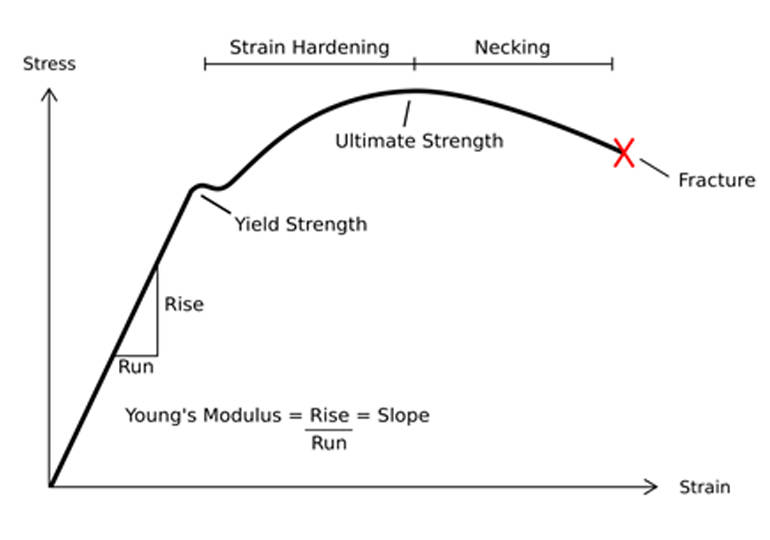
The complete stress-strain curve is important because it shows not only the maximum stress and strain a material can handle, but also important properties such as stiffness and yield (where the material becomes completely deformed), and ultimately, how the material will behave in use. Therefore, it is critical to determine the strain during high-temperature testing.

THE solution

There are several choices for extensometry, depending on your requirements and the type of furnace that you have. If the furnace has a port in the side, then a side entry extensometer can be used, these typically have long ceramic arms with the body of the extensometer outside of the temperature. Alternatively, if it is a closed type furnace, a vertical mechanical extensometer such as the W-6183 type is effective.


Learn more about our automotive solutions