Labtronic EVO®

Labtronic EVO®

Because decisions for the future are made today
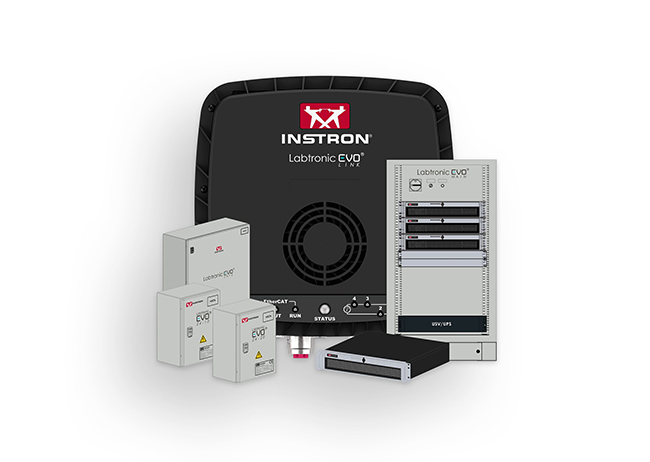
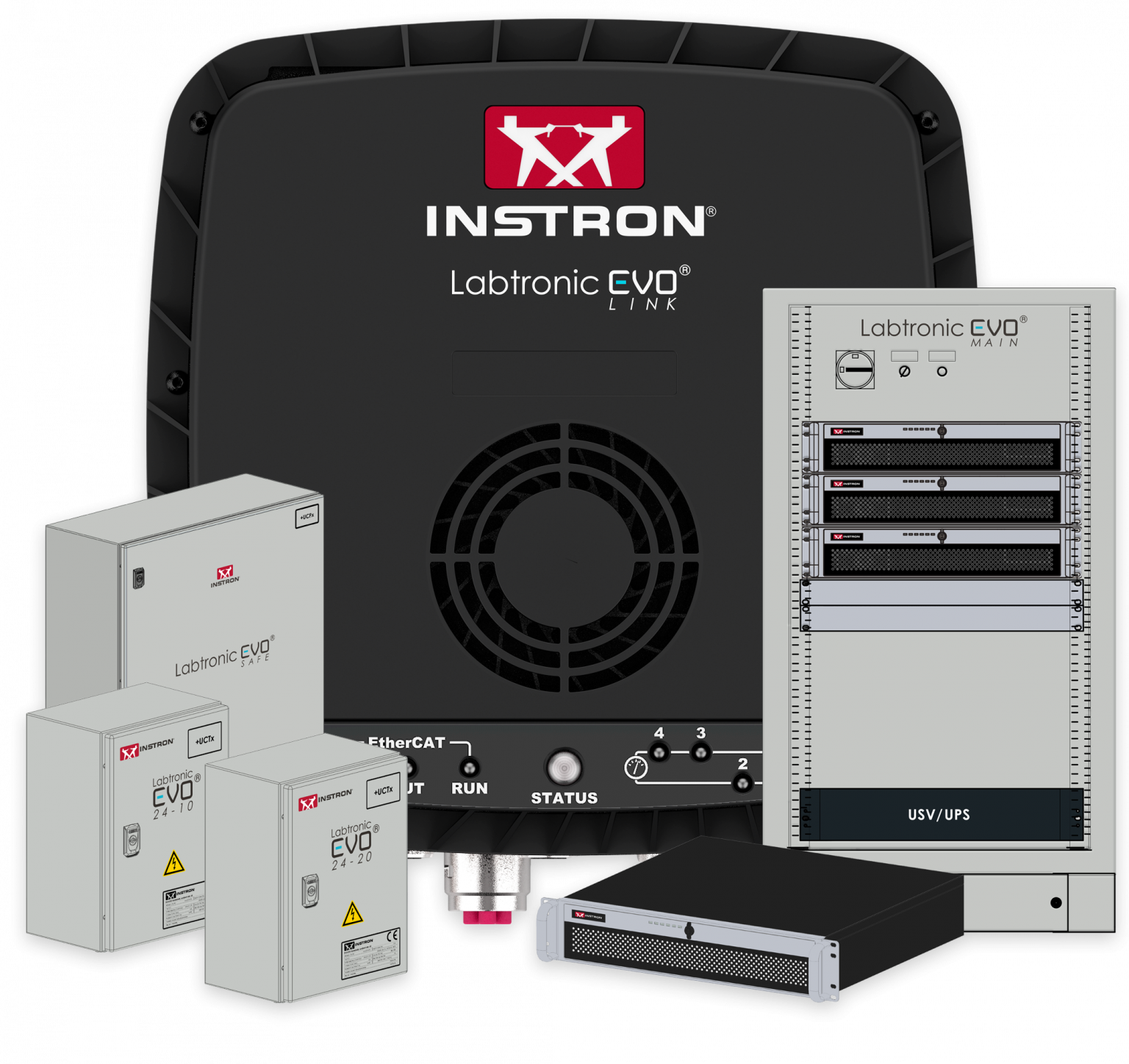
Full Labtronic EVO® product family including LINK, MAIN, CORE, 24-10, and 24-20 modules arranged together
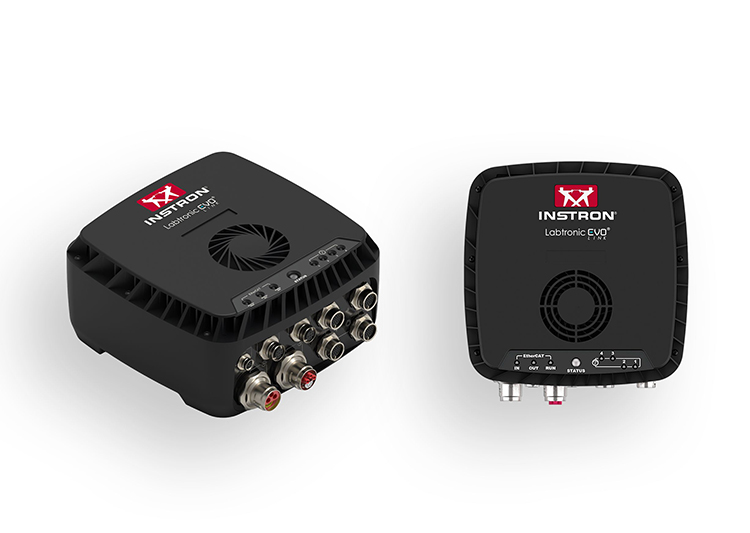
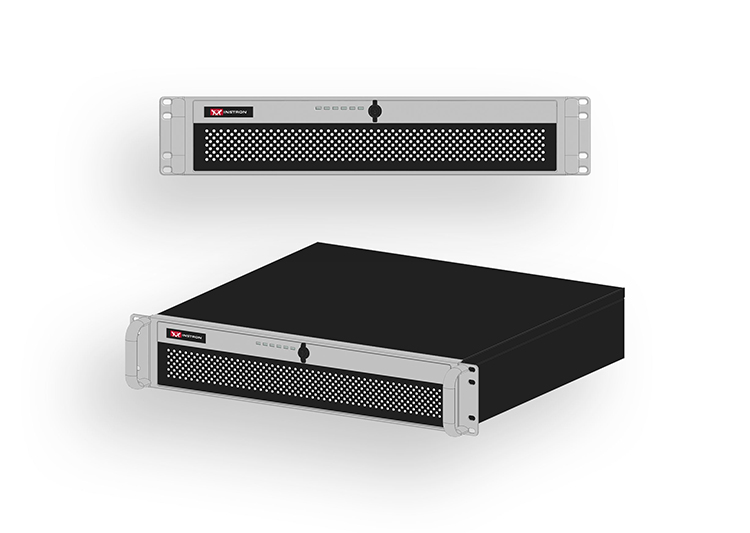
Full Labtronic EVO® product family including LINK, MAIN, CORE, 24-10, and 24-20 modules arranged together Instron Labtronic EVO® LINK decentralized actuator-level measurement module shown from two angles Instron Labtronic EVO® CORE controller unit shown in front and isometric views Instron Labtronic EVO® SAFE safety system enclosure, ISO 13849-1/2 compliant, shown in isometric and front views Instron Labtronic EVO® 24-10 power distribution and I/O module shown in isometric and front views Instron Labtronic EVO® 24-20 power distribution and I/O module shown in isometric and front views

Labtronic EVO is a modular, scalable controller solution designed for modern servohydraulic applications and test systems, combining flexibility, performance, and future-proof upgradeability. Built on a distributed architecture, it replaces traditional centralized systems to reduce cabling, improve signal quality, and simplify installation.

The platform consists of five integrated components:

  • Labtronic EVO CORE (real-time control with EtherCAT connectivity)
  • Labtronic EVO MAIN (protected housing)
  • Labtronic EVO 24-10 / 24-20 (24 V power distribution with I/O and network extension)
  • Labtronic EVO LINK (decentralized actuator-level measurement and valve control with CAN bus)
  • Labtronic EVO SAFE (ISO 13849-1/2 compliant safety system)

With electronics placed close to actuators, Labtronic EVO enables shorter analog paths, faster setup, and reduced downtime of up to 80% in certain configurations. Backward compatibility and stepwise upgrade options allow seamless integration into existing test rigs, making it a powerful platform for new installations and modernization projects.

Ready to learn more? Download the Labtronic EVO brochure for full technical details.
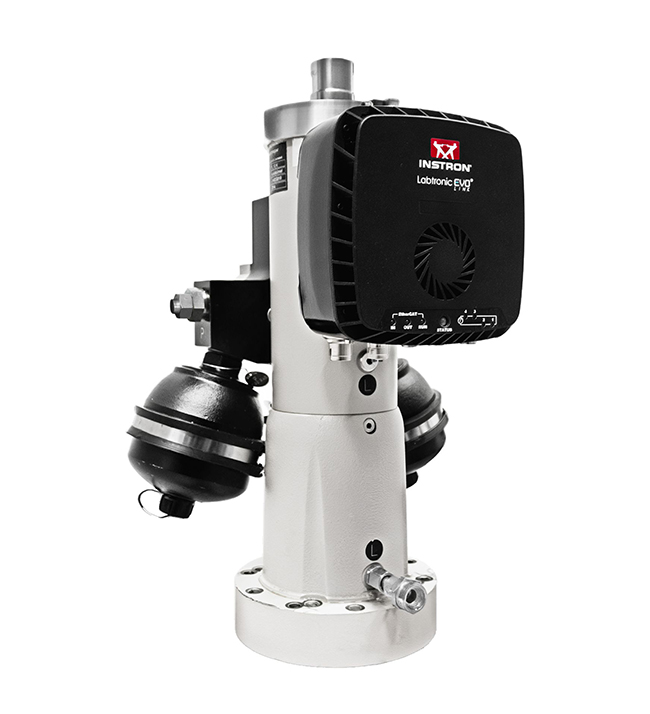
Instron Labtronic EVO® LINK module mounted directly on a servo-hydraulic actuator

Key Features

  • Modular architecture enabling scalable and flexible test system design
  • Decentralized system design with actuator-level integration via EVO LINK for shorter analog signal paths
  • High-speed EtherCAT communication (10 kHz) for deterministic real-time control and low-latency data exchange
  • Integrated multi-function EVO LINK module with measurement amplifiers, valve control, and CAN bus interfaces (CAN 2.0 A/B, CAN FD)
  • Hybrid cabling and daisy-chain connectivity supporting up to eight EVO LINK modules for simplified installation
  • Stepwise upgrade capability and backward compatibility with Labtronic® 8800ml systems for hybrid operation
  • Advanced safety system (EVO SAFE) compliant with ISO 13849-1/2 Performance Level d

Benefits of Use

  • Up to 80% reduction in test setup time, significantly lowering downtime and increasing test efficiency
  • Reduced cabling complexity and faster installation due to decentralized electronics and EtherCAT topology
  • Improved signal quality and noise immunity from shorter analog cable lengths near actuators
  • Flexible, future-proof system upgrades that protect existing investments and allow incremental modernization
  • Minimal disruption during retrofits, as components can be installed alongside existing systems
  • Faster commissioning and maintenance through hybrid connectors and simplified system architecture
  • Lower training requirements thanks to familiar software environments (RSLabSite® 2.n) and backward compatibility

Want to go deeper? Read our interview with Burkhard Bertemes, Instron's Innovation Manager behind the development of the Labtronic EVO.

Labtronic 8800ml
Labtronic EVO
Real-time performance with EtherCAT (10 kHz)
Support for CAN bus integration
Uses RSLabSite 2.n
Decentralized architecture design
Significantly reduced cabling and setup time
Stepwise upgrade and hybrid compatibility
Integrated standardized safety system

FAQ

What is Labtronic EVO?

Labtronic EVO is a modular, scalable test system for servohydraulic applications that simplifies test rig electronics, reduces cabling, and enables fast upgrades. It combines decentralized architecture, modern bus technology (EtherCAT), and backward compatibility to create a flexible platform for new installations and retrofits.
What components make up the Labtronic EVO system?

What problem does Labtronic EVO solve?

How does the decentralized architecture improve performance?

What is special about the Labtronic EVO LINK module?

How much downtime reduction can be achieved?

How easy is it to upgrade or retrofit existing systems?

Is Labtronic EVO compatible with existing systems?

What communication and bus technologies are used?

How does Labtronic EVO support long-term system evolution?

Biaxial and Averaging Axial Clip-On Extensometers

Testing Accessories » Extensometers » Biaxial and Averaging Axial Clip-On Extensometers

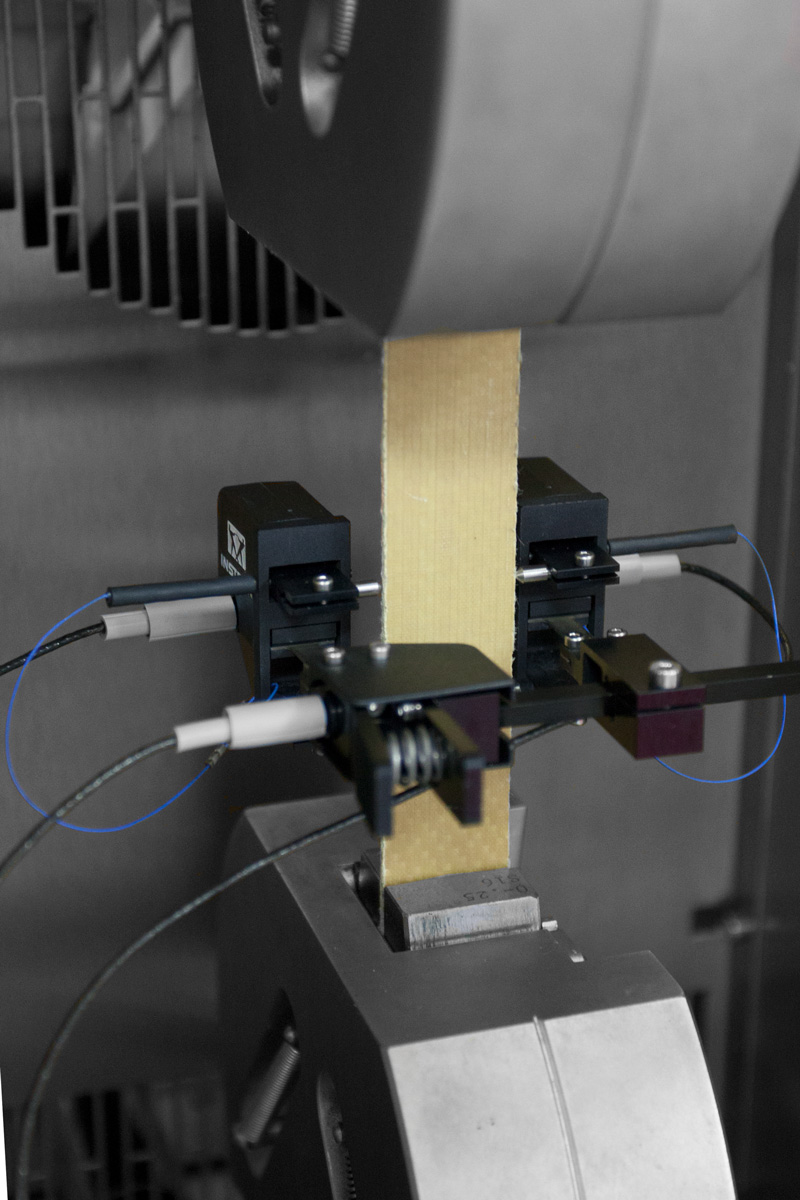
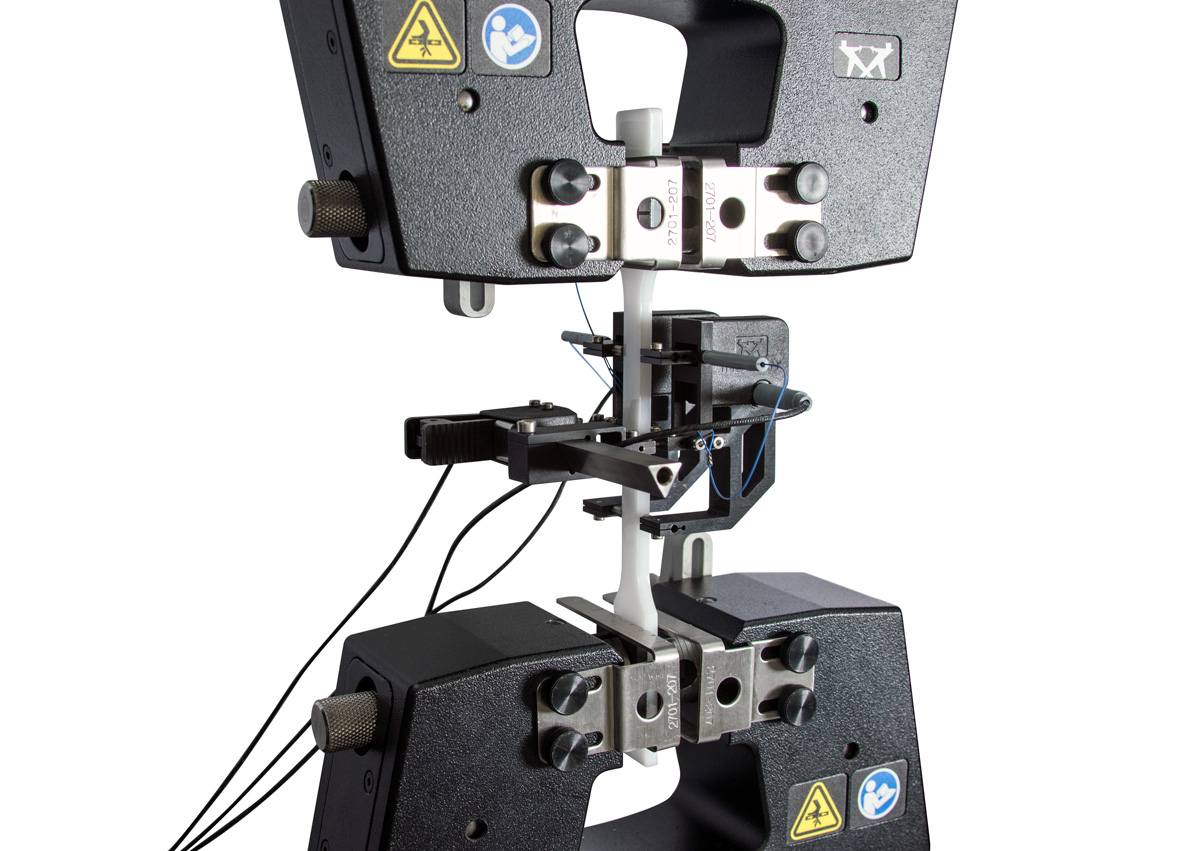
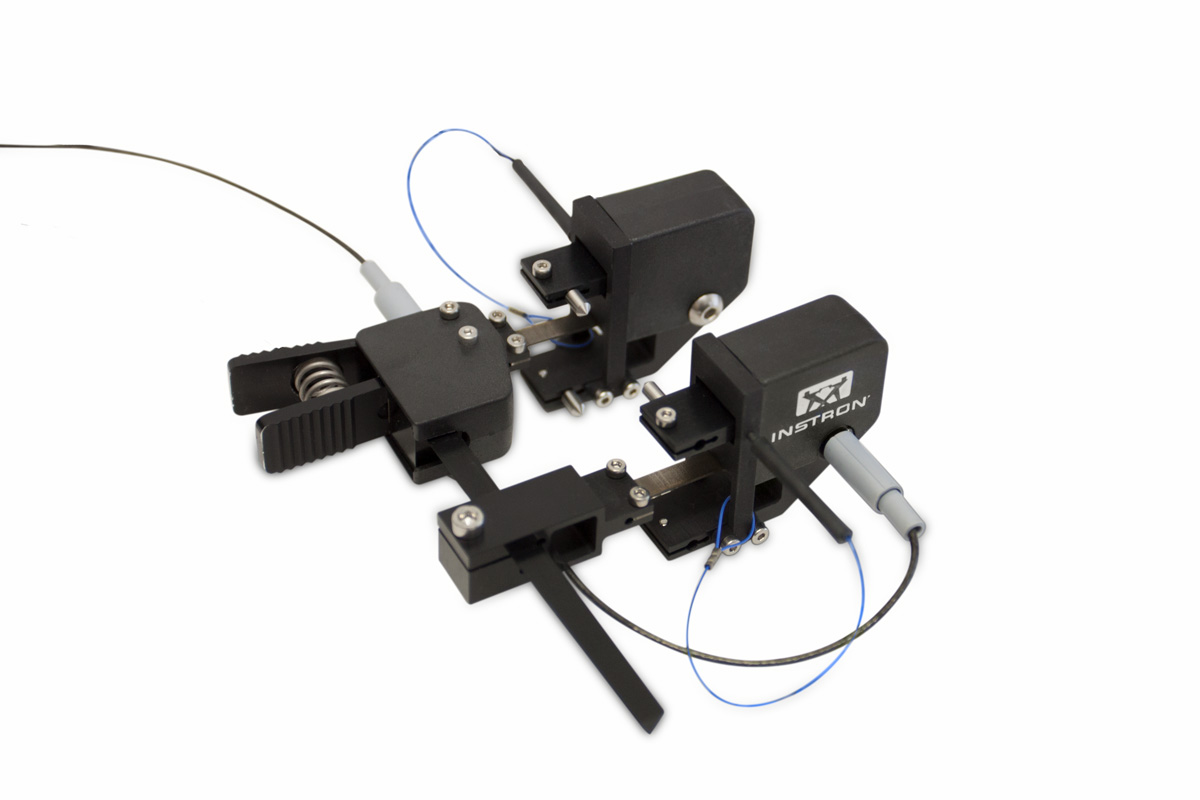
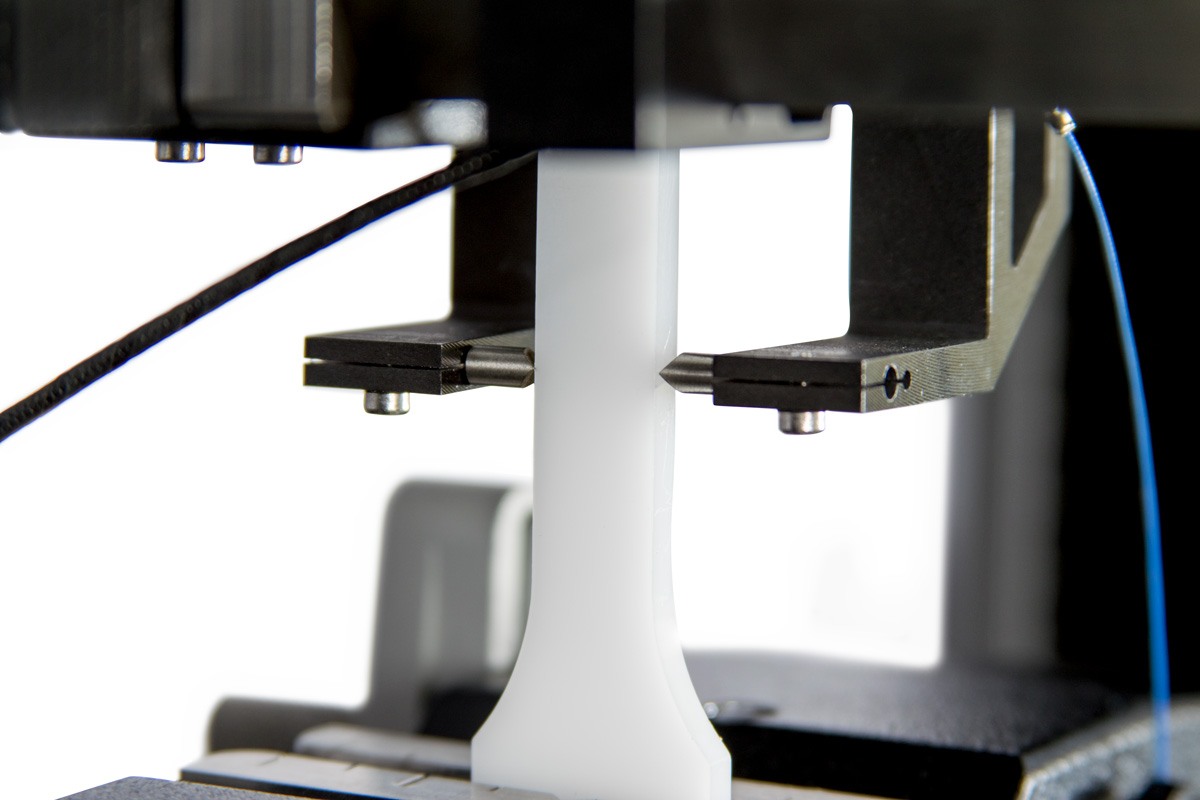
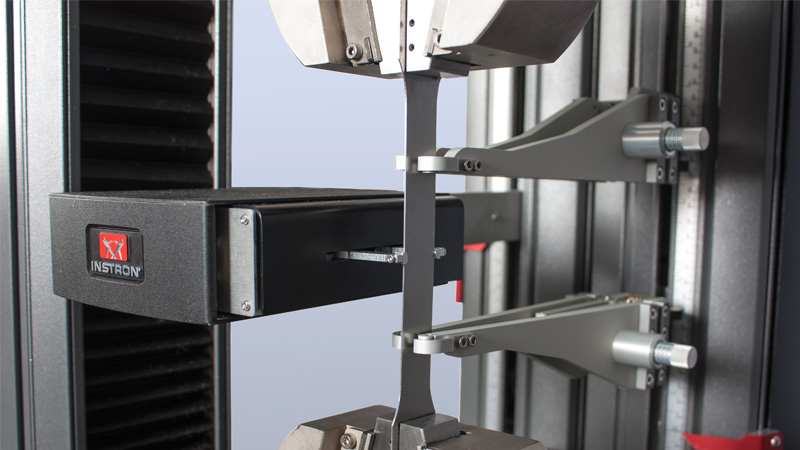
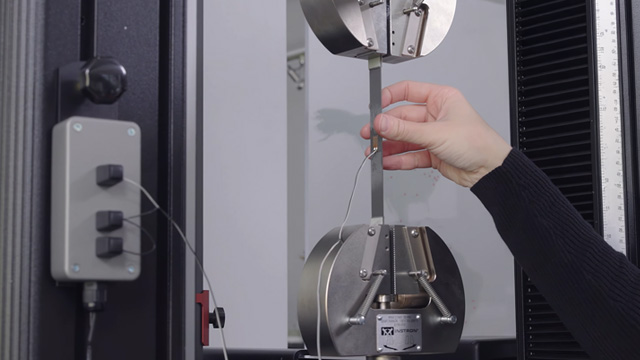
Instron® biaxial and averaging axial clip-on extensometers are typically used for testing advanced composites, rigid plastics, and metals. In all of these extensometers, average axial strain is determined from independent strain measurements from both sides of the specimen. The use of average axial strain corrects for any specimen bending due to misalignment for a consistent and accurate determination of modulus.

By integrating a transverse strain transducer, the extensometer can simultaneously measure average axial and transverse strain, allowing the determination of Poisson’s ratio and in-plane shear strain. With a robust design, these extensometers provide reliable operation under demanding conditions and can be used in temperatures ranging from -200°C to +200°C (-328°F to +392°F).

These extensometers meet the calibration requirements of ASTM E83 B-1, ISO 9513 Class 0.5, and ISO 527 (Annex C).

Averaging axial clip-on extensometer
Averaging axial clip-on extensometer Averaging axial clip-on extensometer for composites testing Biaxial extensometer testing a plastic specimen

Biaxial Clip-On Extensometers

Single Average Axial Strain Output Models

Axial Gauge Length Axial Strain Catalog Number
25 mm -2% to +5% 2650-561
50 mm -1% to +2.5% 2650-563
1 in -2% to +5% 2650-565
2 in -1% to +2.5% 2650-567

Two Independent Axial Strain Output Models

Axial Gauge Length Axial Strain Catalog Number
25 mm -2% to +5% 2650-571
50 mm -1% to +2.5% 2650-573

Averaging axial clip-on extensometer
Averaging axial clip-on extensometer Biaxial extensometer testing a plastic specimen Biaxial extensometer with advanced hydraulic wedge grips

Averaging Axial Clip-On Extensometers

Averaging axial clip-on extensometers measure axial strain on opposite sides of the specimen. These models provide a single averaged axial strain output.

Axial Gauge Length Axial Strain Catalog Number
25 mm -2% to +5% 2650-560
1 in -2% to +5% 2650-564

Not sure which extensometer is right for your application?

Furnace Testing for Fatigue Testing Systems

Testing Accessories » Environmental Chambers and Furnaces » Furnaces » Furnace Testing for Fatigue Testing Systems

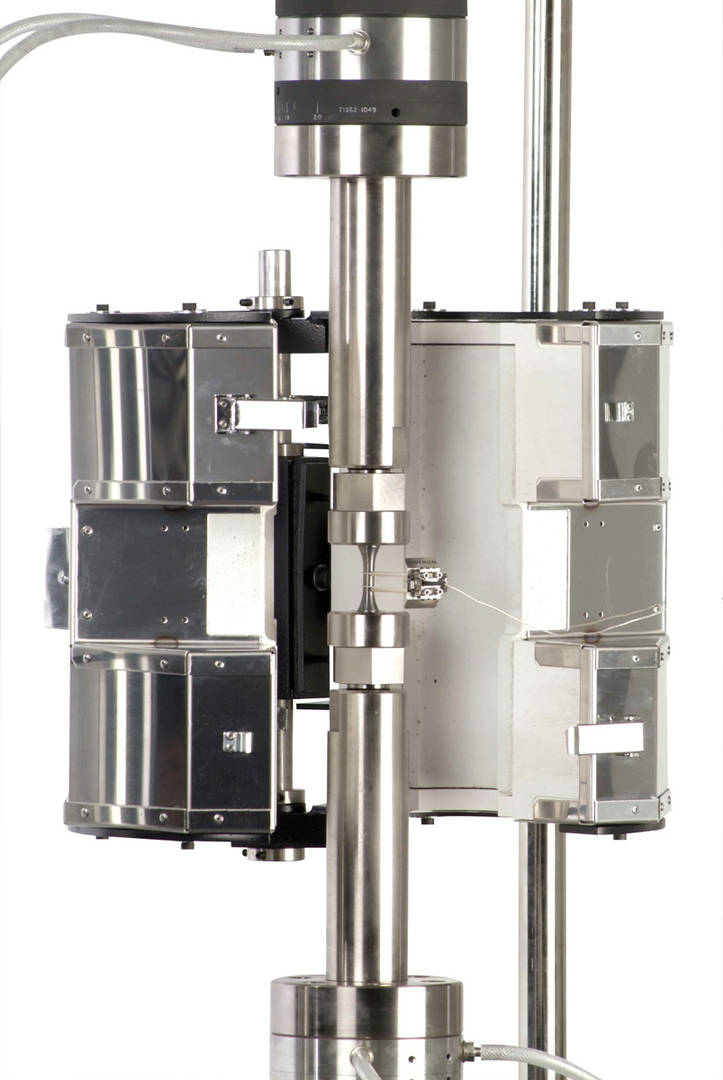
Instron's furnace accessories for fatigue testing systems support elevated temperature testing up to 1000°C in air, including low cycle fatigue, hot tensile, and reverse axial stress applications. Standard configurations include a three-zone split tube furnace with side entry extensometer port and hydraulic reverse-stress pull rods rated to 1050°C. For testing requirements beyond standard temperature ranges or dimensions, Instron's Engineered Solutions Group can develop custom configurations to meet your specific needs.

Furnace for Low Cycle Fatigue Testing
Furnace for Low Cycle Fatigue Testing Furnace for Low Cycle Fatigue Testing

Catalog No. (Various)

Designed for low cycle fatigue testing, this three-zone split tube furnace features durable embedded heating elements, high efficiency insulation, and a side entry extensometer port.

Related Accessories
Description Catalog No.
Furnace Controller and Software 3117-301

Hydraulic Reverse-Stress Pullrods

Hydraulic Reverse-Stress Pull Rods

Catalog No. 3117-501

Designed for elevated temperature low cycle fatigue applications in addition to hot tensile testing and other reverse axial stress applications.

Specifications
Maximum Pressure 130 bar
Maximum Operating Temperature 1050°C (1922°F)
Related Accessories
Description Catalog No.
Electrically Operated Pump 3117-503

Extensometers

Extensometers

Testing Accessories » Extensometers

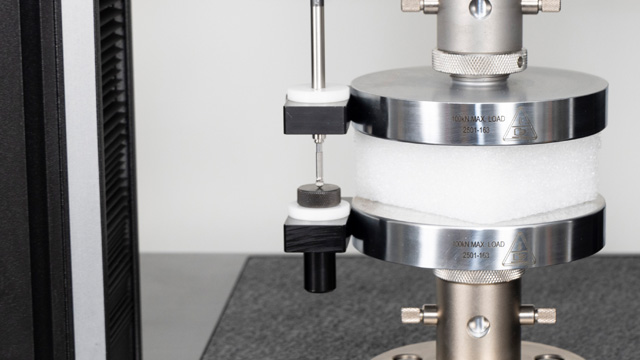
An extensometer is a precision instrument used in materials testing to measure the deformation (strain) of a specimen under applied load. It detects small changes in gauge length — the defined distance between two reference points on the specimen — and converts that displacement into strain data. Extensometers are used in tensile, compression, and flexure testing to generate accurate stress-strain curves and determine mechanical properties such as Young's modulus, yield strength, and elongation at break.

Choosing the Right Extensometer

Selecting the right extensometer depends on your material, specimen geometry, test standard, and throughput goals. The three main types Instron offers each have distinct advantages — use the guide below to identify the best fit for your application.


Most Common

Clip-On Extensometers

Mechanical extensometers that clip directly onto the specimen via knife-edges or pivot arms. They measure strain by detecting changes in gauge length through a strain gauge or LVDT sensor.

Best For

Low-Volume Testing | Poisson's Ratio | High-Temperature | Rigid Materials

Key Considerations

High accuracy across a wide strain range
Works with standard flat and round specimens
Cost-effective for low-volume labs
May need to be removed before specimen fracture to avoid damage
Not suitable for very thin or delicate specimens


Automated

Automatic Contacting Extensometers

A motorised extensometer that automatically attaches to and releases from the specimen, enabling high-throughput testing without manual handling between specimens.

Best For

High-Throughput | Automated Test Systems | Axial and Transverse

Key Considerations

Eliminates manual attachment — reduces operator fatigue and error
Optional auto-detach before fracture
Consistent positioning across all specimens
Less convenient to move between testing systems compared to clip-ons
Not compatible with temperature chambers


Most Versatile

Non-Contacting Extensometers

Video extensometers are camera-based systems that optically track gauge marks or contrasting features on the specimen surface, measuring strain without any physical contact.

Best For

High-Throughput | Almost Any Material | High-Temperature | 2D Strain Mapping | Axial and Averaged Transverse | Closed-Loop Strain Control | r-Value

Key Considerations

No contact — no influence on specimen behavior
Single device suitable for almost any material
Can measure axial and transverse strain simultaneously
Requires good contrast between gauge marks and specimen

Quick Selection Guide

If your requirement is… Recommended extensometer type
Testing thin films or fragile materials that a clip-on would damage Video extensometer
High‑throughput automated test cell with minimal operator involvement Automatic contacting or video extensometer
Measuring both axial and transverse strain Automatic contacting or video extensometer
Tight budget with moderate throughput on standard specimens Clip‑on extensometer
Specimens that fracture explosively (i.e. composites) Video extensometer
Complying with ASTM or ISO standards See our FAQ below
AVE3 Advanced Video Extensometer

Non-Contacting Video Extensometers

A video extensometer is a camera-based extensometer that optically tracks gauge marks or contrasting features on the specimen surface to measure strain without physical contact. Capable of measuring strain on almost any material, video extensometers are particularly well suited for soft, delicate, or highly compliant materials where contact would influence the specimen's behavior or damage the device.

Recommended Use Cases

Multiple Gauge Lengths and Varied Elongations | High-Volume Testing | Ambient and Non-Ambient Applications | Axial and Transverse Strain Measurement | r-Value Determination | Closed-Loop Strain Control

Common Standards
Materials and Industries
Available Models


For Universal Testing Systems

AVE3 Advanced Video Extensometer

Instron's highest-performance video extensometer for universal testing machines, designed for demanding applications and advanced materials research requiring the highest levels of accuracy and repeatability.

Features & Capabilities

Patent-pending CDAT airflow technology for up to 5× accuracy improvement
Supports closed-loop strain control
Single-point or optional averaged transverse strain measurement
Digital image correlation (DIC) capable for full field strain and displacement mapping
500 Hz data capture rate


For Universal Testing Systems

SVE3 Standard Video Extensometer

Instron's standard video extensometer for universal testing machines, delivering reliable and accurate non-contact strain measurement for everyday materials testing and research applications.

Features & Capabilities

Patented cross-polarized lighting technology reduces errors from lighting fluctuations
On-board measurement technology processes data in real-time
Allows for testing at ambient, high, and low temperatures
200 Hz data capture rate
Does not support strain control, transverse strain, or digital image correlation (DIC)

AutoX750 Automatic Contacting Extensometer

Automatic Contacting Extensometers

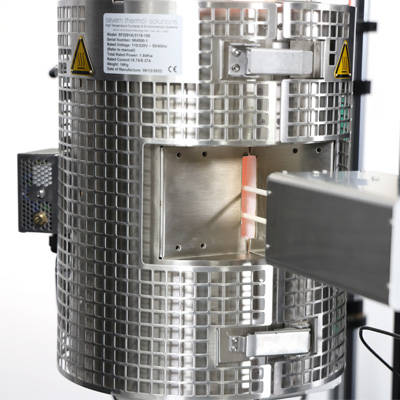
An automatic contacting extensometer is a motorized strain measurement device that automatically attaches to and detaches from the specimen under software control, eliminating manual handling between tests. It can be configured to remain on the specimen through fracture or to retract before failure, protecting the sensor where the test warrants it. Suited to high-throughput production testing and automated test cells where consistency, operator safety, and cycle time are critical.
Recommended Use Cases

Multiple Gauge Lengths and Varied Elongations | High-Volume Testing | Axial and Transverse Strain Measurement | Closed-Loop Strain Control | r-Value Determination | Ambient Testing Only

Common Standards
Materials and Industries

Plastics | Metals | Composites | Elastomers

Available Models


For Universal Testing Systems

AutoX750 Axial Automatic Contacting Extensometer

Instron's automatic contacting extensometer for universal and static hydraulic testing systems, delivering high-accuracy axial strain measurement with automatic gauge length positioning for high-throughput metals, plastics, and composites testing.

Features & Capabilities

Automatic arm attachment and gauge length positioning eliminates manual setup between specimens
Arms can remain on specimen through failure or be configured to detach beforehand
Closed-loop strain control compliant with ISO 6892-1 Method A1 and ASTM E8 Method B
Meets ISO 9513, ASTM E83, and ISO 527-1 accuracy requirements


For Universal Testing Systems

AutoXBiax Biaxial Automatic Contacting Extensometer

Instron's automatic biaxial contacting extensometer for universal testing systems, combining all the capabilities of the AutoX750 with simultaneous transverse strain measurement — enabling axial strain and plastic strain ratio (r-value) to be captured in a single test.

Features & Capabilities

Includes all features from AutoX750, plus:
Simultaneous axial and transverse strain measurement — no separate transverse extensometer required
Automatic centering improves repeatability by positioning in the center of your gauge length
Determine plastic strain ratio (r-value) in sheet metals to ISO 10113, ASTM E517, and JIS Z 2254

Static Axial Clip-On Extensometer

Clip-On Extensometers

Clip-on extensometers attach directly to the specimen via spring-loaded knife-edges, offering a precise and cost-effective solution for strain measurement across a wide range of materials and test types. Instron's clip-on range spans static and dynamic axial, averaging, biaxial, and transverse configuration — covering everything from routine static tensile testing through to high-cycle fatigue, compression, flexure, and full material characterization requiring simultaneous multi-axis strain measurement.
Recommended Use Cases

Low-Volume Testing | Poisson's Ratio | Testing Up to 200°C

Common Standards
Materials and Industries
Clip-On Extensometer Types


For Universal Testing Systems

Static Axial Clip-On Extensometers

Instron's standard clip-on extensometers for static tensile, compression, and flexure testing, delivering accurate axial strain measurement on metals, rigid plastics, and composites to ISO 6892-1, ASTM E8, and ISO 527.


For Dynamic & Universal Testing Systems

Dynamic Axial Clip-On Extensometers

Instron's clip-on extensometers for cyclic and fatigue testing applications, delivering stable and accurate axial strain measurement over high cycle counts to ASTM E606 and ISO 12106.


For Universal Testing Systems

Averaging Axial and Biaxial Clip-On Extensometers

Instron's averaging and biaxial clip-on extensometers for tensile and compression testing of metals, composites, and rigid plastics, delivering mean axial strain measurement for precise modulus and Poisson's ratio determination.


For Universal Testing Systems

Transverse Clip-On Extensometers

Instron's transverse clip-on extensometers for tensile testing, delivering accurate lateral strain measurement perpendicular to the loading axis for Poisson's ratio determination to ASTM E132 and ISO 527.

Long Travel Extensometers


For Universal Testing Systems

Designed to measure strain across very large displacements, long travel extensometers accommodate materials that undergo significant elongation before fracture — such as rubber and other elastomers. Where a standard clip-on extensometer would bottom out at its maximum travel, a long travel design maintains accurate strain measurement throughout the full test.

Recommended Use Cases

Elastomers | ISO 37 | ASTM D412 | Elongations at Break Exceeding 100% | Ambient Testing Only

High-Temperature Extensometers


For Universal Testing Systems

Designed for use inside furnaces and environmental chambers, high-temperature extensometers measure strain on specimens tested at elevated temperatures — up to 1200°C. The ceramic probe transmits displacement from the hot specimen to sensors located outside the heating zone, protecting measurement accuracy.

Recommended Use Cases

Metals | Aerospace Alloys | Ceramics | Energy Industry | ISO 6892-2 | ASTM E21 | ISO 204

Other Extensometers


For Universal Testing Systems

Compression Deflectometers (LVDT)

Instron's LVDT-based deflectometers for compressive property testing, delivering accurate specimen deflection measurement independent of machine compliance on plastics, foams, and composites to ISO 604 and ASTM D695.


For Universal Testing Systems

Flexural Deflectometers

Instron's flexural deflectometer is a spring-loaded plunger used with a clip-on, automatic contacting, or video extensometer to measure specimen deflection during three and four-point bend tests to ISO 178 and ASTM D790.


For Universal Testing Systems

Crack Opening Displacement Gauges

Instron's COD gauges for fracture mechanics testing, delivering accurate crack opening displacement for fracture toughness determination on metals and structural alloys to BS 7448, ASTM E399, and ASTM E1820.


For Universal Testing Systems

Bonded Strain Gauge Adapters

Instron's bonded strain gauge adapters for strain gauge-based testing, enabling standard electrical resistance strain gauges to integrate directly with Instron signal conditioning and data acquisition hardware.

Why Instron

Instron has been designing and manufacturing materials testing equipment for over 80 years, with extensometers developed and built in-house to the same standards our customers test to. Our engineers are active participants in ASTM and ISO standards committees — giving us direct insight into evolving test requirements and ensuring our equipment meets them from day one.

With one of the largest service and calibration organizations in the materials testing industry, we support customers at every stage — from installation and training through to ongoing verification and recalibration. It is why over 96% of Fortune 100 companies trust Instron equipment in their testing laboratories.

Frequently Asked Questions (FAQs)

Which extensometer does Instron recommend for my test standard?

The table below outlines the extensometer types Instron generally recommends for common test standards. These recommendations are intended as a starting point — the most suitable extensometer for your application will also depend on factors such as throughput goals, lab setup, and specimen geometry. If you'd like a more tailored recommendation, speak to one of our application experts.

Standard Application Recommended Extensometer
ISO 6892-1 Tensile Testing of Metals at Ambient Temperature Recommended: Video or Automatic Contacting Extensometer
Acceptable: Clip-On Extensometer
ISO 6892-2
ASTM E21
Tensile Testing of Metals at Elevated Temperature Recommended: High-Temperature Extensometer
ASTM E8/E8M Tensile Testing of Metallic Materials Recommended: Video or Automatic Contacting Extensometer
Acceptable: Clip-On Extensometer
ISO 12135
ASTM E399
Fracture Toughness of Metals Recommended: Crack Opening Displacement Gauge
ISO 527-2
ASTM D638
Tensile Properties of Plastics Recommended: Video or Automatic Contacting Extensometer
Acceptable: Clip-On Extensometer
If testing for Poisson's ratio, a transverse or biaxial clip-on extensometer is required.
ISO 178
ASTM D790
Flexural Properties of Plastics Recommended: Video or Automatic Contacting Extensometer
Acceptable: Clip-On Extensometer
Each extensometer listed above must be used in conjunction with a flexural deflectometer for this test.
ASTM D3039 Tensile Properties of Polymer Matrix Composites Recommended: Video Extensometer
Acceptable: Clip-On Extensometer or Strain Gauge
If testing for Poisson's ratio, a transverse or biaxial clip-on extensometer is required.
ISO 37
ASTM D412
Tensile Properties of Rubber and Elastomers Recommended: Video Extensometer
Acceptable: Long Travel Extensometer

For more detail on individual test standards and extensometer requirements, explore Instron's library of ASTM and ISO standard guides.

When to use an extensometer?

What is gauge length and how do I choose the right one?

Can I leave an extensometer on the specimen through fracture?

What extensometer do I need for testing rubber or elastomers?

How is an extensometer calibrated and what accuracy class do I need?

What is the difference between an axial and a transverse extensometer?

What is an automatic contacting extensometer and when should I use one?

Can one extensometer be used across multiple gauge lengths and materials?

What is the difference between a strain gauge and an extensometer?

What are common extensometer errors?

Does an extensometer measure true or engineering strain?

Not sure which extensometer is right for your application?

SVE3 Standard Video Extensometer

SVE3 Standard Video Extensometer

SVE3 Standard Video Extensometer

Non-Contact Strain Measurement for Routine Testing

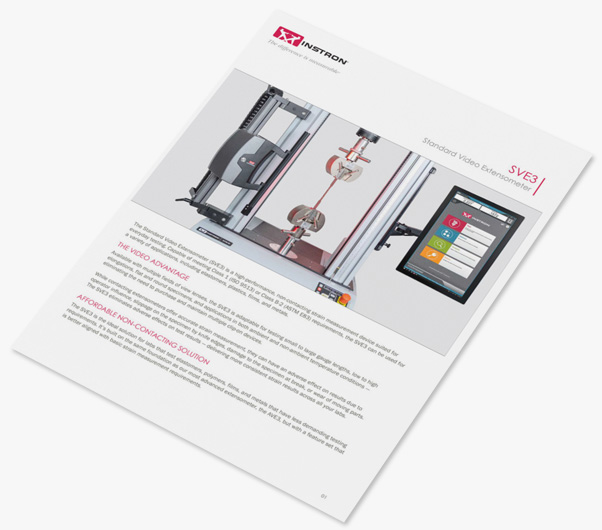
The SVE3 Standard Video Extensometer is a non-contact strain measurement solution designed for routine materials testing. It can be configured to meet ISO 9513 Class 1 and ASTM E83 Class B-1* and B-2 requirements, and supports a wide range of standard applications involving elastomers, plastics, films, and metals.

With multiple field‑of‑view lens options, the SVE3 adapts easily to different gauge lengths, elongation ranges, specimen geometries, and test environments. By eliminating physical contact with the specimen, it removes common sources of error such as slippage, operator influence, and damage at break — delivering more consistent results across labs.

While the AVE3 is Instron’s most advanced video extensometer for demanding applications, the SVE3 is built on a shared core platform and applies a focused feature set optimized for standard strain measurement requirements and routine testing workflows.

1 For gauge lengths greater than 30 mm

Key Benefits

  • Non-contact strain measurement eliminates slippage, operator influence, and specimen damage
  • Designed for everyday testing with consistent, repeatable results across labs
  • Flexible lens options support a wide range of gauge lengths and elongations
  • Reliable performance in ambient and temperature‑controlled testing
  • Seamless Bluehill® Universal integration with real‑time data processing

Application Range

Materials: Elastomers, plastics, films, and metals

Loading types: Tensile, compression, and bend

Standards: ASTM D412, ISO 37, ASTM D638, ISO 6892, ASTM E8/E8M, and more

Test environments: Ambient, high‑, and low‑temperature conditions

System compatibility: Works with nearly any Instron testing system

SVE3 vs. AVE3 Comparison

Standard vs. Advanced Video Extensometry

SVE3
Standard Video Extensometer
AVE3
Advanced Video Extensometer
Lenses - 4 Field of View Options
Factory‑configured, self‑identifying lenses ensure fast setup and consistent strain measurement.
Patented Dynamic Cross‑Polarizing Lighting
Automatically optimizes illumination for clear, reliable specimen mark tracking.
CDAT Airflow Technology (Patent Pending)
Reduces environmental disturbances to improve measurement accuracy and data stability.
Strain Rate Control
Supports closed‑loop strain control compliant with ISO 6892 and ASTM E8/E8M.
Transverse Capabilities
Single point transverse strain or averaged transverse — recommended for r-value determination per ISO 10113 and ASTM E517
Digital Image Correlation (DIC)
Record images in software for full-field strain maps of your specimens that are synchronized with your Bluehill® Universal test data
Data Capture Rate
High‑speed data capture ensures accurate strain measurement during dynamic testing.
200 Hz 500 Hz

If your testing requires advanced control, higher data capture rates, or enhanced accuracy, Instron recommends the AVE3 Advanced Video Extensometer.

Frequently Asked Questions (FAQs)

What types of materials can the SVE3 be used to with?

The SVE3 is commonly used to measure strain in elastomers, plastics, films, and metals, making it suitable for a wide range of routine laboratory tests.

What testing standards does the SVE3 meet?

What is the difference between the SVE3 and the AVE3?

What are the advantages of non-contact video extensometry?

What types of tests can be performed with the SVE3?

Can the SVE3 be used in temperature‑controlled testing?

What lens options are available for the SVE3?

See How the SVE3 Can Optimize Your Strain Measurement

Reliable Strain Measurement — Without Contact

Testing Accessories » AVE3 Advanced Video Extensometer » Reliable Strain Measurement — Without Contact

Reliable Strain Measurement — WITHOUT Contact

Non‑contacting extensometry gives labs a faster, safer, and highly versatile way to capture strain — while still meeting the strict accuracy requirements of today’s test standards. It is a confident, modern alternative to clip‑on extensometers for labs looking to streamline workflows and reduce equipment handling.

A Standards Compliant Alternative to Clip-Ons

Clip on extensometers remain trusted and widely used — and for good reason. But many labs now choose non-contacting solutions because they offer equivalent standards compliance with significant workflow advantages.

The AVE3 Advanced Video Extensometer meets ISO 9513 and ASTM E83 requirements, making it a fully compliant replacement for clip ons in most testing programs.

You’re not compromising accuracy — you’re simplifying how you achieve it.

Row edge-slant Shape Decorative svg added to top
Row edge-slant Shape Decorative svg added to bottom
Covalent Logo

Quote Icon

“The AVE3 has streamlined our workflow by eliminating the need to manage a separate contact extensometer for each gauge length...helping us improve turnaround time, increase testing speed, and offer more competitive pricing to customers.”

Why Labs Are Confident Going Non-Contacting

AVE3 Icon

Broad Range with One Device

Supports small to large gauge lengths, low to high elongations, and diverse materials including plastics, metals, composites, biomaterials, and films.

Meets Standards Icon

Meets Global Standards

A single device satisfies ISO 9513 and ASTM E83 requirements, reducing the need for multiple clip-on devices.

Safe Icon

Safe Through Failure

Because it never touches the specimen, the AVE3 can measure strain all the way through break without equipment risk.

Faster Icon

Faster, Touch-Free Strain Measurement

No attachment, no alignment, no removal — simply mark the specimen and run the test.

Low Maintenance Icon

Low Maintenance

No knife edges, no wear surfaces, and no moving parts to manage.

Why Choose the AVE3

The AVE3 Advanced Video Extensometer delivers the accuracy labs expect, combining non‑contact measurement flexibility with expanded strain visualization and analysis capabilities.

AVE3 Video Icon

Micron-level strain measurement for tensile, compression, and bend testing

500 Hz Icon

500 Hz real-time strain measurement for high-speed test applications

AverEdge32 Icon

Optional AverEdge32™ averaging improves transverse strain repeatability and r‑value determination

Digital Image Correlation Icon

Optional digital image correlation (DIC) enables full-field strain and displacement mapping

Your Workflow, Your Choice

Clip-on and non-contacting extensometers have their place — but if your priority is efficiency, versatility, and consistency, non-contacting offers a clear path forward.

PRIORITY CLIP-ON NON-CONTACTING VIDEO
ISO 9513 / ASTM E83 COMPLIANCE   Compliant   Compliant
SETUP SPEED   Manual steps required   Immediate, no attachment setup
FAILURE BEHAVIOR   May require removal before break   Safe through failure
GAUGE LENGTH RANGE   Multiple devices often needed   One device, wide coverage

Test With Confidence — and WITHOUT Contact

The AVE3 gives labs a standards compliant, low-maintenance alternative to clip-ons — with the speed and safety of a fully non-contacting workflow.

Streamline Your Strain Measurement — Talk to Us About the AVE3

Furnaces for Universal Testing Systems

Testing Accessories » Environmental Chambers and Furnaces » Furnaces » Furnaces for Universal Testing Systems

Our standard furnaces, mounts, grips, and load‑string assemblies for universal testing systems support high‑temperature testing up to 1200°C in air, providing stable thermal performance and reliable load transfer for a wide range of materials. For applications requiring temperatures beyond this range or unique furnace dimensions, our Engineered Solutions team can develop customized high‑temperature systems tailored to your specific testing needs.

1200°C Three-Zone Split Tube Furnace with High Temperature Extensometer
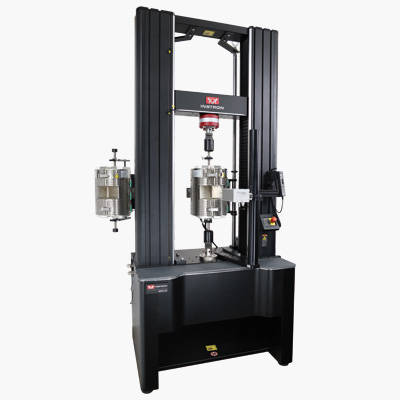
1200°C Three-Zone Split Tube Furnace with High Temperature Extensometer 68FM Universal Testing System with Dual Furnaces

1200°C Three-Zone Split Tube Furnace

Catalog No. 3119-160

This three-zone split tube furnace features a side entry extensometer port and is manufactured with a wire-wound element for maximum operation up to 1200°C (2200°F). The elements are uniquely formed to provide optimum temperature uniformity, ensuring conformance with testing standards such as ASTM E21ISO 6892-2, EN10002-5,and EN2002-2. The top and bottom furnace endplates are durable, provide excellent insulation, and include a 20 mm (0.787 in) diameter hole for use with pull rods.

Specifications
Specimen Temperature Range 200 - 1050°C (392 - 1922°F)
Overall Heated Length 300 mm (11.81 in)
Interior Diameter 75 mm (2.95 in)

Mounting Brackets

Mounting brackets are used to securely attach the furnace to the test system.

Specifications
Description Catalog No.
Floor Model Standard Furnace Mounting  A standard 3-knuckle design furnace mounting that allows for manual adjustments. CP119938
Floor Model Advanced Furnace Mounting  The advanced mounting allows for quick and easy fine adjustments of the vertical position of the furnace as well as parallelism to the load string. CP107737

Temperature Control System
Temperature Control System Temperature Control System Temperature Control System

Three-Zone Temperature Control Systems

Catalog No. 3119-160

Temperature control systems are designed for controlling the heat output of furnaces. The control systems can be configured to operate nearly any furnace with any one of several different thermocouples types. Three zone control systems are designed for heat-only furnaces with three separate zones of heating elements, and typically three different thermocouples to control those zones.

Specifications
Description Catalog No.
Type K Control System 3119-960
Type R/S Control System 3119-962
Stepdown Transformer  The wall mount 3KVA stepdown transformer assembly provides the ability to operate the 120V, single phase Model TCS3203 3-zone furnace control system from 190/200/208/220V, 50/60Hz power sources. W-C015-TRAN

Quick-Change Adapters

Quick-Change Adapters

Quick-change adapters are typically used in hot tensile applications to provide simplified load train installation. They consist of a button-head washer that is threaded onto the room temperature end of a pull rod. The washer and pull rod are then inserted through a slot in the adapter body.

Specifications
Force Capacity Effective Length Catalog No.
90 kN 6.43 in W-7556M4
10 kN 5.58 in W-7556M2

3117-025 | Tension-Only Holders

Threaded End Specimen Holders

Catalog No. W-7551-C

Threaded-end specimen holders made of Inconel 713-C rated for a maximum temperature of 1100 Deg. C (2000 Deg. F).

Specifications
Specimen Thread Size Catalog No.
Metric M6 x 1.0 W-7551-CM1
Metric M8 x 1.0 W-7551-CM2
Metric M8 x 1.25 W-7551-CM3
Metric M10 x 1.5 W-7551-CM4
Metric M12 x 1.5 W-7551-CM5
Metric M12 x 1.75 W-7551-CM6
Metric M14 x 2.0 W-7551-CM7
Metric M16 x 1.5 W-7551-CM8
Metric M16 x 2.0 W-7551-CM9
Metric M18 x 2.5 W-7551-CM10
Metric M19 x 1.5 W-7551-CM11
US Customary 10-24 W-7551-CU1
US Customary 10-32 W-7551-CU2
US Customary 1/4-20 W-7551-CU3
US Customary 1/4-28 W-7551-CU4
US Customary 5/16-24 W-7551-CU5
US Customary 5/16-18 W-7551-CU6
US Customary 3/8-16 W-7551-CU7
US Customary 3/8-24 W-7551-CU8
US Customary 7/16-14 W-7551-CU9
US Customary 1/2-13 W-7551-CU10
US Customary 5/8-11 W-7551-CU11
US Customary 3/4-10 (Type R3f) W-7551-CU12

W-7554 | High Temperature Tension Wedge Grips

High Temperature Tension Wedge Grips

Catalog No. W-7554

One set (2) wedge grip specimen holders made of Hastelloy X. Holders designed for tension-only loading and may be equipped to accept flat specimens from 1.13 mm to 3.18 mm thick (0.005 in to 0.125 in) by 12.7 mm to 22.225 mm wide (0.5 in to 0.875 in). Design of holders requires drilling of holes in specimen end tabs for initial loading and jaw alignment. Centering pin diameter 4.1148 mm (0.162 in). Holders are 70mm (2.75 in) long by 38mm (1.375 in) diameter contain 0.75-10f-RH thread for attachment to pull rods. Jaw inserts ordered separately, selected based on thicknesses of specimens to be tested. See W-7554-A1, -A3, and -A4 below for available inserts and corresponding thickness ranges.

Specifications
Specimen Diameter Pin 4.1148 mm (Pin 0.162 in)
Specimen Thickness 1.13 - 3.18 mm (0.005 - 0.125 in)
Specimen Width 12.700 - 22.225 mm (0.500 - 0.875 in)
Temperature Rating 926°C (1700°F)

High Temperature Wedge Jaw Inserts

One set (two pairs) of high temperature wedge jaw inserts for use with the W-7554 high temperature tension wedge grips.

Specifications
Type Specimen Thickness Temperature Rating Catalog No.
Smooth-Faced 0.13 to 1.0 mm (0.005 to 0.040 in) 926°C (1700°F) W-7554-A1
Serrated-Faced 1.0 to 2.0 mm (0.040 to 0.078 in) 926°C (1700°F) W-7554-A3
Serrated-Faced 2.0 to 3.18 mm (0.078 to 0.125 in) W-7554-A4
noimageavailable_instronsearch_white

High Temperature Wedge Jaw Inserts

Pin and clevis specimen holders are designed for flat specimens that have a hole in each end. The specimen fits into the slot of the holder and is secured by the pin.

Note: Using a specimen that is smaller (thinner) than the slot width specified for a given set of holders can result in misalignment of the specimen.

Specifications
Material Iconel 713-C
Temperature Rating 1100°C (2000°F)
Upper and Lower Fittings US Customary 3/4 in-10 (Type R3f)
Coupling Length 69.9 mm (2.75 in)
Coupling Diameter 28.6 mm (1.125 in)
Available Sizes
Size Catalog No.
1 mm slot, 3 mm pin CP112249
2 mm slot, 3 mm pin CP112250
3 mm slot, 4 mm pin CP112251
4 mm slot, 4 mm pin CP112252
6 mm slot, 6 mm pin CP112253
10 mm slot, 10 mm pin CP112255

Fatigue Rated Mechanical Wedge Action Tensile Grips

Testing Accessories » Tensile Grips » Fatigue Rated Mechanical Wedge Action Tensile Grips

Fatigue Rated Mechanical Wedge Action Tensile Grips

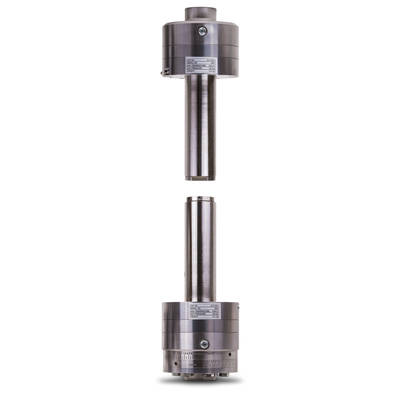
Instron mechanical wedge action grips may be used in static or dynamic materials testing applications, interchangeable wedge-shape grip faces accommodating either flat or round specimens.

The grip is designed to allow test specimens to be securely gripped without introducing axial pre-loading to the specimen. This is achieved by using jaw faces that move in a horizontal direction only, relative to the specimen.

Principle Of Operation

Each grip is mechanically operated, gripping force being applied via movement of the grip body relative to the wedge shaped jaw faces. This movement is induced by the tightening of four socket cap screws on the underside of the grip head.

Each jaw face is located in the grip body by two extension springs, which allow the jaw faces to release the specimen after testing.

The grip body wedge area is fitted with jaw guides, to ensure that the jaw faces remain square to each other and to the specimen.

Products

Out of Production Static Hydraulic Testing Systems

Testing Systems » Out of Production Systems » Out of Production Static Hydraulic Testing Systems

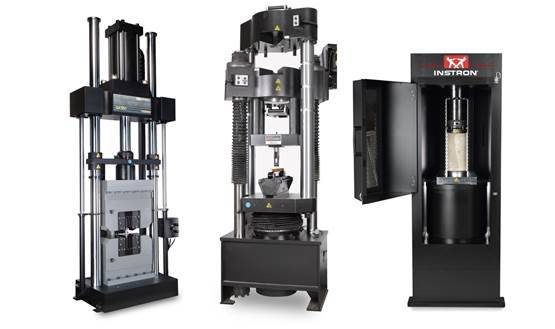
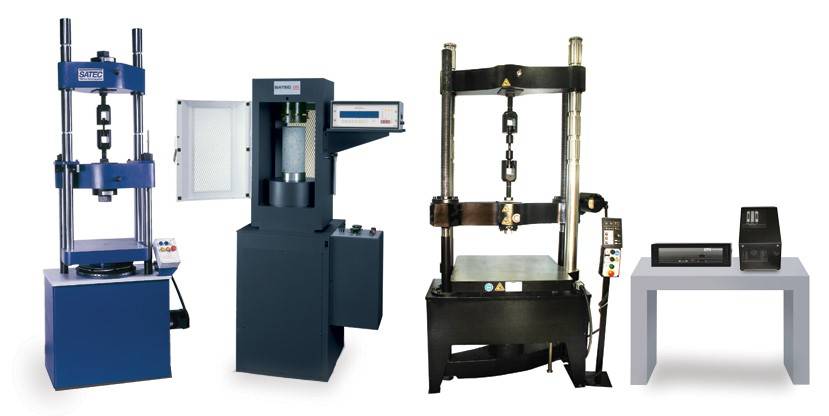
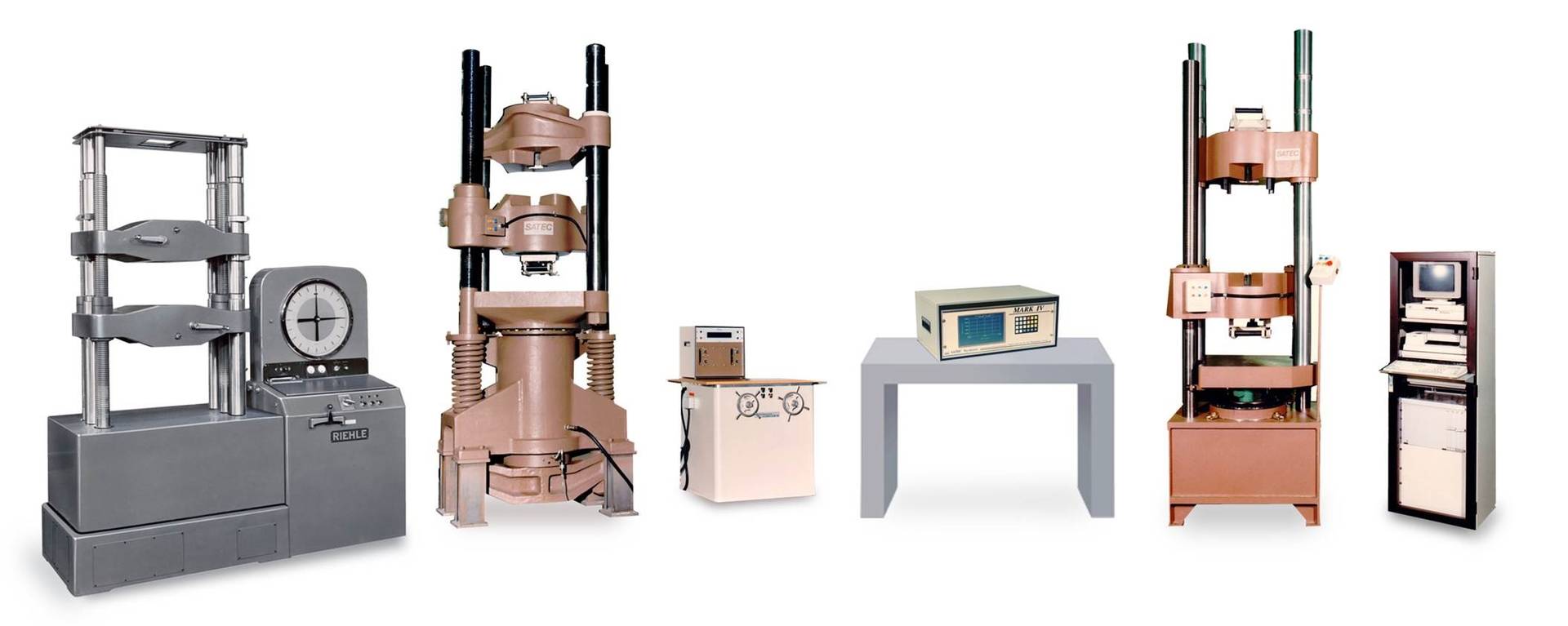
This page lists a selection of hydraulic Universal Testing Machines manufactured by Instron since our founding in 1946, as well as from SATEC whom Instron acquired in 1998. Thousands of these systems have been installed around the world including at 96% of the world’s largest manufacturing companies. Instron has a legacy of building systems that last for decades under severe operations conditions. In fact, the average age of an Instron machine that we service is 18 years. Given proper preventative maintenance, the physical load frame will last an indefinite period of time, but older systems benefit greatly by adding new operating software, or a complete electrical retrofit. Use the tables below to find your system and see what upgrade options are available. Some systems we just can’t retrofit due to parts shortages or obsolescence, and in these cases your local sales engineer can offer you a generous trade in offer.

SATEC Series Static Hydraulic Systems

Model Support Phase 
Phase 1 – Systems are in full production and tech support, parts, and software
are available.
Phase 2 – Systems are no longer manufactured. Tech support, service, parts and
software are available.
Phase 3 – Systems are no longer manufactured. Service is available but parts and
software may be limited.
Phase 4 – Systems are no longer manufactured. Service or parts are not
available.
Read more for full
details.
Software Upgrade Available  This is the latest version of
software that is capable of operating this system. Contact sales to discuss a software
upgrade for your system.
System Retrofit Available  EXTEND the system life and
capability of your Instron® testing system by upgrading the control system with
Instron’s most advanced electronics and software. Click
here to learn more
300DX 2 Contact Us Contact Us
300LX 2 Contact Us Contact Us
600LX 2 Contact Us Contact Us
HVL 2 Contact Us Contact Us
RD 2 Contact Us Contact Us
KN 2 Contact Us Contact Us
2294 3 Contact Us Contact Us
5590 3 Contact Us Contact Us
5591 3 Contact Us Contact Us
5592 3 Contact Us Contact Us
5593 3 Contact Us Contact Us
5594 3 Contact Us Contact Us
5595 3 Contact Us Contact Us
5596 3 Contact Us Contact Us
5597 3 Contact Us Contact Us
5598 3 Contact Us Contact Us
5599 3 Contact Us Contact Us
BTE 3 Contact Us Contact Us
CTL 3 Contact Us Contact Us
QC 3 Contact Us Contact Us
TC 3 Contact Us Contact Us
TVL 3 Contact Us Contact Us
BTE 4 Contact Us Contact Us
CT 4 Contact Us Contact Us
PT 4 Contact Us Contact Us
HVP 4 Contact Us Contact Us
Riehle 4 Contact Us Contact Us
Dartec 4 Contact Us Contact Us

Static Hydraulic System Control Electronics


Model Support Phase 
Phase 1 – Systems are in full production and tech support, parts, and software
are available.
Phase 2 – Systems are no longer manufactured. Tech support, service, parts and
software are available.
Phase 3 – Systems are no longer manufactured. Service is available but parts and
software may be limited.
Phase 4 – Systems are no longer manufactured. Service or parts are not
available.
Read more for full
details.
Software Upgrade Available  This is the latest version of
software that is capable of operating this system. Contact sales to discuss a software
upgrade for your system.
System Retrofit Available  EXTEND the system life and
capability of your Instron® testing system by upgrading the control system with
Instron’s most advanced electronics and software. Click
here to learn more
I Series 3 Contact Us Contact Us
5500 4 Contact Us Contact Us
Apex 4 Contact Us Contact Us
Vertex 4 Contact Us Contact Us
MATS I & II 4 Contact Us Contact Us
Mark I, II, III, IV 4 Contact Us Contact Us
Mark III-C 4 Contact Us Contact Us
Prolog 8802 4 Contact Us Contact Us
UTC 4 Contact Us Contact Us
CATS 4 Contact Us Contact Us
DI100 4 Contact Us Contact Us
DI-300 4 Contact Us Contact Us
Dartec 4 Contact Us Contact Us

Self-Tightening Eccentric Roller Tensile Grips

Testing Accessories » Tensile Grips » Self-Tightening Eccentric Roller Tensile Grips

SELF-TIGHTENING ECCENTRIC ROLLER TENSILE GRIPS

For Tensile Testing Thin Sheets, Films, Flexible Plastics, Rubber, and Elastomers

#image_title

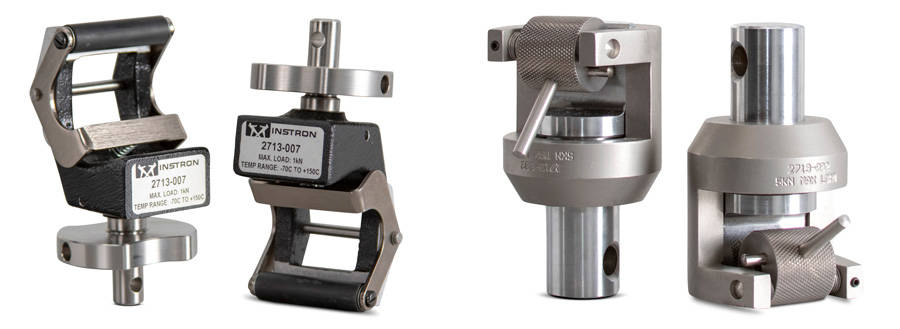
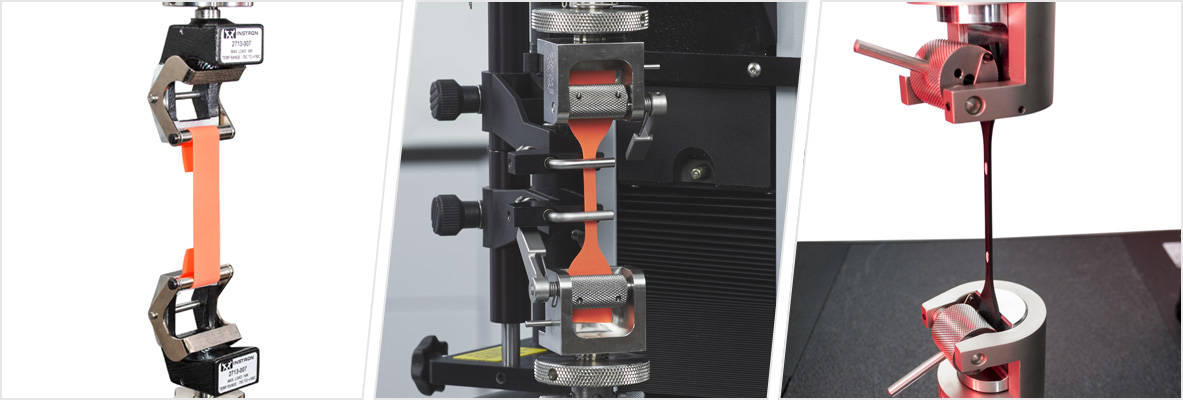
The self-tightening grips are primarily designed for the precision testing of elastomeric and other flexible materials exhibiting a large reduction in cross-section area under load. They provide excellent testing accuracy, positive non-slip gripping action and are quick and simple to use. The upper grip is counter balanced so that the specimen can be aligned with the load cell to eliminate non-axial forces.

AVAILABLE MODELS

1 kN - 5 kN Force Capacities

2713-007-01-02

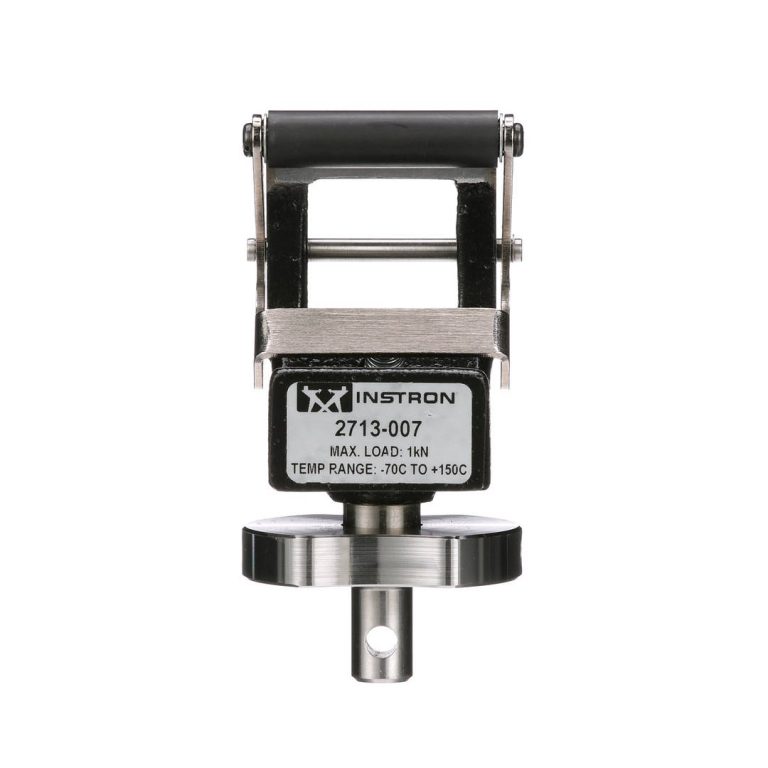
1 kN Model | 2713-007

2713-004-01-18

2 kN Model | 2713-004

2713-002-01-01

5 kN Model | 2713-002

Principle of Operation

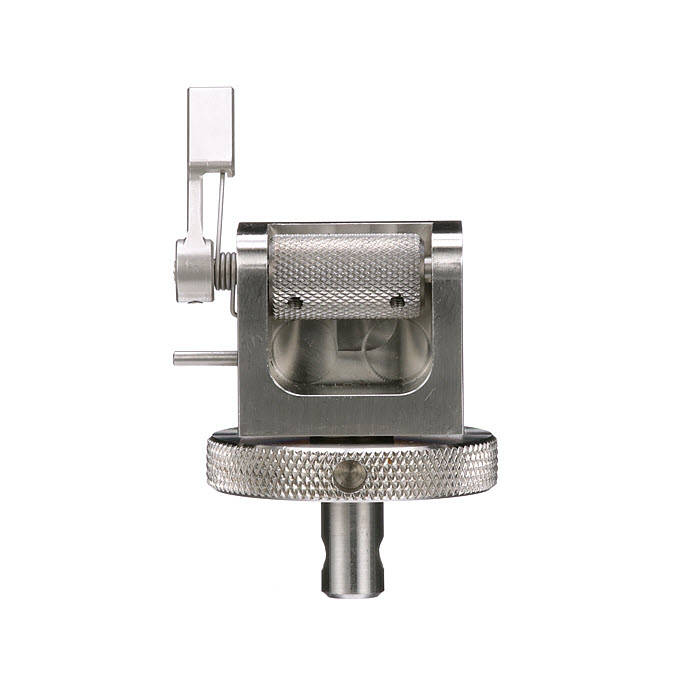
The self tightening grip uses an eccentric roller type clamping action. A single fast action lever reduces the time required to load specimens. Specimen insertion is extremely easy and the spring pressures of the roller bracket gives a positive non-slip action gripping force. This is sufficient to hold the material until a load is applied. The follow up action of the roller while under test prevents the specimen from slipping out of the grip as the load increases.

Specimen Loading: 1 kN Grips

Specimen Loading: 2 kN Grips

Application Range

  • Type of loading: tensile, static, and tension cyclic tests - not suitable for high cycle dynamic fatigue tests
  • Specimen materials: thin sheets, films, flexible plastic and elastomers
  • Specimen shapes: flat specimen with or without shoulder tab ends
Specifications
Catalog no. 2713-007 2713-004 2713-002
Force Capacity 1 kN 2 kN 5 kN
Maximum Specimen Width 43 mm 28 mm 28 mm
Temperature Range -70 °C to 150 °C -70 °C to 315 °C -70 °C to 315 °C
View Full Specifications Download Brochure Download Brochure Download Brochure

KEY FEATURES

Self-Tightening Eccentric Roller Grips

Self-Tightening Eccentric Roller Tensile Grips

Quick Loading

Fast action for rapid specimen insertion to increase testing throughput.

Non-Slip Grip

Positive, non-slip gripping action for accurate results.

Eccentric Roller

Eccentric roller type clamping action increases clamping force with applied force.

Ambient and Non-Ambient Testing

Designed for use in -70° C to 315° C (-94° F to 600° F) temperature ranges.

OTHER MODELS

Low-Force Grips

2713-006 Thin Film Grips

Thin Film Grips

2713-006 Series | 100 N Force Capacity
These grips are ideal for tensile testing natural rubber latex, elastomers, paper, and polymer films.

Wood Testing Fixtures

Wood Testing Fixtures

Testing Accessories » Wood Testing Fixtures

Characterization of wood materials requires a range of tests under different loading conditions, such as tensile, compression, shear, and flexure. Instron provides a range of high-performance wood testing fixtures that conform to the requirements of the appropriate ASTM, ISO, EN, JIS, and other testing standards.

Internal Bond Test Fixture Instron Catalog Number 2820-061
Internal Bond Test Fixture
Catalog Number 2820-061

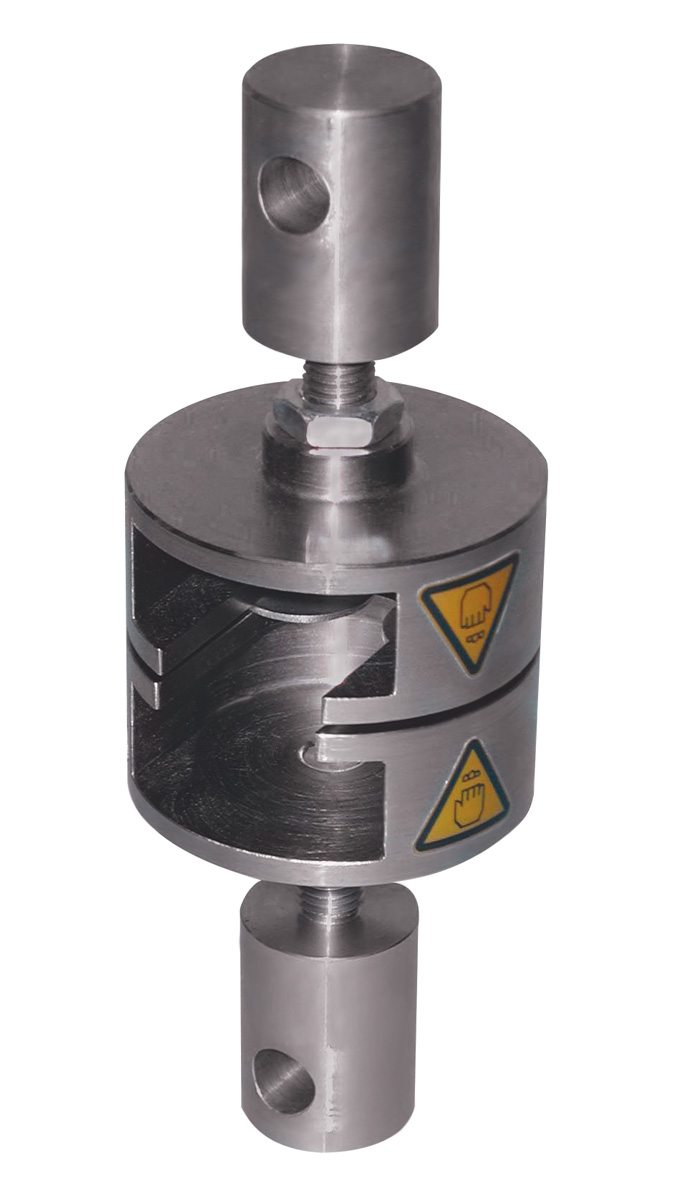
The internal bond test fixture is designed for testing the strength properties of wood or adhesive bonds in wood by tensile loading. The fixture consists of a self-aligning upper grip and a rotatable lower grip. Tensile loading is applied to the specimen via blocks bonded to the specimen itself. Simple clevis pin interfaces are used which allow quick and easy fitting and removal of the grips.

Overview
Force Capacity 10 kN
Recommended For Chipboard, fiberboard, etc.
Type of Loading Static
Specimen Shapes Rectangular
Compliance to Standards ASTM D1037-99, BS 5669-1979, JIS A5905-1994, JIS A5906-1983, JIS A5908-1994

More Info

Wood Flexure Fixtures

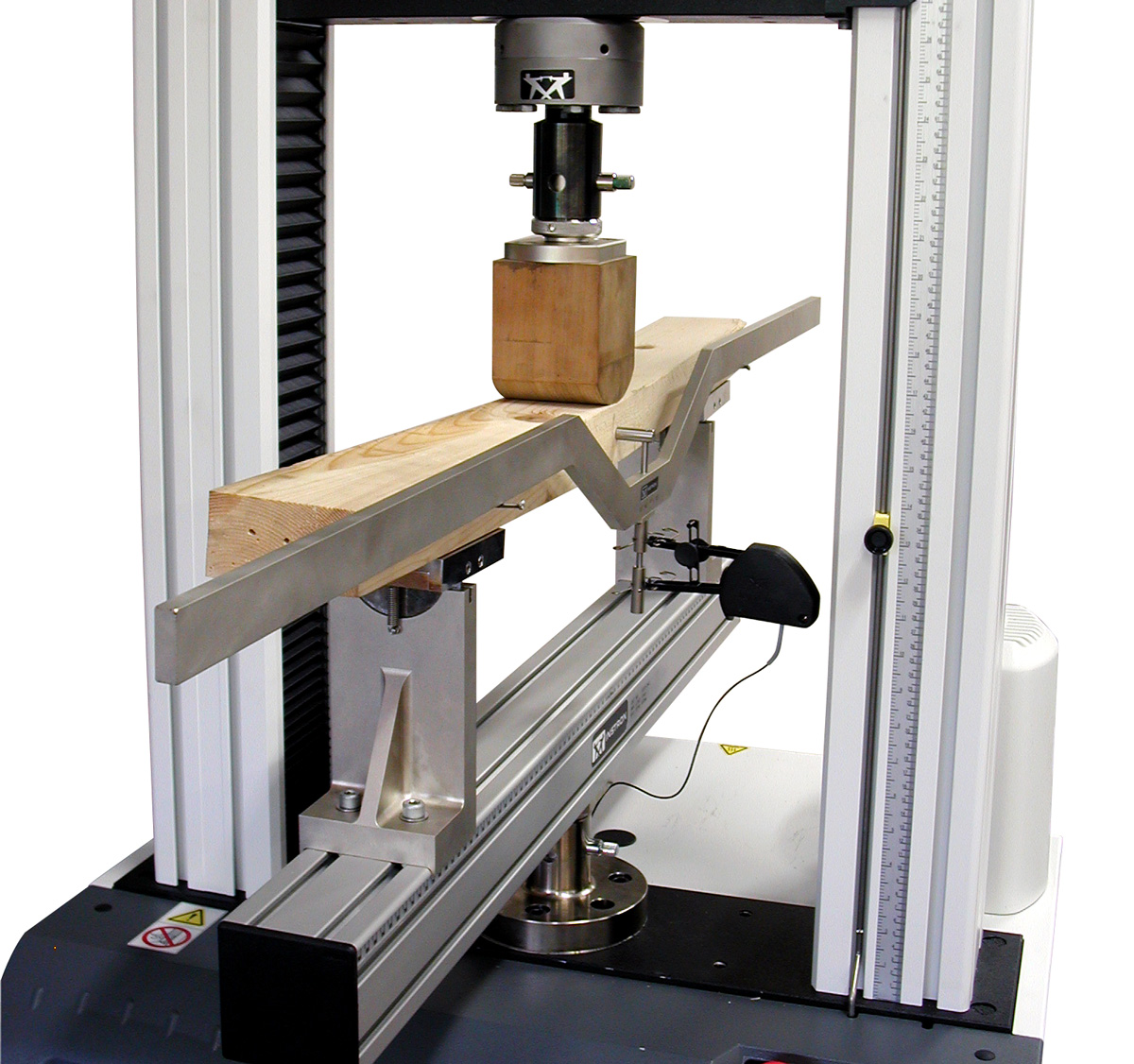
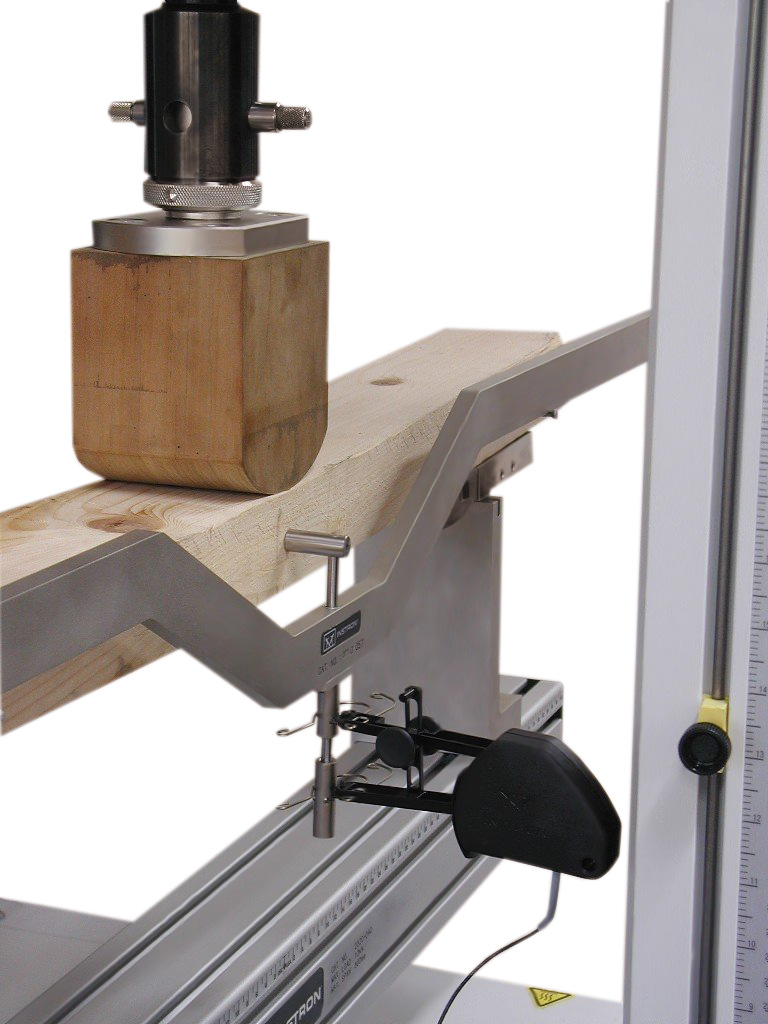
The 2820-04x Series flexure testing fixtures are available in multiple span sizes, force capacities, and are compatible with three and four-point anvil sets to meet a wide range of testing standards. These fixtures are ideal for testing MDF and fiberboard as well as natural timber. Specimens are supported by two anvils attached to a base beam. Force is applied either at the center (three-point bend) or at two points between the supporting anvils (four-point bend). Optional rolling and articulating anvil sets can support testing of warped specimens. Deflection of the specimen can be measured using the optional deflection measurement yoke (catalog no. 2820-057) and a suitable extensometer.

Lower Beams
Constructed of a high strength extruded allow, each lower beam includes a graduated scale for ease of adjusting the anvil span setting and meets the requirements of JIS A5905, JIS A5906, JIS A5908, JAS 112, JAS 601, BS 373, BS 5669, EN 310, EN 789, ISO 3133, ASTM D1037, and ASTM D143.

Force Capacity Maximum Span Catalog No.
10 kN 800 mm (31.5 in) 2820-040
50 kN 800 mm (31.5 in) 2820-041
50 kN 1200 mm (47.2 in) 2820-042

Four-Point Upper Beams
Upper beams are required for four-point flexure testing and each includes a graduated scale for ease of adjusting the anvil span setting. Capable of meeting the following testing standard requirements with the appropriate anvil sets: ISO 3349, JAS 112, JAS 601, EN 789.

Force Capacity Maximum Span Catalog No.
10 kN 300 mm (11.8 in) 2820-043
50 kN 610 mm (24 in) 2820-044

Anvil Sets

Description Testing Standards Catalog No.
3-Point Rigid Anvil Set
Upper and Lower: 20 mm dia.,100 mm wide
JIS A 5905, JIS A 5906, JIS A 5908, BS 5669 2820-045
3-Point Rigid Anvil Set
Upper: 30 mm dia., 100 mm wide
Lower: 15 mm dia., 100 mm wide
BS EN 310 2820-046
3-Point Rigid Anvil Set
Upper and Lower: 76 mm dia., 100 mm wide
ASTM D 1037 for specimens with thickness from 4 – 25 mm 2820-047
3-Point Rigid Anvil Set
Upper and Lower: 60 mm dia., 100 mm wide
ASTM D 1037 for specimens with thickness from 4 – 25 mm 2820-048
4-Point Rigid Anvil Set
Upper: 60 mm dia., 100 mm wide
Requires 2820-048 and Four-Point Upper Beam
ISO 3349 (4-Point) 2820-049
3-Point Anvil Set
Upper (Rigid): 30 mm dia., 100 mm wide
Lower (Rolling and Articulating): 30 mm dia., 70 mm wide
JAS 112 2820-052
4-Point Anvil Set
Upper (Rolling and Articulating): 30 mm dia., 70 mm wide
Requires 2820-052 and Four-Point Upper Beam
JAS 112 (4-Point) 2820-053
3-Point Anvil Set
Upper (Rigid): 30 mm dia., 300 mm wide.
Lower (Rolling and Articulating): 30 mm dia. 300 mm wide
JAS 601, EN 789 2820-054

More Info

Shear Fixture for Wood
Catalog Number 2820-060

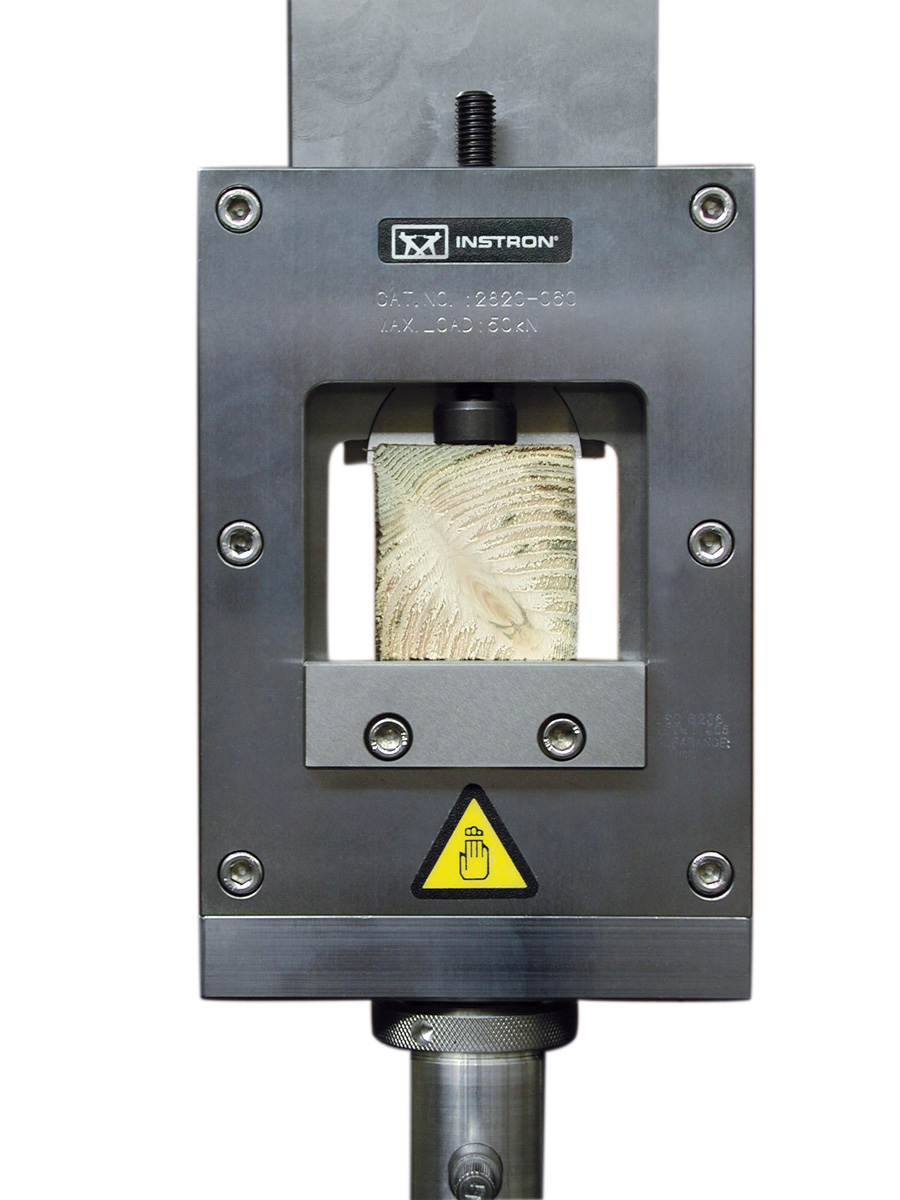
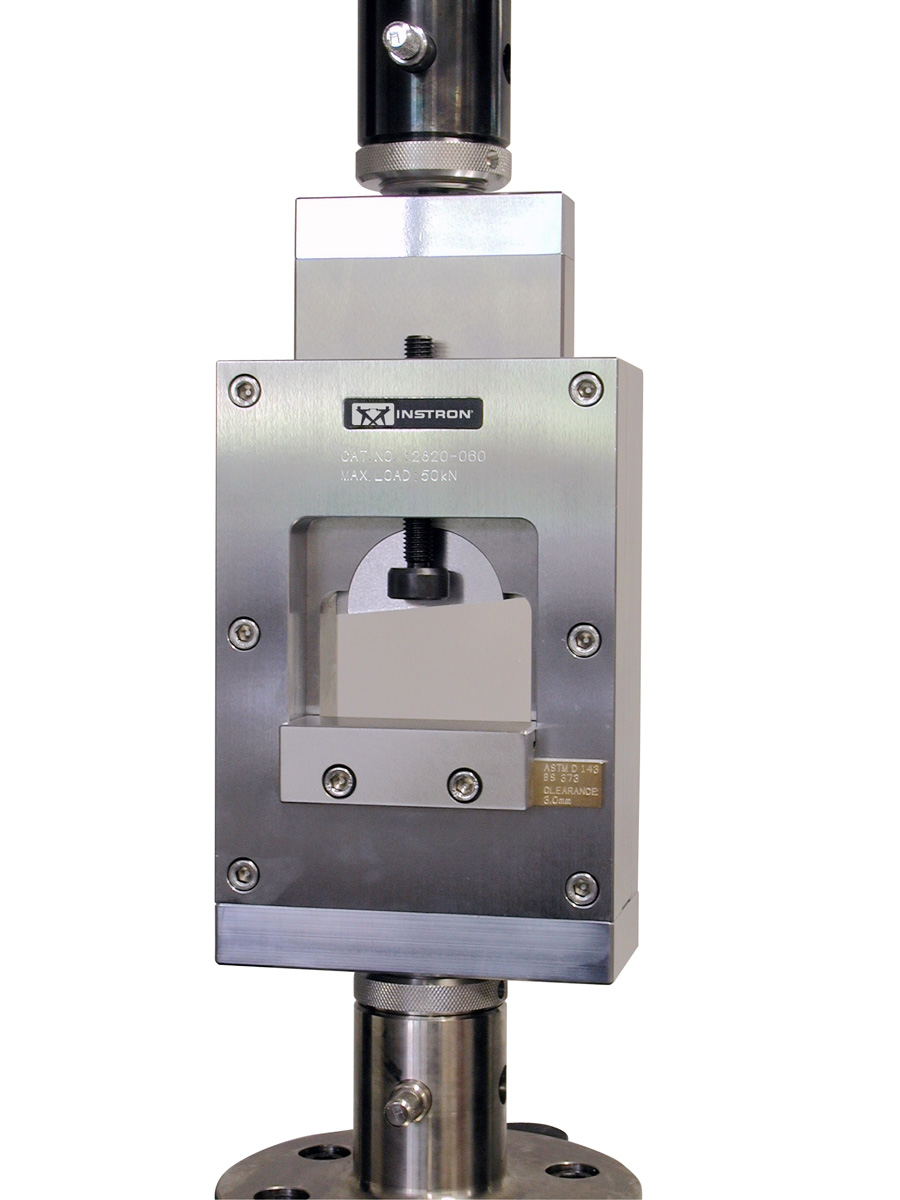
This fixture is designed for testing the shear strength properties of wood or adhesive bonds in wood by compression loading. The fixture consists of a high-strength steel body with a sliding, self-aligning anvil which is used to apply compressive loading to the specimen in shear. The shear line can be set at 0.0 mm, 2.0 mm or 3.0 mm by using shims. The shims are clearly engraved with the applicable standard and are easy and quick to change.

Overview
Force Capacity 50 kN
Type of Loading Static
Specimen Shapes Rectangular
Testing Standards ASTM D143-94, ASTM D905-98, ISO 6238:2001, JIS K 6802-1973, JIS Z 2117-1977, BS 373:1957, JAS 601-1974

More Info

Adhesive Bond Tension Test Fixture
Catalog No. S1-11861

Used to test adhesive bonds perpendicular to the surface.

Force Capacity 10 kN
Testing Standards ASTM D897-01

Contact Us for Details

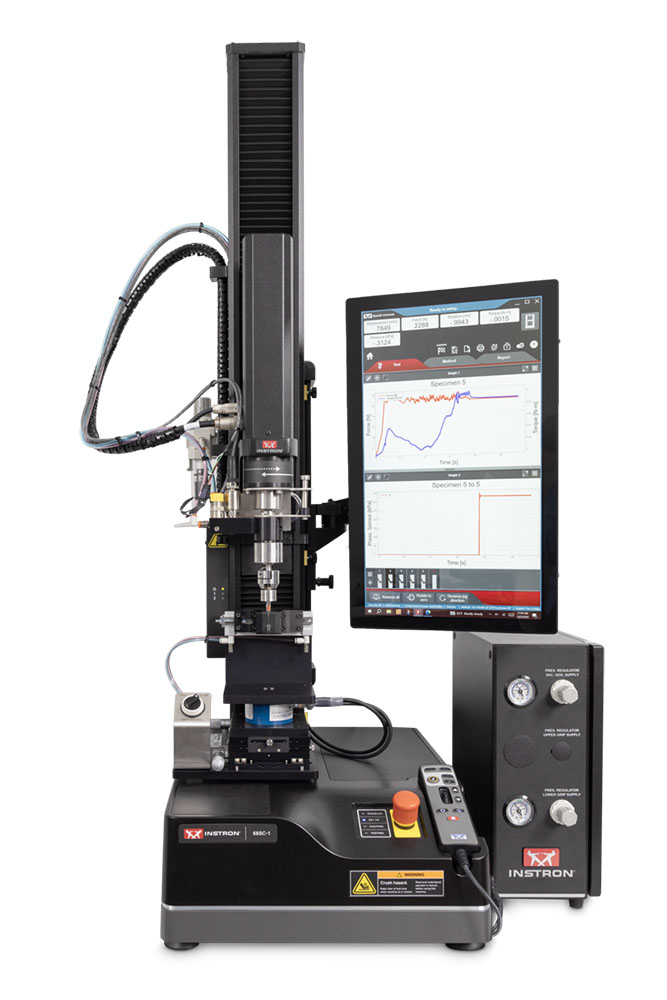
ISO 80369 Testing System

Testing Systems » Universal Testing Systems » ISO 80369 Testing System

ISO 80369 Testing System

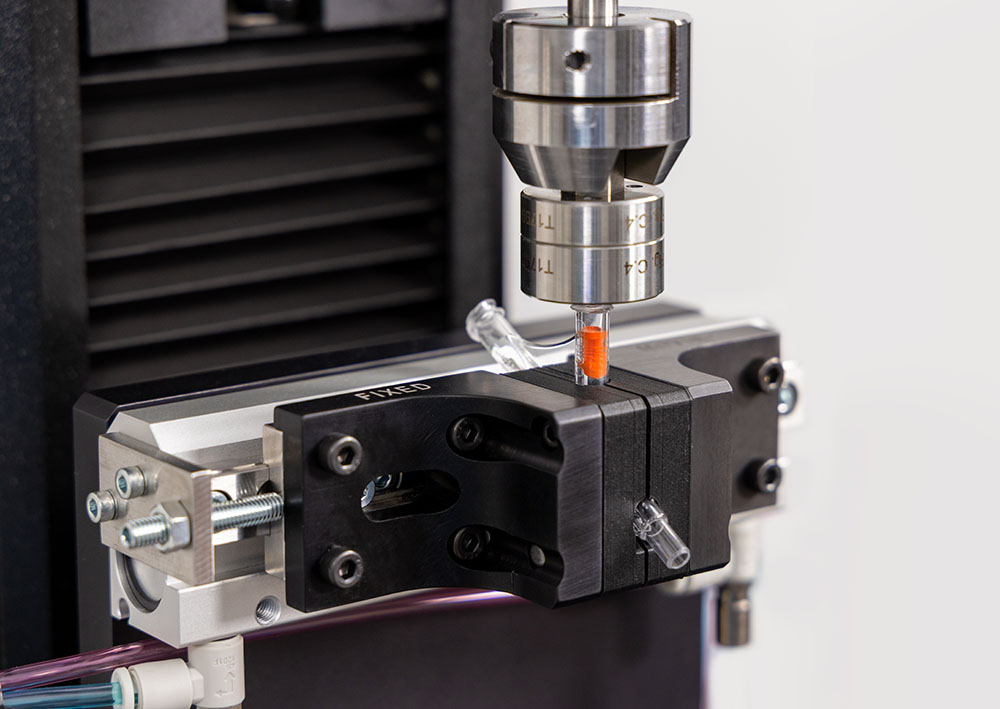
Luer connector for ISO 80369
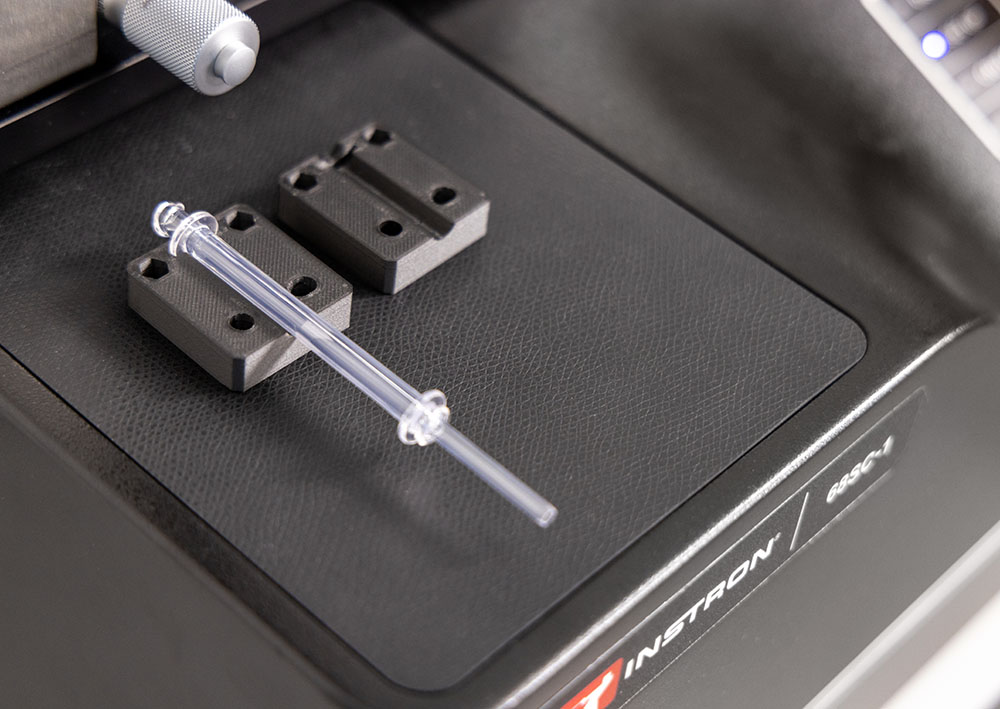
Luer connector for ISO 80369 Luer connector for ISO 80369 Luer connector for ISO 80369 Luer connector for ISO 80369

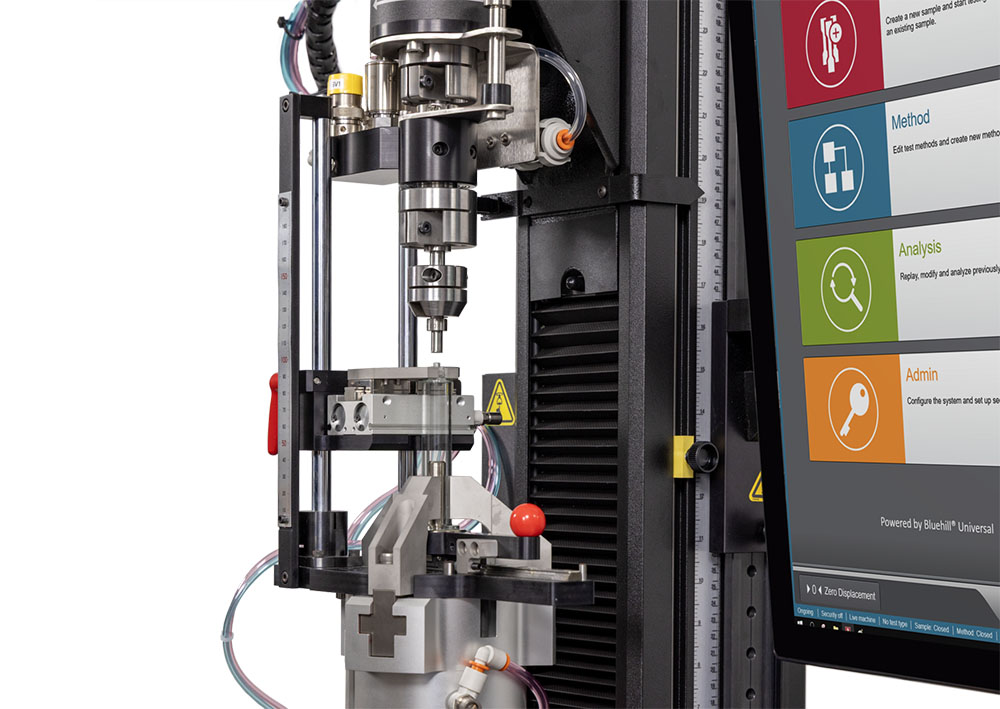
The Instron ISO 80369 system is built upon a single column universal testing machine with biaxial capabilities and is designed to support the testing of Annexes B through I*. The system includes an additional pressure transducer as well as a controller capable of generating both positive and negative pressure in line with the standard. Given the wide range of devices that can be tested, the system provides the necessary modularity to support testing syringes, IV hubs, connectors, and more.

The specific device fixture comes in two main configurations. The first is a highly flexible pneumatic grip with interchangeable faces designed to match various user-defined geometries. The entire grip assembly is mounted on a manual XY assembly to ensure consistent alignment between the device under test and the reference connector. The second configuration is specifically designed to support standard syringe sizes. In this setup, the syringe body is secured by a pneumatic lathe chuck while the rotating luer collar is secured by an adjustable pneumatic side acting grip.

* Annex K was released in 2024 and is still under evaluation for compatibility.

System Benefits

Consolidating testing to a single system and performing assembly in sequence with the testing provides an unparalleled level of efficiency, reducing the time required to evaluate devices and minimizing the number of devices required.

To maximize testing time, the fully assembled reference connector-device pair can be removed to allow the required hold period of 48 hours for stress cracking without losing the ability to use the system.

The system can be configured to allow customers to utilize existing reference connectors, considering their significant expense. To ensure proper fit and function, current connectors will need to be provided during the design of the system.

The configuration for testing IV hubs and connectors provides a simple mounting pattern on the pneumatic grips to allow companies to interface their own faces, which match their device geometry. This also enables labs to remain agile, easily prototyping new faces to support device concepts.

The system is properly rated to support performing variable tests as opposed to the standard attribute tests, as it can require destructive testing. This reduces the total number of specimens needed for a statistically significant result.