

ISO 11040-8 Updated:
What the 2026 Revision Means for Prefilled Syringe Testing
The latest revision to ISO 11040-8 introduces system-level performance requirements, expanded intended use guidance, and a new administration time test method — here's what quality and R&D teams need to know.

Published:
June 22, 2026

Written By:
Landon Goldfarb
Edited By:
Nick Erickson
Reviewed By:
Sam Havel
What Is ISO 11040-8 and Why Does It Matter?
ISO 11040-8 is the international standard governing requirements and test methods for finished prefilled syringes. Unlike other standards in the ISO 11040 series that address individual components, ISO 11040-8 evaluates the prefilled syringe as a combination product — assessing holistic device performance under conditions that reflect actual clinical use.
The standard applies to syringes used both for manual injections and within needle-based injection systems such as autoinjectors. This distinction is critical: testing must be performed with all components required for use (plungers, needles, etc.) in place, as close to real-world conditions as possible.
The 2026 revision replaces the 2016 first edition and introduces meaningful changes to test methods, definitions, and scope — all aimed at strengthening design verification programs and aligning with the industry's shift toward combination product integration.
Key Changes in the 2026 Revision of ISO 11040-8
1. Expanded Definition of Intended Use
The most foundational change in the updated standard is a significantly broadened definition of intended use — and a clearer requirement that it informs every outlined test procedure.
Under the revised standard, intended use must account for:
- Therapeutic indication
- Criticality of administration (e.g., emergency use vs. routine dosing schedule)
- Route of delivery (subcutaneous vs. intramuscular)
- Patient population and human factors
- Clinical vs. home-use setting
- Transportation and environmental conditions
These factors can — and should — directly influence test methodology when proper justification is documented. For example, a device intended for emergency administration may require Break Loose and Extrusion Force evaluations conducted at elevated speeds to reflect the unpredictability of urgent delivery scenarios.
2. Break Loose and Extrusion Force Testing Now Defined in Annex A
Break Loose and Extrusion Force testing has been separated from ISO 11040-4 Annex E.1 and is now codified as a standalone Annex A within ISO 11040-8. The core methodology remains largely consistent with the prior version, but several important clarifications have been added:
- Data capture rate: 500 Hz is explicitly identified as the ideal sampling rate for this testing
- Test speed: 100 mm/min remains appropriate, but the standard reinforces that speed should be adjusted based on intended use; for devices used within needle-based injection systems, 120–420 mm/min may be appropriate
- Air bubble extrusion: The standard now explicitly acknowledges a potential load drop at the end of plunger travel during air bubble extrusion and requires that this force be excluded from extrusion force reporting
For organizations currently performing this testing, these changes will primarily require software method updates rather than hardware modifications.
3. Liquid Leakage and Burst Resistance Consolidated into Annex C
The revised standard consolidates Liquid Leakage Past the Plunger and Burst Resistance testing into a new Annex C. Notably, Burst Resistance has been repositioned as a supplementary test, primarily required for prefilled syringes intended for use in needle-based injection systems.
The table below summarizes the key differences between the two methods:
| Testing Parameter | Liquid Leakage | Burst Resistance |
|---|---|---|
| Needle Closure | Ensure proper needle closure is in place (tip cap, RNS, etc.) | Actively seal the needle tip with suitable method or tool |
| Means of Applying Force | Plunger intended for use | Comparable plunger fixture |
| Test Pressure | 300 kPa | Expected maximum pressure in use +20% |
| Hold Duration | 30–35 seconds | Expected injection duration |
| Failure Criteria | Visual leakage past plunger stopper | Visual leakage or physical cracking/breakage |
4. New Test Method: Administration Time (Annex D)
The most significant addition to the standard is a new, conditionally applicable test method for Administration Time, introduced in Annex D.
This test evaluates ease of administration by measuring the time required to completely dispense a dose under a continuous or defined force profile. It is particularly relevant for biologics and other high-viscosity drug formulations, where patient ability to manually deliver a dose — or the suitability of an autoinjector — must be rigorously validated.

Why This Matters Now
Device manufacturers are increasingly developing syringe features specifically designed to address high-injection-force challenges — including shorter needle lengths and ultra-thin-walled needles. Administration Time testing provides a standardized method to compare these innovations against existing technologies in the context of intended use.
Equipment Requirements
Fixture setup is identical to Break Loose and Extrusion Force testing, but load control capability is required to maintain force during injection. While the standard does not specify a control tolerance, most modern test systems should be capable of ±1 N.
This method also has value beyond design verification — device manufacturers can use it to generate baseline data across a range of fluid viscosities, supporting early-stage characterization and de-risking drug-device partnering decisions.
Practical Implications for Quality and R&D Teams
The 2026 update to ISO 11040-8 reflects a broader industry shift: pharmaceutical organizations are expanding in-house device expertise and involving device stakeholders earlier in development. This standard supports that shift by providing:
- More deterministic test methodologies that reduce ambiguity in design verification
- Clearer intended-use framing that allows teams to tailor test parameters with documented justification
- Preliminary characterization capability for prefilled syringe platforms at earlier development stages, reducing the burden of later-stage testing
For organizations currently testing to the 2016 version, the transition will primarily require software method updates — particularly around data capture rate, speed parameters, and force exclusion logic for air bubble extrusion. No significant hardware changes are anticipated for most labs.
For the complete requirements and test method specifications, we recommend reviewing the full ISO 11040-8:2026 standard directly.
Frequently Asked Questions (FAQs)
ISO 11040-8 is the international standard specifying requirements and test methods for finished prefilled syringes, evaluating them as drug-device combination products under conditions that reflect intended clinical use.
Explore Instron Solutions for ISO 11040 Prefilled Syringe Testing
From the platform to the fixture to the software, Instron has the tools pharmaceutical and medical device teams need to validate prefilled syringe performance to ISO 11040.

Fixtures and automation designed for prefilled syringe testing, including break loose and glide force, needle penetration force, and cap removal applications.

Purpose-built for needle-based injection system testing, supporting activation force, click detection, injection time, needle depth, delivered volume, and needle guard lockout testing.
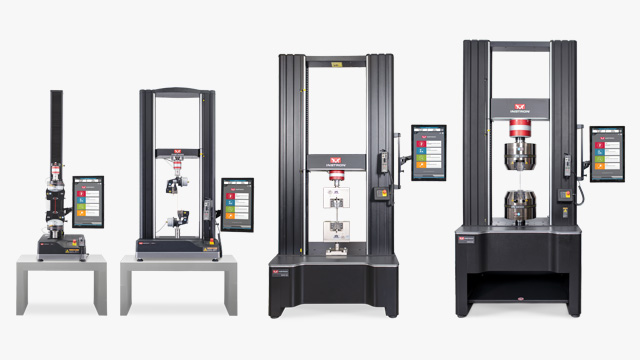
Configurable load frames with the force measurement accuracy, speed control, and accessory compatibility required for the full scope of ISO 11040 mechanical test methods.
or

Talk to an Instron Expert
Get application-specific guidance on testing prefilled syringes to ISO 11040.
About the Author
Landon Goldfarb
Landon Goldfarb is Lead Product Manager at Instron, where he oversees the static testing product management team — collaborating closely with customers and engineering to drive customer-backed innovation across Instron's full static testing portfolio. With deep expertise in highly regulated industries, Landon and his team partner with organizations across a wide range of markets to advance their testing programs — from general quality control to advanced R&D — bringing particular depth and experience to pharmaceutical and medical device customers worldwide.
A trusted industry voice, he contributes to standards development and shares actionable insights through technical publications and conference presentations — championing best practices and advancing the science of medical device testing on a global stage.