

What Is a Texture Analyzer?
Measuring the mechanical properties that define how products feel, perform, and hold up — across food, cosmetics, pharmaceuticals, and packaging
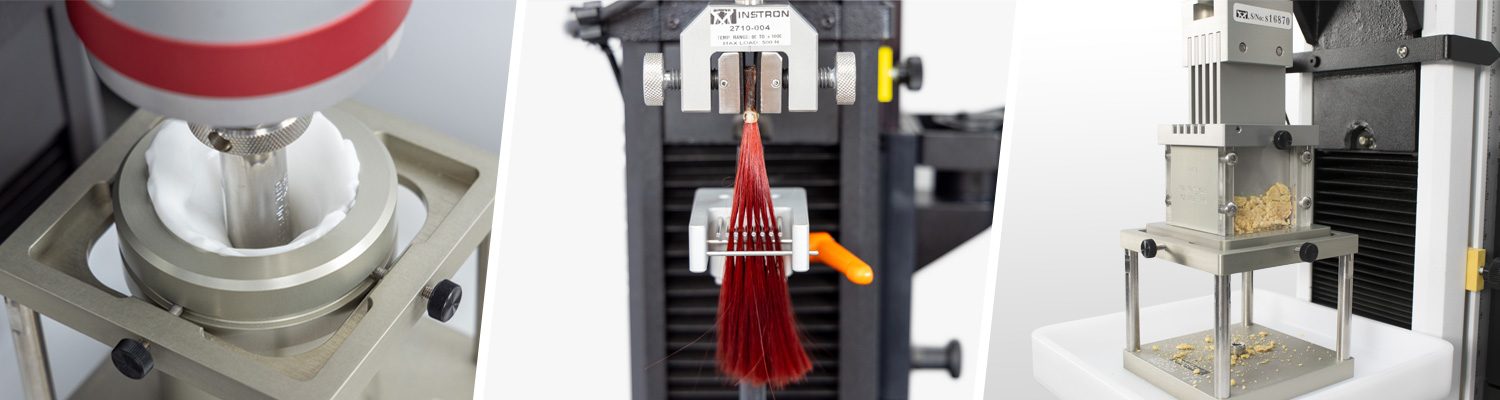
Published:
June 15, 2016
Updated:
June 23, 2026

Written By:
Kayla Thackeray
Edited By:
Nick Erickson
A texture analyzer is an instrument that measures the mechanical and physical properties of materials — quantifying attributes like hardness, cohesiveness, adhesiveness, springiness, chewiness, and tensile strength through controlled, repeatable force application. Rather than relying on subjective sensory impressions, a texture analyzer produces objective, numerical data that can be trended, compared against specifications, and used to make confident quality decisions.
Texture analyzers were historically used in the food industry, where measuring the crunchiness of a cracker or the chewiness of a gummy required more consistency than a human panel could reliably deliver. Today, texture analyzers are used across industries like food and beverage, cosmetics and personal care, pharmaceuticals, consumer packaged goods, and packaging materials — anywhere the tactile or mechanical properties of a product affect quality, performance, or consumer experience.
How Does a Texture Analyzer Work?
A texture analyzer works by moving a probe or fixture through a pre-programmed test cycle — typically a controlled compression, tension, or puncture — while a load cell precisely records the force required at each point. The result is a force-versus-time or force-versus-distance curve that captures the full mechanical performance of the material being tested.
Test Types Performed by a Texture Analyzer
- Compression testing measures how a material deforms under a pressing load. Common for food products (e.g., gels, baked goods, cheese), pharmaceutical tablets, and foam materials.
- Tensile testing pulls a material apart to measure tensile strength, extensibility, or adhesive bond strength. Used for films, doughs, coatings, and adhesive formulations.
- Puncture and penetration testing drives a probe into a material to measure surface strength and internal resistance. Widely used for produce firmness, skin creams, gels, and capsule coatings.
- Bend and flexure testing measures the force to flex or break a material. Common for snack foods, packaging, and solid-dose pharmaceutical products.
- Peel and tack testing characterizes adhesive properties — how readily a surface bonds and releases. Used for packaging seals, pressure-sensitive adhesives, and topical pharmaceutical patches.
Each test generates quantitative data that can be trended over time, compared against specifications, and used to make go/no-go quality decisions.
What Can a Texture Analyzer Be Used For?
Food
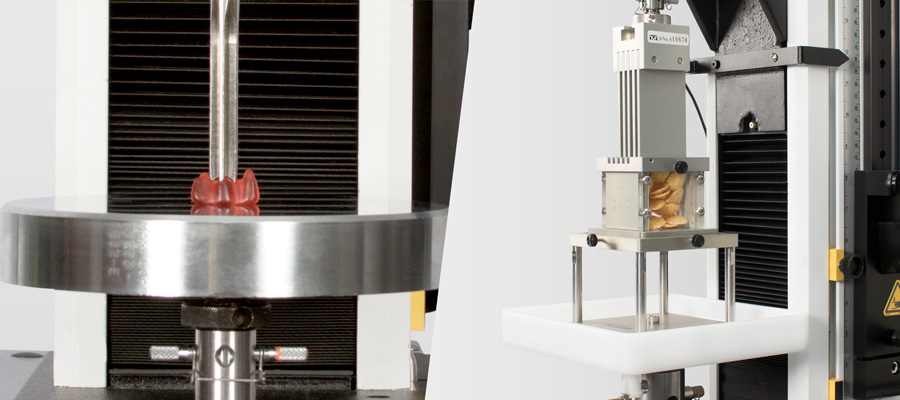
Texture is one of the most powerful drivers of consumer preference in food — often competing with flavor in purchase decisions. A texture analyzer is used throughout food product development and manufacturing to measure:
- Crunchiness and crispness of snacks, cereals, and crackers
- Chewiness and springiness of gummies, bread, and meat products
- Firmness and ripeness of fresh produce
- Spreadability and body of fats, spreads, and dips
- Gel strength and mouthfeel of dairy products, desserts, and hydrocolloids
- Adhesiveness of confectionery coatings and sticky products
The Texture Profile Analysis (TPA) "two-bite" compression test is a widely used standard method that allows manufacturers to replicate and quantify the sensory experience of eating a product with consistent, reproducible data.
Cosmetics and Personal Care
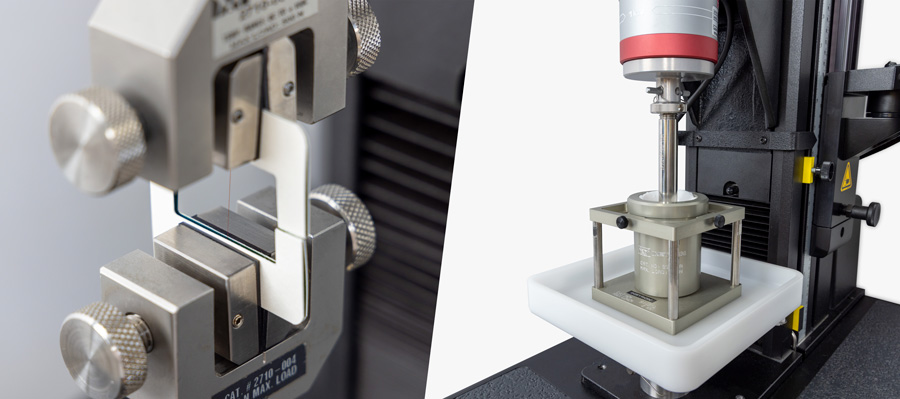
In cosmetics and personal care, texture is both a performance attribute and a central part of the product experience. Consumers form strong preferences for how a moisturizer spreads, how a lipstick applies, or how a hair mask rinses out — and a texture analyzer helps formulators engineer and validate those experiences with objective data.
Typical cosmetics texture analyzer applications include:
- Skin creams, lotions, and serums: Penetration testing measures how readily a product spreads and absorbs. Stickiness and tack measurements predict afterfeel. Viscosity profiling under shear helps benchmark products across formula iterations.
- Lip products: A texture analyzer measures the mechanical strength, hardness, and application force of lipsticks, glosses, and balms. Snap testing evaluates resistance to breakage during use or shipping.
- Hair care: Tensile testing of hair strands quantifies the effect of conditioning treatments on fiber strength, elasticity, and breakage resistance.
- Cleansers and scrubs: Abrasion and surface texture measurements characterize the exfoliating effect of physical scrubs on skin models.
- Masks and gels: Adhesiveness tests measure how well a sheet mask conforms to contours; cohesion testing characterizes how a gel maintains its structure after application.
A texture analyzer in cosmetics supports both formulation development — accelerating iteration and reducing reliance on panel testing alone — and quality control, where it ensures batch-to-batch consistency in product feel.
Pharmaceuticals
In pharmaceutical manufacturing, a texture analyzer supports both product development and regulatory compliance. Applications include:
- Tablet hardness and friability
- Capsule shell strength and puncture resistance
- Gel, cream, and ointment spreadability for topical formulations
- Bioadhesion measurements for mucoadhesive drug delivery systems
- Film coating integrity and adhesion
Texture analyzer methods in pharma are often aligned with pharmacopeial standards and can be integrated into validated quality control workflows.
Consumer Packaged Goods and Packaging Materials
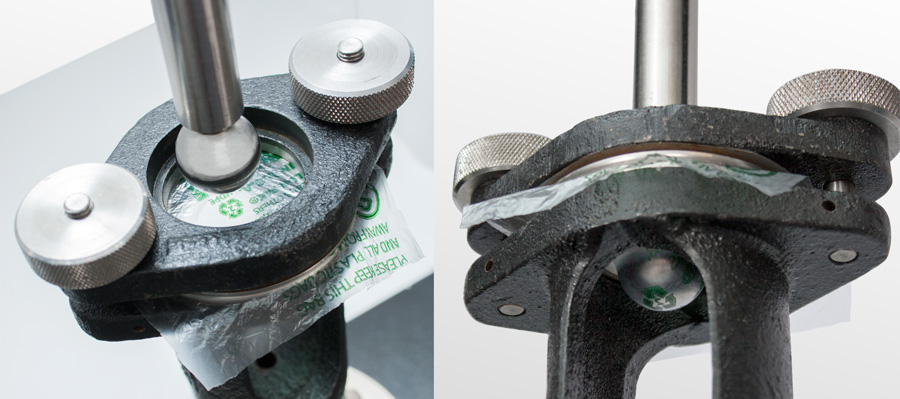
Texture analyzers are increasingly used for non-food consumer packaged goods — anything where tactile or mechanical performance matters. Applications include:
- Wipes: tensile strength, tear resistance, and wet-strength retention
- Diapers and absorbent hygiene products: softness, compression recovery, and surface friction
- Paper and tissue: tensile strength, burst resistance, and softness index
- Packaging films and laminates: peel strength, seal integrity, and puncture resistance
- Flexible packaging: reseal force, closure performance, and film extensibility
Texture Analyzer Equipment
Dedicated Texture Analyzers vs. Universal Testing Systems
When evaluating texture analyzer equipment, there are two broad categories to consider: purpose-built texture analyzers and universal testing systems configured for texture testing.
Purpose-built texture analyzers are single-application instruments optimized for the low-force, food-adjacent tests where texture testing originated. They offer straightforward operation and are well-suited to high-throughput quality control environments where test methods are fixed and the range of forces involved is modest. However, they are limited in flexibility — a dedicated texture analyzer designed for food testing may not have the force range, accuracy, or fixture compatibility to handle cosmetics, pharmaceutical, or packaging applications effectively.
Universal testing systems perform the full range of texture analyzer test types and significantly more. Where a dedicated texture analyzer is constrained to one domain, a universal testing system can be configured for tensile, compression, flexure, peel, tack, and many other test modes — and can accommodate the wider force ranges required when texture testing expands beyond food into cosmetics, packaging, and pharmaceutical applications. For labs whose testing needs span multiple product types or markets, a universal testing system offers more capability per instrument.
Instron Universal Testing Systems as Texture Analyzers
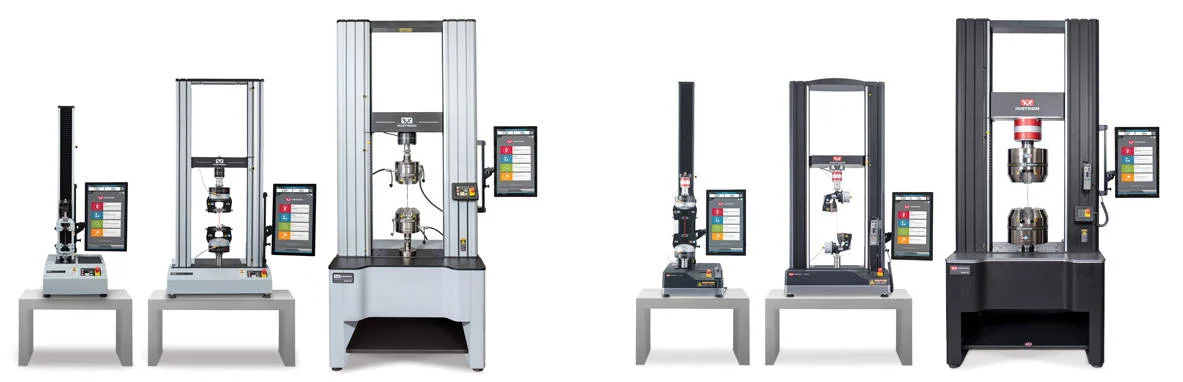
Instron universal testing systems — including the 3400 Series and 6800 Series — perform texture analyzer testing when configured with the appropriate fixtures and probes, while offering substantially greater flexibility than purpose-built texture analyzer equipment.
- The Instron 3400 Series delivers reliable performance across a wide range of texture analyzer applications including food products, cosmetics, pharmaceuticals, and packaging. Its compact footprint and intuitive software make it a strong choice for quality control labs running routine texture methods alongside other testing requirements.
- The Instron 6800 Series offers enhanced accuracy, load frame stiffness, and advanced data acquisition capabilities suited to more demanding texture analyzer applications and research environments. Its higher load measurement accuracy and precision crosshead control make it well-suited to the low-force measurements required for soft gels, creams, and thin films, while retaining the capacity to test stronger materials in the same system.
Both series are compatible with the full range of Instron texture analyzer fixtures — compression platens, probe sets, tensile grips, and application-specific attachments for food, cosmetics, and pharma testing. This makes them a more versatile long-term investment than a single-purpose texture analyzer, particularly for labs whose product scope or market reach is likely to evolve.
Software for Texture Analyzer Testing
The Instron Bluehill® Universal software platform provides a complete environment for designing, running, and analyzing texture analyzer tests. Key capabilities include:
- Method templates for common test types including puncture, peel, tensile, and adhesion
- Statistical analysis and reporting tools for tracking batch-to-batch variation and generating compliance documentation
- Audit trail and data integrity features aligned with 21 CFR Part 11 for pharmaceutical and regulated industry use
- Customizable test sequences for multi-cycle and multi-stage texture profiles
Bluehill Universal integrates directly to Instron load frames and load cells, ensuring that force and displacement data captured during texture analyzer testing meets the accuracy and traceability requirements of both R&D and quality control environments.
Frequently Asked Questions (FAQs)
A texture analyzer is an instrument that measures the mechanical properties of materials — including hardness, cohesiveness, adhesiveness, springiness, and tensile strength — by applying controlled force through a probe or fixture and recording the force response over time or distance. The result is objective, repeatable data that characterizes how a material behaves under the physical stresses it experiences in real use.
Ready to Add Texture Analyzer Testing to Your Lab?
From the testing system to the fixture to the software, Instron has the tools that food, cosmetics, and pharmaceutical labs need to run texture tests with confidence.
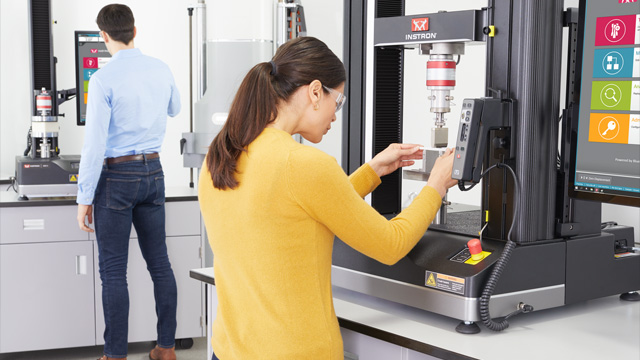
The 3400 and 6800 Series can be configured for compression, tension, puncture, peel, and adhesion testing across food, cosmetics, pharma, and packaging applications.
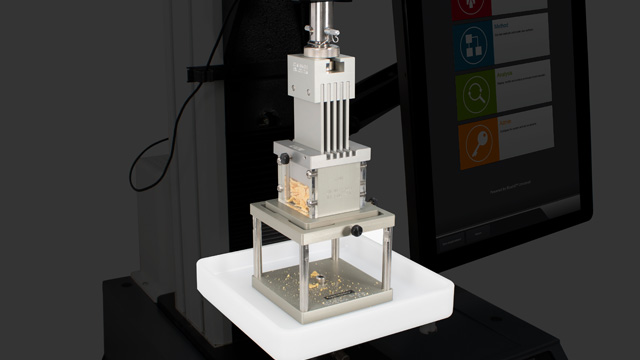
Compression platens, shear cells, back extrusion cells, and application-specific probes designed for texture analyzer testing of food products at any stage of development or production.
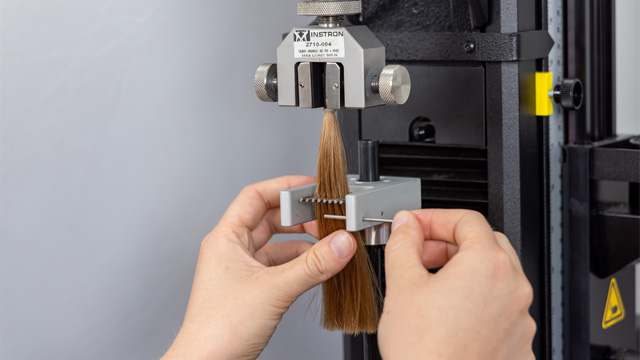
Penetration probes, tack and adhesion fixtures, and tensile grips designed for texture analyzer testing of creams, lotions, gels, lip products, and personal care formulations from bench to QC.
or

Talk to an Application Expert
Not sure which texture analyzer setup is right for your application? With deep experience across food, cosmetics, and pharmaceutical testing, our application engineers can recommend the right system, load cell, and fixture configuration for your texture analyzer application.
About the Author
Kayla Thackeray
Kayla Thackeray has spent over eight years at Instron working at the intersection of materials testing technology and customer need. Her career has spanned product development, market management, and customer-backed innovation — working directly with Instron customers to understand their testing challenges and translate those insights into product solutions. She has represented Instron on key industry standards committees and holds a B.S. in Mechanical Engineering from Worcester Polytechnic Institute.