Necking

Necking » Page 4

Necking

The term "necking" is used in engineering and materials sciences to describe the localized reduction of cross-sectional area of a specimen under tensile load. Necking occurs when an instability in the material causes its cross-section to decrease by a greater proportion than the strain hardens when undergoing tensile deformation. If the material begins to harden by a smaller proportion than the decrease in cross-sectional area, strain concentrates at the location of highest stress or lowest hardness. The greater the local strain, the greater the local decrease in cross-sectional area, which in turn causes even more concentration of strain, leading to an instability that causes the formation of a neck. Necking behavior is disregarded in calculating engineering stress but is taken into account in determining true stress.
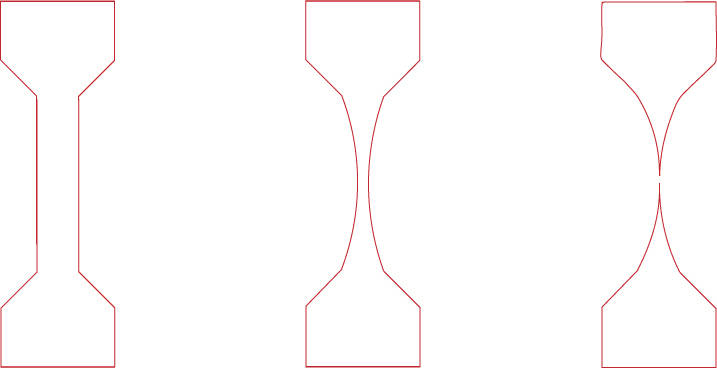
specimen necking
Related Content

3400 Series Universal Testing Systems Brochure

Instron 3400 Series universal testing systems for tensile, compression, bend, and other material property tests.
6800 Series Premier Testing Systems Brochure

Instron 6800 Series Universal Testing Systems provide unparalleled accuracy and reliability. Built on a patent-pending Operator Protect system architecture with an all-new Smart-Close Air Kit and Collision Mitigation features, the 6800 Series makes materials testing simpler, smarter, and safer than ever before.
Bluehill Universal Brochure

Bluehill Universal is Instron’s advanced materials testing software, designed for intuitive touch interaction and streamlined workflows. It offers pre-loaded test methods, QuickTest for rapid setup, enhanced data exporting, and Instron Connect for direct service communication. Users of Bluehill 2 and Bluehill 3 can easily upgrade to the latest version for improved performance and usability.

Modulus of Toughness

Modulus of Toughness

Modulus of toughness is the ability of a material to absorb energy in plastic deformation. It is defined as the amount of strain energy density (strain on a unit volume of material) that a given material can absorb before it fractures. Modulus of toughness is measured in units of PSI or Pascals. It can be determined in a test by calculating the total area under the stress-strain curve up until the fracture point of the specimen. A material's modulus of toughness will vary depending on the material's ductility; two materials with the same yield strength can vary greatly in their modulus of toughness if one of the materials is more ductile than the other. The ductile material will stretch further and have a greater area under its stress-strain curve.

When civil engineers are designing new structures, it is critical that they have access to modulus of toughness data when choosing materials. When designing a structure that may be susceptible to accidental overload, it is safer to select a more ductile material with a higher modulus of toughness, even if other, cheaper materials have the same yield strength.

Modulus of toughness test

Related Content

3400 Series Universal Testing Systems Brochure

Instron 3400 Series universal testing systems for tensile, compression, bend, and other material property tests.

6800 Series Premier Testing Systems Brochure

Instron 6800 Series Universal Testing Systems provide unparalleled accuracy and reliability. Built on a patent-pending Operator Protect system architecture with an all-new Smart-Close Air Kit and Collision Mitigation features, the 6800 Series makes materials testing simpler, smarter, and safer than ever before.

Bluehill Universal Brochure

Bluehill Universal is Instron’s advanced materials testing software, designed for intuitive touch interaction and streamlined workflows. It offers pre-loaded test methods, QuickTest for rapid setup, enhanced data exporting, and Instron Connect for direct service communication. Users of Bluehill 2 and Bluehill 3 can easily upgrade to the latest version for improved performance and usability.
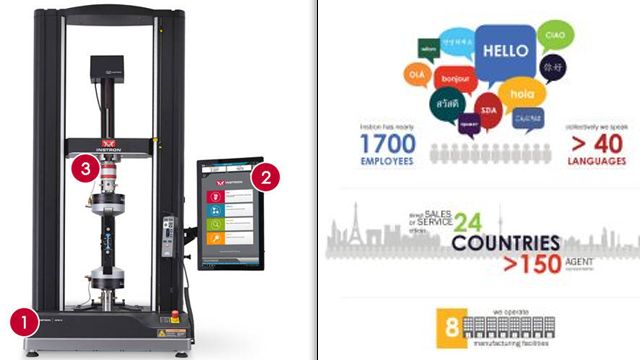
Maximum (yield) Load (Impact)

Maximum (yield) Load (Impact)

The highest point on the load-time curve before failure.  Often the point of maximum load corresponds to the onset of material damage or complete failure.  In some cases where the plastic material is reinforced with filler such as carbon fiber, the peak load may be higher then the maximum load.

Related Content

3400 Series Universal Testing Systems Brochure

Instron 3400 Series universal testing systems for tensile, compression, bend, and other material property tests.

6800 Series Premier Testing Systems Brochure

Instron 6800 Series Universal Testing Systems provide unparalleled accuracy and reliability. Built on a patent-pending Operator Protect system architecture with an all-new Smart-Close Air Kit and Collision Mitigation features, the 6800 Series makes materials testing simpler, smarter, and safer than ever before.

Bluehill Universal Brochure

Bluehill Universal is Instron’s advanced materials testing software, designed for intuitive touch interaction and streamlined workflows. It offers pre-loaded test methods, QuickTest for rapid setup, enhanced data exporting, and Instron Connect for direct service communication. Users of Bluehill 2 and Bluehill 3 can easily upgrade to the latest version for improved performance and usability.

Isotropic

Isotropic » Page 4

Isotropic

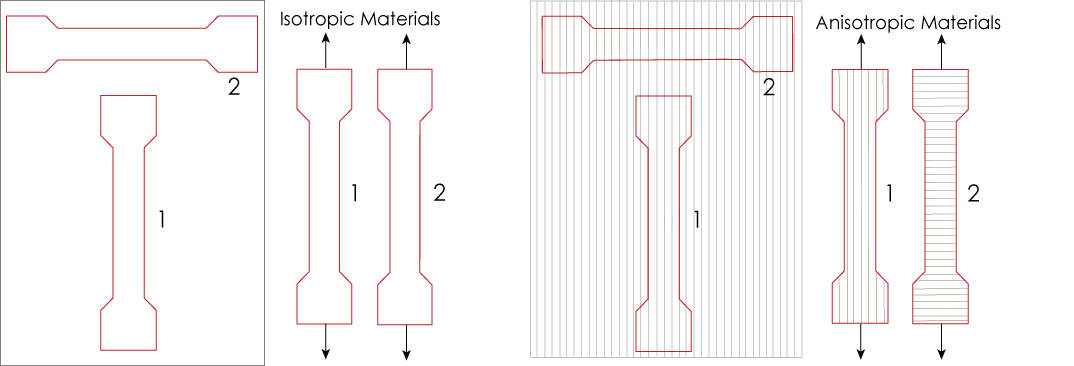
Isotropic materials are materials whose properties remain the same when tested in different directions. Isotropic materials differ from anisotropic materials, which display varying properties when tested in different directions. Common isotropic materials include glass, plastics, and metals. On the other hand, fiber-reinforced materials such as composites and natural materials such as wood tend to display anisotropic properties. These materials can demonstrate great strength when force is applied in the same direction as the fibers, and much less strength when force is applied in the opposite direction (with or against the grain).


anisotropic vs isotropic


Related Content

3400 Series Universal Testing Systems Brochure

Instron 3400 Series universal testing systems for tensile, compression, bend, and other material property tests.

6800 Series Premier Testing Systems Brochure

Instron 6800 Series Universal Testing Systems provide unparalleled accuracy and reliability. Built on a patent-pending Operator Protect system architecture with an all-new Smart-Close Air Kit and Collision Mitigation features, the 6800 Series makes materials testing simpler, smarter, and safer than ever before.

Bluehill Universal Brochure

Bluehill Universal is Instron’s advanced materials testing software, designed for intuitive touch interaction and streamlined workflows. It offers pre-loaded test methods, QuickTest for rapid setup, enhanced data exporting, and Instron Connect for direct service communication. Users of Bluehill 2 and Bluehill 3 can easily upgrade to the latest version for improved performance and usability.

Load


Load
»
Page 4


Load

The force the testing system exerts on the specimen. Load is a real channel. The testing system uses a load cell to measure force.

Related Content

3400 Series Universal Testing Systems Brochure

Instron 3400 Series universal testing systems for tensile, compression, bend, and other material property tests.

6800 Series Premier Testing Systems Brochure

Instron 6800 Series Universal Testing Systems provide unparalleled accuracy and reliability. Built on a patent-pending Operator Protect system architecture with an all-new Smart-Close Air Kit and Collision Mitigation features, the 6800 Series makes materials testing simpler, smarter, and safer than ever before.

Bluehill Universal Brochure

Bluehill Universal is Instron’s advanced materials testing software, designed for intuitive touch interaction and streamlined workflows. It offers pre-loaded test methods, QuickTest for rapid setup, enhanced data exporting, and Instron Connect for direct service communication. Users of Bluehill 2 and Bluehill 3 can easily upgrade to the latest version for improved performance and usability.
Load String


Load String
»
Page 4


Load String

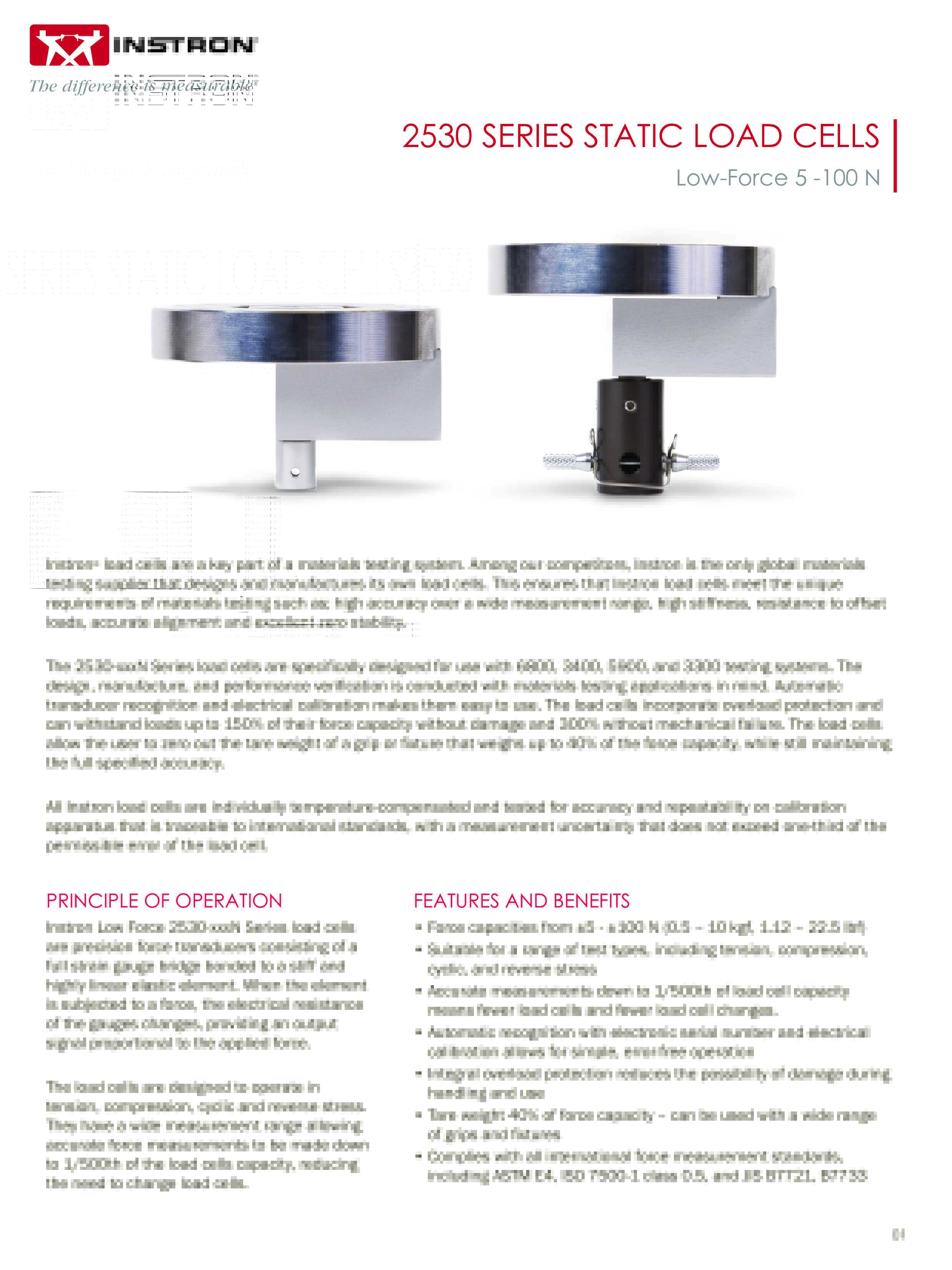
The complete test setup between the moving crosshead and the load frame table (or fixed crosshead). The load string normally comprises a load cell, grip adapters, grips, and the specimen.

Related Content

3400 Series Universal Testing Systems Brochure

Instron 3400 Series universal testing systems for tensile, compression, bend, and other material property tests.

6800 Series Premier Testing Systems Brochure

Instron 6800 Series Universal Testing Systems provide unparalleled accuracy and reliability. Built on a patent-pending Operator Protect system architecture with an all-new Smart-Close Air Kit and Collision Mitigation features, the 6800 Series makes materials testing simpler, smarter, and safer than ever before.

Bluehill Universal Brochure

Bluehill Universal is Instron’s advanced materials testing software, designed for intuitive touch interaction and streamlined workflows. It offers pre-loaded test methods, QuickTest for rapid setup, enhanced data exporting, and Instron Connect for direct service communication. Users of Bluehill 2 and Bluehill 3 can easily upgrade to the latest version for improved performance and usability.

Contact Us

Connect with Instron's Sales, Service, Technical, or Training Support teams- our product and application experts are ready to assist you.

Load Cell

Load Cell » Page 4

Load Cell

A load cell is a transducer which converts a value of force into a proportional electrical signal. Load cells are critical elements of universal testing systems. All Instron load cells are individually temperature-compensated and tested for accuracy and repeatability on a calibration apparatus that is traceable to international standards, with a measurement of uncertainty that does not exceed one-third of the permissible error of the load cell. Instron's Massachusetts headquarters houses the largest commercial deadweight stack in the United States, which allows Instron load cells to often exceed the level of accuracy required by most materials testing standards.

Related Content

2519 Series Static Load Cells

Instron® load cells are an integral part of a materials testing system. The 2519 Series load cells are specifically designed for use with Instron’s 3300 Single column testing systems. The design, manufacture, and performance verification is conducted with materials testing applications in mind and the cells are certified in accordance with international standards.

2525 800 Series Load Cells

Rated capacities from ±2.5 N to ± 100 kN (0.25 kgf to 10,000 kgf, 0.5 lbf to 22,500 lbf)
ISO DIS 7500/1, EN10002-2, BS1610 (1992) and JIS B7721, B7733

2530 Series Low Force Load Cells

Instron 2530 Series low force static load cells range in capacity from 5 – 100 N and are designed for use with 3300, 3400, 5900, and 6800 Series universal testing systems.

2580 Series Load Cells

2580 Series Static Load Cells are precision force transducers and an integral part of an Instron universal testing system. Force capacities range from +/- 500 N to +/- 600 kN (50-60,000 kgf or 112-137,000 lbf).

Load Frame


Load Frame
»
Page 4


Load Frame

A high stiffness support structure against which the test forces can react. The load frame comprises a base beam, two columns, and a moving crosshead.

Related Content

3400 Series Universal Testing Systems Brochure

Instron 3400 Series universal testing systems for tensile, compression, bend, and other material property tests.

6800 Series Premier Testing Systems Brochure

Instron 6800 Series Universal Testing Systems provide unparalleled accuracy and reliability. Built on a patent-pending Operator Protect system architecture with an all-new Smart-Close Air Kit and Collision Mitigation features, the 6800 Series makes materials testing simpler, smarter, and safer than ever before.

Bluehill Universal Brochure

Bluehill Universal is Instron’s advanced materials testing software, designed for intuitive touch interaction and streamlined workflows. It offers pre-loaded test methods, QuickTest for rapid setup, enhanced data exporting, and Instron Connect for direct service communication. Users of Bluehill 2 and Bluehill 3 can easily upgrade to the latest version for improved performance and usability.

Gauge Length

Gauge Length » Page 4

Gauge Length

The term 'gauge length' refers to the part of a test specimen actually being measured for elongation during a tensile test. Depending on the material being tested and the ASTM or ISO standard being used, the gauge length might be taken as the distance between the grips of the universal testing machine or as the portion of the specimen being measured by a strain device such as a non-contacting video extensometer.

'Gauge length' is also used as part of the calculation for strain. In this case, the term refers to the original length of a specimen before the test starts.

Gauge lengths tend to be standardized based on the size and type of specimen being used. Many testing standards allow for multiple specimen shapes, the most common being dog bone shaped and straight (parallel) specimens. The dog bone shape allows specimens to be less affected by gripping and system compliance. In a compression test, the platen height and gauge length will always be identical when the test starts at the same height as the specimen.

gauge length diagram
Related Content

3400 Series Universal Testing Systems Brochure

Instron 3400 Series universal testing systems for tensile, compression, bend, and other material property tests.

6800 Series Premier Testing Systems Brochure

Instron 6800 Series Universal Testing Systems provide unparalleled accuracy and reliability. Built on a patent-pending Operator Protect system architecture with an all-new Smart-Close Air Kit and Collision Mitigation features, the 6800 Series makes materials testing simpler, smarter, and safer than ever before.

Bluehill Universal Brochure

Bluehill Universal is Instron’s advanced materials testing software, designed for intuitive touch interaction and streamlined workflows. It offers pre-loaded test methods, QuickTest for rapid setup, enhanced data exporting, and Instron Connect for direct service communication. Users of Bluehill 2 and Bluehill 3 can easily upgrade to the latest version for improved performance and usability.

Fracture Toughness


Fracture Toughness
»
Page 4


Fracture Toughness

Ability of a material to resist crack propagation when subjected to shock load as in an impact test.

Related Content

3400 Series Universal Testing Systems Brochure

Instron 3400 Series universal testing systems for tensile, compression, bend, and other material property tests.

6800 Series Premier Testing Systems Brochure

Instron 6800 Series Universal Testing Systems provide unparalleled accuracy and reliability. Built on a patent-pending Operator Protect system architecture with an all-new Smart-Close Air Kit and Collision Mitigation features, the 6800 Series makes materials testing simpler, smarter, and safer than ever before.

Bluehill Universal Brochure

Bluehill Universal is Instron’s advanced materials testing software, designed for intuitive touch interaction and streamlined workflows. It offers pre-loaded test methods, QuickTest for rapid setup, enhanced data exporting, and Instron Connect for direct service communication. Users of Bluehill 2 and Bluehill 3 can easily upgrade to the latest version for improved performance and usability.

Fatigue Test


Fatigue Test
»
Page 4


Fatigue Test

A method for determining the behavior of materials under fluctuating loads. A specified mean load (which may be zero) and an alternating load are applied to a specimen and the number of cycles required to produce failure (fatigue life) is recorded. Generally, the test is repeated with identical specimens and various fluctuating loads. Loads may be applied axially, in torsion, or in flexure. Depending on amplitude of the mean and cyclic load, net stress in the specimen may be in one direction through the loading cycle, or may reverse direction. Data from fatigue testing often are presented in an S-N diagram which is a plot of the number of cycles required to cause failure in a specimen against the amplitude of the cyclical stress developed. The cyclical stress represented may be stress amplitude, maximum stress or minimum stress. Each curve in the diagram represents a constant mean stress. Most fatigue tests are conducted in flexure, rotating beam, or vibratory type machines. Fatigue testing is generally discussed in "Manual on Fatigue Testing," ASTM STP 91-A, and "Mechanical Testing of Materials," A.J. Fenner, Philosophical Library, Inc. ASTM D-671 details a standard procedure for fatigue testing of plastics in flexure.

Related Content

3400 Series Universal Testing Systems Brochure

Instron 3400 Series universal testing systems for tensile, compression, bend, and other material property tests.

6800 Series Premier Testing Systems Brochure

Instron 6800 Series Universal Testing Systems provide unparalleled accuracy and reliability. Built on a patent-pending Operator Protect system architecture with an all-new Smart-Close Air Kit and Collision Mitigation features, the 6800 Series makes materials testing simpler, smarter, and safer than ever before.

Bluehill Universal Brochure

Bluehill Universal is Instron’s advanced materials testing software, designed for intuitive touch interaction and streamlined workflows. It offers pre-loaded test methods, QuickTest for rapid setup, enhanced data exporting, and Instron Connect for direct service communication. Users of Bluehill 2 and Bluehill 3 can easily upgrade to the latest version for improved performance and usability.

Extension


Extension
»
Page 4


Extension

The location of the crosshead/actuator relative to the point where the gauge length is reset. Extension is a real channel on an electromechanical system. Extension is derived from position on servohydraulic systems.

Related Content

3400 Series Universal Testing Systems Brochure

Instron 3400 Series universal testing systems for tensile, compression, bend, and other material property tests.

6800 Series Premier Testing Systems Brochure

Instron 6800 Series Universal Testing Systems provide unparalleled accuracy and reliability. Built on a patent-pending Operator Protect system architecture with an all-new Smart-Close Air Kit and Collision Mitigation features, the 6800 Series makes materials testing simpler, smarter, and safer than ever before.

Bluehill Universal Brochure

Bluehill Universal is Instron’s advanced materials testing software, designed for intuitive touch interaction and streamlined workflows. It offers pre-loaded test methods, QuickTest for rapid setup, enhanced data exporting, and Instron Connect for direct service communication. Users of Bluehill 2 and Bluehill 3 can easily upgrade to the latest version for improved performance and usability.