Instron

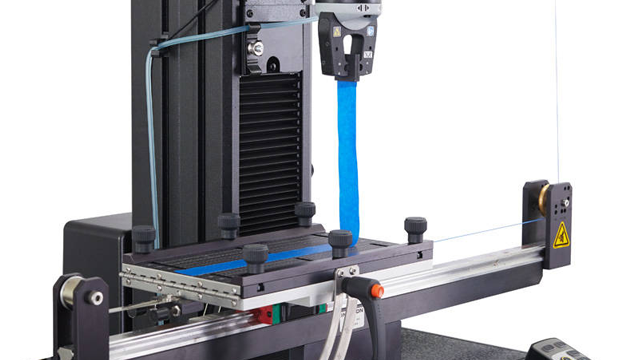
Headliner Peel Testing
Automotive » Interior

Headliner Peel Testing

car_interior2_Instron
car_interior2_Instron Headliner peel testing

THE CHALLENGE

Some vehicle textiles have multiple layers or backings, and must be subjected to a peel test in order to determine if adhesion forces are appropriate.

Our Solution

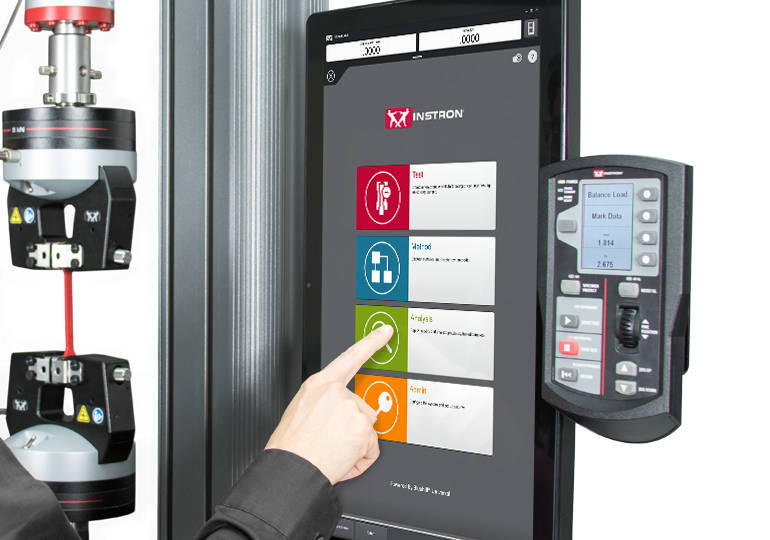
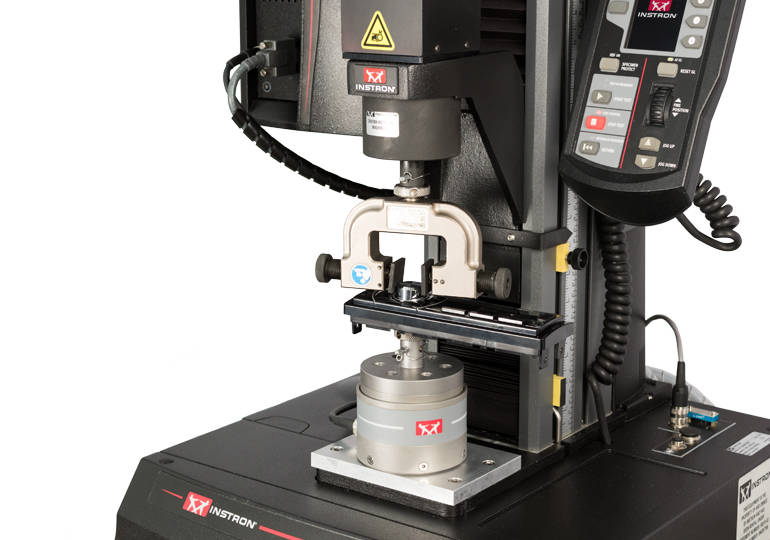
Instron® pneumatic side action grips are able to grip delicate foam specimens in order to perform T-peel tests. With a variety of quick-release jaw faces, these grips allow users to easily test a range of materials with a single system. The air pressure is also adjustable, allowing operators to fine tune the gripping pressure if needed.

Bluehill® Universal software contains a suite of calculations for peel testing, including industry standard calculations, such as first peak, average peel force over a given length, and even allows for custom calculations.
Dashboard Drop Weight Impact

Automotive » Interior

Dashboard Drop Weight Impact

The Challenge

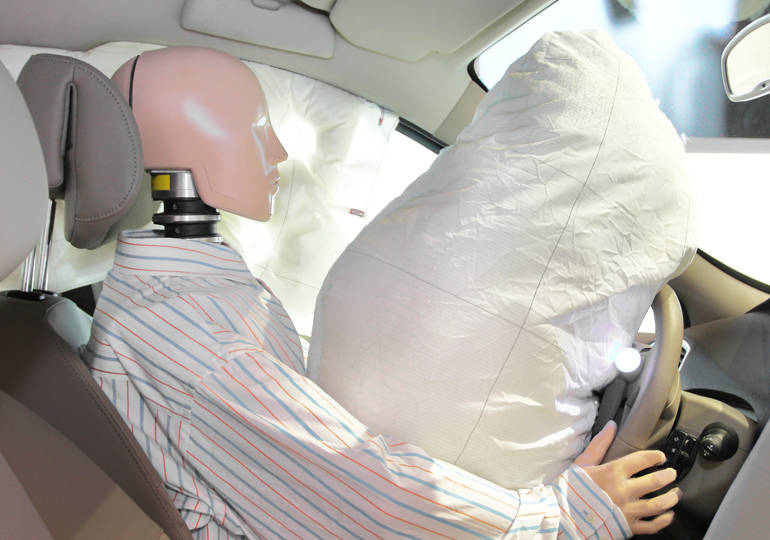
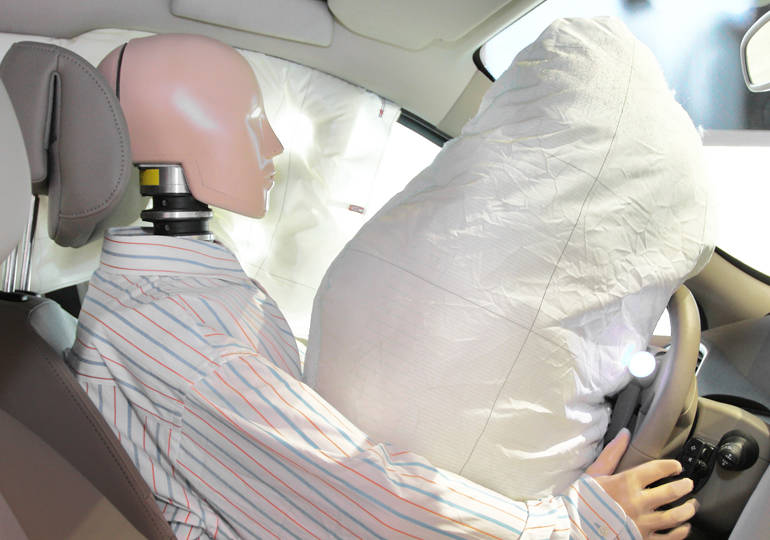
In the automotive field, the safety of passengers is key and drives research and development as well as quality control procedures. Each critical component has to be tested. Looking to gain larger market share in recent years, automotive producers have been including new and original features in car interiors. Besides aesthetics, all of these features have to meet precise technical specifications with regards to strength, durability, and safety. Some of the most critical parts are dashboards and surrounding items such as steering wheel columns, column switches, and airbags. In the event of an accident, the dashboard will absorb a significant amount of the impact energy and, when needed, airbags will deploy. Dashboards are designed to minimize and absorb shocks, their basic construction consists of foam padding and a cover made of PVC. This cover must break in a specific way when an airbag has to deploy to protect the occupants without causing additional injuries.

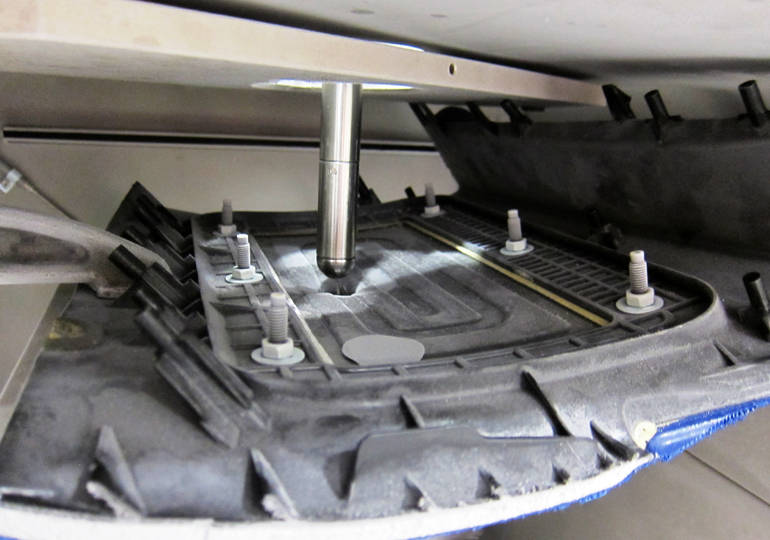
Our SolutionThermostatic chamber for the Instron 9450 drop tower

To understand the sequence in which the PVC cover breaks as the airbag is deployed, engineers perform impact tests on both samples of the materials used as well as the finished cover itself. The 9450 drop tower paired with both standard and custom fixtures is an ideal solution for this application. The addition of a thermostatic chamber and the high energy options allows the materials to be impacted over a wide variety of temperatures and speeds – up to 24 m/s. By testing both the raw materials and the finished product, engineers can investigate how changes in material selection, design, and manufacturing processes have an effect on impact performance of the cover. This is critical testing for the safety of vehicles passengers.

Learn more about our automotive solutions

Plastics Tensile Testing

Automotive » Interior

Plastics Tensile Testing

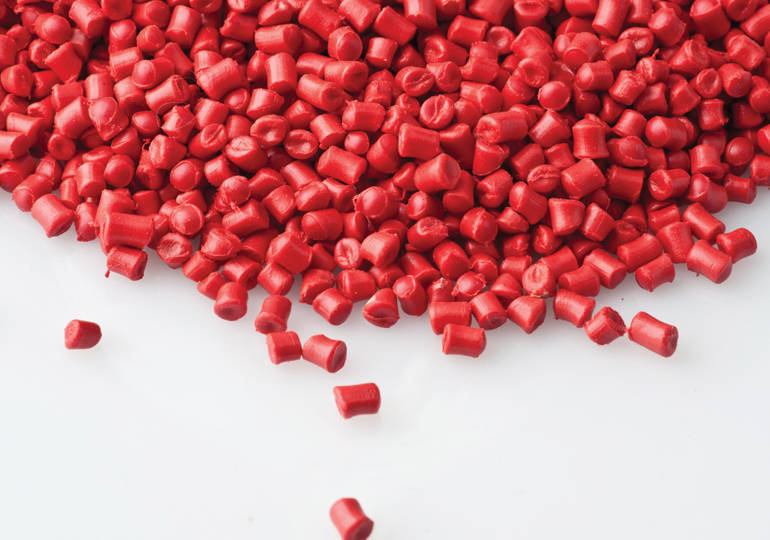
Plastics have proven to be the predominant material for developing durable, highly customizable, and cost-effective interior components. Corrosion resistant properties allow finished components to last longer with little to no maintenance. The versatility of plastic allows automotive designers to customize interiors while maintaining low costs. Modern manufacturing processes allow a vast array of colors and textures to create an aesthetically pleasing environment for the passengers. Additional benefits include reduced weight and high vibration dampening, increasing the ability to meet environmental regulations.

Variability of Results

THE CHALLENGE

Plastics

Design engineers should find it important to understand the tensile properties of plastics to recognize the benefits and potential risks as they are developing solutions. Standards such as ASTM D638-14 and ISO 527 provide guidelines for test setup to help with comparability between test results. One of the greatest challenges is getting repeatable strain data and to meet the measurement accuracy required in the relevant standards.

our Solution

plastics tensile testing

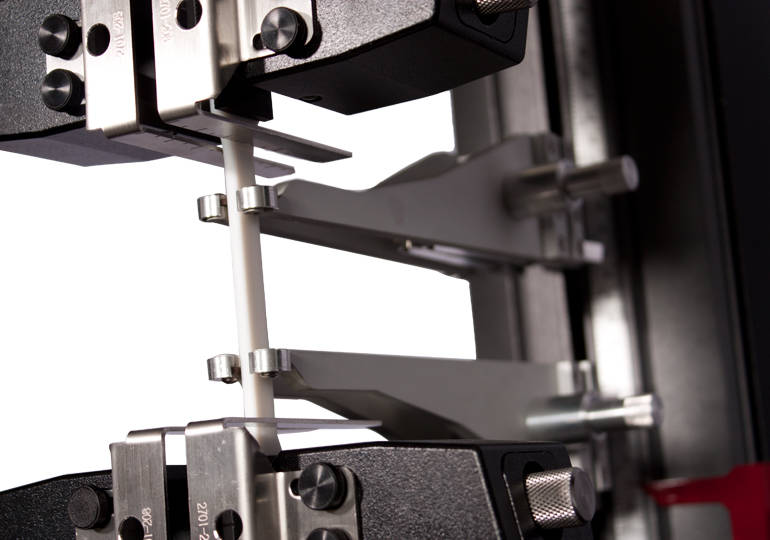
An extensometer is required to accurately measure strain. The optimal solution is using an automatic extensometer, either a non-contacting type, such as the Advanced Video Extensometer (AVE2), or a contacting type, such as the AutoX 750.  These two types of extensometers will decrease variability in results when compared with clip-on types. This is because, unlike clip-ons, they do not need to be attached by the operator and manually centered onto the specimen.

Standard Compliance

THE CHALLENGE

Many may not be following standards correctly, and our research has shown that much of the time it is a result of the customer simply not being aware of changes made to standards, or misinterpretation of the standard itself. Some of the implications that result from this can be failed audits, lost time investigating why results from different labs do not agree, and production delays.

The goal of any standard is to provide instructions and guidelines around a test so that different companies, labs, or operators are able to test in the same manner, thus allowing the ability to compare results. If all tests were conducted differently, then key information such as material datasheets and part specifications would offer virtually no value.

our Solution

To help our customers to comply with the latest standards we have been offering free educational assistance to anyone that would like it. Our application experts have also produced a large number of default methods conforming to these key standards when using Bluehill® Universal software.


Learn more about our automotive solutions

HDT and Vicat Testing

Automotive » Interior

HDT and Vicat Testing

The Challenge

Using lightweight materials such as thermoplastic polymers can help to meet increasing demand for reducing vehicle weight, fuel consumption, and production cost. Automotive interior design is influenced by the proportions, shape, placement, and surfaces for the instrument panel, seats, interior trims, fans and shrouds, etc. Smoothness, feel, and stiffness are just a few of the material characteristics considered when developing automotive interiors.

It is also important to evaluate short-term heat resistance. For example, the dashboard of your car on a hot summer day when the temperatures inside the car could reach up to 50°C (122°F). If the material used to make the dashboard is not tested under these conditions, the dashboard can potentially deform and be damaged.

Our Solution

Instron's HV system allows performing both heat deflection temperature (HDT) and Vicat softening temperature (VST) tests according to both ASTM and ISO standards. The polymer specimen is immersed in a fluid bath where the temperature is raised uniformly at a specific rate (120°C/h or 50°C/h). A predefined load or stress is applied to the specimen in order to measure the temperature at which it shows a set deflection (HDT test) or penetration (VST test). Higher HDT and VST values obtained in a test signify that the tested material is suitable for high-temperature applications, making it a preferable material for automotive applications. In addition to the bulk properties, HDT and VST test results also provide input on the surface properties of a polymer. At temperatures higher than those established by an HDT or VST test, it can be anticipated that the polymer sample undergoes permanent deformation generating further surface defects.

Rigid Plastics Bend Testing

Automotive » Interior

Rigid Plastics Bend Testing

Strain Measurement

THE CHALLENGE

When following ASTM D790 for 3-point bend tests, extension taken from the moving crosshead is sufficient for calculating flexural strain. However, some standards, such as ISO 178 require either a direct strain source or corrected extension for determining strain.

our Solution

Plastics Bend Testing

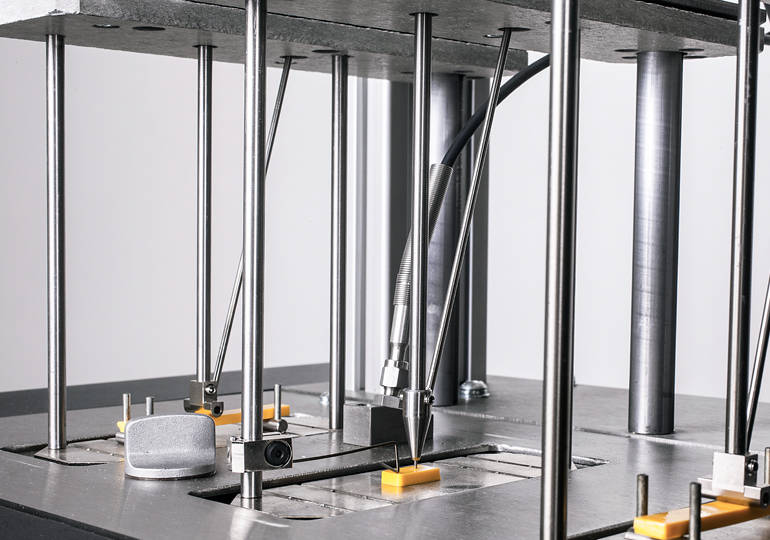
When a direct strain source is required, we recommend using a deflectometer, which is a spring-loaded plunger positioned below the specimen. When the specimen starts to flex, the plunger will compress and strain can be measured using an appropriate extensometer. The deflectometer is compatible with certain clip-on extensometers, Advanced Video Extensometer 2 (AVE 2), as well as the AutoX750 automatic contacting extensometer.

Learn more about our automotive solutions

Knobs and Buttons Tension Torsion Testing

Automotive » Interior

Knobs and Buttons Tension Torsion Testing

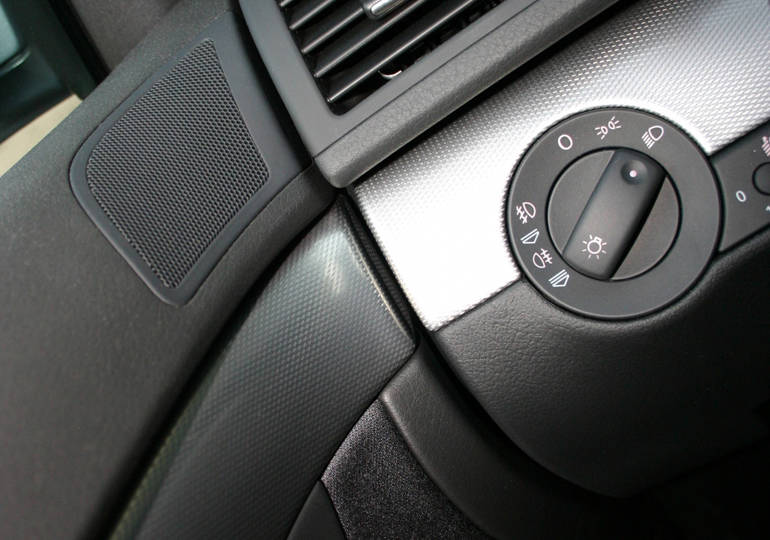
While the world is moving towards touch technology where we interact with swipes, knobs and buttons are still very common in the interior of automobiles.  Knobs and buttons enable the driver to keep their eyes on the road and use haptic sensing to change the radio, switch on the air conditioning, turn on their seat warmer etc. Haptic sensing refers to a user applying a force or touch to an object and that object applying a force, vibration, click, or motion back to the user. For example, when a driver turns their windshield wipers on there is a mechanical stop accompanied with a click that notifies the driver of the different windshield wiper level. 

tHE CHALLENGE

For automobile manufacturers, quantifying the force and torque to click, twist, press, and pull the various parts in the interior of a vehicle is an important measure. Irregularly shaped parts in the automobile's interior such as steering components, windshield wiper control levers, and dashboard knobs are often small and challenging to grip. In addition to this, the low forces and torque required to twist, press, push, and pull various panel parts also can be challenging.

our Solution

Instron offers a range of t-slot tables and component test plates for both single and dual column test frames for clamping and fixturing difficult to grip components. In addition to this, manual screw side action grips are ideal to use because the grip face can be offset in order to keep forces within the center of the load string. A variety of jaw faces can also be interchanged to provide an optimized gripping surface.

Low force and low torque measurements are especially difficult to measure using bi-axial load cells. Bi-axial load cells measure both axial load and torque. Noise from a load cell generally comes from two areas: the load cell design and the signal conditioning electronics. The design of a biaxial load cell is considerably more complicated than a standard axial-only or torque-only load cell as there is cross interference between channels. Instron offers load cells ranging in capacity.

Learn more about our automotive solutions

Seating Foam Compression Testing

Automotive » Interior

Seating Foam Compression Testing

Cyclic Loading

Car manufacturers utilize foam materials primarily for seating purposes. The consumer is continuously interacting with the material and it's material properties can directly affect the consumer's ownership experience. As such, manufacturers perform rigorous testing of foam materials to ensure their safety, durability, and comfort. Various tests are performed in order to characterize the material's properties as they relate to the support profile and long-term consumer comfort.

THE CHALLENGE

Simple compression testing is not adequate in quantifying the material properties of foam materials. Car manufacturers often require cyclic testing in order to better analyze the performance of foam materials.

The two most common tests performed are indentation force deflection (IFD) and hysteresis testing. IFD is defined as the amount of force required to indent a platen of a specified thickness into the material. This test is often performed repeatedly on various sections of the material to best characterize its support profile. Hysteresis testing measures the difference between loading and unloading energy of the material. This helps car manufacturers understand the comfort and support provided to consumers when getting in and out of the seat.

our Solution

Compression Platen

Offered as an add-on to Bluehill® Universal software,  TestProfiler allows the user to create advanced multi-step tests with unprecedented flexibility. Within the powerful yet easy-to-use architecture, cyclic tests can quickly be created to perform both IFD and hysteresis tests.

The required calculations can be easily implemented within the software, and graphical displays can be filtered to only show relevant loading cycles. This gives the user the control to view information most important to them, and more easily gain insight into their product.


Compression

THE CHALLENGE

Most foam compression tests performed by automotive manufacturers are based off ASTM D3574, which has very specific fixture requirements. Most automotive companies internal standards share the same requirements.

The standards require the support plate to be perforated with 6.5 mm diameter holes and 20 mm spacing. The holes allow for the rapid escape of air during the test. The standard also dictates the use of a swivel indenter foot which ensures proper alignment when axial loading is applied to the specimen, ensuring the most accurate and repeatable results.

our Solution

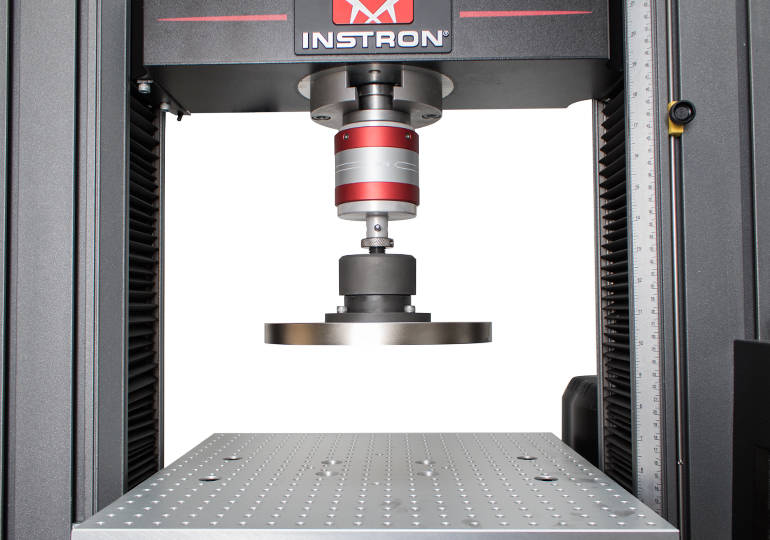
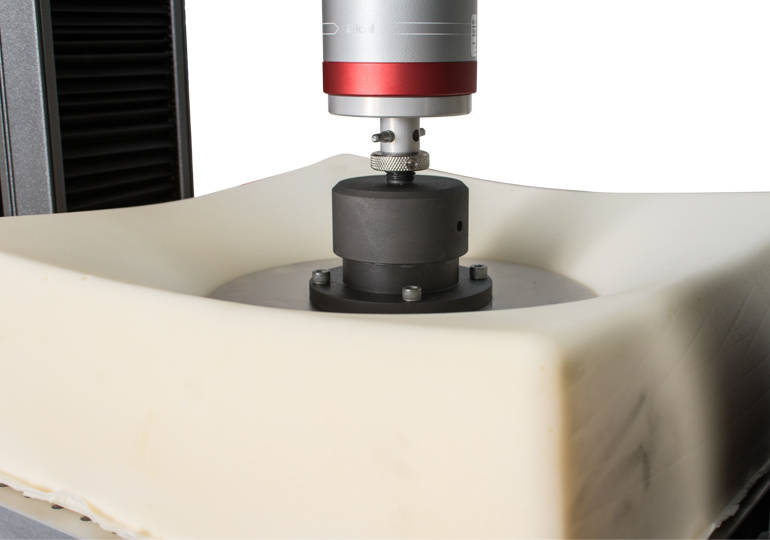
The Custom Solutions Group at Instron has designed a foam compression fixture, 2810-130, which meets all of the requirements laid out in ASTM D3574, and is able to seamlessly integrate with our Electromechanical Testing Machines.

The design utilizes a spherically seated compression platen and an aluminum support base. The support base can be set up in minutes, using the Instron bolt pattern on the base of the frame. The compression platen can attach directly to the load cell.


Learn more about our automotive solutions

Textiles Testing

Automotive » Interior

Textiles Testing

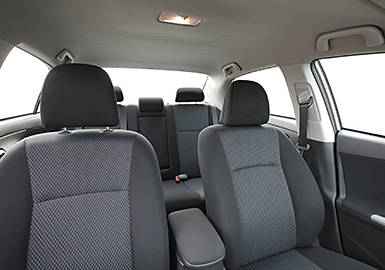
In the automotive sector, textiles must be aesthetically pleasing but also be durable to survive years of abuse. Automobile owners will see the interior of the vehicle every time they enter, so the importance of aesthetics cannot be understated. The automotive market is incredibly competitive, so any advances in the material technology of these textiles can provide a substantial advantage.

Textile Tensile Testing

The Challenge

Textiles can be difficult to test because they are a unique combination of being delicate, yet also strong in the tensile direction. This can make gripping these materials challenging.

Our Solution

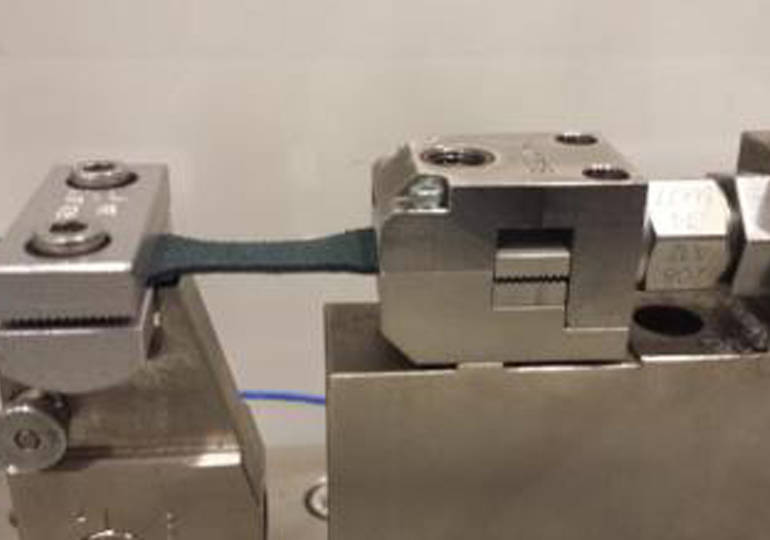
Instron offers many solutions for high-strength textiles that can be difficult to grip properly.

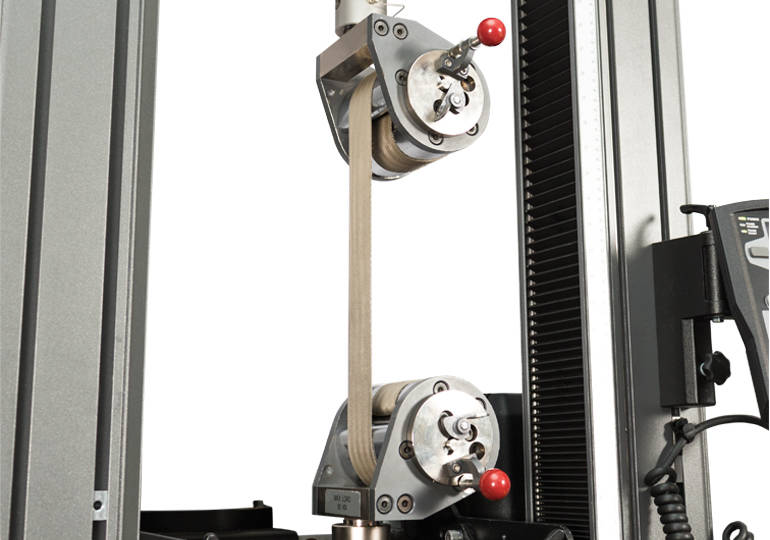
Capstan grips allow for very high-strength specimens (seatbelts, for example) to be optimally gripped without allowing slippage while also not damaging the material, inducing premature failure. The capstan wraps specimens around its smooth surface.

Cord and yarn grips function on the same principle as capstan grips, creating a long smooth surface along which the stress concentrations can be spread, greatly reducing the chances of premature failure for cord and fiber specimens.

Textile Pendulum Impact Testing

The Challenge

Many cars have leather interiors, leather gives a delicate touch of luxury and elegance to any car.  It can be important to check the quality of leather used to cover airbags, including its behavior after sunlight and climate exposure.

Our Solution

Determining the performance of a material covering airbags involves many factors. Measuring the tensile strength of leather is determined during an impact according to ISO 8256 Method A. This can be achieved with a CEAST 9050 Impact Pendulum, the specimen (horizontally-oriented) is supported and clamped through a special vice. The free end of the specimen is clamped through a crosshead that will be impacted by the hammer. VisualIMPACT software allows for easy analysis of the test results. The material’s failure behavior would affect the way the leather cover of the airbag would break during an impact event and is therefore critical to the safety of the passengers.

Airbag Material Testing

THE CHALLENGE

Textiles can be difficult to test, especially some of the more durable types of textiles used for airbag material. The toughness of the material combined with the specimen’s uniform cross-sectional area can result in slippage during testing or premature specimen failure at the gripping point (jaw breaks).

THE Solution

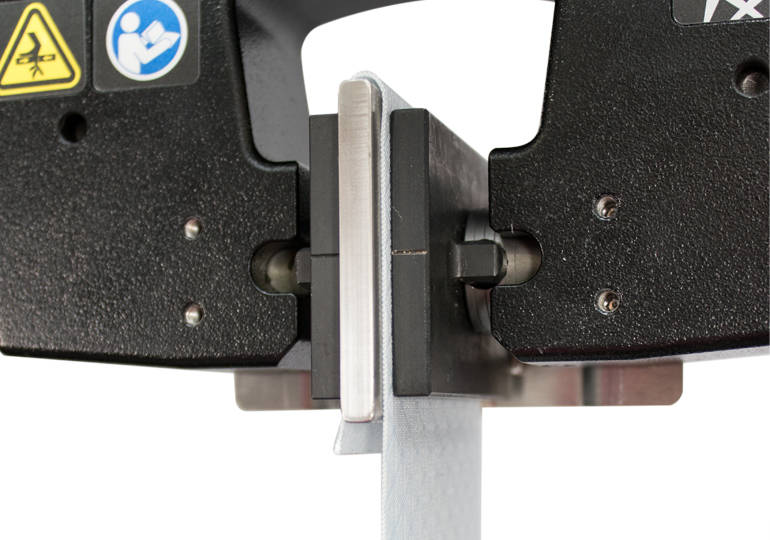
Instron has created a set of integrated wedges that can easily be mounted on a set of 2712-04X grips. These pneumatic side action grips combined with the integrated wedges allow for testing of high-strength strips of material without slippage or jaw breaks while maintaining high throughput.

The wedges can easily be removed, and the grips can then be used as normal pneumatic side action grips.

The wedges are mounted directly to the grips, and specimens are wrapped around the wedge insert so that the amount of material being gripped is effectively doubled. Standard serrated jaw faces are then able to grip the material without inducing jaw breaks.

Learn more about our automotive solutions

In Situ Testing

Automotive » Interior

In Situ Testing

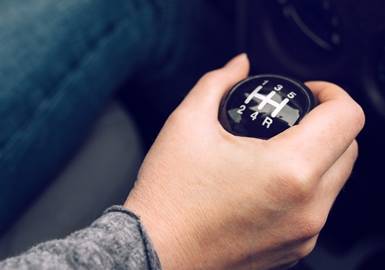
Not all human interactions with automotive components are purely axial and always vertical. If only using a vertical, axial frame, this can create a challenge for the fixture design or prove to be impossible to test in situ. It is important to test final components in the way that the end user will interact with them.

THE CHALLENGE

Shifting an automatic or manual transmission is not a purely linear motion. As you shift between gears, the gear shift moves through an arc. If this test was forced into a linear axial system, a complex fixture design would be needed and the gear shift would have to be placed on its side, not mimicking the real-life application.

our Solution

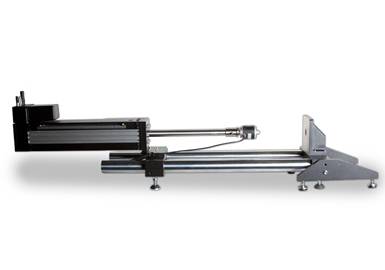
The Electric Actuator is a modular tester which has the flexibility to be easily mounted and installed to suit the application. Flexibility in mounting allows the customer to mount the actuator in any angle to simulate the final use scenario. If the actuator is mounted on a trunnion, it enables it to pivot a move through an arc as the shifter moves between gears.

Braking

THE CHALLENGE

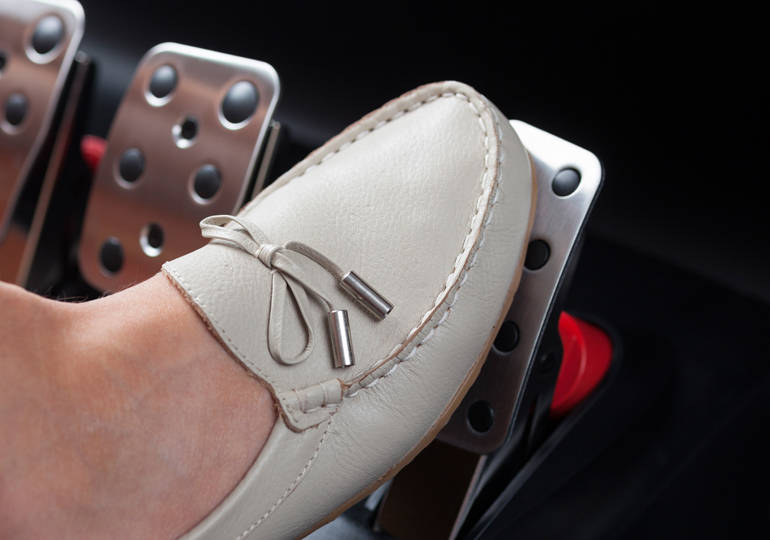
Actuating the brakes in a car is not a purely vertical motion. The user approaches the brake at an angle and pushes down through that angle. It would also be nearly impossible to test the final assembly – brakes and pedals installed in the car – with a standard universal testing machine frame.

our Solution

The Electric Actuator is a modular tester which has the flexibility to be easily mounted and installed to suit the application. The flexibility in mounting allows the customer to mount the actuator from any angle to simulate the final use scenario. The electric actuator can also be mounted onto a rig installed in the car and act as the human leg/foot does as the brake pedal is depressed.


Learn more about our automotive solutions