Instron

Tensile Testing of Steel Cords

Automotive » Wheel and Tire

Tensile Testing of Steel Cords
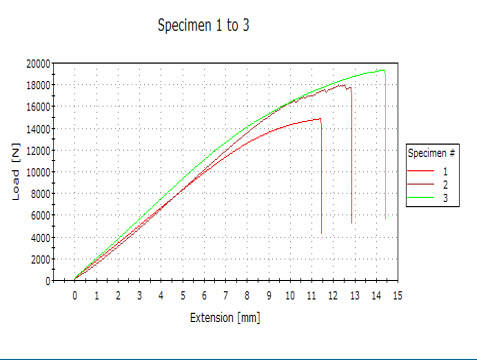
Steel cord is formed by twisting multiple strands of steel wires together to form a cord structure. This is often used as a reinforcement material in conveyor belts and radial tires for passenger cars, buses, or heavy equipment vehicles. Compared to other traditional reinforcement materials like nylon, steel cords possess superior mechanical properties, such as higher tensile strength and modulus and better heat resistance. When used as a reinforcement material in radial tires, it offers high road stability, improved steering response, and longer tire service life. Since some of the key performance indicators of tires are dependent on the reinforcing steel cord, it is important for an engineer to understand the properties of the tire cord and how it functions in a tire.

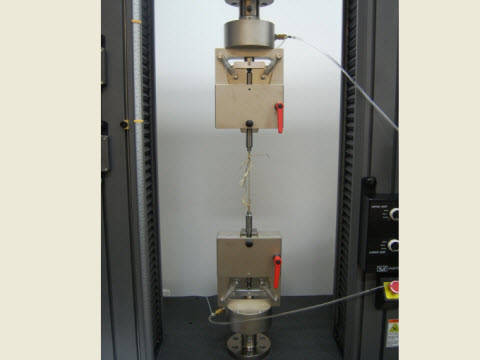
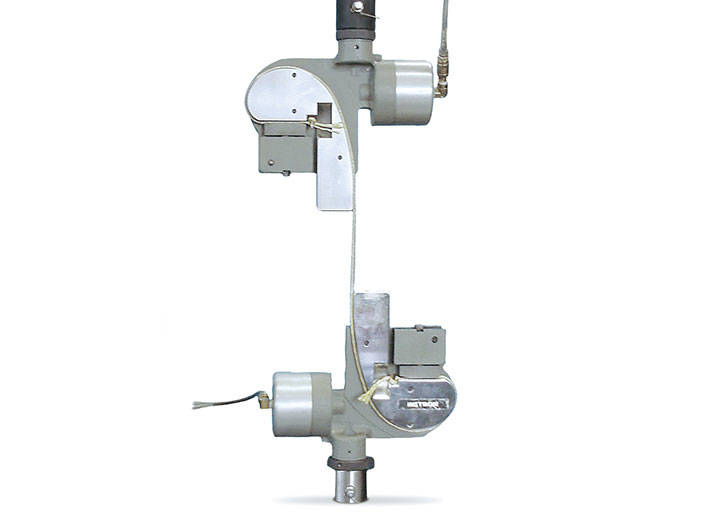
There are many challenges to account for when testing stranded wire. As stranded wire is not a consistent diameter, generally a nominal diameter is used (as defined in the product standard).  As well as the irregularity of the surface, when a specimen is pulled in tension each strand will rotate. Therefore, if a clip-on extensometer is being used, it must be able to rotate. It is also necessary to have a long gauge length, so Instron offers a 600mm G.L. extensometer with 15 degrees of twist available. When stranded wire breaks, the energy released at failure is substantial, and the specimen ‘splays’ out. This may cause damage to extensometers, machine or even operators.

The challenges of testing to this standard are:

  • Specimen gripping
  • Strain measurement
  • Safety


Instron's Solution:

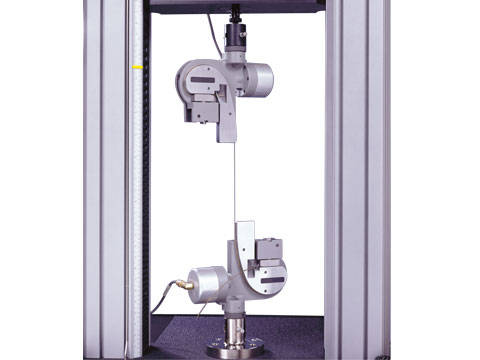
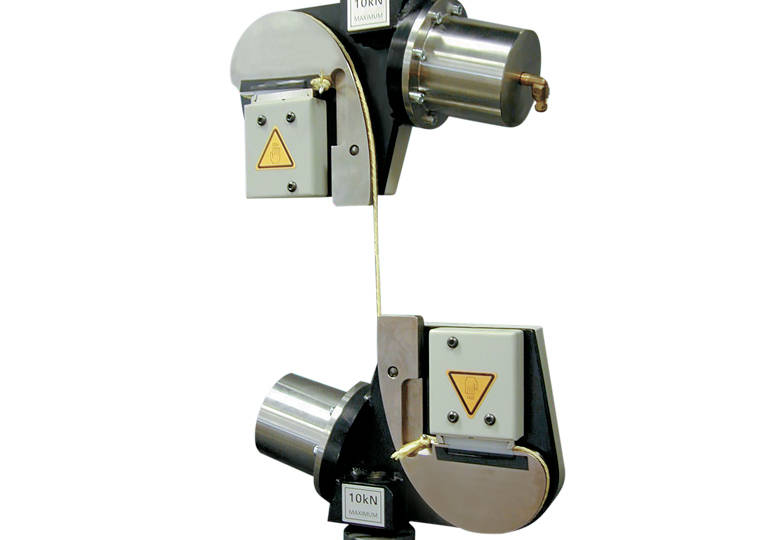
  • Instron provides side action grips with wire strand inserts that ensure optimum grip face engagement and clamping surface area.
  • Instron’s E-series extensometers allow for a 600mm gauge length and specimen rotation, providing a robust strain-measurement solution.
  • Debris shields are available in many shapes and sizes, and can be interlocked to ensure operators are not in danger at any time throughout testing.


It is important to review the pertinent testing standards in order to fully understand the test setup, procedure, and results requirements.

Literature

6800 Series Premier Testing Systems Brochure

Instron 6800 Series Universal Testing Systems provide unparalleled accuracy and reliability. Built on a patent-pending Operator Protect system architecture with an all-new Smart-Close Air Kit and Collision Mitigation features, the 6800 Series makes materials testing simpler, smarter, and safer than ever before.

  • ผลิตภัณฑ์
  • 02/10/2020
  • 1.93 MB

Bluehill Universal Brochure

Bluehill Universal is Instron’s advanced materials testing software, designed for intuitive touch interaction and streamlined workflows. It offers pre-loaded test methods, QuickTest for rapid setup, enhanced data exporting, and Instron Connect for direct service communication. Users of Bluehill 2 and Bluehill 3 can easily upgrade to the latest version for improved performance and usability

  • ผลิตภัณฑ์
  • 02/26/2017
  • 3.77 MB

การทดสอบเส้นใยอะรามีด

Automotive » Wheel and Tire

การทดสอบเส้นใยอะรามีด

การทดสอบแรงดึงนั้นมีความเหมาะสมสำหรับการประเมินลักษณะทางกายภาพของสิ่งทอพื้นฐานต่าง ๆ และยังรวมไปถึงวัสดุที่มีสมบัติพิเศษอื่น  ๆ เรามีเครื่องทดสอบอเนกประสงค์หลากหลายประเภทและมีอุปกรณ์จับยึดที่หลากหลายเพื่อรองรับและตอบสนองต่อวัสดุประเภทต่าง ๆ ที่ต้องการทดสอบ

สำหรับการทดสอบสิ่งทอนั้น เราใช้อุปกรณ์จับยึดแบบ 2714-010 Pneumatic Cord and Yarn Grips เนื่องจากอุปกรณ์ประเภทนี้จะสามารถจับยึดชิ้นงานทดสอบได้อย่างเหมาะสม เนื่องด้วยสำหรับสิ่งทอและเส้นใยสำหรับคอมโพสิตนั้น มีความสำคัญเป็นอย่างยิ่งที่จะต้องมั่นใจว่าไม่เกิดการลื่นหลุดในระหว่างการทดสอบเนื่องจากสิ่งนี้จะส่งผลกระทบต่อความแม่นของผลการทดสอบได้

เส้นใยอะรามีดนั้นจะมีค่าอัตราส่วนของความแข็งแรงต่อน้ำหนักที่สูงกว่าเหล็กถึง 5 เท่าที่น้ำหนักเท่ากันและยังคงสูงกว่าเส้นใยทางการค้าประเภทอื่นอีกด้วย เมื่อเทียบกับเส้นใยแก้วนั้น เส้นใยอะรามีดจะมีค่าความต้านทานแรงดึงสูงสุดที่เท่ากัน แต่จะมีค่ามอดูลัสที่สูงกว่าอย่างน้อยสองเท่า

สำหรับการทดสอบเส้นใยอะรามี เราจะมีอุปกรณ์จับยึดแบบแรงดันลมประเภทต่าง ๆ ที่ได้รับการออกแบบเป็นพิเศษสำหรับจุดประสงค์นี้ให้เลือกใช้งาน

เมื่อท่านทำการทดสอบไม่ว่าจะตามมาตรฐานการทดสอบใด ๆ หรือใช้วิธีทดสอบของต้นเอง เราแนะนำให้ใช้เครื่องทดสอบอเนกประสงค์รุ่น 3300 หรือ 5900 พร้อมโปรแกรมทดสอบวัสดุ Bluehill® 3 เพื่อให้ท่านได้ผลการทดสอบที่ถูกต้องตรงตามความต้องการ

วรรณกรรม

3400 Series – โซลูชันการทดสอบราคาประหยัด

ระบบทดสอบอเนกประสงค์ Instron 3400 ซีรีส์สำหรับการทดสอบแรงดึง แรงอัด การดัดงอ และคุณสมบัติอื่น ๆ ของวัสดุ

  • ผลิตภัณฑ์
  • 06/27/2022
  • 2.58 MB

6800 Series Premier Testing Systems Brochure

Instron 6800 Series Universal Testing Systems provide unparalleled accuracy and reliability. Built on a patent-pending Operator Protect system architecture with an all-new Smart-Close Air Kit and Collision Mitigation features, the 6800 Series makes materials testing simpler, smarter, and safer than ever before.

  • ผลิตภัณฑ์
  • 02/10/2020
  • 1.93 MB

Pneumatic Tire Cord Grips (CP105953)

The Instron® pneumatic tire cord grips provide a convenient method for clamping tire cord and braided wire during testing.

  • ผลิตภัณฑ์
  • 08/14/2013
  • 599.82 KB

Bluehill Universal Brochure

Bluehill Universal is Instron’s advanced materials testing software, designed for intuitive touch interaction and streamlined workflows. It offers pre-loaded test methods, QuickTest for rapid setup, enhanced data exporting, and Instron Connect for direct service communication. Users of Bluehill 2 and Bluehill 3 can easily upgrade to the latest version for improved performance and usability

  • ผลิตภัณฑ์
  • 02/26/2017
  • 3.77 MB

Biaxial Wheel Fatigue Test

Automotive » Wheel and Tire

Biaxial Wheel Fatigue Test

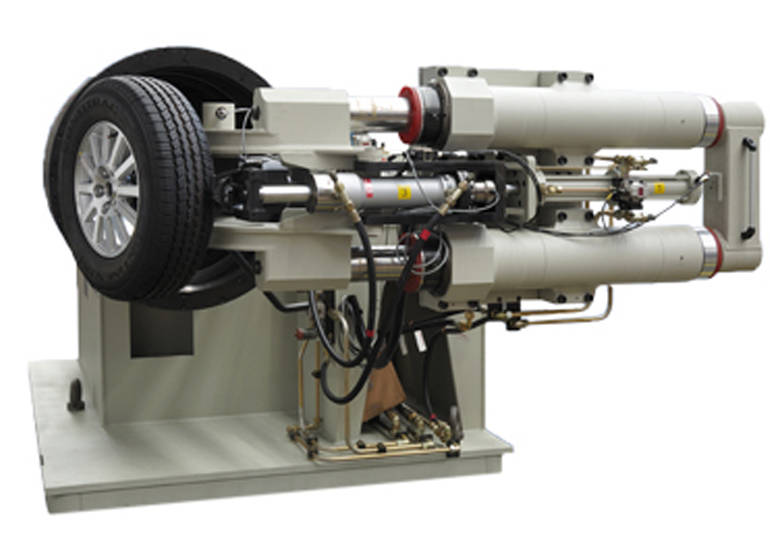
Wheels are safety-critical components of any vehicle and are exposed to severe loads over their lifetime. Their reliability can only be safeguarded by performing tests under laboratory conditions which resemble actual loading conditions as closely as possible. Based on an idea from the Fraunhofer Institute for Structural Durability and System Reliability LBF, the Biaxial Wheel Test Facility has been completing validations since the early 1980´s. This test procedure became a standard at most European wheel producers and was also introduced as SAE wheel standard J 2562, in 2003. Standardized load profiles like Euro-Cycle or AK-Cycle had been developed which could reduce the test time to a minimum by transforming damage content of the original design spectra of 300,000 km to an accelerated one of only 10,000 km. Today, an additional method for the generation of a load profile is available. By using the “Hayes Lemmerz” method the ZWARP’s control parameter could be determined directly from the wheel forces without the need for the long detour of a strain gauge measurement.

The Challenge

Zwarp Challenge

Wheels are critical safety-relevant components of the vehicle which are exposed to severe loads over the lifetime. Their reliability can only be safeguarded by performing tests under laboratory conditions which resemble actual loading conditions as closely as possible. 

Our Solution

Zwarp Solution

The Biaxial Wheel Test (ZWARP) developed by Instron includes an additional hydraulic actuator which allows a controlled and highly accurate adjustment of the angle of attack to produce high lateral forces. It is also distinguished by its compact design, high robustness, and extremely high reproduction quality.

By using this so-called “Hayes Lemmerz” method, the ZWARP’s control parameter could be determined directly from the wheel forces without the need for the long detour of strain gauge measurement.

Learn more about our automotive solutions

Tire Cord Tensile Test

Automotive » Wheel and Tire

Tire Cord Tensile Test

THE CHALLENGE

Tire cord is extremely strong, and gripping the test specimen can be challenging. Designed to be strong and durable, these cords provide critical reinforcement and structure to tires, and are an integral part of the automobile’s safety. Testing must be performed with utmost care, making sure to avoid inducing early failure from gripping incorrectly.

THE Solution

Instron has a range of capacities for cord grip's that were designed specifically for these hard-to-grip specimens. These grips have a smooth, curved face that distributes the stress evenly along a large section of the specimen, greatly reducing the chance of jaw breaks.

Tire Rubber Tensile Test

Automotive » Wheel and Tire

Tire Rubber Tensile Test

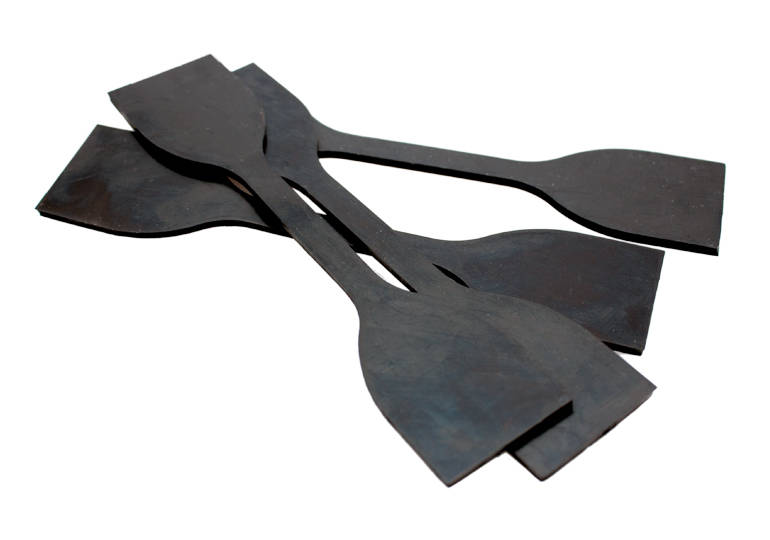
The elongation of elastomers is critically important to tire manufacturers, as this property helps predict how tires may behave during use.  This property, however, can create challenges in testing.

Strain Measurement

THE CHALLENGE

Tire

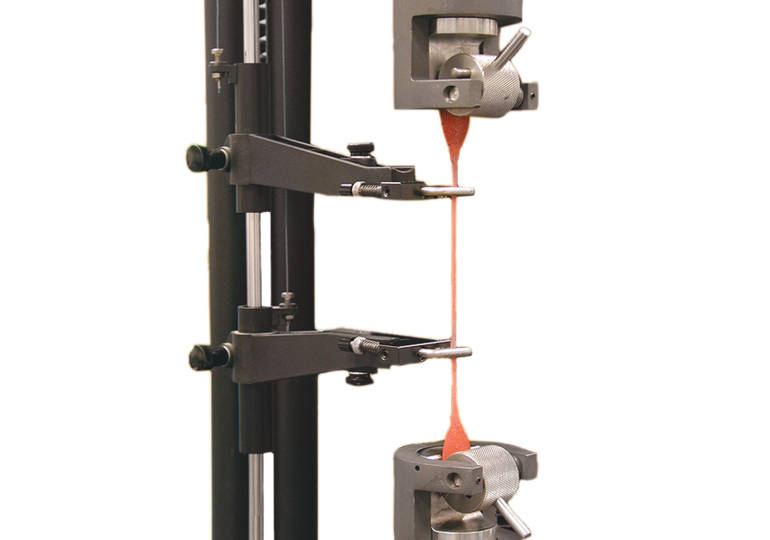
While extensometers are not required by the most common standards (ASTM D412 and ISO 37), a strain measurement device is recommended to ensure the most accurate and repeatable results.   Traditional clip-on extensometers do not provide sufficient travel for elastomeric testing.

In addition, for many customers testing elastomeric tire materials at varying temperatures is critical.

OUR SOLUTION

AVE 2

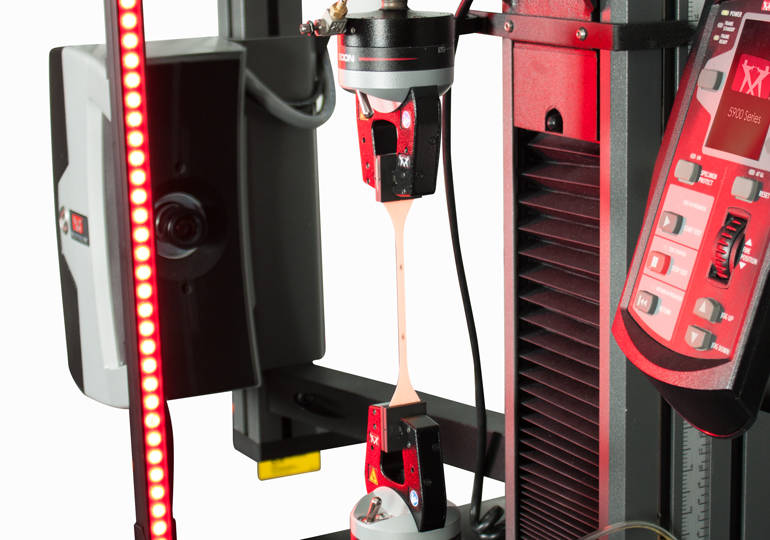
The Advanced Video Extensometer (AVE 2) is a non-contacting extensometer which is ideal for elastomeric materials. The AVE 2 is capable of measuring strain up to 2400% with a 1-inch gage length and can also measure strain up to break. It does not require contact with the specimen and therefore does not produce pinch points which may cause a premature failure and an invalid test. The AVE 2 can be used to measure strain inside of an environmental chamber when testing at non-ambient conditions.

Instron's XL long travel extensometers can also be used through break and are designed to work for elastomeric materials.  The adjustable clamping force on the knife edges reduces premature failure of the specimen.  Strain can be measured up to 3000% with a 1-inch gage length.

Gripping of Elastomers

tHE CHALLENGE

During testing, rubber materials can typically see significant thinning as they experience high elongation.  This can cause extrusion from the grips and result in slipping and non-valid test results.  Over tightening the grips, however, can result in jaw breaks and premature failure.

OUR SOLUTION

The 2712-04x series pneumatic side action grips are capable of maintaining a constant pressure throughout the test.  The adjustable inlet pressure ensures that the pressure can be optimized to eliminate both slipping and jaw breaks.  The patented quick-change jaw faces make it easy to change faces to best suit your material.

Alternatively, a self-tightening eccentric roller grip can be used. These grips use a serrated eccentric roller to clamp the specimen throughout the test.  As the load increases on the elastomeric material, the off-center nature of the roller increases clamping force preventing the specimen from slipping out of the grips.

Learn more about our automotive solutions

Rheology of Tire Rubber

Automotive » Wheel and Tire

Rheology of Tire Rubber

The Challenge

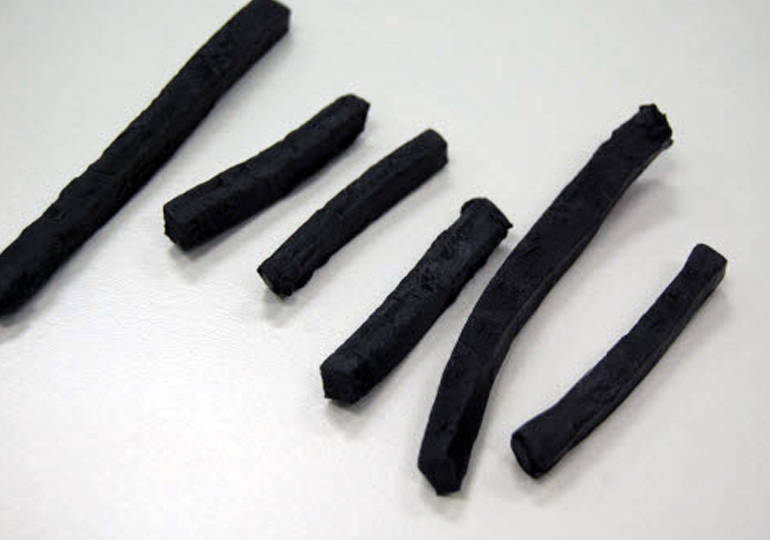
Tires are manufactured worldwide for cars, trucks, industrial vehicles, and common conveyances such as baby carriages, bicycles etc. A tire is a strong and flexible rubber casing attached to the rim of a wheel that provides a gripping surface for traction and serves as a cushion for the wheels. Natural or synthetic rubber are typically the primary material use in tire production however, thermoplastic elastomers are often used to produce tires. Thermoplastic elastomers have the same mechanical and chemical properties, but can also be easily recycled and processed via extrusion and injection molding techniques (common methods used for thermoplastics). A tire manufacturer needed to study their rubbery compound for its viscosity properties and swelling at the exit of the die. The sample consisted of an elastomer, carbon black, and additives in form of flat sheets.

Our Solution

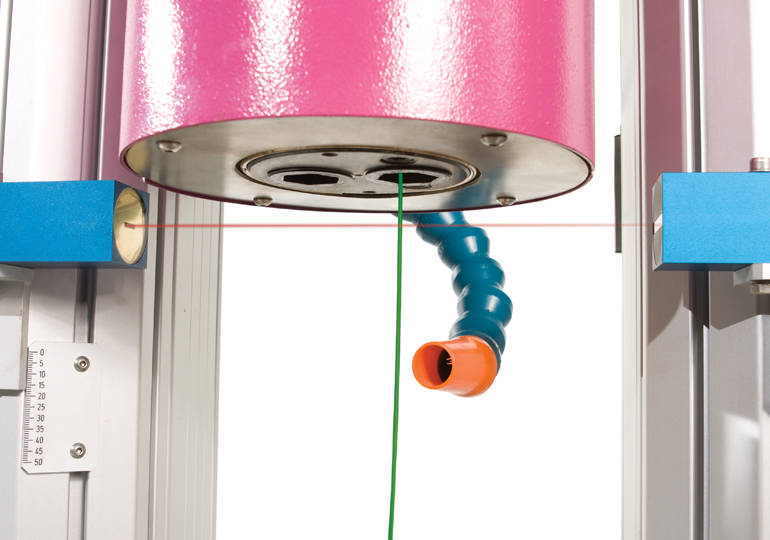
A capillary rheometer is a useful tool for determining flow characteristics of thermoplastic elastomers to understand their behavior during the processing phase. Besides determining the rheological curve (viscosity vs shear rates), it is often useful to study the extrudate swelling characteristics thanks to an add-on laser device for swell measurements. A CEAST SR20 (equipped with a 20 kN load cell) is used to perform both rheological tests according to ISO 11443 and die swell tests. The rheological test was carried out at 100°C spanning shear rates between 1 to 1000 s-1 through a capillary die and a twin bore configuration was used to perform two tests simultaneously. This material showed a non-Newtonian behavior with a viscosity ranging from 100,000 Pa*s at 1 s-1 shear rate to 800 Pa*s at 1000 s-1. Overall, the sample showed good repeatability and reproducibility of results. Furthermore, a die swell test was carried out by using the CEAST die swell laser system to study the influence of swell in this compound upon exit from the die.