Instron

Evaluation of Radial Forces from Embolic Filters
Biomedical Testing » Implantable Devices

Evaluation of Radial Forces from Embolic Filters

Radial Strength Testing of Stent Grafts and Vascular Devices

Embolic filters are used within a variety of interventional procedures to capture debris resulting from the deployment of a medical device, like a stent. The stent is used to open arterial paths that may be occluded by plaque. Upon placement of the stent, dislodged plaque (or embolic material) can potentially be responsible for heart attacks, strokes, kidney failure, or death. Firm placement of the embolic filter is a critical requirement for successful procedures.

One of the most critical parameters for proper utilization of the filter is the radial forces it imparts on the arterial wall. In particular, the chronic radial force that the filter imparts over time helps to ensure that the device remains in place as intended. This fit ensures that all material is captured before heading further down the arterial pathways.

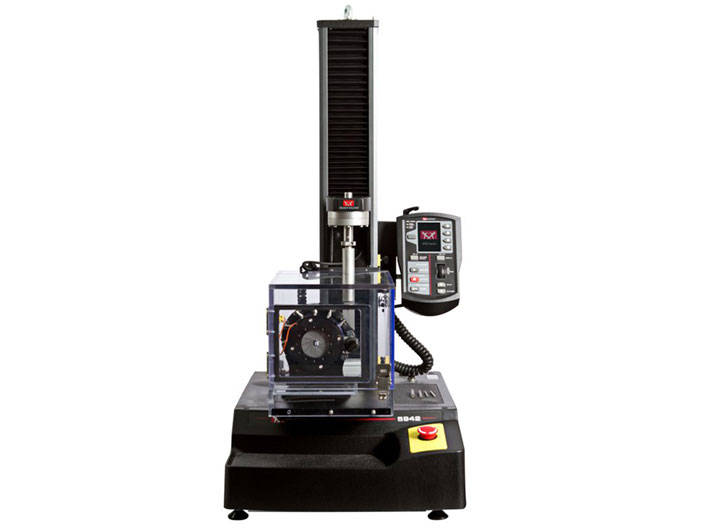
The RX575 system has the fidelity to measure the small radial expansion forces of the embolic filter. The unique segment design of the fixture results in small frictional forces, which ensures that your data will present clean results from the radial tests. The radial fixture mounts to electromechanical instruments, as well as into a fluid bath for accurate simulation of body temperatures. Additionally, the fixture provides the capability for tensile tests to evaluate resistance to tearing properties during deployment.

Bluehill® Software provides an interface to run tests, to evaluate the radial strength, and to generate standard reports that can be submitted for regulatory submissions.

Literature

3400 Series Universal Testing Systems Brochure

Instron 3400 Series universal testing systems for tensile, compression, bend, and other material property tests.

  • Productos
  • 06/27/2022
  • 2.69 MB

6800 Series Premier Testing Systems Brochure

Instron 6800 Series Universal Testing Systems provide unparalleled accuracy and reliability. Built on a patent-pending Operator Protect system architecture with an all-new Smart-Close Air Kit and Collision Mitigation features, the 6800 Series makes materials testing simpler, smarter, and safer than ever before.

  • Productos
  • 02/10/2020
  • 1.93 MB

Radial Force Evaluation of Stent Grafts

Biomedical Testing » Implantable Devices

Radial Force Evaluation of Stent Grafts

Stent grafts are used to treat a wide variety of peripheral arterial issues, as well as abdominal and aortic pathologic conditions like abdominal aortic aneurysms (AAA). The success of endovascular stent grafts for AAA’s has provided motivation to adapt similar technology for descending thoracic aortic aneurysms (TAA’s). Survival rates for untreated and traditionally treated (through complex thoracic surgeries) aneurysms are typically quite poor.

Advantages of stent grafts include shorter operative time, avoidance of major thoracic or thoracoabdominal incisions, and significant reductions in morbidity and mortality. Successful surgery requires the accurate placement of the stent graft to ensure it does not move, especially in upper descending thoracic aorta cases.

Typically, secure placement for stent grafts is a function of the proper selection and sizing since physiological movements of the aorta can be significant. Additionally, stent grafts have much larger diameters than coronary stents (30+ mm versus 2-3 mm). Evaluating the radial strength of a stent graft helps manufacturers to ensure efficacy and reliability of the medical device when implanted in vivo.

Instron partners with Machine Solutions Inc. (MSI) to utilize either a RX575 or RX675 stent iris on an Instron system. The fixture can also be customized and used for special specimen types to provide radial strength and stiffness over the entire graft or the securing graft ends. The control software to operate MSI’s RX fixture on an Instron system is standard Bluehill® 3 and TestProfiler. Although room-temperature testing provides excellent comparative results, the system can also be configured with a chamber to provide simulation of body temperature.

Literature

6800 Series Premier Testing Systems Brochure

Instron 6800 Series Universal Testing Systems provide unparalleled accuracy and reliability. Built on a patent-pending Operator Protect system architecture with an all-new Smart-Close Air Kit and Collision Mitigation features, the 6800 Series makes materials testing simpler, smarter, and safer than ever before.

  • Productos
  • 02/10/2020
  • 1.93 MB

Contact Lens Testing

Biomedical Testing » Implantable Devices

Contact Lens Testing

The Challenge

Contact Lens

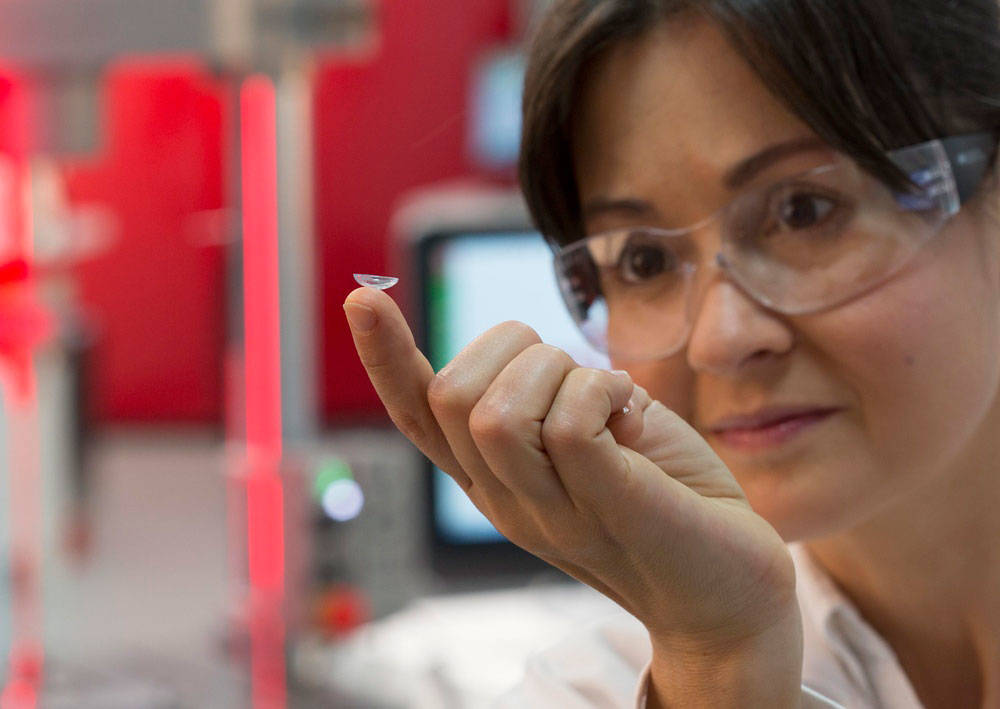
Contact lenses, one of the most widely used medical devices in the world, are primarily used for eyesight correction, but also for aesthetic enhancements and modifications. They are manufactured in a variety of forms, but are most commonly made from soft polymeric materials. Because soft contact lens material is slippery and delicate to handle, loading the specimen into grips can be challenging, and tears in the lens are common even under very low forces. To best simulate how they will be used, contact lenses should be tested in physiologically relevant conditions, which requires the lenses to be tested in a saline bath, heated to body temperature.

Our Solution

Contact Lens Testing

For testing contact lenses, we recommend using a Universal Testing System configured with the BioBath, 250 N submersible pneumatic grips, and extra long surfalloy grip faces. The long grip faces enable the user to insert the small lens into the grips with enough room to maneuver, while allowing the user to achieve zero grip separation. The lenses can be tested as full final products, cut into strips, or sliced to perform a trouser tear type of test. A low force load cell is also recommended to accurately detect specimen failure. The 250 N pneumatic submersible grips and associated pull rod that attach to the load cell are both designed to minimize buoyancy chances during low force testing, such as contact lens testing.

Ocular Implant Testing

Biomedical Testing » Implantable Devices

Ocular Implant Testing

The Challenge

Occular Implants

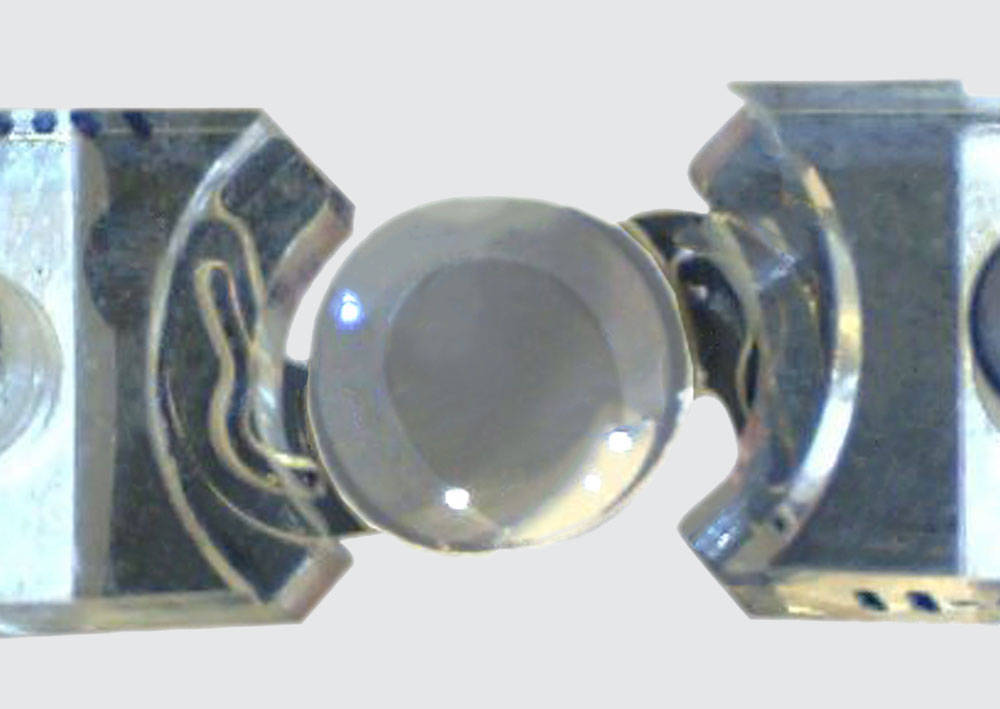
An intraocular lens (IOL) is a synthetic, artificial lens that is placed inside a patient’s eye, most typically after cataract surgery. When the patient’s natural lens is removed due to disease, the eye’s ability to refocus is lost. IOLs are most commonly made from Poly(methyl methacrylate) (PMMA), silicone, acrylic, and other soft materials that enable them to be easily folded and inserted into the eye. During surgery, it is imperative that IOLs do not rip or tear, as even the smallest tear can be very uncomfortable for the patient. Some of the biggest challenges with testing IOLs are simulating the folding behavior experienced during surgery, and gripping these small, dime-sized, devices.

Our Solution 

Ocular Implants Testing

For testing IOLs, we recommend using the TestProfiler module to conduct a simple cyclic test that puts the IOL in both tension and compression. For test systems, we recommend using a 6800 Series universal testing system, fiber grips, and a low force load cell, such as a 10 N load cell. In addition, we recommend using Bluehill® Universal’s TestCam feature paired with a USB microscope, which enables users to magnify their test specimen, record the test, and playback the footage post-test. Using a USB microscope with at least 10x helps the user detect any small sized tears that may not be visible with the naked eye.

Heart Pacemaker Testing

Biomedical Testing » Implantable Devices

Heart Pacemaker Testing

The Challenge

Heart Pacemaker

A pacemaker is a small electronic device, implanted under a patient’s collarbone, which helps a patient’s heart beat more regularly. It's composed of three main parts: a pulse generator, one or more leads, and an electrode on each lead. The pulse generator consists of a small case that contains circuitry, a battery, and a computer chip that regulates the electrical impulses sent to the heart. The lead is an insulated wire that connects to the pulse generator and extends to one of the heart’s chambers. The electrode on the end of the lead makes contact with the heart wall and is responsible for the delivery of electrical impulses to the patient’s heart. Considering that each component of a pacemaker is critical to its function, all three components must undergo rigorous testing. The variety of tests, including shear testing on the microelectronic components, compression testing on the battery, and tensile testing on the leads, can be challenging to meet with just one system.

Our Solution 

Heart Pacemaker Testing

The Instron® 6800 Series test systems, with Bluehill® Universal software and TestProfiler module, represent the most capable of Universal Testing Machines on the market today. Software flexibility gives users the ability to program a multitude of different methods with simplicity, including tensile, flex, compression, peel, tear, and friction. In addition, Instron’s Engineered Solutions Group has partnered with a number of electronics companies and medical device companies to develop specialized fixtures, including special shear clamps and micro bend fixtures. In addition, we recommend using pneumatic cord and yarn grips for tensile testing leads.

Stent Testing

Biomedical Testing » Implantable Devices

Stent Testing

The Challenge

Stent

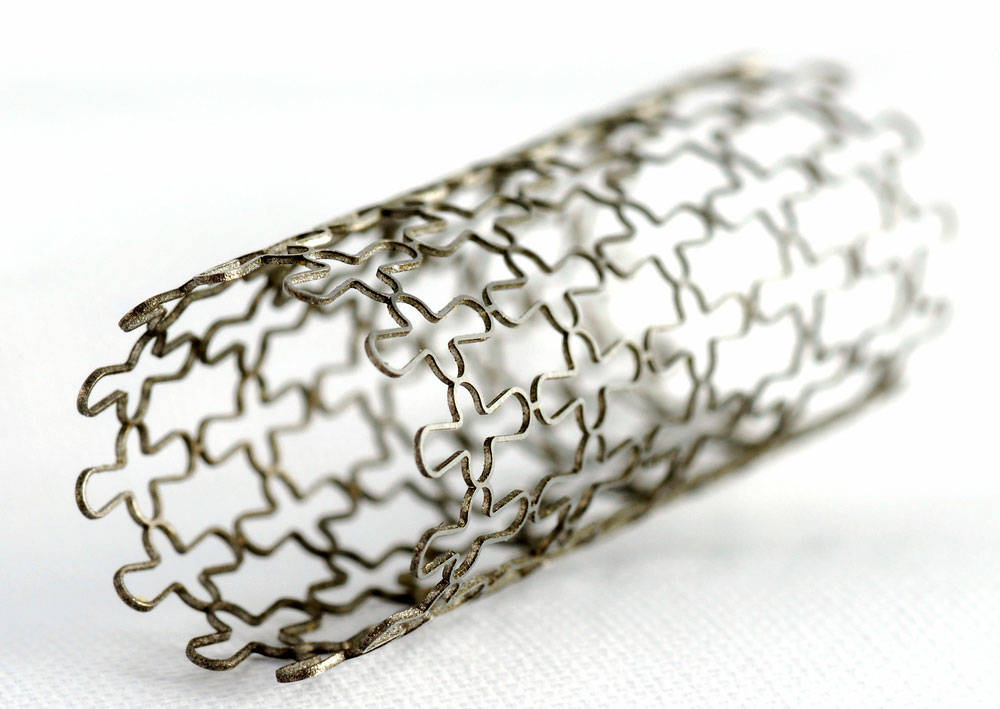
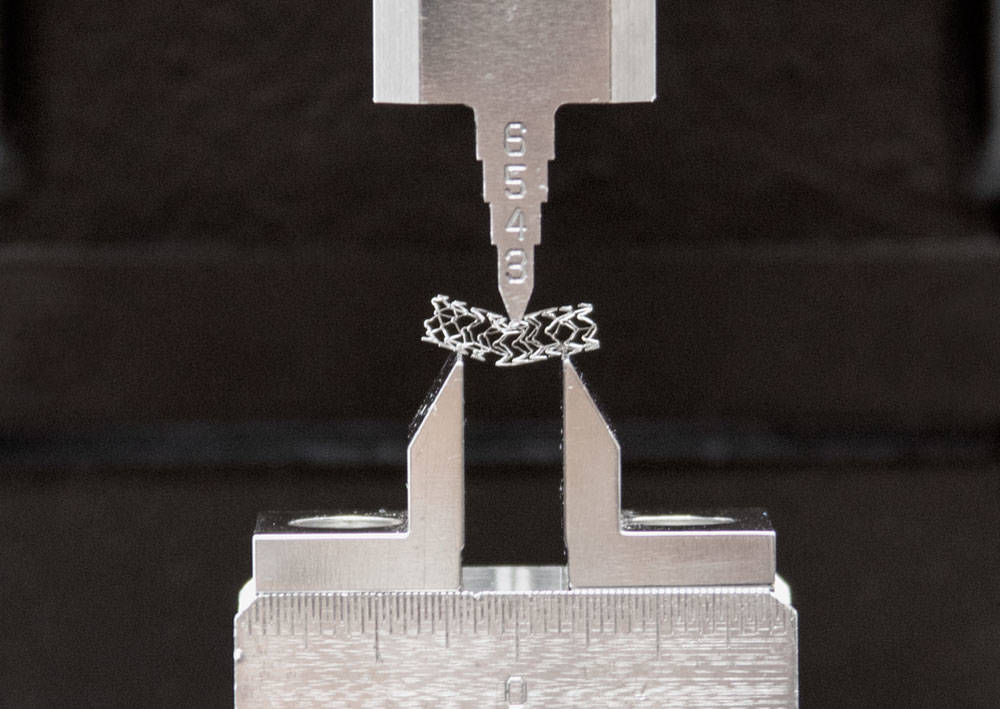
Mechanical testing of stents involves a range of different tests that encompass both static and fatigue methods. Stents are most commonly made from Nitinol wire, which must be tested to ASTM F2516 in a simple cyclic test. Another static test that is often carried out on stents is a flexural test in accordance with ASTM F2606. In addition to testing the raw material, the diamond structure of the stent body is commonly tested in fatigue at 60 Hz in position control. The entire stent body is also typically tested in radial compression as a static test, and pulsatile fatigue or cyclic fatigue as a dynamic test. Considering that such a variety of mechanical tests are required on any single stent, it is often challenging to select the appropriate test system for conducting as many tests as possible.

Our Solution 

Stent Testing

For all static testing, including testing to ASTM 2516, ASTM F2606, and radial compression testing on the full stent body, we recommend using a 6800 Series universal testing system. When testing Nitinol Wire to ASTM 2516, we recommend utilizing our Advanced Video Extensometer for accurate strain measurement. When testing full stent bodies in radial compression, Instron® partners with Machine Solutions Inc. (MSI) to provide a specialized fixture. The radial compression fixture can be mounted to any Instron 5940 or 5960 series system and can utilize standard Bluehill® Universal software to control the test. For all fatigue tests, including testing the diamond structure of the stent body or the entire stent in cyclic extension control, we recommend using our ElectroPuls™ test systems.