Mechanical Testing of Medical Device Plastics Webinar
Vital Signs: Evaluating the Plastics Behind Medical Devices
Mechanical testing plays a critical role in demonstrating that plastics used in biomedical packaging, components, and device assemblies are suitable for their intended use. In this webinar, we focus on the aspects of mechanical testing that are unique to the biomedical industry, particularly the processes, controls, and documentation practices needed to support compliant testing in regulated environments.
What You'll Learn
- How mechanical testing is applied to single-use packaging, components, and connectors commonly found in biomedical applications
- Practical considerations for testing complex devices and assemblies, where traditional test approaches may not directly apply
- How to maintain compliance through proper documentation, validation strategies, and testing practices aligned with FDA-regulated environments
Presenter
Sam Havel, Biomedical Product Specialist at Instron®
[00:00] Like Nick said, my name is Sam, and thank you for taking the time to join us this morning. If you're coming from one of our other plastics webinars, welcome back. And if this is your first one in the series, welcome.
[00:19] I want to start with a brief overview of what I plan to cover. We'll begin with how plastics are used in the biomedical space and why they're significant. Then we'll discuss the considerations that make testing plastics in this industry unique, before spending some time on the regulatory space, compliance, and traceability in your testing. Then, as Nick mentioned, we'll wrap up with a Q&A.
[00:52] It's hard to think about our world, especially medicine and the biomedical industry, without plastics. Usually, when we talk about plastics in the materials testing world, we think of them as a raw material, tested in the uniform dog bone shape that many of you are familiar with, to determine their properties. In the biomedical space, we see these plastics later in the life cycle, either as a component or as a finished product, and they are all around us.
[01:22] In the pharmaceutical segment, these are usually products used to deliver or store a drug for therapeutic purposes. Examples include auto-injectors, syringes, medicine bottles, and IV bags. Even in this small subsegment, you can easily see the difference between an IV bag, which is a flexible, thinner plastic, and a medicine bottle, which is much more rigid and probably has a childproof cap. Plastics in this industry vary widely.
[02:03] Next, we have medical devices. These are products used for investigative or therapeutic procedures, and they usually need to be tested at body temperature. Examples include catheters, tubing, and Luer lock connectors that usually interface with plastics in the pharmaceutical area.
[02:24] Then we have biotechnology. These products usually fall between pharmaceutical and medical device. On the screen, you see an IUD. It has a plastic frame, but the copper wire is what delivers the therapy to the body.
[02:41] Finally, we have packaging and PPE. These are the consumable products that protect workers and patients and transport organic matter. Examples include face shields, lab goggles, and, probably most importantly, single-use sterile packaging. This has become critical as our understanding of germs, bacteria, and viruses advances. When we clean our materials, we need to sterilize them and store them for long periods without risk of infection to patients later on.
[03:19] Although most plastics testing in this industry is in the form of components or finished products, there are significant considerations for the raw material plastics that are chosen. Does my product need to be sterilized, and can it handle those temperatures? Can this plastic withstand body temperature for long periods? Is there a time threshold where there's a risk to the patient or discomfort? If this component is used in many different assemblies, how quickly and effectively can it be produced? And increasingly, even if it's safe for the patient, what are the environmental impacts?
[04:02] Starting with manufacturability: as with any plastic, the ability to manufacture is very important. In biomedical applications, injection molding is one of the most common manufacturing methods. The picture here shows an assembly line. Producing these products quickly, especially in times of need, is very important.
[04:28] Then we have durability. Whether it's a component or a full device, it usually needs to last longer than intended and in more extreme conditions. Think about the rubber gloves shown here. We want them to be flexible and cover the full hand without restricting movement of the fingers. They need to withstand the warmth of your hands and any moisture, because if a glove rips or fails, that is a risk to you as the provider or to the patient.
[05:05] Then there's biocompatibility. ISO 10993 is the standard for evaluating biocompatibility and classifying a plastic as medical grade. It looks at cytotoxicity, irritation to the patient, and systemic toxicity, meaning whether the device poses any risk to the larger systems and organs of the body.
[05:36] Finally, and increasingly, we have sustainability. Many medical devices are single use for sterility purposes, which puts a focus on the environment. Think about auto-injectors, especially with the rise of GLP-1 medications. They are single use, so after the medication is delivered, they go into a sharps bin and are disposed of. Many manufacturers are now starting initiatives for patients to send back their used auto-injectors so the sharps can be removed and the recyclable parts can be recycled.
[06:18] Now that we have some background on plastics in this space, let's discuss the unique considerations for testing biomedical components.
[06:28] As we've mentioned, plastics in the biomedical space are rarely in dog bone form, so they can't be tested to some of the most common plastics test standards, such as ASTM D638. And as with most applications, plastics in the biomedical industry do not exist in a vacuum. Standards give a great outline for how a device should be tested, but they may not capture all the specifics relevant to your device, such as who is using it and where. Where possible, human factors should be included and test procedures adapted to mimic the intended application.
[07:14] Here are some examples. First, criticality of administration: is the device for emergency use or regular day-to-day use? Going back to auto-injectors, epinephrine auto-injectors are used in emergencies to treat anaphylaxis. If the plastic cap cannot be removed in time, there is a severe risk of injury and harm to the patient. With a GLP-1 auto-injector, it's not as critical if the cap can't be removed, and the risk is much lower.
[07:53] Then there's the use environment. Especially since the pandemic, many therapies have moved to at-home use for patient comfort. Is a clinician or healthcare worker delivering the treatment, or is the patient doing it at home? What is their background and knowledge of the device?
[08:17] There's also the patient population. Depending on the treatment, it could be young children, elderly patients, or anyone in between. If the product is intended for a specific population, consider their skill level, the size of their hands, their fine motor skills, and any restrictions they might have.
[08:41] Then there's the target route and frequency. If it's an injection going into the same place in the body every time, is that causing adverse reactions or risk over time? Will that cause issues with how the product is administered?
[09:00] These are just a small subset of intended use factors to consider when deciding what additional testing might fall outside the standard. Other examples include transport, storage, and other environmental factors. Even if these aren't part of the intended use, the conditions a product goes through on the way to a patient or clinician could affect its performance when it is used.
[09:35] Now that we have a better understanding of intended use, there are some other component-specific factors to take into account. First, in any mechanical testing, you have your hardware, and you're trying to replicate the true intended use of the product. Then there are temperature considerations. If the device will be used in the body, you should probably test at body temperature. But you also have to consider whether the temperature fluctuates during storage or transport.
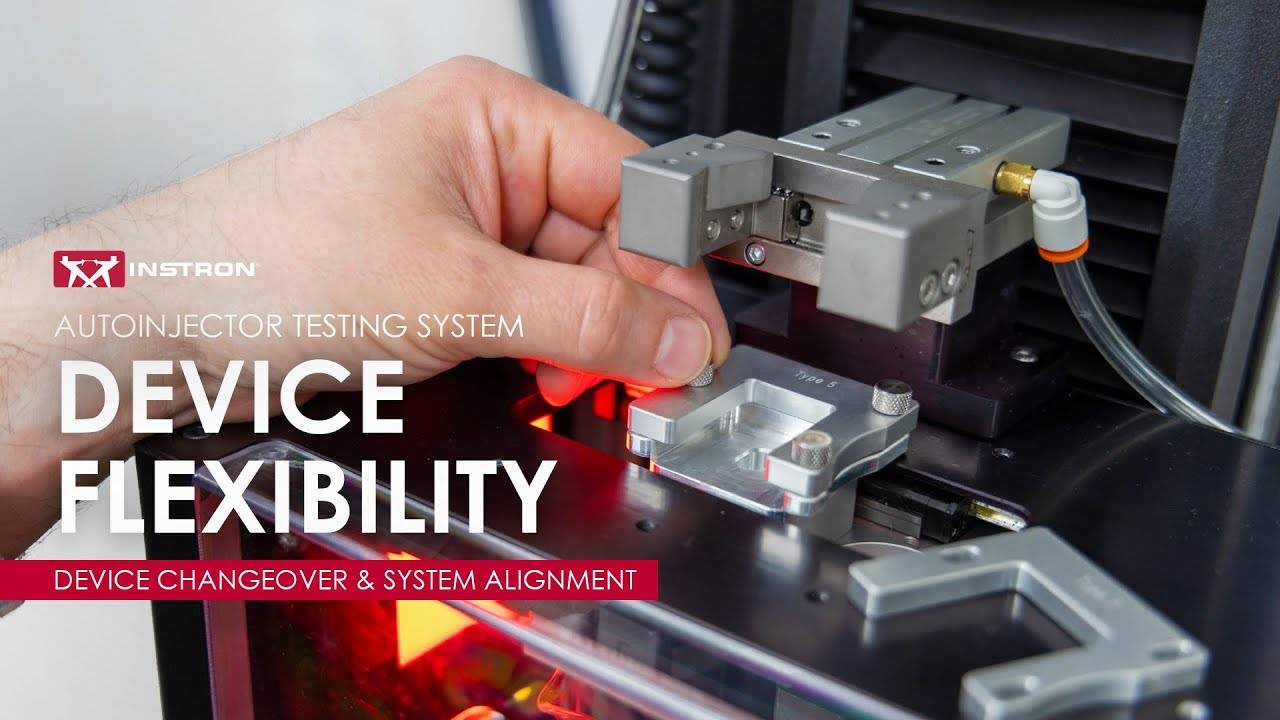
[10:16] Many of these plastics come in complex geometries, which can make them tricky to fixture. Think about a medicine bottle. How are you gripping it, and how can you replicate that with hardware? As you see in the image, we often use component test plates and other unique fixtures, sometimes customer-built, to replicate real-world use as closely as possible.
[10:44] Then there's software. Is the test sequence representative of real-world use, and how complex can it be? In the photo, you see a syringe being unwrapped from its packaging. Think about how you open a package, whether it's a bandage or a bag of chips. Do you open it at a constant speed, or slower and then faster? Can your software handle those different use cases?
[11:08] Can your software support non-mechanical properties? Force and displacement are important to capture, but what about other measurements? In this picture, video is being captured, and we'll go deeper into that in a few slides. Finally, is your data traceable? There is increasing focus and scrutiny on data security. When you submit data to a governing body, you need to be sure it is secure and that nothing has been changed or manipulated.
[11:54] We've talked about testing at body temperature, but what does that look like? Human body temperature is 37°C (98.6°F), and how you test at that temperature depends on your product.
[12:11] For in vitro testing at body temperature, we offer a BioBath™ that allows testing at temperature in a fluid such as water or saline. This is important for understanding mechanical properties in the true application, whether that's catheters or even contact lenses. As someone who wears contact lenses, I can say for sure that they behave very differently when they dry out. When manufacturers make my contacts and run quality control, I want them tested the way they'll be used, not dried out, where something unexpected could occur.
[12:55] For testing that doesn't need to be done in fluid, we also offer the BioBox, an enclosure held at body temperature. It allows more flexibility, especially for larger components or complex fixturing that might not fit in a water or saline bath. Beyond body temperature, extreme hot and cold conditions should also be explored if there are concerns about how the product will be stored or transported before it reaches the patient.
[13:40] As promised, let's look at characterization beyond mechanical properties. Software that supports non-mechanical measurements is becoming increasingly important as medical devices become more complex.
[13:55] One example is visual analysis, like we saw in the photo a few slides ago. Images and video of failures can be very helpful for identifying failure modes and for root cause analysis. If I'm a rubber glove manufacturer, do I see the glove rip in the same place every time? Do I see differences that might indicate a problem in the manufacturing process? Having video linked to my data helps me trace back and determine whether there's a problem to solve.
[14:34] Then there's optical measurement. Not every parameter can be characterized by force or displacement. During the injection step of an auto-injector, the needle extends from the body of the device, and it's important to know how far it extends. If it doesn't reach the correct therapeutic range, the medication won't be as effective. Integrating optical cameras and measurements into your test system means you can test fewer devices and still capture those critical results.
[15:16] Then there's device connectivity. Medical devices are becoming more complex, and I expect that trend to continue. On-body devices such as insulin pumps can connect to your phone, send your data securely, and link to your doctor's notes. As these devices get easier to use, we want to make sure they perform the way they should and deliver your data where it needs to go. This applies mainly to finished products, not components, but that may change.
[15:57] Finally, there are acoustic emissions. Going back to auto-injectors, most click at the start and end of injection to tell the patient when the dose has started and when delivery is complete. We can also apply this to packaging. Does my package make a ripping sound when opened? Should it? Does that sound affect whether a patient or clinician believes the package is sterile? Acoustic measurement can help characterize your device beyond force and displacement.
[16:41] Your software should also adapt to changing procedures and standards. We'll talk more about this in the compliance section, but every scientific process has breakthroughs and changes. Software that adapts with them is important for keeping your data and testing repeatable. One way to do that is through a workflow.
[17:04] We all have standard operating procedures, but even small reminders built into your test steps can be very helpful to operators, especially when processes have recently changed or the setup is complicated. In the workflow, managers or admins can add images and specific text so the proper procedure is followed and mistakes are reduced.
[17:38] In this example, we have a setup for ISO 7886-1, for sterile single-use hypodermic syringes for manual use. There is quite a bit of setup before testing, so this is a great place for an image of the correct setup. In my before-test or before-analysis steps, I might also record who the operator was and lab conditions such as humidity and temperature. That way, whether tests are days, weeks, or months apart, the same procedure is followed as closely as possible.
[18:17] Next is the Pass/Fail module. Whether you're testing packages or a full assembly, you'll have critical results. If something goes wrong in manufacturing, you want to identify it as soon as possible. In a large results table, it can be hard to spot a value that doesn't look right, and you need to catch it so it can be escalated and the root cause determined.
[18:44] The Pass/Fail module checks all your results against the acceptance limits for each specimen and for the whole batch. It then shows the operator, with large, bold indicators, whether everything passed. In the same syringe example, once setup is done and the test is running, you can see the live plot measuring glide force. If debris in the syringe caused a spike mid-test, the software would quickly show me as the operator that something wasn't right, and that these are results I need to investigate.
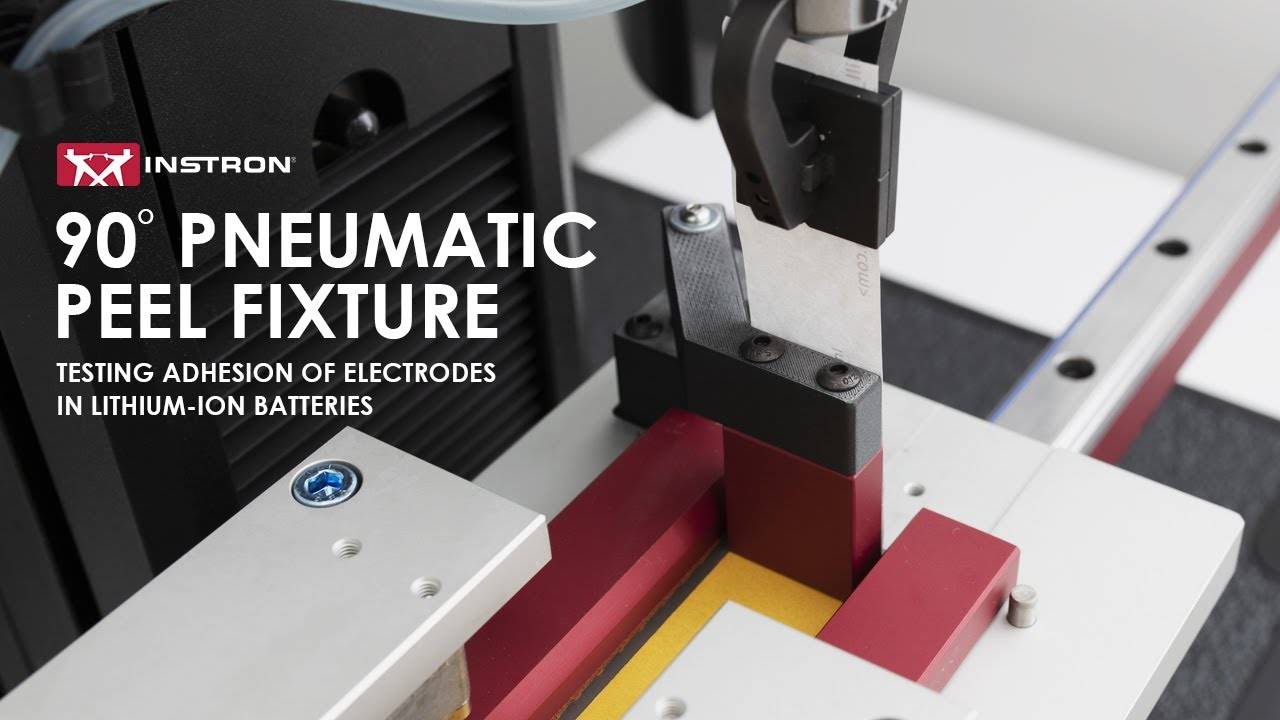
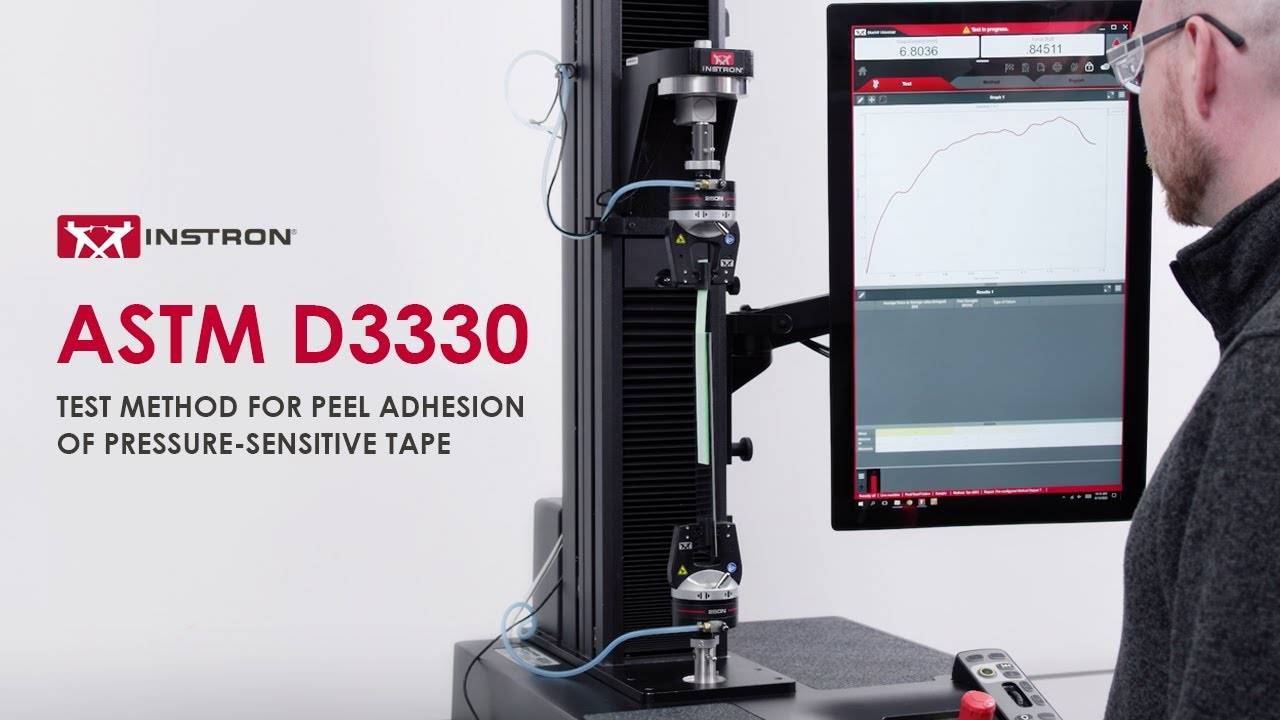
[19:42] The last thing I want to highlight here is pneumatic grip control. In component testing of plastics, how tightly you clamp your specimen can affect your results. If I clamp manually, I might not use the same force from one day to the next, and it varies between operators too. Pneumatic grips take that variable out of the equation. I know the correct air pressure is reaching my grips and that my clamping pressure is consistent throughout the test.
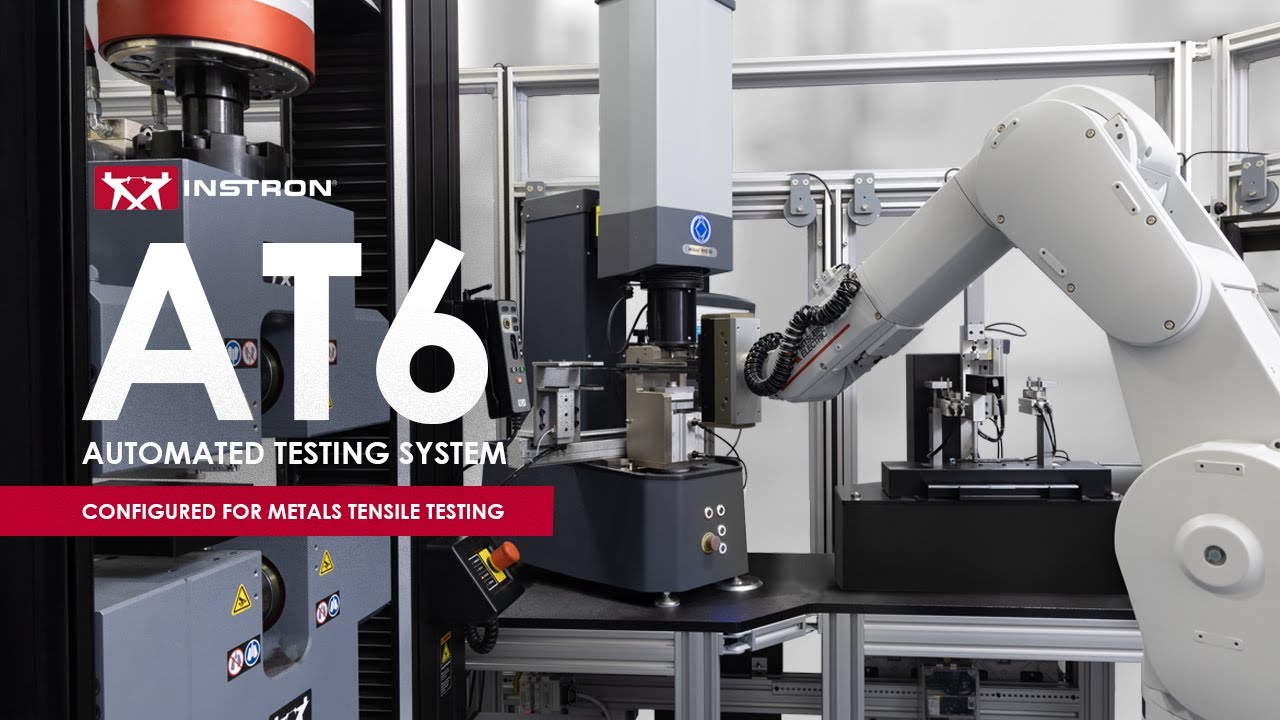
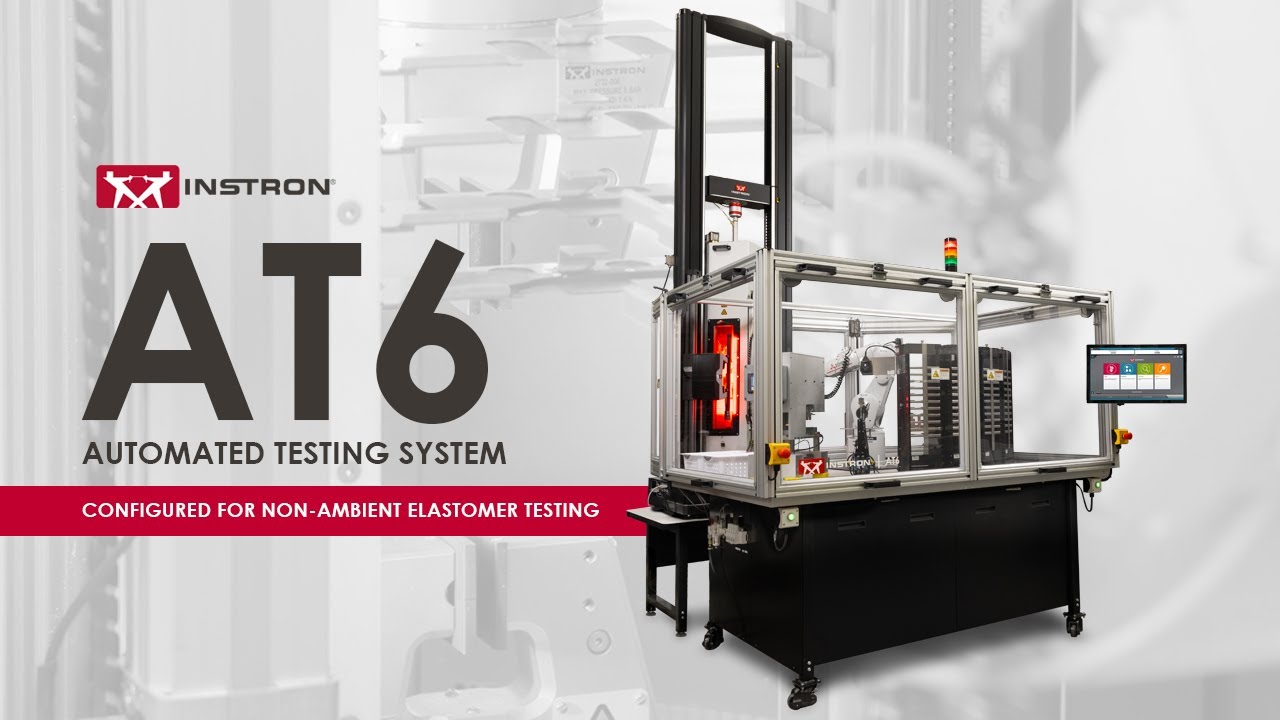
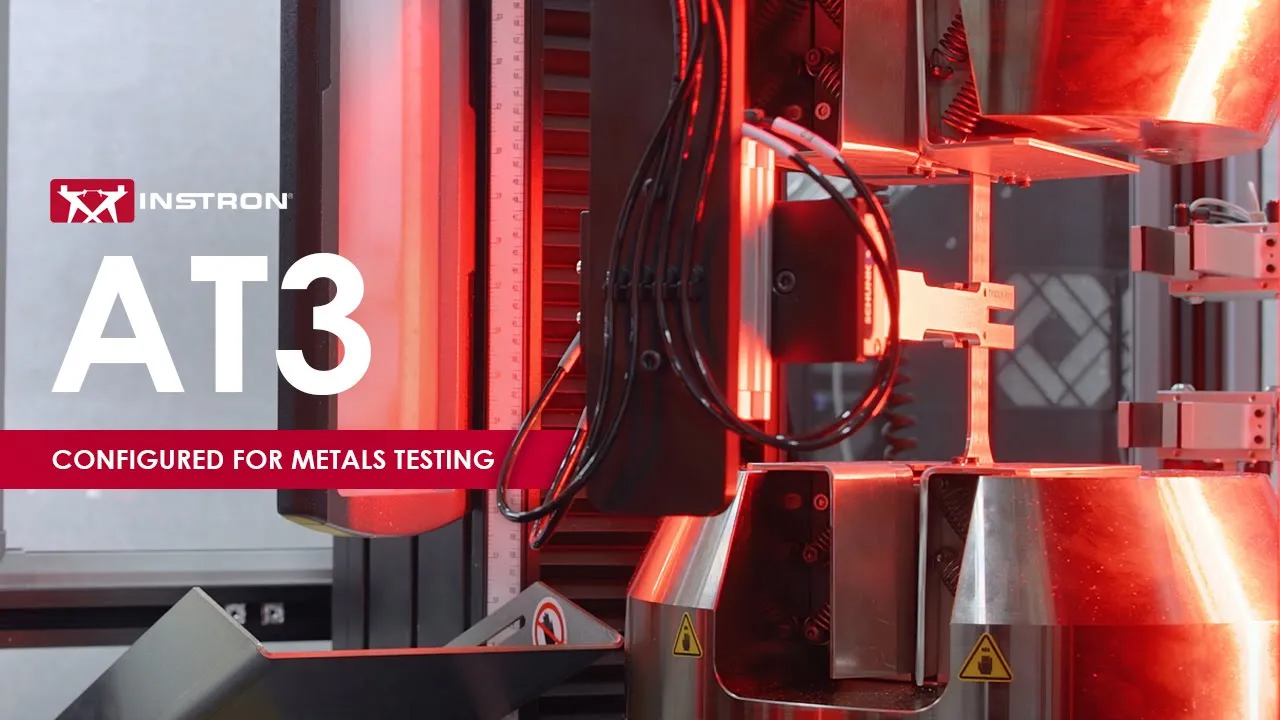
[20:15] In this example, rubber gloves cut into dog bones are being tested by an automated system. It takes each dog bone, measures the thickness of the gauge length, and places it in the pneumatic grips. Whether it's one test, 10, or 100, every time the grips close, they apply the same clamping pressure to every specimen. We've all clamped a little too hard, or squeezed a rubber glove or elastic band, and seen small nicks and tears that could affect test results. Pneumatic grips are a great way to control that parameter.
[21:07] Now that we've covered application-specific considerations, I want to touch on compliance and traceability, since it's such a big topic in the biomedical industry.
[21:18] Depending on where you are in the world and where your plastic component or device ends up, there are several governing standards and bodies your product must comply with. Unfortunately, it's not as simple as each governing body using one set of standards. On the left, we have the FDA for the US, the EU Medical Device Regulation, and the NMPA in China. Some of the most common standards organizations are ASTM, ISO, and USP, the United States Pharmacopeia.
[21:57] Instead of a one-to-one relationship where each governing body uses one type of standard, it actually looks more like this. The governing bodies work together, standards may overlap, and as science advances, there will be revisions to improve the process for better patient outcomes. For you, in the middle, this means your plastics testing should look at individual component performance, how the component operates within the full assembly, how it relates to intended use, and any human factors considerations.
[22:46] It can be hard to picture what this looks like in practice, so I'll use a plastic syringe to show the different standards that could apply to one seemingly simple product.
[23:02] Here I have a syringe in its packaging. To remove it from the package, ASTM F88 for seal strength is a common standard I might test to. Whether it's for at-home use or a surgical suite, you want the package to open easily while maintaining the sterile barrier. A few slides ago, we saw the syringe tested inside its packaging, but we also commonly see different parts of the packaging cut to evaluate the top, bottom, and sides. This confirms the package isn't too difficult to open but remains sealed.
[23:50] Once the syringe is out of the packaging, USP <382> looks at rubber stoppers and other elastomeric components. Take the black piece at the end of the plunger that forces the fluid out. If it's penetrated by a needle, does it self-seal? If I push too hard, does fluid get past that seal?
[24:14] Another test is ISO 80369 for Luer lock connections. At the end of the syringe are threads that connect to a needle hub or IV tubing. Regardless of manufacturer, these threads need to be easily torqued on and off, and they must not leak when connected.
[24:42] Finally, we have ISO 11040, specifically the annex for break loose and glide force. We've looked at several individual components of the syringe, but this test evaluates them together. Break loose force is the force needed to overcome static friction and start the plunger moving. Glide force is the force needed to sustain plunger movement. This can be tested on an empty syringe, a filled syringe, or a capped syringe for burst force or closure integrity. A seemingly simple device can go through many different tests, and this doesn't even include instructions and other human factors that could affect how a patient uses it.
[25:30] Now that we've applied the governing bodies and standards to the testing itself, what does this mean for data storage and data integrity? Most of you probably have a password on your smartphone or laptop. The same applies to your testing. Locking down your test methods so they can't be changed, intentionally or accidentally, is important for compliance.
[25:59] Admins and managers, perhaps in your R&D group, will create methods. In production, you want to make sure specimens and data aren't accidentally deleted. A bad test could point to a quality problem in manufacturing, so we don't want to lose that data. Setting security permissions so specific users and operators can't accidentally change a method is important for complying with these governing bodies.
[26:36] Bluehill® Universal also includes revision history as standard. We no longer need to write down in a notebook who made a change and what it was. Everything is tracked and recorded automatically. For compliance, this running list is very helpful, especially when you document which method revision was used on reports stored on an internal network drive. As methods change over time, being able to look back at the history helps you understand why procedures might look different. For more data integrity tips specific to Bluehill Universal, I recommend our recent webinar on data integrity presented by our software product manager.
[27:46] Going further, there's the Traceability module, which is designed to support FDA 21 CFR Part 11. This regulation applies to any pharmaceutical or medical device manufacturer submitting product documentation to the FDA for approval for sale in the US or as part of post-market surveillance. The requirements mainly apply to the processes around creating, retaining, and submitting electronic records. They address software validation, electronic signatures, and a searchable, timestamped audit trail, which you see here. This goes beyond the method or data level to what is happening on the frame: who logs in and out, and which files are created or altered. You have it all at your fingertips on your system, instead of paper records you have to track.
[28:54] As we've discussed, methods sometimes have to change because materials change or new guidance comes from governing bodies or standards. Electronic signatures let you track those changes. Someone makes a change to a method, it is approved and timestamped with a signature, and then it is pushed to production. Governing bodies need this tracked and easy to present.
[29:36] Screenshots don't quite show how this works in a lab, so here's a quick example for a lab with both a production team and an R&D team. Right now, my team is testing our product with the same version of the method. Then we have a breakthrough. Maybe we're using a different raw plastic and need to see how it holds up, or a standard has changed. My R&D team alters the method to see what makes the most sense. When they're satisfied, a manager reviews the changes and confirms they comply with the standard. The manager signs off, and the method officially moves to version two.
[30:28] The full history of changes, including documentation of why the team chose one approach over another, is stored in the method revision history. Once we're happy with the new version, we can push version two to the production team as well.
[30:49] To conclude, plastics are a critical part of our lives, particularly in the biomedical industry, where they contribute to positive patient outcomes. Understanding the plastic you choose as a raw material, how it performs as an individual component, and how it performs in a finished product are all significant for patient outcomes, compliance, and product success anywhere in the world. Choosing a testing partner whose hardware and software can keep up with these changing trends will help your testing represent real-world use, for the benefit of your group and the patients who rely on these products. With that, we're ready to turn it over to Q&A.
[31:44] We do have some questions. For everyone in the audience, please continue to submit your questions, and we'll see what we can get to. The first question: is it worth having traceability in my testing software even if I'm at the very early stages of device development?
[32:09] That's a really good question, and I would say yes. Given the time it takes to validate your test methods and procedures, being able to validate on the same software and immediately push it to your production team is very helpful. Traceability within your R&D team gives you a history of what changed, how, and why. That sets you up well for the regulatory compliance you're probably seeking. When you move to production, the infrastructure is already in place, and you don't have to revalidate.
[32:49] Great. The next question: if my medical device will be used in the body, does all of my testing have to be done at that temperature?
[33:04] I would say no. If the device will be used primarily in the body, most of your testing should be at body temperature. But you should also consider extreme cases, such as high and low temperatures during transport and storage. Room temperature, or a closet or cabinet, is usually much cooler than the body. You should test and evaluate how those conditions affect your product over time, especially over extended periods like months or years.
[33:44] This looks like it might be our last question: what do you recommend for testing very unique plastic geometries? I'm assuming non-standard dog bones.
[34:03] Of course. It depends on the shape and size of the component. A set of grips with interchangeable jaw faces is a great start. For a truly unique geometry, a component test plate or the ability to make your own fixtures can help. 3D printers have become very common, and even prototyping your own fixtures can be a helpful first step in finding the best way to secure and test your device.
[34:38] That's all of the questions I'm seeing, so we'll move on to the wrap-up. Thanks for that presentation, Sam.
[34:52] I have a few quick notes, and then you can be on your way. If any questions come in before the end, I'll send them to Sam, and she can answer them by email. This session was recorded. If you want to rewatch or share it, we'll post it to our YouTube channel and our website, and you'll receive a link in a follow-up email.
[35:18] As I mentioned earlier, this is part of our 2026 plastics testing series. Our next topic is automation in plastics testing, and Sam's presentation included a great video of that in action on our AT3 system. That session takes place on November 17. You can find more information and register on our webinars page. Finally, you'll see a brief survey when this webinar ends. We'd appreciate your feedback. Thank you again to Sam for presenting, and thank you all for joining us today. Take care.

Talk to an Instron Expert
Our biomedical team can help you choose the fixtures, temperature-controlled enclosures, and Bluehill Universal modules you need for packaging, component, and device testing in regulated labs.
Talk to an Applications Engineer
Tell us about your testing needs, and we'll help you configure the right frame, load cell, grips, and software for your lab. Please complete the form below, and we'll respond within 1-2 business days. For a faster response, call +1-800-473-7838 or +1 781 828 2500 if you are outside of the US.