

2716 Series Mechanical Wedge Action Grips
Unboxed and Installed
This video looks at the 2716 Series mechanical wedge action grips. Whether you’re new to your testing system or simply need installation guidance, we walk you through everything included in the box and demonstrate the correct procedure for installing the grips on your Instron® universal testing machine.
Instron’s 2716 Series mechanical wedge action grips are designed for easy specimen loading, alignment, and positioning. After the initial face-to-specimen contact, the gripping force will increase as the testing load increases. Due to the Instron design of moving grip bodies, virtually no preload is seen during specimen clamping.
These versatile wedge grips are equipped with moving grip bodies, allowing them to be tightened onto a specimen without altering the vertical position of the faces in relation to the specimen. This is accomplished by a design that moves the grip body to close the faces. This feature makes it possible to preselect the exact point at which the specimen will be held with a consistent gauge length and where virtually no compressive force is applied, which may cause specimen buckling. The grip faces are spring loaded against a shoe, which is in a fixed position in respect to the testing machine.
As the grip is tightened, its frame is drawn toward the specimen and the wedged sides push against the matching side of the faces that move laterally against the specimen. The open-front design of the grip frames allows for the faces to be easily interchanged, as well as for easy specimen loading. Because the faces are held in a fixed position, there is no recoil or loosening when the specimen ruptures, and if an extensometer is attached, it will remain in place.
Discover more testing accessories.
Related Videos
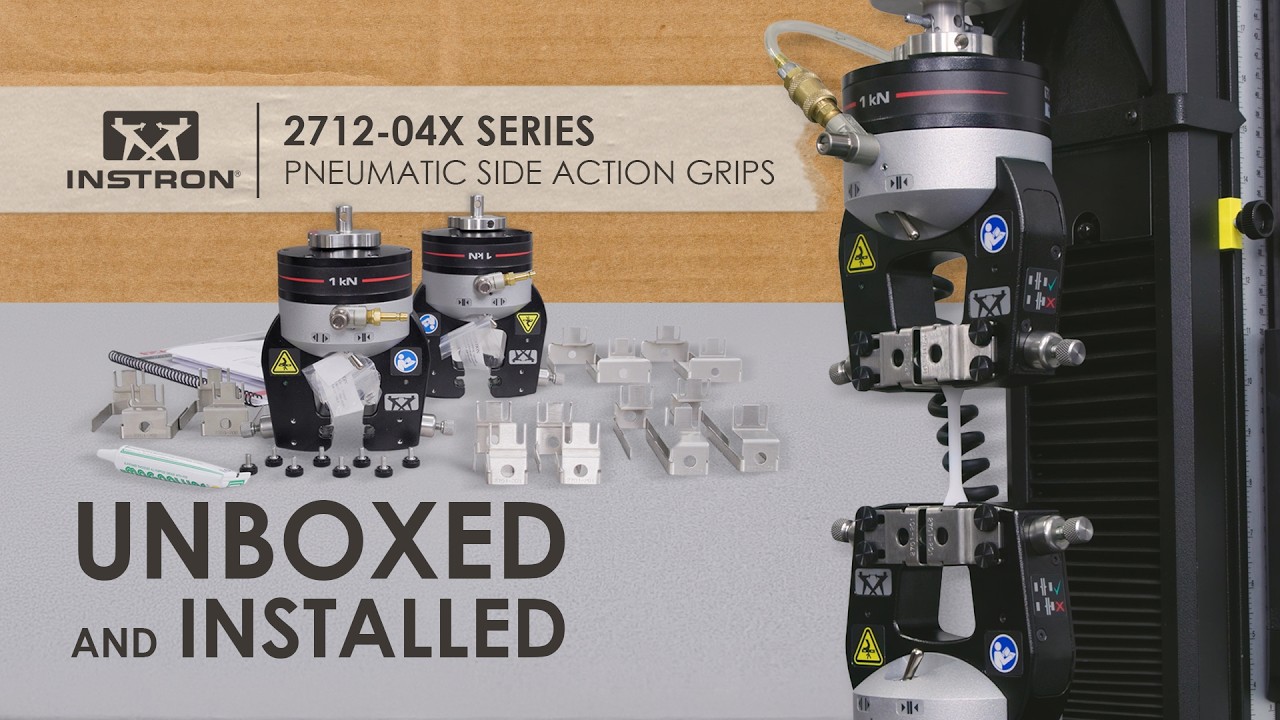
This video looks at everything included with the Instron 2712-04x Series pneumatic side action grips and demonstrates the correct installation procedure.
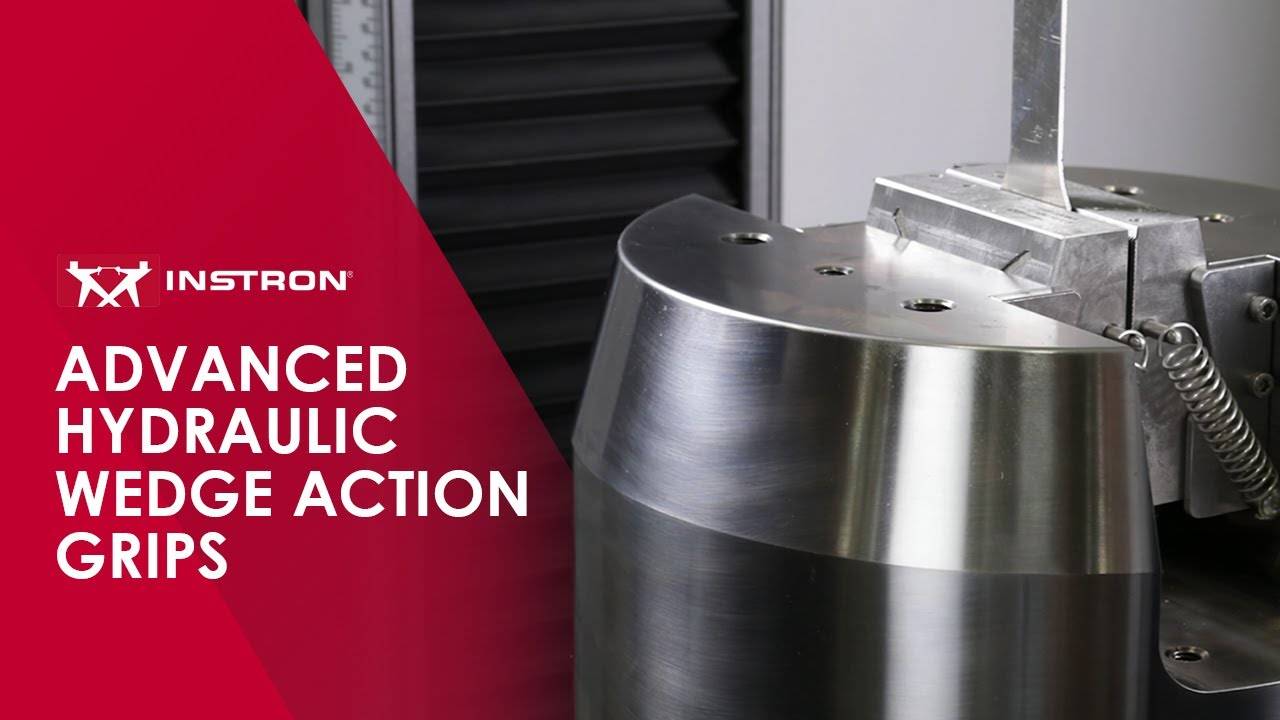
Advanced Hydraulic Wedge Action Grips are versatile grips that can be used in both static and dynamic materials testing applications — up to 500 kN force capacity for dynamic tests, and up to 600 kN for static tests.
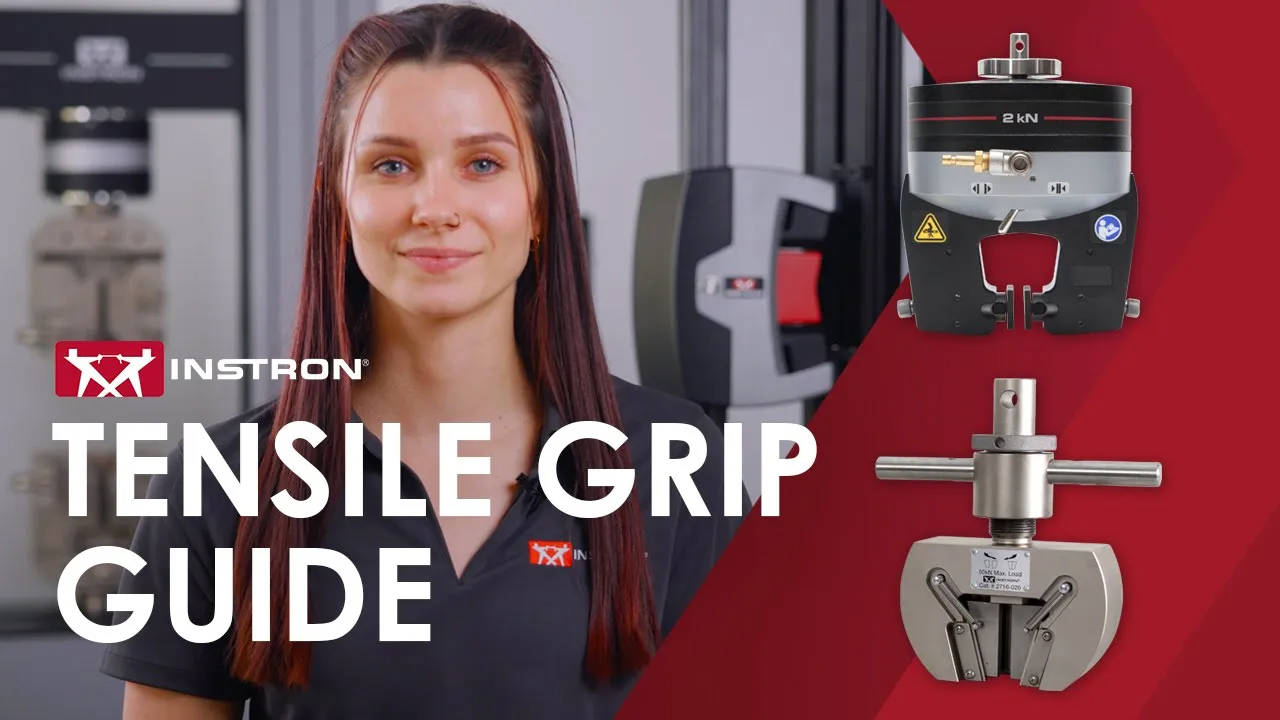
Learn about key differentiators between the major tensile grip types, including manual versus powered and side action versus wedge. We cover how they work and their suitability in various testing scenarios.