

BLOG
Einblicke für Fachleute der Materialprüfung
Bleiben Sie auf dem neuesten Stand zu Branchentrends, internationalen Prüfnormen, Anwendungshinweisen und bewährten Verfahren für Prüfgeräte. Entdecken Sie die neuesten Artikel von Instrons Ingenieuren und Spezialisten und abonnieren Sie unseren Newsletter, um neue Inhalte direkt in Ihr Postfach zu erhalten.
Filter Blog
August 22, 2025
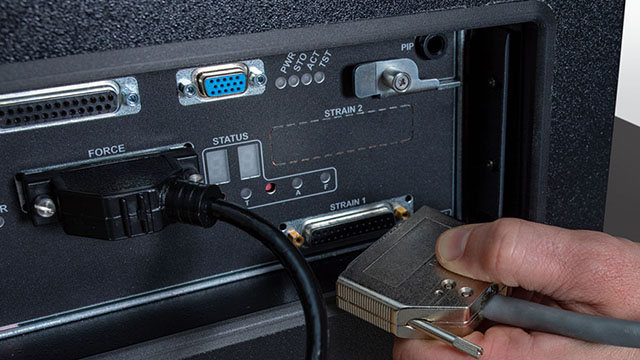
So schließen Sie Messwertaufnehmer an Instron-Systeme an: vier Methoden
Die Integration von Sensoren und Messwandlern von Drittanbietern in ein Instron-Prüfsystem – sei es für Kraft, Dehnung, Temperatur, Druck oder Verschiebung – erfordert die Auswahl der richtigen Verbindungsmethode für Ihre Konfiguration. Dieser Artikel behandelt die vier unterstützten Ansätze: analoger 0–10-V-Eingang, rationalisierte Verbindung mit Selbstidentifikation und automatischer Kalibrierung in Bluehill Universal, kundenspezifische Polynomkalibrierung für Nicht-Instron-Messwandler und digitale Dateneingabe über Geräte von Drittanbietern wie das HBM QuantumX MX430B.
Juni 12, 2023

5 Schritte zur effektiven Automatisierung mechanischer Prüfungen für biomedizinische Labore in CDMOs
Da die Nachfrage nach selbstdeaktivierenden Spritzen steigt, stehen CDMO-Labore unter zunehmendem Druck, den Prüfdurchsatz zu erhöhen, ohne dabei Genauigkeit oder Wiederholbarkeit zu opfern. Dieser Leitfaden beschreibt fünf Schritte zur Auswahl, Einrichtung und optimalen Nutzung eines Cobot-basierten mechanischen Prüfsystems – von der Bewertung der Laboranforderungen und der Auswahl der richtigen Automatisierung bis zur Optimierung der Datenerfassung und Vereinfachung der Wartung.
Oktober 28, 2020

Braided Rope Tensile Testing
My name is Landon Goldfarb and I am an applications engineer, which is really a fancy way of saying it is my job to successfully break anything thrown my way. This is the first in a series of stories cultivated from my time working in the applications lab highlighting unique applications and the novel solutions we have employed. At 8:00 AM, give or take, every morning, I arrive at our office – always excited to see what has shown up on our testing backlog. Perhaps elastomers for racing tires on a Monday and then moving on to artificial bone by Thursday. When people ask what kind of products we test, I will often respond by asking them what they did today. After looking back quizzically, they may say “I woke up, got dressed, had some juice, and then drove to work”. To which I could say, taking a deep breath first, “We may test the durability of the springs in your mattress, the elasticity in the fibers of your clothing, the torque necessary to open the juice packaging, and last but not least a myriad of functional tests on the individual components in a car.”
Mai 24, 2017
When You Don’t Take Advantage of Software Updates
As Technical Support Manager at the Instron® corporate headquarters, I have answered my share of customer questions and hopefully brought more clarity to testing operators. Through this kind of customer exposure, my team and I are constantly taking note of feedback to make our products better. In particular, we receive calculation requests, discover bugs, and think of new features for our software products. As we develop and release software updates, many of these suggestions are added.
Februar 12, 2017
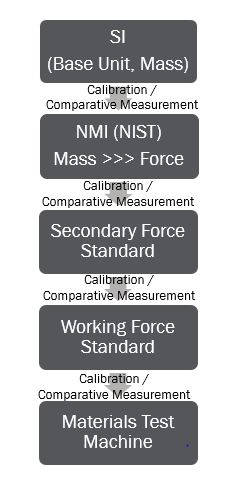
Traceability: What is it, and Why is it Important in Testing of Materials?
Traceability: What is it, and Why is it Important in Testing of Materials? One link/tier further down this chain is Instron’s 130,000lb deadweight stack Primary Force Standard. Since this […]
August 31, 2016

What Value Does ISO 9001 Add?
Instron's quality manual defines our commitment to provide customers with the best ownership experience through quality products, support, and service.
Dezember 8, 2015

Increase Efficiency Without Sacrificing Safety
Increase Efficiency Without Sacrificing Safety An Instron geotextile customer was conducting materials testing nearly around the clock. They were not able to keep up with demand and were building another […]
September 15, 2014
Understanding Melt Flow Testing and Its Importance
Melt flow testing is a measure of the flow of a polymer when melted. The result is called the mass-flow rate (MFR) or volume-flow rate (MVR).
April 17, 2014
The Truth About Strain Gauge Load Cells vs. Pressure Transducers
Load cells independently and directly measure the force being applied to specimens. Pressure transducers measure force indirectly from the oil pressure observed in the cylinder. Which is superior? The answer is simple: Load cell technology due to the fact that some of the pressure in a hydraulic system has nothing to do with the load being applied to the specimen.