Instron

Personal Protective Equipment (PPE) Testing

Biomedical Testing

Personal Protective Equipment (PPE) Testing 

Materials Testing Guidance for Personal Protective Equipment

stethoscope icon
The global demand for medical equipment has skyrocketed in response to the COVID-19 pandemic, with many companies refocusing their efforts to produce personal protective equipment (PPE). With this vast uptick in demand, medical device manufacturers have scrambled to increase their production capacities while non-medical manufacturing companies have transitioned their own production facilities to create items such as masks, gloves, and nasal swabs. With increased manufacturing comes increased quality control testing, and Instron has received numerous inquiries from companies seeking to expand their testing capacity or reconfigure their existing equipment to test PPE. This guide was created to help familiarize manufacturers with key testing requirements and provide an overview of current FDA regulations. We hope that it will be a useful resource for anyone seeking to aid the fight against COVID-19.


Medical Masks

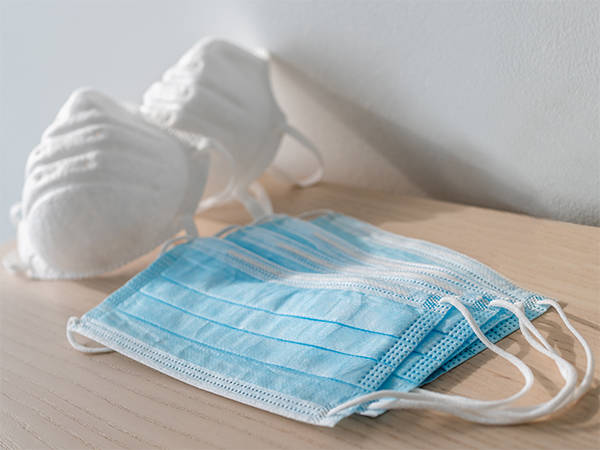
Medical masks come in two primary types: single-use surgical masks and N95 respirator masks. Surgical masks are intended to prevent viral spread by containing droplets produced by the wearer, while respirator masks are designed to protect the wearer from virus particles that have been aerosolized. Both of these masks are relatively easy to manufacture and test, and many textile manufacturers have shifted their operations to produce them in an attempt to meet the current demand. Many of these companies already own materials testing equipment and are able to make small modifications to their existing systems in order to perform the required FDA testing.

mask-fabric-test.jpg

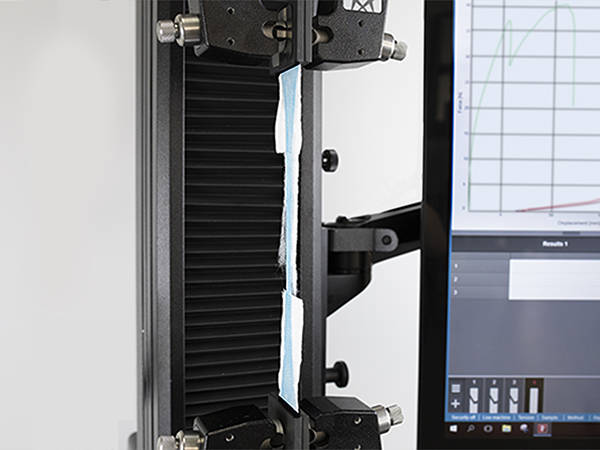
Fabric Test

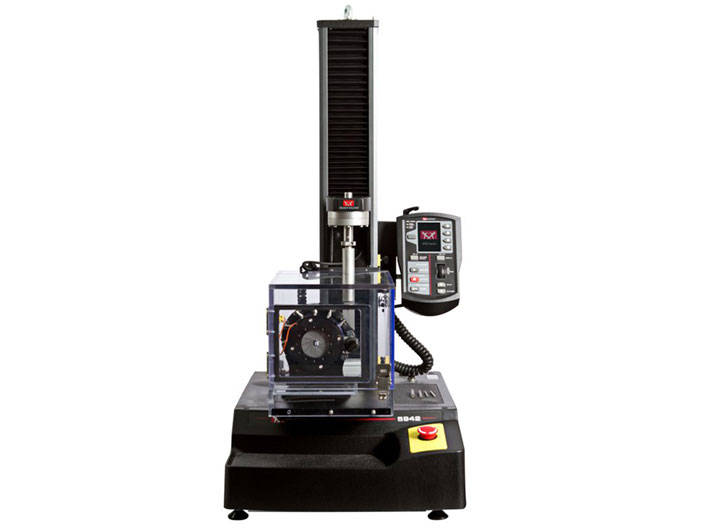
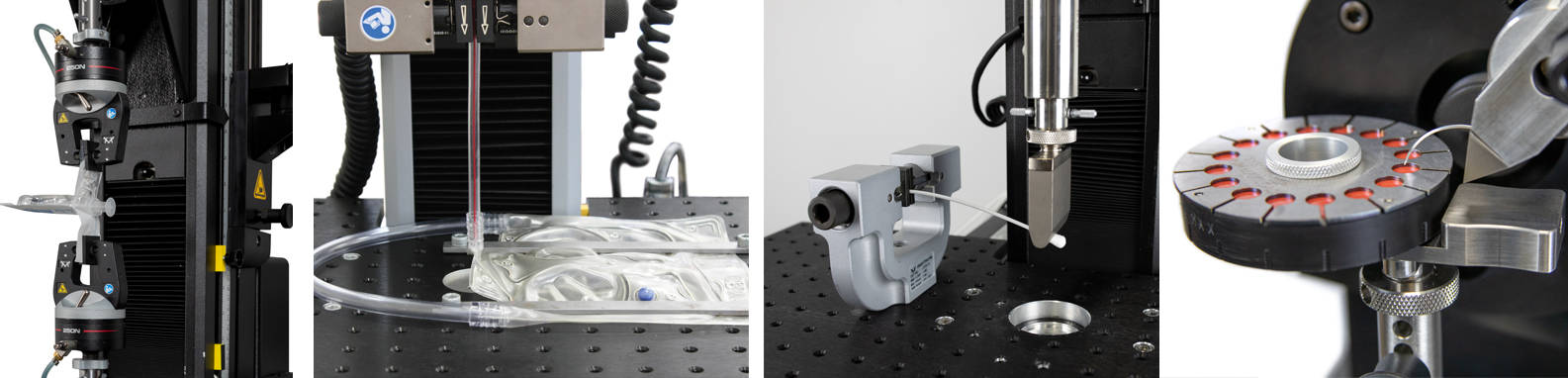
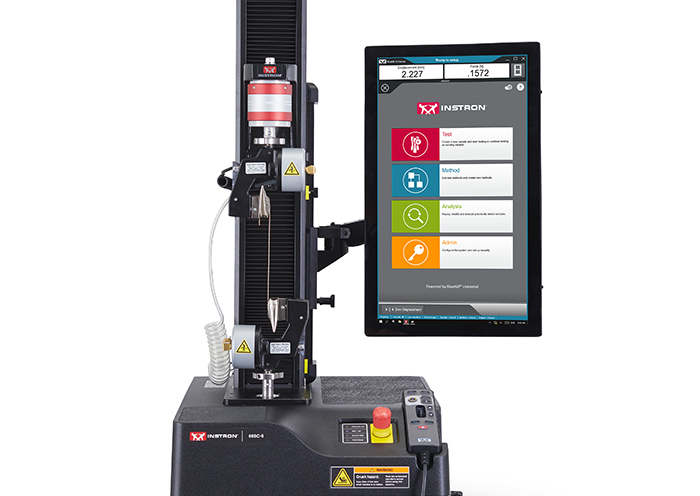
Mask fabric is generally tested in accordance with general textile standards such as ASTM D5034. Because fabric samples are prone to jaw breaks, we recommend pneumatic grips with smooth jaw faces to minimize this risk. In order to capture peaks and troughs generated by individual fiber breaks, we recommend a test system with a high data capture rate, such as Instron's 68SC-5.
mask-elastic-test.jpg

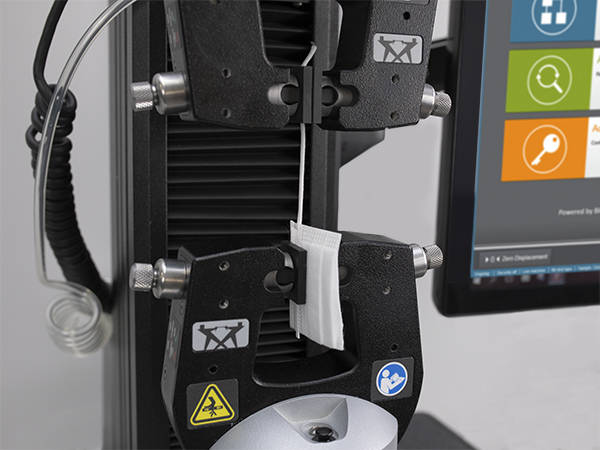
Elastic Test

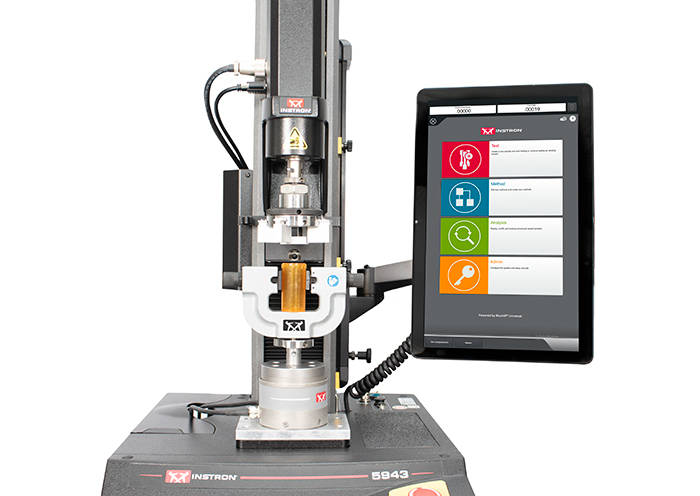
It is important to test the strength of the connection between a mask's fabric and the elastic band that holds it into place. This test is performed by loading the band to a minimum of 10 N and visually evaluating it to ensure there has been no separation. With masks now being worn for longer periods of time than ever, it may also be valuable to perform a relaxation test to determine its durability.
respirator-filter.jpg

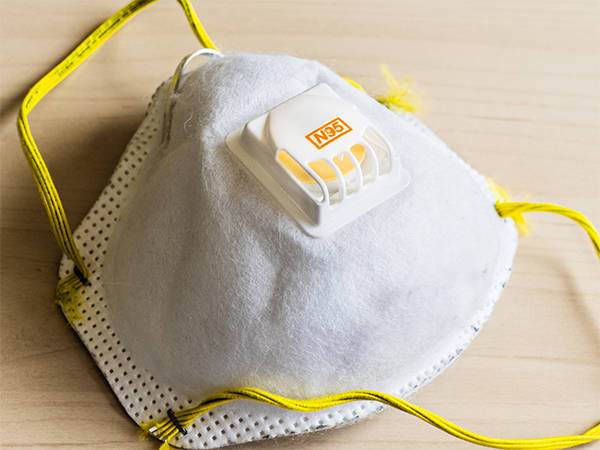
Filter Test

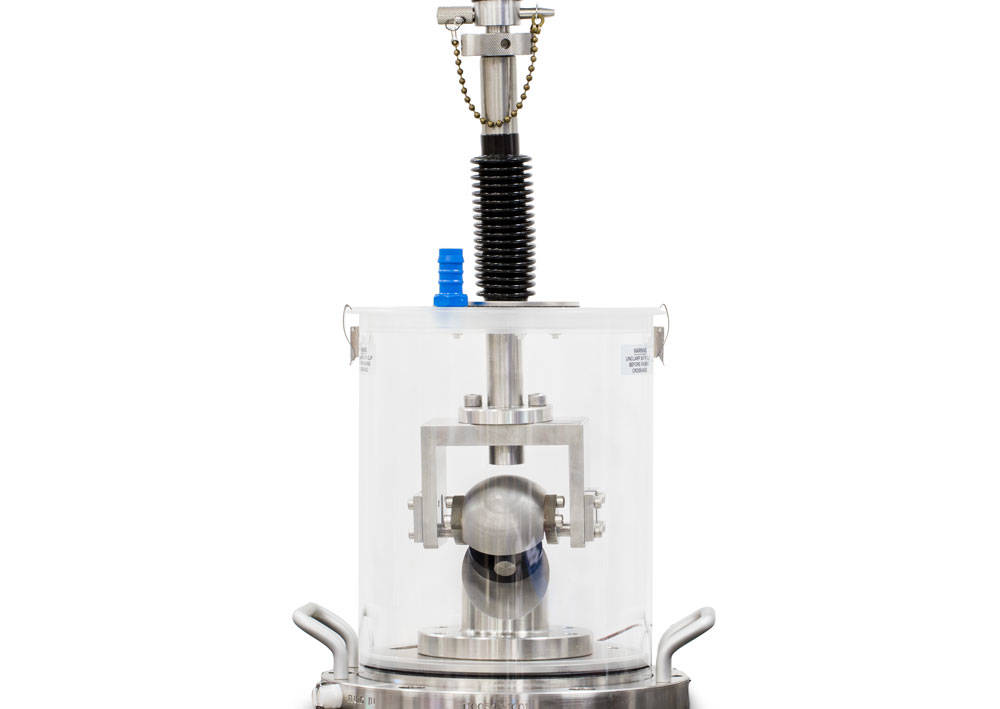
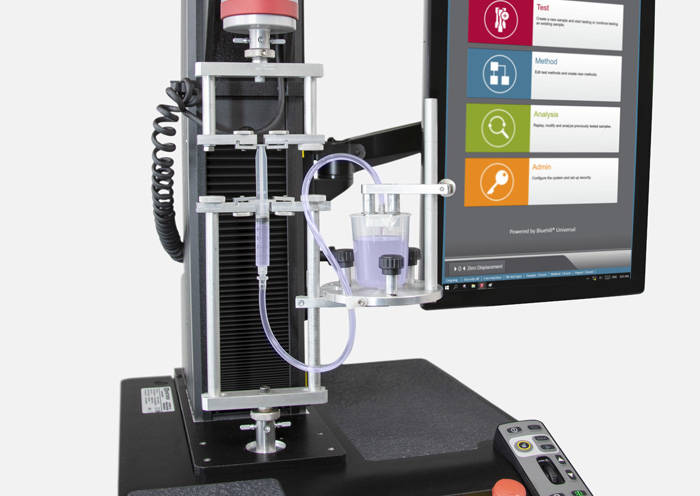
Respirator masks must be tested to ensure the strength of connection between the mask fabric and the respirator valve. This test can be accomplished using a side-acting grip on the base of the system and a custom-made hook fixture attached to the load cell.

Medical Gloves

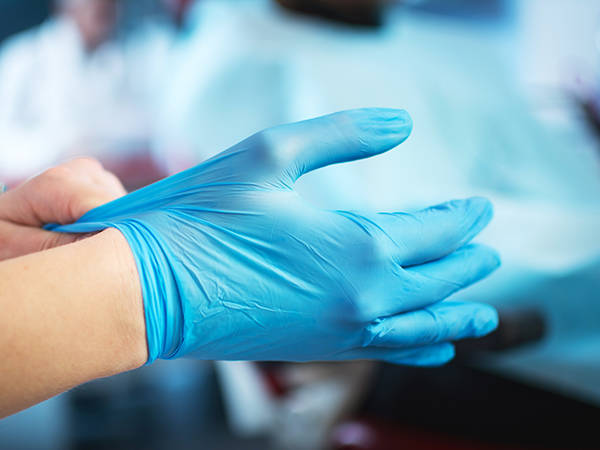
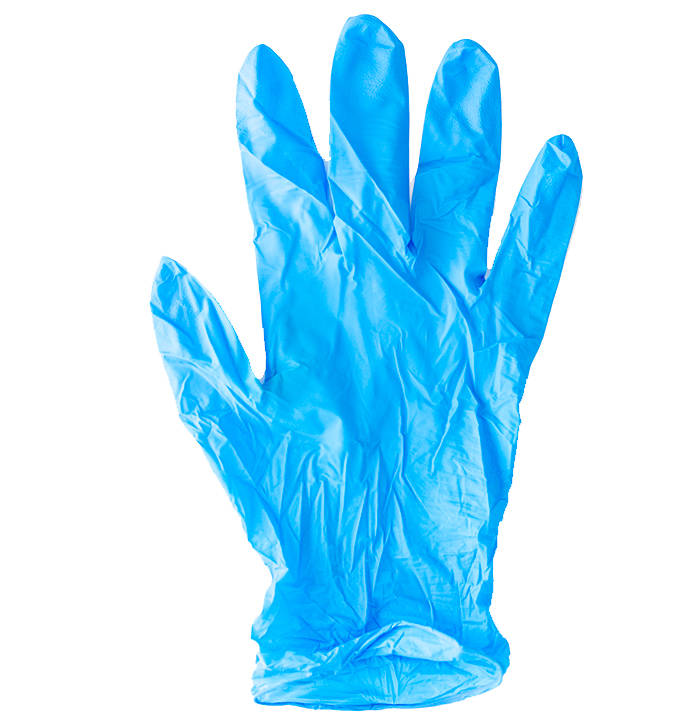
ASTM classifies medical gloves according to their material (latex, nitrile, natural rubber, PVC, or polychloroprene), while ISO classifies them based on their application (patient examination or surgical). Regardless of the testing standard, material, or clinical application, the equipment and general procedure for testing is consistent across all medical glove types. ASTM D6319, ISO 11193, and EN 455-2 are standards used by the biomedical industry to regulate the tensile properties of medical gloves. The key results for all glove testing standards are the tensile strength and ultimate elongation of the material. Rather than testing the entire glove, a dogbone specimen is cut from the finished glove and testing in accordance to the relevant elastomeric standard (ASTM D412 or ISO 37).

Glove Test Setup
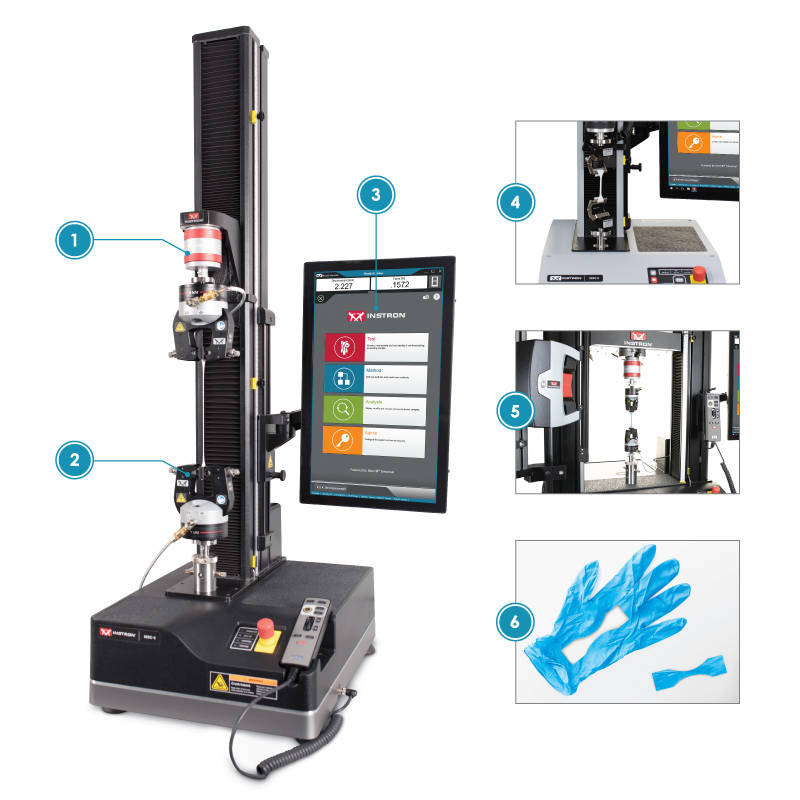
1) Load Cell
A 500N load cell is an appropriate capacity for all glove materials.
2) Pneumatic Grips
Air pressurized grips ensure consistent clamping forces Jaw faces are easily interchangeable to ensure the correct surface texture is used for the material. Elastomeric materials like rubber gloves typically require rubber coated faces due to how thin the specimen is. The rubber coating is able to prevent slippage of the material without damaging the specimen.
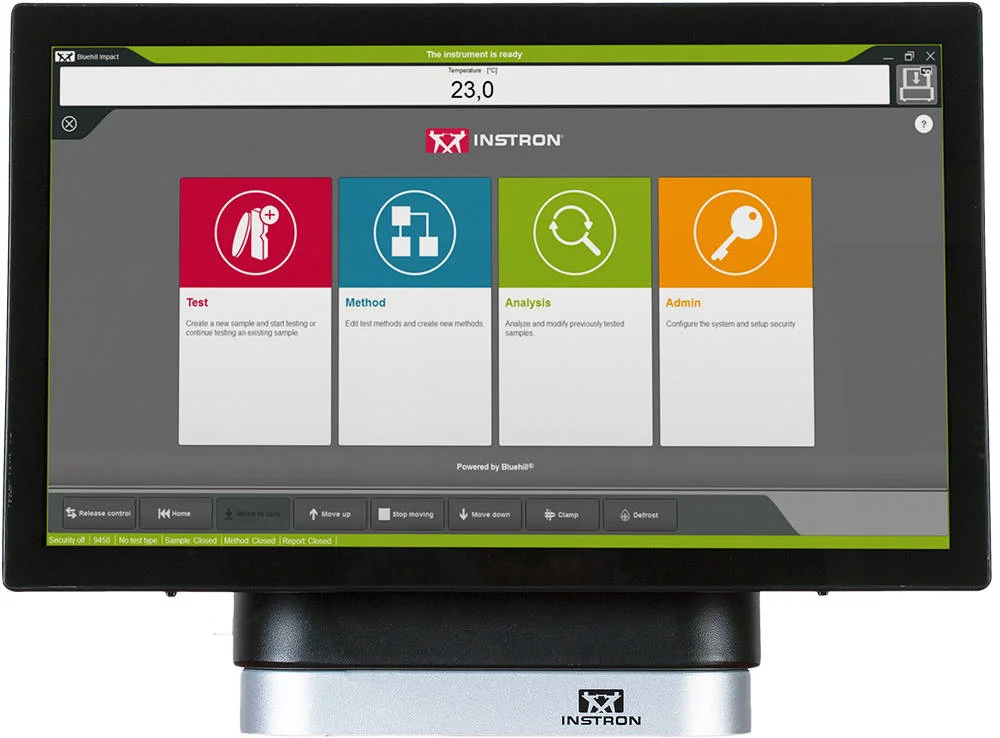
3) Bluehill Software
The biomedical method suite includes preconfigured methods for EN455-2
4) Elastomeric Roller Grips
Roller grips provide a cost effective gripping solution for thin elastomers The roller grip utilizes a proportional clamping pressure which increases as more force is applied to the specimen
5) AVE 2.0
An optical non-contacting strain device can be used to ensure more accurate strain measurement
6) Specimen Preparation
All the major ASTM/ISO/EN standards require a dumbbell shaped specimen to be stamped from the palm of the glove EN 455-2 takes into consideration the potential discrepancies in thickness between the palm and the fingertips. The standard compares their thickness and uses a correction factor for the tensile strength of the speicmen.

ppe_gloves_callout-_003.jpg

Nasal Swabs

Nasopharyngeal (NP) swabs are crucial tools in the diagnosis of influenza and respiratory diseases. Despite their similar appearance, these swabs are considerably more specialized than the standard cotton swabs used for personal hygiene, using synthetic fibers for the swab staff and tiny bristles for the swab tip. In an effort to bolster the global supply, significant collaborations have occurred between 3D printer manufacturers and medical research teams, which have resulted in a massive increase in production capacity of test quality NP swabs. It is critical to perform mechanical testing to determine if the performance of the 3D printed swabs is comparable to the performance of those produced by standard methods.
nasal-swab-3-point-bend.jpg

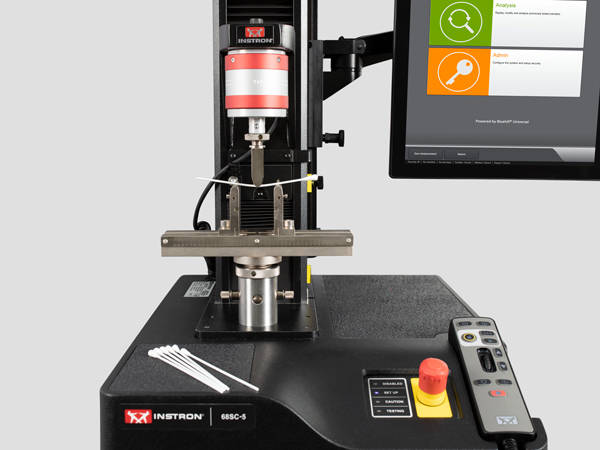
3 Point Bend Test

Nasal Swabs are subjected to flexural forces as they travel through the nasal passage. 3 point bend tests help characterize these stresses. It is also important to evaluate the weak point at the tip of the swab which helps achieve the correct size for transport. Instron's standard 2810-400 3 point bend fixture with 10 mm diameter anvils is ideal for these applications.

nasal-swab-cantilever-bend.jpg

Cantilever Bend

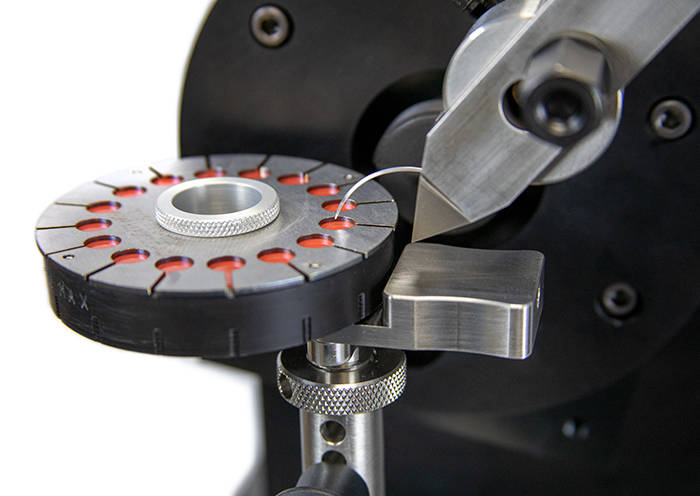
The cantilever bend test best represents the stresses seen when the swab is held during the procedure. The material needs to be flexible enough to ensure it will not fail during the test. This setup is accomplished using a component test plate and an advanced screw action grip to hold the specimen in place. Any probe can be used to deflect the tip of the swab.
nasal-swab-shear-test.jpg

Tip Shear Strength

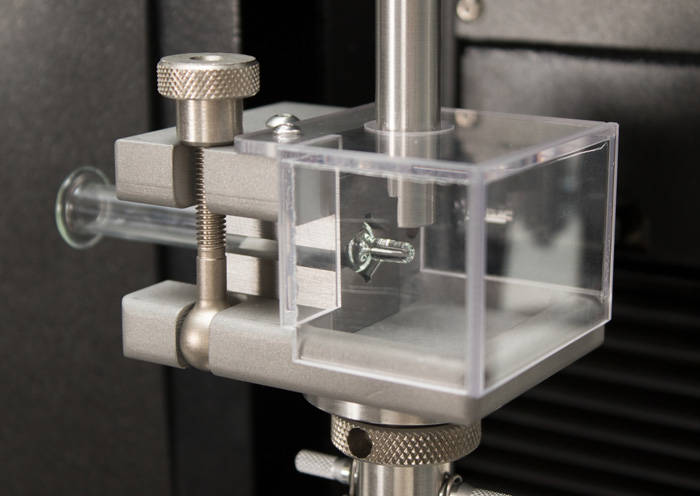
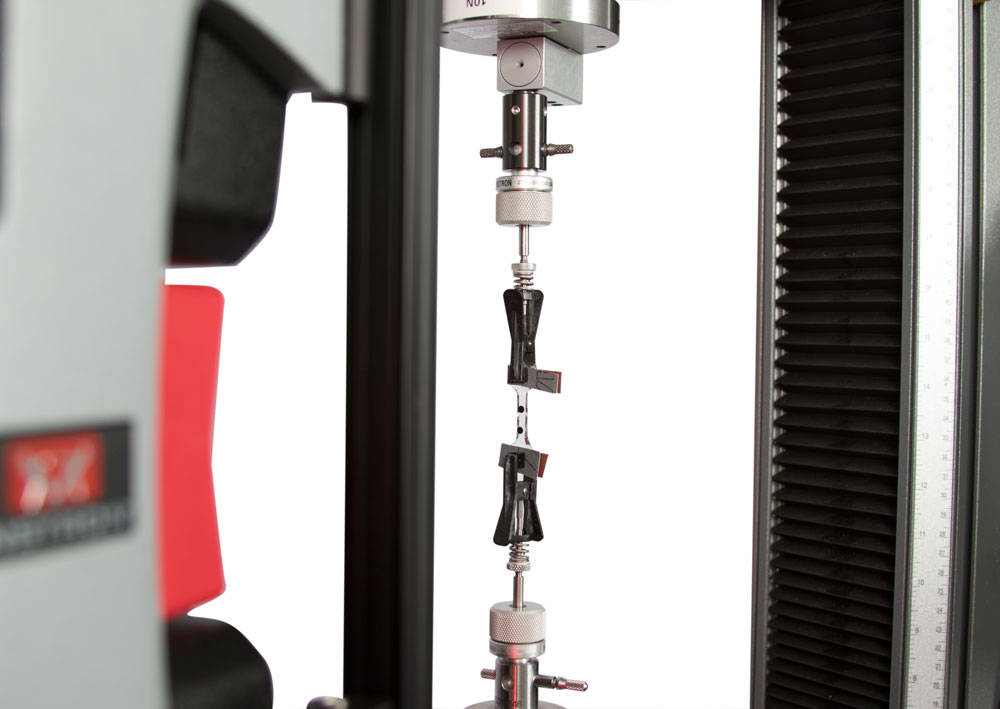
The tip of an NP swab is made of tiny bristles that allow for maximum sample collection. These bristles need to withstand shear forces as they move across the walls of the nasal passage. In order to test this property, the tip and base of the swab are clamped with advanced screw action grips to evaluate the maximum force required to break the bristles or the tip itself.

FDA Requirements in the Age of COVID-19

The Food and Drug Administration is the main regulatory body overseeing the production and distribution of PPE in the United States. The level of FDA involvement depends on the class of the device, which can range from class 1 to class 3 based on the device’s potential risk of nonconformance. Most types of PPE are labeled as class 1 devices, which have the fewest barriers to approval.

Because it can take months or even years to gain FDA approval, in times of health crisis the FDA issues something called an Emergency Use Authorization (EUA). An EUA essentially loosens the requirements for production and distribution of certain medical products to allow production to ramp up quickly. EUAs are currently being granted to manufacturers of COVID test kits, virus therapies, ventilators, respirators, and PPE. These emergency authorizations are generally granted to specific companies who apply to expedite the approval process, but they are also being released as blanket statements covering certain types of PPE so that smaller companies can also participate with minimal red tape. The EUAs include additional documentation that outline the enforcement policy for PPE manufacturing during the current public health emergency and provides criteria for quality control standards as well as the required labeling of products released under the authorization.


Watch Our PPE Testing Webinar

Intervertebral Disc Testing

Biomedical Testing

Intervertebral Disc Testing

The Challenge

Intervertebral Disc

Intervertebral disc replacement is a surgical technique for the treatment of lower back pain related to degenerative disc disease. The advantage of this technique over traditional spinal fusion is that it preserves or restores motion in the spine, and has the potential to delay the onset of degeneration of healthy discs at adjacent levels in the spine. Disc prostheses are designed to be load bearing over the physiological range of disc motion, and to give years of pain-free and trouble-free operation in the body. Understanding the static and dynamic characteristics of a particular device allows manufacturers and designers to ensure their product is proven and accepted. ASTM F2346 provides a methodology for characterizing the static strength and dynamic fatigue behavior of disc prostheses. The rigorous testing regimes in this standard aim to scientifically validate any prosthesis design. With a typical test run lasting for 10 million cycles and requiring both axial and torsional loading, it is vital that a testing system copes with these performance demands and delivers the highest quality of results. In addition, the requirement to conduct these tests in a wet environment adds to the complexity of the system.

Our Solution 

Intervertebral Disc Testing

An 8874 axial-torsional system, with the addition of a temperature controller and re-circulator unit, allows device manufacturers and contract research laboratories to conduct both static and cyclic testing on a range of implant designs. The bath, in which saline flow and temperature are controlled, provides a stable environment. With the use of specialized test fixtures, the 8874 system's combined axial-torsional actuator allows for characterization to be conducted in axial compression, compression-shear, and compression-torsion test modes for both articulating discs of traditional metal-on-metal or metal-on-polyethylene design. It's also used for the next generation of prostheses, which feature an elastomeric component to give axial compliance under load that mimic the biomechanics of the natural disc.

Tensile Testing Polymeric Membranes

Biomedical Testing

Tensile Testing Polymeric Membranes

Synthetic membranes are commonly used in the biomedical field. These polymeric membranes, designed to mimic the natural filtration systems in human bodies, are being researched and developed for use in drug delivery systems, medical devices, and artificial bio-organs.

For example, synthetic membranes are used in hemodialysis, which is a method of removing waste products from the body when the kidneys fail. Blood from the patient is passed through a semi-permeable membrane that is immersed in dialysis solution and waste products such as urea in the blood diffuse across the membrane into the dialysis solution.

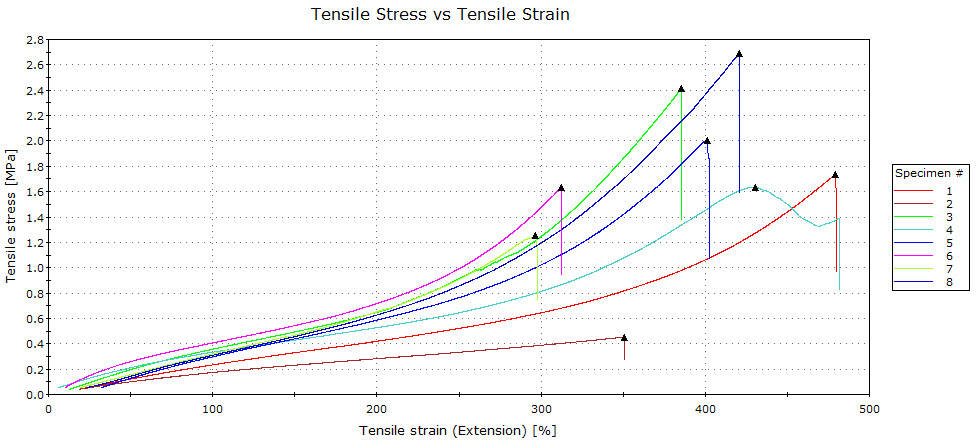
Often these synthetic membranes are moist and slippery, and consquently, tensile testing can be challenging. Similar to testing soft tissues, the gripping surface must offer sufficient friction to firmly hold onto the membrane, but also be delicate enough to avoid specimen tearing.

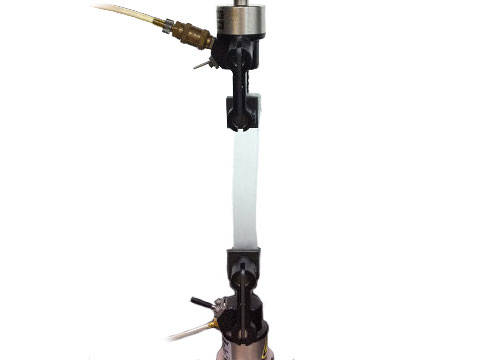
Recently, we were asked to recommend a gripping solution for testing of wet polymeric membranes. In this test, the polymeric membranes were first soaked in water for up to 20 minutes to allow them to soften and swell. The wet specimens were then tested using the 5965 dual column electromechanical machine equipped with pneumatic side action grips and rubber coated jaw faces. Since these membranes are very delicate, the clamping pressure must be carefully controlled as excessive high pressure can cause the specimen to fail prematurely when the grip closes.

Because the specimens are wet, corrosion resistant grips or fixtures should be used. Our 3 Software®Bluehill provides both the test control and results required.

Literature

Bluehill Universal Brochure

Bluehill Universal is Instron’s advanced materials testing software, designed for intuitive touch interaction and streamlined workflows. It offers pre-loaded test methods, QuickTest for rapid setup, enhanced data exporting, and Instron Connect for direct service communication. Users of Bluehill 2 and Bluehill 3 can easily upgrade to the latest version for improved performance and usability

  • ผลิตภัณฑ์
  • 02/26/2017
  • 3.77 MB

Evaluation of Radial Forces from Embolic Filters

Biomedical Testing

Evaluation of Radial Forces from Embolic Filters

Radial Strength Testing of Stent Grafts and Vascular Devices

Embolic filters are used within a variety of interventional procedures to capture debris resulting from the deployment of a medical device, like a stent. The stent is used to open arterial paths that may be occluded by plaque. Upon placement of the stent, dislodged plaque (or embolic material) can potentially be responsible for heart attacks, strokes, kidney failure, or death. Firm placement of the embolic filter is a critical requirement for successful procedures.

One of the most critical parameters for proper utilization of the filter is the radial forces it imparts on the arterial wall. In particular, the chronic radial force that the filter imparts over time helps to ensure that the device remains in place as intended. This fit ensures that all material is captured before heading further down the arterial pathways.

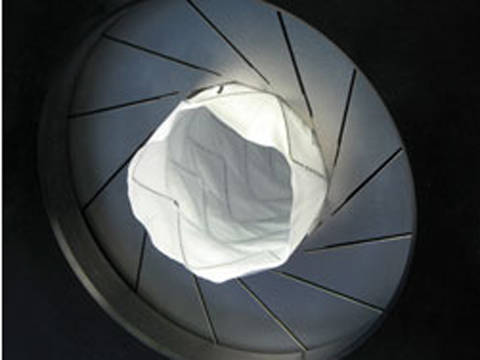
The RX575 system has the fidelity to measure the small radial expansion forces of the embolic filter. The unique segment design of the fixture results in small frictional forces, which ensures that your data will present clean results from the radial tests. The radial fixture mounts to electromechanical instruments, as well as into a fluid bath for accurate simulation of body temperatures. Additionally, the fixture provides the capability for tensile tests to evaluate resistance to tearing properties during deployment.

Bluehill® Software provides an interface to run tests, to evaluate the radial strength, and to generate standard reports that can be submitted for regulatory submissions.

Literature

3400 Series Universal Testing Systems Brochure

Instron 3400 Series universal testing systems for tensile, compression, bend, and other material property tests.

  • ผลิตภัณฑ์
  • 06/27/2022
  • 2.69 MB

6800 Series Premier Testing Systems Brochure
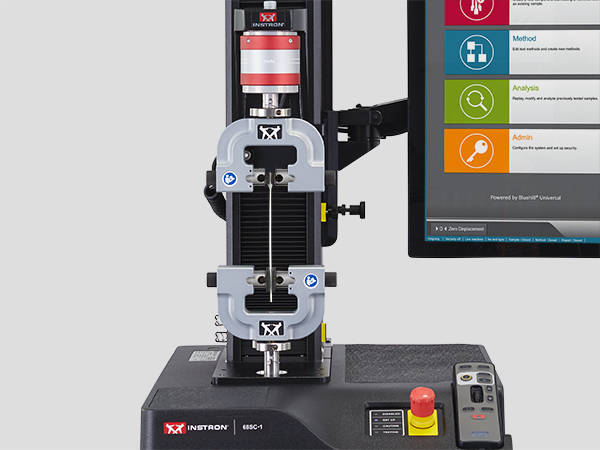
Instron 6800 Series Universal Testing Systems provide unparalleled accuracy and reliability. Built on a patent-pending Operator Protect system architecture with an all-new Smart-Close Air Kit and Collision Mitigation features, the 6800 Series makes materials testing simpler, smarter, and safer than ever before.

  • ผลิตภัณฑ์
  • 02/10/2020
  • 1.93 MB

การทดสอบกาวเนื้อเยื่อโดยใช้ฟิกซ์เจอร์การลอกแบบมุมแปรผัน

Biomedical Testing

การทดสอบกาวเนื้อเยื่อโดยใช้ฟิกซ์เจอร์การลอกแบบมุมแปรผัน

กาวเนื้อเยื่อถูกใช้งานอย่างกว้างขวางในอุตสาหกรรมชีวการแพทย์สำหรับงานประเภทต่าง ๆ เช่น พลาสเตอร์ปิดแผล และผ้าปิดแผล ถึงแม้ว่าจะยังไม่มีมาตรฐานการทดสอบเฉพาะโดยตรงสำหรับการใช้งานฟิกซ์เจอร์แบบมุมแปรผันในการทดสอบ แต่จะมีมาตรฐานการทดสอบของ ASTM ที่คล้ายคลึงกับการทดสอบนี้ ได้แก่ ASTM F2255, F2256, F2258 และ F2458 ความแข็งแรงของการยึดเกาะของผลิตภัณฑ์เหล่านี้จะต้องได้รับการกำหนดก่อนที่จะนำไปใช้ในทางคลินิก หากกาวนี้ไม่มีความแข็งแรงเพียงพอ ผลิตภัณฑ์อาจจะส่งผลให้เกิดการติดเชื้อหรือการรักษาตัวของแผลที่ไม่ดี แต่หากกาวนี้มีความแข็งแรงมากเกินไป เนื้อเยื่อด้านล่างอาจจะเกิดความเสียหายในระหว่างการนำผลิตภัณฑ์ออก


เราทำการทดสอบแรงยึดติดของกาวโดยการใช้ฟิกซ์เจอร์แบบมุมแปรผันเพื่อเป็นการจำลองสิ่งที่จะเกิดขึ้นเมื่อทำการลอกกาวออกจากผู้ป่วย เราใช้ เครื่องทดสอบระบบไฟฟ้าเชิงกลรุ่น 3345 พร้อมกับโหลดเซลล์ขนาด 50 นิวตัน พร้อมกับอุปกรณ์จับยึดแบบ pneumatic grip ขนาด 250 นิวตันและใช้พื้นผิวปากจับแบบโลหะที่เรียบขนาด 25 มม.x 25 มม. และฟิกซ์เจอร์การลอกแบบมุมแปรผัน โดยฟิกซ์เจอร์การลอกแบบมุมแปรผันนี้ถูกตั้งรูปแบบที่มุม 135 องศา เพื่อที่จะเป็นการจำลองแนวการดึงที่ใกล้เคียงที่สุดสำหรับการใช้งานที่จะเกิดขึ้นจริงสำหรับผลิตภัณฑ์กาวนี้ เราใช้หนังสัตว์เป็นวัสดุฐานรองสำหรับการทดสอบเพื่อจำลองสมบัติทางพื้นผิวของผิวหนังมนุษย์


โปรแกรมทดสอบวัสดุ Bluehill® 2 พร้อมโมดูลการทดสอบ Peel, Tear and Friction เหมาะสมกับการทดสอบประเภทนี้ โดยโมดูลการทดสอบนี้จะช่วยให้สามารถตรวจวัดค่าของแรงที่จุดสูงสุดจุดแรก ค่าแรงเฉลี่ย และค่าแรงเฉลี่ยต่อความกว้าง ซึ่งเป็นผลการทดสอบที่มักถูกเลือกใช้งาน
วรรณกรรม

3400 Series – โซลูชันการทดสอบราคาประหยัด

ระบบทดสอบอเนกประสงค์ Instron 3400 ซีรีส์สำหรับการทดสอบแรงดึง แรงอัด การดัดงอ และคุณสมบัติอื่น ๆ ของวัสดุ

  • ผลิตภัณฑ์
  • 06/27/2022
  • 2.58 MB

Bluehill Universal Brochure

Bluehill Universal is Instron’s advanced materials testing software, designed for intuitive touch interaction and streamlined workflows. It offers pre-loaded test methods, QuickTest for rapid setup, enhanced data exporting, and Instron Connect for direct service communication. Users of Bluehill 2 and Bluehill 3 can easily upgrade to the latest version for improved performance and usability

  • ผลิตภัณฑ์
  • 02/26/2017
  • 3.77 MB

การทดสอบแรงกระแทกของอุปกรณ์ฝังในทางออร์โธพีดิกส์

Biomedical Testing

การทดสอบแรงกระแทกของอุปกรณ์ฝังในทางออร์โธพีดิกส์

โรคข้อเสื่อมนั้นเกิดขึ้นเมื่อการเคลื่อนไหวของข้อในร่างกายเรามีได้น้อยมาก การขาดการเคลื่อนไหวของข้อนั้นจะส่งผลให้ข้อเกิดการเสียหายหรือไม่สามารถใช้งานได้ตามปรกติ   วัสดุฝังในทางออร์โธพีดิกส์ได้รับการออกแบบเพื่อเปลี่ยนทดแทนข้อที่เสียหายและเพิ่มการเคลื่อนไหวของชิ้นส่วนดังกล่าวในร่างกาย เช่น ข้อสะโพก, ข้อเข่า, ข้อไหล่ หรือข้อศอก ซึ่งมักผลิตขึ้นจากเหล็กสเตนเลส ดังนั้นจึงมีความสำคัญสำหรับผู้ผลิตของวัสดุฝังในทางออร์โธพีดิกส์ที่จะต้องทดสอบชิ้นส่วนต่าง ๆ ของวัสดุฝังในดังกล่าวเพื่อศึกษาถึงความต้านทานแรงกระแทกของผลิตภัณฑ์

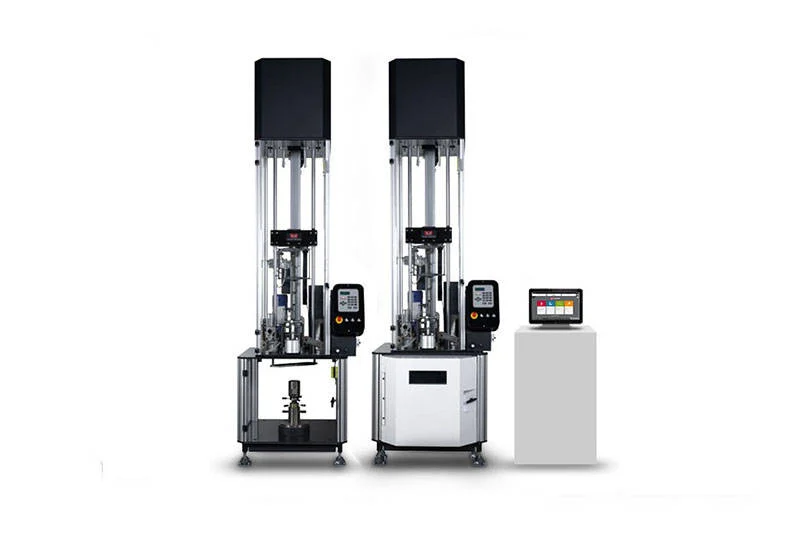
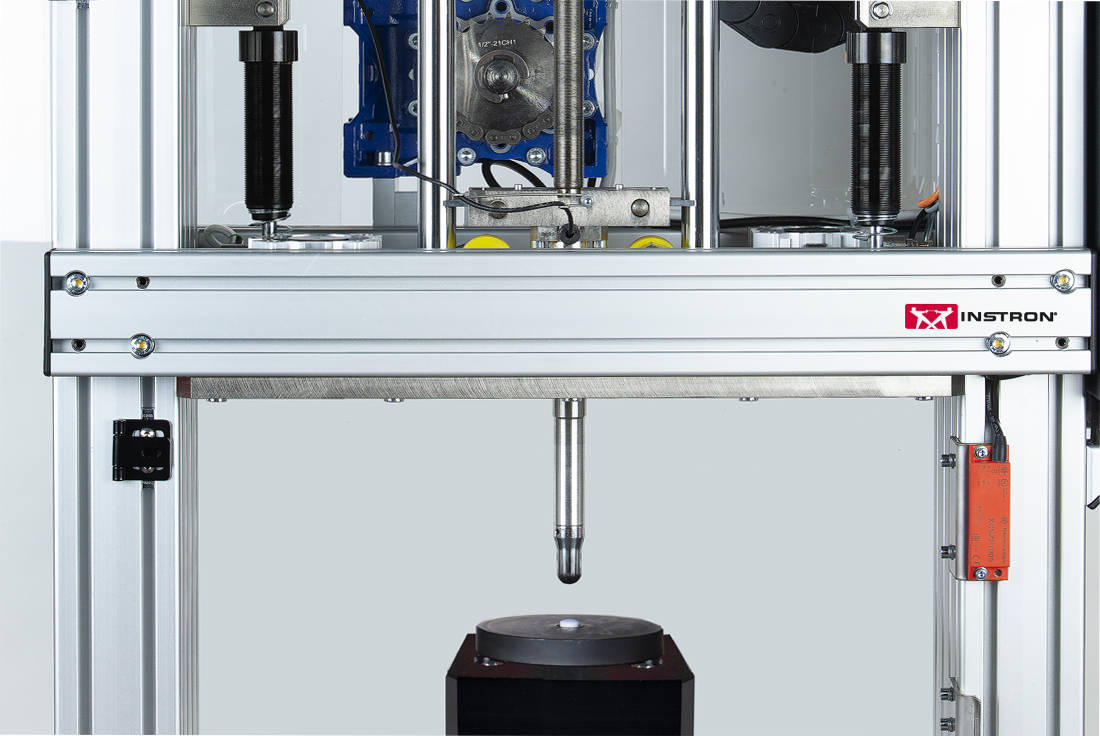
เครื่องทดสอบรุ่น Instron 9450 นั้นเหมาะต่อการทดสอบที่ต้องการ ทั้งนี้เนื่องจากวัสดุฝังในสำหรับแต่ละส่วนของร่างกายนั้นจะมีหลากหลายขนาดและรูปทรง ดังนั้นการทดสอบจะดำเนินการโดยใช้ฟิกซ์เจอร์เฉพาะทางแบบต่าง ๆ เราใช้แผ่นฐานร่องตัวทียึดเข้ากับด้านล่างของเครื่องทดสอบ จากนั้นติดตั้งฟิกซ์เจอร์เฉพาะทางที่จับยึดข้อเข่าเทียมเข้ากับแผ่นฐานร่องตัวทีดังกล่าวที่ฐานของเครื่องทดสอบ หัวทดสอบที่ติดตั้งเกจน์วัดความเครียดขนาด 45 กิโลนิวตันนั้นถูกใช้วัดแรงกระแทกของข้อเข่าเทียม อุปกรณ์จัดเก็บข้อมูล (DAS) และโปรแกรม Bluehill Impact ถูกใช้งานร่วมกับเครื่องทดสอบแรงกระแทกแบบปล่อยตกกระทบด้วยแรงโน้มถ่วงเพื่อจัดเก็บข้อมูลของแรงและความเร็ว เพื่อวิเคราะห์สมรรถนะด้านแรงกระแทก

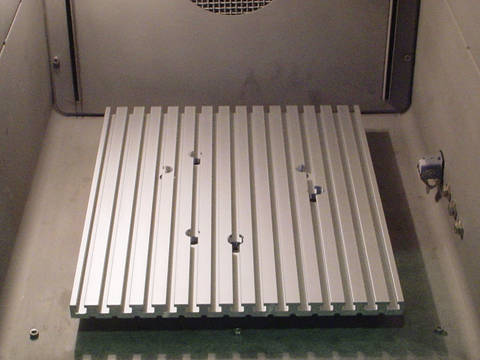
นอกจากนี้ยังสามารถใช้แผ่นฐานอเนกประสงค์ดังแสดงในภาพแทนที่จะใช้แผ่นฐานร่องตัวที โดยแผ่นฐานนี้จะให้ความยืดหยุ่นต่อบริษัทผู้ผลิตที่จะติดตั้งฟิกซ์เจอร์เฉพาะทางต่าง ๆ เข้าได้ตามความต้องการ โดยการทดสอบแรงกระแทกดังกล่าวสามารถปรับแต่งให้คล้ายคลึงกับสภาวะของแรงกระแทกพลังงานต่ำและสูงที่จะเกิดขึ้นจริงในขั้นตอนการผ่าตัด

หมายเหตุ: รูปแบบการทดสอบจริงนั้นถือเป็นความลับของลูกค้า จึงไม่สามารถแสดงได้ในตัวอย่างการใช้งานนี้

วรรณกรรม

9400 Series Drop Tower Brochure

Instron Drop Towers are used to develop, fine tune, and validate material models. Testing materials under real impact conditions is a crucial step prior of product design. Using the characterization data obtained with the Instron 9400, coupled with customer supplied high-speed video, you can have confidence in your results and deliver new materials to your customers faster. Our Drop Tower impact systems, fixtures, and tups are designed to meet a wide range of applications and testing standards including: ISO, ASTM, ANSI, Airbus, Boeing, BSI, DIN, EN, FDA, Ford, GM, JIS, NASA, GOST, and more.

  • ผลิตภัณฑ์
  • 02/05/2020
  • 763.1 KB

9400 Series Dashboard Brochure

Bluehill® Impact is built from the ground up for touch interaction. The Operator Dashboard features large touchpoints to make the user experience simpler and smarter. Easy-to-understand icons and workflows make it easy to train new or experienced users, simplify operator training, and allow you to start testing even faster than ever before

  • ผลิตภัณฑ์
  • 08/01/2019
  • 2.35 MB

ความต้านทานแรงกระแทกของเม็ดยาทางเภสัชกรรม

Biomedical Testing

ความต้านทานแรงกระแทกของเม็ดยาทางเภสัชกรรม

Support for pharmaceutical tablet impact testing

เม็ดยาทางเภสัชกรรมนั้นโดยทั่วไปมักจะมีการเคลือบผิวเพื่อช่วยในการกลืน, การควบคุมการปลอดปล่อยยาเพื่อผลการรักษา, การแยกแยะ และการแยกผู้ผลิต นอกจากนี้ การเคลือบผิวมักจะช่วยให้แน่ใจว่าสามารถมีอายุการจัดเก็บได้นานโดยการป้องกันเม็ดยาจากสภาพแวดล้อมที่มีผลกระทบ เช่น แสงสว่าง, อุณหภูมิ, ความชื้น และแรงกระทำทางกล โดยเฉพาะในระหว่างกระบวนการผลิตและบรรจุซึ่งผิวเคลือบของเม็ดยานี้จะถูกกระแทกที่สามารถทำให้เกิดความเสียหายได้

การทดสอบแรงกระแทกนั้นสามารถสร้างมูลค่าให้แก่ผู้ผลิตในรูปแบบของข้อมูลประสิทธิภาพสำหรับงานวิจัยและพัฒนาของวัสดุผิวเคลือบชนิดใหม่หรือกระบวนการผลิตใหม่ เมื่อได้ผลิตภัณฑ์ที่เหมาะสมแล้ว ผู้ผลิตยังสามารถที่จะจัดทำขั้นตอนการควบคุมคุณภาพโดยใช้ข้อมูลที่อ้างอิงจากการทดสอบความต้านทานแรงกระแทกนี้เพื่อเป็นการตรวจสอบกระบวนการผลิตได้อีกด้วย

INSTRON 9440 Drop Tower ประกอบไปด้วยเซ็นเซอร์ Piezo โหลดต่ำ (0.45kN หรือ 4.5kN), insert นิ้วซีกแทรกหรือแบนทับ tup และซอฟต์แวร์ Bluehill Impact เหมาะสำหรับการทดสอบยาและแท็บเล็ตยา สำหรับการแก้ไขเราขอแนะนำให้ใช้แผ่นโลหะที่แข็งแบนและสามารถยึดกับพื้นที่โต๊ะได้อย่างง่ายดาย


ระบบการทดสอบแรงกระแทกนี้เหมาะสำหรับการวิเคราะห์หาประสิทธิภาพในการต้านทานแรงกระแทกของเม็ดยาทางเภสัชกรรม เช่น ความสม่ำเสมอของแต่ละล็อตการผลิตและการเสียหายหรือการเสียหายจากส่วนผสม ซึ่งสมบัติเหล่านี้จะมีความสัมพันธ์กับวัสดุเคลือบผิวที่ใช้สำหรับเม็ดยา ด้วยการเข้าใจถึงการที่ผิวเคลือบจะเพิ่มหรือลดความแข็งแรงของเม็ดยานั้นจะทำให้สามารถเพิ่มสมบัติของผลิตภัณฑ์ได้

วรรณกรรม

9400 Series Drop Tower Brochure

Instron Drop Towers are used to develop, fine tune, and validate material models. Testing materials under real impact conditions is a crucial step prior of product design. Using the characterization data obtained with the Instron 9400, coupled with customer supplied high-speed video, you can have confidence in your results and deliver new materials to your customers faster. Our Drop Tower impact systems, fixtures, and tups are designed to meet a wide range of applications and testing standards including: ISO, ASTM, ANSI, Airbus, Boeing, BSI, DIN, EN, FDA, Ford, GM, JIS, NASA, GOST, and more.

  • ผลิตภัณฑ์
  • 02/05/2020
  • 763.1 KB

9400 Series Dashboard Brochure

Bluehill® Impact is built from the ground up for touch interaction. The Operator Dashboard features large touchpoints to make the user experience simpler and smarter. Easy-to-understand icons and workflows make it easy to train new or experienced users, simplify operator training, and allow you to start testing even faster than ever before

  • ผลิตภัณฑ์
  • 08/01/2019
  • 2.35 MB

Radial Force Evaluation of Stent Grafts

Biomedical Testing

Radial Force Evaluation of Stent Grafts

Stent grafts are used to treat a wide variety of peripheral arterial issues, as well as abdominal and aortic pathologic conditions like abdominal aortic aneurysms (AAA). The success of endovascular stent grafts for AAA’s has provided motivation to adapt similar technology for descending thoracic aortic aneurysms (TAA’s). Survival rates for untreated and traditionally treated (through complex thoracic surgeries) aneurysms are typically quite poor.

Advantages of stent grafts include shorter operative time, avoidance of major thoracic or thoracoabdominal incisions, and significant reductions in morbidity and mortality. Successful surgery requires the accurate placement of the stent graft to ensure it does not move, especially in upper descending thoracic aorta cases.

Typically, secure placement for stent grafts is a function of the proper selection and sizing since physiological movements of the aorta can be significant. Additionally, stent grafts have much larger diameters than coronary stents (30+ mm versus 2-3 mm). Evaluating the radial strength of a stent graft helps manufacturers to ensure efficacy and reliability of the medical device when implanted in vivo.

Instron partners with Machine Solutions Inc. (MSI) to utilize either a RX575 or RX675 stent iris on an Instron system. The fixture can also be customized and used for special specimen types to provide radial strength and stiffness over the entire graft or the securing graft ends. The control software to operate MSI’s RX fixture on an Instron system is standard Bluehill® 3 and TestProfiler. Although room-temperature testing provides excellent comparative results, the system can also be configured with a chamber to provide simulation of body temperature.

Literature

6800 Series Premier Testing Systems Brochure
Instron 6800 Series Universal Testing Systems provide unparalleled accuracy and reliability. Built on a patent-pending Operator Protect system architecture with an all-new Smart-Close Air Kit and Collision Mitigation features, the 6800 Series makes materials testing simpler, smarter, and safer than ever before.
  • ผลิตภัณฑ์
  • 02/10/2020
  • 1.93 MB

Implantable Devices

Biomaterials

Dental

Orthopedics

Soft Tissue Testing

Biomedical Testing

Soft Tissue Testing

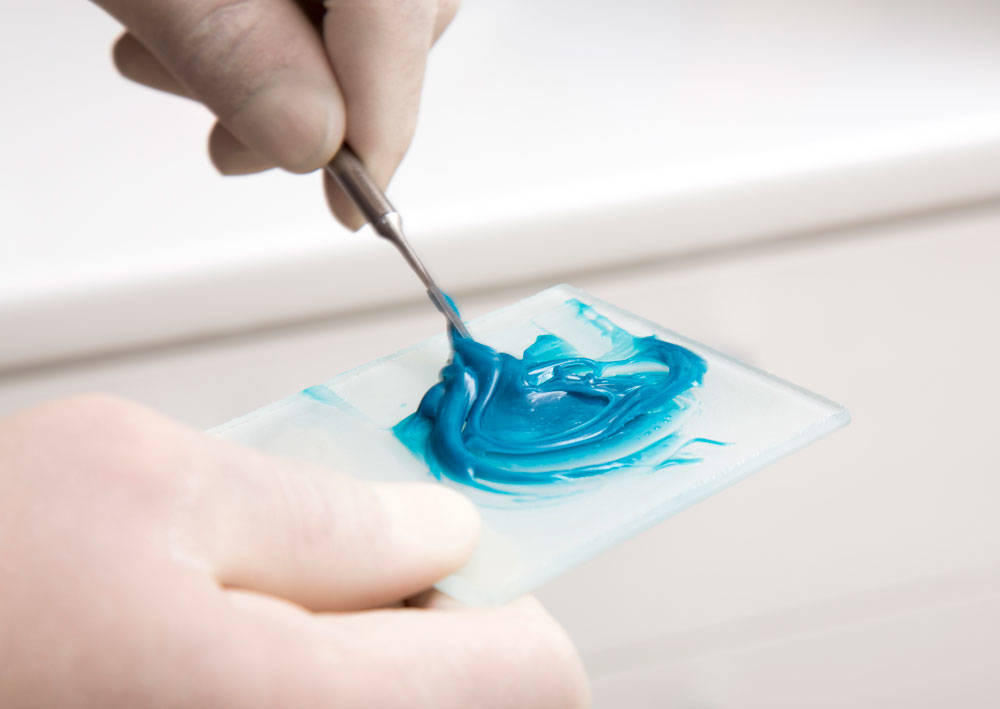
The Challenge

Skin

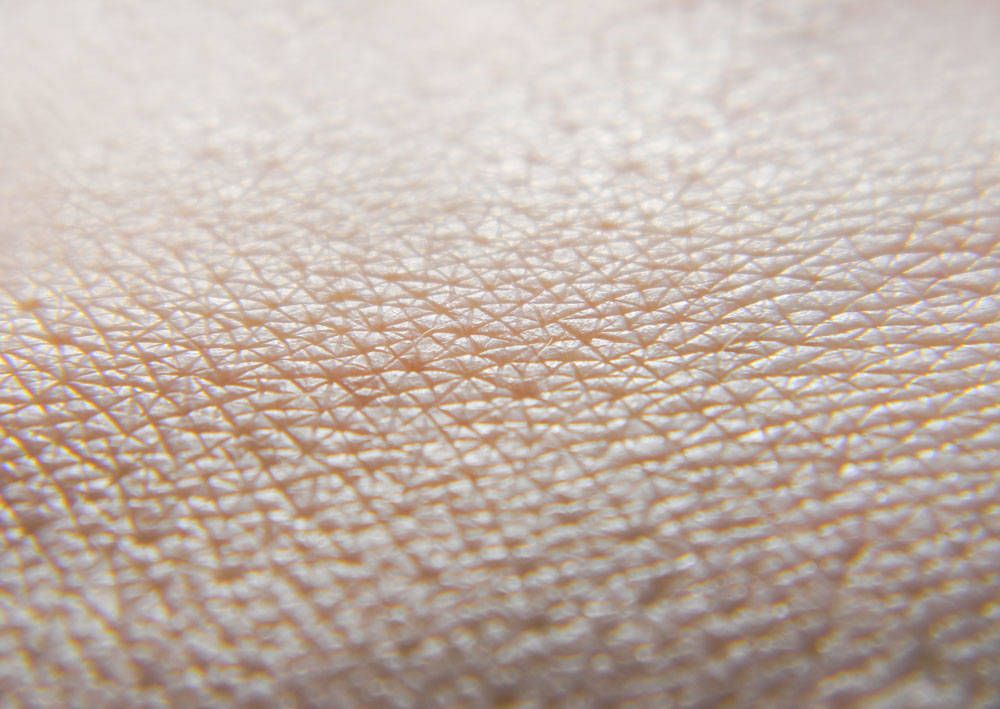
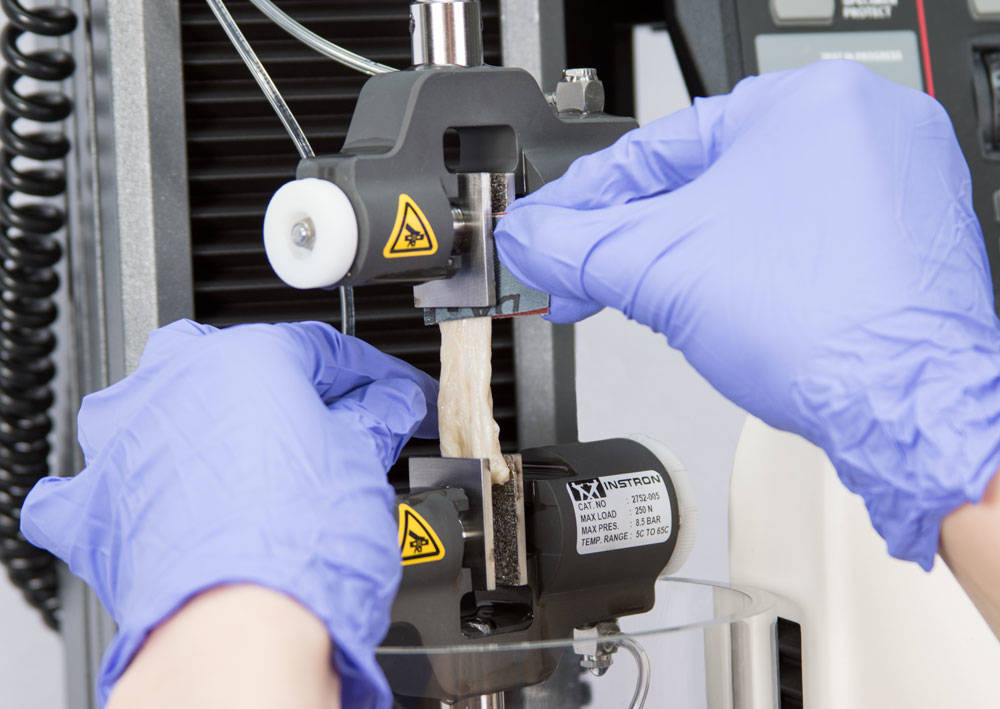
Testing soft tissues, such as skin, tendons, ligaments, and others, presents many challenges. Specimens of this type are delicate; hence they break at low forces. Gripping soft tissues can also be problematic given that these specimens are small, slippery, and compliant in nature. In addition, soft tissues are viscoelastic and often require accurate elongation or strain measurement to properly understand the material properties. Typically, in vivo conditions are needed to test soft tissues, which calls for the test to be performed at body temperature and in a hydrated state. This requires the testing equipment and fixture to be corrosion resistant and "waterproof" to avoid damaging the sensitive electronics of the testing system.  

Our Solution 

Soft Tissue Testing

For testing at physiological conditions, the Instron® BioBath is an ideal solution for keeping a specimen fully hydrated in a saline solution and at 37°C. The BioBath uses a closed-loop temperature control measurement, which can be fed directly into the test system's software to accurately track specimen temperature, in addition to mechanical test data. Pneumatic grips are recommended for consistent clamping pressure that the user can vary up to 90 PSI. A high friction surface is often needed to grip slippery biomaterials to avoid specimen slipping. To avoid this, we recommend using a metallic high friction finish known as surfalloy on the grip face, but grit sandpaper is also a viable option. A stainless steel tray, such as the BioTray, can help protect the system's electronics from damage in the case of spills or messy specimens.

Testing Medical Consumables

Biomedical Testing

Medical Consumable Testing


TESTING MEDICAL CONSUMABLES

A Guide for Single-Use Consumables Such as PPE, Surgical Tools, and Wound Closure Products
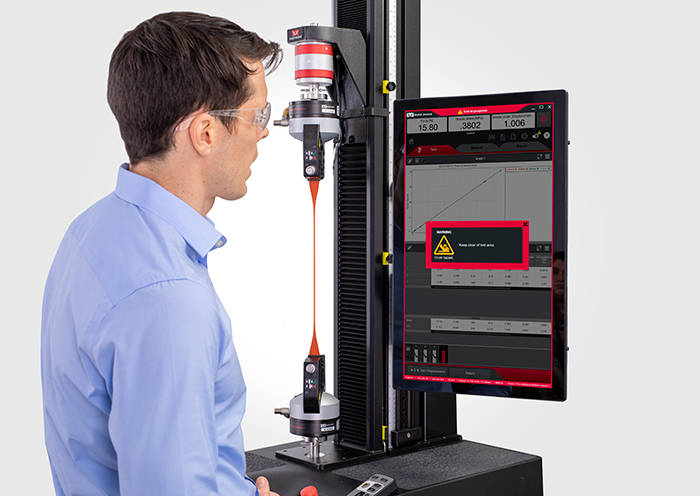
Medical consumables represent the largest category of biomedical testing and include a wide variety of single-use products such as surgical tools, PPE, wound closure products, specimen collection products, and more. Healthcare settings rely on single-use products to mitigate the occurrence of hospital acquired infections and ensure patient safety. These products are typically either FDA class I or II medical devices, which, despite having less stringent test requirements than higher risk products, are often produced in such large quantities that specific steps must be taken to support high volume mechanical testing. To compensate for the larger volumes, throughput and repeatability become critical test requirements addressed through specialized fixturing, efficient operator workflows, and intuitive software. Another critical component within this category is the medical grade packaging used for finished goods, which has its own set of testing requirements. For more information on other biomedical applications, visit our Biomedical Industry page.
medical glove

PRODUCT TESTING SPECTRUM

Evaluation of these devices can occur at many points throughout the product development and production processes, meaning the actual test sample can range in complexity from raw materials to subcomponents and finished goods. At the raw material stage, testing methodology is often much more prescriptive to well-defined standards and known fixturing solutions. In many cases, standard tensile grips or compression platens can be utilized to properly evaluate different materials and help engineers make informed decision regarding material selection for their product. At the component level of testing, unique product geometry creates a greater need for customized fixturing. Utilizing XY tables or tapped test plates provide users the flexibility to adapt their system to many different types of components. These fixtures also enable you to ensure that the loading axis is properly aligned with the feature of interest on the product. Components may need to be evaluated in many different ways order to fully characterize the performance of the device. A full performance assessment may also require a qualitative assessment of the failure mode in addition to the measured load and displacement data. Integrated testcams can be helpful in providing visual feedback of the failure event synchronized with the test data.

AUTOMATION POTENTIAL
Especially within the context of a global pandemic, demand for medical consumables, especially PPE, has shown to be unpredictable. Drastic shifts in testing throughput for these products has become the norm. Integrating automation into a mechanical testing program can provide improvements in throughput, repeatability, and overall product quality. In most cases, medical consumable testing is "pick and place," requiring minimal operator interaction. This makes it a perfect candidate for automating through collaborative robots or automatic XY stages. Automation can also include integration of your equipment into existing quality management systems, serving to create closed loop feedback within your manufacturing process. This feedback can help minimize waste in the production process, using collected mechanical data to make real time changes in upstream production parameters.

biomedical testing automation

PACKAGING

Medical products require rrobust airtight packaging to ensure that device sterilization is maintained until the time of use. This packaging is critical to prevent any contamination, which would ultimately result in a patient acquiring an infection. To verify the strength of the packaging seal, most customers test to ASTM F88, which provides the testing criteria for evaluating the seal. The main challenges are specimen preparation and data collection. Many specimen preparation fixtures exist to uniformly produce the 1 inch wide strips necessary per the standard. Seal strength testing will result in a non-uniform curve with instantaneous changes requiring a high enough data capture rate to ensure you are accurately recording the event. If the data capture rate is too low, the load curve could be rounded off and result in an artifically low average seal strength. Pneumatic grips with flat faces are ideal for repeatably holding on to the specimen tails without damaging the material in any way.

SUSTAINABILITY FOCUS

Hospitals are increasingly concerned with the waste issues brought about by their consumption of single-use medical products. The development of bioplastics is a burgeoning industry with a strong market need, and standards are currently in development to address a range of biopolymer properties across many healthcare applications. In the meantime, many typical plastics standards such as ASTM D638 and ISO 527 have updated their verbiage to include bioplastics and 3D printed plastics. The testing requirements for these standards are well known, and by using them for evaluation researchers can clearly distinguish between the material properties of petroleum and those of biologically-based plastics. Researcher may need to perform tensile, compression, flexure, torsion, and other forms of testing on these new sustainable materials in order to properly characterize them. R&D facilities need the tools at their disposal to perform these comprehensive analyses and clear the regulatory hurdles that the FDA and other international organizations will create.

Drug Delivery Device and Container Testing

Biomedical Testing

Drug Delivery Device and Container Testing

DRUG DELIVERY DEVICE AND CONTAINER TESTING

A Guide for Testing Syringes, Cartridges, and Vials

The global demand for pharmaceutical products is on the rise, fueled by higher incidence rates of chronic disease, an aging population, and the threat of future pandemics. Patients and physicians expect drug delivery containers to be devoid of defects, capable of securing the medicine throughout its transportation and deployment. Failures can pose a severe risk to the patient or result in the disposal of large quantities of much needed supplies. For these reasons, drug delivery containers and devices require stringent evaluation, enforced by global regulatory bodies, to ensure they can perform as intended. There are multiple types of drug containers designed to store and deliver medicine under varying circumstances. This page differentiates the various containers and identifies the unique testing objectives and challenges associated with each. For more information on other biomedical applications, visit our Biomedical Industry page.

Syringe

SYRINGE TESTING

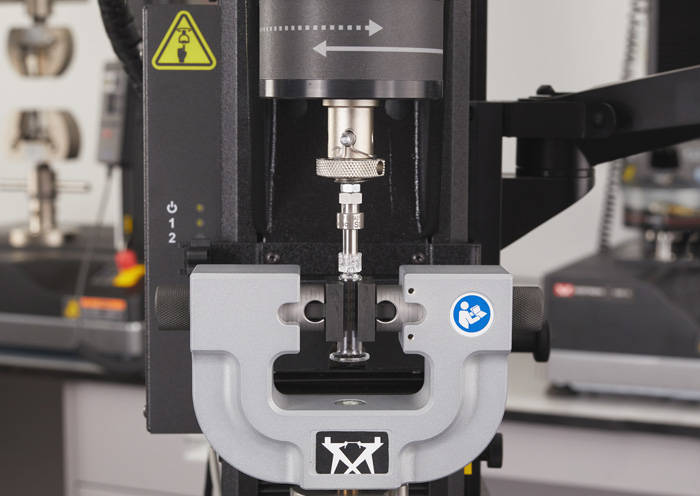
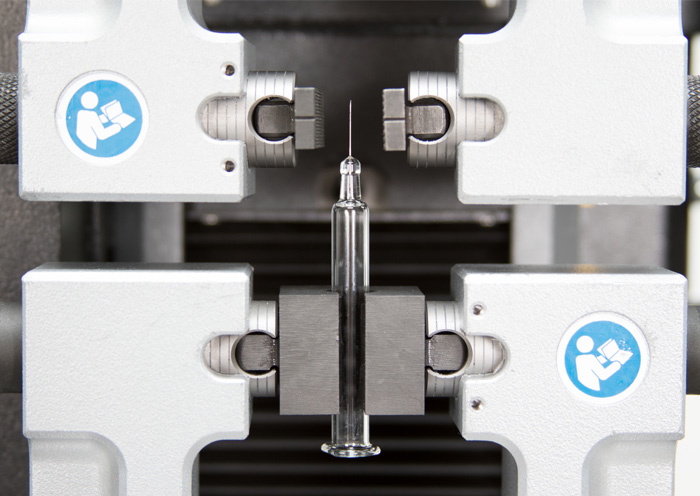
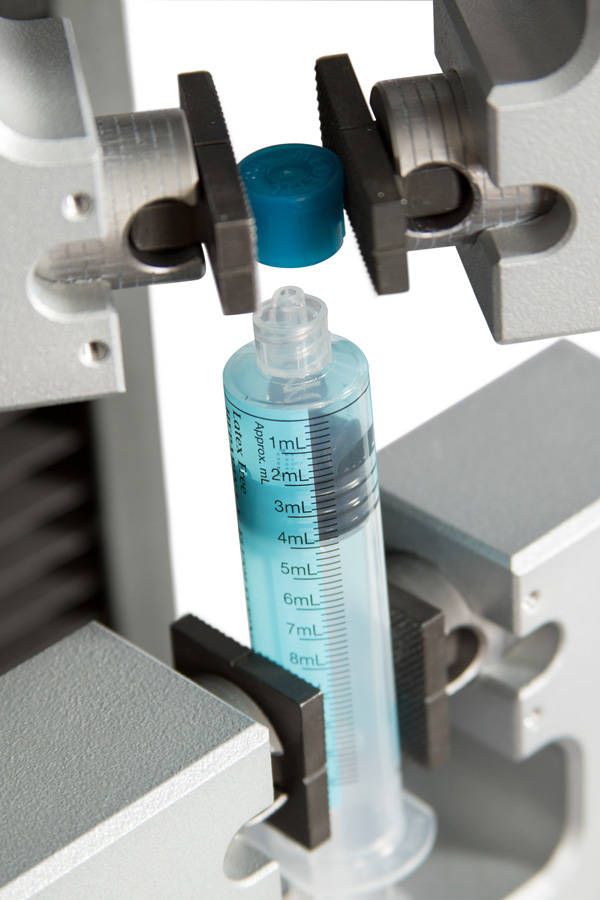
Because they are responsible for delivering many different drugs in many different settings, syringes are manufactured in several varieties. Glass syringes represent the largest percentage of the market, closely followed by plastic, with a smaller market for stainless steel syringes. Despite their inherent simplicity, there are hundreds of design considerations that must be made when creating these products, as they serve as both containers and drug delivery devices. Mechanical testing aims to address many of these and assist manufacturers in achieving optimal performance and maintaining production quality.

Device usability is one of the most important design considerations. For syringes, this means the ease of dispensing fluid by using the plunger. Achieving optimal performance  can require modifications to barrel geometric tolerances, inner surface roughness, siliconization processes, plunger stopper geometry, and more. Manufacturers must lean on mechanical testing during the R&D process to qualify and evaluate all design decisions.


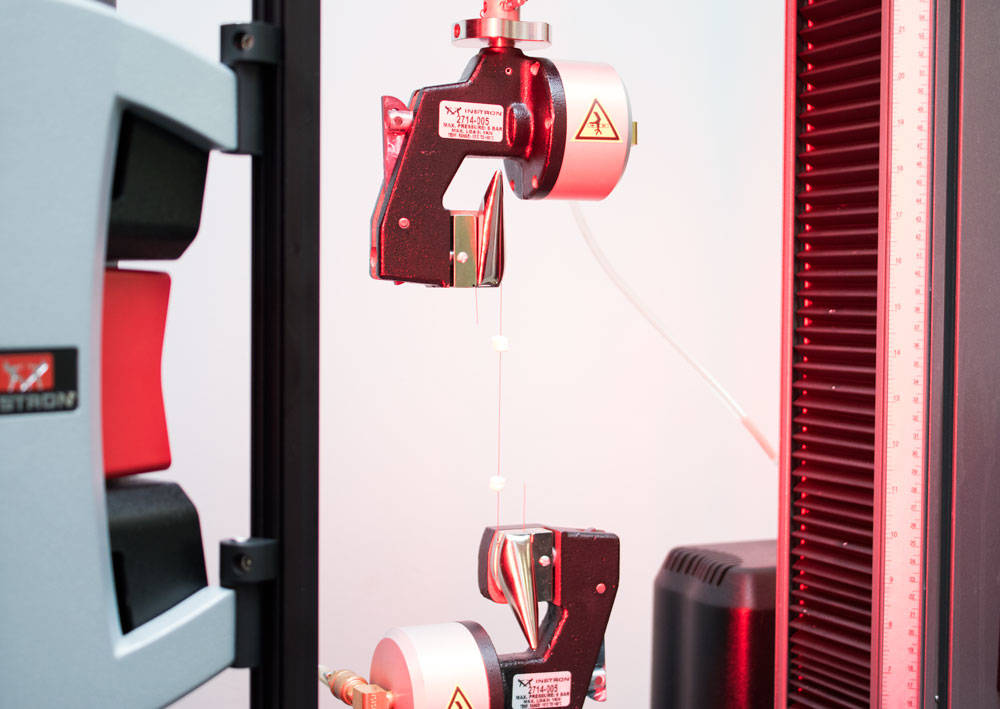
Another important consideration is the closure and safety mechanisms for the device. Some glass needles have staked needles embedded in the cone of the barrel and require a needle shield, while most syringes use a luer connection to attach a cap and separate needle. Safety mechanisms can be classified as active or passive, depending on the interaction of the user. Active safety requires a distinct action from the operator such as placing a shield over an exposed needle. Passive mechanisms typically use a spring to hide or cover the needle after use to prevent sharps injuries. In both type of mechanism, one of the main testing challenges is alignment. Concentricity errors can affect the force and torque values of the measurement. Self-centering grips are ideal for these applications and remove opportunities for operator error.

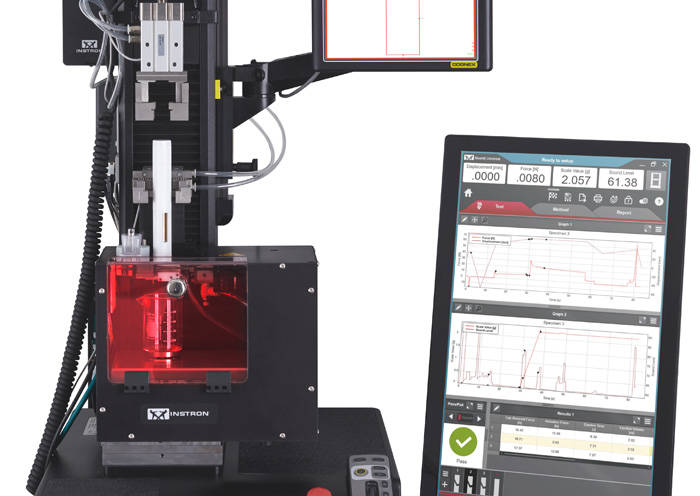
Both prefilled glass syringes and cartridges can be directly placed into automatic drug delivery devices. These devices are designed to mechanically engage drug delivery after a patient presses a button or engages a needle shield. During activation, a loaded spring pushes a plunger down on the container and dispenses fluid. Automatic drug delivery devices dramatically increase ease-of-use for the patient, but also present additional design complexity that necessitates the evaluation of many subcomponents and functionalities. Many customers address these with multiple testing systems, each designated for a different evaluation, such as ejected volume or needle length insertion depth. Manufacturers can improve throughput, reduce operator influence, and simplify testing workflows by utilizing a single turnkey solution to perform all the required functional tests.

Setting Up Syringe Test


CARTRIDGE TESTING

Cartridges are most commonly used within automated drug delivery systems including autoinjectors, pen injectors, and wearables. They present unique advantages for pharmaceutical companies, being simpler to manufacture than syringes and more compact for improved storage efficiency. They are also simple in design, consisting of a borosilicate glass container with elastomeric seal and stopper, enclosed by an aluminum cap. The cartridge relies on two external mechanisms to deliver medicine – a manual or automated action to actuate the plunger, and an attachable needle to channel the medicine into the body. Most testing on cartridges evaluates the former, ensuring the forces necessary to dispense fluid can be achieved within the device.
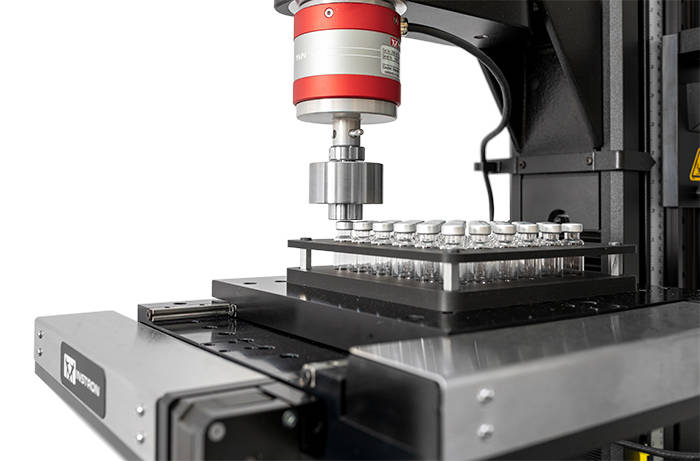
Cartridge Testing on Automated XY Stage

Like syringes, alignment is a primary challenge for achieving repeatable testing results. Alignment concerns can be mitigated by using self-aligning fixtures and the ability to make XY adjustments to the workspace. The geometry of cartridges presents a key difference in the fixturing required for testing. They do not have finger flanges, meaning all gripping force must be applied to the sides of the container. The clamping forces must be calibrated to prevent damage to the container, which is made of glass. The use of an insert to support the bottom of the cartridge can limit the application of side loads and result in better repeatability in testing.


VIAL TESTING

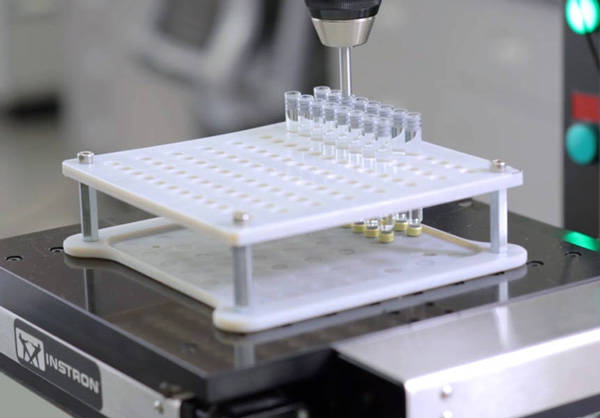
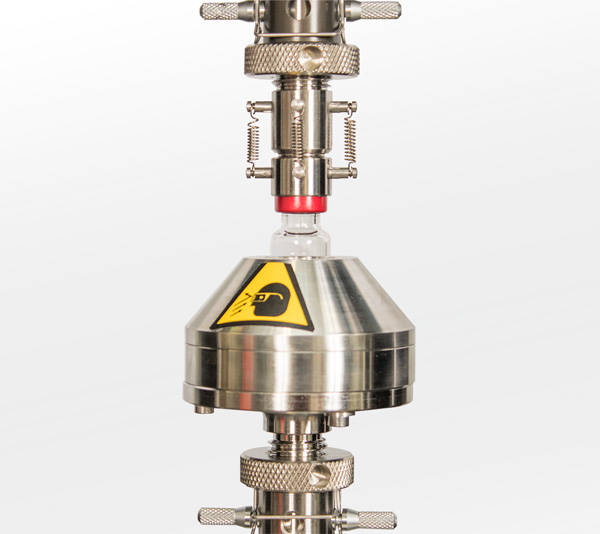
Vials are storage containers for pharmaceuticals and are not part of the actual drug delivery. They generally consist of a glass container, rubber seal, and an aluminum crimped cap. A syringe is used to puncture the rubber seal and draw out the precise dosage required for administration. Of concern to vial manufacturers is the container closure integrity (CCI), a series of assessments to validate the closure prevents outside particulates from contaminating the product. These tests themselves are not mechanical in nature and use electrical or pressurized means to determine the closure integrity. Instron systems help provide empirical evidence identifying the key mechanical parameters for the elastomeric seal and crimping procedure that correlate to CCI performance. Residual Seal Force (RSF) is one of the main tests that is performed, determining the force required to overcome the internal forces of the elastomeric seal, which maintains contact between the vial and cap. This test is vital for evaluating the many variables which can ultimately effect CCI:

Residual Seal Force Test
  • Time from Sealing
  • Storage Temperature
  • Storage Humidity
  • Stopper Design
  • Stopper Material
  • Crimping Technique

The main challenges related to RSF testing are ensuring proper alignment of the device and the evaluation of the RSF point on the load displacement curve. While many operators will manually select the point on the curve, Bluehill software allows the operator to add first and second derivative measurements, allowing for the automatic recognition and selection of the inflection points associated with RSF.

Additional testing is performed related to physician use and labelling. Instron's custom products group has designed specialized fixtures to repeatably remove the plastic cap and peel off the label, as it is important to ensure the adhesive strength can be maintained through hot, cold, or fluctuating storage temperatures.

IMPROVING EFFICIENCY AND REPEATABILITY

As you move towards commercialization of a product, the quantity of testing will inevitably increase. Efficiency and repeatability are two critical parameters that can be affected by increased volume. To address this, there are many solutions which can be utilized to improve process flow and reduce operator errors. These solutions can include:

Syringe Testing with a Cobot

Real World Scenario: Design verification testing for example, is always the final push before receiving product approval, but may only occur a few times a year. Ensuring the lab has the appropriate staffing to both complete all the necessary testing and produce the documentation and analysis can be a challenge. Utilizing automation can help meet these challenges, removing the need for operators to stand in front of the system, and instead concurrently work on other required tasks. Automation like the CT-6 cobot can help optimize the efficiency of the lab, allowing a lab manager to appropriately distribute the workload and meet the tight deadlines associate with product release.

FDA 21 CFR Part 11 Compliance

Biomedical Testing

Materials Testing Lab

FDA 21 CFR PART 11 COMPLIANCE FOR MECHANICAL TESTING LABS

What Is Required and How You Can Achieve It

What is FDA 21 CFR Part 11?

21 CFR Part 11 is a regulation that applies specifically to electronic documentation provided to the FDA. First published in 1997, the original intent was to create a framework that ensured electronic means of recording, approving, and submitting documents was effectively equivalent to handwritten paper documents in terms of security. The objective was to ensure that companies were capable of using electronic record keeping technology as it became more commonly utilized within the industry.

Who Does 21 CFR Part 11 Apply To?

FDA 21 CFR Part 11 applies to any pharmaceutical or medical device manufacturer submitting product documentation to the FDA for approval for sale within the United States or as part of any post-market surveillance activities.

What are the Requirements of 21 CFR Part 11?

Regulatory requirements mainly apply to the processes surrounding electronic record creation, retention and submission. The regulation specifically discusses the need for software validation, use of electronic signatures, a searchable time-stamped audit trail, and access to traceable record copies.


INSTRON PRODUCTS


Compliance is best achieved through a partnership between a manufacturer and its equipment suppliers, where the equipment supplier provides the tools to effectively and efficiently integrate the equipment into the manufacturer's quality management system. Instron's Bluehill® Universal software, compatible with static universal testing systems, offers several features designed to aid in 21 CFR Part 11 compliance. Bluehill Central lab management software allows for centralized management of multiple instances of Bluehill Universal, further simplifying the processes necessary for compliance.


Bluehill Universal
Bluehill Universal

Bluehill Universal is the testing industry's most powerful and advanced testing software. Its intuitive workflows are designed to simplify operator training, increase testing efficiency, and minimize safety hazards.

Learn More


Bluehill Central
Bluehill Central

Bluehill Central software is a laboratory management tool that enables centralized, remote management of Bluehill Universal software applications associated with multiple Instron test frames. The software allows you to remotely manage all Bluehill Universal users, test templates, results, file revision approvals, and audit trail data from multiple Instron systems.

Learn More


TRACEABILITY

Bluehill Universal’s Traceability Module enables users to meet the audit requirements associated with FDA 21 CFR Part 11 as well as those of ISO 17025, Nadcap, and other regulatory bodies. Through seamless integration of electronic approvals, revision history, and an automated audit trail, this powerful add-on combines with Bluehill’s built-in security to provide unmatched data traceability.

  Webinar: Introducing Bluehill Universal's Traceability Module
  Webinar: Protecting Data Integrity and Having Traceability in Your Testing
  FDA 21 CFR Part 11 Implementation White Paper

revision history icon

Revision History

Revision history allows users to view the full revision history of Bluehill methods, tested samples, and report templates. Each revision contains the details of the affected item, including a time stamp, both the previous and the new value, and the name of the users involved with initiating and, if required, approving the change.

electronic approval icon

Electronic Signatures

Electronic signatures serve as electronic approvals and replace the need for manual, hard copy signatures. Electronic signatures can be configured for primary, secondary, and tertiary electronic sign off to ensure that method revisions and test data are reviewed before a change is implemented or data is publicized.

audit trail icon

Audit Trail

Bluehill Universal’s built-in secure and searchable audit trail tracks system level usage, such as log-ins and log-outs and additions, modifications, and deletions to all Bluehill files. The audit trail also captures usernames, dates, and timestamps for all activities, allowing full visibility into all system activities during an audit.


SECURITY

Bluehill Security allows a Lab Manager to configure permissions in the software, granting access to trained personnel, such as super users, and limiting access where needed. Bluehill Security allows login permissions to be configured directly in Bluehill, or linked to the local Windows® login or Windows Active Directory.

  Security in Bluehill Software Whitepaper
  Security Comparison Chart


DATABASE TYPES

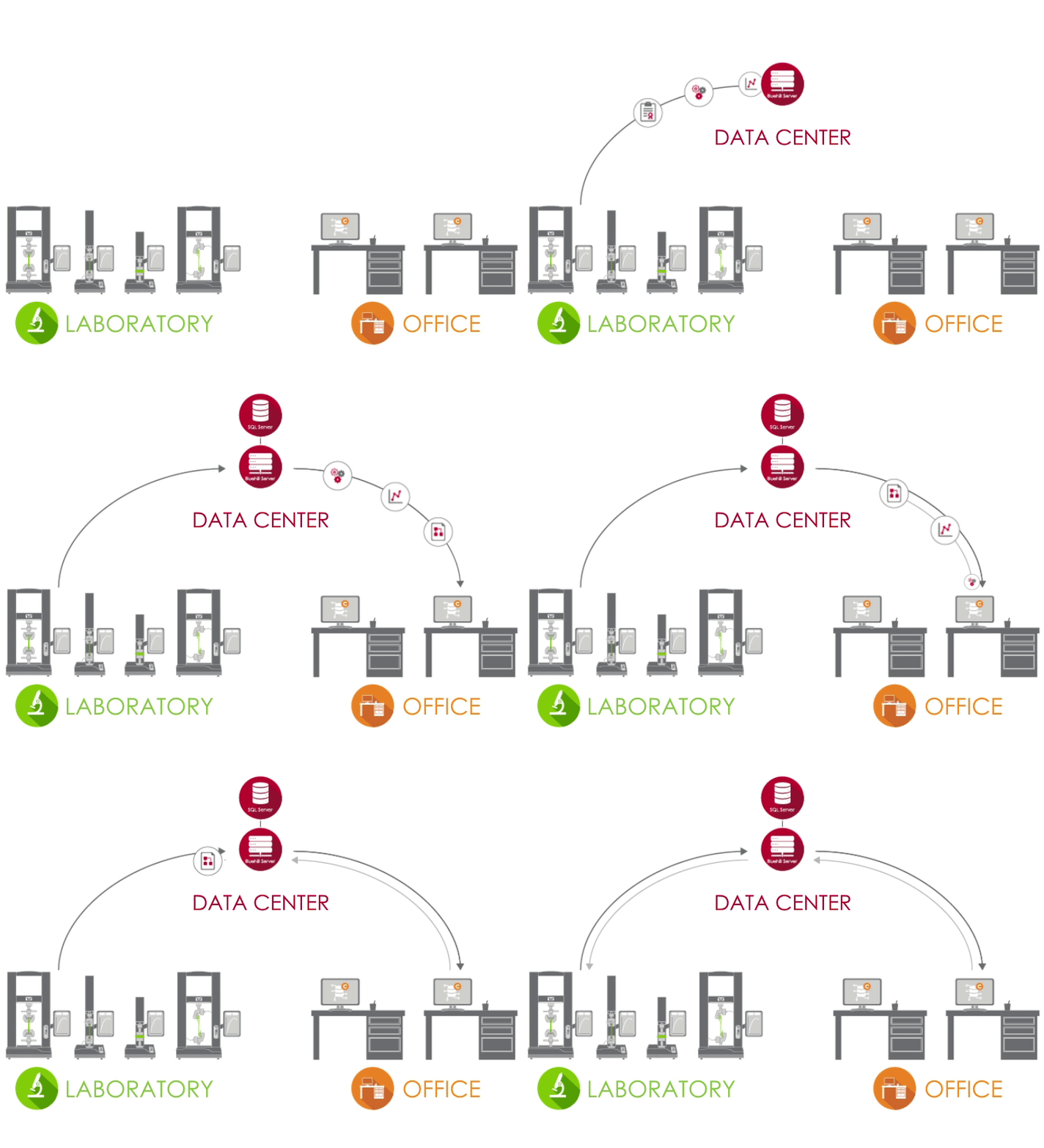
Traceability’s audit trail offers both a network and local database to accommodate your data management preference. A networked, centralized database offers your lab greater efficiencies and reduced risks when compared to locally managed data. Determining your lab’s IT infrastructure and data management preferences is recommended when considering these alternatives.


local systems
Local

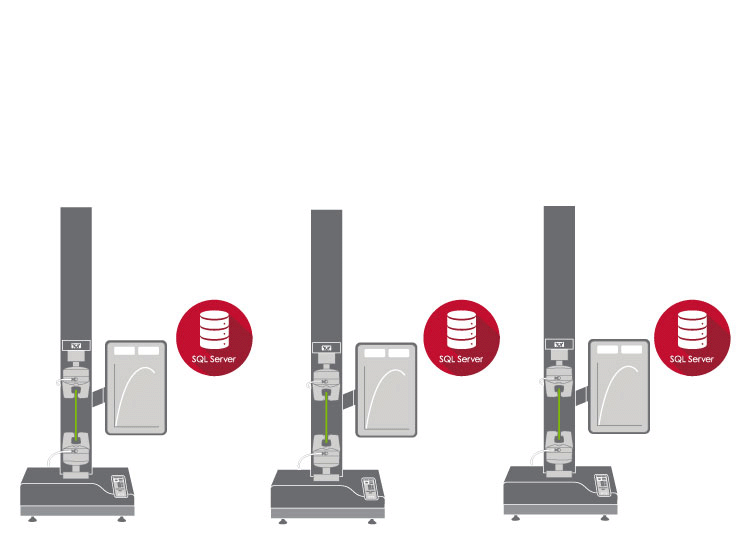
Bluehill Universal’s local Traceability module stores audit trail data on a Microsoft SQL Express database that is hosted on the computer running Bluehill Universal connected to the Instron system. The local database model accommodates labs that cannot connect computers to a shared network. Viewing the audit trail and electronically signing files occurs locally on the computer, and each Instron system with a local Traceability database stores its own SQL Express database. Database backup and restore functions can be performed manually in Bluehill Universal.


Bluehill Central Architecture
Network

The network solution for Instron’s Traceability is powered by Bluehill Central, which employs a client/server framework to store all shared audit trail data, files, and settings on a Microsoft SQL Server database. When Bluehill Universal is connected to your lab’s Bluehill Central server, each testing system send and receives data from the centralized database, eliminating the risk of variation and the burden of locally managing each system. Viewing the audit trail, electronically signing files, and user management is performed either remotely in Bluehill Central or locally in Bluehill Universal. Database backup and restore functions can be performed manually in Bluehill Central.


INSTRON SERVICE


Instron field service teams provide validation and documentation services to support IQOQ processes designed to ensure that your Instron testing equipment performs to its intended purposes and produces valid results (per 21 CFR 820.72 and ISO 13845). Validation packages can also include validation of Bluehill Central and Bluehill Traceability to aid in compliance with CFR 21 Part 11. These validation packages contain checks to confirm that certain operations performed in the software are traceable in an audit trail, and provide reference to Instron transducer calibrations (purchased separately) to ensure that the software and system are providing accurate, reliable results. At the conclusion of our services we provide a Completion Certificate for Installation and Operational Qualification that will be signed by the Instron Field Service Engineer who performed the validations.


IQ/OQ

Our field service teams provide validation and documentation services to support IQOQ processes designed to ensure that your Instron testing equipment performs to its intended purposes and produces valid results per 21 CFR 820.72 and ISO 13845. At the conclusion of our services we provide a Completion Certificate for Installation and Operational Qualification that will be signed by the Instron Field Service Engineer who performed the validations.

Learn More


Systems Verification

Instron's field service teams provide speed, displacement, alignment, and temperature verification for your mechanical testing systems to ASTM E2658, ASTM E2309, and other standards.

Learn More


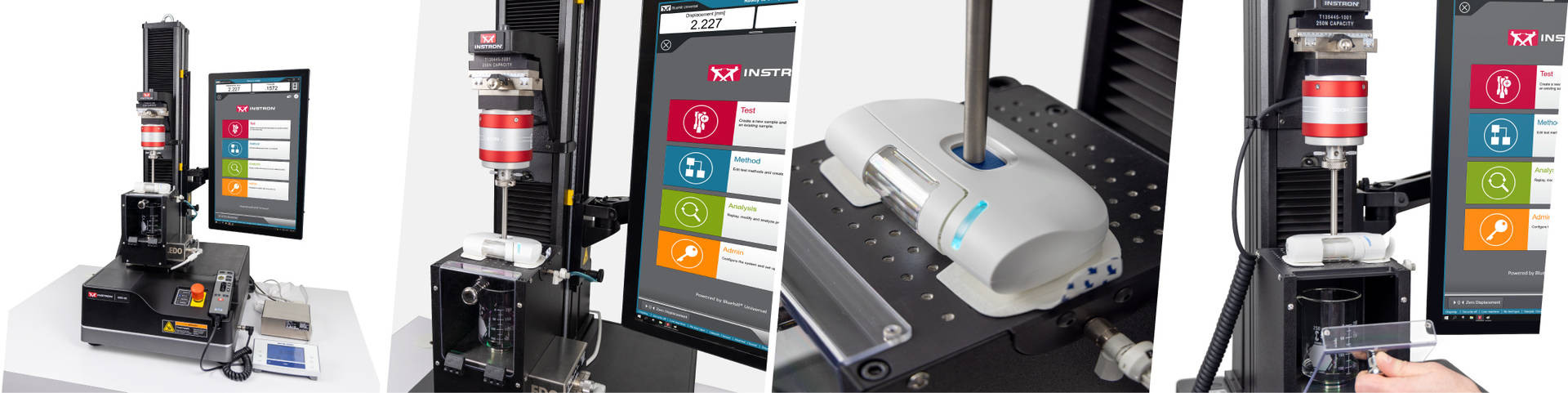
On Body Delivery Systems

Biomedical Testing

mechanical testing of on body delivery systems

TESTING ON BODY DELIVERY SYSTEMS

Testing Wearable Devices Used in the Treatment of Diabetes and Other Chronic Illnesses


Trends in wearable technology follow those of the broader biomedical and electronics industries — devices are getting smaller, smarter, and easier to use. These wearable devices range from on-body drug delivery systems for diabetes and cancer treatment to electrical nerve stimulation patches or sensors t monitor vitals. All treatments increase patient autonomy and are rapidly increasing in popularity in light of higher incidence rates of chronic disease and an aging population. As this trend continues, manufacturers are working to develop robust testing methods to mechanically evaluate all aspects of these devices and ensure that they are performing as expected. For more information on other biomedical applications, visit our Biomedical Industry page.

CHALLENGES OF TESTING WEARABLES

On Body Delivery Systems (OBDS) represent a quickly growing segment of the injectable drug delivery device market. These devices offer unique advantages over more traditional delivery methods. One of their most differentiating features is their ability to support significantly larger volumes of medication than devices like prefilled syringes and autoinjectors, with some OBDS reaching as much as 10 mL of deliverable volume. This is a direct result of the explosion of large molecule biologics, whose efficacy requires higher concentrations and subsequently higher volume in solution. OBDS also simplify patient adherence, as the entire delivery process occurs automatically once the device is placed and activated. In addition, their form factor allows for easier integration of IOT functionality, helping create companion applications to track and monitor patient progress.

stethoscope icon

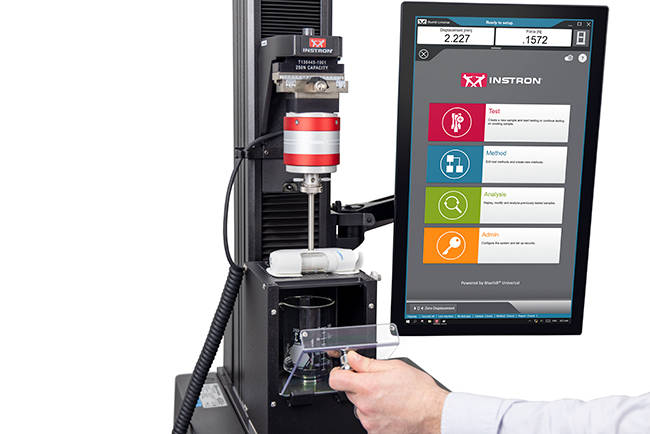
Though these devices are just recently starting to be commercialized on drug platforms, the testing requirements are becoming more standardized. ISO 11608-6 was released in 2022, which is the first official standard that provides guidance around evaluating the functionality of OBDS. At this point, the testing specifications are still purposefully broad to apply to a range of devices with different form factors. The dose accuracy, injection time, delivery profile, and needle extension are relatively agnostic of the device, requiring additional testing system capabilities such as an integrated scale and camera. Testing around the properties of the medical grade adhesives is subject to the most uncertainty, with references to a wide range of existing adhesive test standards.

Challenge #1 - Flexibility Around Device Form Factors

The overall size and functionality of OBDS can vary greatly between manufacturers, and mechanical testing systems are not inherently designed for evaluating such a varied set of products. The dimensions of OBDS necessitate testing systems with a large fixturing surface that has sufficient anchoring points to accommodate all profiles. The use of a component test plate - a tapped platform with regularly spaces threaded connections - provides the most flexibility for customers to create their own fixturing for their devices. A unique challenge to OBDS is the potential for activation mechanisms and needles which are not collinear. An adjustable load cell mount makes it possible to maintain the needle centered on the injection point while ensuring the load cell is aligned with the activation button.


Challenge #2 - Capturing Extended Dose Profiles

wearable autoinjector being tested

Autoinjectors typically dispense their entire volume of fluid at a consistent rate in the range of 1 to 10 seconds. OBDS will work on a longer time scale to address patient comfort associated with large volume injections. In some cases, the delivery profile will vary throughout the duration of the injection to optimize drug absorption. The use of an integrated scale measurement in Bluehill Universal allows for proper visualization representation of the dose profile , aligning with the guidance of the ISO 11608-6 standard [Annex B].

Challenge #3 - Adhesive Evaluations

ISO 11608-6 points toward established standards like ASTM D3330 for characterizing the fundamental adhesive properties of the adhesive materials used to affix devices to patients' skin. This standard provides an ideal baseline for comparative testing of different adhesives, but does not accurately represent the real-world adhesive properties. To do this, the testing system must also be able to support more realistic substrates and preconditioning parameters such as temperature and moisture. A system with cyclic loading capabilities may provide additional insights in evaluating the degradation of adhesive properties after hours of simulated use.

Metal Ceramic Plastic Braces Testing

Biomedical Testing

Metal Ceramic Plastic Braces Testing

The  Challenge

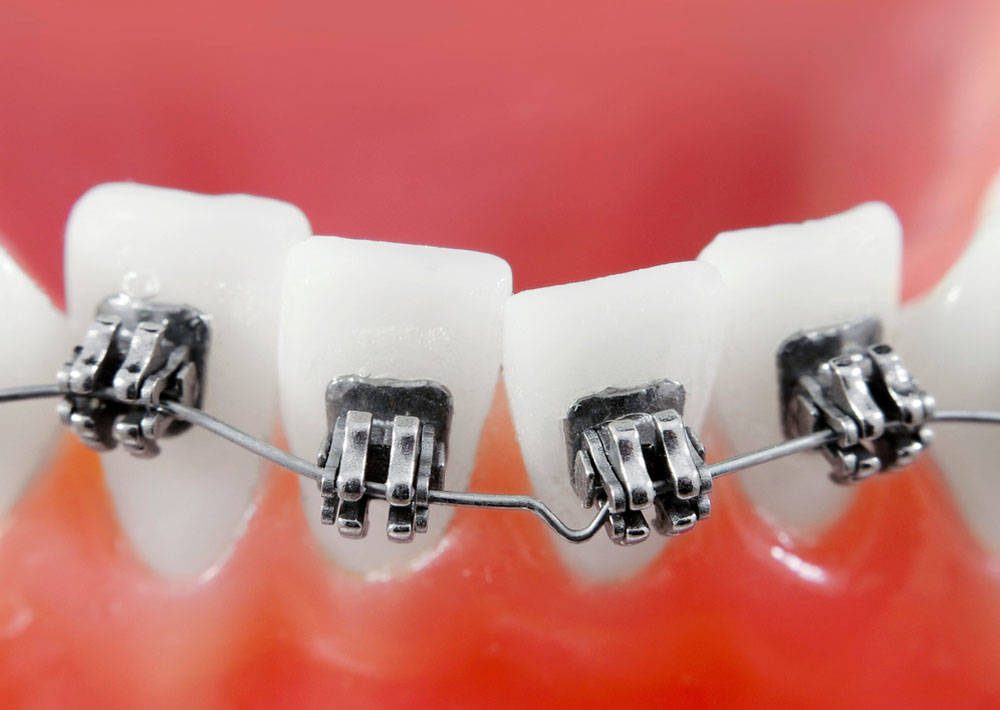
Braces

Metal braces are the most common type of braces for correcting misaligned teeth, and are typically made from high quality stainless steel or titanium. The components of metal braces include the brackets that physically attach to the teeth, bonding material like an adhesive to secure the brackets to the teeth, arch wire that connects the brackets together, and elastic which is typically referred to as O-ring material. In recent years, clear braces produced from plastic or ceramic have become a popular alternative to metal braces for cosmetic reasons. For a patient that requires braces, the preparation and application of braces are both expensive and time intensive. It is imperative that braces remain intact during application and during the patient's daily use of eating and drinking. Given the complexity of different patients and the multiple components and materials associated with braces, testing all parts and use cases can be overwhelming.

Our Solution 

Braces Testing

In order to test each component in a set of braces, we recommend using a Universal Testing System, such as the 6800 Series or 3400 Series systems with Bluehill® Universal software. Bluehill Universal's flexible user interface enables users to quickly set up different methods for tensile, compression, flex, peel, tear, and friction tests. This allows users to test the compressive strength properties of the brackets, peel properties of the adhesive, and tensile strength of both the metal wire and O-ring material. For testing the brackets, we recommend using 2-inch compression platens. When testing the adhesive, we recommend performing a 90° peel test with the adhesive bonded to substrates that mimic the tooth. Depending on the thickness of the metal wire, pneumatic cord and yarn grips may be the most preferred gripping solution for wire tensile tests. Finally, for testing the elastomeric O-ring material, Instron® offers a specialized O-ring fixture designed for measuring stiffness, strain, and ultimate tensile strength properties for a variety of O-ring sizes.

Knee Testing

Biomedical Testing

Knee Testing

The Challenge

Knee Joint

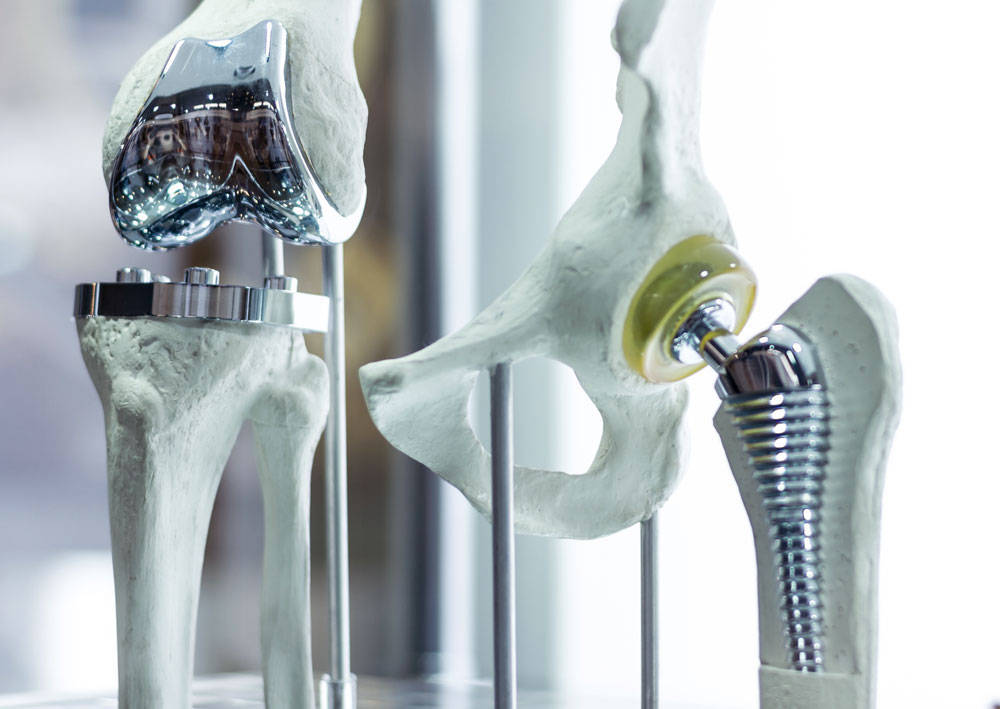
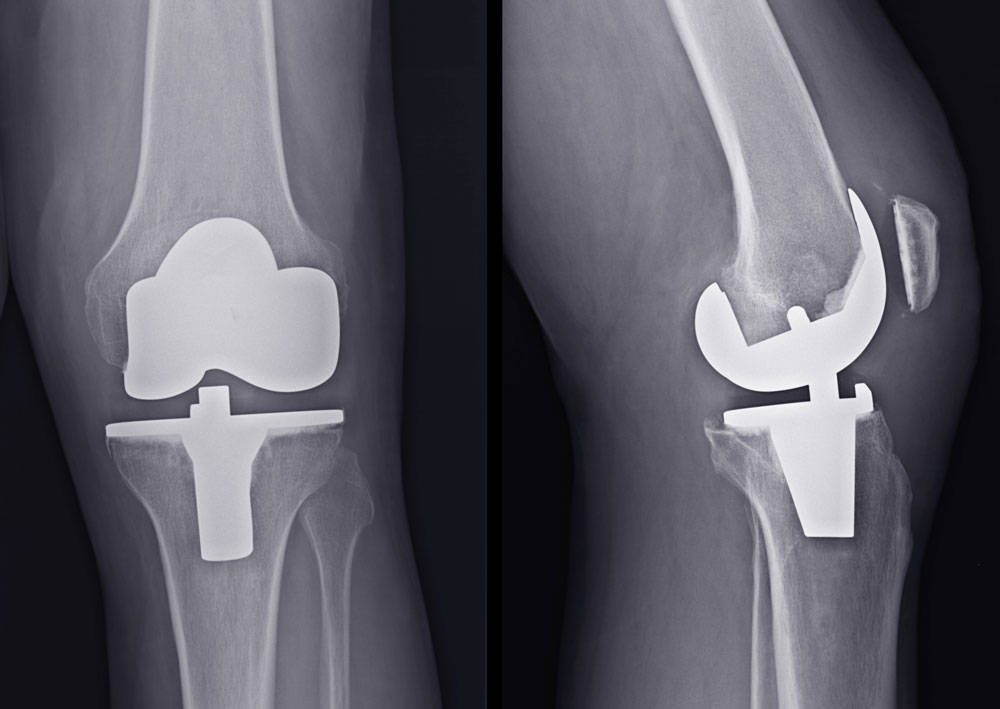
Knee replacements are among the top surgical procedures worldwide for improving quality of life. Fatigue fracture of knee tibial trays is one of the most commonly reported failure mechanisms of total knee replacements (TKR). It is caused by the loss of underlying bone support resulting from biological reactions, such as wear-induced osteolysis. Under these conditions, the tibial tray becomes mechanically unstable, and cyclic loading imparted by normal walking causes fatigue cracks, ultimately leading to catastrophic failure.

Our Solution 

Knee Joint Testing

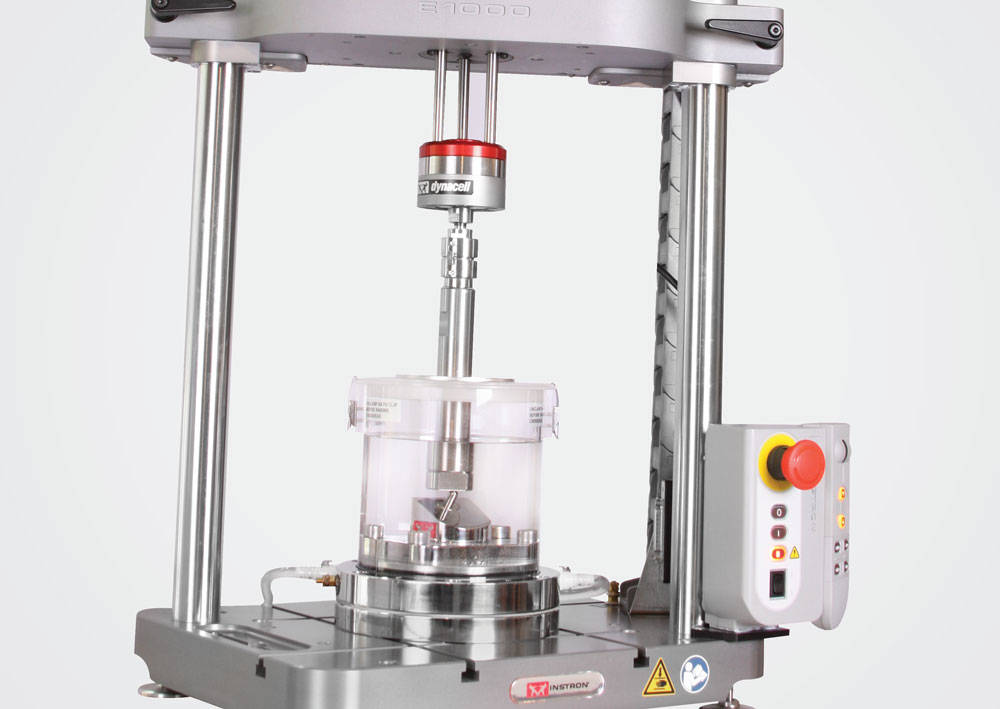
The ElectroPuls™ All-Electric Dynamic Test Instrument assists designers, manufacturers, and researchers through the product life-cycle process, from deriving fundamental material properties, such as resistance to fatigue crack propagation, to testing the entire tibial tray and beyond. We use a clamping fixture to secure one half of the tibial tray, simulating a fully supported condyle. The other unsupported condyle is then subjected to physiologically representative loading. By using our unique Dynacell™ load cell, dynamic inertial errors, such as those caused by the fixturing and from hydro-dynamics that result when testing in an environmental bath, can be removed. This allows for a more accurate measurement of load being applied to the specimen.

Contact Lens Testing

Biomedical Testing

Contact Lens Testing

The Challenge

Contact Lens

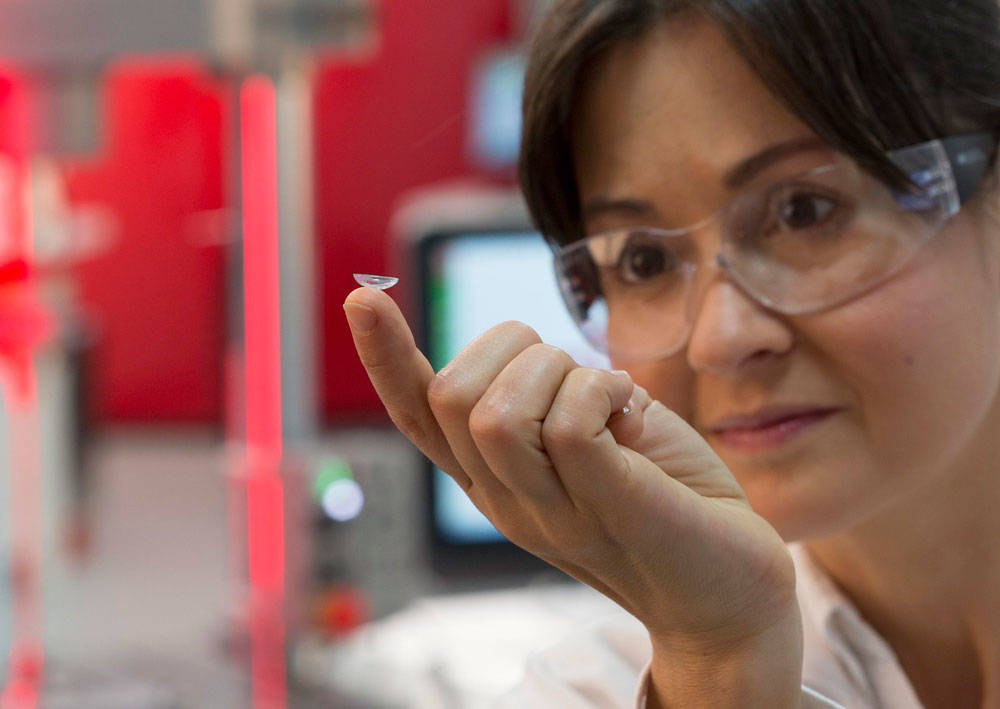
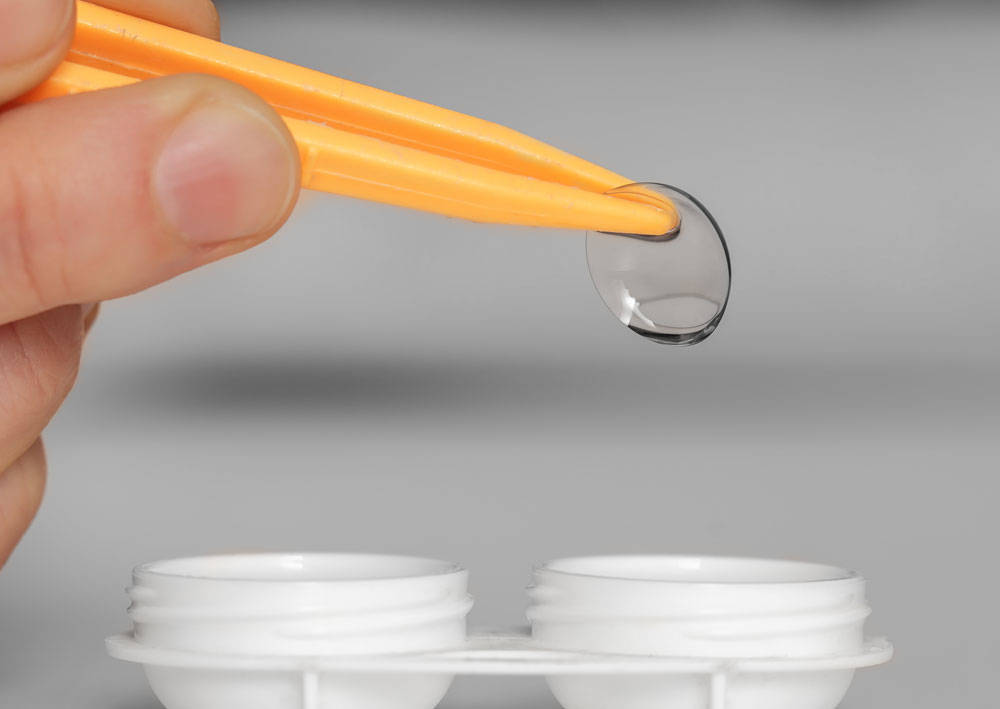
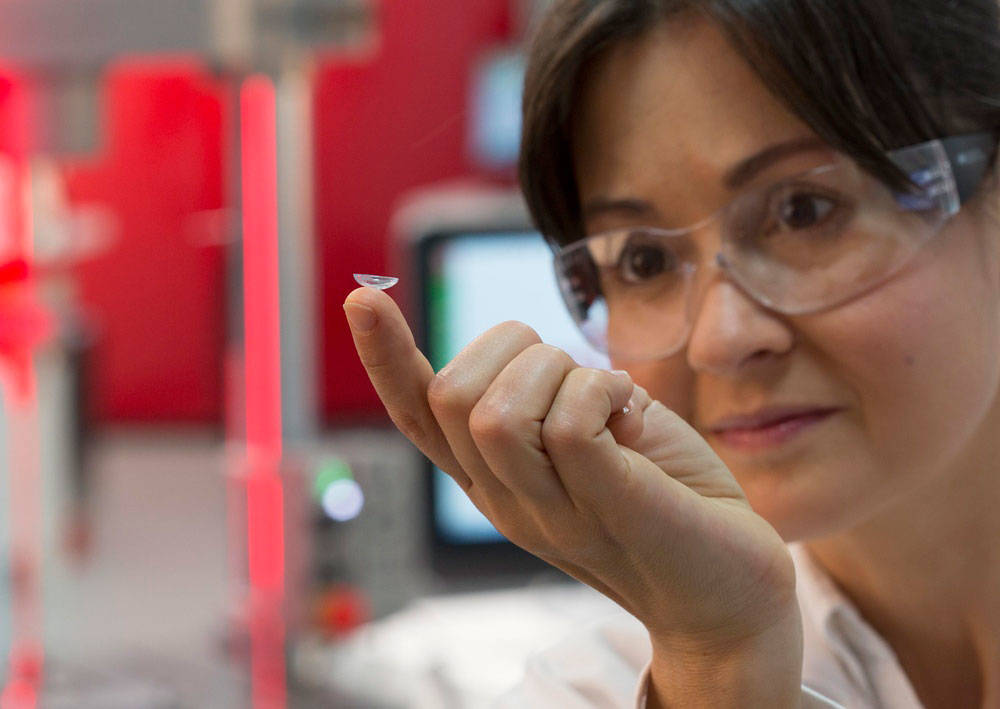
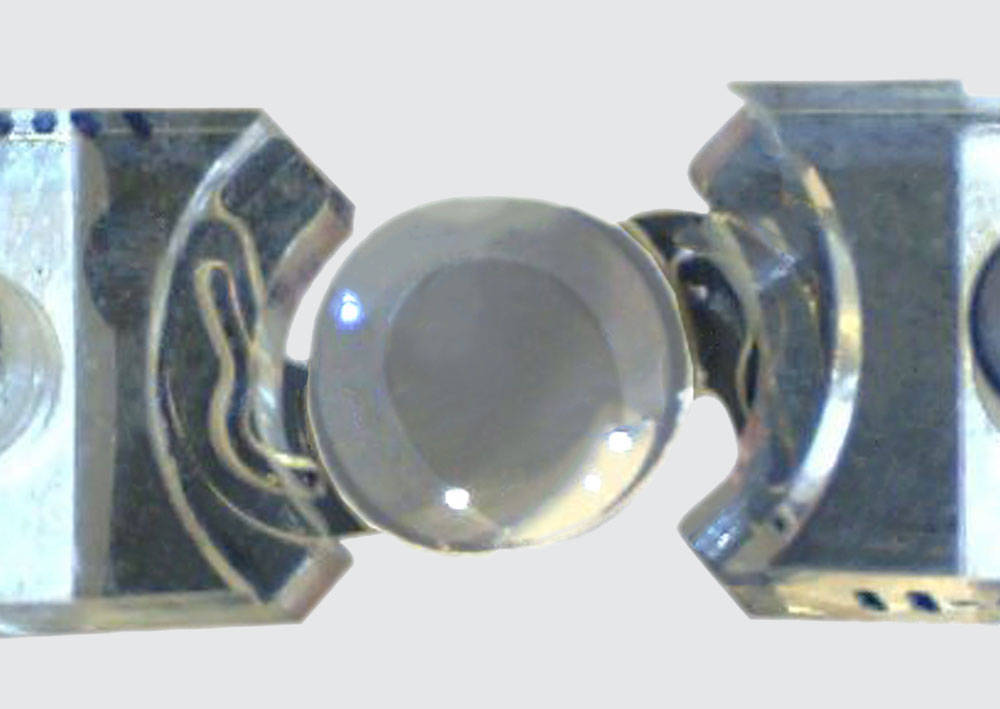
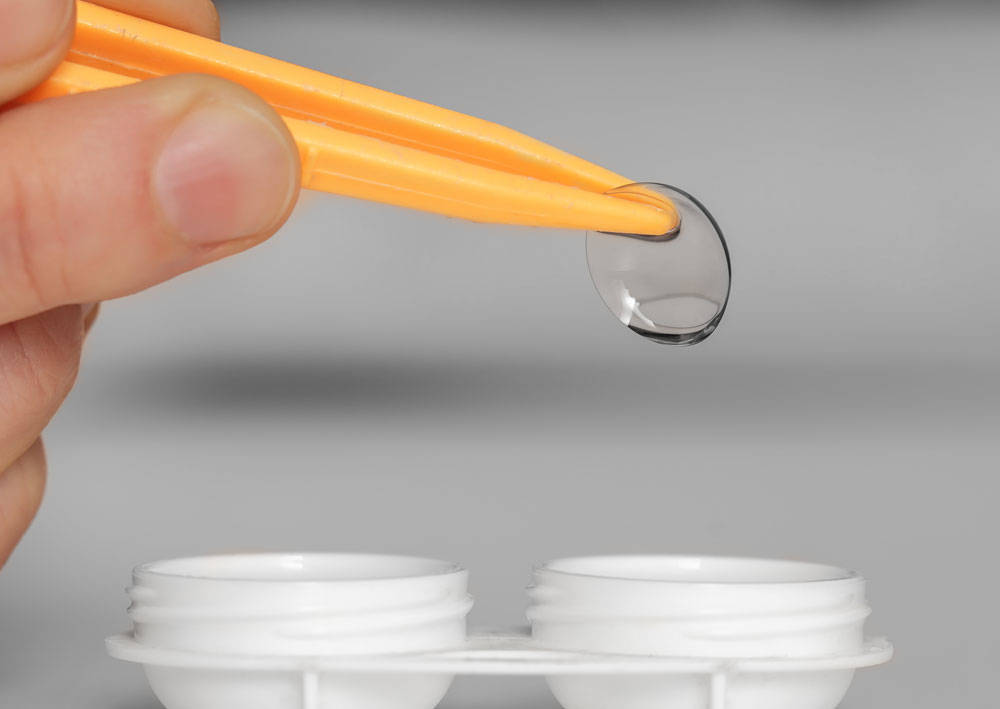
Contact lenses, one of the most widely used medical devices in the world, are primarily used for eyesight correction, but also for aesthetic enhancements and modifications. They are manufactured in a variety of forms, but are most commonly made from soft polymeric materials. Because soft contact lens material is slippery and delicate to handle, loading the specimen into grips can be challenging, and tears in the lens are common even under very low forces. To best simulate how they will be used, contact lenses should be tested in physiologically relevant conditions, which requires the lenses to be tested in a saline bath, heated to body temperature.

Our Solution

Contact Lens Testing

For testing contact lenses, we recommend using a Universal Testing System configured with the BioBath, 250 N submersible pneumatic grips, and extra long surfalloy grip faces. The long grip faces enable the user to insert the small lens into the grips with enough room to maneuver, while allowing the user to achieve zero grip separation. The lenses can be tested as full final products, cut into strips, or sliced to perform a trouser tear type of test. A low force load cell is also recommended to accurately detect specimen failure. The 250 N pneumatic submersible grips and associated pull rod that attach to the load cell are both designed to minimize buoyancy chances during low force testing, such as contact lens testing.

Hip Implant Testing

Biomedical Testing

Hip Implant Testing

The Challenge

Hip Implant

Following surgery, proximal loosening and stress shielding can occur as a result of normal activity and can lead to abnormal loading profiles. Therefore, the real-life environment and loads that the specimen will experience while in the body need to be replicated in testing. Hip femoral fatigue testing can be challenging due to the importance of precisely embedding the specimen. The fixture needs to be capable of supporting compression, bending, and torsional stresses in order to meet ISO 7206 standards. The high-frequency rates of these tests also pose a challenge as they can cause the specimen to heat up beyond an acceptable limit.

Our Solution

Hip Implant Testing

Instron® provides a specimen embedding device that ensures the required offset angles and embedding depth is achieved. The purpose-built corrosion resistant fixture allows for in vivo testing. The assembly comes complete with a temperature controller and a recirculating pump to ensure the temperature never exceeds the acceptable limit by automatically reducing the frequency of the test. The easy-to-install fixture includes a low-friction loading head and adapters for mounting it to an ElectroPuls™ system. The Instron WaveMatrix™ software allows a number of test-end criteria to be used, such as running a specific number of cycles or until specimen fail is detected, which can be determined in a number of ways. With one package you can confidently test to and exceed the requirements for ISO 7206-4, 7206-6, and 7206-8.

Ocular Implant Testing

Biomedical Testing

Ocular Implant Testing

The Challenge

Occular Implants

An intraocular lens (IOL) is a synthetic, artificial lens that is placed inside a patient’s eye, most typically after cataract surgery. When the patient’s natural lens is removed due to disease, the eye’s ability to refocus is lost. IOLs are most commonly made from Poly(methyl methacrylate) (PMMA), silicone, acrylic, and other soft materials that enable them to be easily folded and inserted into the eye. During surgery, it is imperative that IOLs do not rip or tear, as even the smallest tear can be very uncomfortable for the patient. Some of the biggest challenges with testing IOLs are simulating the folding behavior experienced during surgery, and gripping these small, dime-sized, devices.

Our Solution 

Ocular Implants Testing

For testing IOLs, we recommend using the TestProfiler module to conduct a simple cyclic test that puts the IOL in both tension and compression. For test systems, we recommend using a 6800 Series universal testing system, fiber grips, and a low force load cell, such as a 10 N load cell. In addition, we recommend using Bluehill® Universal’s TestCam feature paired with a USB microscope, which enables users to magnify their test specimen, record the test, and playback the footage post-test. Using a USB microscope with at least 10x helps the user detect any small sized tears that may not be visible with the naked eye.

Bone Screw Testing

Biomedical Testing

Bone Screw Testing

The  Challenge

Bone Screw

Bone screws are used in surgical procedures for securing implants, osteosynthesis devices, and fracture fixation plates to the skeletal system. In normal clinical use, a surgeon applies combined axial and torsional forces to the bone screw as it is implanted within the body. Manufacturers and scientists test bone screws to determine various mechanical properties when evaluating new materials and designs. The most common standard for testing bone screws is ASTM F534. The standard consists of a total of four testing annexes: axial tests, torsion only tests, or a combination of both linear and torsion tests. ASTM F543-17 Test A1 - Test Method for Determining the Torsional Properties of Metallic Bone Screws requires the screw to be sufficiently clamped and a rotational velocity between 1 and 5 rpm to be applied until specimen failure, and to measure the torque profile and the rotational angle. ASTM F534-17 Test A2 - Test Method for Driving Torque of Medical Bone Screws measures the torque required to insert and remove the screw with a constant rotational velocity between 1 and 5 rpm while maintaining an axial load of no more than 10 N in compression. ASTM F543-17 Test A3 - Test Method for Determining the Axial Pull-Out Strength of Medical Bone Screws measures the force required to axially remove the screw that has been fully inserted in the test block using the method from Test A2. The pull-out fixture then applies a tensile load at a constant rate of 5 mm/min until the failure of the bone screw or removal from the test block. ASTM F543-17 Test A4 - Test Method for Determining the Self-Tapping Performance of Self-Tapping Medical Bone Screws specifies the procedure to evaluate the axial loading required to engage a self-tapping bone screw into a standard laboratory material. Although considered a simple clinical procedure, reproduction of this in vitro results in a relatively complex motion due to the interaction between the rotation and linear axes of a test machine. The test requires a continuous rotational velocity of up to 30 rpm while the axial load is incremented during the insertion at a rate of 2 N/s. The objective of this test is to record the torque profile as the bone screw is inserted into the material and then removed.

Our Solution 

Bone Screw Testing

To perform bone screw testing to ASTM F543, either an electromechanical system with a Torsion Add-On 3.0 , or an ElectroPuls™ Linear-Torsion system can be used. The Torsion Add-On 3.0 can be added to any new or existing 6800 Series single column or dual column table top testing machine to add rotational capabilities. The ElectroPuls E10000 and E3000 Linear-Torsion test systems are all-electric dynamic testing systems that provide a unique linear and torsion actuator system that is capable of synchronized linear and multi-rotation testing, which makes them ideal platforms for performing the full range of tests prescribed by the standard. For both the electromechanical system and ElectroPuls system, a bi-axial Dynacell load cell is mounted to the base of the machine. Using WaveMatrix™ dynamic test software on the ElectroPuls system, a user is able to control both axial and rotational axis in closed-loop control. This gives the user the ability to easily set up the multi-axial tests as a series of steps, and displays the required information as the test proceeds. Special fixtures are used to clamp the material to the biaxial load cell, and a drill chuck is used for the drive bits.

Hard Tissue Testing

Biomedical Testing

Hard Tissue Testing

The Challenge

Hard Tissue

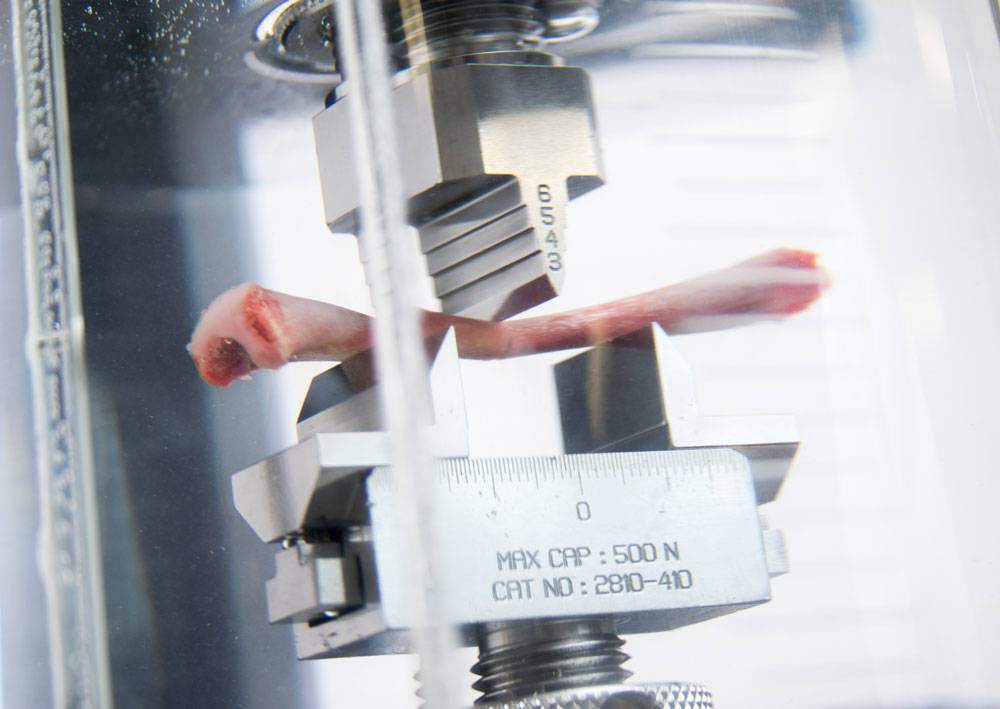
Bone, dentin, and dental enamel are all considered to be hard tissues. Specimens of this type are most commonly tested in compression and flexural. The most common results obtained from a compression or flexural test on hard tissues is modulus and force at fracture. Typically, these specimens come from mice, rats, or other mammals and are small in size. Despite being small in size, hard tissues have high stiffness. A typical challenge with measuring modulus is accurate measurement of displacement. For a given force, a hard tissue such as bone will exhibit small displacement. In addition to compression testing, 3-point and 4-point bend tests are common to quantify force at fracture on bone sections. Often, this testing must be conducted at physiologically relevant test conditions, such as in a hydrated bath and at body temperature.

Our Solution 

Hard Tissue Testing

When conducting compression testing on hard tissues, it is critical that users choose appropriately sized compression platens to closely match specimen size, ensure the compression platens are spherically seated or self-aligning to apply even pressure on the specimen, and use an accurate source to measure system displacement. For example, an accurate measurement source of displacement could be via compliance correction in the software, or by using a strain measuring device, such as a linear variable deflection transducer (LVDT) or a video extensometer. When testing flexural specimens, it is critical that the anvils on the flexural fixture are appropriately sized to the specimen and that the flexural fixture properties, such as span length, are easily entered into the software.

Fracture Fixation Device Testing

Biomedical Testing

Fracture Fixation Device Testing

The Challenge

Fracture Fixation

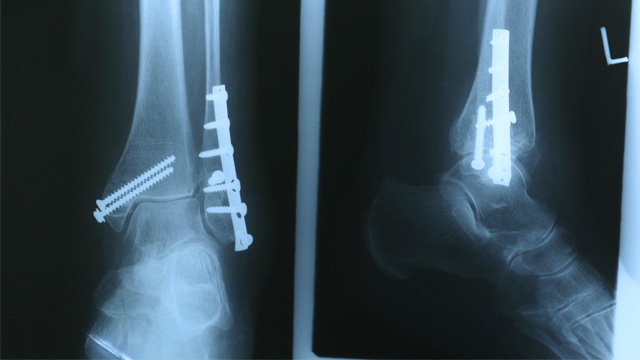
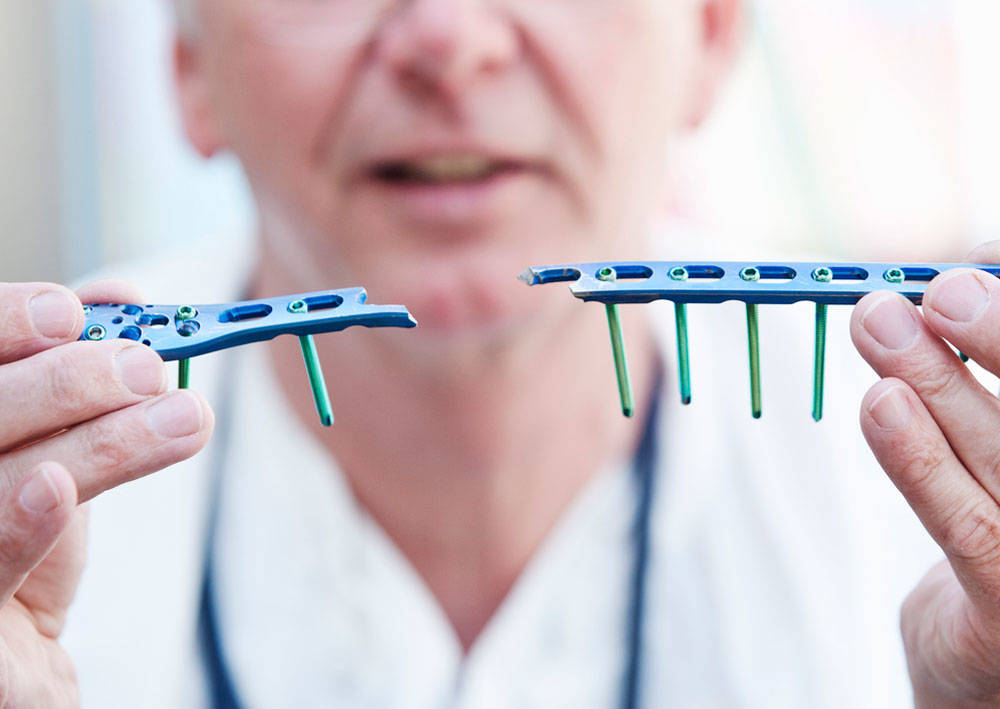
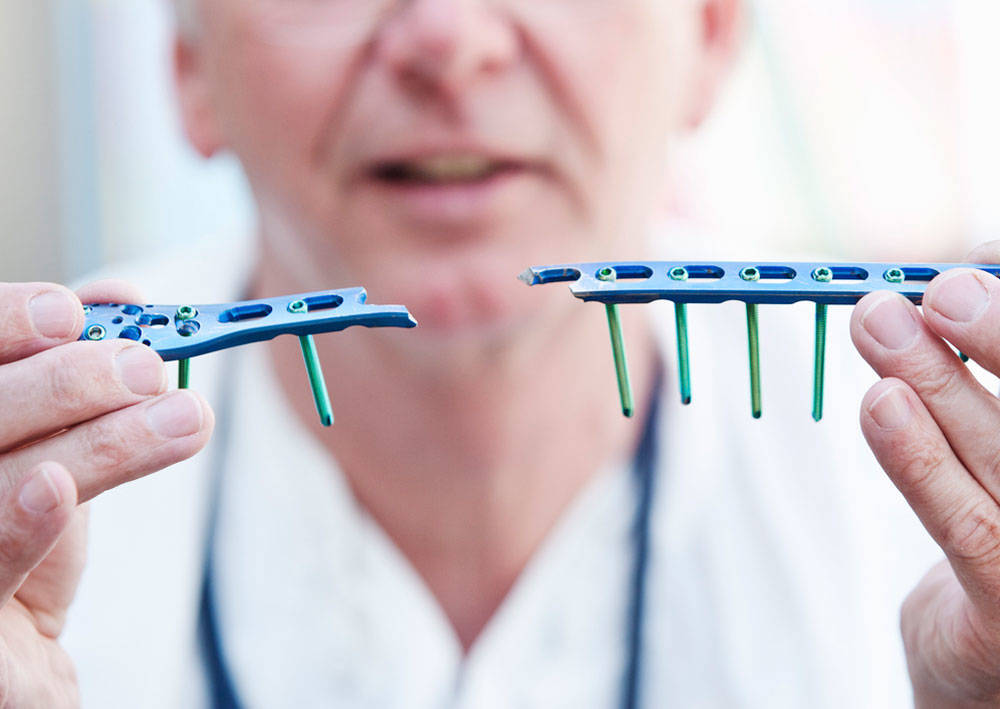
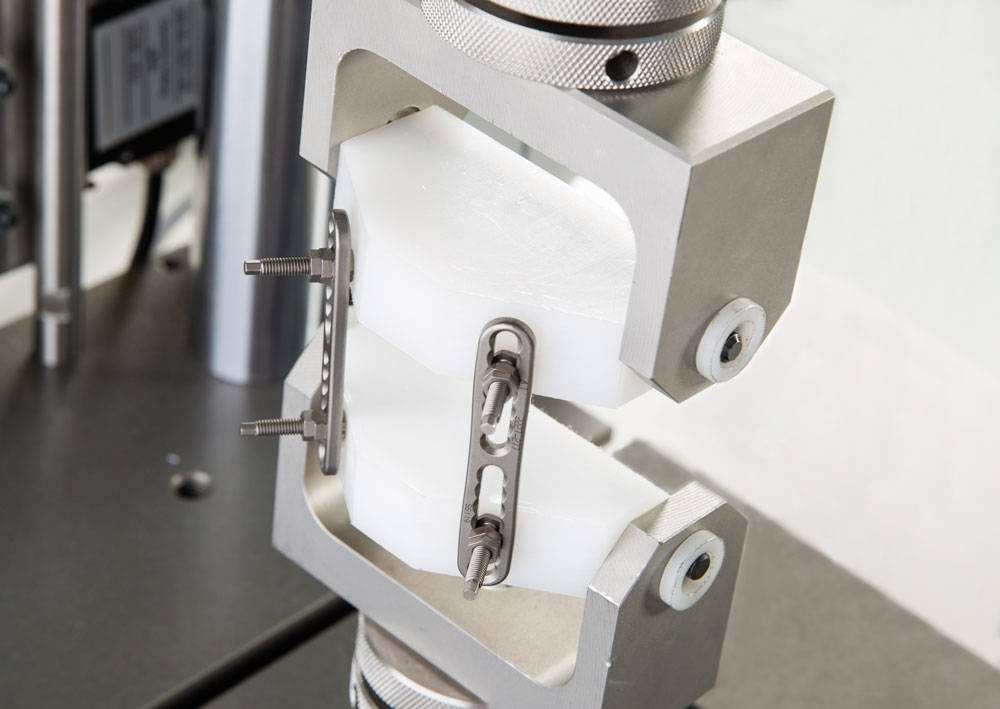
Fracture fixation plates are used to immobilize bones that have been fractured or severely broken. These plates are most commonly made from titanium or stainless steel. Both have similar mechanical properties, including stiffness and ultimate tensile strength, as native bone. These plates are often irregular geometries and come in a variety of sizes to accommodate different size bone fractures in the body. For example, a plate used to immobilize a fractured bone in a femur will be very different than one used in an ankle, finger, or jaw. The irregular geometry and size range of fracture fixation plates makes them challenging components to test. In addition, in most cases, these plates remain within a patient for life and must be able to withstand the dynamic motion of the body over decades of time.

Our Solution 

Fracture Fixation Device Testing

In order to understand the mechanical properties of fracture fixation plates, a range of both static and dynamic tests are required. Monotonic flexural, tension, and compression testing is necessary to understand modulus and ultimate tensile strength. Given the irregular geometry of fracture fixation plates, measuring strain is a challenge. 2D and 3D modeling techniques, such as finite element analysis, are often conducted to understand full-field stress and strain properties of fracture fixation plates. For monotonic tensile, compression, or flexural testing, our Digital Image Correlation software paired with our Advanced Video Extensometer allows researchers and scientists to visualize and quantify the full-field strain properties of these plates. For all fatigue tests, we recommend using our ElectroPuls™ systems. Specifically, we recommend either the E3000 or E10000 Linear-Torsion test system. The ability to test plates simultaneously in axial loading and torsional loading best represents realistic loading conditions in the human body.

Hydrogel Tensile Testing

Biomedical Testing

Hydrogel Tensile Testing

The Challenge

Hydrogel Tensile

Hydrogel testing is most commonly done in both tension and compression. Compression testing on hydrogels poses less of a challenge, as many hydrogels are compliant and compress easily under load. The natural compliance of hydrogels becomes more of a challenge in tensile testing, as these materials can be difficult to grip and exhibit high elongation. Gripping hydrogels with too much pressure typically displaces the material out of the grip faces, which makes gripping ineffective. In addition, a traditional contacting extensometer is not a viable option considering the soft properties of hydrogels. Given the viscoelastic properties of these materials, test speed will greatly affect results, such as force at break and elongation at break. 

Our Solution 

Hydrogel Tensile Testing

When testing hydrogels in compression and tension, most common forces at failure are below 100 N. Given the low forces obtained in hydrogel mechanical testing, it is important that an accurate load cell is used. This can be especially tricky in a compression test as many users restrain from using low capacity load cells out of fear that they will overload the load cell if the compression platens begin to touch during a test. To prevent this from happening, it is imperative that safety limits are set and that the end of test criteria is set to the load cell capacity in the software. For tensile testing, Instron® offers a range of low force grips, including spring loaded, screw side action action, and pneumatic side action grips. Given the compliant nature of hydrogels, often sandpaper needs to be used to increase friction at the gripping contact points. When accurate measurement of strain is required, we recommend using our Advanced Video Extensometer

Spinal Implant Testing

Biomedical Testing

Spinal Implant Testing

The Challenge

Spinal Implant Testing

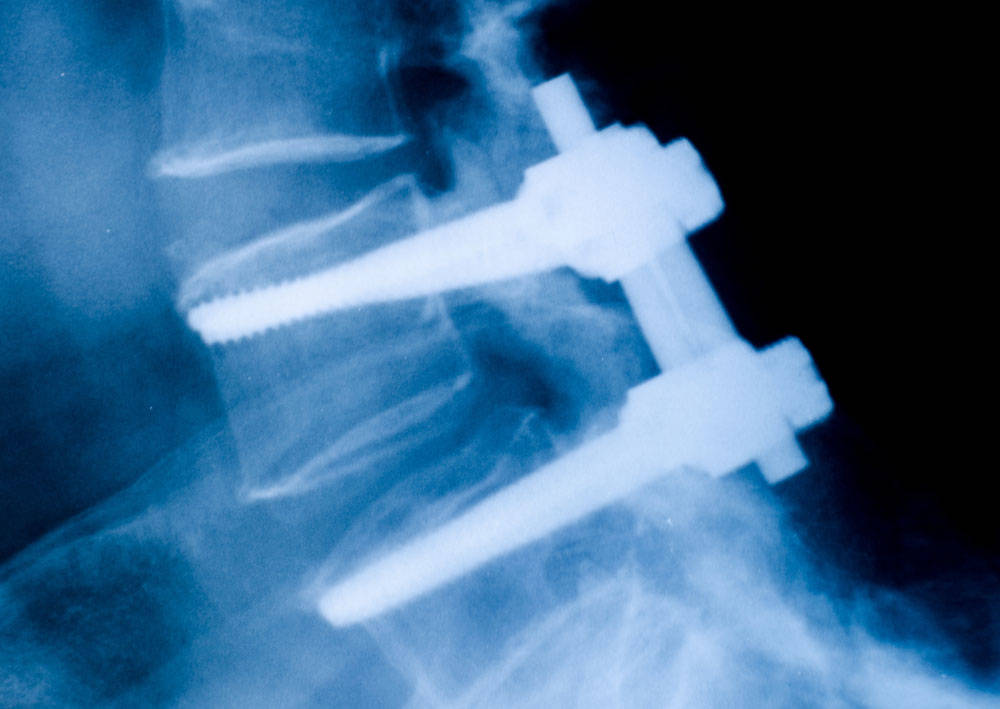
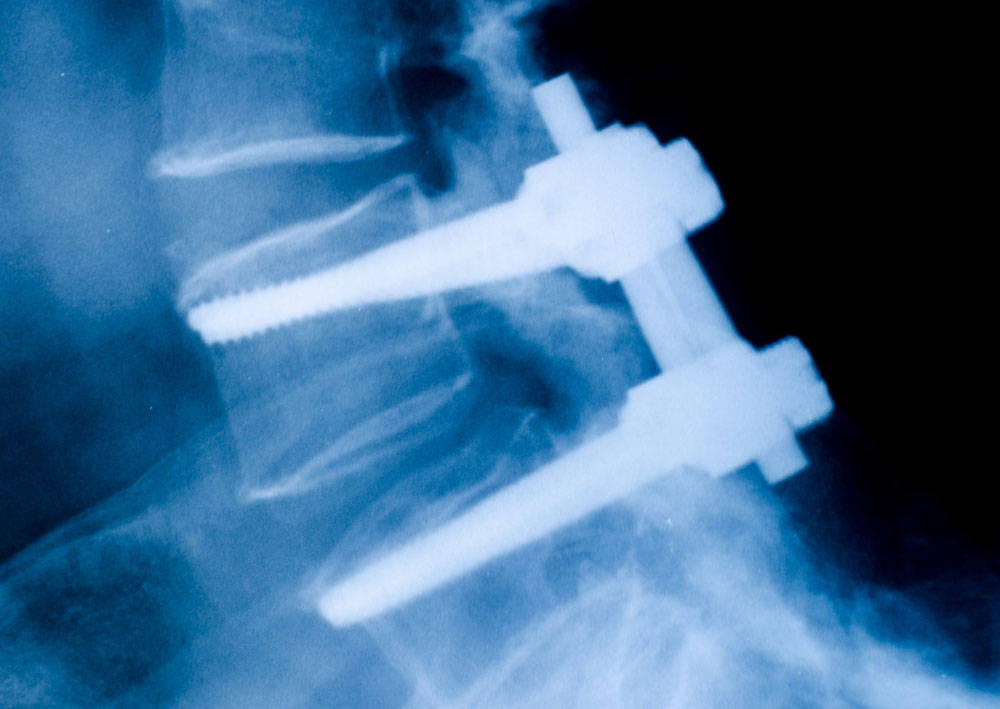
Service life testing of spinal constructs is critical as fatigue failure is more common than catastrophic failure. During normal patient activity, spinal constructs can be subjected to high in vivo loading, which may result in catastrophic failure. Cyclic testing is performed in order to evaluate the number of cycles it takes for fatigue failure to occur. Loading is typically applied with a constant-amplitude load-controlled sinusoidal waveform running in excess of five million cycles. Simple static testing is also performed to evaluate the load required to result in spinal fracture.

Our Solution

Spinal Implant Testing

The Instron® Linear-Torsion ElectroPuls™ system is recommended as it allows the user to complete both static and dynamic tests according to ASTM F1717-12 standards on a single machine. A dedicated spinal fixture can easily be mounted to this system with the option of mounting a saline bath onto the base for in vivo testing. When using the bath, the load cell is designed to be mounted onto the actuator utilizing Instron’s patented Dynacell technology for inertia compensation. Instron’s patented stiffness-based turning algorithm ensures excellent waveform fidelity, even with non-linear specimens.

Bioadhesives Peel Testing

Biomedical Testing

Bioadhesives Peel Testing

The Challenge

bio adhesive

Adhesives are widely used in the medical device industry for dental implants, bone cements, and wound closure products. Wound closure products include tissue adhesives that can be found in bandages, secondary dressings, and a variety of surgical sealants. The adhesive strength of these products must be well defined. An adhesive that isn’t strong enough may result in a wound that heals poorly, or it can lead to an infection. If an adhesive is too strong, it may damage the underlying tissue or cause the patient unnecessary pain when removing. A fundamental challenge with testing bio adhesives is characterizing adhesive strength in physiologically relevant conditions. 

Our Solution 

Bioadhesives Peel Testing

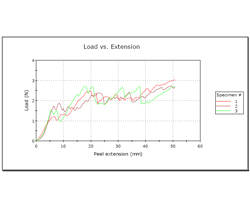
Soft tissue substrates should be tested under physiologically relevant conditions, most preferable in a bath or temperature controlled enclosure at 37°C. The BioBath with submersible pneumatic grips is recommended. The grips and pull rod that attach to the force transducer are designed to minimize buoyancy chances during low force testing. We also recommend a low capacity load cell, given that adhesive strength for biological applications is typically under 10-20 N. Bluehill® Universal's Peel, Tear, Friction Module is ideal for this test type in order to measure first peak force, average force over the seal, and average force per width of the specimen. 

Heart Pacemaker Testing

Biomedical Testing

Heart Pacemaker Testing

The Challenge

Heart Pacemaker

A pacemaker is a small electronic device, implanted under a patient’s collarbone, which helps a patient’s heart beat more regularly. It's composed of three main parts: a pulse generator, one or more leads, and an electrode on each lead. The pulse generator consists of a small case that contains circuitry, a battery, and a computer chip that regulates the electrical impulses sent to the heart. The lead is an insulated wire that connects to the pulse generator and extends to one of the heart’s chambers. The electrode on the end of the lead makes contact with the heart wall and is responsible for the delivery of electrical impulses to the patient’s heart. Considering that each component of a pacemaker is critical to its function, all three components must undergo rigorous testing. The variety of tests, including shear testing on the microelectronic components, compression testing on the battery, and tensile testing on the leads, can be challenging to meet with just one system.

Our Solution 

Heart Pacemaker Testing

The Instron® 6800 Series test systems, with Bluehill® Universal software and TestProfiler module, represent the most capable of Universal Testing Machines on the market today. Software flexibility gives users the ability to program a multitude of different methods with simplicity, including tensile, flex, compression, peel, tear, and friction. In addition, Instron’s Engineered Solutions Group has partnered with a number of electronics companies and medical device companies to develop specialized fixtures, including special shear clamps and micro bend fixtures. In addition, we recommend using pneumatic cord and yarn grips for tensile testing leads.

Stent Testing

Biomedical Testing

Stent Testing

The Challenge

Stent

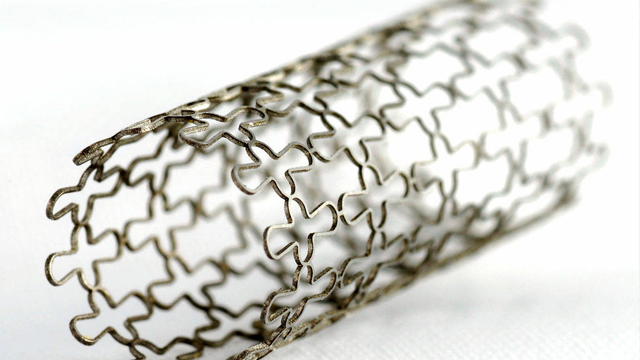
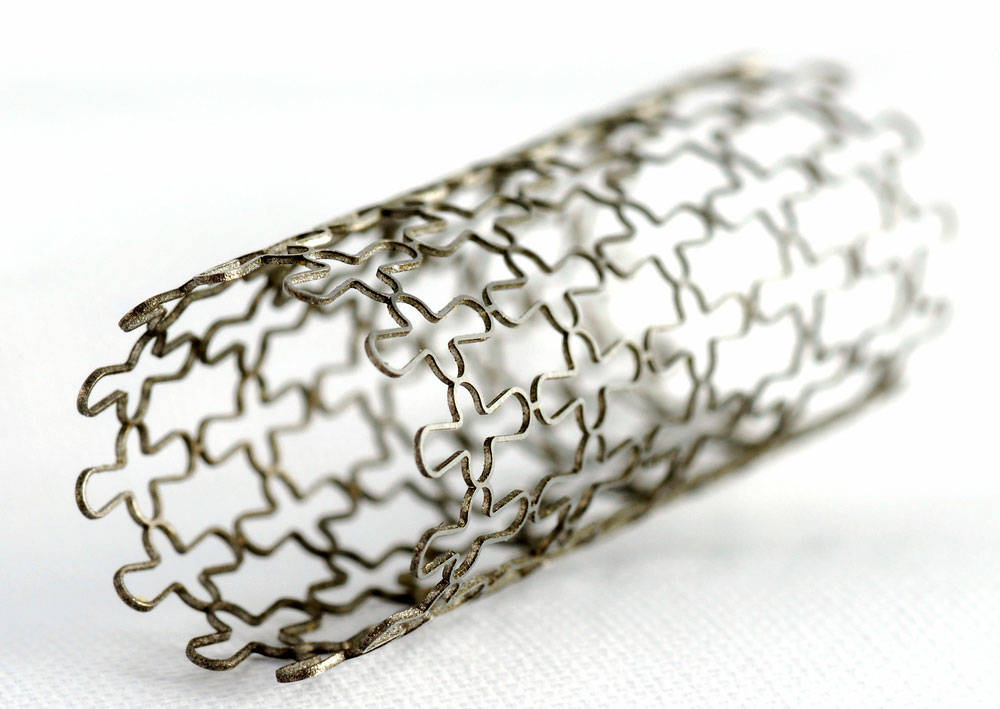
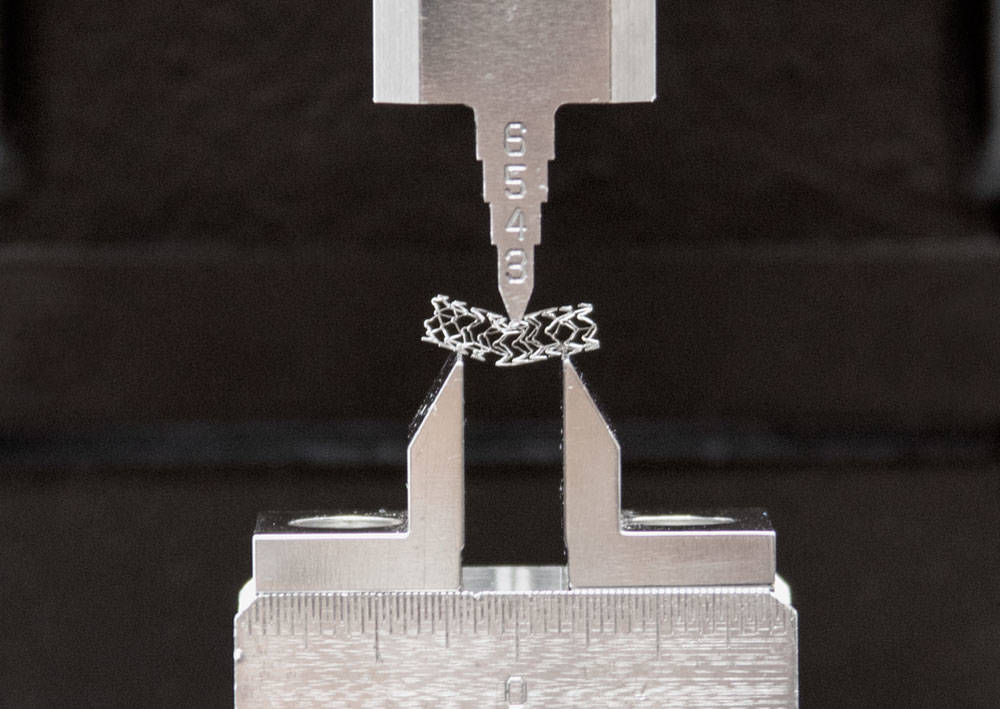
Mechanical testing of stents involves a range of different tests that encompass both static and fatigue methods. Stents are most commonly made from Nitinol wire, which must be tested to ASTM F2516 in a simple cyclic test. Another static test that is often carried out on stents is a flexural test in accordance with ASTM F2606. In addition to testing the raw material, the diamond structure of the stent body is commonly tested in fatigue at 60 Hz in position control. The entire stent body is also typically tested in radial compression as a static test, and pulsatile fatigue or cyclic fatigue as a dynamic test. Considering that such a variety of mechanical tests are required on any single stent, it is often challenging to select the appropriate test system for conducting as many tests as possible.

Our Solution 

Stent Testing

For all static testing, including testing to ASTM 2516, ASTM F2606, and radial compression testing on the full stent body, we recommend using a 6800 Series universal testing system. When testing Nitinol Wire to ASTM 2516, we recommend utilizing our Advanced Video Extensometer for accurate strain measurement. When testing full stent bodies in radial compression, Instron® partners with Machine Solutions Inc. (MSI) to provide a specialized fixture. The radial compression fixture can be mounted to any Instron 5940 or 5960 series system and can utilize standard Bluehill® Universal software to control the test. For all fatigue tests, including testing the diamond structure of the stent body or the entire stent in cyclic extension control, we recommend using our ElectroPuls™ test systems.

Dental Implant Testing

Biomedical Testing

Dental Implant Testing

The  Challenge

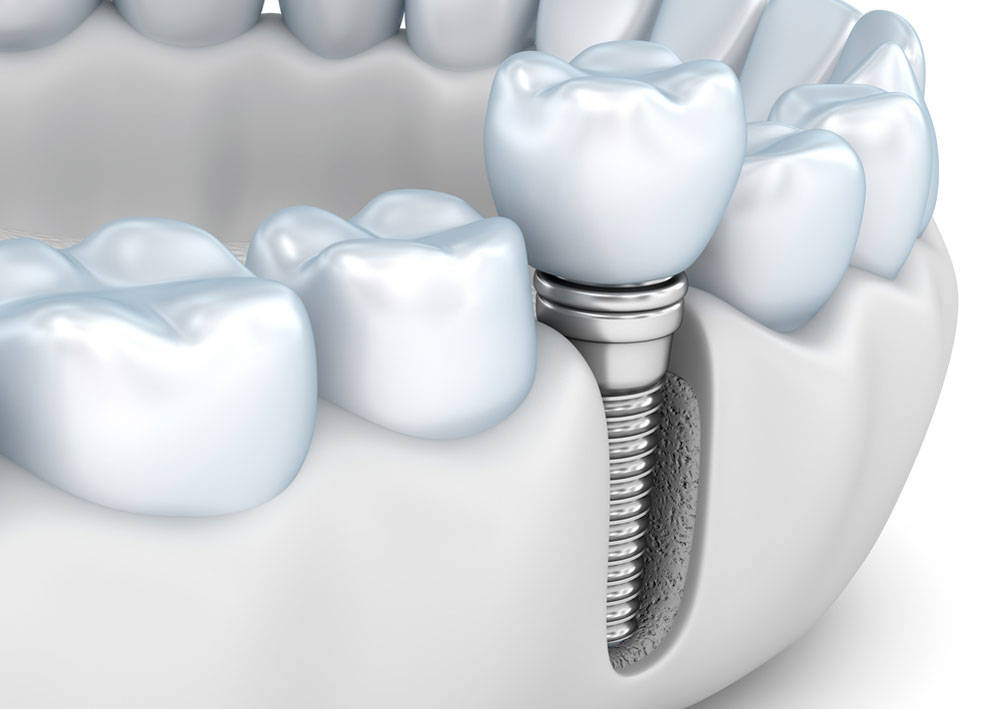
Dental Implant

The shape of the implant and material used are continuously researched in order to improve contact with the gum and fusion with the bone. Therefore, dental implants designed from various manufacturers tend to have many differences. In addition, the size and shape of the implant varies depending on their application and where they are placed in the mouth. This creates a challenge when testing specimens and comparing materials and designs.

Our Solution 

Dental Implant Testing

With an array of implant sizes and geometries, angled dental implants can be mounted into an Instron® dental variable angle fixture for testing. The fixture ensures that the mounting neither over constrains the implant nor generates large lateral forces that can damage the load cell or the testing machine. As with straight dental implants, pre-angled dental implants can also be tested in an aqueous environment, if corrosion fatigue is expected to occur. The fixture can be mounted in a fluid bath to test the implant in saline solution, or other physiological medium, while the temperature is maintained at 37 °C.

Customer Privacy Notice (last updated August 2018)

This Customer Privacy Policy governs the collection, disclosure and use of personal information and data relating to potential and existing customers and users of our goods and services ("you") of Instron®. This Customer Privacy Policy provides you with details about the personal information we collect from you, how we use your personal information and your rights to control personal information we hold about you.

We are committed to your right to privacy and will only process personal information you provide to us in accordance with applicable data protection laws.

Please read this policy carefully as it explains the personal information we collect about you and how such personal information is handled. By your continued use of our services (including our websites and apps), you confirm that you have read, understood and agree to this Customer Privacy Policy in its entirety. If you do not agree to this Customer Privacy Policy in its entirety, you must not use our products or services. Please check back for updates regularly, as we may amend this Customer Privacy Policy from time to time.

If you have any questions about how we collect, store and use your personal information, please contact us by email at [email protected] or write to us at the following address: Coronation Road, High Wycombe, HP12 3SY, UK.

The personal information we collect

The personal information that we may collect about you broadly falls into the following categories:

  • Your name;
  • Company Name;
  • Payment processing information;
  • Company or business postal address;
  • Company or business email address;
  • Business landline or mobile telephone number;
  • Delivery details;
  • As well as other non-sensitive personal information;
    • Your industry interests
    • Your job title or job role
    • Company business information
    • Top level demographic information

If you use our websites, we may also collect information about you or your computer when you browse to allow you to use the services available, and also collect anonymous information about you or your computer for analysis to support continual improvements to our products and services, as explained further in our Website Notice and in our Cookie Notice.

How we use your personal information

We use the personal information that we collect about you to respond to your enquiries for payment processing, for the provision of goods and services to you or to the company that you represent, and for providing continuing product care such as warrant and technical support. We also process your personal information where we are required to do so by law, and for the exercise or defence of legal claims.

From time to time, we may contact you for research purposes, or to tell you about our special offers and other services in accordance with your contact preferences. Where appropriate, we will obtain your consent to do so. If you no longer wish to receive communications from us, please follow the "unsubscribe" instructions provided in any of those communications.

If we intend on using your personal information for any other purpose, we will let you know how we intend to use it when it is captured.

We will only process your personal information for the specific purposes listed above or for any other purposes specifically permitted by law. Your personal information will only be processed to the extent that it is necessary for the specific purposes listed above.

Our legal basis for processing your personal information

We will only process your personal information where you have consented (which you may withdraw after giving it if we are relying on consent as a legal basis), in order to perform a contract with you, or where the processing is necessary for our legitimate interests or the legitimate interests of others, for example, for market research purposes or, where you are an existing customer or user, to promote our goods and services.

How long we retain your personal information

We will only retain personal information if it is required for a specific purpose. We have a statutory duty to keep certain records for a specified minimum period, for example personal information in relation to the purchase of a product or service from Instron. We will retain your personal information as long as necessary to provide the services, products and information you request, or as permitted by applicable law and in line with our retention policy, applied under GDPR. We will also retain and use your personal information as necessary to comply with our legal obligations, resolve disputes, and enforce our agreements. Information that is no longer required for any valid business purpose, and that we are not required to keep pursuant to any applicable law, will be routinely destroyed by secure means.

Who we share your personal information with

We may share your personal information with the following categories of recipients:

  • Our group companies, third party services providers and partners who provide data processing services to us (for example, to support the delivery of, provide functionality on, or help to enhance the security of our Website), or who otherwise process personal information for purposes that are described in this Privacy Notice or notified to you when we collect your personal information.
  • Any competent law enforcement body, regulatory, government agency, court or other third party where we believe disclosure is necessary (i) as a matter of applicable law or regulation, (ii) to exercise, establish or defend our legal rights, or (iii) to protect your vital interests or those of any other person;
  • A potential buyer (and its agents and advisers) in connection with any proposed purchase, merger or acquisition of any part of our business, provided that we inform the buyer it must use your personal information only for the purposes disclosed in this Privacy Notice;
  • Any other person with your consent to the disclosure.

We may transfer your personal information to our associated entities and other members of our group of companies (including our parent company, Illinois Tool Works Inc., in the US).

Please be aware that countries outside of the European Economic Area (EEA) may not offer the same level of data protection as a country within the EEA. We ensure that we have a relevant data processing agreement in place with each third party outside the EEA to ensure they are compliant with privacy and data protection laws. We will make sure that any transfer of your personal information by us will be secured and/or encrypted for its protection.

How we protect your information

We use reasonable and appropriate administrative, technical, and organisational measures to safeguard personal information against loss, theft and unauthorised uses, access, disclosure, modifications or destruction. Certain areas of our websites may be password protected. If you are a user of our websites and have a password, you can help to preserve your privacy by ensuring that you do not share your password with anyone else.

Choices you have about how we use your information

You have the following rights under data protection laws:

  • If you wish to access, correct, update or request deletion of your personal information, you can do so at any time by contacting us using the contact details provided under the "How to contact us" heading below.
  • In addition, you can object to processing of your personal information, ask us to restrict processing of your personal information or request portability of your personal information. Again, you can exercise these rights by contacting us using the contact details provided under the "How to contact us" heading below.
  • You have the right to opt-out of marketing communications we send you at any time. You can exercise this right by clicking on the "unsubscribe" or "opt-out" link in the marketing e-mails we send you. To opt-out of other forms of marketing (such as postal marketing or telemarketing), then please contact us using the contact details provided under the "How to contact us" heading below.
  • Similarly, if we have collected and process your personal information with your consent, then you can withdraw your consent at any time. Withdrawing your consent will not affect the lawfulness of any processing we conducted prior to your withdrawal, nor will it affect processing of your personal information conducted in reliance on lawful processing grounds other than consent.
  • You have the right to complain to a data protection authority about our collection and use of your personal information. For more information, please contact your local data protection authority.

These rights may not apply in some cases, including where we must comply with legal requirements, where it would violate the rights of someone other than the individual requesting access, or (in the case of your right to request access to your personal information) where the request is manifestly unfounded or excessive.

If you would like to request access to, correction, amendment, or deletion of your personal information, please contact us using one of the methods below. We may request specific information from you to confirm your identity. In certain circumstances, for instance if you request substantial copies of documents, we may charge a reasonable fee.

We respond to all requests we receive from individuals wishing to exercise their data protection rights in accordance with applicable data protection laws.

Updates to this Privacy Notice

We may update this Privacy Notice from time to time in response to changing legal, technical or business developments. When we update our Privacy Notice, we will take appropriate measures to inform you, consistent with the significance of the changes we make. We will obtain your consent to any material Privacy Notice changes if and where this is required by applicable data protection laws.

You can see when this Privacy Notice was last updated by checking the “last updated” date displayed at the top of this Privacy Notice.

How to contact us

If you have any questions or concerns about our use of your personal information, please contact us by email at [email protected] or write to us at the following address: Coronation Road, High Wycombe, HP12 3SY, UK.

The data controller of your personal information is Instron.