Pendulum Impact Hammers for Charpy, Izod, and Tensile Impact Testing
Pendulum impact hammers set the energy and velocity of each impact test, as defined by ISO, ASTM, and equivalent standards. Our hammers fit the Instron® 9050 Pendulum Impact Testing System and are available from 0.5 to 50 J (0.37 to 36.9 ft·lbf), in un-instrumented and instrumented versions.
Quick Links to Products
Instrumented or Un-Instrumented?
An un-instrumented hammer measures one value: the energy the specimen absorbs, calculated from the pendulum's energy loss. That value tells you whether a material passes, but not how it failed.
An instrumented hammer records the force on the specimen throughout the impact, as a function of time or specimen deflection. Combined with a data acquisition system and Bluehill® Impact software, it shows the full impact event. Details such as the first point of damage and the ductile-to-brittle transition become visible in the data. This supports research and development and gives quality control a deeper view of why materials fail.
Comparison table: What Each Hammer Type Measures
Built for Accuracy and Rigidity
Rigid one-piece structure Our patented Charpy hammer is machined from a single piece of metal alloy. The one-piece structure gives high rigidity and a solid connection to the encoder shaft, so vibration has very little effect on the measurement. A flattened profile reduces energy lost to air friction.
Tool-free hammer changes A quick-change mechanism lets operators change hammers without tools or screws, and a wedge system holds each hammer firmly in place.
Automatic recognition and calibration Three pins on each hammer are read by the instrument's photocell system, so the pendulum identifies the hammer automatically. After each hammer change, the calibration procedure runs these steps to avoid setup errors:
- Sets the encoder to zero.
- Identifies the hammer and shows its data on the touch screen.
- Calculates the lost energy, shown on a green background when the value is below the maximum the standard allows.
- Wire-Free Instrumented Hammers
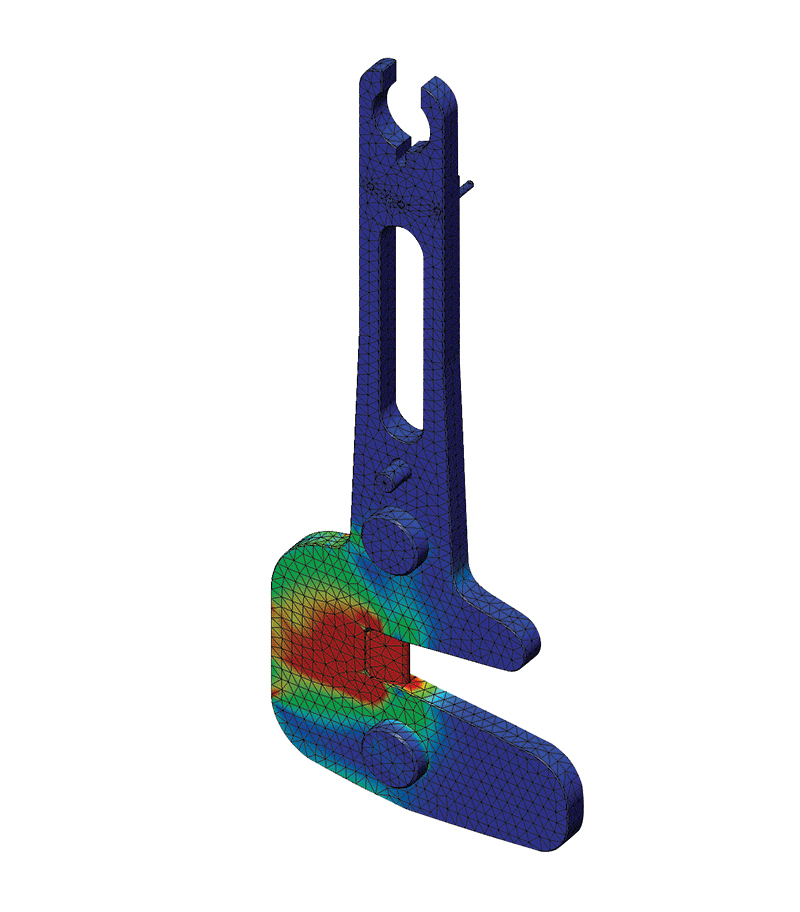
Wire-Free Instrumented Hammers
Instrumented hammers for ISO 179-2 Charpy and Izod testing connect through a wire-free slip ring. A force sensor in the striker measures the load on the specimen during impact. The slip ring carries that signal from the swinging hammer to the data acquisition system through the pivot, so no cable has to move with the hammer. That matters because a cable that swings with the hammer can drag on it and act like a spring, which affects the energy and force results. Without a cable, there is also nothing to tangle, wear out, or reconnect each time you change hammers.
 Lower FrictionA miniature slip ring carries the signal with very low friction. There are no connection cables to act as a spring and affect the measurement.
 Faster SetupConnecting a hammer takes less than 5 minutes, compared to 20 to 30 minutes for hammers with cable connections.
 Less DowntimeWith no cable to set up or damage, there is no downtime from cable repairs or reconnection.
Hammers for Polymer Testing
Choose the hammer by standard and energy. In each table, instrumented hammers are listed after the un-instrumented hammers. Specimen vices, shoulders, and alignment devices for each test are in the Accessories Catalog.
Hammers for Metals Testing
The 9050 is well suited to instructional or comparative metals testing, such as in academic labs or to meet internal standards. It is not suitable for ASTM E23 production or quality testing. For those uses, the standard requires indirect verification with NIST specimens, and NIST runs that verification on floor model pendulums. For production and quality control, use the MPX Series Motorized Pendulum Impact Testing System, available from 300 to 900 J.
Source: Accessories Catalog, page 304
Only low-energy specimens may be used for indirect verification to metals standards.

Talk to an Instron Expert
Not sure which hammer energy or striker your standard requires? Tell us your material, specimen, and standard, and our impact specialists will help you choose the right hammer for your pendulum.
Talk to an Impact Applications Engineer
Tell us about your testing needs, and we'll help you configure the right frame, load cell, grips, and software for your lab. Please complete the form below, and we'll respond within 1-2 business days. For a faster response, call +1-800-473-7838 or +1 781 828 2500 if you are outside of the US.