

Fatigue Performance in Additive Manufacturing: Challenges for Design, Testing, and Qualification
Defects, residual stress, and anisotropy may reduce fatigue strength in 3D‑printed parts, making robust qualification testing essential for adoption
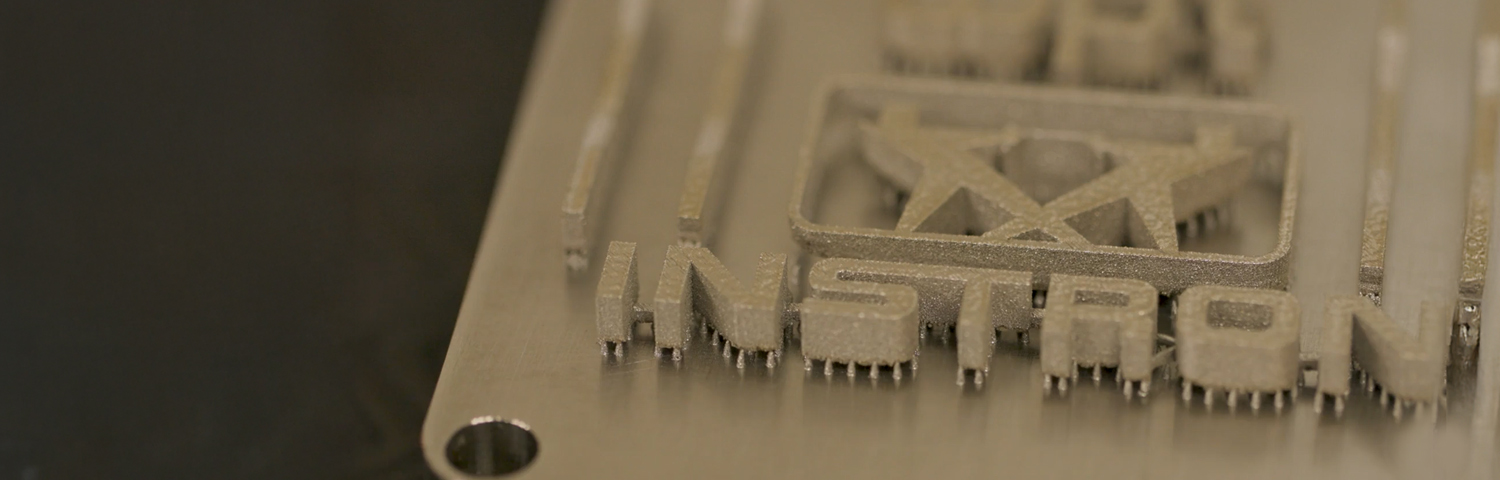
As additive manufacturing (AM) transitions from prototyping into the production of structural and safety-critical components subjected to repeated loading, fatigue performance becomes a central concern. While the fundamental principles of fatigue remain unchanged, the nature of additive manufacturing introduces additional complexities that must be considered during testing.
Why Fatigue Matters in Additive Manufacturing
Fatigue testing has been routinely conducted for conventionally manufactured components to characterize long-term behavior, demonstrate compliance with international standards, or provide material input data for finite element analysis (FEA) and life prediction models. These same motivations now apply to additively manufactured parts.
However, as discussed in the first blog post of this series, additively manufactured parts differ fundamentally from their traditionally manufactured counterparts in terms of microstructure, defects, and variability. It is therefore important to conduct separate testing and ensure that assumptions on performance are not carried through from historical datasets on traditional parts.

Fatigue Behavior of Additively Manufactured Parts
Experimental evidence consistently indicates that the fatigue strength of additively manufactured parts is generally lower than that of equivalent conventionally manufactured parts. This reduction is primarily attributable to features inherent to the additive manufacturing process.
Internal defects such as porosity and lack of fusion are common in additively manufactured parts and act as stress concentrators that promote early crack initiation. In addition, these parts typically exhibit high surface roughness in the as-built condition, which can significantly reduce fatigue life by providing surface crack initiation sites. Residual stresses introduced during rapid thermal cycling further exacerbate fatigue performance, particularly under high-cycle loading conditions.
Another defining characteristic of additively manufactured fatigue data is increased scatter. Compared with traditional materials, fatigue life results often show greater variability, reflecting the inherent variability in defect size, distribution, and orientation. This scatter can be compounded by material anisotropy, where fatigue performance depends strongly on build orientation and loading direction.
Specimen Design and Post-Processing Considerations
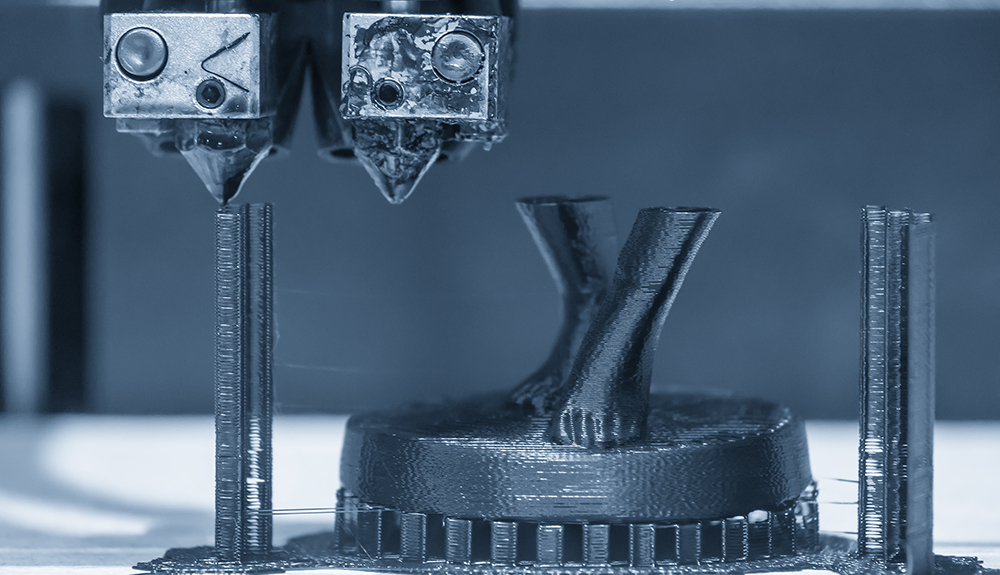
Post processing plays a critical role in improving fatigue performance for additively manufactured parts. Surface machining or chemical etching is commonly employed to remove surface roughness, while heat treatments can be used to reduce residual stresses and to close or blunt internal defects. Such post-processing steps can significantly improve fatigue life, and it is therefore essential that post-processing conditions be documented and defined when characterizing parts.
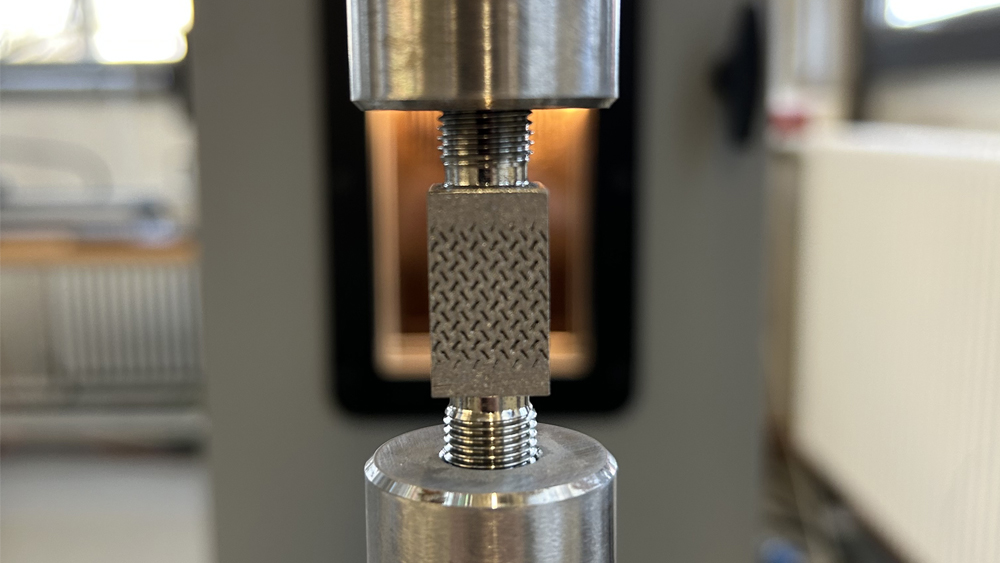
Fatigue testing of additively manufactured specimens often necessitates deviations from conventional specimen design. Fatigue specimens are frequently sub size, due not only to the cost and build time associated with additive manufacturing, but also to the increasing reduction in the scale of the final parts in use. While this approach enables efficient data generation, it introduces key testing challenges related to gripping, alignment, and representativeness.
Finally, many fatigue test programs incorporate full-scale or representative components rather than standard dog bone specimens. This approach acknowledges that properties are highly dependent on print path, geometry, and local thermal history and that small specimens may not fully capture component-level behavior.
Implications for Design and Qualification
The combination of reduced fatigue strength, increased data scatter, and unconventional specimen requirements presents a significant challenge for the qualification of additively manufactured parts. Robust fatigue testing remains essential, not only to inform design but also to understand the influence of process parameters, build orientation, and post-processing routes.
As additive manufacturing continues to mature, fatigue performance will remain a key factor governing its adoption in critical applications. Progress in test standardization, coupled with improved process control and defect mitigation strategies, will be essential in enabling the reliable and repeatable use of additively manufactured parts under cyclic loading.

Subscribe to the Instron Update
Stay up to date on industry trends, testing standards, applications, tips and tricks, and so much more!
About the Author

Rebecca Reiff-Musgrove
Rebecca Reiff-Musgrove is Business Development Manager for ElectroPuls® at Instron®. Her background includes an MSci from the University of Cambridge with a focus on the surface properties of additively manufactured parts, as well as previous roles in materials testing for the additive manufacturing industry. At Instron, she has held a range of technical and commercial roles, giving her a grounded understanding of both the technology and the customer challenges it addresses.