Top 5 Considerations When Selecting a Pendulum Impact Testing Machine
Pendulum impact testing is a critical quality control process for the automotive industry, where composites, polymers, and light alloys must demonstrate reliable impact resistance under real-world conditions — including collisions and extreme temperatures. As automotive supply chains accelerate and material varieties multiply, QC laboratories are under growing pressure to increase throughput, maintain accuracy, and test a wider range of specimens without sacrificing safety.
Selecting the right pendulum impact tester is a significant decision. Here are the five most important factors to evaluate.

Did you know that Instron offers a FREE Lab Health Check?
Learn More
1. Throughput
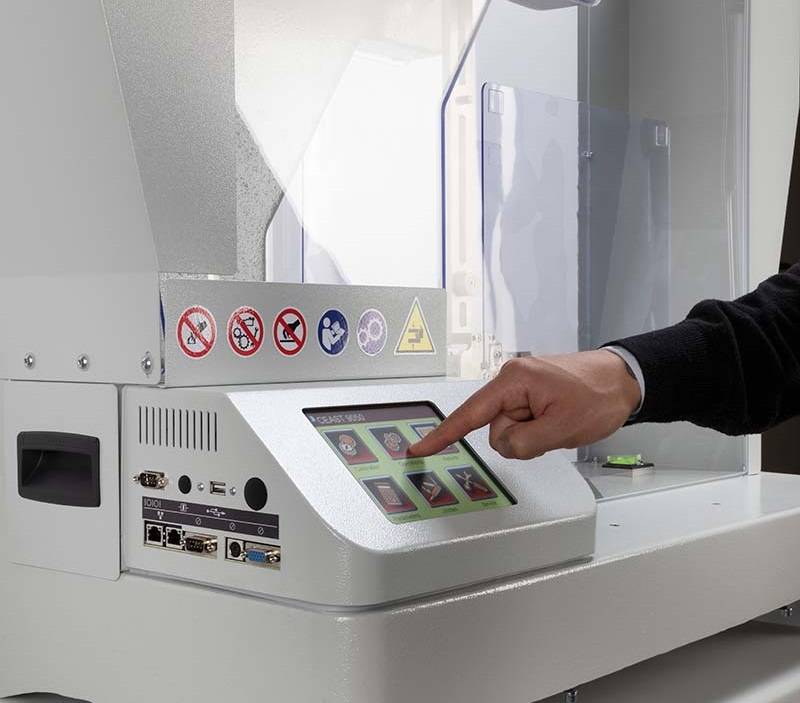
Automotive manufacturers may require QC laboratories to run hundreds of pendulum impact tests every day, often using different test methods depending on the destination of the product. A tester that slows down the process — through manual settings changes, time-consuming hammer swaps, or slow sample preparation — creates a bottleneck that can affect the entire supply chain.
When evaluating throughput, look for the following features:
- Pre-defined test methods that allow quick switching between methods without manual input of settings
- Automatic hammer identification that matches the installed hammer to the correct test method
- Tool-free quick-change systems for changing hammers and fixtures rapidly between tests
- Automatic notching machines capable of notching up to 50 samples in a single cycle, with all key parameters stored for traceability
Together, these features minimize the time between tests and reduce the operator effort required to manage high-volume testing programs.
2. Repeatability
In automotive applications, polymers, composites, and light alloys are used in components where performance is critical and failure is not an option. This places a high demand on QC laboratories to maximize the repeatability and accuracy of every result.
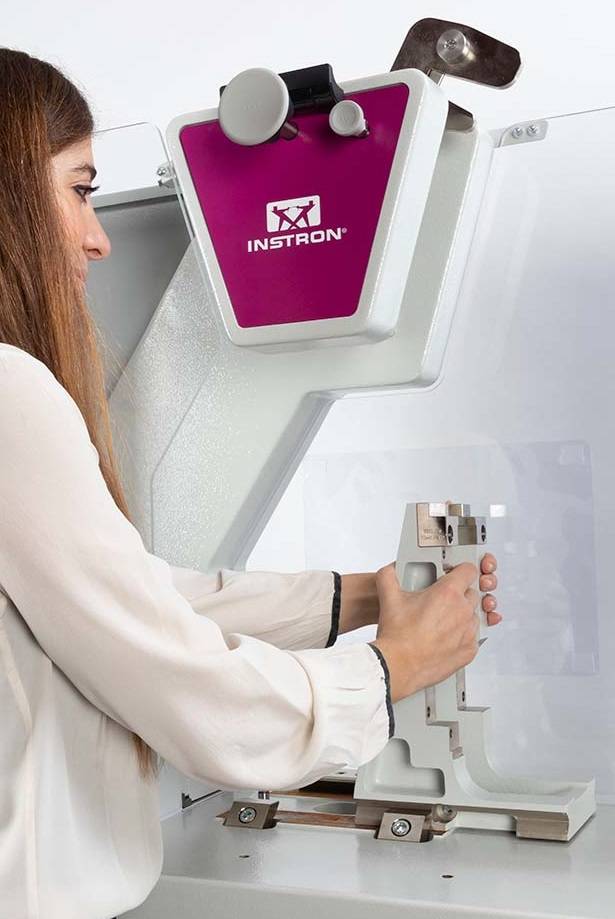
Vibration is one of the most significant sources of measurement error in pendulum impact testing. Vibrations can originate from fastenings that loosen over time, from the hammer and pendulum structure itself, or from the interaction between the fixture and the sample. Pendulum testers built around solid monolithic cast iron frames eliminate the need for fastenings in the frame structure — removing a common source of vibration at the root. Similarly, solid hammer construction contributes to consistent, repeatable energy delivery on every strike.
Fixture design also plays an important role. Fixtures designed around the specific thickness of the sample — including miniaturized samples increasingly used for high-cost specialty polymers — minimize unwanted movement during impact and improve result consistency.
Software is equally important in reducing variability. Systems that minimize the number of manual inputs required — through pre-defined methods, automatic parameter recall, and guided workflows — reduce the opportunity for human error and improve consistency across operators and shifts.
3. Flexibility
The growing variety of materials used in automotive applications means that a single QC laboratory may need to test specimens with very different energy requirements. Some materials require high-energy hammers (up to 50 J), while others need low-energy hammers (as low as 0.5 J). On traditional pendulum testers, changing the hammer energy range also requires changing the pendulum frame — a time-consuming process that limits flexibility.
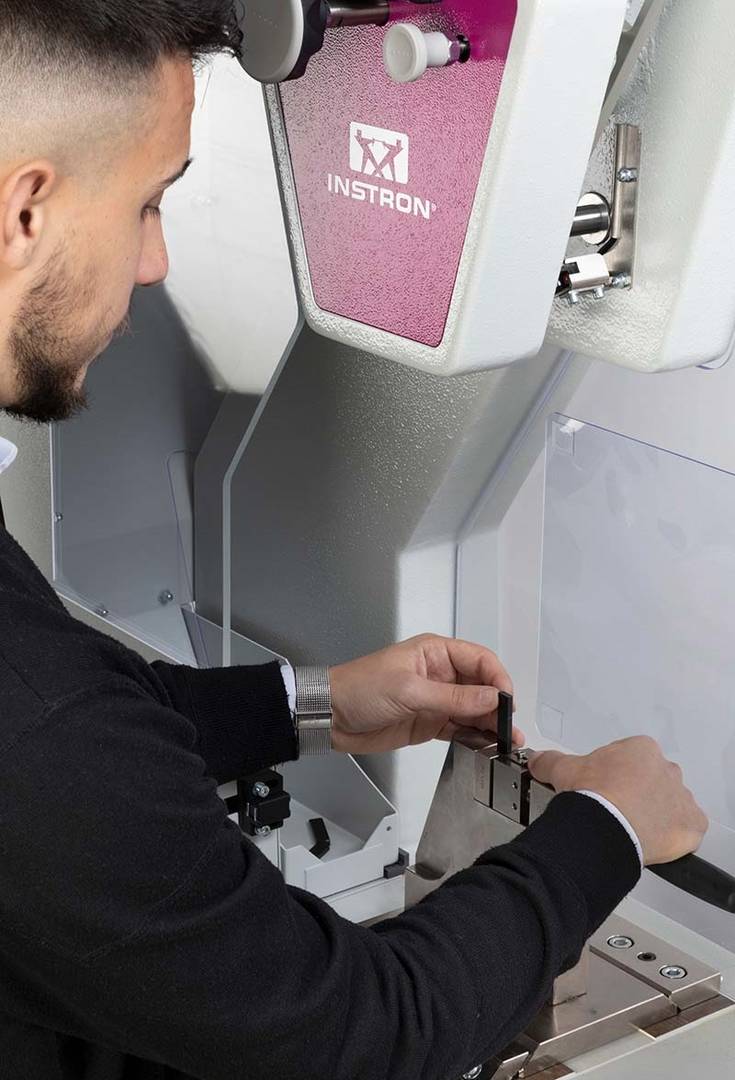
Test method standards also specify different sample sizes and shapes depending on the material being tested. The trend toward miniaturized samples, particularly for high-cost specialty polymers, means that fixtures must be switched out frequently as sample characteristics change.
To address these challenges, look for pendulum testers that cover a wide energy hammer range without requiring a full frame change, and that offer fixture systems designed for fast, straightforward changeovers between sample sizes and geometries. The ability to accommodate both standard and miniaturized specimens on a single platform significantly expands the range of materials a laboratory can test without investing in multiple systems.
4. Safety
Pendulum impact testers operate with moving parts at high energy — a struck pendulum can cause serious injury if an operator is in the test area during testing. Beyond the mechanical hazard, there are also occupational health risks associated with the release of toxic fumes, vapors, or dust from certain materials when struck by the hammer.
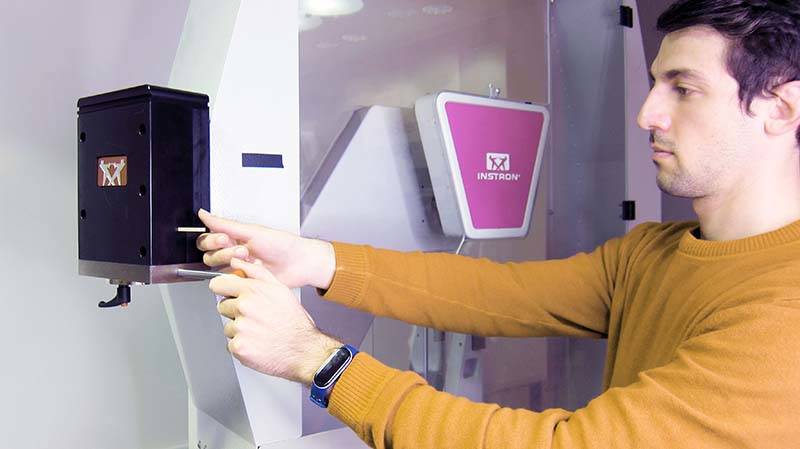
Modern pendulum testers address both of these risks. Enclosed test areas prevent operator access to the sample during testing and contain any material released on impact. Two-handed hammer release mechanisms ensure operators are positioned safely before the test begins. Pneumatic release systems with safety interlocks automatically place the pendulum in safe mode whenever an access door is opened, providing an additional layer of protection against accidental release.
When evaluating safety features, consider not just the mechanical safeguards but also how well the system manages material release — particularly if your laboratory tests materials that may produce hazardous particulates or vapors on impact.
5. Temperature
Impact resistance is not a fixed property — it changes with temperature. Many polymers, composites, and light alloys used in automotive components transition from ductile to brittle behavior at low temperatures, with brittle failure modes that can be catastrophic in a collision scenario. This means that impact testing must be performed under temperature-controlled conditions that reflect real-world operating environments, including sub-zero conditions.
Integrated thermal chambers offer the most efficient solution for low-temperature testing. The latest pendulum testers can cool up to 11 specimens simultaneously to -60°C — including fixtures and the impact area — ensuring that the test temperature is consistent across the entire specimen population and that results are comparable between tests.
For laboratories that need to test larger batches or maintain temperature for longer periods, external cooling chambers provide an alternative approach. Specimens and the specimen feeder box are conditioned in an external cooling fridge to maintain test temperature, and the feeder box is then attached directly to the pendulum tester. Each loader can hold up to 30 specimens, enabling high-throughput low-temperature testing without sacrificing temperature consistency.
Conclusion
Charpy and Izod pendulum impact testers have been used in materials testing for decades, but the demands of the modern automotive industry — faster throughput, higher accuracy, greater material variety, and more stringent safety requirements — are raising the bar for what QC laboratories need from their equipment.
The five factors covered in this post — throughput, repeatability, flexibility, safety, and temperature — provide a practical framework for evaluating whether a pendulum impact tester is truly fit for the demands of automotive quality control. Prioritizing all five will help ensure your laboratory can keep pace with production demands today and adapt to evolving requirements in the future.
Learn more about the Instron CEAST 9050 impact pendulum range.

Talk to an Instron Expert
Whether you are evaluating pendulum impact testers for the first time or looking to upgrade your current equipment, our team can help you identify the right solution for your throughput requirements, material types, and testing standards.
Contact Our Sales Department.
Please complete the form below and we will be happy to contact you with a response. Our typical response time for an online request is within 1-2 business days. For a faster response, please call +1-800-473-7838.