

Synchronized Data Acquisition: Turning Multiple Measurements Into One Connected Test
Synchronized Data Acquisition Series, Part 1
Force and displacement are fundamental to mechanical testing — they tell us how a material or component responds as it's pulled, compressed, flexed, or otherwise loaded. But in many applications, they're only part of the story.
An electrical connection may become unstable before a component reaches peak load. A battery may begin to heat as it's compressed. The resistance of a conductive material may change well before it visibly fails.
These additional measurements — continuity, temperature, resistance — help explain what's happening inside the specimen. But their real value comes when they're connected directly to the mechanical event. The most valuable data is connected data.
The Insight Gap
Today, engineers have access to more sensors and instruments than ever. But collecting more data doesn't automatically create more insight.
Imagine force and displacement are captured by the mechanical testing system, while resistance is measured by a separate instrument. Both may collect useful data — but on different clocks, sampling rates, and file formats. After the test, someone has to export, combine, and align it all by hand.
Even then, key questions can remain unanswered: Did resistance start changing before or after peak load? What was the exact force and displacement when continuity was lost? When data is captured separately, the relationship between events has to be estimated rather than known.
Put Every Measurement on a Common Timeline
Synchronized acquisition solves this by capturing load, displacement, strain, and any additional sensor or instrument data on one common timeline. Instead of treating temperature, voltage, or resistance as a separate result, engineers can evaluate it as part of the same test — seeing not just what happened, but also when and how.
An electrical signal can be tied to a precise load and displacement. A temperature change can be compared directly to the specimen's mechanical response. An image can be captured at an exact point in the test.
One test. One timeline. A more complete picture of material or component behavior.

Less Manual Work, Better Repeatability
Synchronization also simplifies the operator's workflow. Running instruments separately means starting each one, recording values by hand, managing multiple files, and aligning data after the fact — and every manual step is a chance for a missed reading, a mismatched specimen, or lost data. Sometimes, errors aren't caught until the test is already done, meaning it has to be repeated on another specimen.
Manual alignment adds its own uncertainty. Small differences in how two datasets line up can shift the force or displacement value tied to a critical event — creating apparent variation that actually comes from the analysis process, not the specimen.
Automatically acquiring measurements as part of the test removes that manual entry and post-test alignment. It keeps every measurement tied to the right specimen and result, using the same process every time. Synchronization doesn't change how repeatable the mechanical loading itself is — it changes how repeatably events are measured, correlated, and interpreted. The payoff: better throughput, fewer data-entry mistakes, and more confidence in your conclusions.
Bring the Measurement Into the Test
Synchronized acquisition also opens the door to rethinking measurements that are normally taken before or after a test. A post-test check can show that a property changed — but not when it started changing or how it developed.
Capture that measurement during the test instead, and you see the full evolution. Rather than checking continuity only after a connector test, monitor it throughout. Instead of measuring resistance before and after a material is deformed, track it continuously as it stretches.
This can mean fewer separate procedures, less specimen handling, and less repeat testing — and data that speaks more directly to the engineering question you're actually asking.
Turn Correlation Into Insight
In the end, the value of synchronized data is the insight it creates. Viewing multiple signals together lets engineers see the sequence of events leading up to a change or failure — what preceded what, the exact conditions present when something happened, and whether the same pattern shows up consistently across specimens.
That's how you answer the questions that matter: What changed first, and under what conditions? How did the measurements evolve together? Is this relationship consistent test after test — and what does that tell you about performance or failure mode?
Isolated measurements can't answer these questions. The insight comes from the correlation.
Your System May Already Be Capable of More
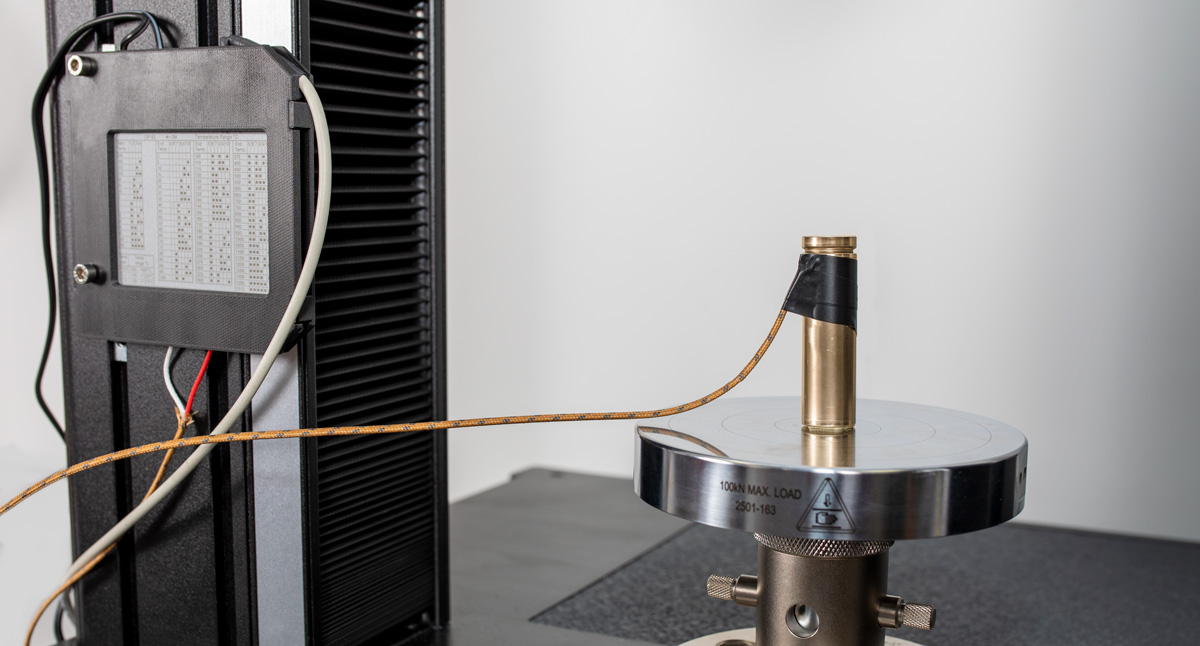
You may be closer to a fully synchronized setup than you think. Sensors, external instruments, environmental chambers, cameras, control systems — Instron's analog and digital I/O can bring all of it into the test, coordinated with the mechanical event.
This is the first article in a series on synchronized data acquisition. In the installments ahead, we'll dig into the hardware, communication options, and Bluehill® Universal features that make it possible — how to expand your system, add sensor measurements, talk to external instruments, automate interactions with other equipment, and turn additional signals into usable test channels.
Because the real value was never just about connecting more devices or collecting more data. It's about connecting measurements, correlating events, and using those relationships to reach deeper engineering insight.

You’ve seen why connected data matters. Part 2 looks at the hardware that makes it possible on a 6800 Series system. We explain what each controller interface does: Sensor Conditioning Modules for added sensors, the Expansion Channel Module for more channels, and the I/O board for sharing signals with external equipment. We also cover how digital I/O and TestProfiler in Bluehill Universal can coordinate other instruments during a test. The result: you may be able to expand what you measure with the system you already have.
Frequently Asked Questions (FAQs)
It's the process of capturing force, displacement, strain, and any additional sensor or instrument data — such as temperature, resistance, or continuity — on a single, shared timeline during a test, rather than collecting each measurement separately and combining it afterward.
Explore Instron Solutions for Synchronized Data Acquisition
From sensor conditioning to expansion channels and digital I/O, Instron has the tools to bring more of your test environment onto one synchronized timeline.

Add synchronized sensor inputs like extensometers, LVDTs, and load cells directly into your digital signal processor for closed-loop strain control.

Scale up to eight channels of signal conditioning and control on 6800 Series systems, monitoring signals simultaneously with no performance loss.

Coordinate external equipment with Bluehill software on 6800 Series systems, triggering and monitoring up to four input and output channels.
or

Talk to an Instron Expert
Get application-specific guidance on synchronizing data across your test environment.
Contact Our Sales Department
Please complete the form below and we will be happy to contact you with a response. Our typical response time for an online request is within 1–2 business days. For a faster response, please call +1-800-473-7838.

About the Author

Phil Levesque
Phil Levesque is Instron's Electronics Market Manager, with over 13 years of experience in materials testing across engineering and market development. As a former Principal Engineer, Phil led a wide range of projects spanning custom fixture design, automation, and application development for Instron's universal testing systems — building a deep understanding of the challenges and requirements unique to the electronics and semiconductor industries. Today, he applies that hands-on expertise to help customers develop testing strategies that keep pace with the rapid innovation reshaping the market.