ASTM D2344: Short-Beam Strength Testing for Polymer Matrix Composites
What Is ASTM D2344?
ASTM D2344 is the standard test method for determining the short-beam strength of polymer matrix composite materials with continuous or discontinuous fiber reinforcement. It applies to composites whose elastic properties are balanced and symmetric with respect to the longitudinal axis of the beam specimen.
The test loads a short-beam specimen in a 3-point bend configuration. Because the specimen is short relative to its thickness, the loading is designed to promote interlaminar shear failure rather than typical flexural failure. Specimen thicknesses between 2 mm and 6 mm are permitted, and the ratio of loading span length to specimen thickness must be held at 4.0 to reliably induce this shear failure mode.
Why Is ASTM D2344 Used?
Manufacturers of composite materials use ASTM D2344 primarily as a quality control and process specification tool. It is a fast, low-cost way to:
- Verify that a composite laminate was properly cured
- Screen for manufacturing defects such as voids or delamination
- Monitor the consistency of ply layups and other manufacturing techniques
Because the test is quick to run and requires relatively simple specimens, it is widely adopted as a routine screening method rather than a method for generating design-allowable data.
Who Uses ASTM D2344?
This method is used by:
- Composite material manufacturers performing incoming material or in-process quality checks
- Process engineers validating cure cycles and layup consistency
- Materials testing labs supporting aerospace, automotive, marine, and industrial composite programs
Key Measurements and Results
ASTM D2344 produces a single calculated result: the apparent interlaminar shear strength (ILSS), more commonly referred to as short-beam strength (SBS).
The apparent interlaminar shear strength is calculated using the following formula:
Where:
- Fsbs = apparent interlaminar shear strength (short-beam strength)
- Pm = maximum load observed during the test
- b = measured specimen width
- h = measured specimen thickness
In addition to this calculated value, ASTM D2344 requires users to identify and report the failure mode observed in each tested specimen. The standard provides guidance on common failure modes in Figure 7 of the test method, and correctly identifying failure mode is essential — a non-interlaminar-shear failure mode can invalidate the calculated strength value as a true measure of interlaminar shear strength.
ASTM D2344 vs. ISO 14130: How Do They Compare?
Engineers and labs working internationally often need to know how ASTM D2344 relates to ISO 14130, the comparable international standard. Both methods measure the apparent interlaminar shear strength of fiber-reinforced plastic composites using a short-beam, 3-point bend loading setup — but there are meaningful differences in scope and fixture geometry.
| Attribute | ASTM D2344 | ISO 14130 |
|---|---|---|
| Specimen symmetry requirement | Specifically applies to balanced, symmetric laminates | Does not exclude non-balanced/non-symmetric specimens, but notes potential effects on results |
| Specimen geometry | Covers both flat and curved specimens | Flat, rectangular specimens only |
| Loading member diameter | 6 mm | 10 mm |
| Support diameter | 3 mm | 4 mm |
| Loading member/support hardness | Specified: 60–62 HRC | Not specified |
| Span-to-specimen-thickness ratio | 4:1 | 5:1 |
Which Standard Should You Use?
- Choose ASTM D2344 if you're working within an American/aerospace-driven supply chain, need to test curved specimens (such as sections of tubes or cylindrical structures) in addition to flat ones, or need traceability to hardness-specified loading fixtures.
- Choose ISO 14130 if your program follows European/international specifications, or your customer or governing standard calls out ISO test data specifically.
Because the two standards use different fixture geometries and span ratios, results from ASTM D2344 and ISO 14130 are not directly interchangeable — comparing short-beam strength values across the two standards without accounting for these differences can result in misleading conclusions.
Specimen Requirements
Specimen Dimensions
- Minimum specimen thickness: 2 mm
- Specimen length: 6 × specimen thickness
- Specimen width: 2 × specimen thickness
These should be considered as recommended dimensions, but other dimensions are permitted as long as these governing ratios are maintained.
Specimen Preparation
ASTM D2344 references ASTM D5687/D5687M as the guide for specimen preparation and recommends following its practices wherever practical, including guidance on machining, edge finishing, and avoiding specimen damage during preparation.
Specimen Measurement
Accurate specimen measurement is critical to a valid short-beam strength calculation:
- Thickness and width: Measure using a micrometer with a 4–7 mm nominal diameter ball interface, or a flat anvil. A ball interface is recommended for specimens without smooth surfaces.
- Length: Measure using a micrometer or caliper with a flat anvil interface.
Recommended Test Equipment for ASTM D2344
Because span accuracy and loading geometry are directly tied to inducing the correct failure mode, equipment selection and fixture precision matter significantly for reliable, repeatable ASTM D2344 results. Below is a recommended equipment configuration.
Test System
A 6800 Series universal testing machine with 10 kN capacity is often sufficient for ASTM D2344 testing, given the relatively low loads involved in short-beam testing.
However, composites labs often also perform tensile and compression testing, which typically require higher force capacities — commonly in the 100 kN or 300 kN range, depending on the material and application. In these cases, a higher-capacity frame can also be used for ASTM D2344 testing, allowing a lab to standardize on a single frame for multiple composite test methods.
Load Cell
A load cell with a 1:1000 measuring range is worth prioritizing, since ASTM D2344 forces are relatively low compared to other composite coupon tests like tensile and compression. When paired with a 6800 Series test system, Instron 2580 Series load cells offer accuracy of 0.5% of reading down to 1/1000th of load cell capacity. This means labs running higher-capacity load cells (such as 100 or 300 kN) for other composites tests can typically use that same load cell for ASTM D2344 testing, without needing to swap in or piggyback a separate, lower-capacity load cell.

Test Fixture
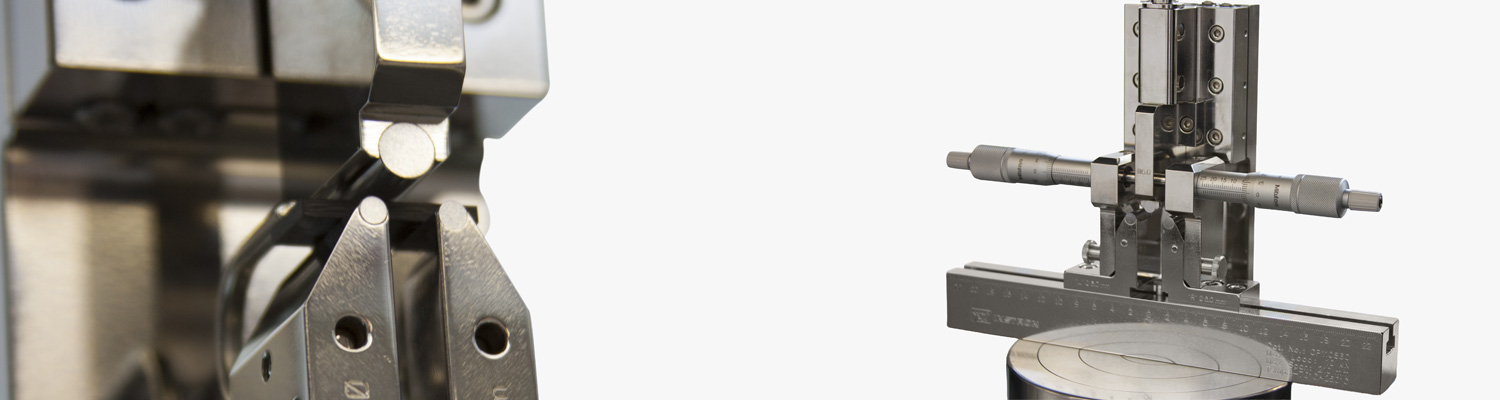
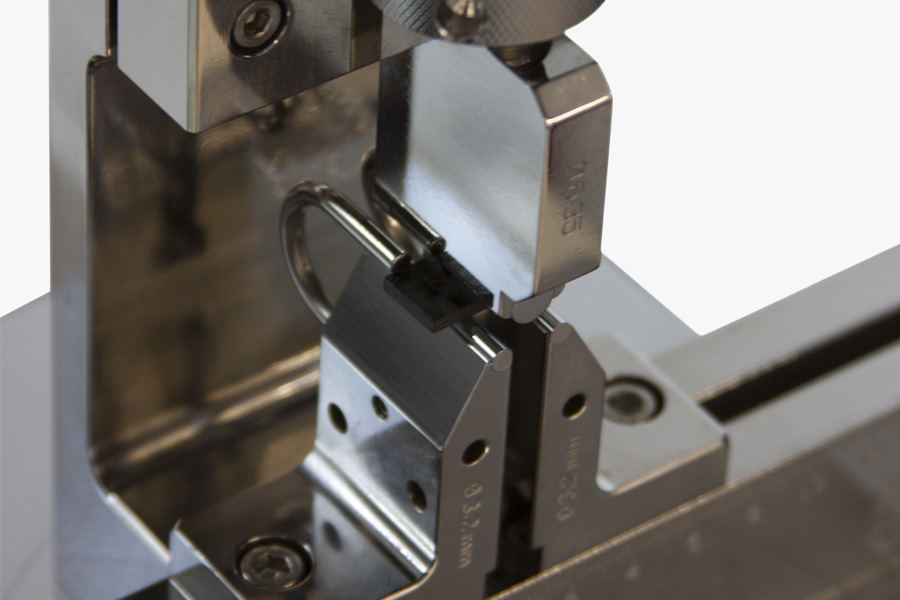
A flexural and interlaminar shear strength bend fixture is required to apply the loading configuration specified by the standard (catalog number: CP110860). This fixture is paired with an anvil set matched to the version of the standard being followed:
- An anvil set for standard ASTM D2344 (catalog number: CP107574), or
- An anvil set for the metric version, ASTM D2344M (catalog number: CP106695)
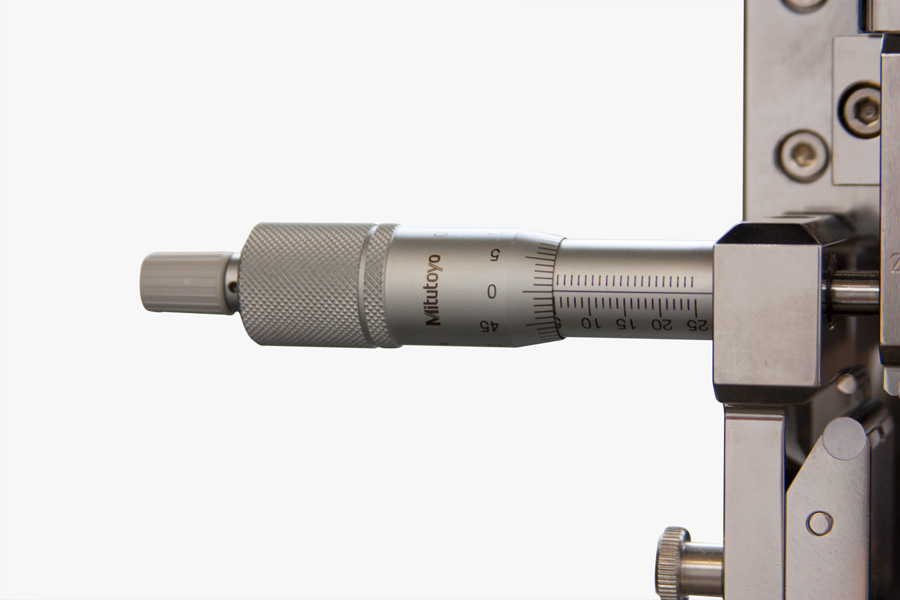
A precision span set is strongly recommended for setting support spans accurately, since interlaminar shear failure is highly sensitive to the correct span-to-thickness ratio. Instron's version (catalog number: CP108199) includes two micrometers that allow spans to be set to an accuracy of 0.01 mm.
Supporting Hardware
- Instron's short-beam bend fixture requires a compression platen at least 100 mm in diameter beneath it. A 150 mm diameter platen (catalog number: 2501-163) is a suitable option.
- The upper anvil connects via a Type Dm connection, allowing direct mating into a Type Df load cell connection without additional adapters.
- Specimen stops are included with the anvil sets, simplifying setup for labs getting started with the method.
Tips for Reliable ASTM D2344 Testing
- Use specimen stops on the bend fixture to easily and consistently center the specimen between the support anvils. Small placement errors can affect span accuracy and failure mode.
- For labs requiring tighter span control, the CP110860 fixture supports mounting the CP108199 micrometers directly on the ILSS lower anvils, allowing the span to be precisely set to within 0.01 mm tolerance relative to the upper anvil.
A Note on This Guide
This page is intended as a general informational guide to ASTM D2344 and is not a substitute for the full test method. Specimen preparation, testing, and reporting should always follow the complete, current version of the standard. The official standard can be procured directly from ASTM: ASTM D2344/D2344M.
Frequently Asked Questions (FAQs)
Short-beam strength (apparent interlaminar shear strength) is calculated as:
where Pm is the maximum load observed, b is the specimen width, and h is the specimen thickness.
Explore Instron Solutions for Testing Composites
From the test system to the fixture to the software, Instron has the tools that composites manufacturers, test labs, and quality teams need to perform accurate, repeatable mechanical testing.
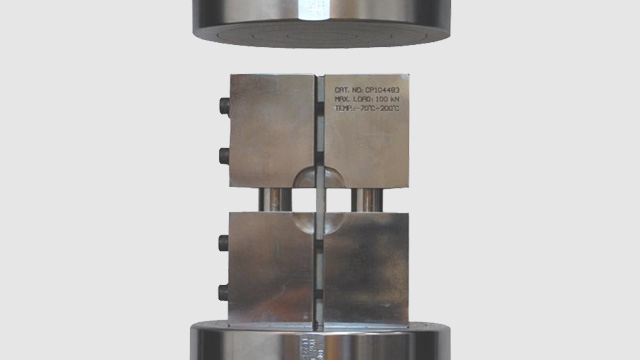
Purpose-built fixtures and accessories for flexural, tensile, and compression testing of polymer matrix composites, designed for accuracy and repeatability across a wide range of applications.
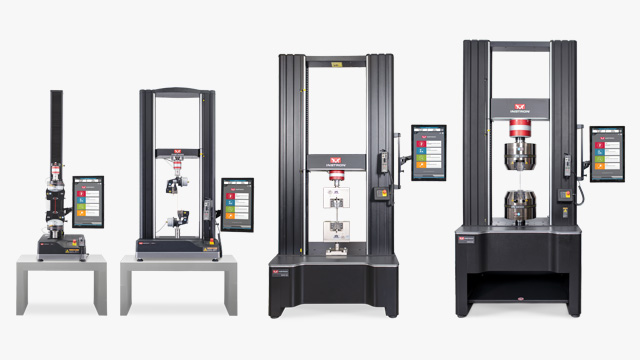
Configurable load frames with the accuracy and accessory compatibility needed for the full range of composites testing, capable of meeting Nadcap alignment requirements.

Centralized lab management software for standardizing test methods and maintaining data integrity and security across composite testing programs and test frames.
or

Talk to an Instron Expert
Get application-specific guidance on testing polymer matrix composites.
About the Author

Stephan Botzki
Stephan Botzki is a Senior Applications Engineer at Instron, where he works with customers to identify the optimal testing configuration to meet application requirements for mechanical testing of composite materials. He specializes in high-force static testing of composites and other advanced materials, and he is a key member of the ASTM D30 Committee on Composite Materials. His work bridges rigorous standards with real-world applications in materials testing.