Torsion Testing of Flexible Circuits and Microelectronic Components
IPC TM-650
The Challenge
The miniaturization of mobile electronic devices has driven rapid adoption of flexible printed circuits (FPCs) — lightweight, thin, and bendable interconnect solutions that are increasingly preferred over rigid PCBs in compact and wearable electronics. The emergence of flexible electronic displays has extended this trend further, enabling entirely new product form factors where the circuit itself must withstand repeated bending, twisting, and flexing throughout its service life.
As these technologies are still relatively new, the mechanical reliability of FPC subassemblies under torsional loading is not yet fully characterized for many material and component combinations. Understanding how torsion is applied across FPC panels — and how component layout patterns, trace routing, and substrate materials influence torsional performance — is critical for OEMs developing products where FPCs are subjected to real-world twisting and rotational forces during use and assembly.
Our Solution
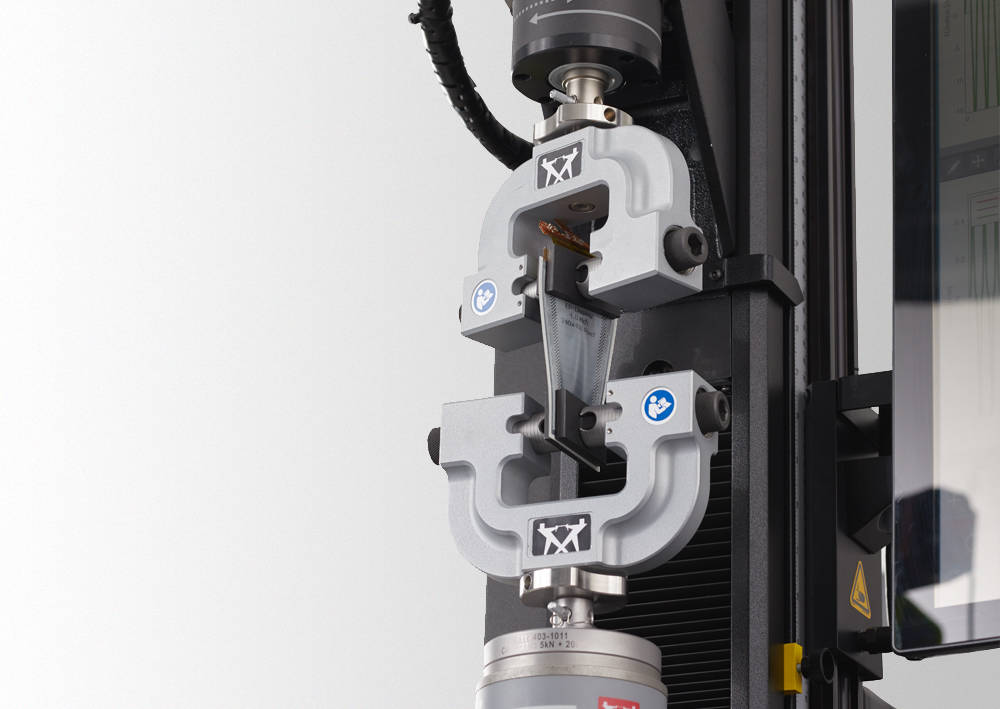
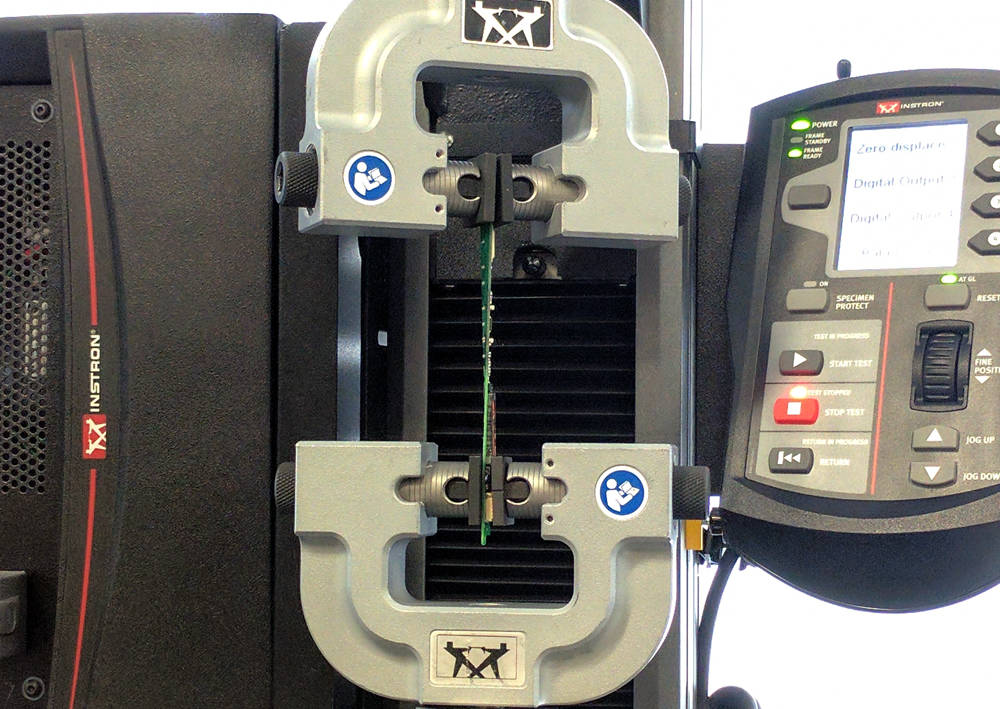
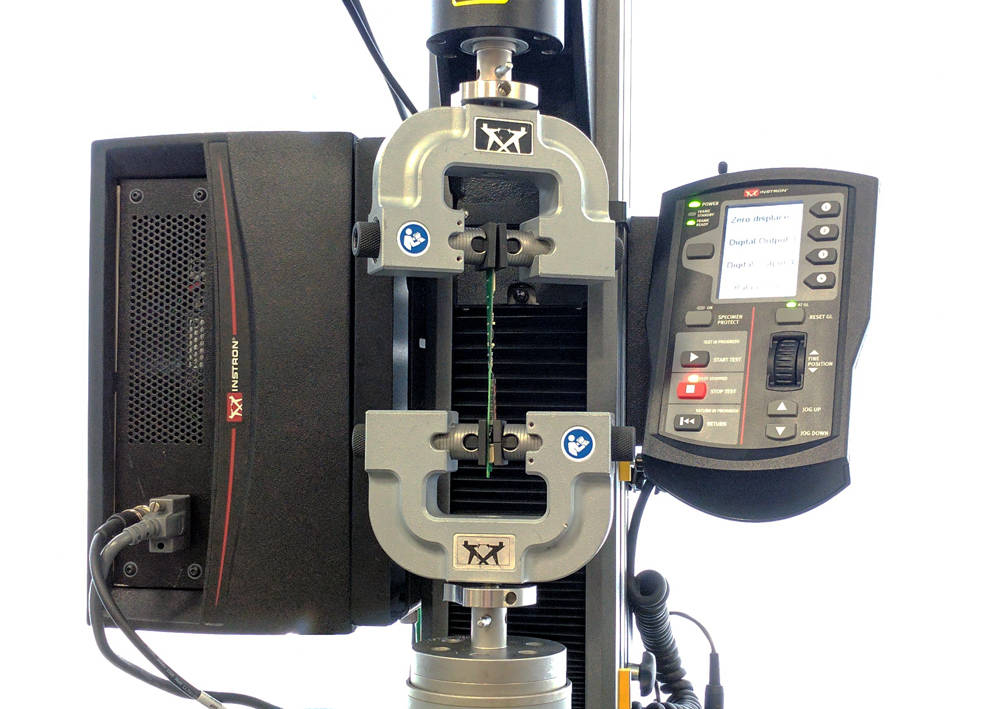
Torsion Add-On 3.0 - The Torsion Add-On 3.0 can be installed on a 6800 Series universal testing system to enable torsion testing of FPC panels and microelectronic components. The add-on is capable of twisting specimens at precise, controlled degrees of rotation — allowing engineers to evaluate torsional stiffness, maximum torque at failure, and the relationship between rotation angle and torque throughout the test.
Gripping - Pneumatic side action tensile grips hold FPC panels securely in the correct position for torsional testing. The pneumatic actuation provides consistent, repeatable clamping force across specimens without the variability of manual gripping — important for ensuring that grip conditions do not influence the torsional results.
Cyclic Torsion Testing - In addition to single-cycle torsion tests to failure, cyclic torsion testing can be set up to evaluate the durability of FPC panels under repeated twisting — simulating the real-world loading that flexible circuits experience over thousands of open-close or flex cycles in a finished product.
Software - Bluehill® Universal software is used to create and run torsion test methods — including both single-cycle and cyclic configurations — and to capture key results such as torque at failure, rotation angle, and torque-angle curves. The TestCam video module is available to capture real-time synchronized video of the torsion event for visual analysis of failure location and mode.

Talk to an Instron Expert.
Whether you are developing a new torsion test program for flexible printed circuits or need help configuring a cyclic torsion test for durability evaluation, our team can help you identify the right setup for your components and testing requirements.
Contact Our Sales Department.
Please complete the form below and we will be happy to contact you with a response. Our typical response time for an online request is within 1-2 business days. For a faster response, please call +1-800-473-7838.